In
1598, don Juan de Oñate
led an expedition of Spanish colonists--including eight Franciscan
friars--to the east bank of the Rio Grande near its confluence with the
Chama River. There they founded San Gabriel, New Mexico's first capital
at a
site close to present day Okay Owingeh, one of New Mexico's great
Tewa speaking Northern New Mexico Pueblos.
Nine years later Don
Pedro de Peralta, established as New Mexico's capital, "La Villa Real de Santa Fe de San
Francisco de Asisi," or "The Royal City of the Holy Faith of Saint
Francis of Assisi."
Spanish explorers and
the sandal-shod sons of Saint Francis of Assisi who accompanied them
planted the seeds of Catholicism by evangelizing to a large
population of native Americans and to other colonists who migrated to
the new country. The seeds they planted took root and have flourished for more than
400 years.
Today, despite he
incursion of contemporary secularism, Santa Fe remains the "City of Holy
Faith" established by Peralta. It is
the seat of the Archdiocese of Santa Fe which counts among its faithful,
more than 300,000 Roman Catholics.
The
Archdiocese of Santa Fe covers an area of more than 60,000 square miles
and includes 216 active missions and 91 parish seats, including Our Lady
of Guadalupe in Santa Fe.
Our Lady of Guadalupe
was built in 1961 and is adjacent to the venerable Santuario de
Guadalupe which was founded in 1795. Though no longer an active
parish, the Santuario remains a viable symbol of the Catholic heritage
in Santa Fe.
Built of adobe in the
local style of the eighteenth century, the Santuario and its cruciform
structure remain largely intact despite the ravages of time.
Today, the Santuario
houses the Archdiocese's collection of New Mexican santos (carved images
of the saints) as well as Italian Renaissance and Mexican Baroque paintings, many
of which are priceless.
Literally at the shadow
of the Santuario in a building once owned by the church is Cafe San
Estevan, perhaps appropriately owned and operated by a Franciscan monk
with a passion for saints.
Estevan
Garcia's other passion is cooking, a passion he developed while cooking
for friars.
The
New Mexican dishes he prepares are inspired by San
Pasqual, patron saint of Mexican and New Mexican kitchens. Divine
inspiration is very much in evidence and not only in the chef's
wonderful culinary creations.
From its Spanish iconography to the
religious art festooning its thick adobe walls, spirituality has been
incorporated into every facet of the restaurant.
Several santos adorn the flat stone
fireplace on the southeast corner of the main dining room while a mural
depicting several perspectives of what appears to be a guardian angel
watching over a charge are the focus of a smaller dining room.
The restaurant's architecture is
artsy, too, in a New Mexico sort of way with exposed vigas on the
ceiling, latillas dividing a half wall, notched beams and immaculate
white adobe walls. Woven tapestries and chile ristras also adorn
the Southwest hacienda style restaurant. Though some of these
features can be found in other New Mexican restaurants, Cafe San Estevan
seems to do them with more class.
Successful
restaurants are in Garcia's pedigree. In the early 1990s, he
operated Ste. Estephe, a popular restaurant in Manhattan Beach,
California which specialized in modern Southwestern cuisine. Ste.
Estephe was a favorite of
Gourmet magazine editor Ruth Reichl.
Wanting to return to his New Mexican roots and
work with beans and chile and other native staples with which he grew
up, Garcia launched Cafe San Estavan in 1996. He is avid about
supporting local shepherds and farmers and uses many organic ingredients
bought locally. His is a ubiquitous presence at Farmers' Markets.
Garcia is meticulous about the
preparation of each meal, taking extra care to ensure flavorful red and
green chile that won't singe the tongues of unenculturated diners.
His chile is dried in the fields, not on a conveyer--a real difference
maker. His pinto
beans are grown in a farm in Chimayo. The succulent lamb on the
menu was raised on the verdant grasses of Tierra Amarilla.
Though he doesn't stray far from
traditional New Mexican cuisine, French influences and innovations are
in evidence. Little wonder
Hispanic magazine named Cafe San
Estevan one of America's Top 50 Hispanic restaurants
in 2003 and 2004. Though I don't always agree with the magazine's
selections, this one can't be argued with.
As might be expected, service is attentive and efficient.
The wait staff seems to anticipate your needs and is on-hand with
beverage refills just as you need them (an indictment of the dry New
Mexico air, not necessarily the chile).
Streetside dining on a small shaded
patio is very popular during sultry summer mornings, especially during
Sunday brunch.
The menu (which depicts a herald angel
on a cloud) is broken into three sections: apertivos (appetizers),
ensaladas (salads) and la cena (the meal). An abbreviated menu
featuring some items not otherwise served daily is available for Sunday
brunch.
Cafe San Estevan's appetizer
selections are unique. You'll want to order several--perhaps the
carne adovada raviolis (three raviolis stuffed with red chile
marinated pork and served in a garlic cream sauce), tamalitos
(two traditional tamales--one pork tamale served with a red chile sauce
from Chimayo and one vegetarian tamale served with a roasted Hatch green
chile) or Andrea's pastel de Guacamole (avocado mousse with corn
and jalapeno served with chips).
There's
also Estevan's divinely inspired salsa served with warm tortilla chips.
The salsa is only medium hot (piquant), but it is thick, chunky and very
flavorful, among the very best in Santa Fe.
One thing we appreciate about Cafe San
Estevan is its meticulous attention to the little things, those things
that ultimately make a difference and set one restaurant apart over
another.
Touches such as serving your meals
steaming hot instead of lukewarm (or worse, cool) really do make an
impression. Wouldn't you rather have to blow on your food than
complain about it being warm in places and cool in others? At Cafe
San Estevan, your entire plate is served hot to the touch.
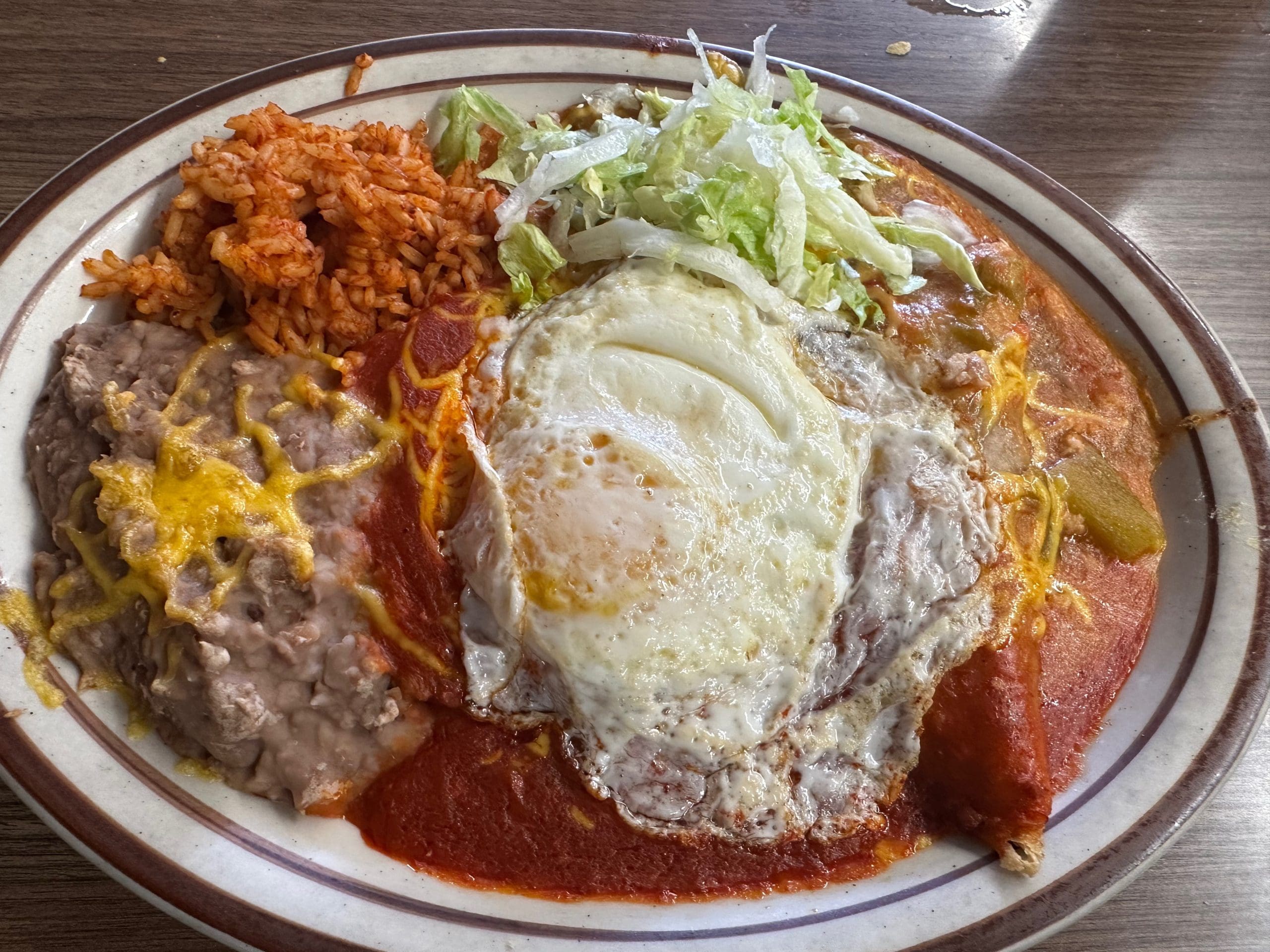
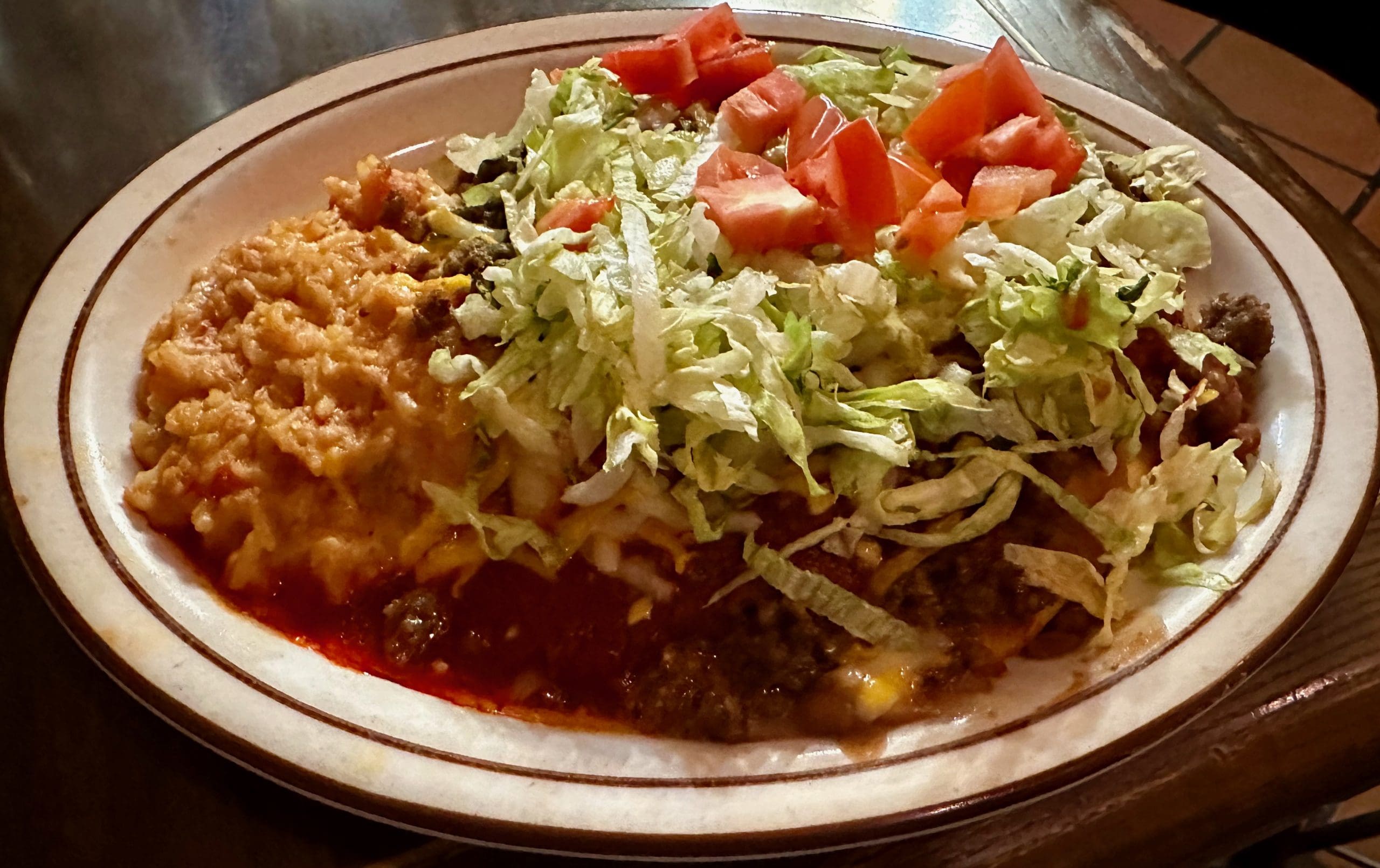
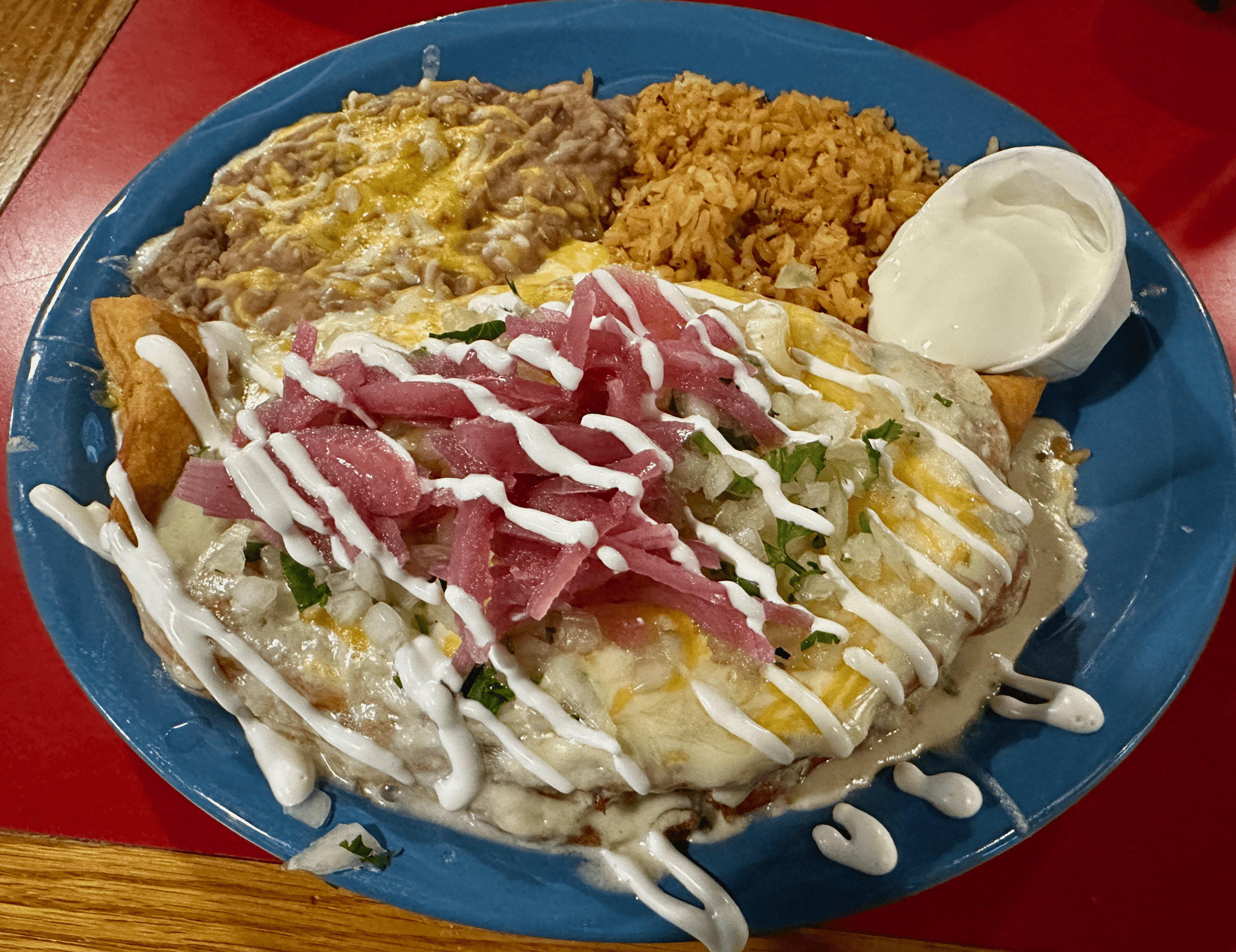
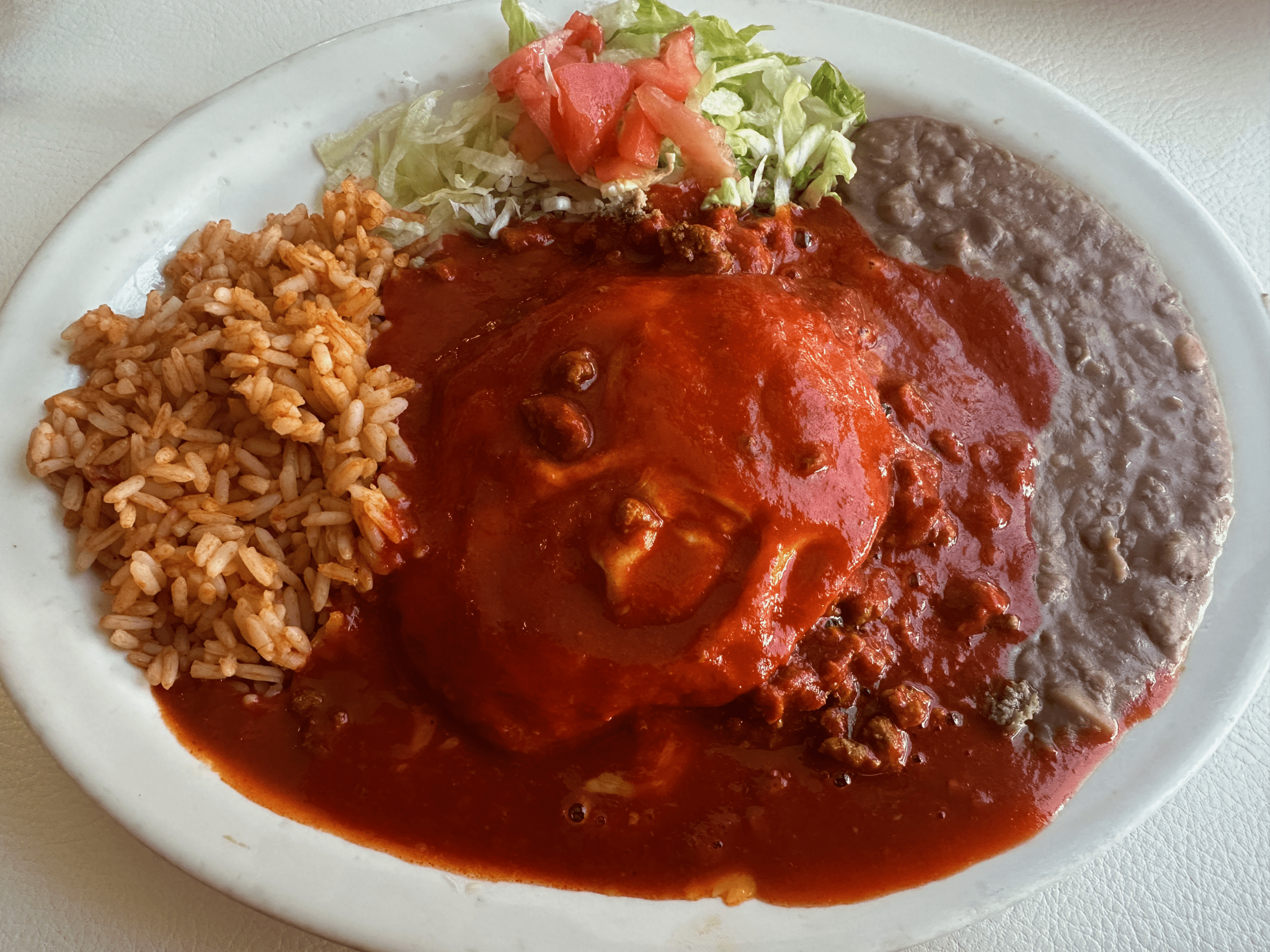
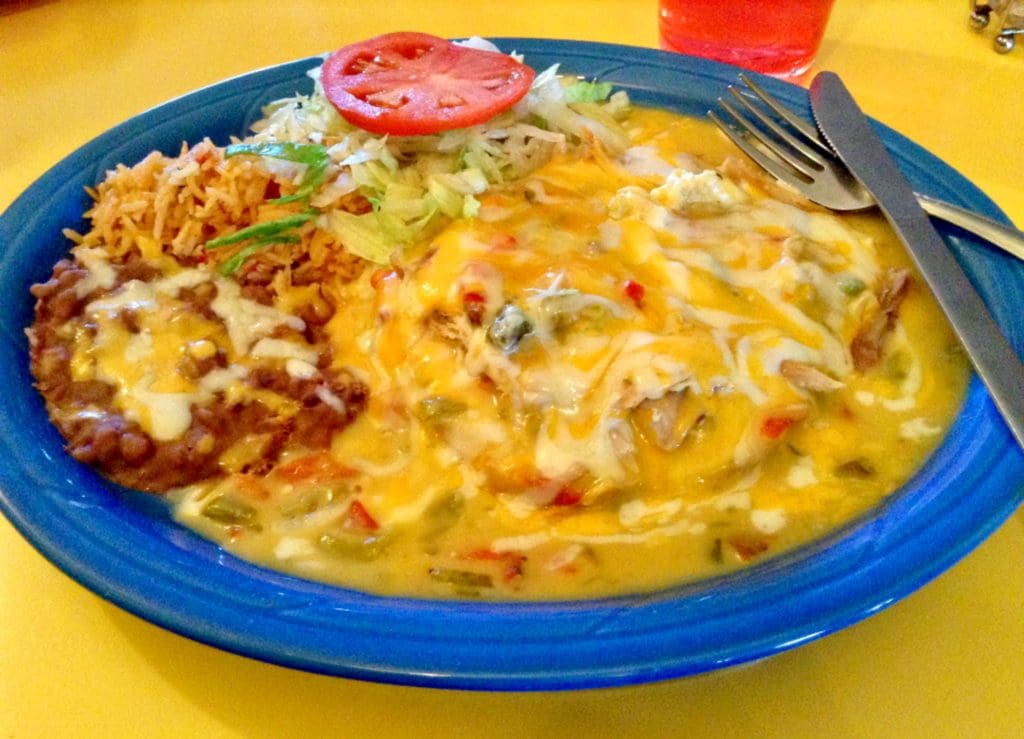
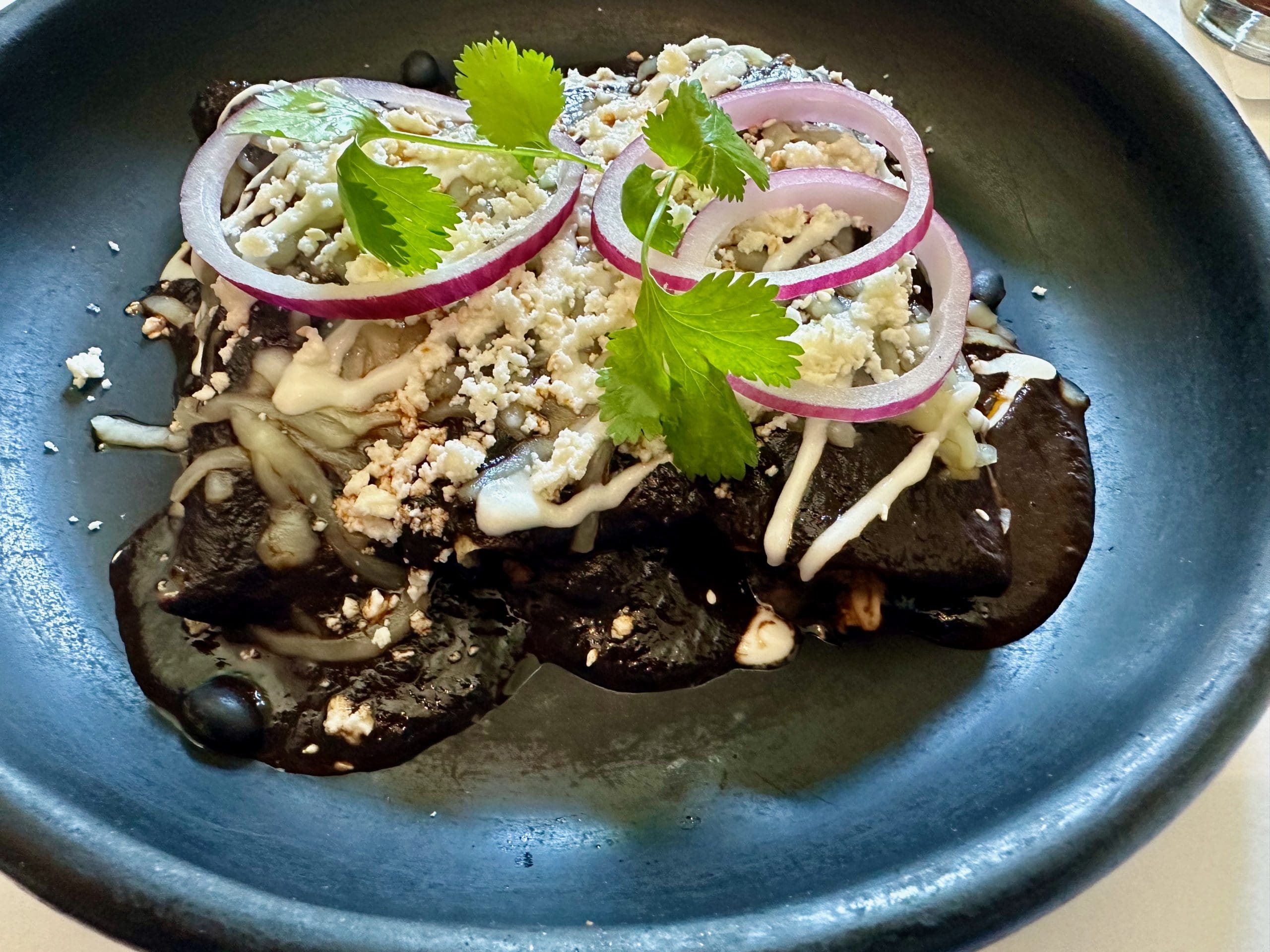
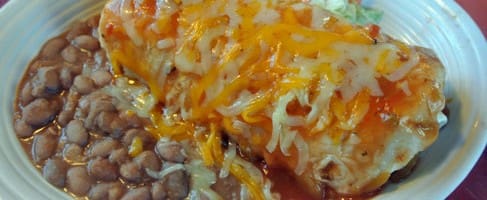
The first entree listed on La Cena is
the Enchilada de la Casa De San Estevan, but if you're thinking
"it's just another enchilada," you're in for a treat. Estevan's
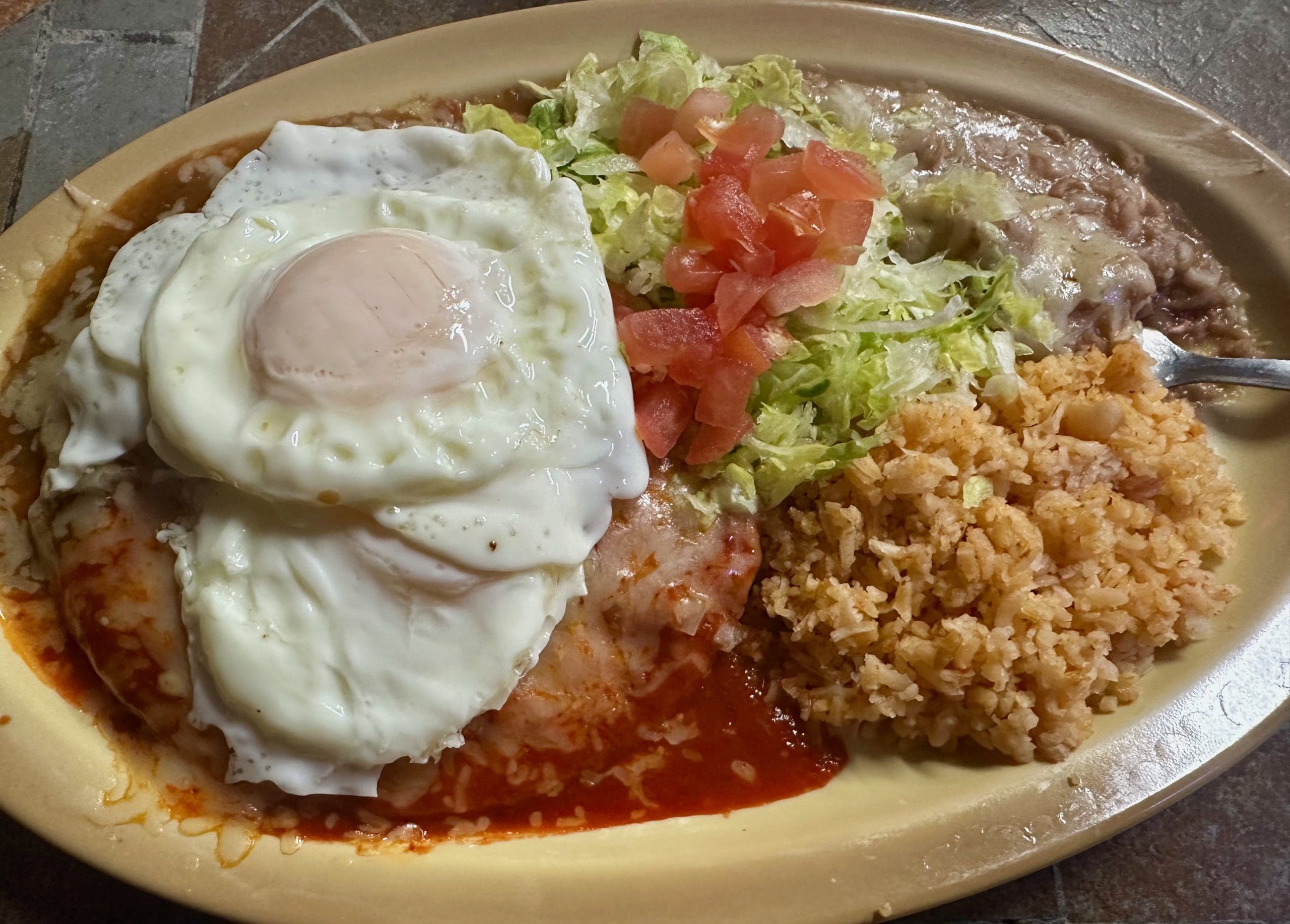
enchiladas are special--two corn tortillas filled with your choice of
chicken or beef, red or green chile (or both) and for a mere pittance
more, blue corn tortillas and (or) a fried egg.
Though
medium (at least for fire-eaters) on the piquant scale, both the red and green chile are redolent
with flavor and the beef is seasoned to perfection. Cheddar cheese
drapes over the enchiladas and the Chimayo pinto beans. Many
native New Mexicans prior to my generation boast of having eaten beans
for breakfast, lunch and dinner. You would brag, too, if you could
eat these praise-worthy beans every day.
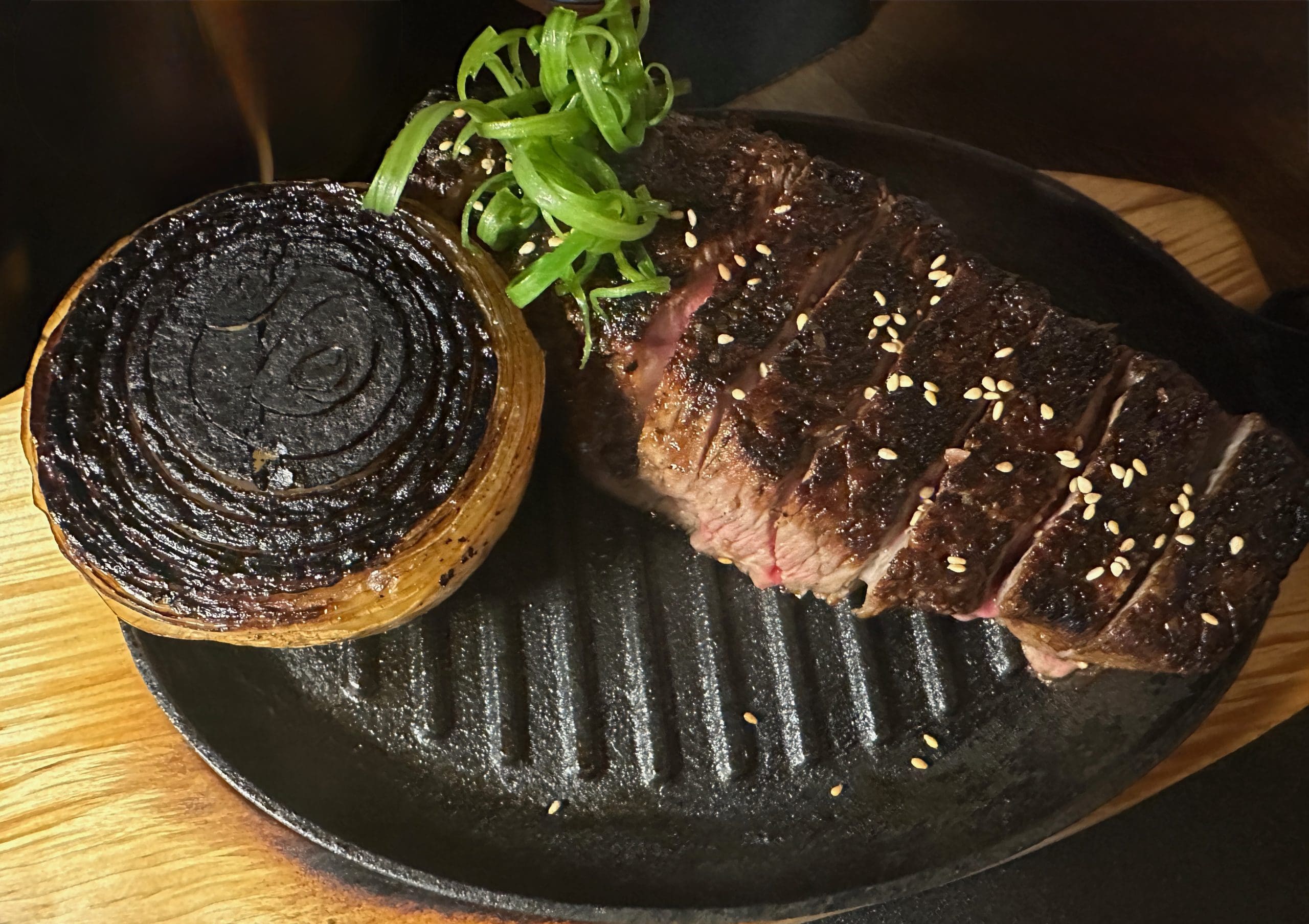
Estevan "one-ups" the traditional
brunch combination of steak and eggs by serving a perfectly seasoned,
tender six-ounce ribeye steak with calabasitas (a cornucopia of squash,
corn and onions) and a cheese enchilada topped with chile caribe,
a chile preparation style practiced for
hundreds of years in Northern New Mexico. There's no doubt Estevan is
well-practiced in the culinary art of preparing this delicious red
chile.
Evening specials tend
to showcase Estevan's creative side, but if your preference is for New
Mexican cuisine, maybe you'll luck out and the restaurant will be
offering another terrific combination platter.
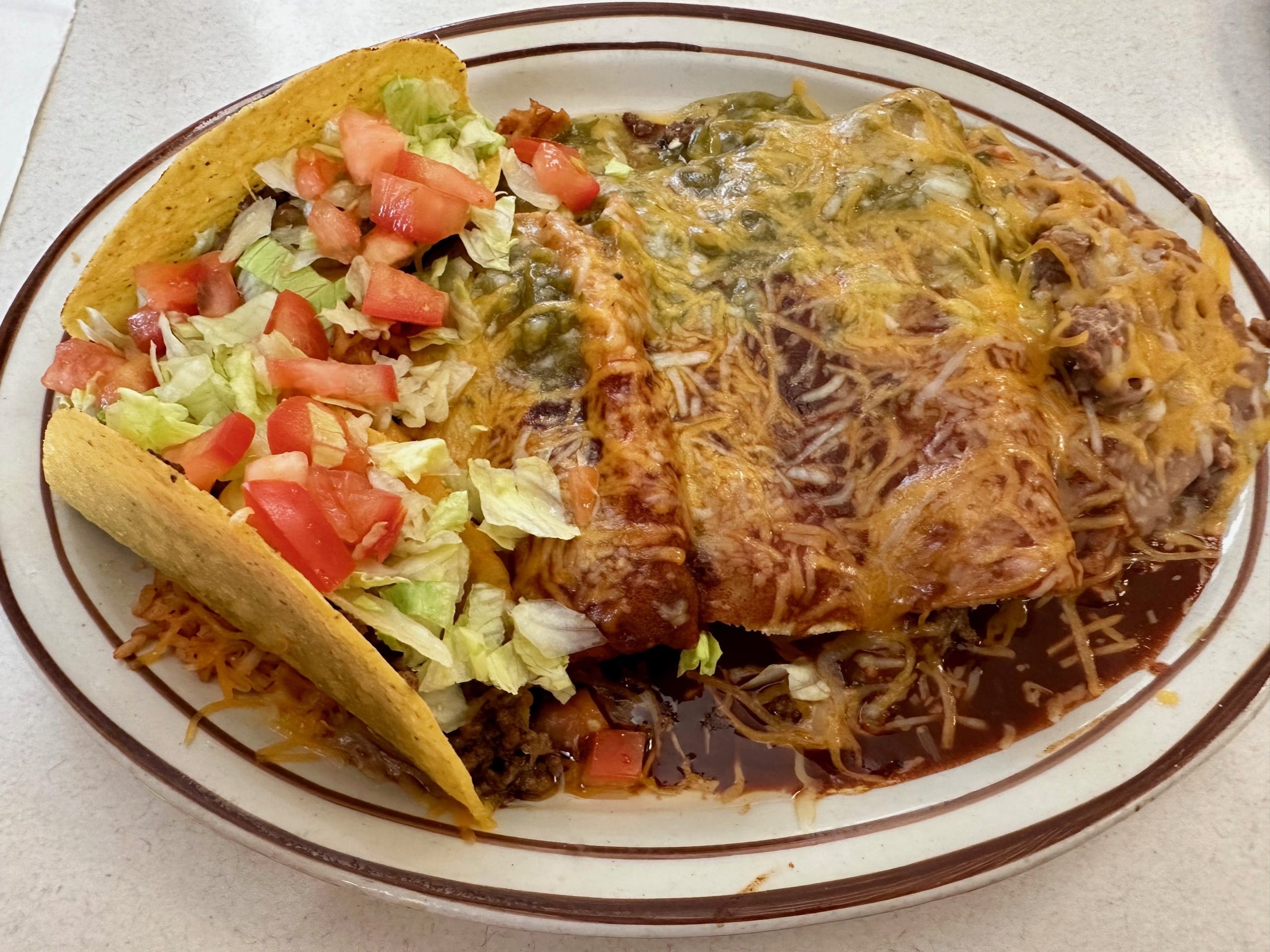
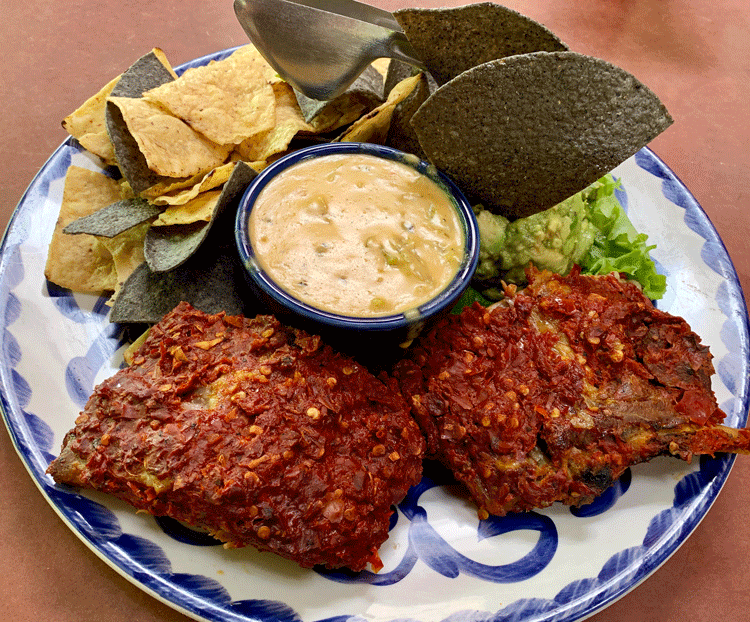
That combination
platter (pictured at right), as during my second visit to Cafe San
Estevan, featured a beef enchilada, a pork chop, tamale and the
aforementioned calabasitas.
While every item on
this particular combination is absolutely wonderful, I'm convinced that
Cafe San Estevan serves one of the four or five best enchilada dishes in
the state--especially when served "Christmas style" with both red and
green chile.
At Cafe San Estevan, even the sopaipillas are
more cloud-like and fluffy. They're also thicker than most sopaipillas and
won't crumble apart like some others.
While sopaipillas generally suffice
for dessert, you've got to order one of Estevan's sweet creations. The
organic goat's milk flan is a popular choice and for good reason. It
is rich and sweet with a touch of creaminess that distinguishes goat's milk from
the rest.
I've never been a fan of flan, but Estevan's
has made a convert out of me. The caramel sauce has none of the cloying
qualities of the caramel you might heap on ice cream. It's an adult,
semi-sweet caramel that complements the flan like a marriage made in heaven.
After a meal at Cafe San Estevan, you might
just want to cross the street to Our Lady of Guadalupe and give thanks for your
bounty of some of Santa Fe's most divinely inspired New Mexican food.