When my Kim required physical therapy after a brief hospitalization, extraordinary physical therapist Lana Ramos was dispatched to our home where she worked with my Kim for several weeks. Lana was wonderful–a superb and patient coach for my injured bride and a knowledgeable and patient source of knowledge for me. Having been around many Air Force colleagues married to Filipino women, I developed a fondness for both the culture and cuisine of the Philippines. Lana reignited that fondness by answering my questions and clarifying a few misconceptions I had. When my Kim successfully completed her physical therapy, Lana prepared lumpia for us. It had been a long time since we’d had lumpia.
Lana told us that she and several compatriots journey to the Phoenix area periodically to get their fix of Filipino cuisine which–until September, 2024 could not be found at an Albuquerque eatery. Then came Cindy Recile, an effusive and radiant personality who named her take-out establishment “Barkada’s ABQ” for the Filipino word for “friends” or “group of friends.” Barkada’s is not a sit-down restaurant in which you can linger to enjoy fabulous flavors. Instead, you’ve got to use social media to order food which you can pick up or have delivered.
In an article about Filipino food culture, writer Mikaeala Lucido noted “In Filipino food culture, we understand that food is a love language that can invoke powerful memories.” Sadly, I don’t have many memories of Filipino cuisine, but those memories I do have are powerful. They’re warm and fond. Almost all of those memories have their genesis in the homes of friends from the Philippines or with colleagues married to Filipino women. Though there are 4.2 million Filipinos in the United States, according to a 2023 Pew Research Report, yet there are only 1,400 Filipino restaurants in the United States. Until Barkada’s ABQ, the Duke City didn’t have any.
Every year at the start of a new year, some culinary cognoscenti declares a different cuisine “the next big thing.” For Filipino cuisine, such a proclamation has been made several times during the past decade. Andrew Zimmern, the host of the erstwhile Bizarre Foods, said it in 2012, and the late food legend Anthony Bourdain proclaimed it again in 2017. Yet, as of 2023, Filipino restaurants still only make up around 1% of U.S. restaurants serving Asian food. I won’t make a similar proclamation about the ascendency of Filipino cuisine, but I will say uniquivocally that the very best restaurant we visited during our 2024-2025 visit to the Valley of the Sun was Tambayan Filipino Food in Phoenix.
We enjoyed the cuisine at Tambayan more than we enjoyed the food at several “best of Phoenix” recipients and even several lavished with praise by Food Network gliteratti Guy Fieri. Introducing my Kim to a cuisine type with which she’s only had limited exposure can be a crapshoot. Not so at Tambayan which validated my long-held contention that the cuisine of the Philippines is among the very best in the world. It was a given that your intrepid food blogger would love Tambayan, but even my enjoyment was surpassed by that of my bride.
As with most of the world’s cuisines, Filipino cuisine has been broadly influenced by other countries. In a wonderful interview with Splendid Table, Amy Besa, the award-winner author of Memories of Philippine Kitchens, explains that Filipino food can be divided into two sections: “food that was always ours,” and “food we borrowed and made our own.” Among the latter are foods whose flavor profile is sour. Perhaps more than the cuisine of any other nation, the Philippines prepare foods made sour by citrus and sour fruit. Sour isn’t the only taste you can discern in Filipino cuisine. In fact, the cuisine is rather diverse in that it encompasses the combination and balance of various flavors, including sweet, salty, sour, bitter, umami, and other taste elements, as well as aromas and textures. Moreover, it’s absolutely delicious!
It’s been my experience that Filipino cuisine has the qualities of home cooking, the type of which my mom’s prepared for her family. Visit a Filipino home and you’ll be met with a traditional Filipino greeting of “Kain tayo!”. That greeting doesn’t translate to “welcome to our home,” but to “Let’s eat!” In Filipino culture, that means the same thing. I’ve learned over the years that Filipinos have a deep sense of community and belonging They have a compulsion to sharing their food. Now, that’s my type of people!
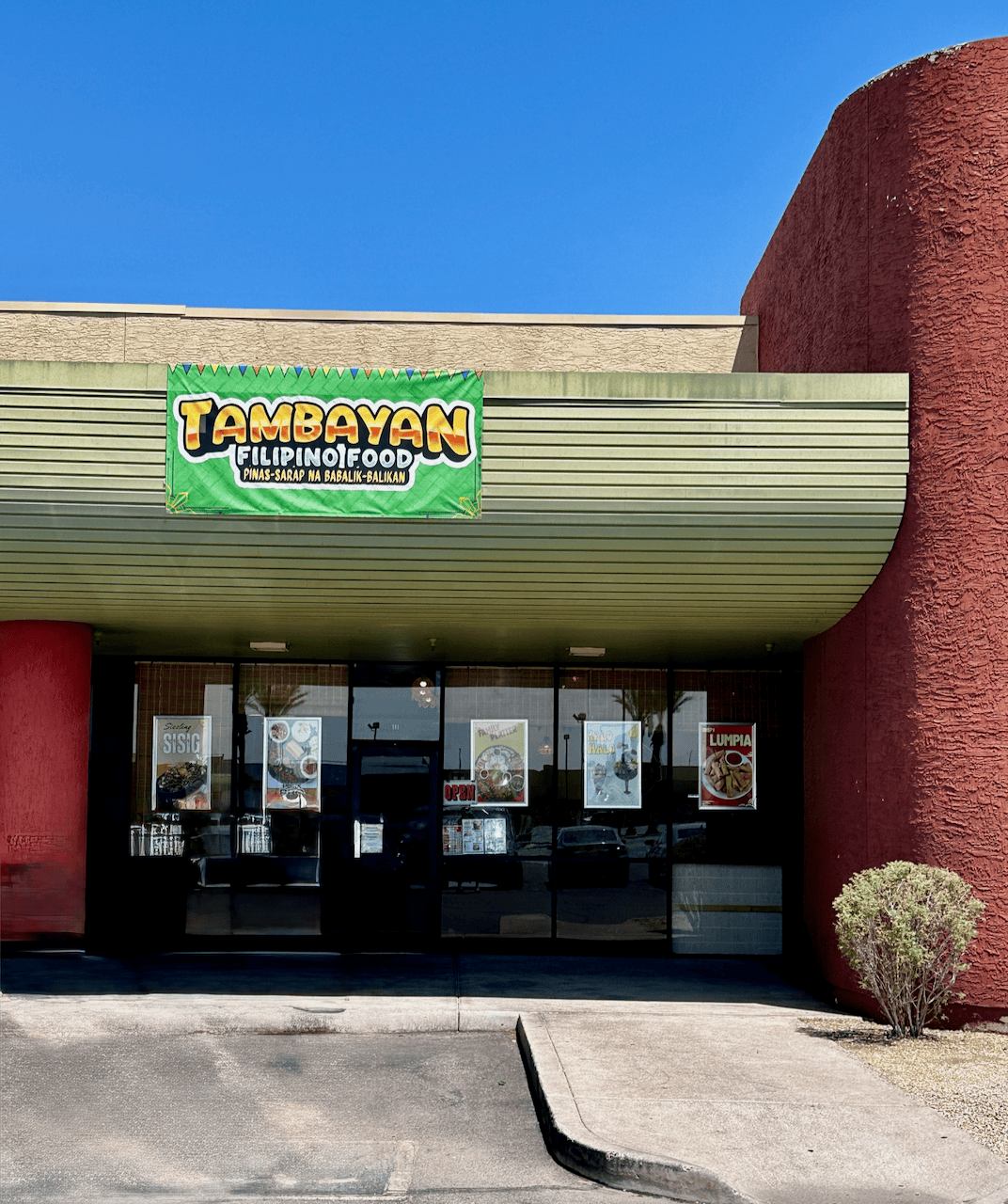
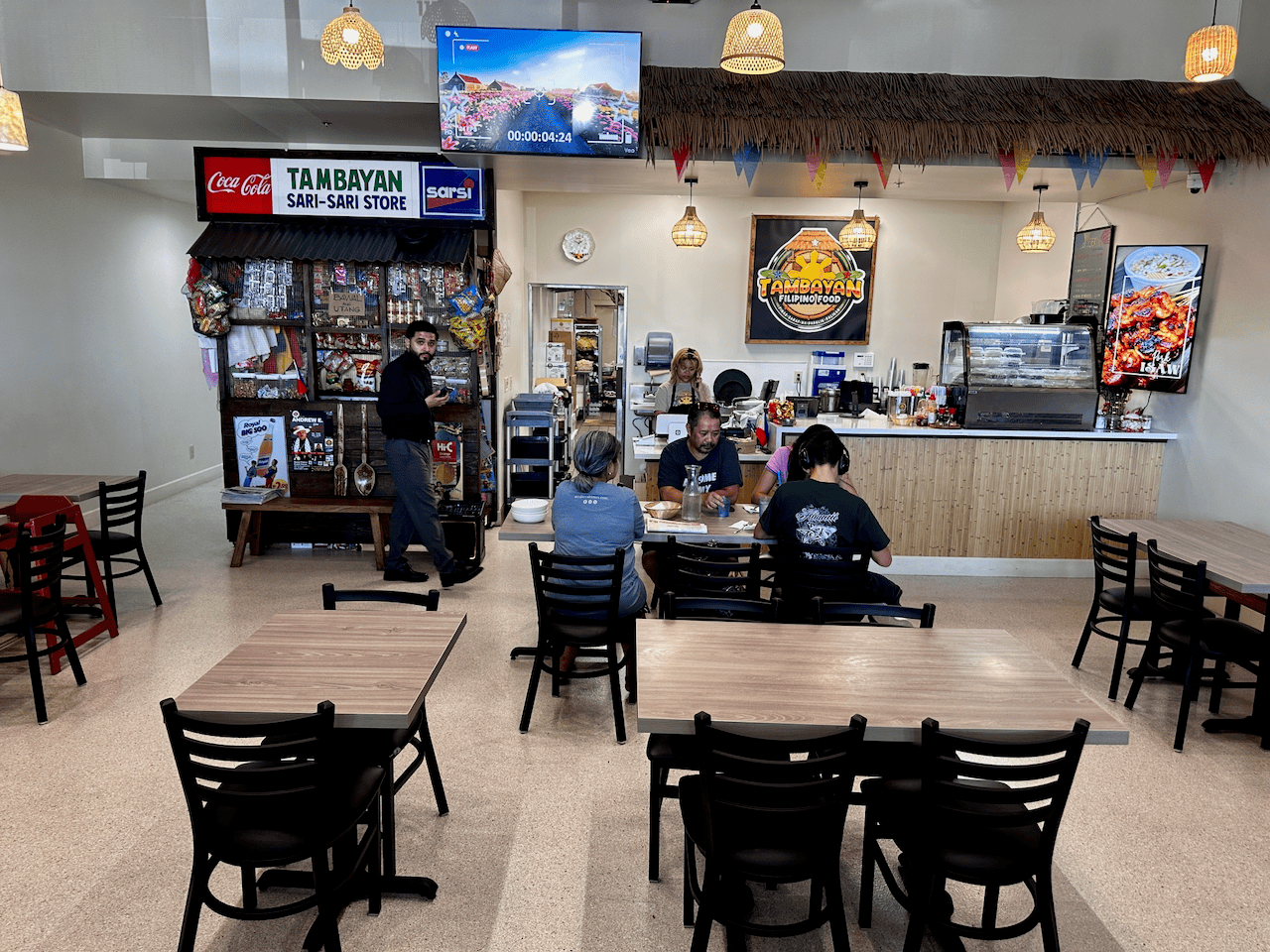
Tambayan’s “origin story” is similar to that of many ethnic cuisines striving to make their mark on the United States. Here’s how the Phoenix New Times explains it: “Joann Tagorda and her husband, Denver Tagorda, emigrated from the Philippines to the U.S. in the early to mid-2000s. They then met and married in Illinois before settling in Phoenix in 2010. The two quickly noticed a gap in the Valley’s culinary scene. Determined to share their beloved cuisine from the Philippine Islands with their new community, in 2013, the couple began cooking Filipino dishes in their own kitchen, promoting the dishes and selling them to Facebook friends, catering at parties and setting up booths at street fairs across metro Phoenix.” In time, they were able to launch their brick-and-mortar on Camelback. In June, 2025, Tambayan relocated to Mesa where a large concentration of Asian people live.
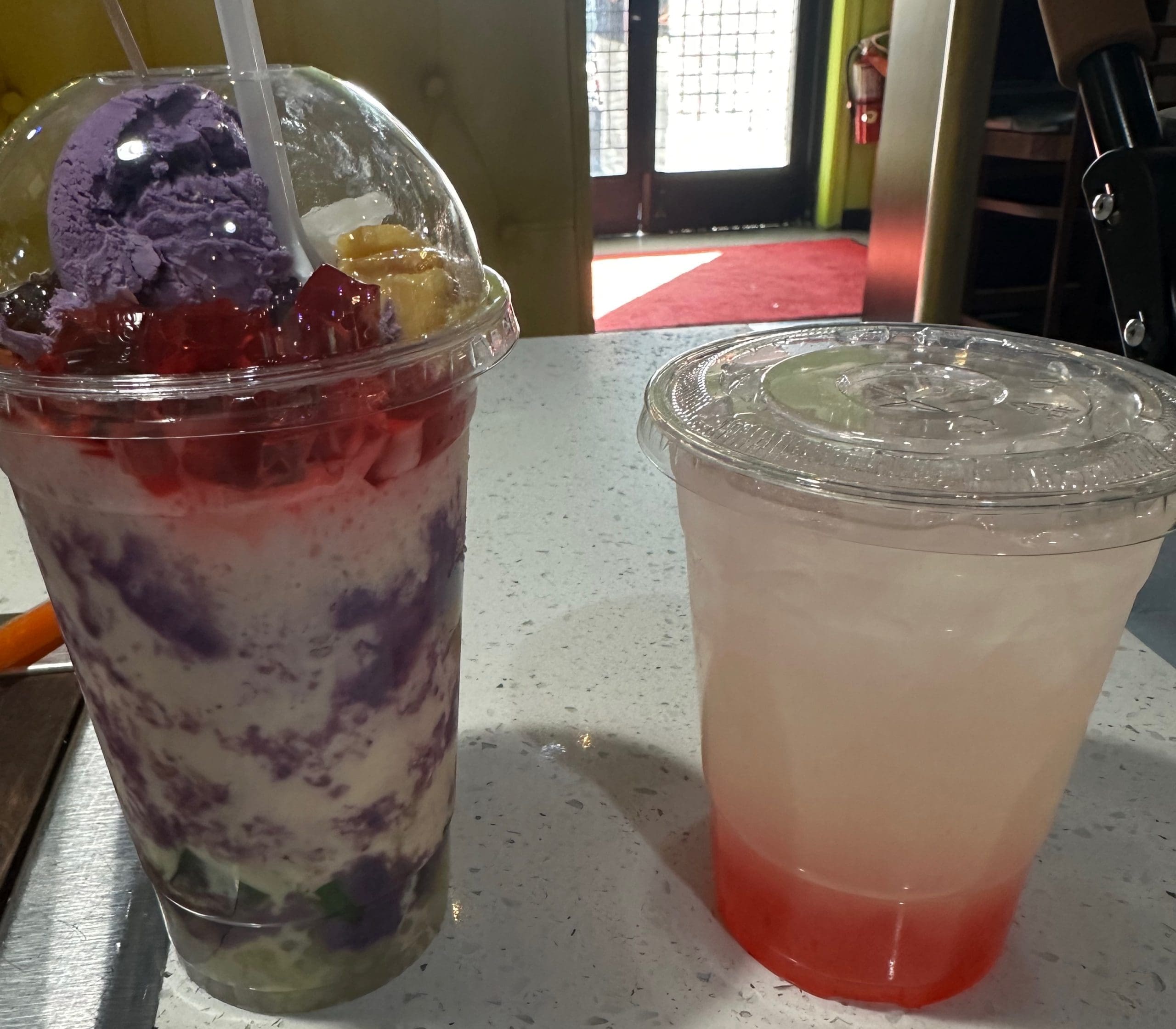
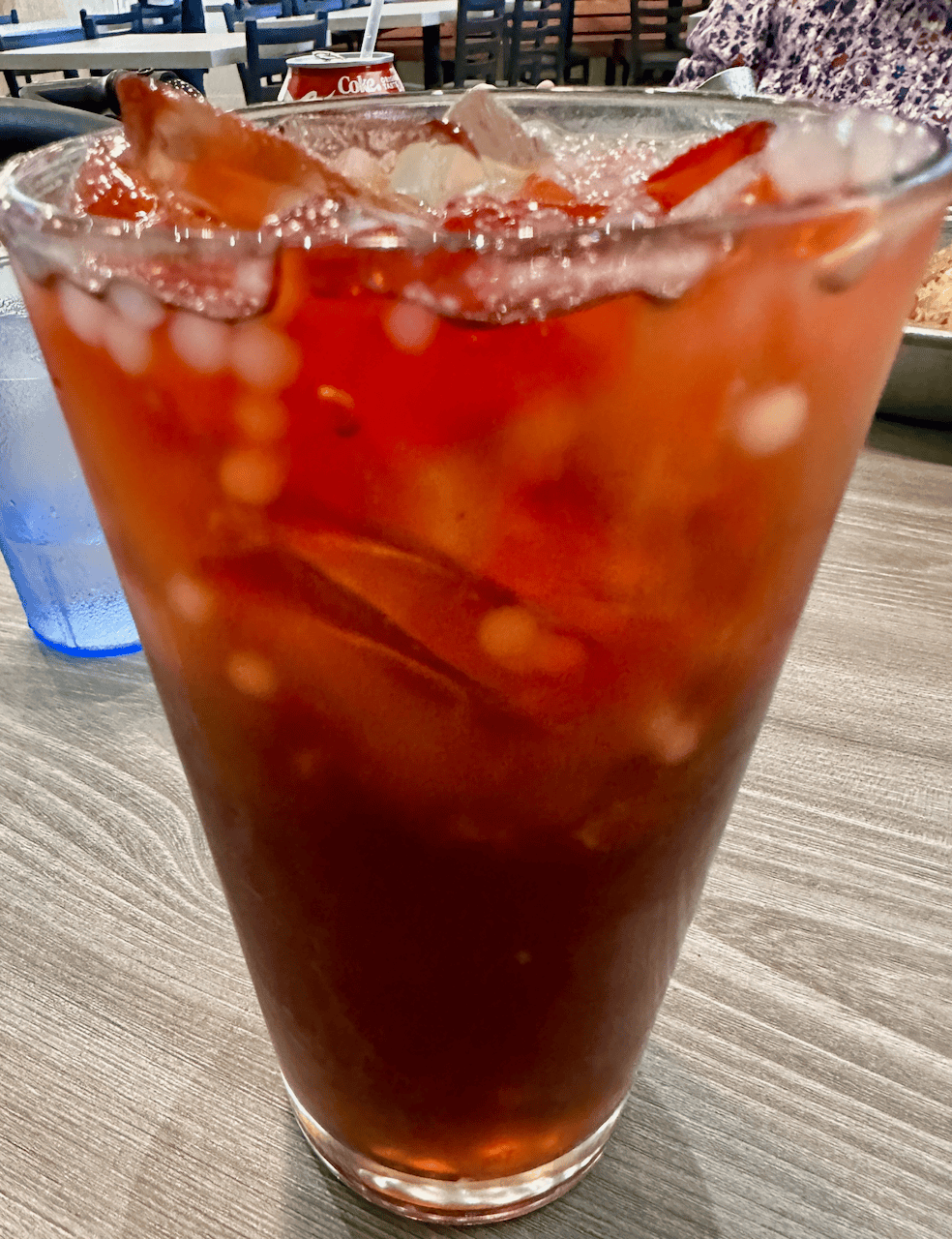
30 December 2024: Almost predictably, we were seated across the aisle from a couple from the Philippines. Also predictably, they were very friendly and happy to share recommendations. “You have to order the halo halo special” they told me. Admittedly I’ve only ever heard of this exotic beverage-slash-dessert. The halo halo special is one of several uniquely Filipino beverages available (though I suppose some people will order the usual American soft drink suspects). Halo Halo is technically a dessert, but in my adultery such designations as dessert and entree don’t come with strict limits. Though the name sounds Hawaiian, it’s a Filipino dessert which translates to “mix mix” and is constructed from shaved ice layered with various ingredients: tropical fruits, ice cream, gelatin-based candies made from coconut water, and so much more. One of the premier ingredients Tambayan uses is ube, a purple yam beloved in the island nation.
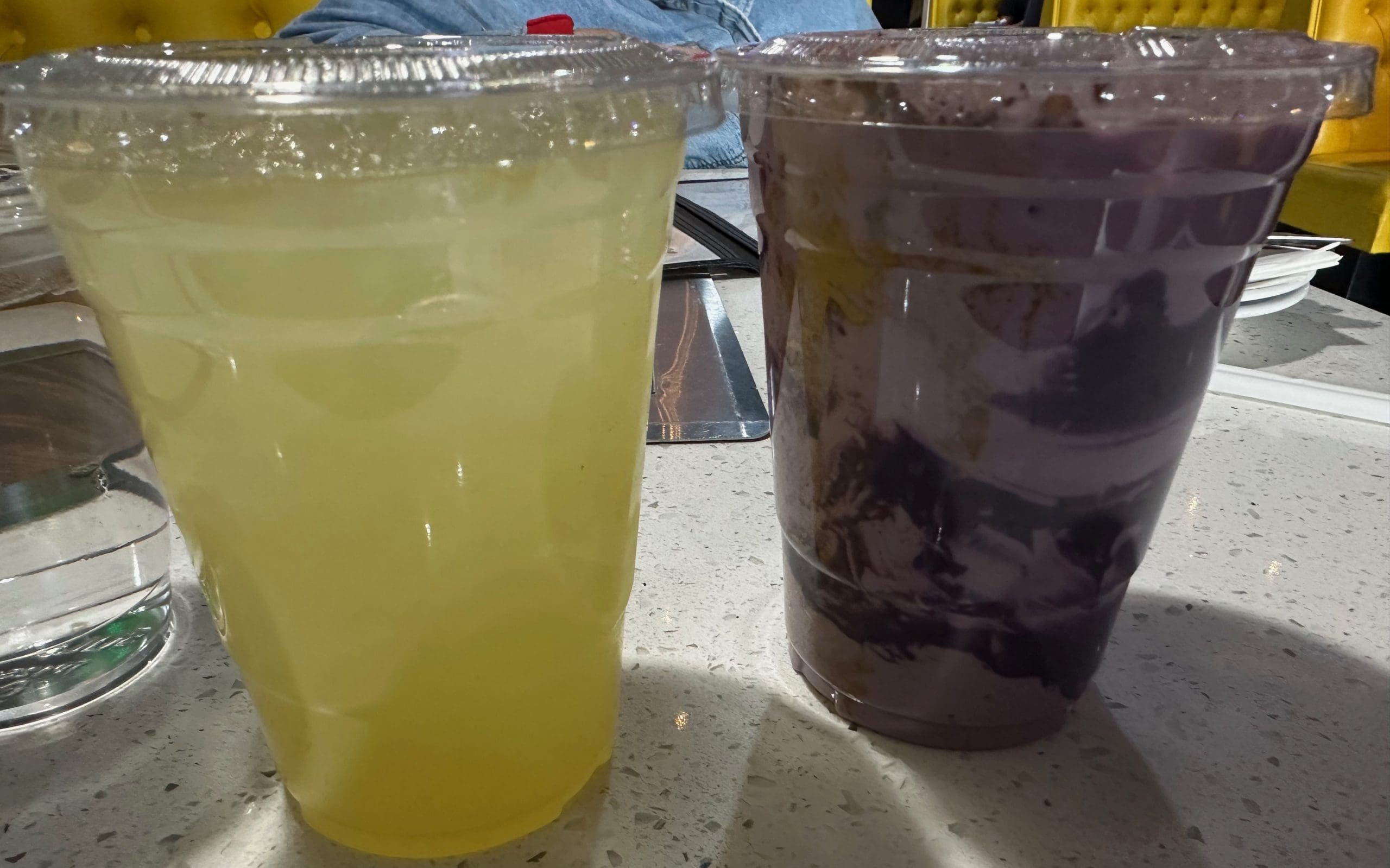
4 January 2025: During our inaugural visit, my Kim’s initial beverage of choice was lychee popping boba. She’s had lychee at several Vietnamese restauants but never before with boba, the bite-sized, chewy tapioca pearls. If you’ve never had lychee, when you order it make sure you pronounce it “lie-chee.” Lychee has a light, crisp sweet flavor though in beverage form it loses its wonderful fragrance. On her second visit, she had kalamansi juice is the Filipino version of lemonade and limeade. It’s super refreshing and best served ice cold. A fruit popular in the Philippines, Kalamansi is a hybrid, primarily a cross between a kumquat and a mandarin orange. My second visit choice was ube horchata, a Mexico meets The Philippines hybrid of purple yams and horchata. Two commonalities among all the beverages we enjoyed at Tambayan were just how refreshing and how absolutely delicious they all were.
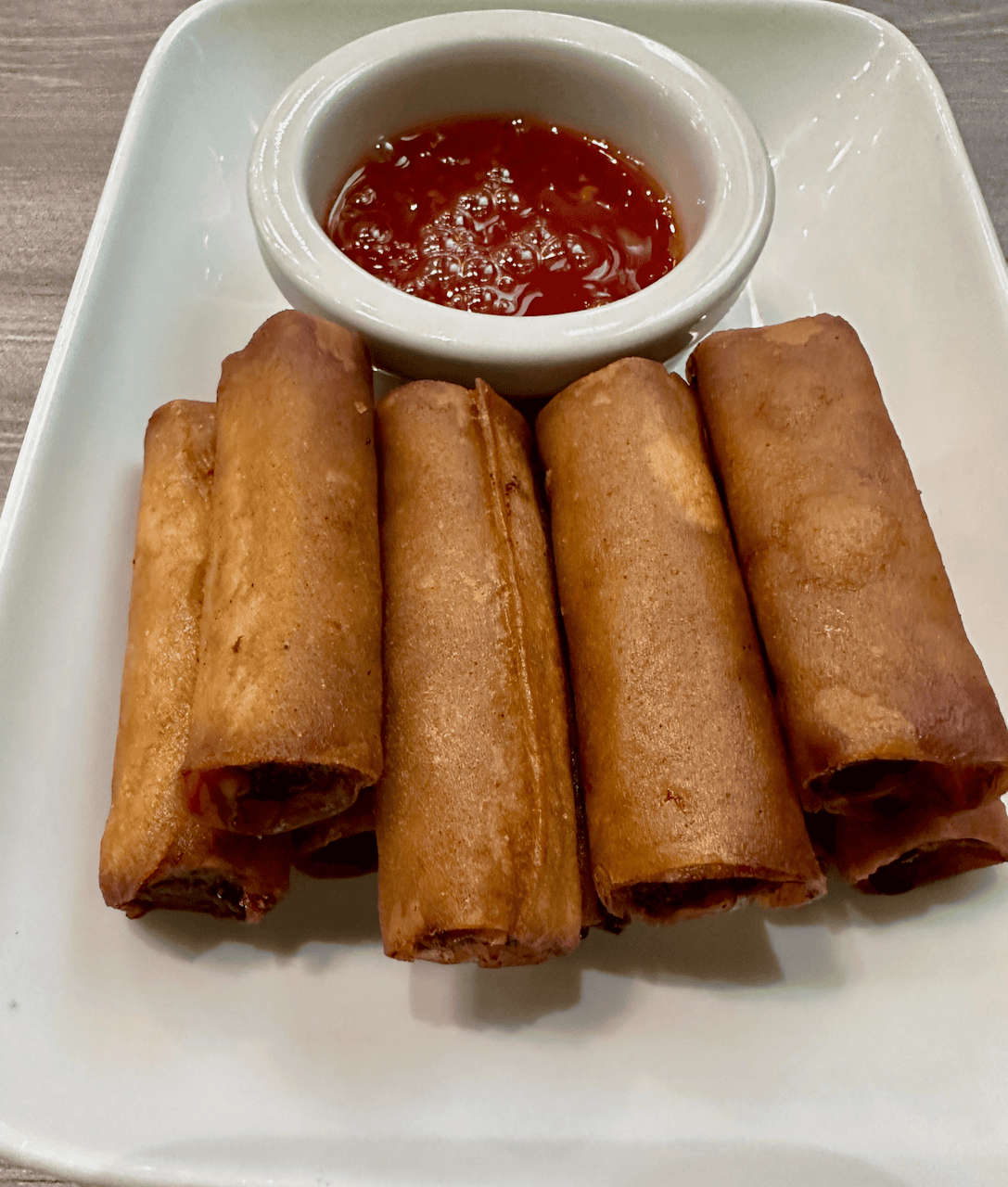
4 January 2025: Two visits, two orders of lumpia…and we’re kicking ourselves for not having brought more home. Lumpia is probably the best known of all Filipino foods. Lumpia is essentially fried spring rolls filled with a savory mixture of pork, cabbage, and other veggies. Lumpia are an unbelievably delicious crispy appetizer we love more than egg rolls. That’s largely because lumpia is usually brimming with meat and vegetables and have a thinner, more delicate wrapping than egg rolls (which tend to be crammed only with vegetables). Tambayan’s lumpia is very reminiscent of Thai egg rolls we’ve had in the past though more meaty and even better tasting.
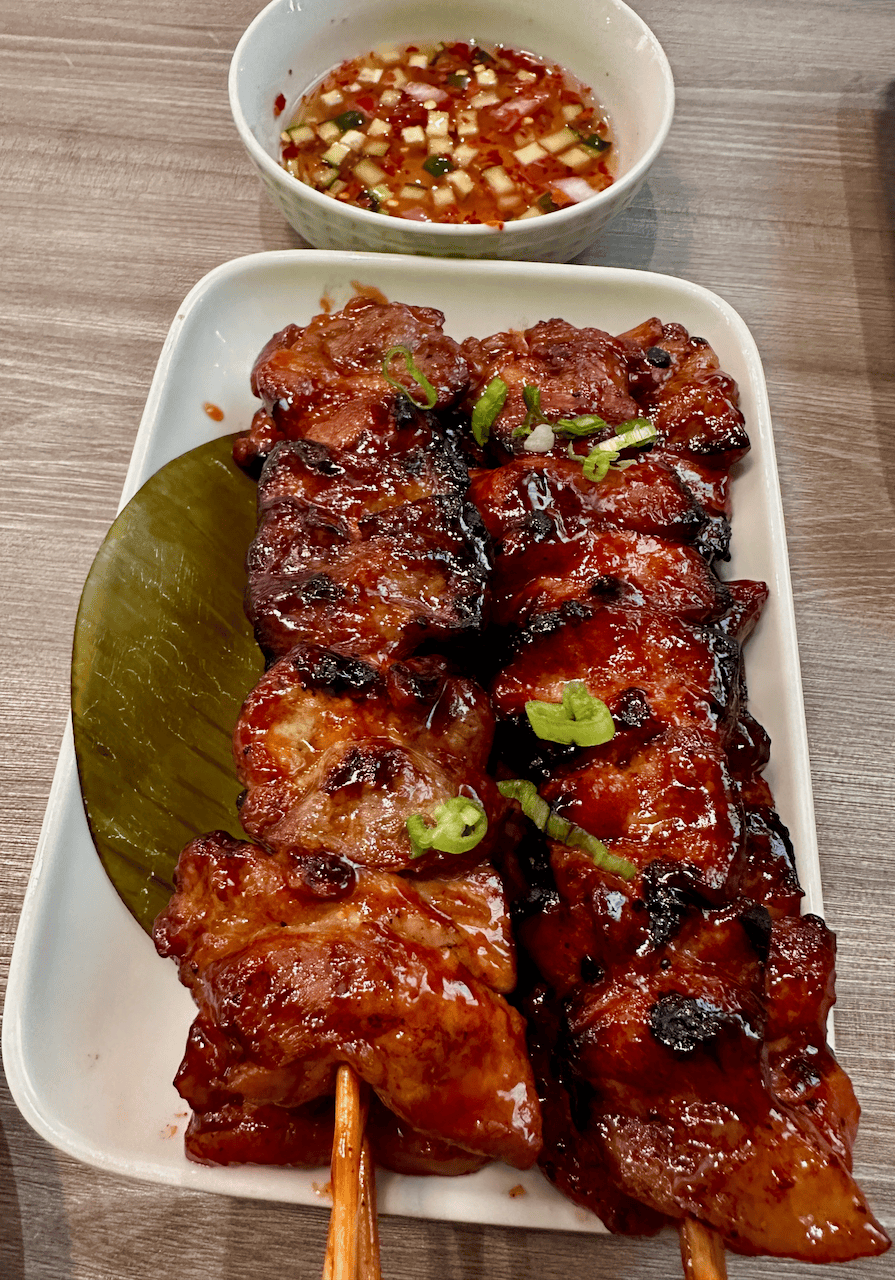
4 January 2025: Another appetizer we HAD to order during all three of our visits was Tambayan’s pork barbecue skewers. One of the best culinary lessons reinforced during our 2024-2025 visit to the Valley of the Sun is just how awful satay at Thai restaurants can be in comparison to pork barbecue skewers. As with Korean barbecue (including bulgogi), it’s an eye-opening experience. In Filipino barbecue, pork is sliced into thin pieces that are marinated in a mixture of spices and seasonings then grilled over wood charcoal. They’re served with a spicy vinegar-based dipping sauce, a refreshing change from all those overly sweet sauces many Asian restaurants serve. Served six per order, these skewers are addictive, maybe the best we’ve ever had.
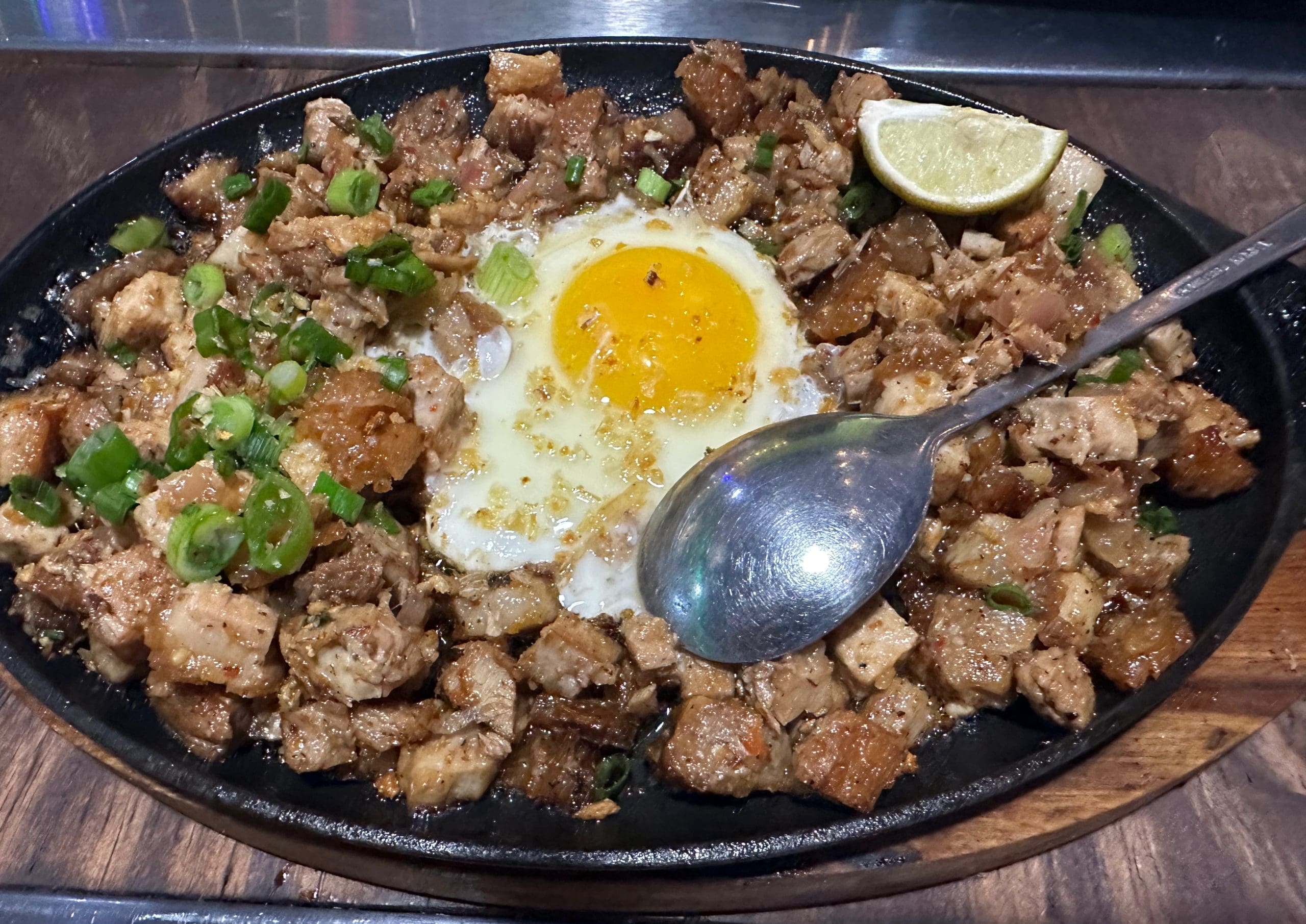
30 December 2024: Acclaimed and much missed author-television star-chef Anthony Boudain described sizzling pork sisig as “perfectly positioned to win the hearts and minds of the world as a whole.” He declared it’s “most likely to convince people abroad who have had no exposure to Filipino food to maybe look further and investigate further beyond sisig.” If anything, pork sigsig is so good, you may not want to do any further investigation. It’s so good, you may not want to order anything else. The dish is described on the menu as “a delicious medley of chopped pork belly, onions, ginger, chili peppers tossed in a mild, spicy, tasty and savory dressing served with a fried egg.” True to its name, this dish arrives sizzling at your table though because it smells so good, you might not want to wait before digging in. Sizzling pork sisig is fabulous, a dish worthy of the confidence Bourdain expressed.
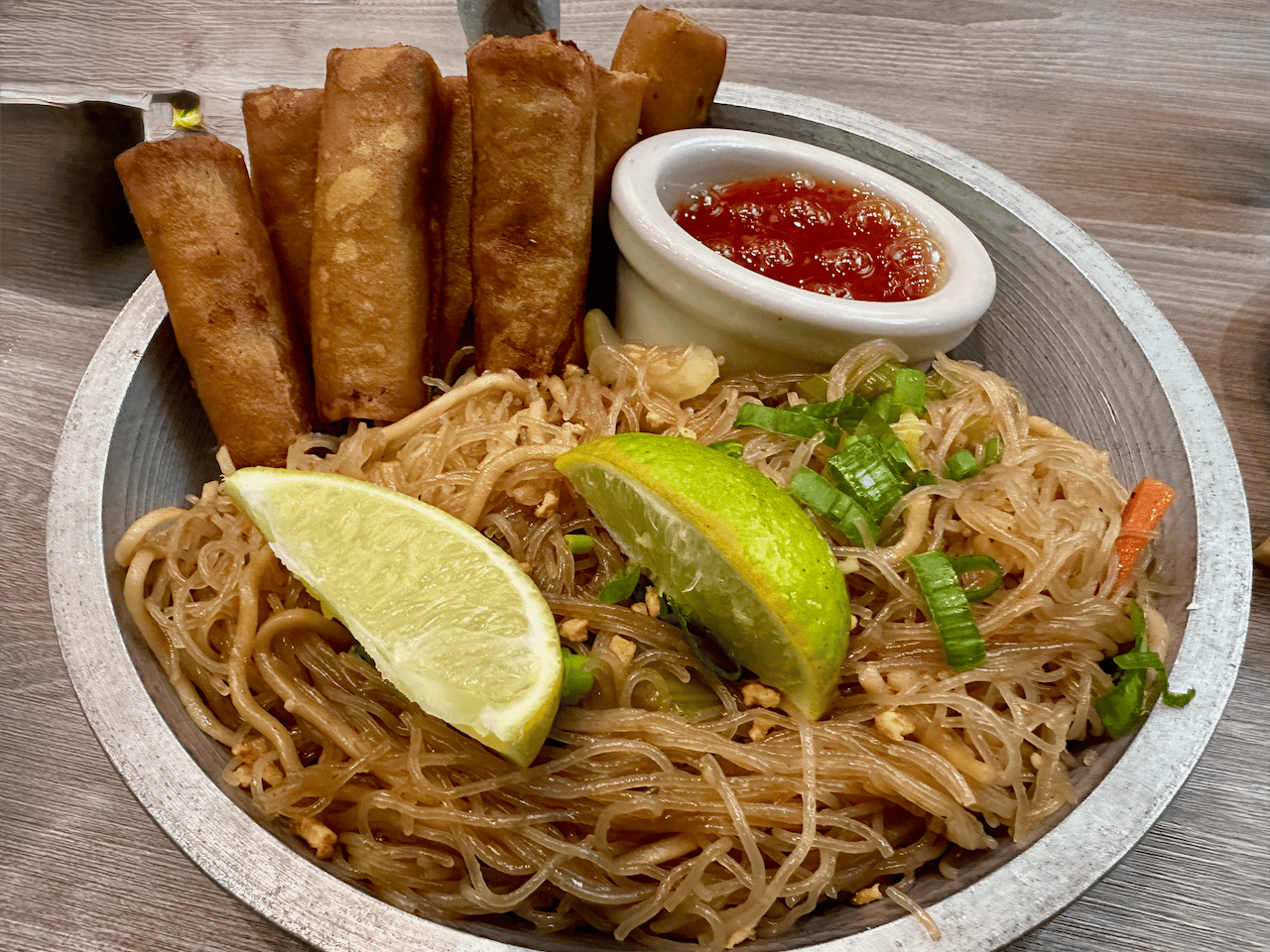
30 December 2024: Because she loves noodles so much, I ordered meat and vegetable pansit for my Kim. Pansit (also spelled pancit) is a stir-fried noodle dish that consists of meat and vegetables. It’s a rather simple dish that is said to symbolize a long and happy life because it is usually served on birthdays or special occasions (such as dining with my bride). Somewhat similar to Chinese lo mein, pansit is made with wheat flour noodles while lo mein is made with egg noodles. Tambayan’s version is made with scallions, red peppers, carrots, lettuce and pork. It’s one of the best versions of stir-fried noodles we’ve ever had. Even better than the meat and vegetable pansit is the pansit with lumpia (pictured above). In addition to a generous bowl of pansit, seven lumpia grace a bountiful plate. It’s my Kim’s new favorite Asian dish.
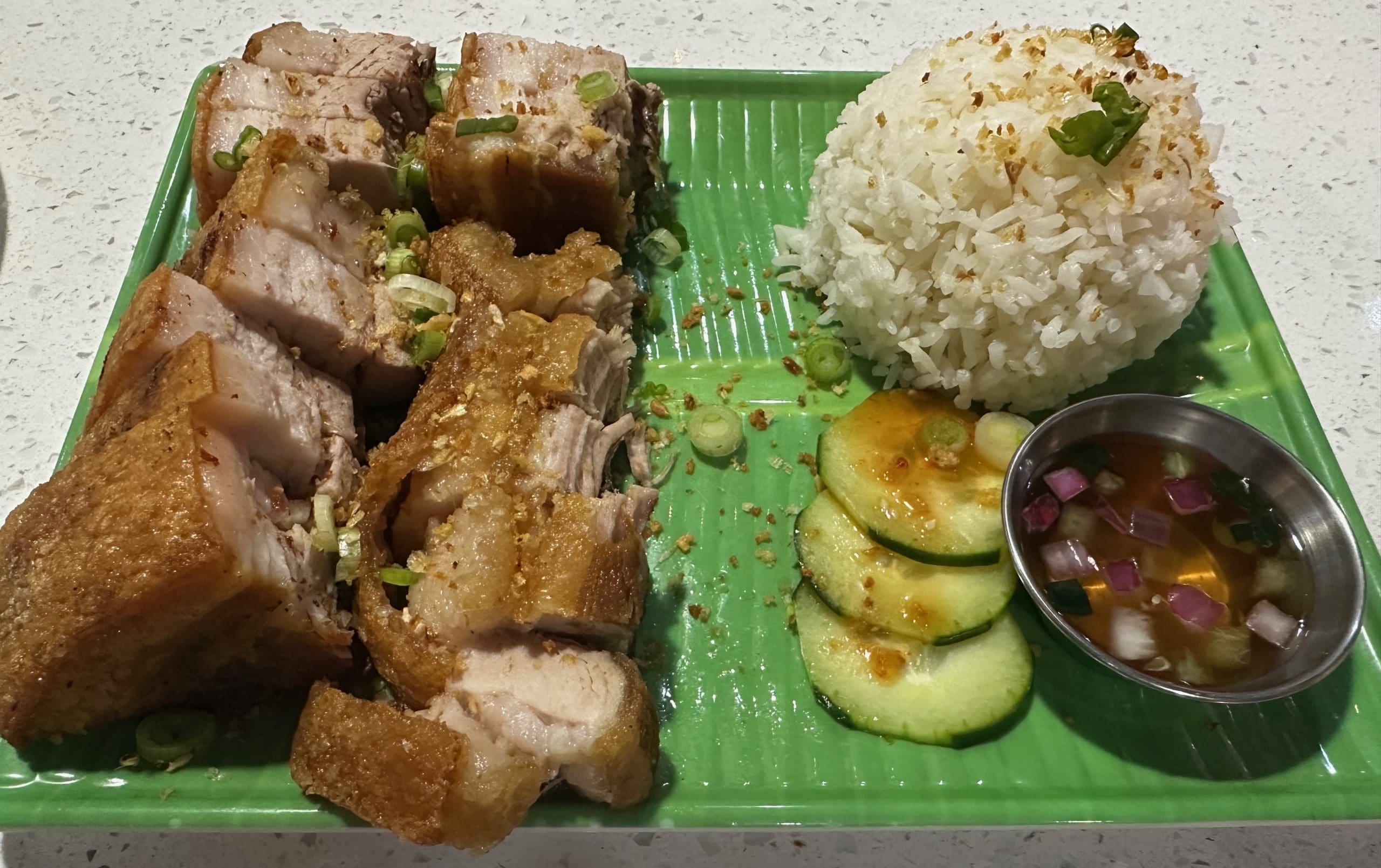
4 January 2025: Another dish that sounds as if it may have originated in Hawaii is the lechon kawali plate. For me, it’s a dish reminiscent of chicharrones. That makes sense because it’s slabs of pork deep-fried in a pan or wok (kawali). Lechon kawali is seasoned before being prepared and is accompanied by rice and a vinegary sauce. New Mexicans who might wish chicharrones were larger would love lechon, one of the most popular Filipino entrees. In The Philippines, it is said that if you’re served lechon, you’re seen as a valued guest. Tambayan must really value all its guests.
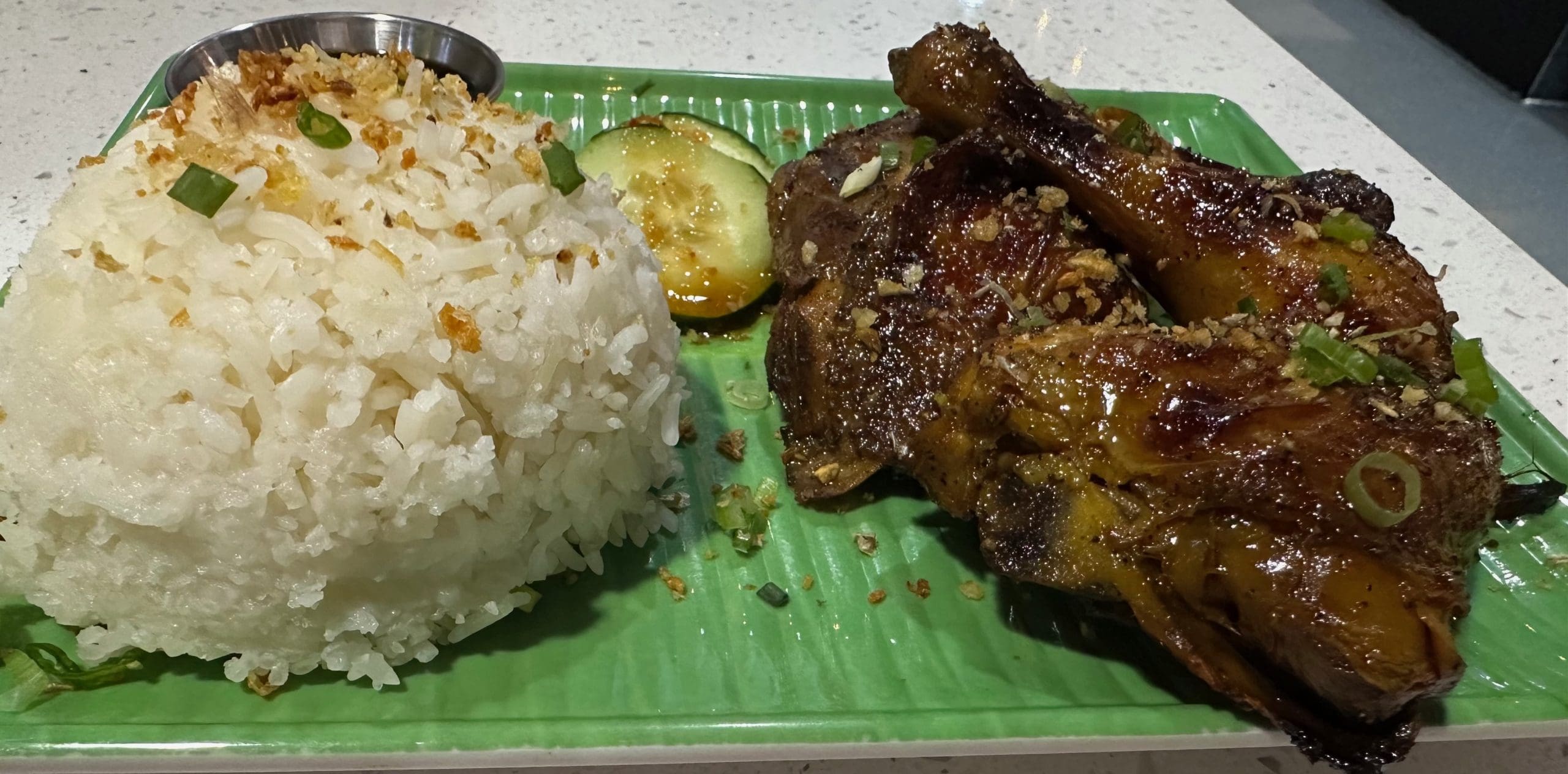
4 January 2025: Though I’m one of the world’s worst gift-givers (invariably buying my Kim something she already has or doesn’t want), I’m great at recommending foods she will love. Not that it’s much of a challenge considering just how good every item on the Tambayan menu is. It also helps me to know how much my Kim loves chicken. Tambayan’s chicken inasal was just what the doctor ordered. Chicken insanal is basically chicken legs and thighs marinated with lemongrass so that the skin is crispy and the meat replete with juicy flavor. Garlic, ginger and lemon permeate deep into the meat which is served with rice and a vinegar-based sauce to add extra tang. Kim loved the inasal so much she declared Filipino cuisine even better than Vietnamese, her previous favorite.
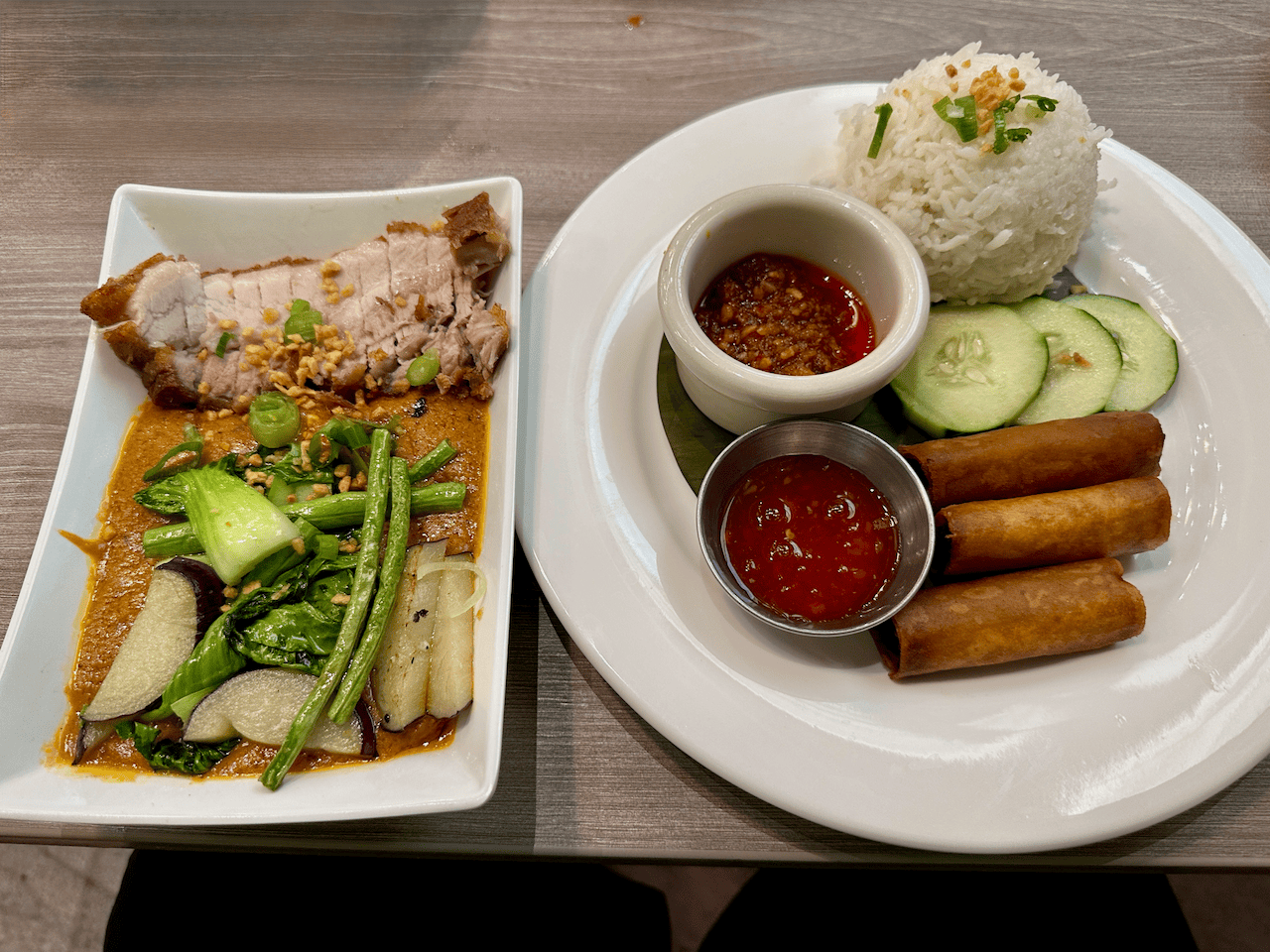
26 July 2026: One of my favorite aspects of dining at a Filipino restaurant is their intrepidity in using ingredients the American palate may find distasteful (or disgusting). Kim’s Filipino nurse in Tempe told me I must have been Filipino in a previous life because “I’m the only white boy who likes durian, offal, oxtail, etc.). What a great compliment. In that vein, my internal debate was whether to have pork isaw (grilled pork intestine skewer) or crispy kare-kare (deep-fried pork belly in peanut sauce with shrimp paste, eggplant, long beans and bok choy. Kare-kare had more of the things I love so this time my decision was easy.
Kare-kare comes from the word “kari” which means curry. More often than not, it’s an oxtail stew in a thick peanut sauce. Crispy pork belly isn’t quite as good as oxtail, but I’d never kick it off my table. In fact, it’s going to be dificult to resist ordering it during our next visit to Tambayan. Unlike most Thai and Vietnamese peanut sauces, Tambayan’s is savory. It doesn’t have the cloying flavor often found on peanut sauce that accompanies satay. The savory flavor is a revelation. As shown below, the kari-kari is accompanied by four lumpia, a lump of white rice and two sauces. The rice goes so well with the peanut sauce. Eggplant, long beans and bok choy round off what is one of the very best Asian dishes you’ll ever have.
Future visits to Phoenix will perpetually include at least one meal at Tambayan which is at the pinnacle of restaurants in our estimation.
Tambayan Filipino Food
1832 West Broadway Road #111,
Mesa, Arizona
(623) 502-1595
Website | Facebook Page
LATEST VISIT: 28 July 2026
1st VISIT: 30 December 2024
# OF VISITS: 3
RATING: Outstanding–A stand-out; delivers a memorable dining experience through a harmonious blend of exceptional food, attentive service, and consistent quality
COST: $$$ – $$$$
BEST BET: Pansit, Sizzling Sissig, Pork Barbecue Skewers, Lumpia, Halo Halo Special, Lychee with Boba, Chicken Inasal, Lechon Kawali, Kare-Kare, Sago’t Gulaman
REVIEW #1443
One thought on “Tambayan Filipino Food – Mesa, Arizona”