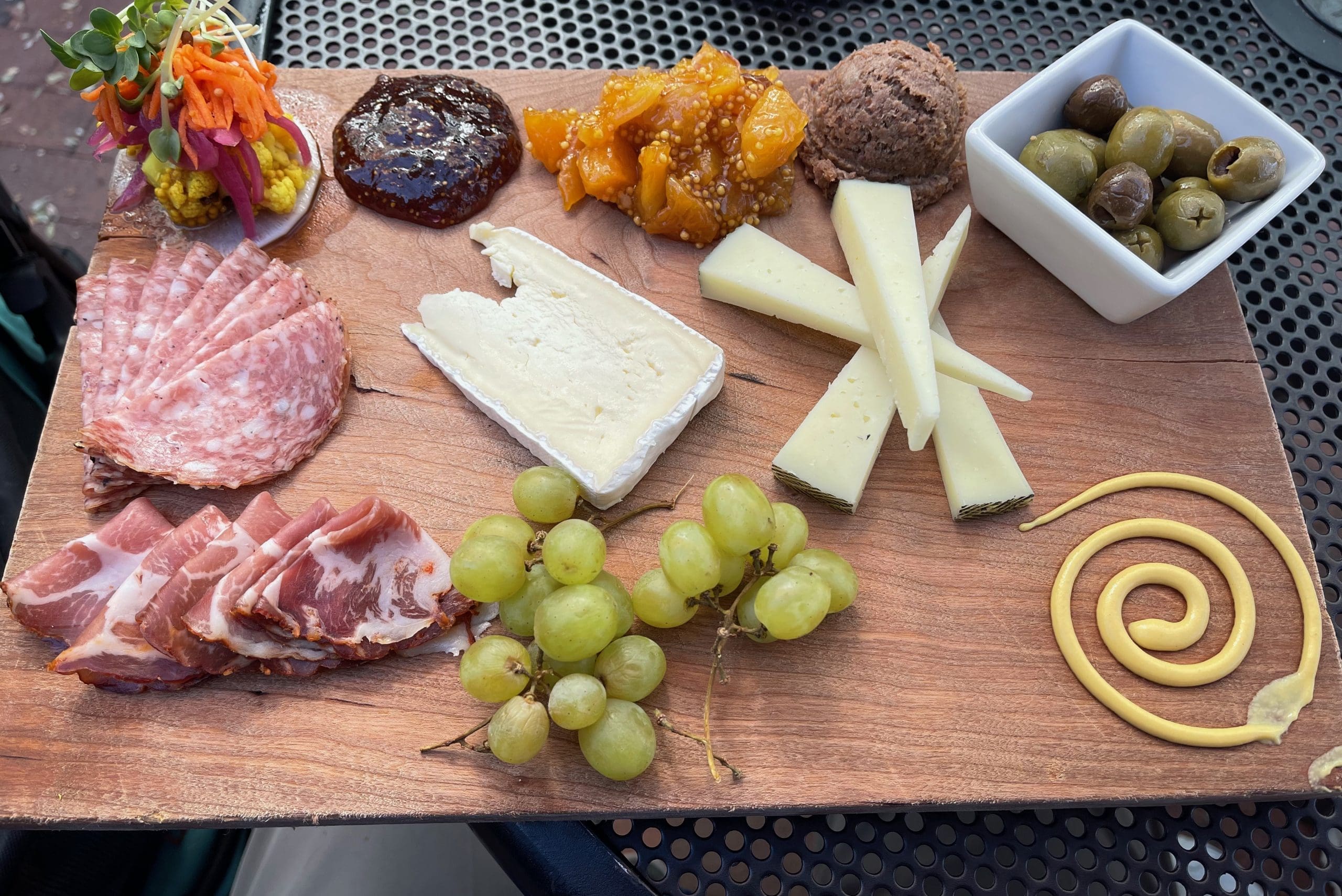
Salt and Board – Albuquerque, New Mexico
“Five years ago, everyone was making beer in their bathtubs, and now everyone’s making charcuterie in their garage!” ~Brian Malarkey, Chef When my friend Carlos, a punctilious polyglot conversant in four languages, asked what my Kim and I ate over the weekend, my poorly-pronounced beginner’s French response was “une assisette de charcuterie et de fromages.” “Oh, you had cold-cuts and cheese,” he responded. “No, we had charcuterie!” I emphasized, slowly pronouncing each syllable of the term: “char-cu-te-rie.” “Only the French,” he retorted “could convince you a plate of bologna and slices of cheese is a gourmet dish worth thirty dollars.”…