There wasn’t much ethnic or cultural diversity in Peñasco where I grew up. Our little village was overwhelmingly (probably 98% if not more) Hispanic. One of the only other ethnic groups in the area were non-Hispanic white residents, most of whom worked either as teachers or for the forest services. We also had a couple of families (Sahds and Owens) of Lebanese descent. Everyone referred to them as “Los Arabes” because Arabic is the principle language in Lebanon. Los Arabes were (and still are) beloved in Peñasco. They have been the heart of commerce for generations.
Other than through books, I hadn’t been exposed to a lot of cuisine or culture that wasn’t Hispanic. The Air Force changed all of that by sending me to Massachusetts, a veritable melting pot of ethnicity. Like a sponge soaking up water, I took in every detail of every new experience. Perhaps more defining of my character, I tried every new food I could find…and virtually everything was new. The foods of the mysterious subcontinent of India and of Southeast Asia were among my favorites, but it was Italian food that captured my heart most. My only exposure to most Italian food had been pizza (if you can call Chef Boyardee’s pizza), spaghetti and lasagna. In Boston’s North End, I discovered the many possibiities of “red gravy.”
You can imagine my naivete at learning about red gravy. Gravy had always been brown or white and used on mashed potatoes or biscuits. This “red gravy” on the East Coast was used on Italian dishes. You’ve likely surmised that red gravy is a slow-simmered, tomato-based sauce deeply rooted in Italian-American and New Orleans Creole-Italian cooking. While purists argue red gravy is a sauce rather than a traditional flour-thickened gravy, Italian-American immigrants historically called it “gravy” (or “Sunday gravy”) because of its rich, meat-infused heft. Red gravy is also called “red sauce,” a broad term that most commonly refers to a savory, tomato-based sauce used for pasta, pizza, and baked dishes.
For the most part, we called our favorite Italian restaurants “red sauce restaurants.” It’s a term my friend Joe Guzzardi, the beloved founder and former owner of Joe’s Pasta House in Rio Rancho used to describe his eponymous restaurant. The Boston area had its share and more of Northern Italian restaurants which are characterized by its reliance on butter, cream, lard, and cheeses rather than olive oil, and a preference for rice and cornmeal over dried pasta, but the red sauce restaurants were our favorites. We frequented ristorantes with their elegant, multi-course menus featuring refined or contemporary Italian cuisine; trattorias with their hearty, traditional local recipes handed down through generations; and mostly osterias with short, simple menus centered around local or regional specialties.
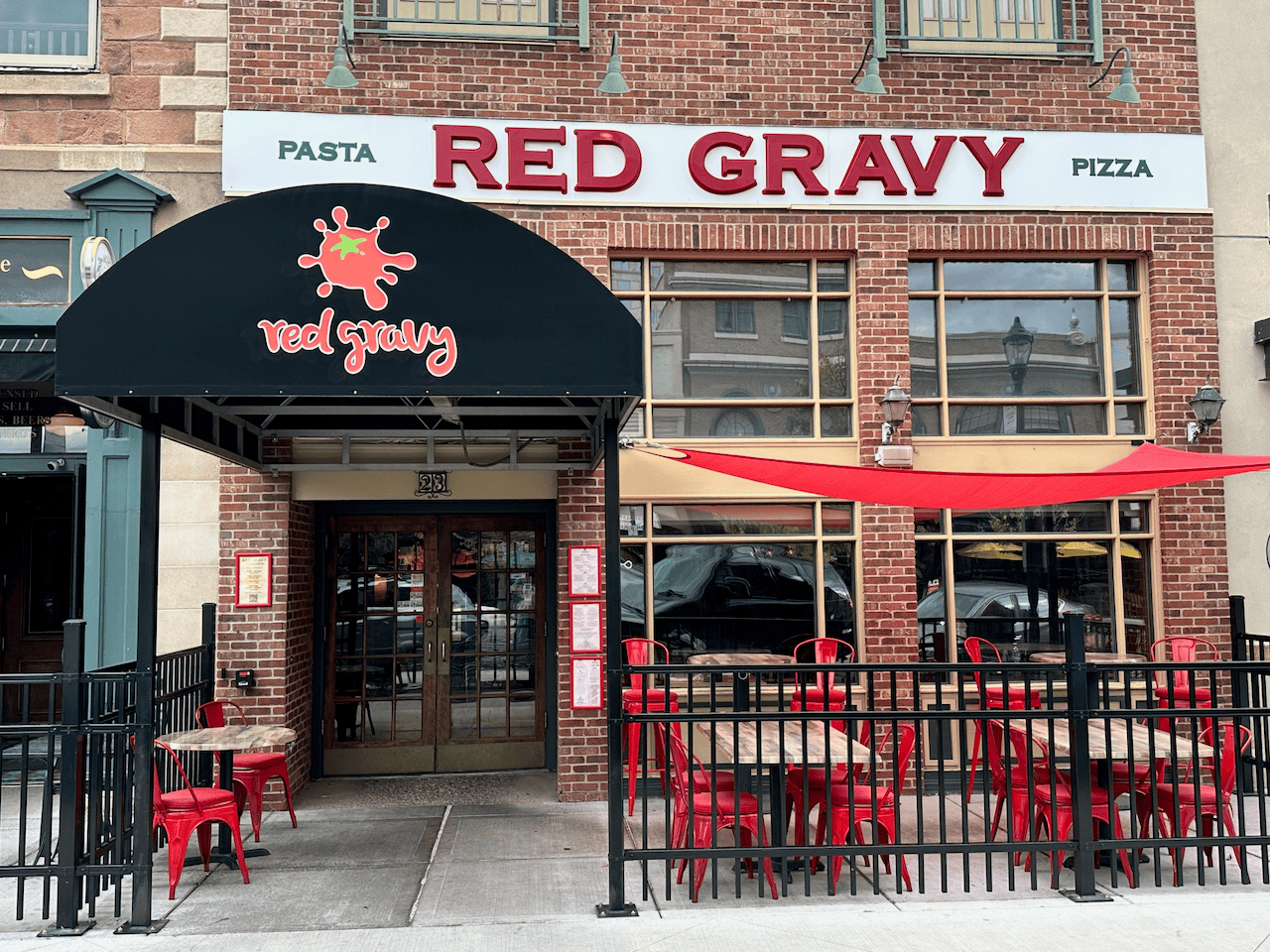
There was no doubt our visit to Colorado Springs would include a meal at Red Gravy and not solely because the name flooded me with memories of my time in Massachusetts. For one thing, Red Gravy brings authentic Italian-American recipes and traditions from St. Louis’s historic “The Hill” neighborhood to Colorado Springs. I had the great fortune to have dined at a couple fantastic Italian restaurants on The Hill and found them comparable in quality to those on Boston’s North End. Red Sauce owner and chef Eric Brenner grew up in St. Louis, trained in its classic Italian kitchens, and won a Food Network competition in 2014 before opening Red Sauce in January 2016.
The Food Network competition Chef Brenner won was Guy’s Grocery Games, a high-stakes cooking competition where four chefs race through a fully functioning supermarket known as “Flavortown Market” to cook gourmet meals. This culinary competition is hosted by Food Network personality Guy Fieri who bears more than a passing resemblance to Chef Brenner. Brenner beat out a three other chefs from across the country and won an $18,000 grand prize. He competed in three elimination challenges, preparing dishes such as French toast without bread (he substituted with a frozen English muffin) and a steak dinner prepared with only canned goods. Perhaps the crowning achievement was wowing judges with his grilled cheese coupled with tomato bisque. Chef Brenner took his $18,000 grand prize and relocated to Colorado Springs.
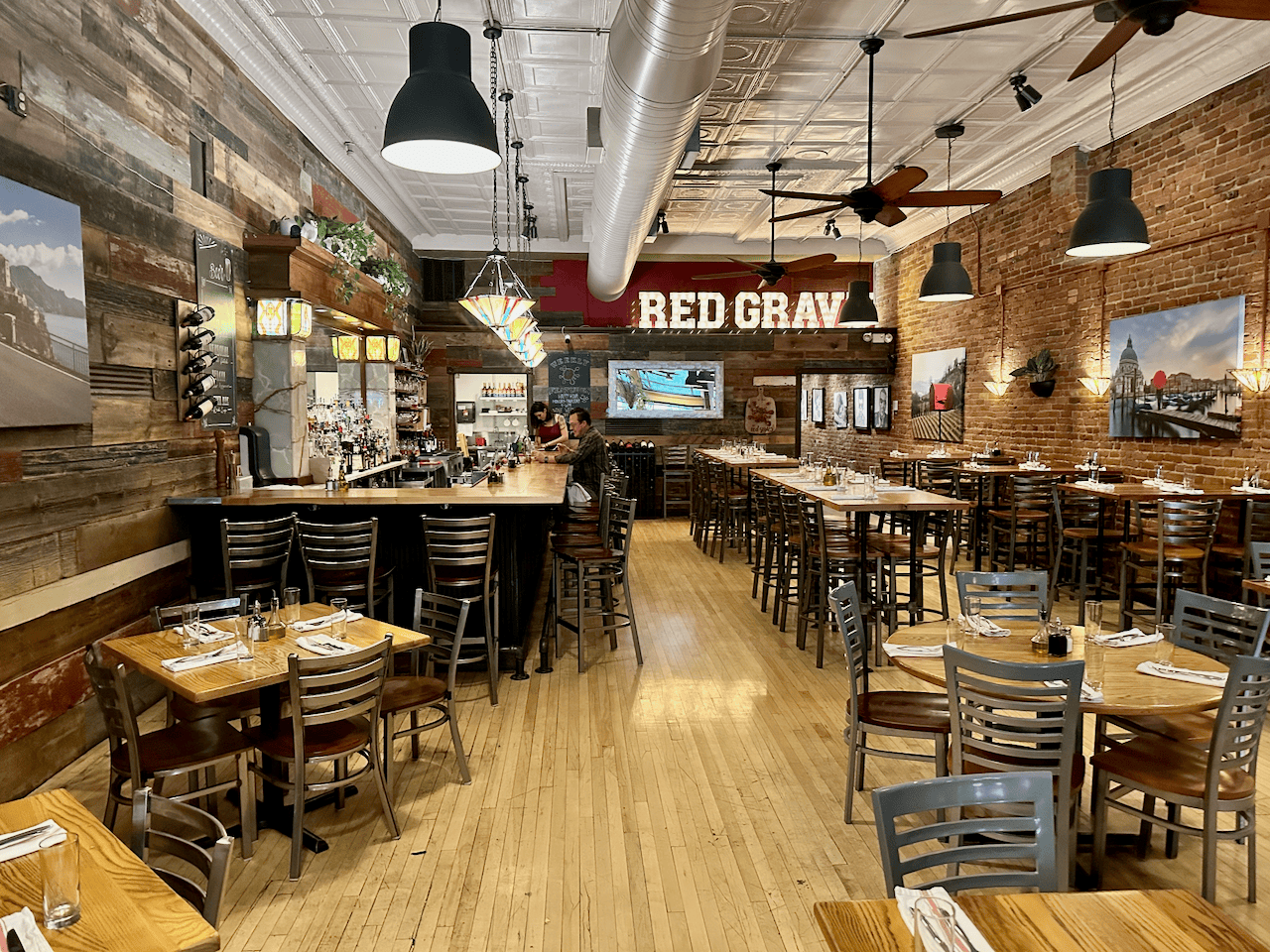
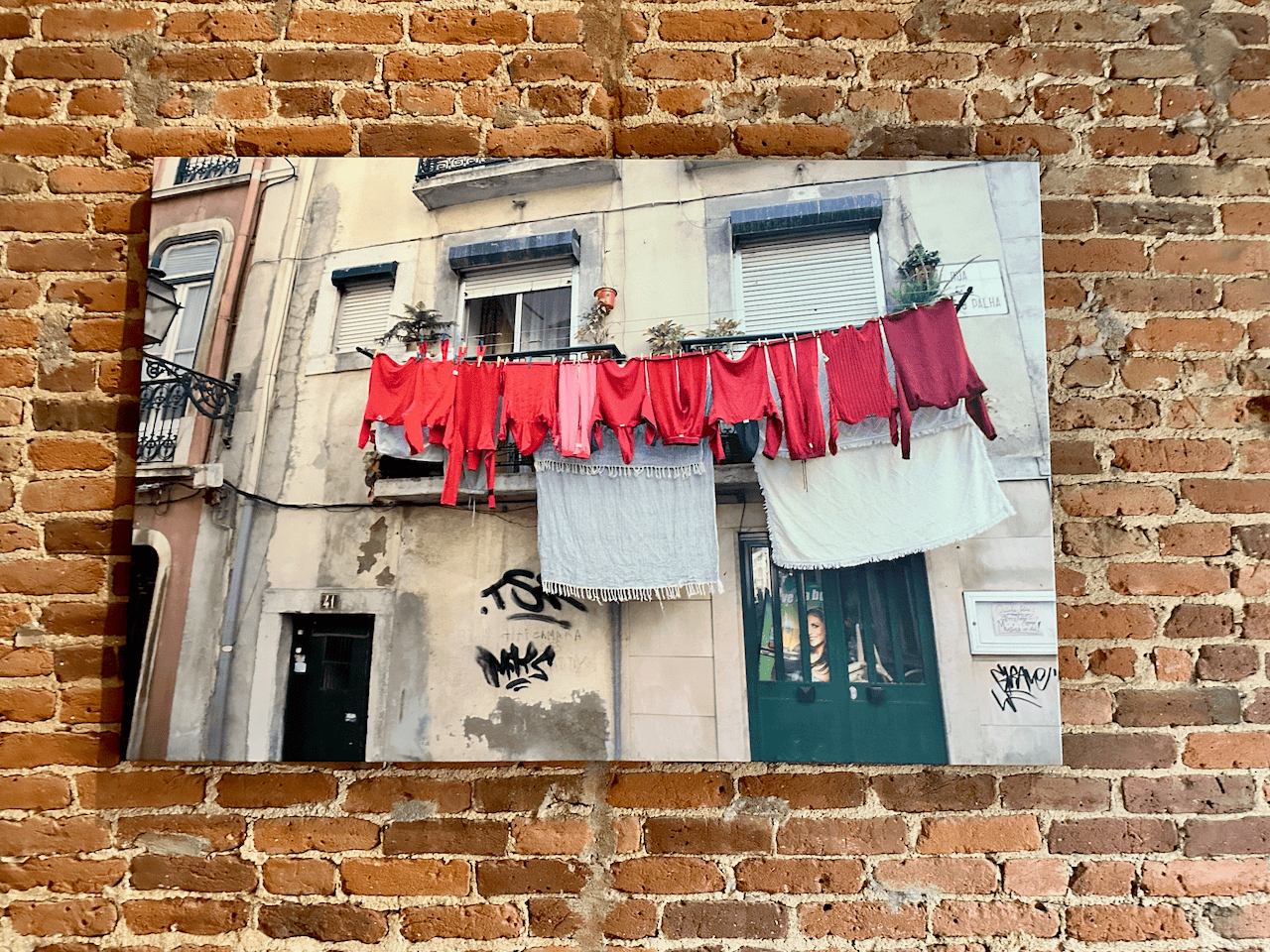
Red Gravy is replete with personality. Large scale framed photographs on red brick walls are mostly monochromatic save for one element of those photographs being gravy red. That red element may remind film buffs of the Donald Sutherland and Julie Christie classic Don’t Look Now. The building features a lively historic brick- and wood-lined interior, high ceilings, exposed brick walls, and a distinctive tin-plate ceiling. Chef-owner Brenner purchased the building (circa 1916) housing the restaurant to stabilize its downtown roots, with plans to expand the second floor into a culinary learning center and event space. On-site spaces include the main dining room, a small outdoor patio, and an intimate back private event space known as the “Blue Room”
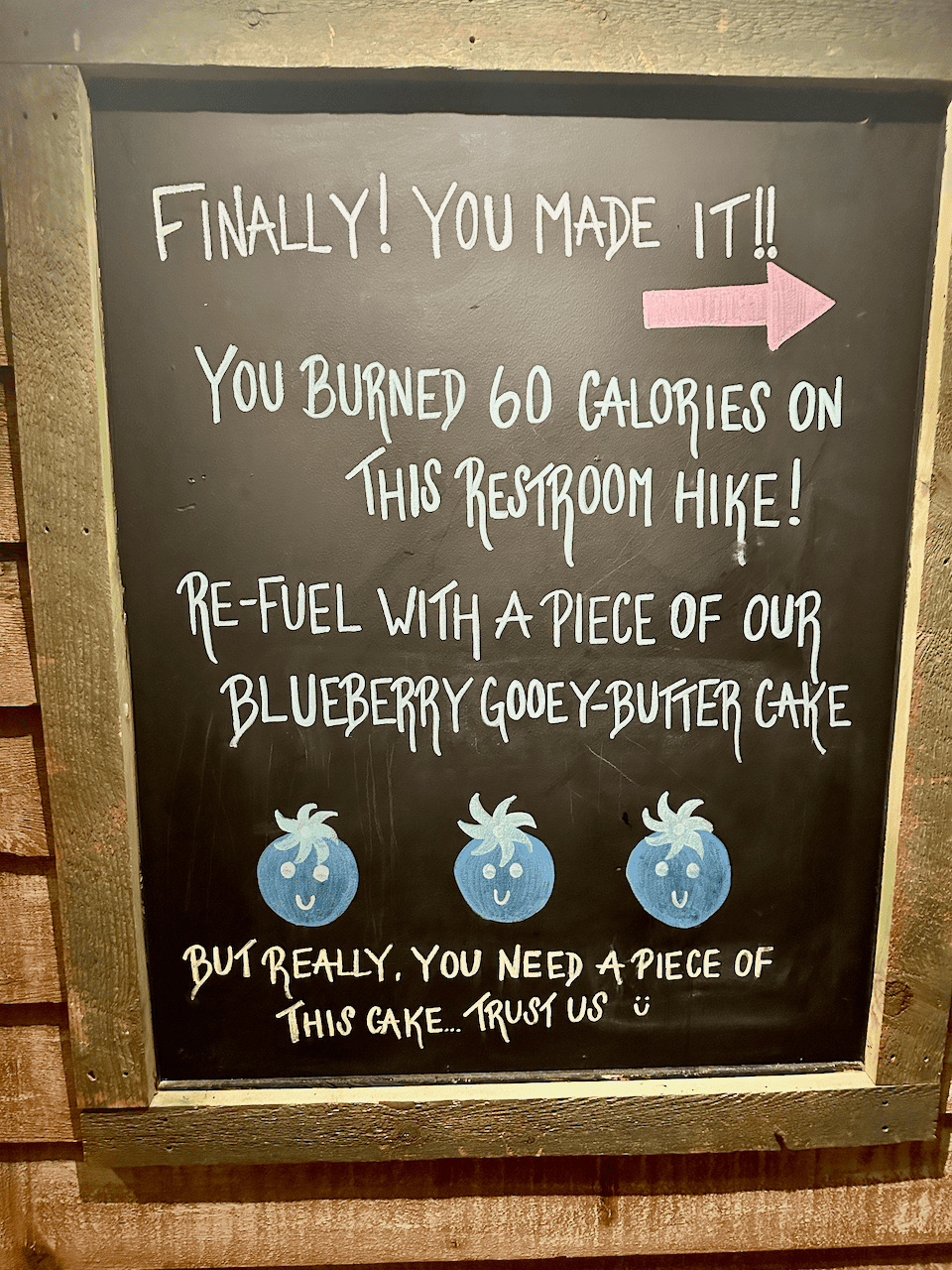
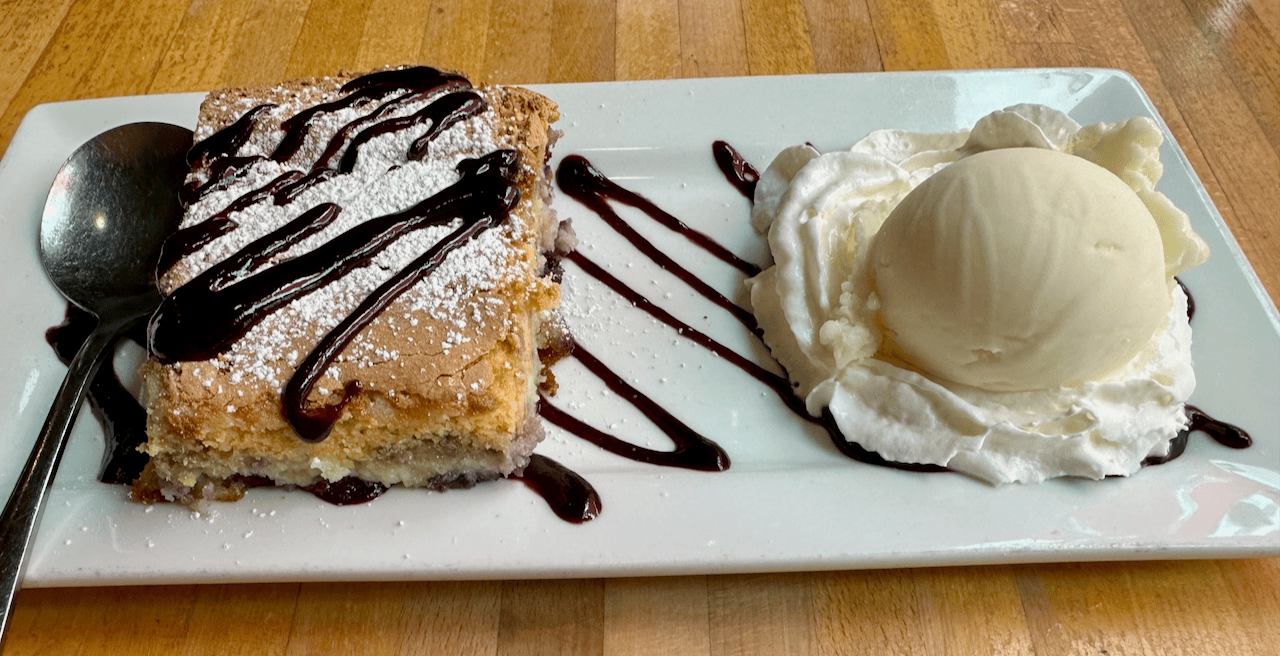
Perhaps indicative of the chef’s sense of humor, you’ll espy signage on the walls leading to the restroom at the very back of the restaurant. One warns you that there are 60 steps remaining until you reach your destination (I counted only 24 at my usual 30-inches per step). Another congratulates you for finally making it and in the process burning 60 calories. That sign urges you to refuel with a piece of the blueberry gooey-butter cake. That’s advice you should heed!
Before we delve into the menu, let me share a little about St. Louis style Italian cuisine. St. Louis-style Italian food is a highly distinct, localized regional cuisine heavily shaped by the historic Italian immigrant neighborhood known as The Hill. Unlike traditional Italian cuisine, the St. Louis style features a unique roster of comforting, fusion-esque local specialties, sweet red sauces, and a iconic local processed cheese. The pillars of St. Louis style Italian food include toasted ravioli which is considered THE definitive St. Louis appetizer. These are actually breaded, deep-fried beef or cheese ravioli dusted with parmesan cheese and served with a side of warm marinara sauce.
Another pillar is Provel Cheese, a white processed cheese made from a blend of cheddar, Swiss, and provolone. Provel cheese has a low melting point, resulting in a gooey, slightly smoky flavor profile that is foundational to local dishes but starkly distinct from traditional mozzarella. There’s also St. Louis-Style Thin Crust Pizza featuring a signature cracker-thin crust topped with oregano and the iconic St. Louis provel cheese. There’s also Sweet Red Sauce; many local red sauces incline toward a sweeter profile. I actually tried getting assigned to Scott Air Force Base just to be closer to The Hill and all that fabulous St. Louis style Italian food.
Red Gravy’s dinner/lunch menu is almost a compendium of all the Italian dishes you could want. First on the menu is an Appetizers, Soups and Salads category listing eight starters, four salads and only one soup. That one soup, however, is Chef Brenner’s award-winning tomato bisque. Seven items are listed as “Entrees,” though there’s a significantly larger (19 items) “Pastas” menu section. Pizza, 10-inch St. Louis style thin crust with Red Gravy’s signature sauce, provel, mozzarella and parmesan cheeses, oregano is next on the menu. There are six custom pizzas on this section of the menu, but a list of fifteen toppings lets you create your own. Because portion size is substantial, diners with avian appetites should consider the “Red Gravy Mix” which lets you choose any half pasta and your choice of House Salad, Caesar Salad, or Cup of Soup. Seven items festoon the desserts section of the menu.
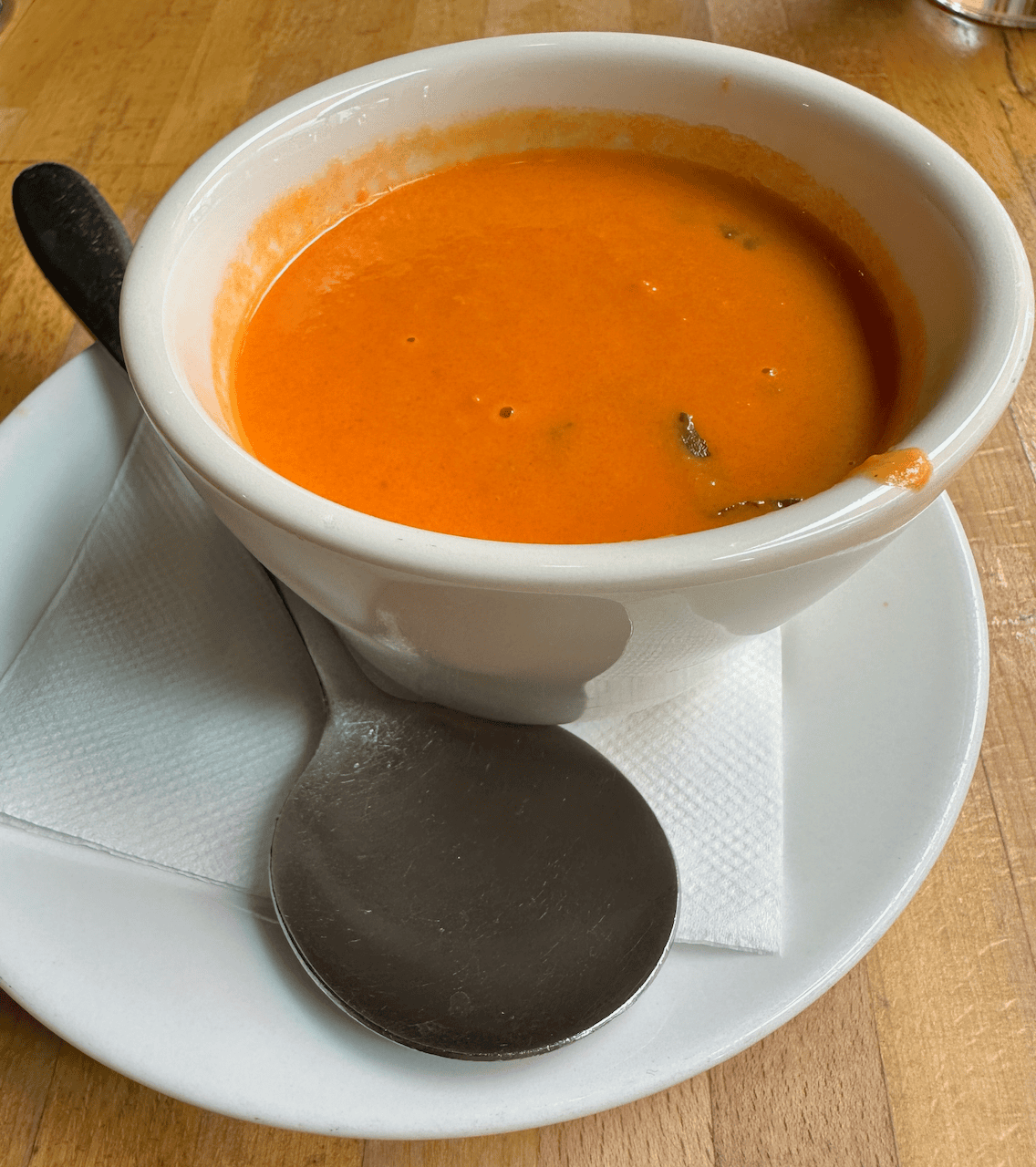
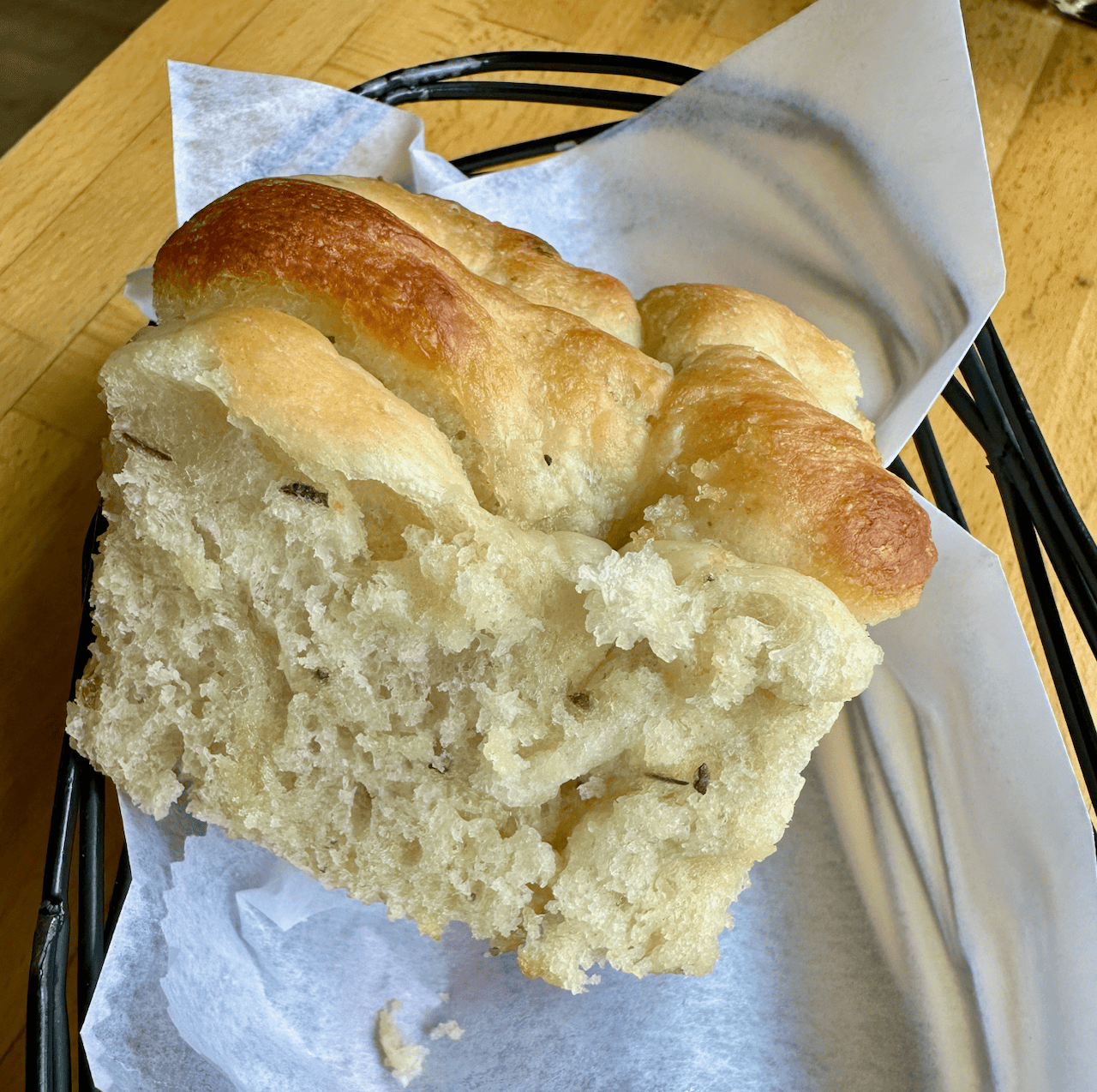
My Kim can never be accused of ordering more food than she can physically finish–even if she does usually share some of her bounty with me. For her, the Red Gravy Mix made the most sense. Opting for Chef Brenner’s tomato bisque (yes, the award winning soup from Guy’s Grocery Games) was a no-brainer. We’ve had tomato bisque by the barrelful and have enjoyed almost all of them, but none made a significant dent on our memories. That changed with this version. Chef Brenner’s tomato bisque combines deep, sweet-tart tomato flavor with a velvety, luxurious texture that sets it far (legions) apart from basic canned soup. It is simply outstanding and served at the perfect temperature. My Kim normally asks for crackers with which to desecrate (my opinion) soup. Thankfully our server didn’t provide it. Instead, my bride dunked the complimentary focaccia bread into the bisque. That was genius.
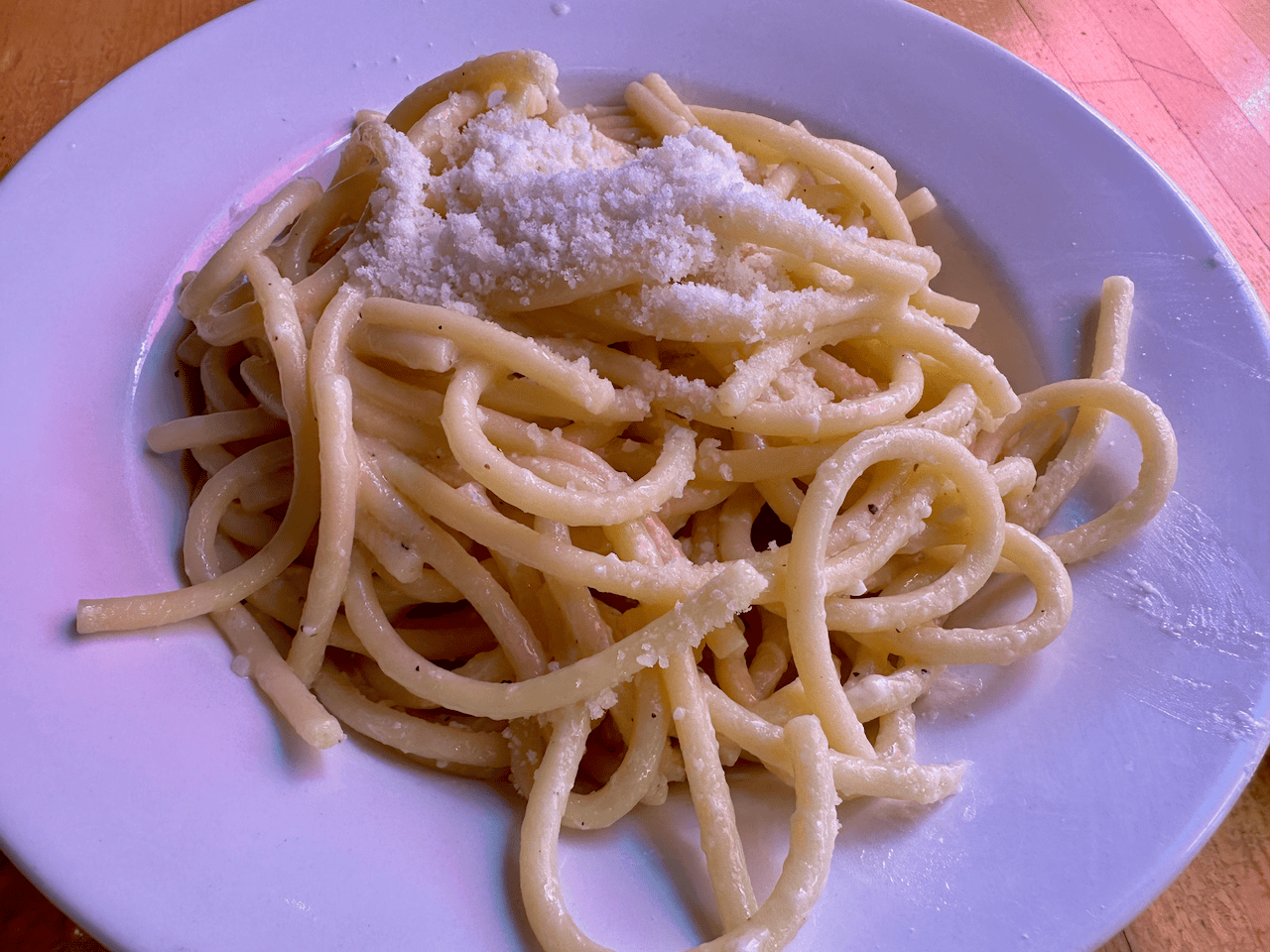
For her entree, my Kim selected cacio e pepe (bucatini, butter, Pecorino Romano, black pepper ), a dish with its genesis in the Roman countryside and the Apennine Mountains, where rural shepherds invented the dish during the seasonal migration of their flocks. A great cacio e pepe relies on the precise emulsion of finely grated Pecorino Romano, freshly cracked black pepper, and starchy pasta water to create a smooth, creamy sauce without any clumping. Though it’s less traditional, Chef Brenner creates his cacio e pepe with bucatini, a thick, hollow long noodle. The center hole captures extra peppery sauce with every bite. That’s precisely what you want from pasta.
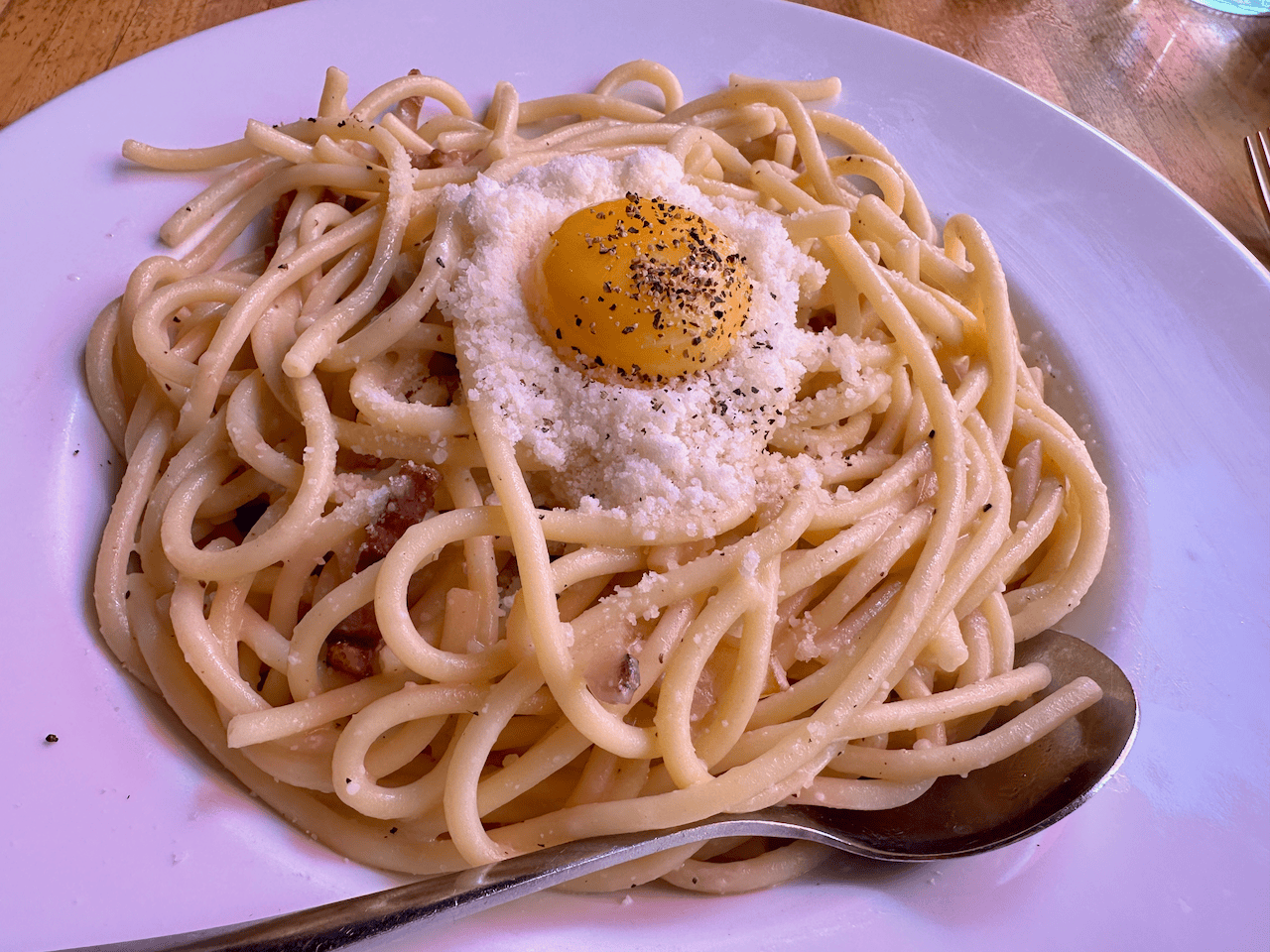
Bucatini is also the pasta Red Gravy uses for its Roman carbonara (guanciale, black pepper, Pecorino Romano, butter, egg yolk). According to the website No Regret Spaghetti, “authentic Roman carbonara relies on just four core ingredients—guanciale, Pecorino Romano, fresh eggs, and black pepper—combined with pasta water to create a creamy emulsion without a single drop of cream.” The site calls for eggs (just yolks) being whisked together in a bowl. Red Gravy’s version included an entire egg yolk atop the bucatini. It may not have been entirely authentic, but it was quite delicious. It could have used more guanciale, but a pound wouldn’t have been enough for me.
Remember the blueberry gooey buttercake (blueberry sauce, lemon sorbetto) you were advised to order to refuel after the arduous 60-calorie-burning hike to the bathroom? I did and even considered taking another hike just so I could order another one. What appealed most to me is the tartness of both the blueberry sauce and the lemon sorbetto. The sorbetto, in particular, was so tart it pursed my lips in a most delightful manner. The blueberry sauce was also tangy and zesty. As with all great desserts, this St. Louis specialty came and went all too quickly.
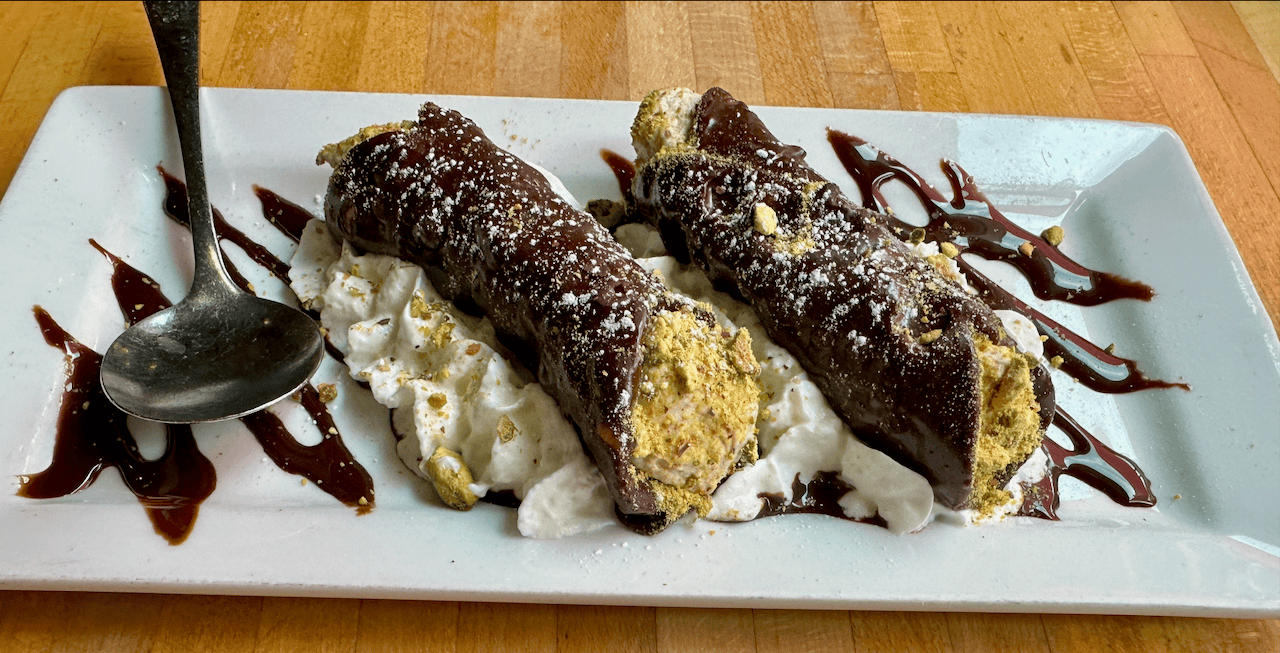
My Kim’s dessert choice as it usually is at Italian eateries was cannoli. Red Gravy’s cannoli wa prefaced by “Sicilian.” So just what is Sicilian cannoli? According to the menu, Sicilian cannoli is made with chocolate-covered pastry shells and filled with a cinammon and ricotta filling then dusted with pistachios. The bigges surprise with this dessert was the cinnamon and ricotta filling. The pairing of cinnamon and chocolate gives the filling a warm, cozy, and deeply rich flavor with a comforting, spiced notes. When these two flavors meld together, the spice behaves like a culinary amplifier for the cocoa. Bravo Red Gravy!
Lest I be remiss, service at Red Gravy is exemplary. During our late (1:30PM) lunch there were only two tables taking care of guests scattered throughout the yawning space. Both servers were friendly and cheerful, bringing the element of fun to our dining experience. To say we were treated like welcome guests is an understatement.
When I told my dear friend Becky Mercuri of our visit to Red Gravy, she told me the name evokes memories of Sunday gatherings where family members come together around a large, slow-simmered pot of tomato-and-meat sauce that cooks for hours. We didn’t have red gravy meals in Peñasco, but I know where we’ll return to have another.
Red Gravy
23 South Tejon Street
Colorado Springs, Colorado
719-635-7661
Website | Facebook Page
LATEST VISIT: 1 October 2026
# OF VISITS: 1
RATING: N/R
COST: $$$ – $$$$
BEST BET: Sicilian Cannoli, Roman Carbonara, Cacio E Pepe, Blueberry Gooey Cake with Lemon Sorbetto, Foccacia
REVIEW #1552