My friend and frequent dining companion Bill Resnik has plied his project management skills throughout the world. His travels afforded him the opportunity to enjoy a wide variety of cuisine and wine. You might think his culinary memories would be reserved for foods of the fine dining category. You would be wrong. One of the foods he frequently waxes poetic about is a simple egg salad sandwich that came from a vending machine at a convenience store in Japan. It made such an impression on him that he obsessed about figuring out how to duplicate that sandwich. With his engineering bent, that meant lots of iterative testing of ingredient combinations until he had created a more than passable simile of the egg salad sandwich that captured his affections. He’s not the only bon vivant to fall in love with a Japanese egg salad sandwich.
During a 2015 episode of CNN’s Parts Unknown, Anthony Bourdain and his crew visited Okinawa, the southernmost prefecture of Japan. Bourdain raved about a Japanese convenience store egg salad sandwich—known as a tamago sando—calling them “pillows of love” and describing them as “delicious, unnatural, and inexplicably addictive.” What’s so special about an egg salad sandwich? First, it’s made with shokupan (Japanese milk bread), a crust-free canvas. Japanese milk bread is is fluffy, pillow-soft and slightly sweet. Second, the egg salad itself is a rich, creamy mixture of mashed egg yolks and finely chopped egg whites bound with Kewpie mayonnaise (which uses egg yolks and rice vinegar for a distinct, tangy umami flavor).
You can find fresh or refrigerated egg salad sandwiches at convenience store (konbini in Japanese) throughout Japan. Unlike American convenience stores which primarily serve as quick stop shops focused on bulk snacks, fountain drinks, tobacco products and maybe desiccated hot dogs, Japanese convenience stores are multi-function neighborhood hubs that offer high-quality, fresh meals such as the egg salad sandwich. These delicious sandwiches typically cost between ¥245 and ¥350, which equates to roughly $1.75 to $2.25 USD depending on the exchange rate. Egg salad sandwiches (tamago sando) are eaten for breakfast in Japan, though they are popular as a grab-and-go meal at any time of day.
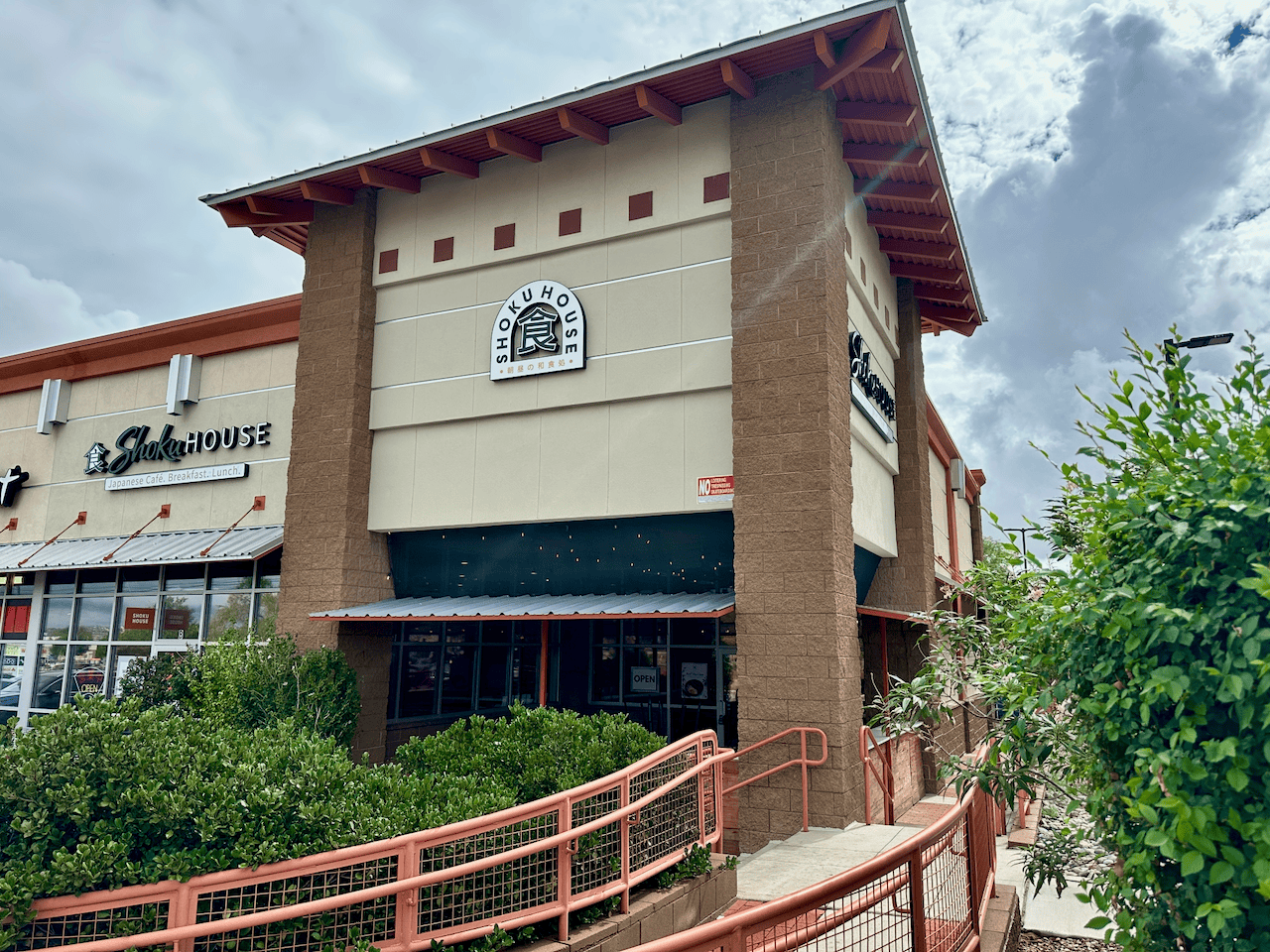
The reason Bourdain loved the egg salad sandwich in Japan was because it epitomized his appreciation for Japan’s obsession with perfection and elevating simple, everyday foods into an art form. If that sounds like your idea of what dining should be, you don’t have to visit the Land of the Rising Sun. You can now experience a Japan-inspired egg salad sandwich (albeit for $15) as well as other fabulous Japanese breakfast and brunch dishes at Shoku House on Albuquerque’s burgeoning west side. As you’ve probably surmised “Shoku” is a diminutive of Shokupan (Japanese milk bread). The kanji character (食) that makes up Shoku House’s logo translates to “food, meal, or to eat.”
Shoku House is the brainchild of entrepreneur and restaurant impresario Dipo Alam, an indefatigable whirling dervish who’s created such beloved Duke City concepts as Paleta Bar, Spring Rollin’, Pho Kup, Sa Thai and other purveyors of deliciousness across the metropolitan area. Somehow Dipo manages to circulate among his restaurant concepts. We’ve encountered him numerous times at Sa Thai and ran into him during our inaugural visit at Shoku House. Dipo is a percipient and affable guy who’s always looking out for new concepts that work well in the Albuquerque market. I joked with him that he’s got the Midas touch. Virtually every concept he’s introduced has been highly successful.
Shoku House is located in the McMahon Marketplace on Unser Blvd. in Albuquerque’s west side. Fret not, east-siders. Dipo plans on launching a second Shoku House, this one the Montano and Coors area. Among Shoku House’s neighbors in what is quickly becoming a flourishing gastronomic district are such popular eateries as ChocoGlitz & Cream, Slice & Dice, Royal Hyderabad, Fuego 505 Rotisserie and recent addition Ohana Hut. Throughout the Unser Blvd. corridor, new and relocated restaurants have discovered that the west side is replete with hungry and adventurous diners.
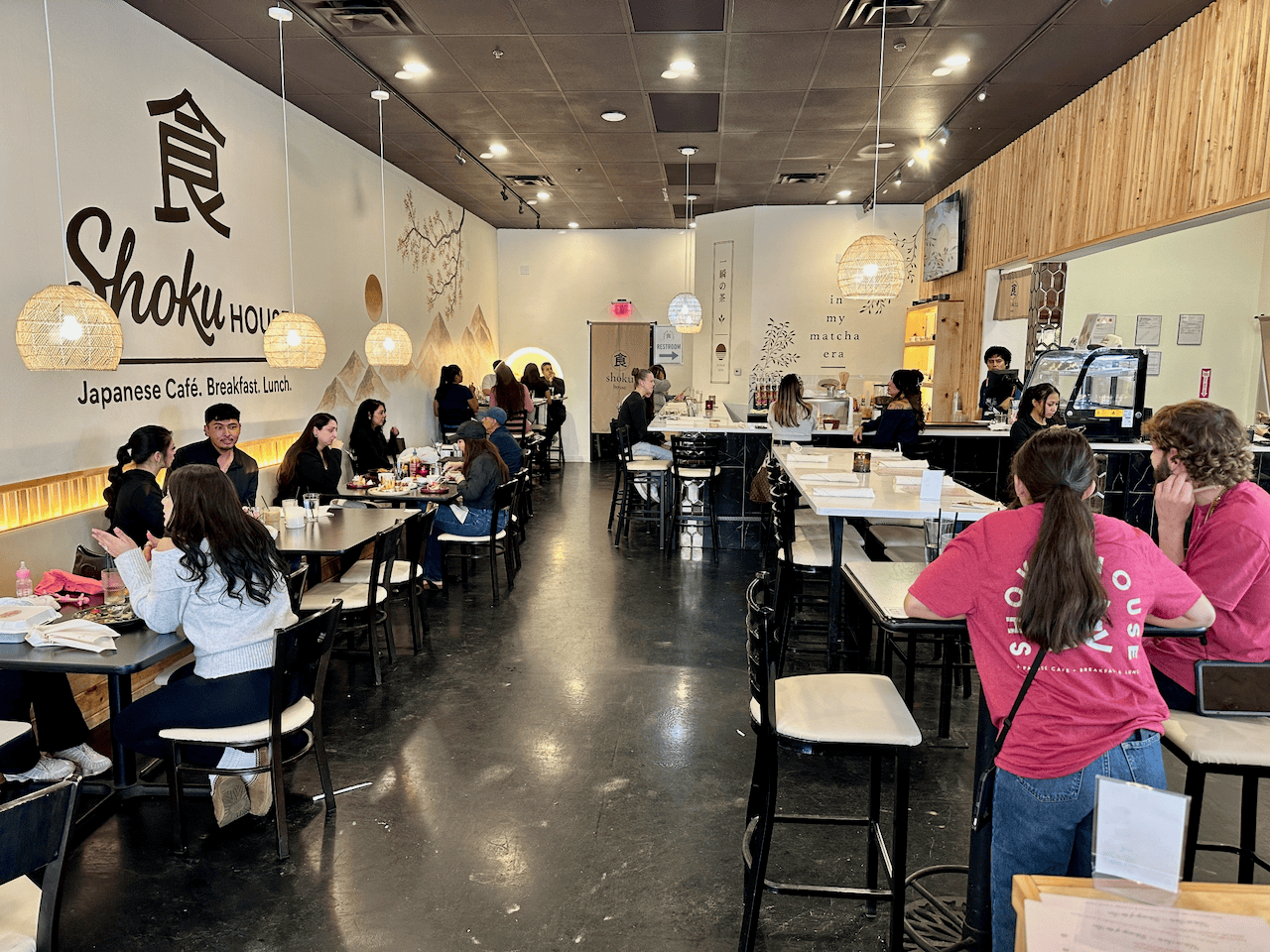
It’s not often the term “adventurous” is used to describe Duke City area diners, many of whom are of the “chain gang” (frequenting chains mostly or exclusively). That’s why it surprised me so much to learn that Shoku House has been packed since day one (August, 2026). On weekends, you can expect to wait in line up to 45-minutes just to get in the door. What gives? Shoku House is wholly unlike any dining concept in the metropolitan area. It gives me hope that many of the diners we espied during our inaugural visit were youthful and adventurous. They weren’t ordering the “usual suspects” either. Many tables showcased Japanese breakfast dishes heretofore unknown to Albuquerque. At 39, I was probably the most geriatrically advanced person on the premises.
The Japanese idea of breakfast is centered around the concepts of balance (a harmony of colors, aromas, textures, and tastes (sweet, salty, sour, bitter, and umami), nutrition, and harmony. Unlike the American gobble-and-go breakfast mentality, in Japan breakfast is viewed as a complete meal to fuel the body and mind for the day ahead. Rice (known as morning rice) is considered the “anchor” of breakfast. Many modern Japanese households and urban workers have embraced Western-style breakfasts such as thick fluffy Shokupan toast with butter or sweet bean paste (anko), eggs, cereal, or coffee.
Shoku House’s menu is absolutely spectacular, a blend of delicious Japanese offerings served in portions Americans expect. If you’re not familiar with the menu, ask your servers. Service is a tandem concept. You’ll be visited by a number of servers all eager to ensure you enjoy your dining experience. Nine appetizers, a melange of familiar and new, will get you started on a firm footing. Next on the menu is Shokupan sandos (soft Japanese milk bread paired with savory favorites). There are seven sandos on the menu, including the aforementioned egg salad sando. More intriguing for me was the menu section describing Japanese Soufflé pancakes (fluffy Japanese soufflé pancakes served with 100% maple syrup). They aren’t Hungry Jack pancakes you make at home. Next on the menu are five Benedicts (rich, savory brunch plates finished with poached eggs and hollandaise). The entrees (comforting Japanese-inspired plates for a satisfying meal) section of the menu includes some surprises such as loco moco curry. Throw caution to the wind. Order something new and different. You can’t go wrong with anything on the menu.
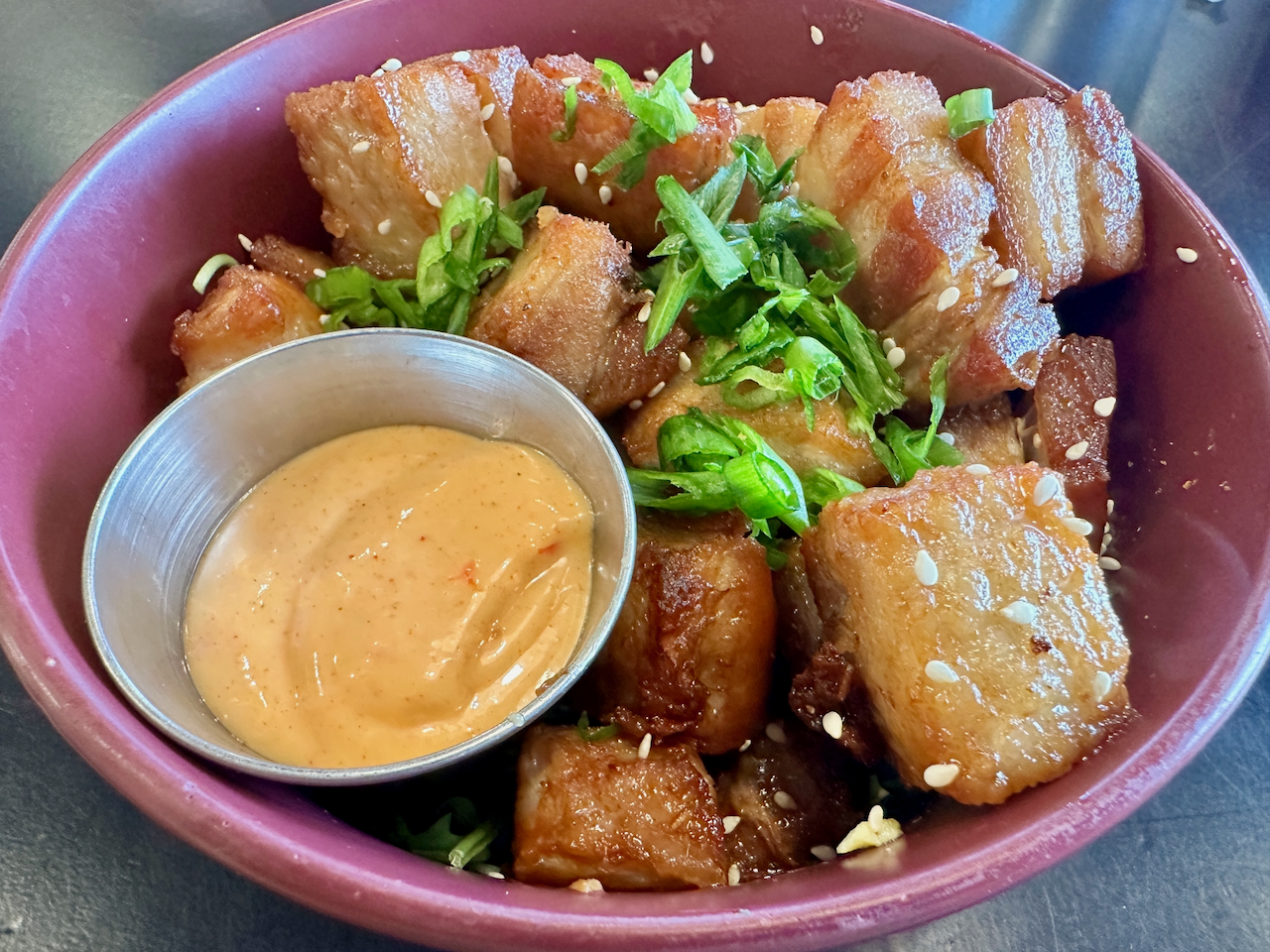
My Kim’s appetizer selection was pork belly bites (pork belly pieces served on a bed of cabbage). Rather than being cooked fresh as a large slab, the vast majority of pork belly in the West is traditionally cured, smoked, and sliced into bacon. That’s starting to change as fresh roasted pork belly—often smoked on barbecue grills in the U.S.—has grown widely popular on restaurant menus. Pork belly is valued for its rich layering of meat and fat. Shoku’s version of pork belly isn’t quite as meaty (bacony?) and crispy as American pork belly tends to be. It’s served with a Shoku sauce that imbues the pork belly with more personality.

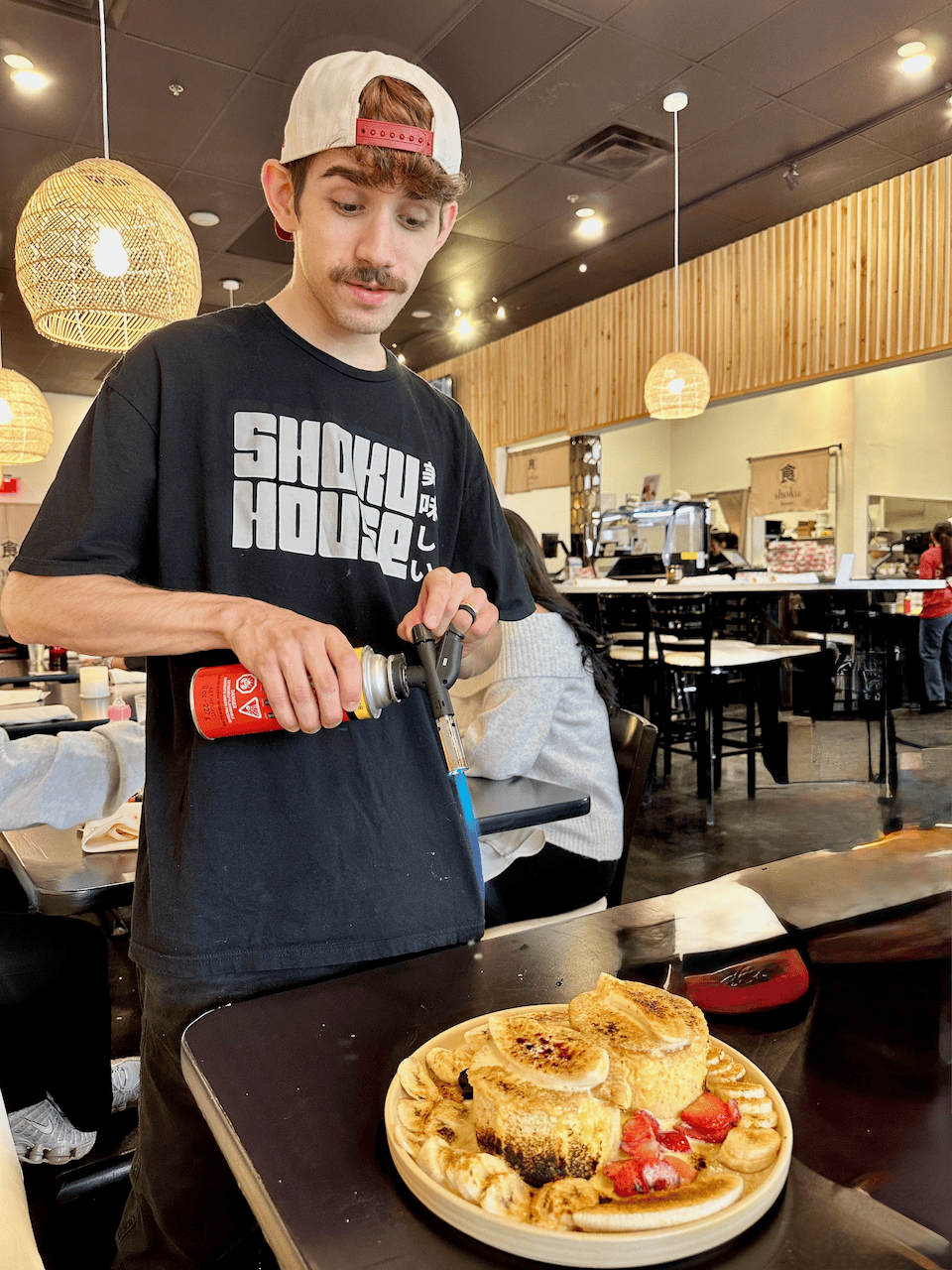
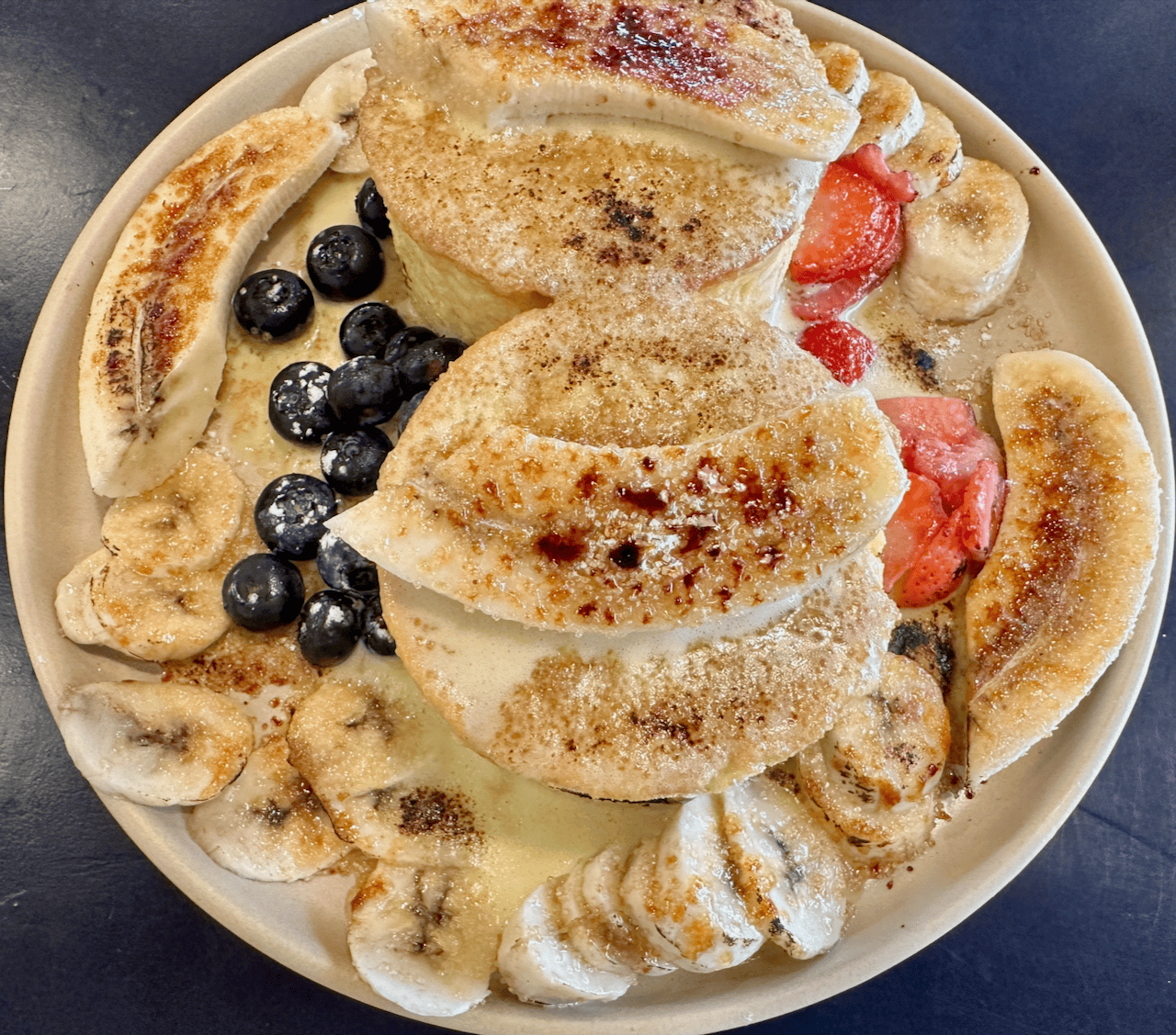
Social media sites warned that during peak times Shoku House’s soufflé pancakes may take a long time to prepared and be delivered to your table. That’s not fear-mongering, it’s good advice. I placed my order for a banana crème brûlée soufflé pancake immediately after placing our beverage order. Because the restaurant wasn’t completely full, the pancakes were quickly delivered. As with other soufflé pancakes we espied at several tables, this was an edible work of art, so beautifully plated you might not want to disrupt the plate. With the banana crème brûlée soufflé pancake, you’ll even have “entertainment” at your table. As the picture above shows, a server will torch the bananas and crème brûlée atop the pancake to create a caramelized and absolutely addictive masterpiece. Josiah, our server advised us to slice the pancake down the middle so that more of the brûlée can seep into the rest of the pancake. This is one of the very best pancakes I’ve had in many years–better than Swedish lingonberry pancakes, better than nutella and banana crepes, better than Aunt Jemima (or whatever she’s called now) pancakes.
Though her sweet tooth eclipses mine by far, my Kim actually opted for a savory offering. Her choice was a pork chashu sando (grilled chashu pork and scrambled eggs). If you frequent Japanese restaurants, you’ve likely experienced the deliciousness that is pork chashu, essentially tender, Japanese braised pork belly. The pork inherits its flavor and personality from being slowly simmered or braised for hours in a savory-sweet liquid typically made from soy sauce, sake, mirin, sugar, ginger, garlic, and scallions. My Kim quickly became enamored of the chashu, but it was the milk bread she raved about most. She also praised the scrambled eggs. It’s no surprise that Japanese are so adept at preparing scrambled eggs. Japan has one of the highest per-capita egg consumption rates in the world at around 320 eggs per person each year. Also noteable were the sweet potato waffle fries.
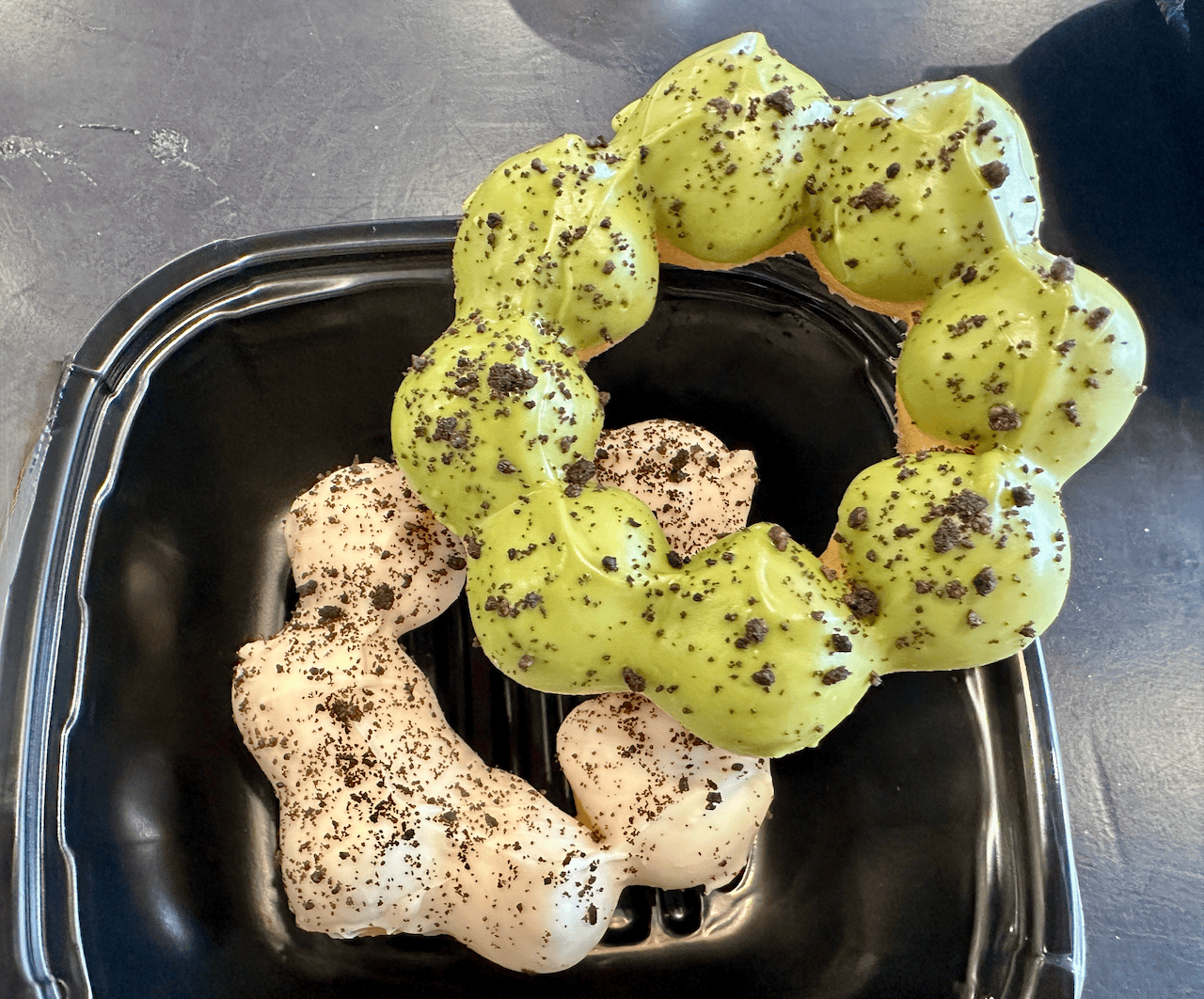
Donuts trace their direct origins to 17th-century Dutch settlers who brought sweet fried dough balls called olykoeks (oil cakes) to America. American military personnel introduced modern Western donuts to Okinawa and other parts of Japan in the late 1940s. Though donuts were initially viewed as a novelty children’s snack, they have evolved into a favorite dessert. That’s especially true of mochi donuts, a Japanese-American hybrid pastry with roots in Japan and Hawaii in the early 2000s. Shoku House offers six different mochi donuts. Dipo recommended the matcha mochi donut. Considering his track record of success, I took him up on his recommendation. That was a great choice. It was a sweet, earthy, slightly bitter melange of green tea within a rich, bouncy, and chewy rice-flour pastry. My Kim’s choice was a cookies and cream mochi donut. It, too, was quite good.
Shoku House is one of the most innovative and exciting new restaurants to open in Albuquerque in recent years. With an exciting menu of new and different dishes, it promises to become a city-wide favorite.
Shoku House
10660 Unser Blvd., N.W.
Albuquerque, New Mexico
Website |
LATEST VISIT: 24 September 2026
# OF VISITS: 1
RATING: N/R
COST: $$$
BEST BET: Mochi Donuts, Pork Chashu Sando, Banana Crème Brûlée Soufflé Pancake, Pork Belly Bites
REVIEW #1550