Chez Axel – Albuquerque, New Mexico

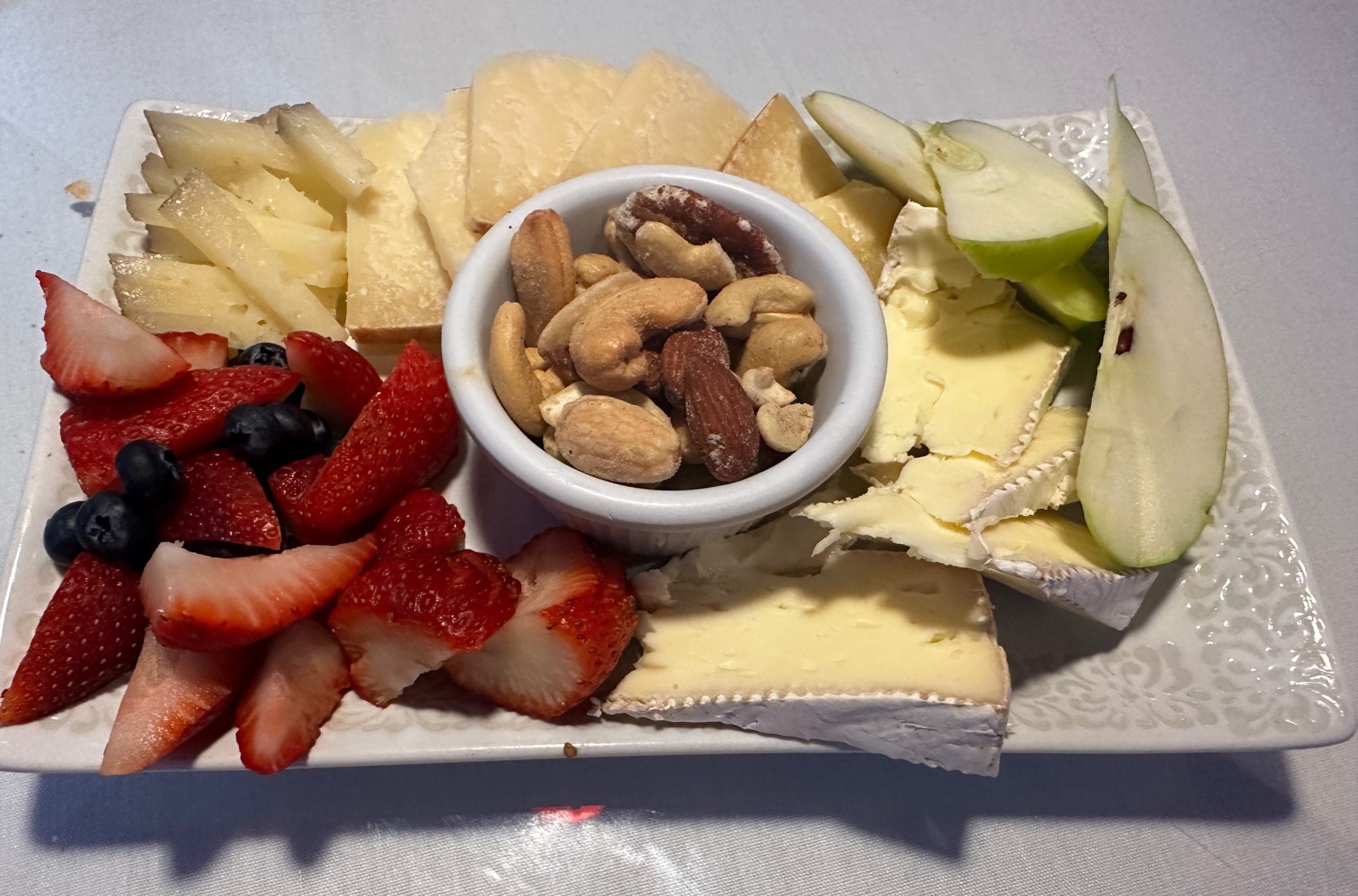
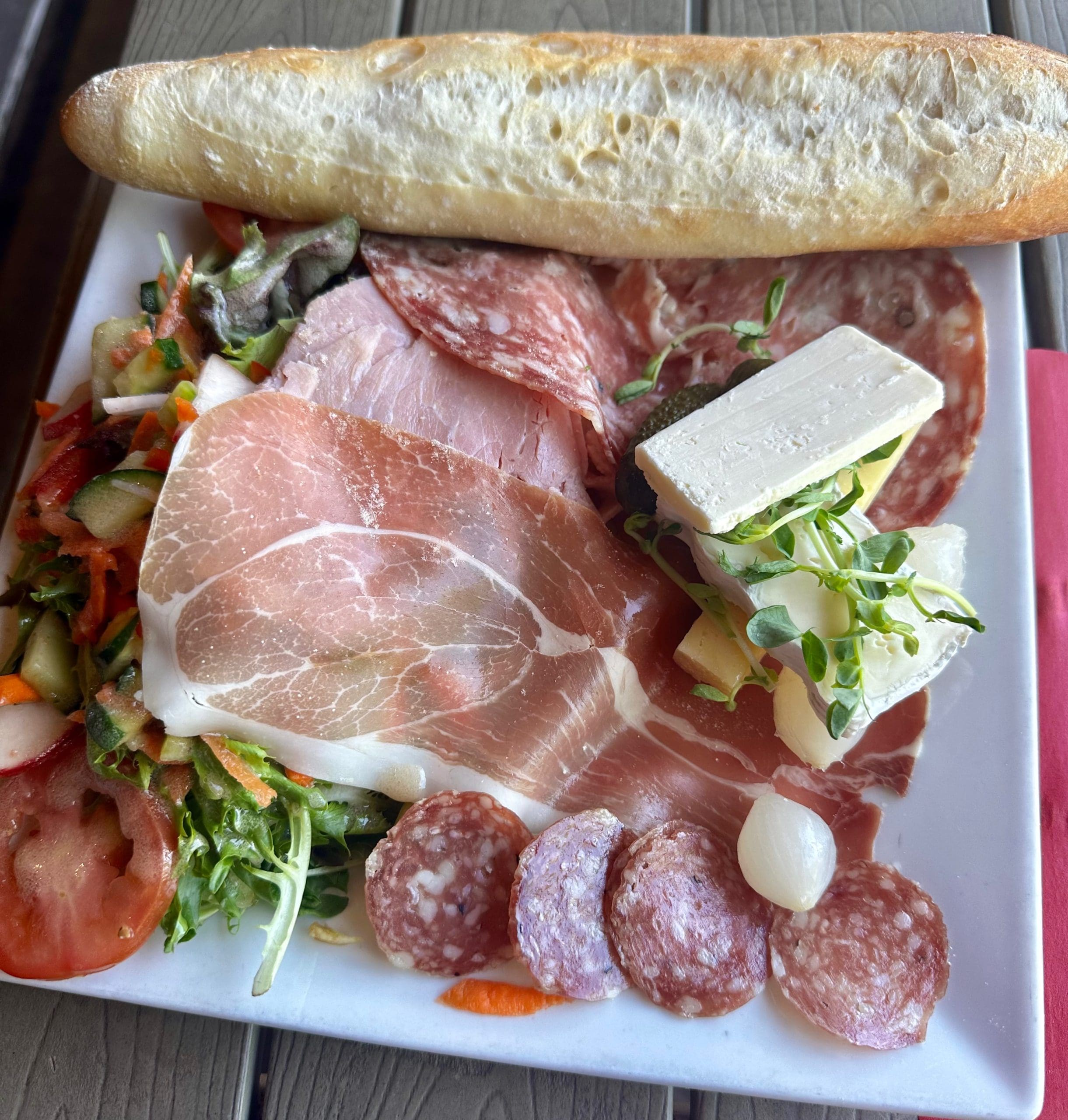
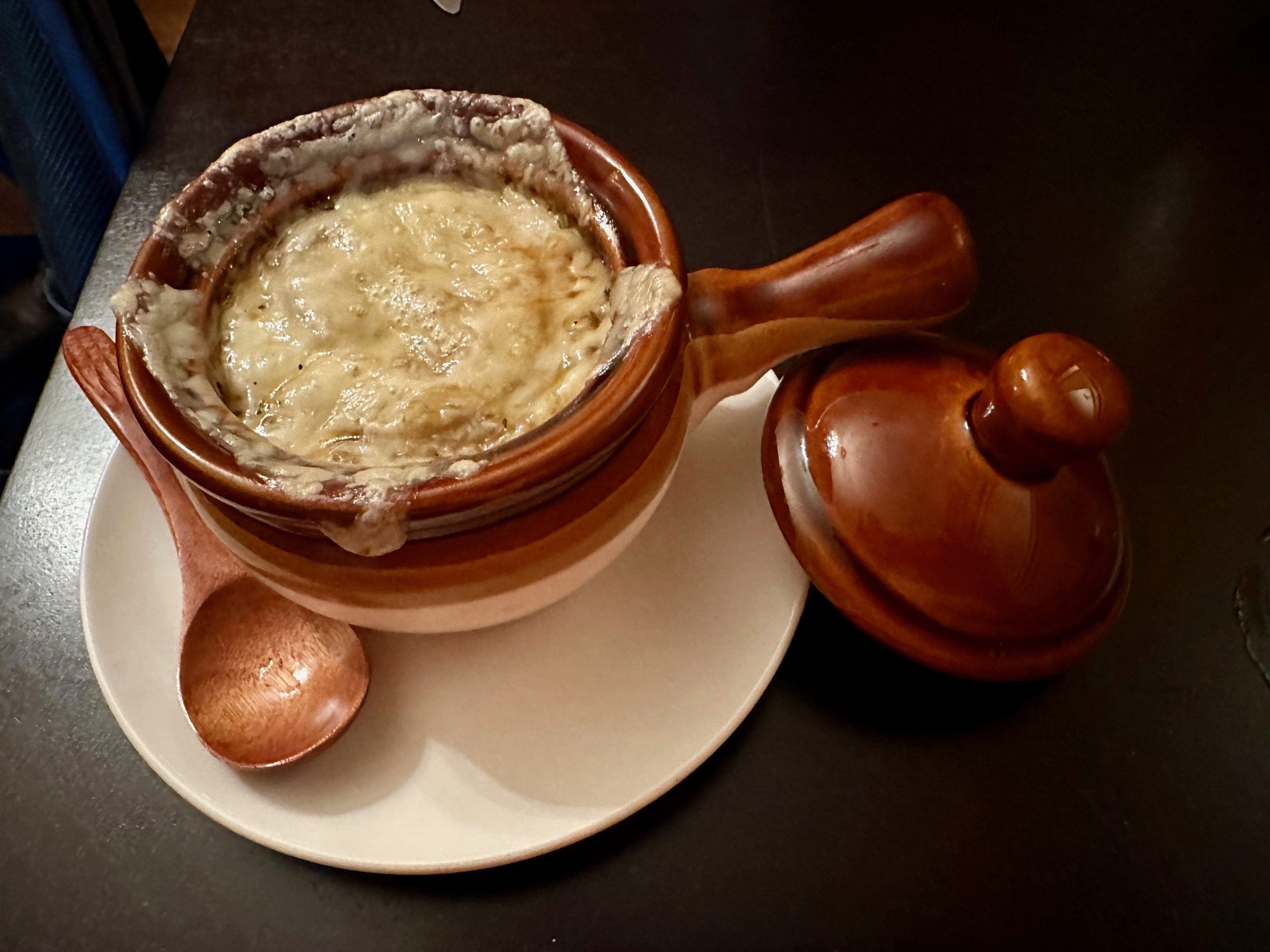
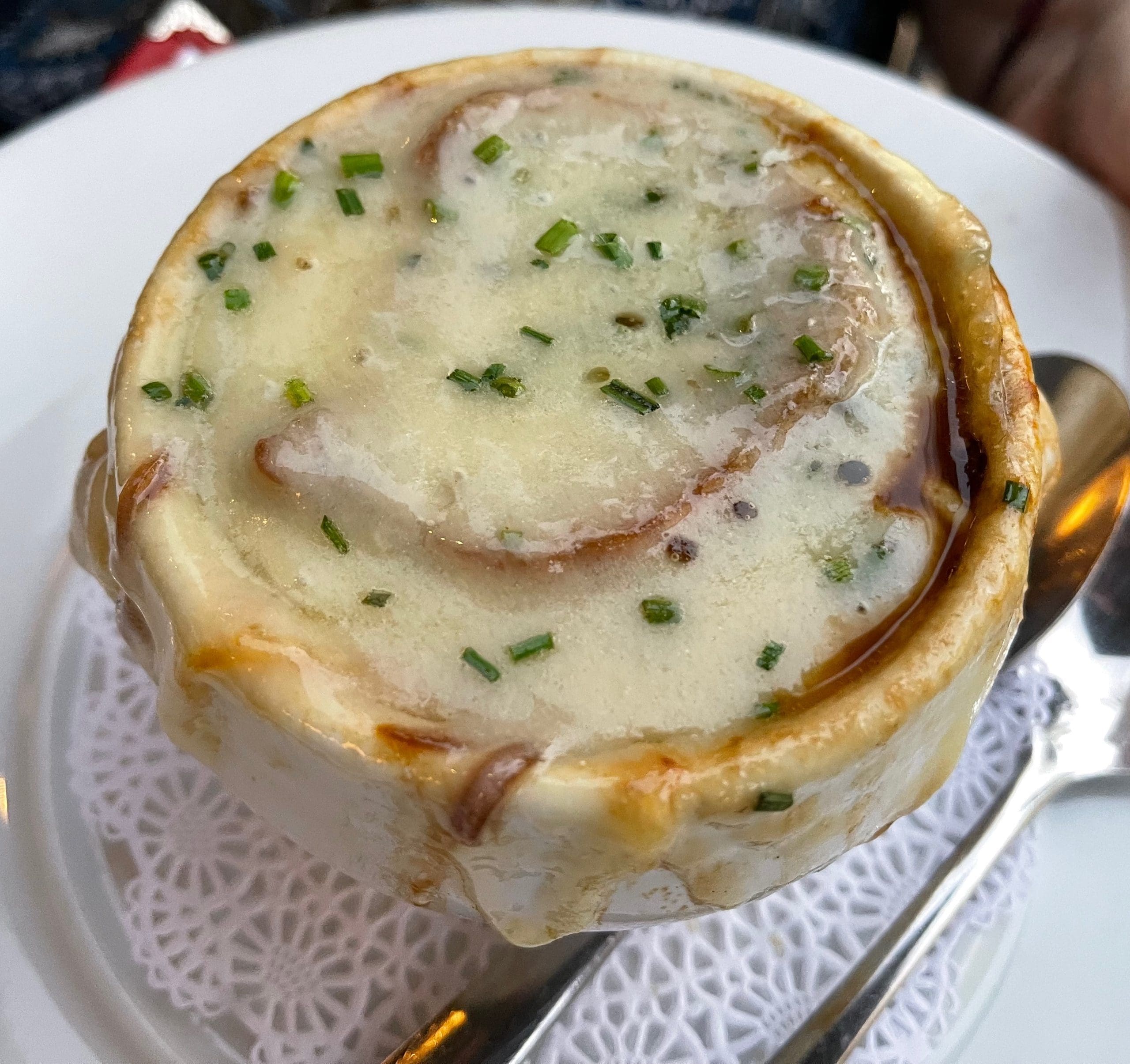
At an Italian restaurant in which he once worked,  one of Chef Daniel Little’s primary tasks was to construct charcuterie boards, a recognition of his artistic nature and deftness.  He would much preferred to be doing the cooking.  The Central New Mexico (CNM) Community College trained chef is doing all the cooking he wants to do now.  After more than twelve years of working for some of Albuquerque’s premier chefs at such enchanting eateries as M’Tucci’s Bar Roma, Savoy and Level 5, Chef Little is now calling the shots as the chef-owner of Chez Axel, one of Albuquerque’s most venerable French restaurants. During our 2025 visit to Chez Axel after an absence of fourteen years, Chef Daniel was both host and server while a fellow CNM alum did the cooking.  Chef Daniel is a genial guy with a great sense of humor and guest orientation that makes everyone feel welcome.  Moreover, he’s absolutely committed to his craft and not just the cooking part of owning a restaurant.  He’s also pursuing a degree in Business with an emphasis in Marketing so that he can take advantage of social media’s broad reach.  One of the challenges he faces is that Chez Axel…

CLAFOUTIS – Santa Fe, New Mexico

According to the Oxford Dictionaries, you only need to know 10 words to understand 25-percent of what native [English] speakers say and write. You need to know 100 words to understand 50-percent of what native speakers say and write, and 1000 words to understand 75-percent of all the words used in common, everyday English. To understand 95-percent of the text used in blogs (even this one) and newspapers, you need a vocabulary of only 3,000 words. Considering the Oxford English Dictionary lists more than 171,000 words in current use (and another 47,000 obsolete words), knowing 3,000 words doesn’t sound very impressive. Many years ago before my first trip to France, I took an inventory of how many French words I knew, arriving at somewhere near that magical number of 3,000. While knowing that many words in English would make me fairly conversant, knowing 3,000 words in French (from a language boasting of 100,000 words) certainly didn’t endow me with conversational fluency. Not even close! French orthography, the spelling and punctuation of the French language, comes easy for me compared to pronunciation. If you’ve ever seen the episode of Friends in which Joey Tribbiani attempted to speak French, you’ll know of…

La Vie Est Un Bistro – Silver City, New Mexico

In 2013, the New York Times published an article titled “Looking for Big Flavors in a Small Town.”  The article extolled the dining scene in “Silver City, an old mining town in the southwestern corner of the state, which has “seen its creative spirit extend to the local food scene.”   Leave it to your roving gastronome to arrive in Silver City ten eleven years too late.  When the New York Times visited, Silver City was home to the Curious Komquat, where Chef Rob Connoley earned  James Beard semi-finalist honors for Best Chef – Southwest.  Chef Connoley, by the way, moved to St. Louis where he garnered another semifinalist nomination in 2022, this time for Best Chef: Midwest.  He repeated that honor in 2023 then in 2024 was the only St. Louis chef to be named finalist. It goes without saying that the closure of Curious Kumquat put a serious dent on the Silver City culinary world.  That loss was compounded by the 2015 shutting down of Shevek & Co, another Silver City institution.  Then, the aftermath of the Cabrona virus brought about the 2022 closure of Revel, another highly regarded downtown eatery.  Diane’s Restaurant & Bakery, THE place to visit…

Zinc BIstro – Scottsdale, Arizona

“Are you sure we belong here,” my Kim asked as we strolled along Kierland Commons, an upscale Main Street lifestyle center.  “Of course, we belong here,” I replied just as a shiny, brand new Bentley parked in the spot we were walking past.  We certainly don’t have that kind of money (not even close), but we have a great equalizer.  Just by batting his brown eyes, our debonair dachshund The Dude had the couple on the Bentley clamoring to pet and stroke him, all the while uttering oohs and aahs at the softness of his fur and the sweetness of his smile.  Whether you own a Bentley or a Hyundai, our Dude will own your heart.   Based on the adulation he received that evening, The Dude could have run for mayor of Kierland Commons and he probably would have won (unless Maricopa Country’s election shenanighans rig it against him).   His peeps included the wait staff as well as diners at adjacent tables.  Everyone wanted to meet our four-legged fur baby.  Whether or not my Kim and I belonged among all the well-heeled, it was obvious The Dude makes himself–and by extension, us–at home wherever he goes.   Now,…

Salt and Board – Albuquerque, New Mexico

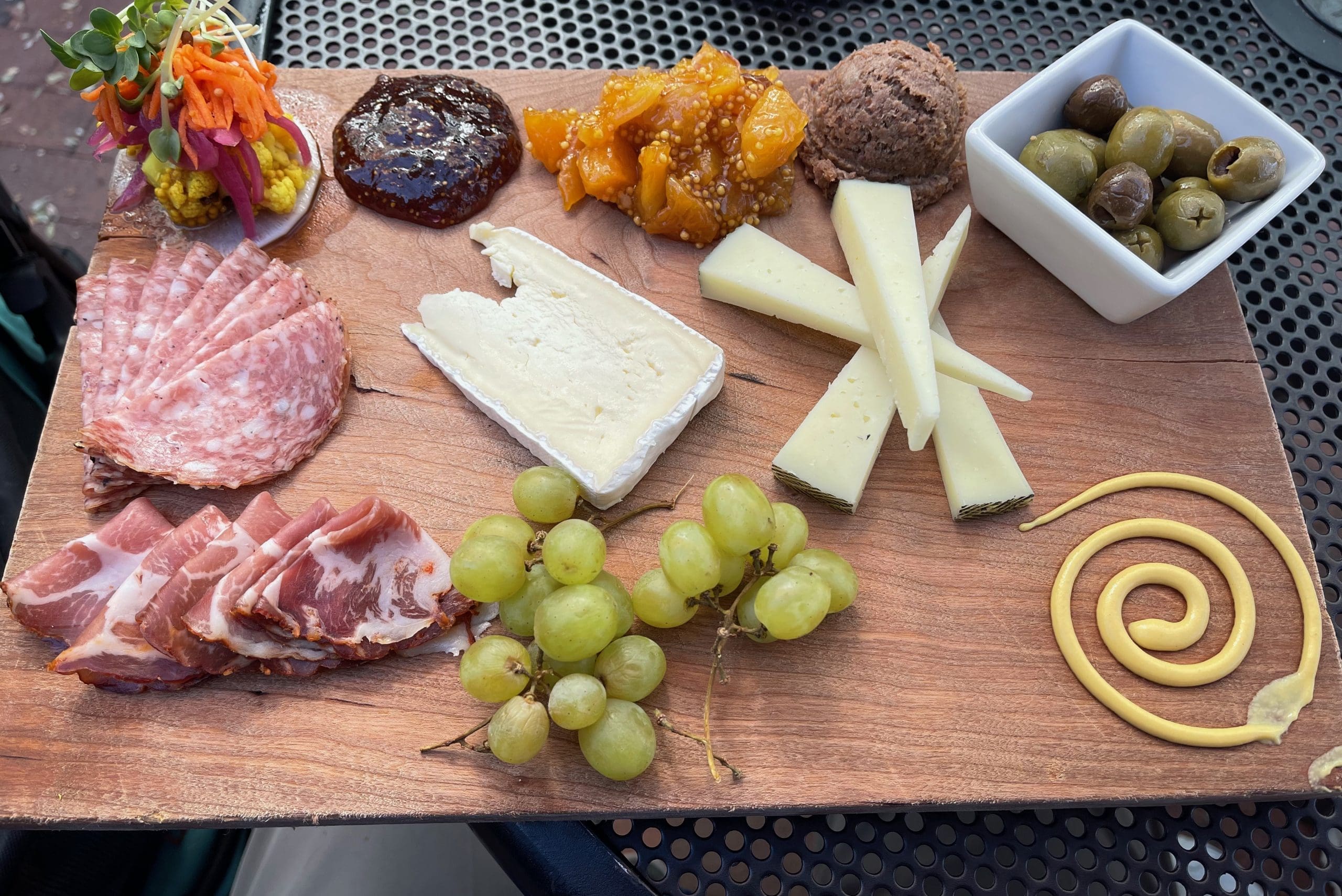
“Five years ago, everyone was making beer in their bathtubs, and now everyone’s making charcuterie in their garage!” ~Brian Malarkey, Chef When my friend Carlos, a punctilious polyglot conversant in four languages, asked what my Kim and I ate over the weekend, my poorly-pronounced beginner’s French response was “une assisette de charcuterie et de fromages.” “Oh, you had cold-cuts and cheese,” he responded. “No, we had charcuterie!” I emphasized, slowly pronouncing each syllable of the term: “char-cu-te-rie.” “Only the French,” he retorted “could convince you a plate of bologna and slices of cheese is a gourmet dish worth thirty dollars.” Carlos was only kidding, of course, but beyond his flippancy was a veiled challenge. He wanted me to figure out what distinguishes “charcuterie” from any other plate of cold-cuts and cheeses thrown together. It could be argued that charcuterie’s historical roots extend hundreds of years back when early civilizations figured out how to cure and preserve meats. The term “charcuterie,” which is derived from the French words for flesh (chair) and cooked (cuit), finds its genesis in fifteenth-century France. Charcuterie was essentially born out of the necessity for foods to have a long shelf life. Because pork vendors were prohibited…

P’Tit Louis Bistro – Albuquerque, New Mexico (CLOSED)

“If you are lucky enough to have lived in Paris as a young man, then wherever you go for the rest of your life, it stays with you, for Paris is a moveable feast.” –Ernest Hemingway I’ve often wondered if Ernest Hemingway would have felt at home in Taos during the “roaring twenties,” a period of dynamic artistic, societal and lifestyle upheaval. Instead of communing with the Taos Society of Artists and other inspired Bohemian minds, Hemingway spent much of the decade in Paris, a city whose own liberal attitudes attracted poets, painters and writers from throughout the world. Paris was a vibrant city which drew many expats from the so-called “lost generation” of cynical young people disillusioned with the materialism and individualism prevalent in society at the time. Paris was not only a relatively inexpensive city in which to live, unlike America it did not have a prohibition against alcohol. The American expatriates–F. Scott Fitzgerald and Gertrude Stein among them–would gather at cafes to discuss their work and drink until their money ran out. Much of Hemingway’s most productive writing, in fact, took place in cafes which he visited with his characteristic blue notebooks, pencils and a pocket knife…

La Madeleine – Albuquerque, New Mexico

“Show me another pleasure like dinner which comes every day and lasts an hour.” ~Charles Maurice de Talleyrand–Périgord On Wednesday, November 3, 1948, at Auberge La Couronne in Roule, France,  Julia Child ate what she later declared to be the “most exciting meal of her life,” a veritable feast she shared with her husband Paul: six Brittany oysters, Dover sole meuniere, green salad, fromage blanc with berries, and coffee. Since the airing of “Julie & Julia’’ diners (mostly American and British) have made pilgrimages to Roule in attempt to replicate the French Chef’s gastronomic epiphany. Replicating what Julia ordered is easy. The menu at La Couronne offers the very same meal, calling it “Menu Julia Child.” Replicating the experience itself is not always so easy for American diners who don’t always esteem the experiential aspects of dining as highly as the French do. American writer Alice B. Toklas relished the dining experience, too, noting: “The French approach to food is characteristic; they bring to their consideration of the table the same appreciation, respect, intelligence and lively interest that they have for the other arts, for painting, for literature, and for the theater.” Other expats—Ernest Hemingway, Gertrude Stein, James Joyce, Pablo Picasso—were…

Crepe Crepe – Albuquerque, New Mexico (CLOSED)

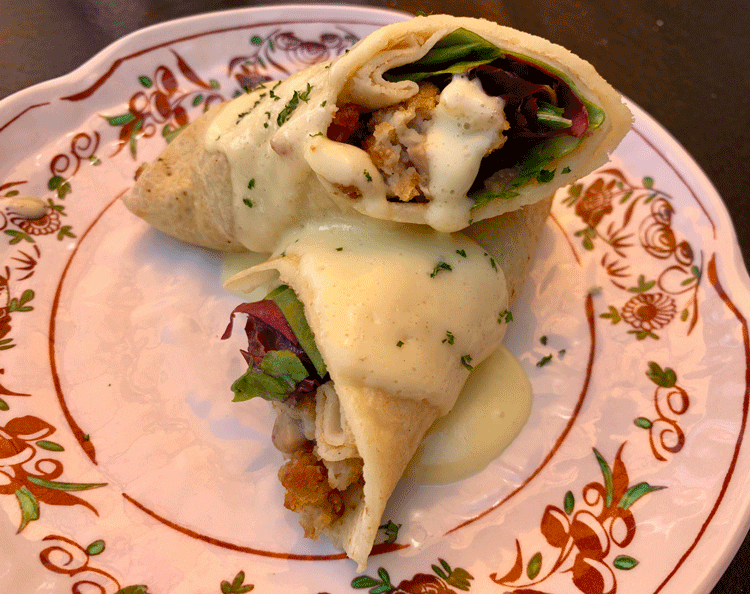
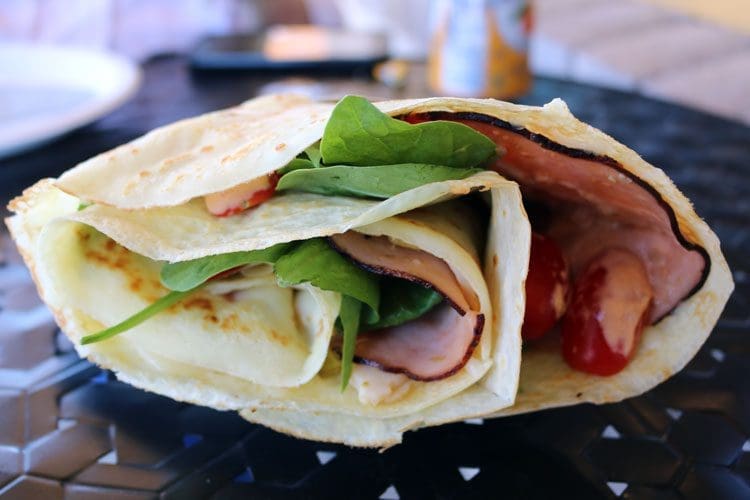
Richard Olney, a cookbook author best known for his books on French country cooking described crepes thusly: “their greatest pitfalls derive, no doubt, from their versatility — not in itself a fault, but a quality that teases many a cook into overstepping the boundaries of sense and taste. One should never lose sight of the fragile and delicate, thin, tender thing that is the crepe itself.”  In his magnificent tome The French Menu Cookbook, he prefaced a recipe for Gratin of Stuffed Crepes with: “crepes may contain practically anything and they represent one of the prettiest and most satisfactory means of disposing of leftovers.”  Then as to demonstrate their versatility, he listed among the ingredients for the stuffed crepe, one calf’s brain. If you’ve ever partaken of crepes at a French restaurants in the metropolitan area, versatility is probably not how you’d describe those crepes.  Delicious, mouth-watering, delightful…yes, but they won’t surprise you with ingenuity.  They all pretty much uphold French crepe traditions (though surprisingly only one Duke City French restaurant offers Crepe Suzette, the most famous crepe dish in the world).   The versatility described by Richard Olney began with mobile food kitchens (that’s food truck for you, Bob) which began experimenting…

Le Troquet Bistro – Albuquerque, New Mexico

Pope Gregory the Great was a prolific writer canonized as a saint and recognized as a “doctor of the church.” Among musicians, singers, students and teachers, he is revered as a patron saint, a heavenly advocate who intercedes on their behalf. Among gluttons of the Middle Ages, however, the supreme pontiff was reviled. In his treatise Morals on the Book of Job, Pope Gregory essentially condemned them to Hell, a denouncement reflecting the strict austerity of the times. For gluttons, the unpardonable sin was in deriving too much pleasure from eating. Eating, or more precisely the pleasurable overindulgence in food, was viewed as an ungodly preoccupation with temporal and corporeal pleasures at the expense of spirituality. Church leaders of the Middle Ages didn’t just denounce the derivation of pleasure from eating in a general sense. They listed five specific ways in which gluttony was a sin: eating too soon, eating too expensively, eating too much, eating too eagerly, eating too daintily and eating wildly. By Middle Age standards, many Americans are gluttons and would be condemned to an eternity in Hell for our enjoyment of food. Fortunately the provincial dogma regarding the enjoyment of food has been replaced by more…

Chez Mamou – Santa Fe, New Mexico

When she asked me to repeat the name of the French restaurant where we were dining one slightly breezy Sunday morning, I knew my clever bride had something in mind. Relaying that we were dining at Chez (pronounced “shay”) Mamou, she retorted “are you sure it’s not called “Shame on you.” That was her reaction to a server having deposited a stale, probably older than day-old baguette on our table. She followed up with “no self-respecting French restaurant, especially one claiming to be a bakery would serve bread baked by Napoleon’s baker.” Whether or not the fossilized (her term) bread was indicative of Chez Mamou’s daily performance, it was enough to rile my usually saintly patient wife. By this point, she had already dissed the coffee, an Allegro Coffee blend, which she found entirely too strong and “more bitter than supporters of England wanting to remain in the European Union.” (In the interest of full-disclosure, she finds coffee too strong if it can’t be “cured” by five or six packets of Splenda.”) She would later repeat her “what’s the name of this restaurant” comment while eating some of the restaurant’s highly-touted pastries and croissants, reputedly baked by a master baker…

La Quiche Parisienne Bistro – Albuquerque, New Mexican

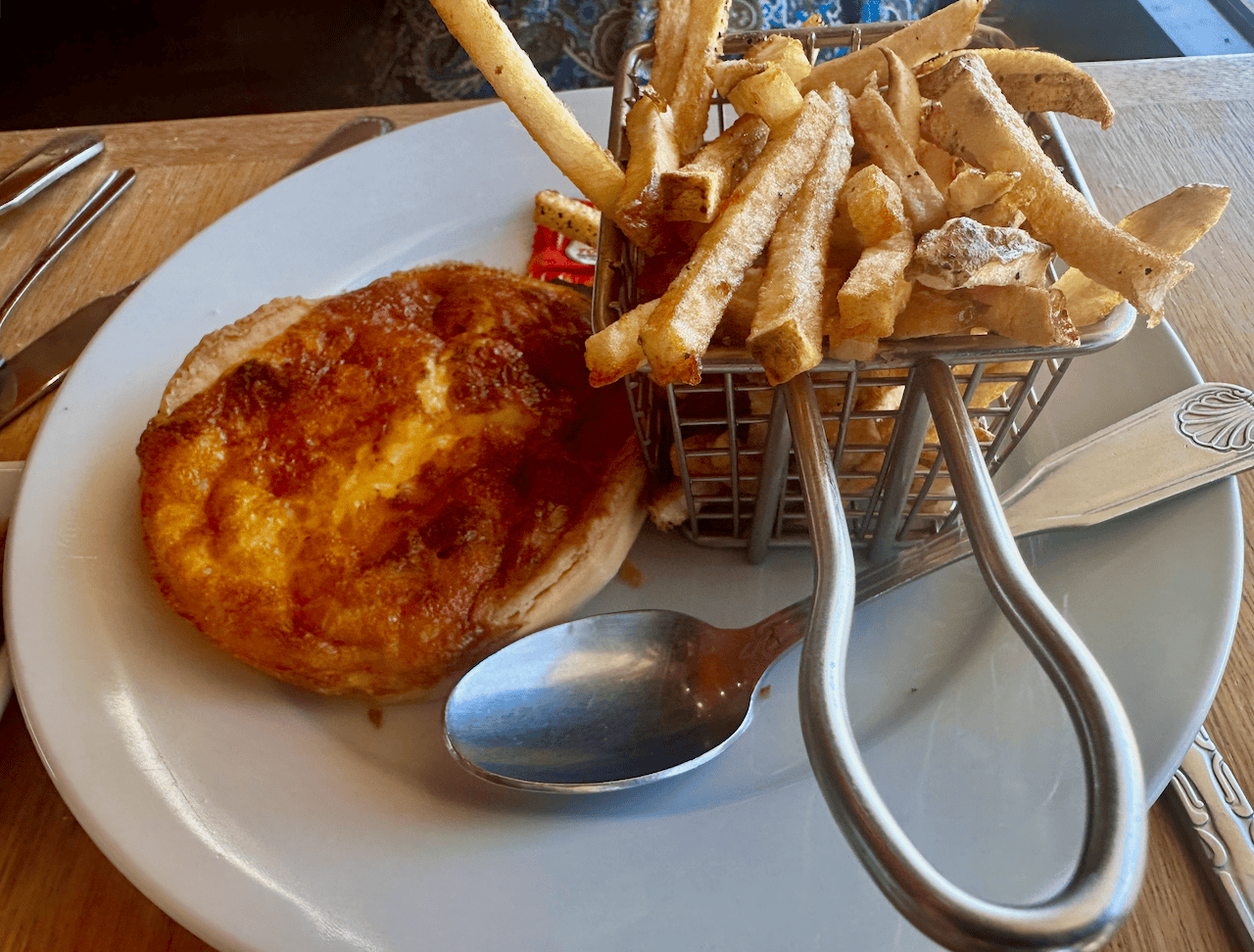
Who can ever forget Fred the Baker, the haggard, perpetually exhausted Dunkin Donuts baker and his iconic lament, “time to make the donuts?” Every morning an annoying alarm clock would rouse Fred from his deep slumber and he would wearily utter his trademarked catch phrase as he prepared for the rigor of the day. For fifteen years—from 1982 to 1997—Fred the Baker let America know it was time to make the donuts, reminding them that while he was doing so, the guys who make the supermarket donuts were still in bed. The Fred the Baker commercials became ingrained in American pop culture, but they also had a ring of truth. Being a baker means rising very early and working during hours in which most people are sleeping. According to the Bureau of Labor Statistics, “bakers work early mornings, late evenings, weekends, and holidays” and “the work can be stressful because bakers often work under strict deadlines and critical, time-sensitive baking requirements.” La Quiche Parisienne Bistro is an exemplar of every story you’ve ever heard about how hard bakers work. Master baker Bruno Barachin and his better half Sabine Pasco, the on-site pastry chef, put in the type of hours which…