“This stuffing of food in your fellow diners’ face is called gursha,
and that’s what you do to show your affection and respect.
Try this at the Waffle House some time and prepare for awkwardness.”
~Anthony Bourdain, Season 6 of Parts Unknown
Eating Ethiopian cuisine involves eating with your hands. That can also be said about eating pizza, sandwiches, tacos, gyros and a number of other foods common to the American palate. But what about being fed from someone else’s hand? In Ethiopia, that practice is called gursha. Gursha is a term for the Ethiopian tradition of hand-feeding a bite of food, wrapped in injera, to someone else as a gesture of love, friendship, and respect. It signifies hospitality, often extended to guests or loved ones, with larger bites symbolizing a stronger bond. Bourdain noted that hospitality is a way of living in the “Land of Origins” (signifying Ethiopia’s status as a cradle of humanity and civilization): “Here, as in much of Ethiopia, Muslims and Christians live side by side. … It’s a peculiar history of peaceful coexistence here, of which Ethiopians are quite proud. .”
In the handful of times I’ve dined at Ethiopian restaurants, I’ve never been compelled to engage in gursha. That’s partially because friends with whom I’ve visited Ethiopian restaurants might be inclined to bite my fingers off. Admittedly, as much as I may like to immerse myself in the culinary traditions of different cultures, the ugly American in me would never want to disrespect gursha either by shoving food into someone’s face or even contemplating the act of doing so. Perhaps, I pondered, dining at an Ethiopian restaurant with my Kim might motivate me to either give or receive food from her hands.
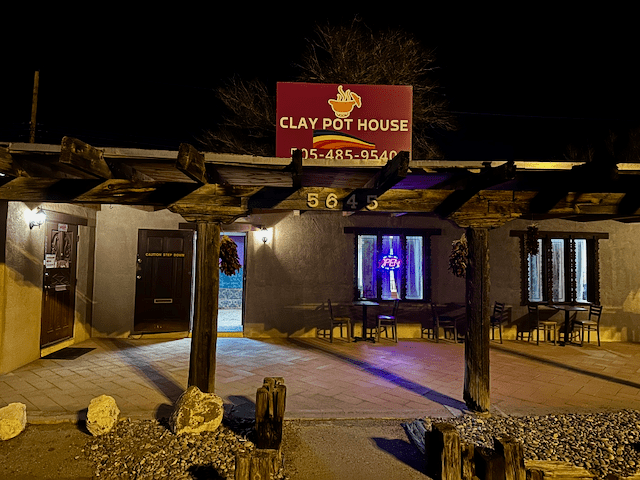
Cosmpotolian cities throughout the fruited plain have long welcomed Ethopian restaurants. It’s always bothered me that none have survived the Duke City’s persnickety restaurant landscape. Chef Seble Yemenu hopes she can introduce metropolitan area diners to her culture’s unique and wonderful cuisine and that her restaurant can have the staying power others have lacked. She may not have chosen a more challenging location. Her eatery, the Clay Pot Restaurant is situated in Paradise Hills just west of Unser (recessed from Paradise). This location may be semi-convenient to Visionaries (residents of Rio Rancho) and west-siders, but it’s a long drive for denizens of the Northeast Heights. In my humble estimation, Clay Pot is well worth the drive–from anywhere in the city.
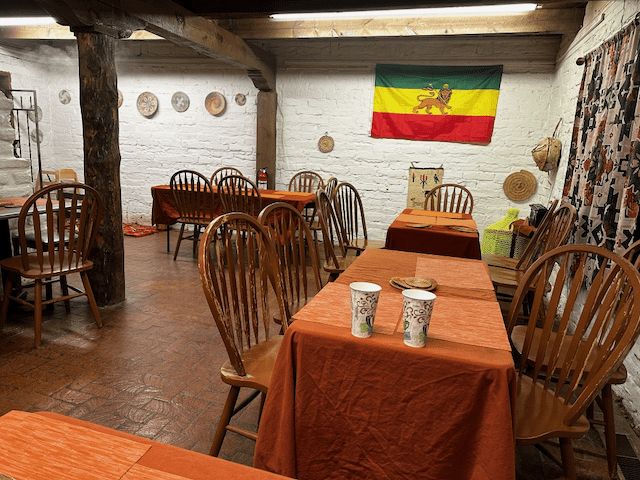
Chef Yemenu may not have invited us to participate in gursha, but she could not have been more welcoming. She relocated from Ethopia in 2018 and visits her homeland every few years. Clay Pot may look like a converted home, but Chef Yemenu related that she found an old menu (offering waffles) that seems to indicate another restaurant once graced this location. Whitewashed brick walls and floors as well as distressed vigas lend to a charming ambiance that is further ameliorated by Ethopian tapestries and baskets. Also festooning one wall is “The Lion of Judah” Ethiopia’s flag. The tricolored green, yellow and red) flag depicts a crowned lion holding a cross-tipped staff. It symbolizes the Ethopia’s historical ties to King Soloman and Queen Sheba.
A multi-paneled framed poster (similar to this one) actually captures the intriguing legend of Solomon and Sheba. It tells of the descent of the Ethiopian monarchy from Solomon and the Queen of Shebaa and how the Ark of the Covenant came to rest in Lalibela, Ethiopia. Legend has it that Solomon feted the beauteous queen with a feast of delicacies. The food was very spicy and made the Queen of Sheba very thirsty. When she dispatched her maid to fetch some water (which the leceherous king had placed at his bedside), Solomon engaged in carnal knowledge with her. Later on Solomon slept with the Queen, too. She must have been very impressed as she converted to the religion of the God of Israel and brought it back to Ethopia.
If you’ve never had Ethopian cuisine, you’re in for an eye-opening, mouth-watering treat. Ethiopian cuisine is characterized by flavorful, often spicy stews (wat) and sautéed meats (tibs) served atop injera, a tangy, spongy sourdough flatbread used to scoop food by hand (New Mexico’s sacrosanct flour tortillas can and do serve the same purpose). Restaurants and family homes are as apt to partake of vegetarian platter as Americans are to indluge in meats. Vegetarian and meat dishes are usually spiced with Berbere, an Ethiopian hot spice blend melding chili powder, garlic, ginger, basil, korarima, rue, ajwain or radhuni, nigella, and fenugreek. It’s an absolutely delicious blend.
Chef Yemenu certainly appreciates New Mexico’s love of spicy foods. On her website, she admits “Since I moved to New Mexico from Ethiopia I was fascinated by the amount of chile that is available here! Some of my concerns about moving to America was having to eat bland food! I was wrong! All varieties of chile are grown here just like back home! Berbere one of our most used spices is not a problem! New Mexico is the perfect land to cook and share Ethiopian Food!”
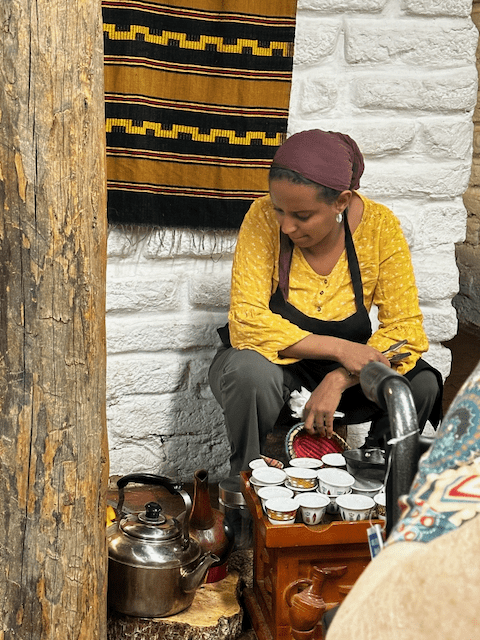
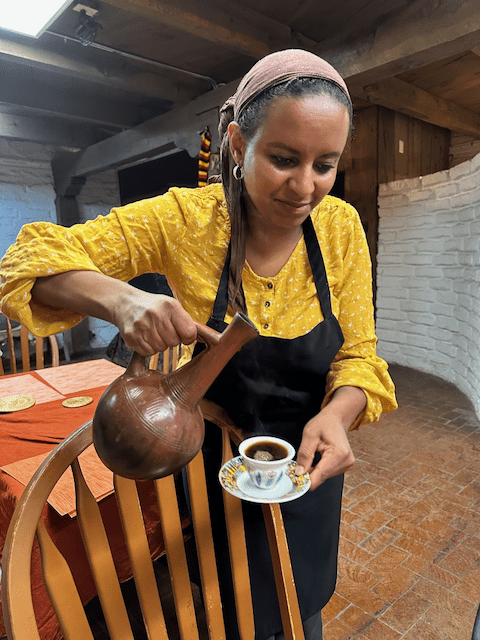
The Clay Pot House is currently open only from Thursday through Saturday from 4PM to 8PM. Buffet lunch is available every Tuesday from 12PM to 3PM. Ethopian food enthusiasts who would like a warm and cozy get-together with friends and family can contact Chef Yemenu for lessons on the authentic way to prepare Ethiopian food. Her lessons include the creation of three meals in an interactive shared experience. Another special experience Chef Yemenu offers a unique coffee ceremony in which she demonstrates the process of roasting coffee beans, grinding those beans and roasting them, an aromatic experience best held indoors on chilly days. Home cooks can also purchase hand-ground spices from Chef Yemenu’s Spice Shop. These are the same spices she uses to create her delicious fare. The talented chef also offers catering.
Friday’s featured fare is a vegetarian platter showcasing colorful portions served on injera. Catholics abiding by the prohibition of meats on Fridays during Lent have another wonderful option We visited on a Saturday when a prodigious three-meat platter was featured. Coffee and tea are complimentary. Chef Yemenu is very proud of Ethiopian coffee and rightfully so. Ethiopia is the renowned as the birthplace of Arabica coffee and is the largest coffee producer in the African continent. Chef Yemenu serves a medium-blend coffee with aromatic properties that will ensnare the coffee lover in you. She prepares and serves it herself.
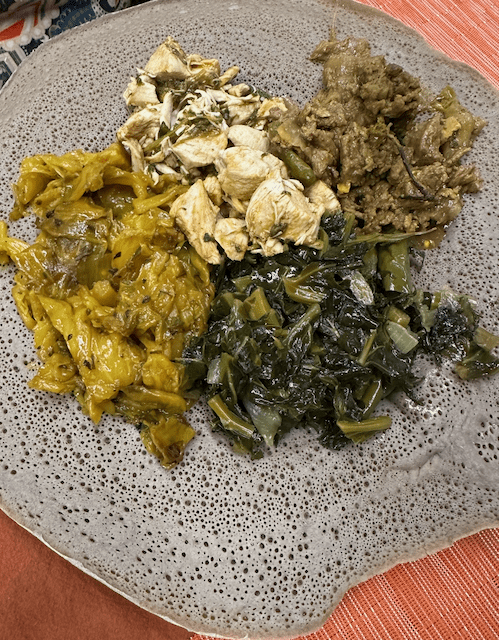
Before ordering her single-sized plate, my Kim asked that piquant foods be excluded. She just can’t handle the heat any more. Chef Yemenu was very accommodating. Alas, the only meat that wasn’t heavily spiced was chicken. Though the chicken is very flavorful, missing out on the Berbere lamb was akin to waking up without coffee. Sans the Berbere lamb and spicy beef, my Kim’s plate was still redolent with deliciousness: perfectly cooked greens (gomen). Ethiopian greens are a milder and faster-cooking species than American collard greens. Unlike collard greens, they’re not served with smoked meat. They’re seasoned with ginger and other aromatic spices. The plate also included shiro, a creamy, velvety stew made from roasted chickpeas and seasoned magnificently with a blend of herbs and spices. Ethiopian cabbage also graced her plate.
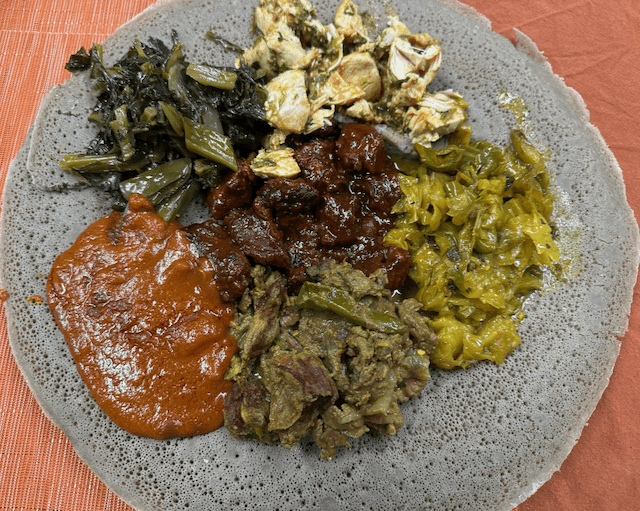
Meat plate doesn’t mean solely meats. My plate included all the aforementioned vegetables as well as Berbere lamb, spicy beef and chicken. The Berbere lamb was outstanding, offering a complex balance of spicy heat, earthy warmth and sweet notes with subtle hints of smoke and citrus. I couldn’t stop raving about it. Gracious hostess that she is, Chef Yemenu gave me a second serving of that llife-altering lamb. The spicy beef and chicken were delicious in their own right, but this lamb-lubber is besotted with that Berbere lamb. We were thoroughly enamored of the injera and its spongy, moist texture. It didn’t quite make the fork redundant, but proved versatile enough to ensnare Gil-sized portions of food.
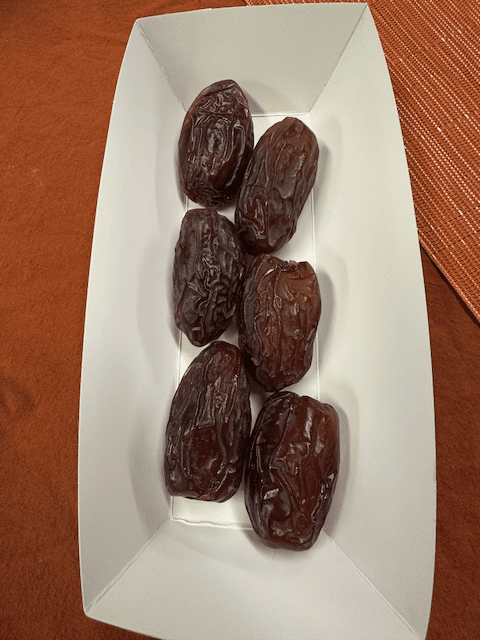
A small bowl of dates proved an effective palate-cleanser in between the richness of outstanding Ethiopian cuisine. My Kim let me have one. Clay Pot House is a wonderful addition to Albuquerque’s burgeoning culinary scene. My hope is that someday Chef Yemenu can expand and offer her outstanding cuisine in a more centralized location available to many more people.
Clay Pot House Restaurant
5645-B Paradise Blvd., N.W.
Albuquerque, New Mexico
(505) 485-9540
Website | Facebook Page
LATEST VISIT: 1 March 2026
# OF VISITS: 1
RATING: N/R
COST: $$
BEST BET: Berbere Lamb, Cabbage, Greens, Shiro, Spicy Beef
REVIEW #1519