Banh Me & You – Albuquerque, New Mexico

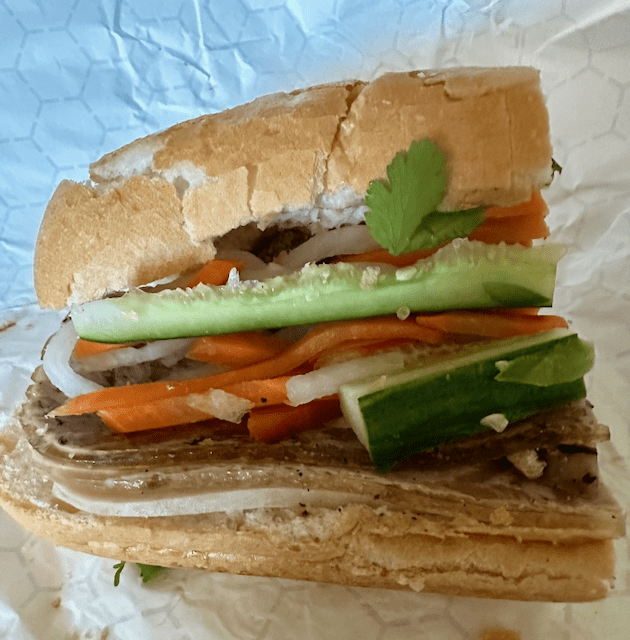
According to The Tanner Food Group, a a food consultancy focused on international trade, industry preparedness and regulatory activities, there are now nearly 8,000 Vietnamese restaurants stateside.  Food Scientist Michael Murdy, founder of robustkitchen.com attributes the  popularity of Vietnamese food to the “wide range of flavors and textures associated,” specifying that “the combination of sour, sweet, savory, and spicy flavors, as well as the use of fresh herbs and vegetables, makes Vietnamese food particularly attractive to people.” From among the nearly 8,000 Vietnamese restaurants on this side of the pond, it’s a good bet many of their menus are graced with banh mi, the sandwich melding French and Vietnamese flavors and techniques.  I first encountered the banh mi during one of many trips to the Santa Clara-San Jose area courtesy of Intel.  With a significant Vietnamese population, the area was teeming with restaurants, most generally serving pho and other wondrous delights from Vietnam.  At the time (mid 1990s), the San Jose area was starting to see Vietnamese bakeries opening up mostly in areas frequented by Asian populations.  Among them was Lee’s Sandwiches, maybe the first to showcase the banh mi. Lee’s Sandwiches has suffixed its corporate name with “International” and…

Clay Pot Restaurant – Albuquerque, New Mexico

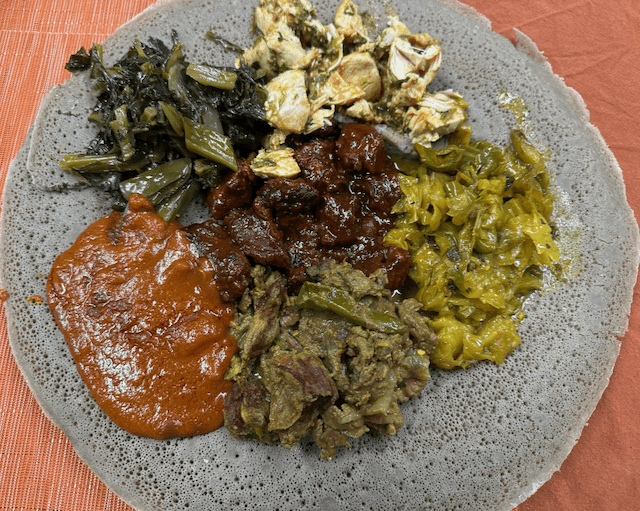
“This stuffing of food in your fellow diners’ face is called gursha, and that’s what you do to show your affection and respect. Try this at the Waffle House some time and prepare for awkwardness.” ~Anthony Bourdain, Season 6 of Parts Unknown Eating Ethiopian cuisine involves eating with your hands. That can also be said about eating pizza, sandwiches, tacos, gyros and a number of other foods common to the American palate. But what about being fed from someone else’s hand?  In Ethiopia, that practice is called gursha.  Gursha is a term for the Ethiopian tradition of hand-feeding a bite of food, wrapped in injera, to someone else as a gesture of love, friendship, and respect. It signifies hospitality, often extended to guests or loved ones, with larger bites symbolizing a stronger bond.  Bourdain noted that hospitality is a way of living in the “Land of Origins” (signifying  Ethiopia’s status as a cradle of humanity and civilization): “Here, as in much of Ethiopia, Muslims and Christians live side by side. … It’s a peculiar history of peaceful coexistence here, of which Ethiopians are quite proud. .” In the handful of times I’ve dined at Ethiopian restaurants, I’ve never been compelled to engage…

PIOCHE FOOD GROUP – Fruitland, New Mexico

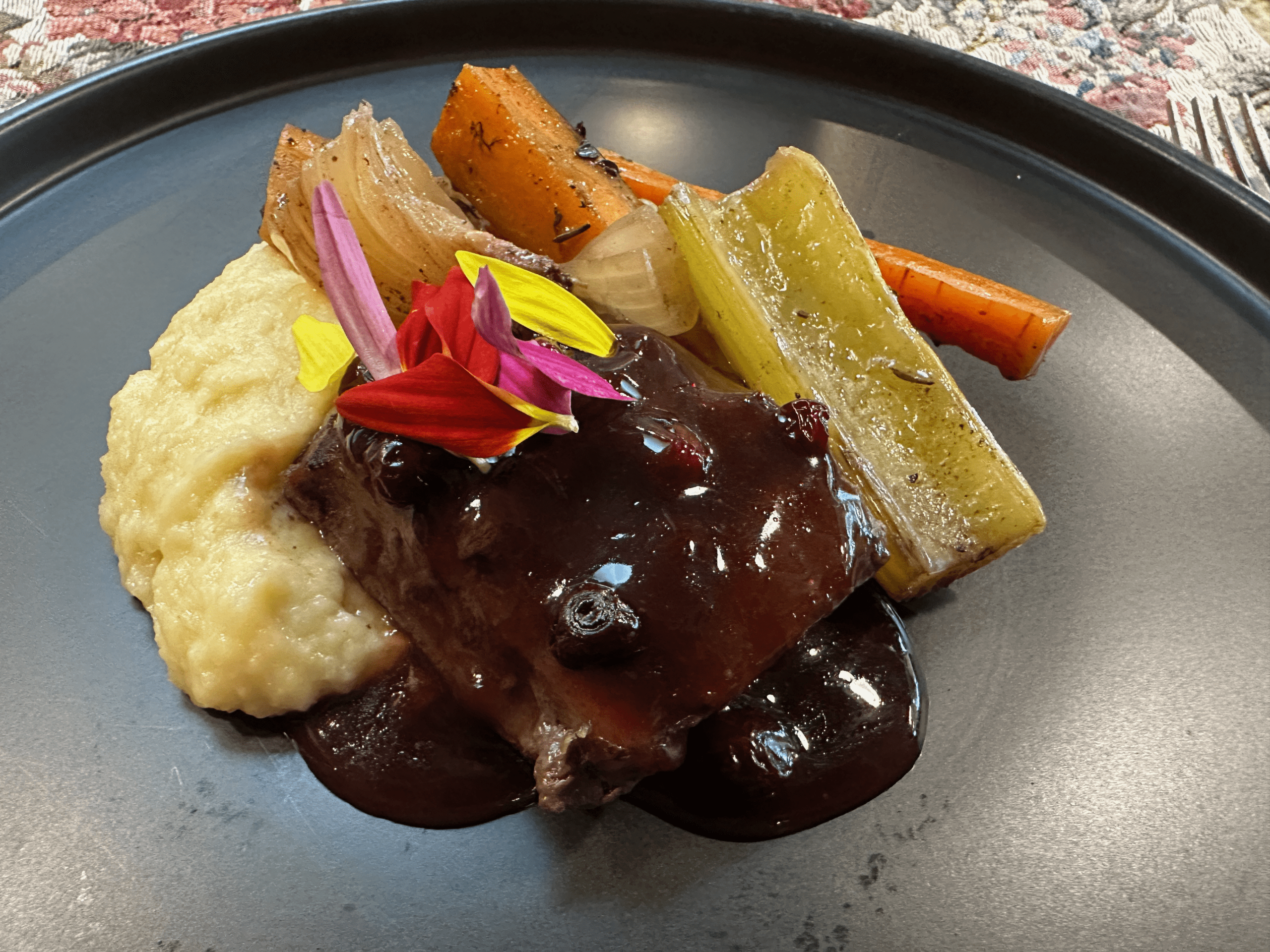
As my friend and retired restaurateur Tom Hamilton and I watched the Pioche family prepare a meal for some twelve guests, we both marveled at the quiet efficiency of the kitchen.  A veteran of decades leading highly-regarded kitchens, Tom related that most kitchens are a loud and frenetic hive of activity amped up to high volume.  Communication among kitchen staff is an absolute must to ensure synchronicity, especially when multiple courses are being prepared.  Instead of the characteristic chaotic din of most restaurant kitchens, the Pioche family worked in harmony, focusing on the quiet, efficient, and harmonious execution of the multitudinous tasks involved in the preparation of  a nine-course meal. It probably shouldn’t have surprised us so much that the Pioche family worked in such consonance.  After all, a traditional traditional Navajo (Diné) approach to family and communication is deeply rooted in the concept of K’é, a system of kinship and connectivity. This approach emphasizes respect and collective responsibility.  While Chef Justin Pioche is  the marquee name, he deflects praise and credits his sister Tia and mom Janice.  He’ll tell you he can’t operate without them and he’s not just being modest.  Like concordant instruments in an orchestra, each family member…