Fry Bread House – Phoenix, Arizona

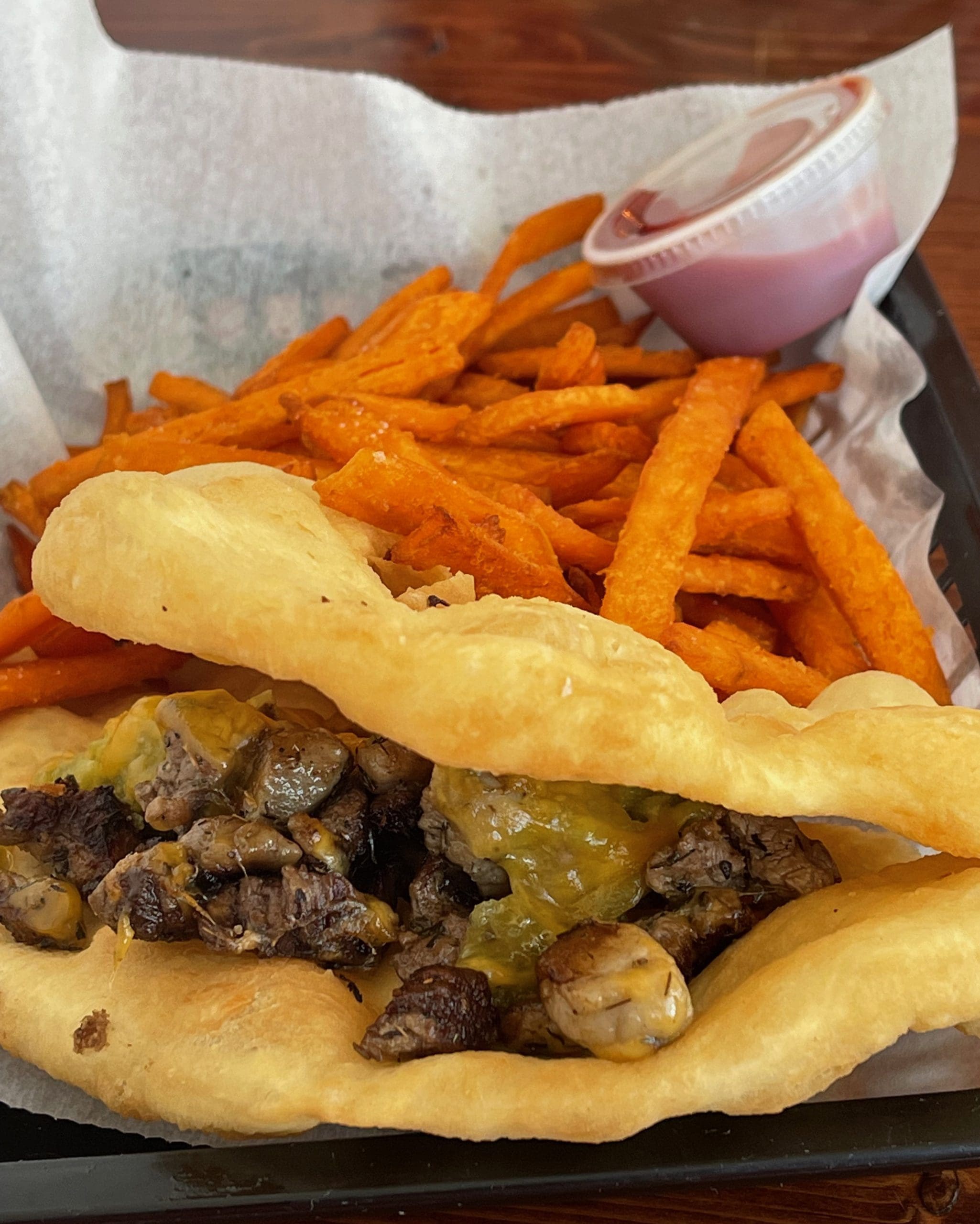
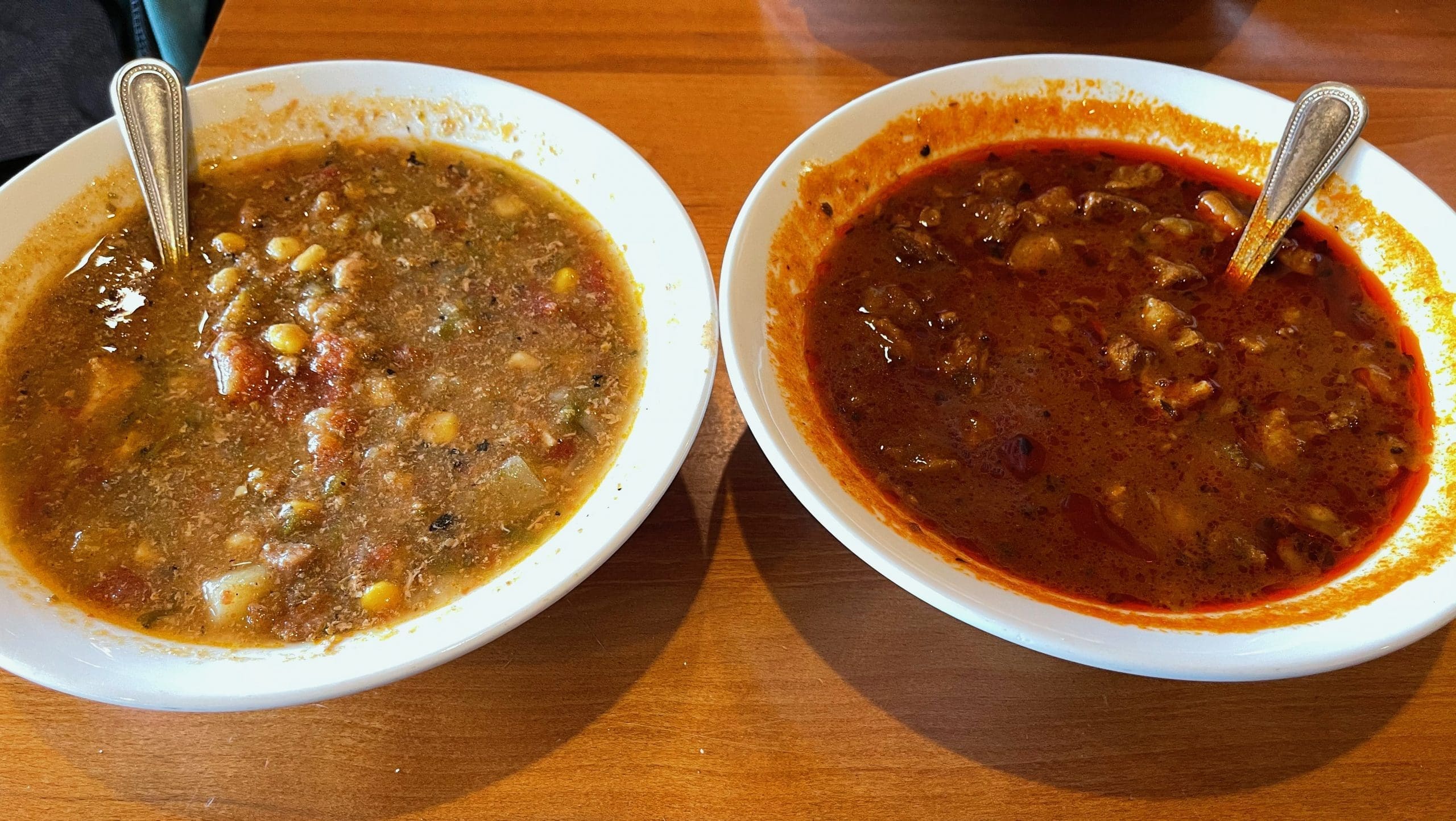
The James Beard America’s Classics Award honors locally owned restaurants with timeless appeal, beloved in their region for serving quality food that reflects the character and cultural traditions of their community, and must have been operating for at least 10 years, recognizing enduring, community-rooted establishments over flashy new trends. While the America’s Classic award is presented annually, only six of the twelve James Beard regions are eligible each year.  That means every other year, each region is represented.  This ensures broad coverage over time.  The most recent New Mexico recipient of the America’s classic award is the incomparable Mary & Tito’s. In 2012, the Fry Bread House, a beloved Phoenix institution since 1992, earned the America’s Classic award, becoming the very first Native American restaurant in the United States to earn that distinction.  The Fry Bread house was started by Cecelia Miller, a member of the Tohono O’odham Nation.  After she passed away in 2020, her children Jennifer and Richard continue the tradition.  According to the restaurant’s website “Tohono Oʼodham people are known throughout the southwest for their red chili beef, large, hand-stretched flour tortilla and fry bread.”   Over the years, the restaurant has garnered many “Best of the City”…

Earl’s Family Restaurant – Gallup, New Mexico

Two years after the end of the “second war to end all wars,”  a hamburger joint in Gallup first opened its doors.  What started out as a small burger place with scant seating (four stools and a couple of booths) has grown over the years to accommodate legions of loyal guests, some of whom have been frequenting Earl’s Family Restaurant practically since its inception.  Today, the seating capacity at Earl’s approximates 300.   That’s just barely enough to accommodate crowds during peak hours  Earl’s is open seven days a week fror breakfast, lunch and dinner. At nearly eighty years of serving Gallup residents and travelers along historic Route 66, Earl’s shows no signs of surcease. As you amble through the canopied walkway to the restaurant’s entrance, you’ll pass by several tables lining the walkway.  Stationed at those tables are several intrepid Native Americans hawking their wares, braving rain, snow and gloom of night to do so.   This is among the many charming aspects of dining at Earl’s.  You’ll enjoy occasional visits to your table by local artisans from the Native American community.  They’re never intrusive nor will they ever push you to purchase their wares (like some of annoying door-to-door vacuum…

Juniper Coffee & Eatery – Farmington, New Mexico

Before heading off for an overnight stay in Farmington back in February, 2023, I scoured the internet for suggestions on where to have breakfast.  My criteria was simple:  preferably a Navajo owned-and-operated eatery.  Restaurants who spell New Mexico’s official state vegetable “chili” wouldn’t be considered.  Yelp came through on its listing of the ten best restaurants for breakfast in Farmington.  At the very top of that list was Juniper Coffee and Eatery on College Blvd.  Little did I know how enthusiastically and overwhelmingly that choice would be endorsed later by people with whom I shared a dinner table and many laughs.  Serendipity certainly played a role in my breakfast venue of choice. Serendipity also played a role in that the address for the LorAmy’s Valentine’s Dining Experience presented by James Beard Award Finalist Justin Pioche and the address of Juniper Coffee and Eatery were one and the same.  Justin had borrowed the venue from his friends at Juniper for the exclusive one night Valentine’s Day extravaganza.  As the only unaccompanied diner at the event, I had the great privilege and blessing of being seated next to the great chef’s three aunts and one uncle.  When I asked them what Farmington restaurant…

PIOCHE FOOD GROUP – Fruitland, New Mexico

As my friend and retired restaurateur Tom Hamilton and I watched the Pioche family prepare a meal for some twelve guests, we both marveled at the quiet efficiency of the kitchen.  A veteran of decades leading highly-regarded kitchens, Tom related that most kitchens are a loud and frenetic hive of activity amped up to high volume.  Communication among kitchen staff is an absolute must to ensure synchronicity, especially when multiple courses are being prepared.  Instead of the characteristic chaotic din of most restaurant kitchens, the Pioche family worked in harmony, focusing on the quiet, efficient, and harmonious execution of the multitudinous tasks involved in the preparation of  a nine-course meal. It probably shouldn’t have surprised us so much that the Pioche family worked in such consonance.  After all, a traditional traditional Navajo (Diné) approach to family and communication is deeply rooted in the concept of K’é, a system of kinship and connectivity. This approach emphasizes respect and collective responsibility.  While Chef Justin Pioche is  the marquee name, he deflects praise and credits his sister Tia and mom Janice.  He’ll tell you he can’t operate without them and he’s not just being modest.  Like concordant instruments in an orchestra, each family member…

Isleta Grill – Albuquerque, New Mexico

When the Spanish arrived in the late 1500s they named the village south of Albuquerque Isleta, a diminutive of “isla” which means “island.”  Fast forward 600 years, and may as well have been christened “desert island” as in short for “deserted island.”  Despite being one of the largest of New Mexico’s nineteen Pueblos, drivers may not have even known that Exit 215 off Interstate 25 will transport them to the home of some 3,000 inhabitants.   That is until the Isleta Resort & Casino began operating in 1986.  Calling itself “New Mexico’s Grandest Casino Resort,” the Isleta Casino Resort boasts of the best of headline entertainment, capacious meeting rooms, gaming, dining and more.  It’s located just minutes South of Albuquerque’s Sunport and in fact, it has an Albuquerque address. So does the Isleta Grill which itself might have remained a hidden treasure had it not been for the New Mexico State Fair’s green chile cheeseburger challenge.  While the New Mexico State Fair hosts a number of food related competitions, none garner as much attention as the green chile cheeseburger challenge.  Unlike political elections, the public is not subjected to a months-long bombardment of torturous and borderline slanderous messages.  Instead, an online call goes…

El Roi Cafe – Albuquerque, New Mexico (CLOSED)

You know you’ve been involved in project management for too long when the only thing that comes to mind when told about a restaurant named “El Roi” is “why would a restaurant be named for a Return on Investment (ROI).”  For those of us who have worked in Information Technology, ROI is a financial ratio used to calculate the benefit an investor will receive in relation to their investment cost.  Restaurants often have a poor return of investment–not just in financial capital, but in human capital.  Restaurants require a significant investment in time by owners as well as kitchen and “front of the house” staffs and the financial return isn’t exactly lucrative.  My Kim theorized that Roi is probably a preferred derivation of Roy.  “By poor spellers,” I chortled.  It turns out my brainy bride was correct…well, almost.  According to Namedat, a website which takes social security administration data and converts it to facts and stats about names of people in the United States, there are actually 8,706 humans in the country with the first name Roi.  Naturally one of the very first questions we asked when we finally made it to El Roi is just what does the name…

Indian Pueblo Kitchen – Albuquerque, New Mexico

>Pedro de Castaneda, a Spanish explorer who chronicled Coronado’s expeditions through the southwest from 1540 to 1542 observed that corn, beans, and squash were the main staples of the pueblo diet. Of the three, which have come to be known as “Three Sisters,” corn was the most important. It was boiled whole, toasted on the cob, or dried and ground into a fine powder easily cooked as bread or gruel.  Every day female family members knelt before metates (grinding stones), grinding corn to feed their gods, fetishes and kin. One crushed the maize, the next ground it and the third ground it even finer. Castaneda observed that the women worked joyfully at this task.  The three sisters of corn, beans and squash remain an integral part of the pueblo diet. Think “pueblo harvest” and the first image the term evokes is likely of the classical “horn of plenty” motif depicting a bountiful cornucopia in which corn, beans and squash spill out of a goat’s horn.  This rich symbolism of pueblo life also represents the cuisine at the Indian Pueblo Kitchen (formerly known as Pueblo Harvest), a restaurant which celebrates the culinary traditions of New Mexico’s nineteen Indian pueblos and showcases…