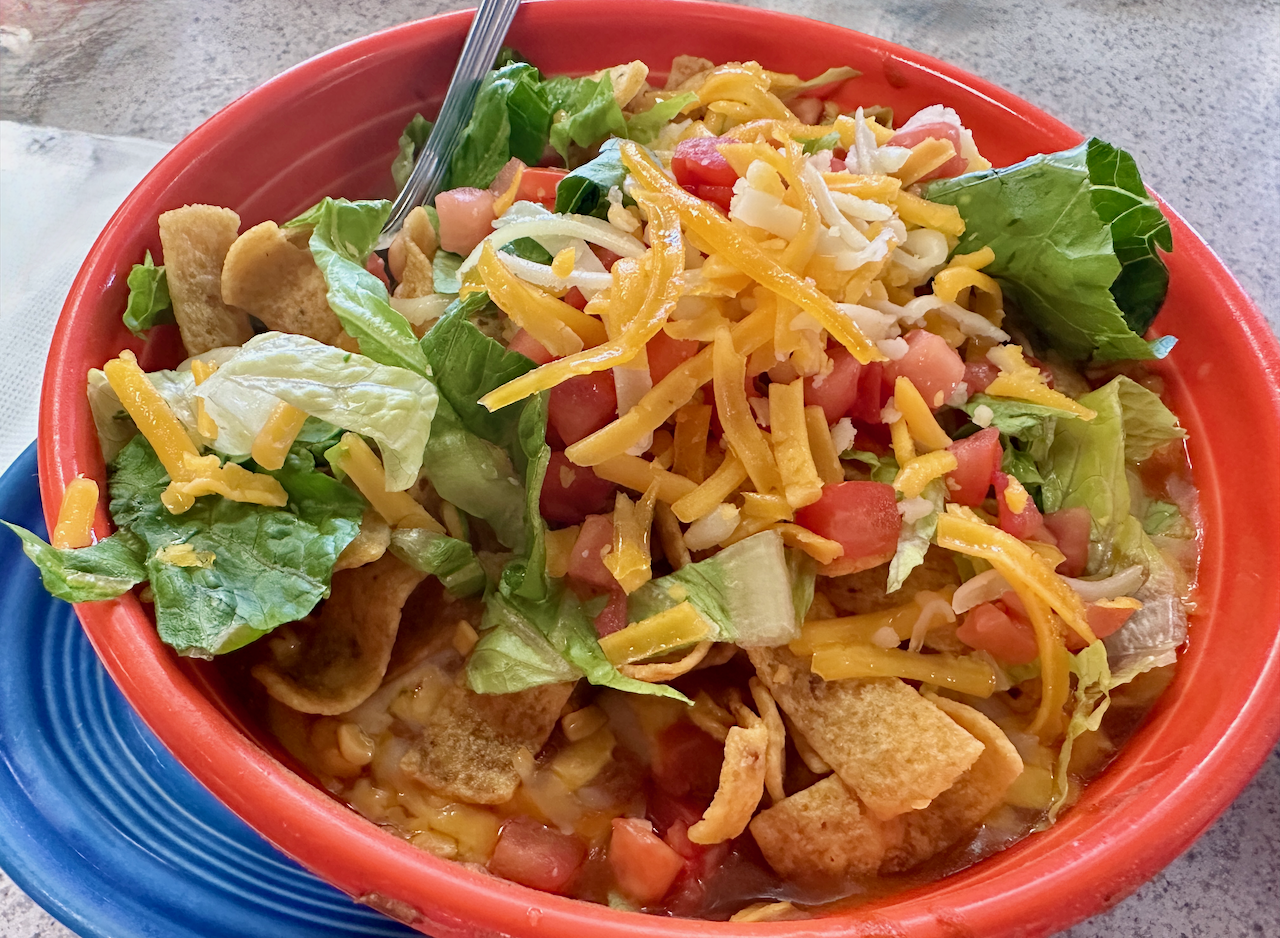
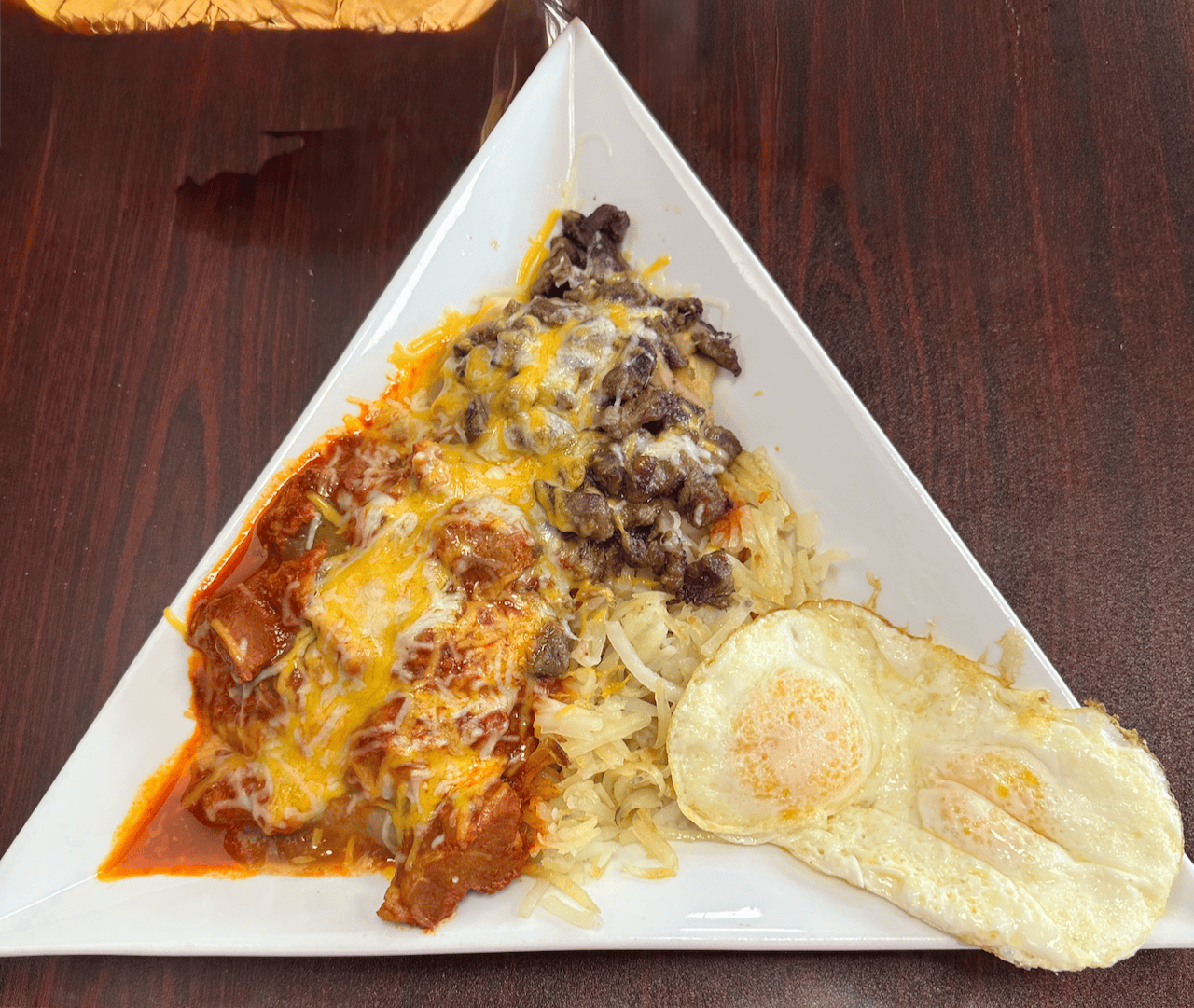
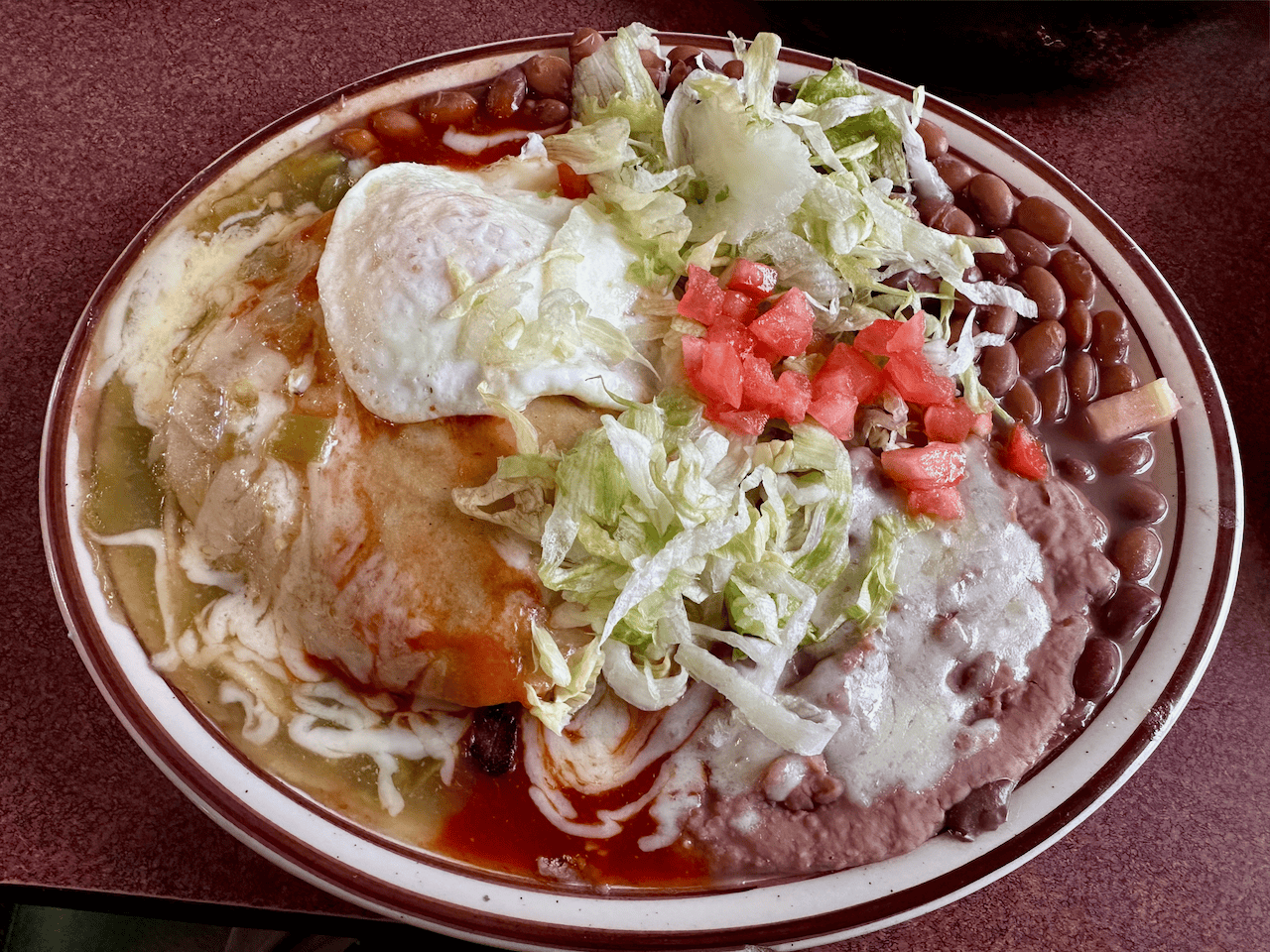
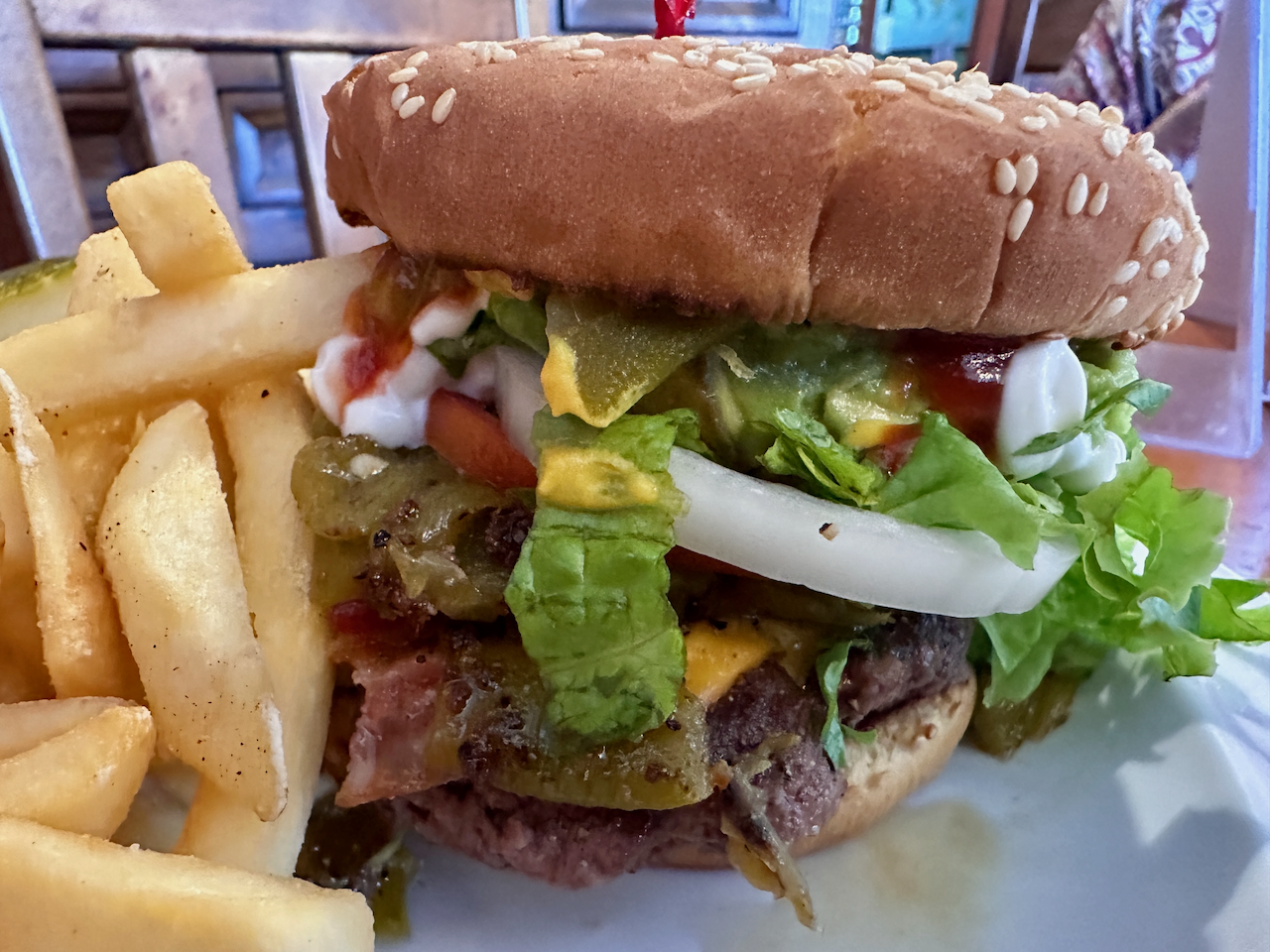
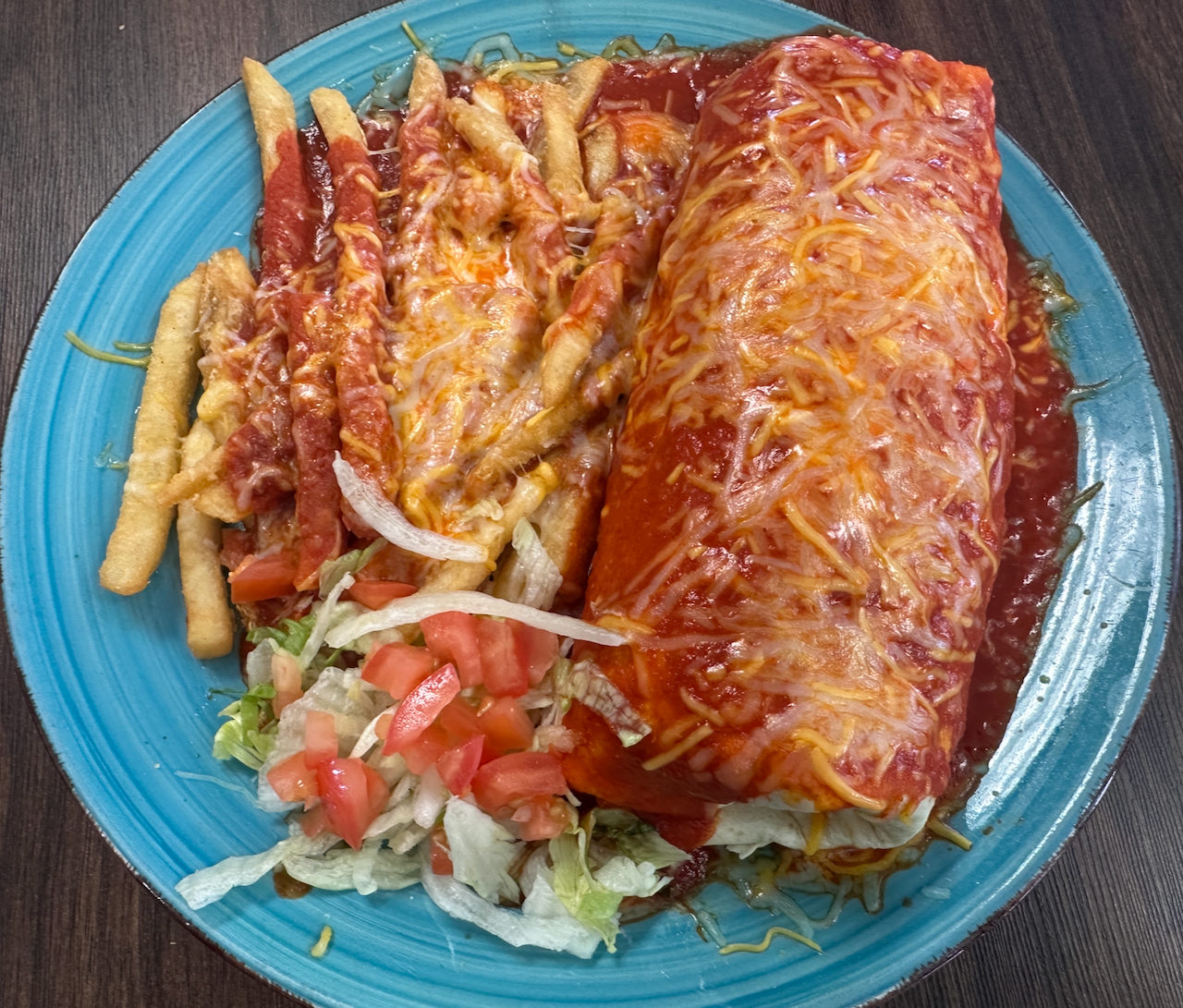
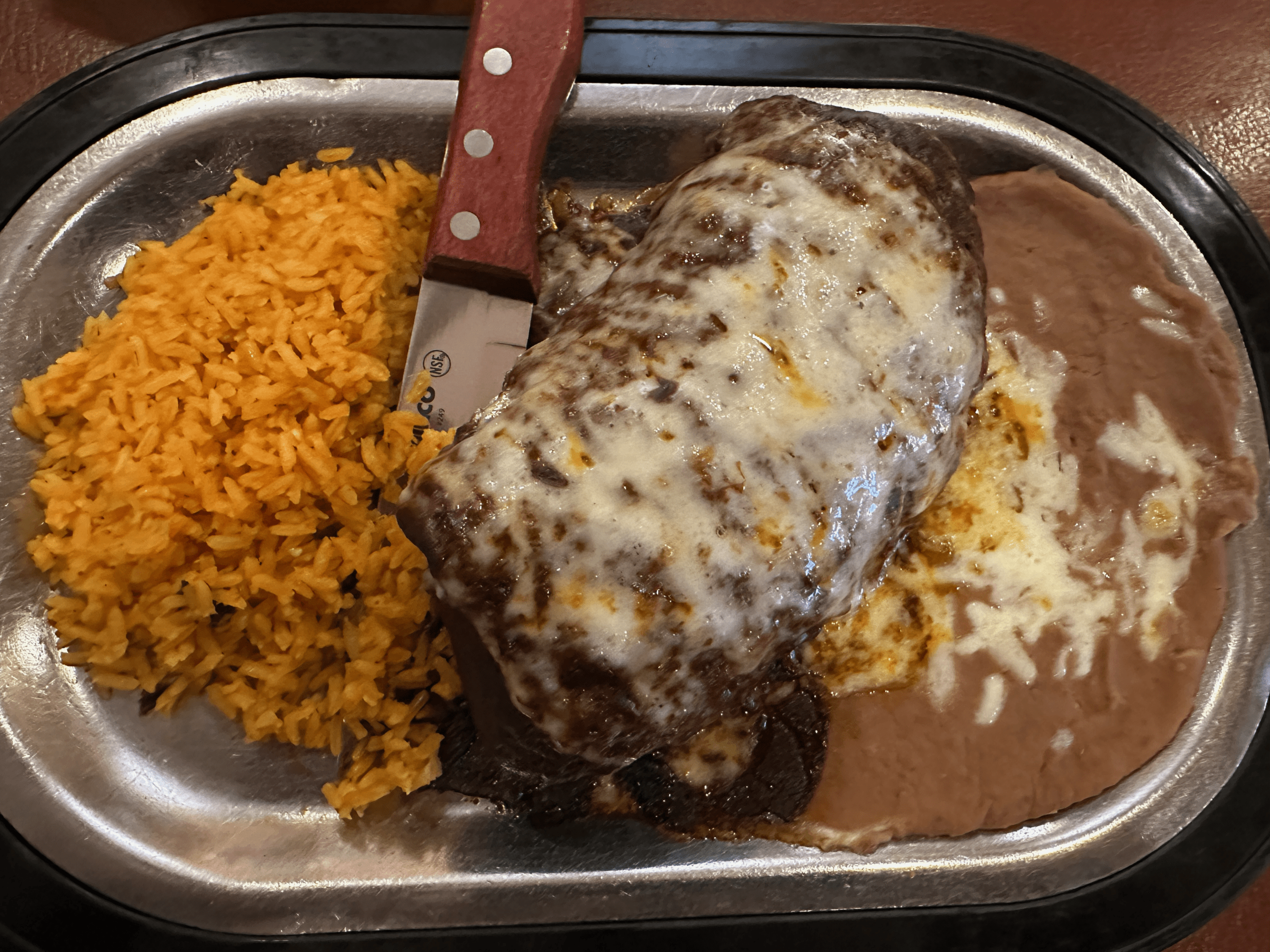
Albuquerque City Limits – Albuquerque, New Mexico

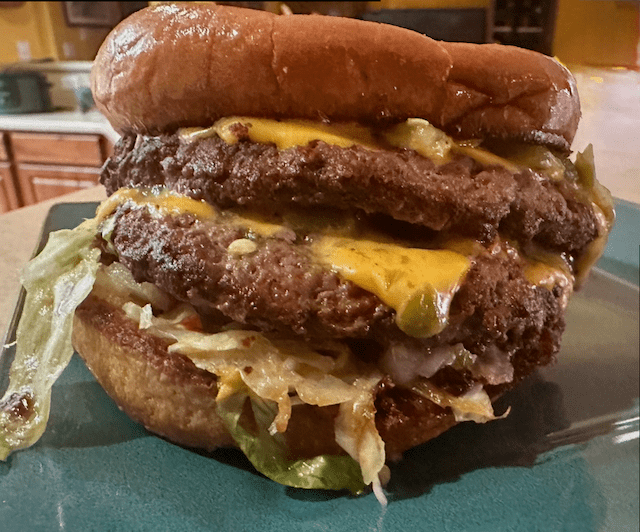
“It’s when I reach the city limits that my sense of security ends and my sense of adventure begins.” ~Anthony T. Hincks Author: Verbs in Storyland Why is it the term “city limits” conjures the same type of trepidation today that very early (before the Third Century BC) explorers must have felt when they thought the Earth was flat and if they navigated too far west, they’d fall off the edge of the map?   Why is it Hollywood has consistently portrayed the area just beyond city limits as either a dystopian wasteland or a bastion of lawless libertinage?  For that matter, why do so many “inner city” Duke City dwellers believe the city limits is too far a distance to travel for a good meal? Think I’m kidding?  When I told friends and colleagues about having discovered one of the state’s very best green chile cheeseburgers in the South Valley, their typical reactions were “only you would go that far for a burger” and “why didn’t you just go a little further and eat at The Owl.”   You’d think I had trekked to South America, not the South Valley.  You’d think I had risked life and limb.  Perhaps the South Valley…

La Sierra New Mexican Restaurant – Albuquerque, New Mexico

“I eat uno, dos, tres, quatro burritos Pretty soon I can’t fit in my Speedos Well, I hope they feed us lots of chicken fajitas And a pitcher of margaritas” ~Taco Grande by Weird Al Yankovic While perusing the slogans–One Bite And You’re Hooked; Cooked Slow, Served Hot, Loved Fast; Hot Chile makes Everything Better” on the windows of La Sierra, I half expected to see lyrics from the “Weird “Al Yankovic song “Taco Grande”  (a parody of the song “Rico Suave”).  What I didn’t expect was for La Sierra to live up to its self-aggrandizing hype.  Of course, diners always hope a restaurant is as good as it professes to be, but all-too-often an eatery doesn’t live up to the hype.  La Sierra does…and then some! Albuquerque’s very first instantiation of La Sierra (not to be confused with the venerable Mac’s La Sierra) launched in July,  2025 on the corner of Menaul and University at the site of a former Little Anita’s.   Some nine months later, a second La Sierra opened its doors.  This one is located on Alameda just west of Corrales Road. You may recall that this location once housed The Whole Enchilada which was later renamed…

Los Cuates – Albuquerque, New Mexico

Of the five variations of twins that occur commonly throughout the world, the most common fraternal (non-identical) occurrence is male-female twins which transpire in about 40% of all twins born. Fraternal twins may share up to 50% of their genes and generally are no more similar or dissimilar than any other two siblings.  Although technically not twins because they were “born” four years apart, the Duke City’s most famous twins are the Los Cuates restaurants (cuates being the Spanish word for twins), named for Antoinette and Marcus, the fraternal male-female twins of founder Frank R. Barela, an inspiration for all of us who started at the bottom and worked our way up. Barela got his start in the restaurant business in 1971 as a busboy at Silvano’s, a legendary Duke City purveyor of New Mexican food.  In 1985, he bought Silviano’s and renamed it Los Cuates after his newborn children.  In 1989, he took over another Albuquerque landmark of the era, Cocina De Carlos Mexican Restaurant, across the street from his first eatery. Because of the two restaurant’s twin-like proximity, he also named it Los Cuates…not Los Cuates I and Los Cuates II, just Los Cuates.  Note: While walking the…

Calavida Cantina – Albuquerque, New Mexico

At Calavida Cantina, you’re invited to “party like the dead.”  If you haven’t partied like the dead, you’re probably not well acquainted with the Mexican tradition of “El Dia De Los Muertos,” the Day of the Dead.  During this Mexican holiday, the profusion of skeletons of all sizes performing day-to-day activities signifies the return to this world of the dead who remain who they were when they lived, doing what they did.  For example, skeletal figures depicted on the artwork at Calavida Continue would have been party animals when they graced this earthly plane.  Therefore in death, they remain party animals–eating, drinking and being merry.   At Calavida, the party animals of a past life mingle with party animals of today in a milieu that’s the antithesis of a morgue or mortuary. When we first espied the Calavida Cantina, I worried my Spanish vocabulary was diminishing with age (I’m 39) and lack of practice.  It was a relief to learn that Calavida isn’t an actual word, but a portmanteau blending calavera (skull) with vida (life), “a nod to the Día de los Muertos belief that joy and remembrance can—and should—coexist.” Calavida “toasts to the past, celebrates the present, and crafts liquid stories for the…

Perea’s Tijuana Bar & Restaurant – Corrales, New Mexico

The curious appellation “Tijuana Bar” dates back to the 1920s when the 18th amendment to the Constitution established Prohibition in the United States during the period 1920 to 1933. Because Prohibition forbade the sale of alcoholic beverages, many Americans got their alcohol illegally or they went to Mexico. Tijuana was a popular vacation and honeymoon destination and it happens to be where Teofilo C. Perea, Sr. and his bride honeymooned in the 1920s. The newlyweds visited a bar called the “Tijuana Bar” and decided then and there to use that name should they ever open a bar. Bureaucracy being what it is, once a license to dispense alcohol is issued, it’s very difficult to change the name on the license–hence Tijuana Bar. It fits. Housed in one of the oldest buildings in Corrales, a 200 year plus old structure constructed of “terrones” or thick slabs of earth rather than adobes, Perea’s Tijuana bar & Restaurant doesn’t subscribe to the notion that all food served in Corrales has to be of high-brow fru-fru variety. In fact, for outstanding home-cooked New Mexican food, Perea’s is one of a handful of restaurants vying for “best restaurant” in the Duke City area. In my…

Twisters Burgers & Burritos – Albuquerque, New Mexico

One of the sure signs of spring and summer in New Mexico is the presence of dust devils, those haphazardly whirling, dirty, dusty dervishes which seem to whip up out of nowhere to vacuum up all surface detritus on their unpredictable paths. Tumbleweeds, trash and soil spin skyward to heights of up to 100 feet only to be deposited–torn, tattered and worse for wear– sometimes great distances from their points of origin.  Normally lasting no longer than a few seconds, dust devils are nature’s hot wind temper tantrum, capable of wreaking havoc quickly and with tremendous force. At their worse, they can rip siding off buildings, snap power lines, overturn lawn furniture, send trash cans careening down the street and propel sheet metal through windows.  If a home isn’t well insulated, being on the path of a dust devil will mean a covering of fine sand throughout the home. A dust devil might not transport Dorothy and Toto to Oz, but it will certainly bug the heck out of them. As prominent a presence as dust devils are throughout New Mexico, they aren’t exactly popular.  You certainly won’t find any schools proudly proclaiming the Dust Devil as their mascot.  (Yet,…

Ramona’s Mexican Cafe – Albuquerque, New Mexico

“No one who cooks, cooks alone. Even at her most solitary, a cook in the kitchen is surrounded by generations of cooks past, the advice and menus of cooks present, the wisdom of cookbook writers.” ~Laurie Colwin, Novelist Watch virtually any episode of Kitchen Nightmares and you might just be convinced that families can’t possibly work together in a restaurant.  Kitchen Nightmares, one of Gordon Ramsay’s eight-hundred or so television shows, is rather formulaic–Ramsay spends a week with a failing restaurant in an attempt to revive the business.  Almost invariably, the failing restaurant is owned and operated by a family.  Almost invariably, the drama falls just short of Homer strangling Bart.  Arguments on Kitchen Nightmares are loud and intense.  Copious tears are shed.  Predictably, the sagacity and sangfroid of Saint Ramsay brings sanity to the family fray and the family joins him in a rendering of kumbaya. Contrast a visit to a Kitchen Nightmares restaurant with a visit to Ramona’s Mexican Cafe and the only drama you might experience is the internal conflict of trying to figure out what to order from a terrific menu.  Ramona, the matriarch of the Chavira Y Valles family, runs the kitchen with her sons.…

Si Señor – Las Cruces, New Mexico

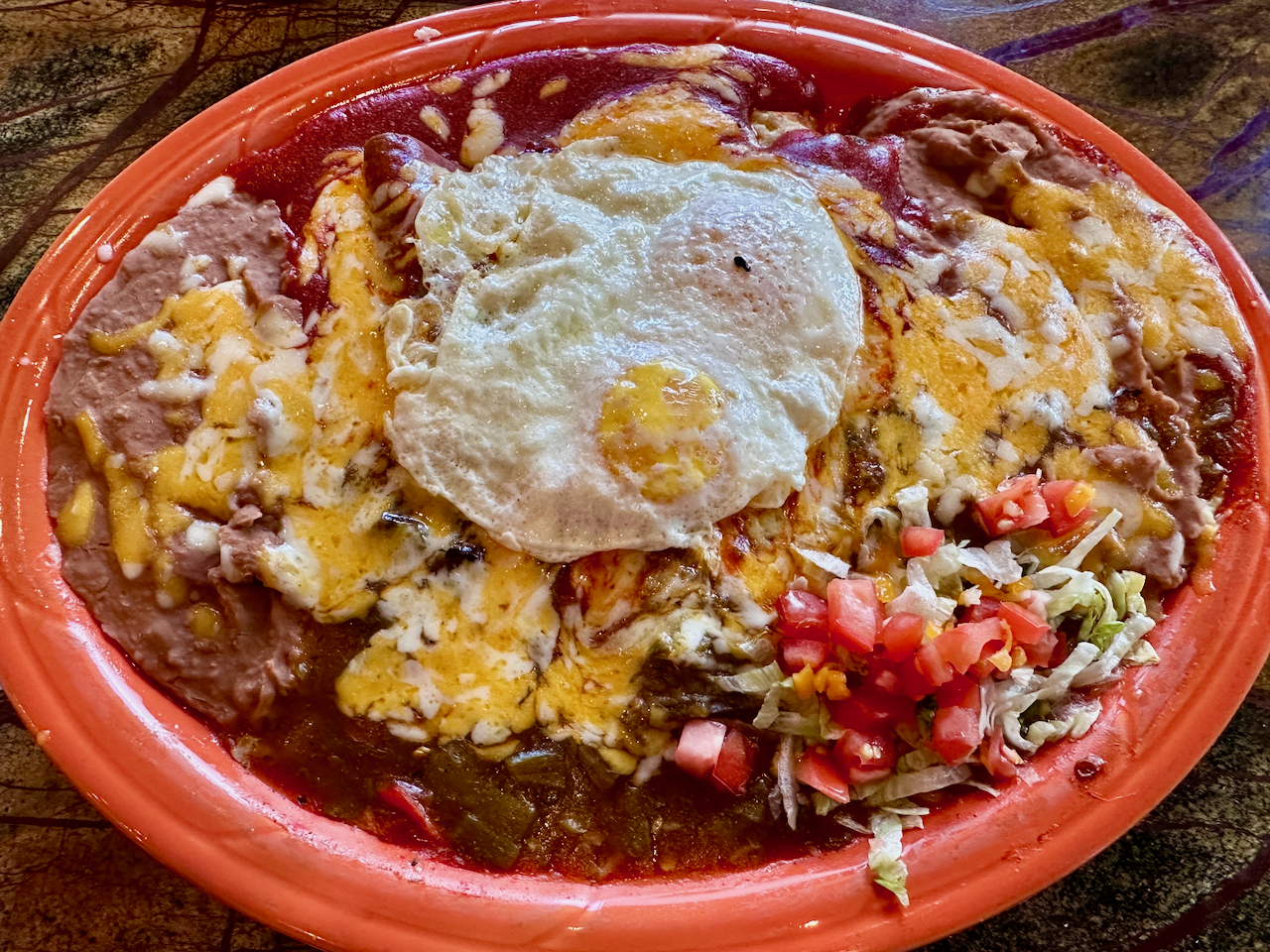
Much as New Mexicans would like to think our sacrosanct red and green chile is resultant from God’s infinite grace, there’s more than divinity at work.  Would you believe science?  Even before it became known as New Mexico State University (NMSU), the state’s second largest university has played a crucial role in chile production by leading breeding programs for disease-resistant, higher-yielding varieties. It started with Fabian Garcia, a member of the first graduating class in 1894.  In 1898, Garcia became director of the agricultural experiment station. His research focused on helping farmers transition away from grain production. He became known for developing improved chile pepper varieties, a contribution that shaped New Mexico’s agricultural identity. The principal objective of NMSU’s Chile Pepper Breeding and Genetics Program is improvement of chile pepper production through genetically superior germplasm. New Mexico’s chile pepper production can be separated into five major commodities: green chile, red chile, paprika, cayenne, and jalapeno. The overall production value of chile hovers around $40-50 million annually in recent years (e.g., $41.5M in 2023), with most sold for processing into salsas and sauces Chile has long been the Land of Enchantment’s number one cash food crop. Its overall economic impact (including…

Mick’s Chile Fix – Albuquerque, New Mexico

Addicts are all too familiar with the symptoms, especially the insatiable cravings that can only be quelled by a fix. There’s nothing like the high you get from the addictive mistress that is New Mexican chile. That’s why we willingly singe our tongues and scald our taste buds to get that fix. What gives chile its intense fire and creates the need for a fix is a chemical called capsaicin, a natural ingredient that stimulates the mouth’s nerve endings, causing a burning sensation. In response to this burning sensation, the brain releases endorphins, natural painkillers that may produce a temporary “high.” So, the more of a fiery chile you eat, the stronger the soothing effect. Even though chile isn’t medically addictive, some chile lovers may be hooked on the high they get…just ask anyone in New Mexico who loves the stuff. Better still, ask a chile addict who no longer lives in New Mexico and can’t get the stuff everyday. The withdrawal is painful. In dreams they are plagued by the unrequited yearning which can be fulfilled only by a satisfying bowl of red or green. They wake to drool soaked and chewed up pillows. New Mexicans are fortunate indeed…

Earl’s Family Restaurant – Gallup, New Mexico

Two years after the end of the “second war to end all wars,”  a hamburger joint in Gallup first opened its doors.  What started out as a small burger place with scant seating (four stools and a couple of booths) has grown over the years to accommodate legions of loyal guests, some of whom have been frequenting Earl’s Family Restaurant practically since its inception.  Today, the seating capacity at Earl’s approximates 300.   That’s just barely enough to accommodate crowds during peak hours  Earl’s is open seven days a week fror breakfast, lunch and dinner. At nearly eighty years of serving Gallup residents and travelers along historic Route 66, Earl’s shows no signs of surcease. As you amble through the canopied walkway to the restaurant’s entrance, you’ll pass by several tables lining the walkway.  Stationed at those tables are several intrepid Native Americans hawking their wares, braving rain, snow and gloom of night to do so.   This is among the many charming aspects of dining at Earl’s.  You’ll enjoy occasional visits to your table by local artisans from the Native American community.  They’re never intrusive nor will they ever push you to purchase their wares (like some of annoying door-to-door vacuum…

Hello Deli – Albuquerque, New Mexico

HELLO DELI (to the tune of Hello Dolly) “Hello Deli, this is Joe, Deli would you please send up a nice corned beef on rye. A box of RITZ, Deli and some Schlitz, Deli Some chopped liver and a sliver of your, apple pie. Turkey Legs, Deli hard boiled eggs, Deli and a plate of those potatoes you french fry, oh Don’t be late, Deli I just can’t wait Deli, Deli without breakfast, I’d just die.” ~ Frank Jacobs (Writer for MAD Magazine) In 2016, BBC Travel lamented the imminent demise of the New York City deli.  “Not the corner markets or bodegas that appear on nearly every New York block,” but “the true New York City delicatessen: the brick and mortar expression of the American immigrant experience, the very culinary soul of the city. “Some 80 years ago, New York City was home to three or four thousand delis. Today, there are less than 24.”  That true New York City delicatessen of which BBC Travel wrote showcased “the food of the Eastern European peasantry – smoked sausages and cured meats, smoked cabbage and offal stews and dark bread, salted fish and boiled dumplings.”  The primary draw to the New York…