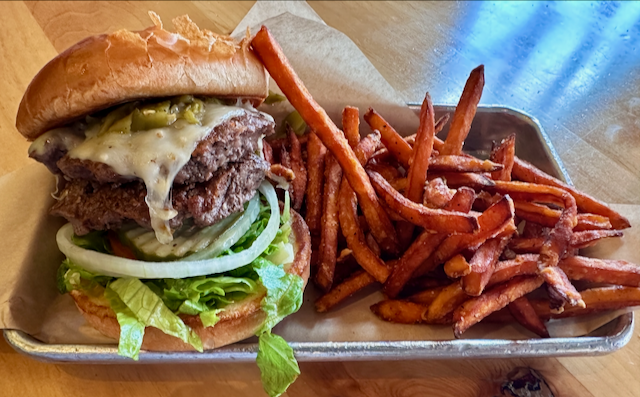
Grassburger – Albuquerque, New Mexico

For nearly a decade, television viewers have been subjected to a very successful advertising campaign depicting contented cows talking and singing about the pleasures of life in sunny and warm California. The slogan for the “happy cows” campaign’ is “Great cheese comes from happy cows. Happy cows come from California.” The campaign would have you believe the cows are happy because they feast and frolic on a diet of delicious grass from verdant hillsides and not on troughs full of grains which don’t taste quite as good. I don’t know about cows being happier because they graze on grass, but can certainly attest to being a happier diner when enjoying a diet of grass-fed beef. Generations of New Mexicans, particularly from the more verdurous northern villages, find the notion of grain-fed cattle heretical. All our cows are grass-fed thanks to open-range grazing laws which allow carefree cows to traipse up and down the streets in search of unfenced (or poorly fenced) yards in which the grass does appear to be greener. In the late spring when mountain snows have started to melt, many ranchers herd their cattle into the mountains where meadowlands near the timberline are abundant. In fall when…

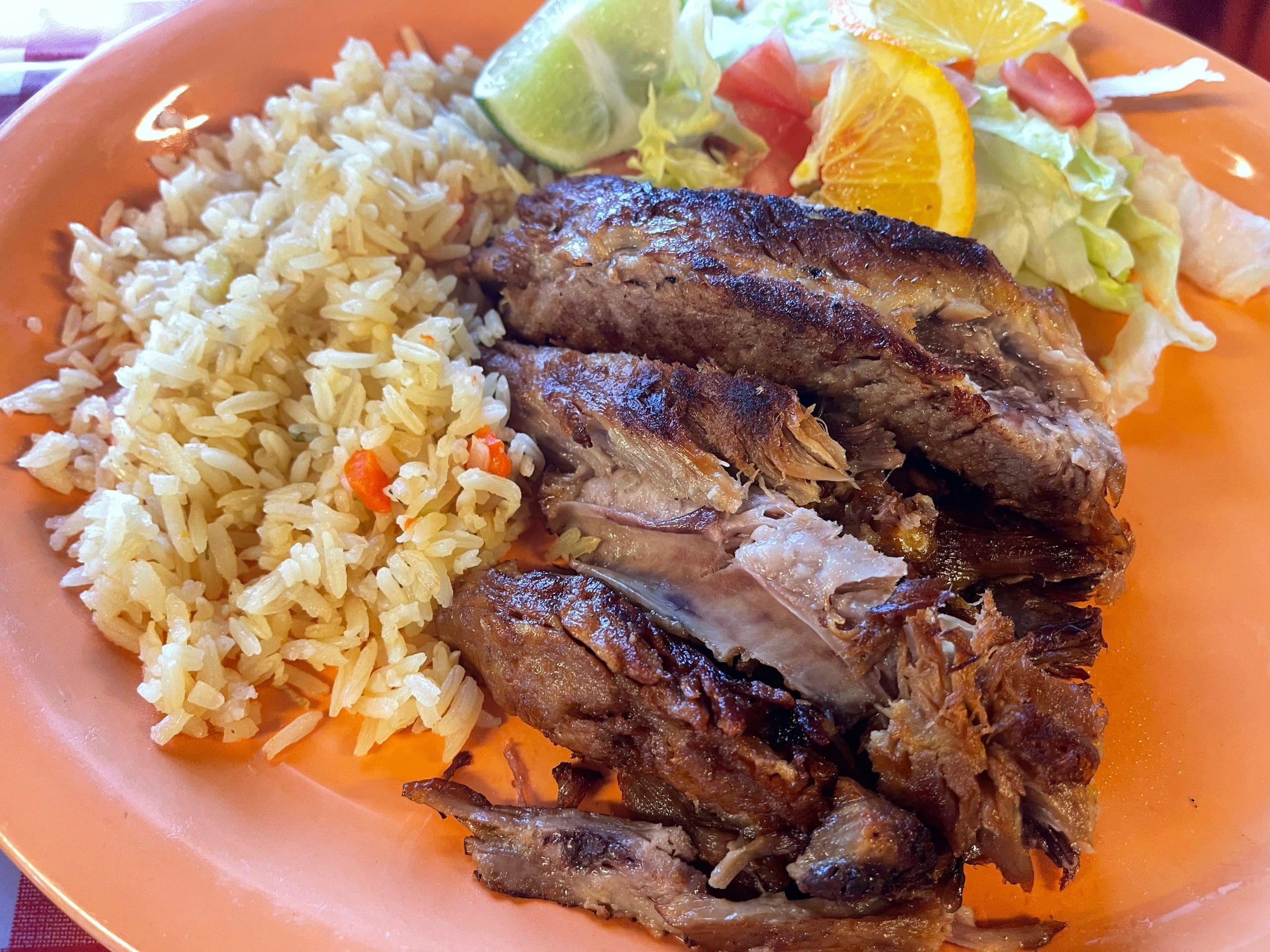
Los Olivos – Albuquerque, New Mexico

For many New Mexicans, Durango, Colorado is much more familiar than Durango, Mexico.  In truth, however, Mexico’s Durango may actually have more historical significance and ties to the Land of Enchantment than its like-named resort town in Colorado.  That’s especially true for the Catholic Churches of New Mexico. Episcopal jurisdiction for the Catholic church in New Mexico was placed in 1797 under the stewardship of the Bishop of Durango. New Mexico remained part of the Diocese of Durango until 1850 when Pope Pius IX created the Vicariate Apostolic of New Mexico and appointed Father Jean Baptiste Lamy as its first Bishop.  Yes, that’s the same Father Jean Baptiste Lamy on whom Wila Cather’s Death Comes For the Archbishop is based. Durango, Mexico was also a significant “paraje” (stopping point) along the The Camino Real de Tierra Adentro (Royal Road of the Interior Land), the 1,590 mile road between Mexico City and San Juan Pueblo (Ohkay Owingeh), New Mexico. During the 17th Century, the area between the villas of Durango and Santa Fe also came to be known as “the Chihuahua Trail.”   It’s a vast understatement to declare that Santa Fe’s reliance on El Camino Real was crucial to the…