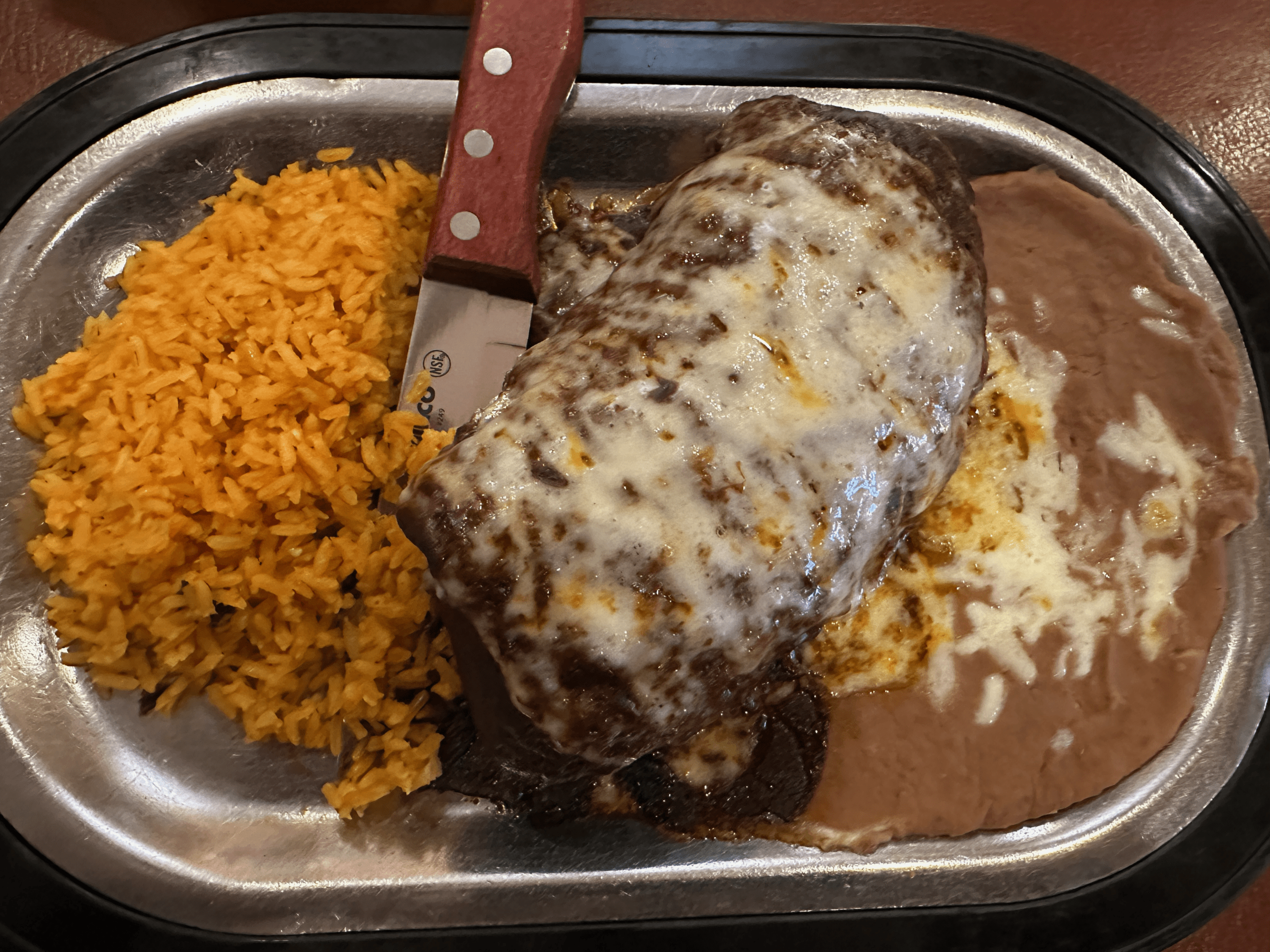
Si Señor – Las Cruces, New Mexico

Much as New Mexicans would like to think our sacrosanct red and green chile is resultant from God’s infinite grace, there’s more than divinity at work.  Would you believe science?  Even before it became known as New Mexico State University (NMSU), the state’s second largest university has played a crucial role in chile production by leading breeding programs for disease-resistant, higher-yielding varieties. It started with Fabian Garcia, a member of the first graduating class in 1894.  In 1898, Garcia became director of the agricultural experiment station. His research focused on helping farmers transition away from grain production. He became known for developing improved chile pepper varieties, a contribution that shaped New Mexico’s agricultural identity. The principal objective of NMSU’s Chile Pepper Breeding and Genetics Program is improvement of chile pepper production through genetically superior germplasm. New Mexico’s chile pepper production can be separated into five major commodities: green chile, red chile, paprika, cayenne, and jalapeno. The overall production value of chile hovers around $40-50 million annually in recent years (e.g., $41.5M in 2023), with most sold for processing into salsas and sauces Chile has long been the Land of Enchantment’s number one cash food crop. Its overall economic impact (including…