Los Cuates – Albuquerque, New Mexico

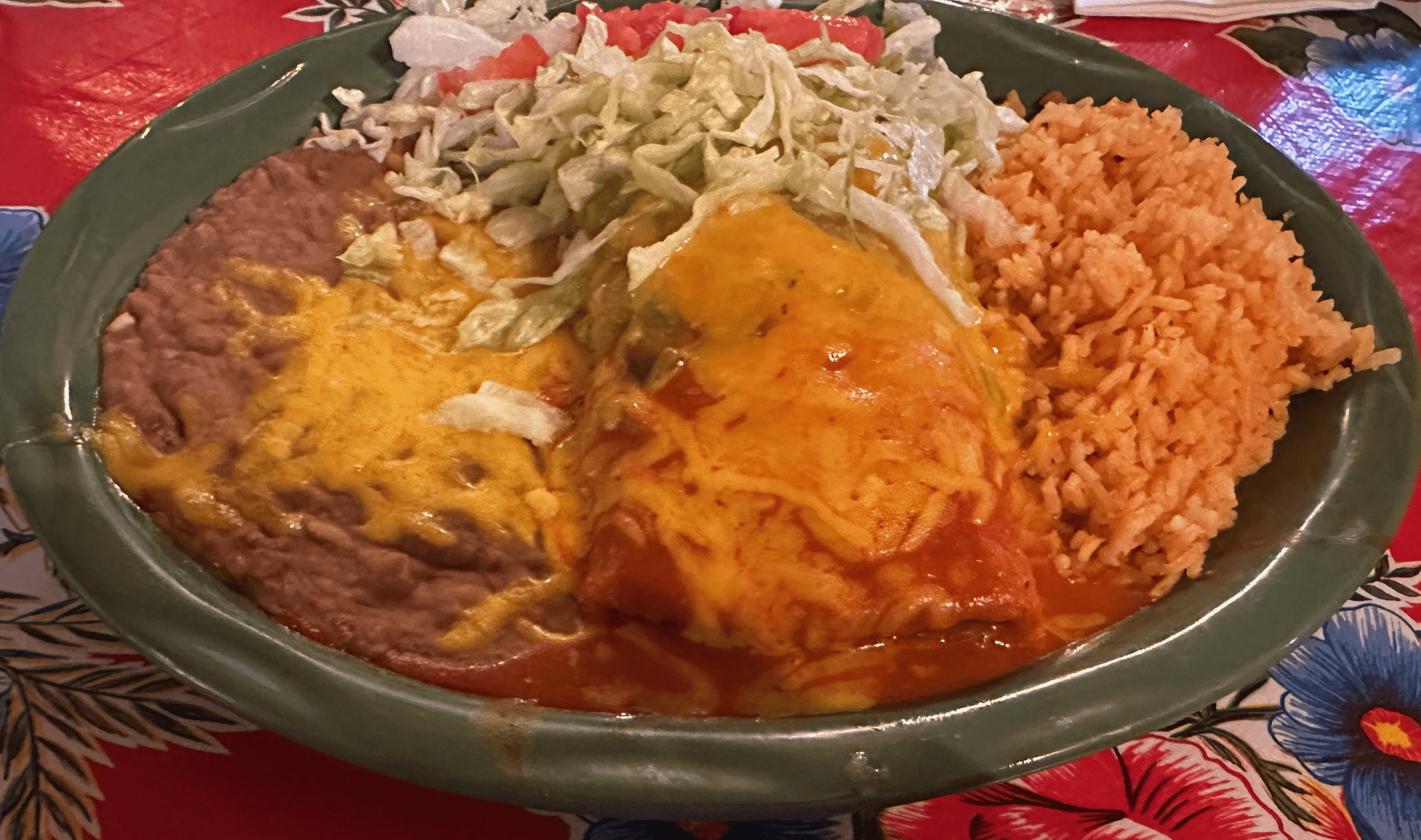
Of the five variations of twins that occur commonly throughout the world, the most common fraternal (non-identical) occurrence is male-female twins which transpire in about 40% of all twins born. Fraternal twins may share up to 50% of their genes and generally are no more similar or dissimilar than any other two siblings.  Although technically not twins because they were “born” four years apart, the Duke City’s most famous twins are the Los Cuates restaurants (cuates being the Spanish word for twins), named for Antoinette and Marcus, the fraternal male-female twins of founder Frank R. Barela, an inspiration for all of us who started at the bottom and worked our way up. Barela got his start in the restaurant business in 1971 as a busboy at Silvano’s, a legendary Duke City purveyor of New Mexican food.  In 1985, he bought Silviano’s and renamed it Los Cuates after his newborn children.  In 1989, he took over another Albuquerque landmark of the era, Cocina De Carlos Mexican Restaurant, across the street from his first eatery. Because of the two restaurant’s twin-like proximity, he also named it Los Cuates…not Los Cuates I and Los Cuates II, just Los Cuates.  Note: While walking the…

La Posta De Mesilla – Mesilla, New Mexico

If only walls could talk, you’d want the adobe brick walls at La Posta (The Inn) to recount their impressions of the veritable “who’s who” of Western history who once sought shelter within its fortified walls.  You’d want those walls to reveal their thoughts of legendary outlaw Billy the Kid who hung out at La Posta on his road to notoriety.  You’d want those walls to tell you about the steely presence of General Douglas MacArthur, who commanded Allied forces in the Pacific Theater during World War II. You’d want those walls to share their account of Generalissimo Pancho Villa, another sojourner who sought shelter at La Posta.  Certainly no raconteur could provide the details known only to the walls at La Posta when it quartered controversial frontiersman Kit Carson or for then General, later President, Ulysses S. Grant. Built in the 1840s by Sam and Roy Bean, themselves  historical luminaries, La Posta was originally a freight and passenger service.  After the Civil War, it became part of the Butterfield Stagecoach line which ferried passengers and mail from eastern outposts in Memphis and St. Louis to California.  During the 1870s and 1880s, the sprawling edifice was home to the Corn…