Calavida Cantina – Albuquerque, New Mexico

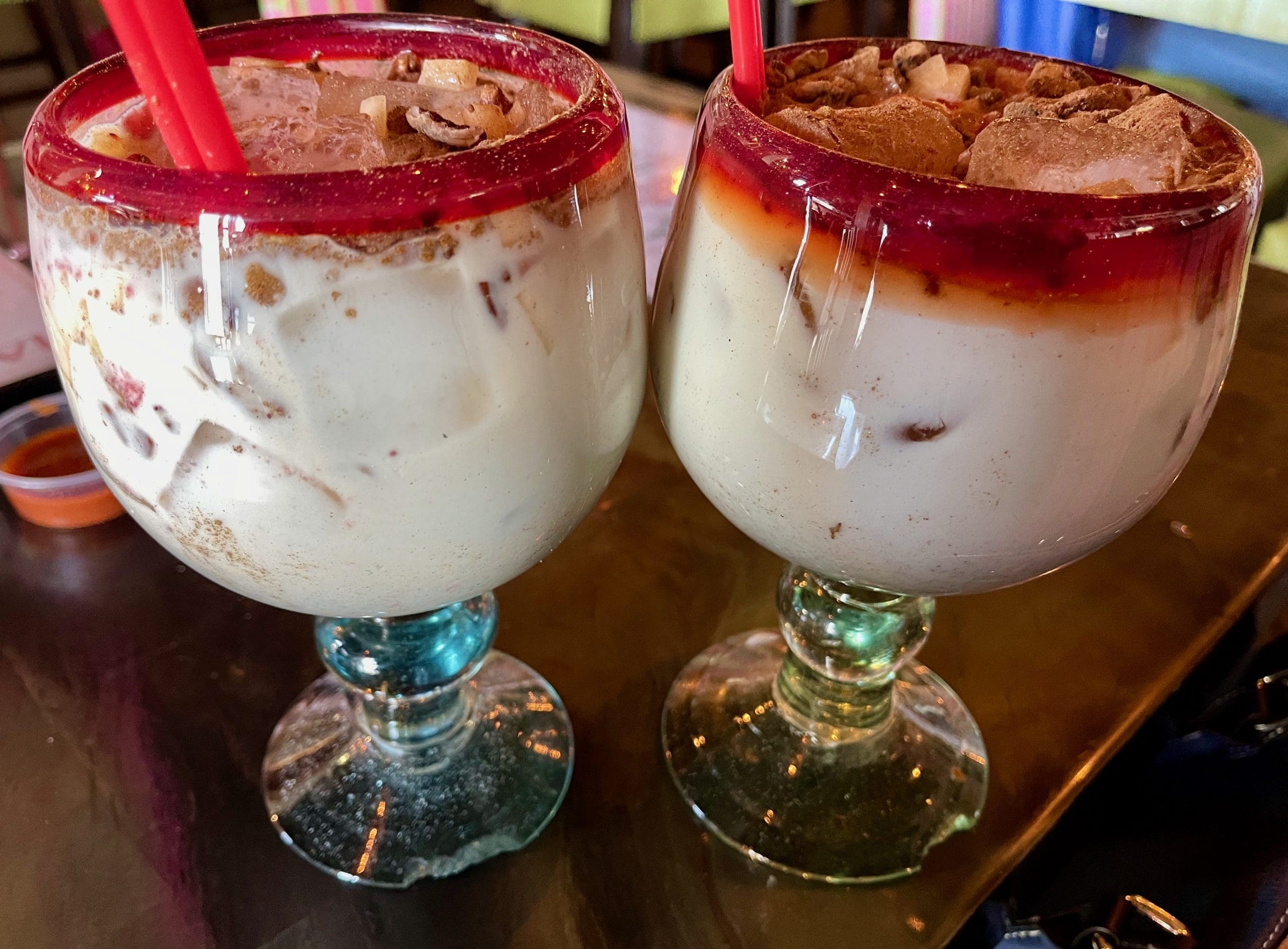
At Calavida Cantina, you’re invited to “party like the dead.”  If you haven’t partied like the dead, you’re probably not well acquainted with the Mexican tradition of “El Dia De Los Muertos,” the Day of the Dead.  During this Mexican holiday, the profusion of skeletons of all sizes performing day-to-day activities signifies the return to this world of the dead who remain who they were when they lived, doing what they did.  For example, skeletal figures depicted on the artwork at Calavida Continue would have been party animals when they graced this earthly plane.  Therefore in death, they remain party animals–eating, drinking and being merry.   At Calavida, the party animals of a past life mingle with party animals of today in a milieu that’s the antithesis of a morgue or mortuary. When we first espied the Calavida Cantina, I worried my Spanish vocabulary was diminishing with age (I’m 39) and lack of practice.  It was a relief to learn that Calavida isn’t an actual word, but a portmanteau blending calavera (skull) with vida (life), “a nod to the Día de los Muertos belief that joy and remembrance can—and should—coexist.” Calavida “toasts to the past, celebrates the present, and crafts liquid stories for the…

La Santisima – Phoenix, Arizona

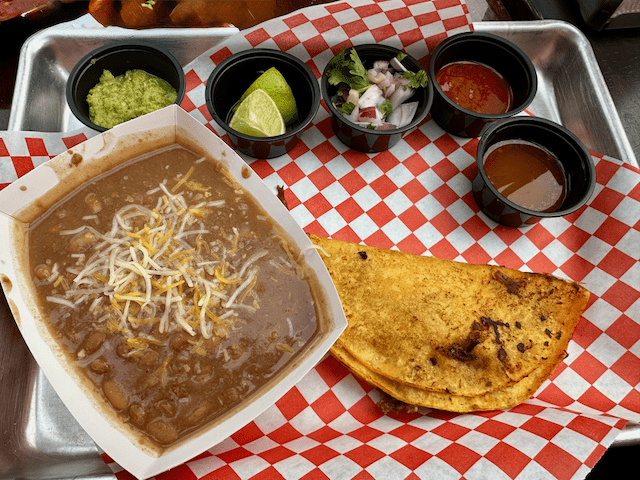
Gustavo Arellano, the brilliant writer behind the Ask A Mexican column (and even better book by that title) was remarkably quick with a disarming retort that diffused controversy with humor.  One example is when a reader–perhaps hoping to ingratiate himself to Arellano–wrote Ask A Mexican: “I don’t go to many Mexican restaurants—not because of the stereotypes but because the food is usually watered down to fit the taste buds of gabachos. In a future column, Arellano provided a response appropriate to the point.”Your sad story is one experienced by many Mexicans who travel through the parts of this country that wabs have just begun to colonize, but it’s not unique to us: New Yorkers always bemoan the quality of bagels everywhere outside of Brooklyn, and San Franciscans simply won’t eat burritos not folded in their famed Mission District. I will argue, however, that Mexican cuisine is more whitewashed than others.” Boy could we relate!  During our travels over my Air Force career, we encountered a phalanx of inauthentic “Mexican restaurants” comparable to Taco Bell, an eatery we wouldn’t frequent if you put a gun to our heads.  That was to be expected in such states as Mississippi, Louisiana, Massachusetts, Connecticut  but certainly…

Tako Ten – Albuquerque, New Mexico

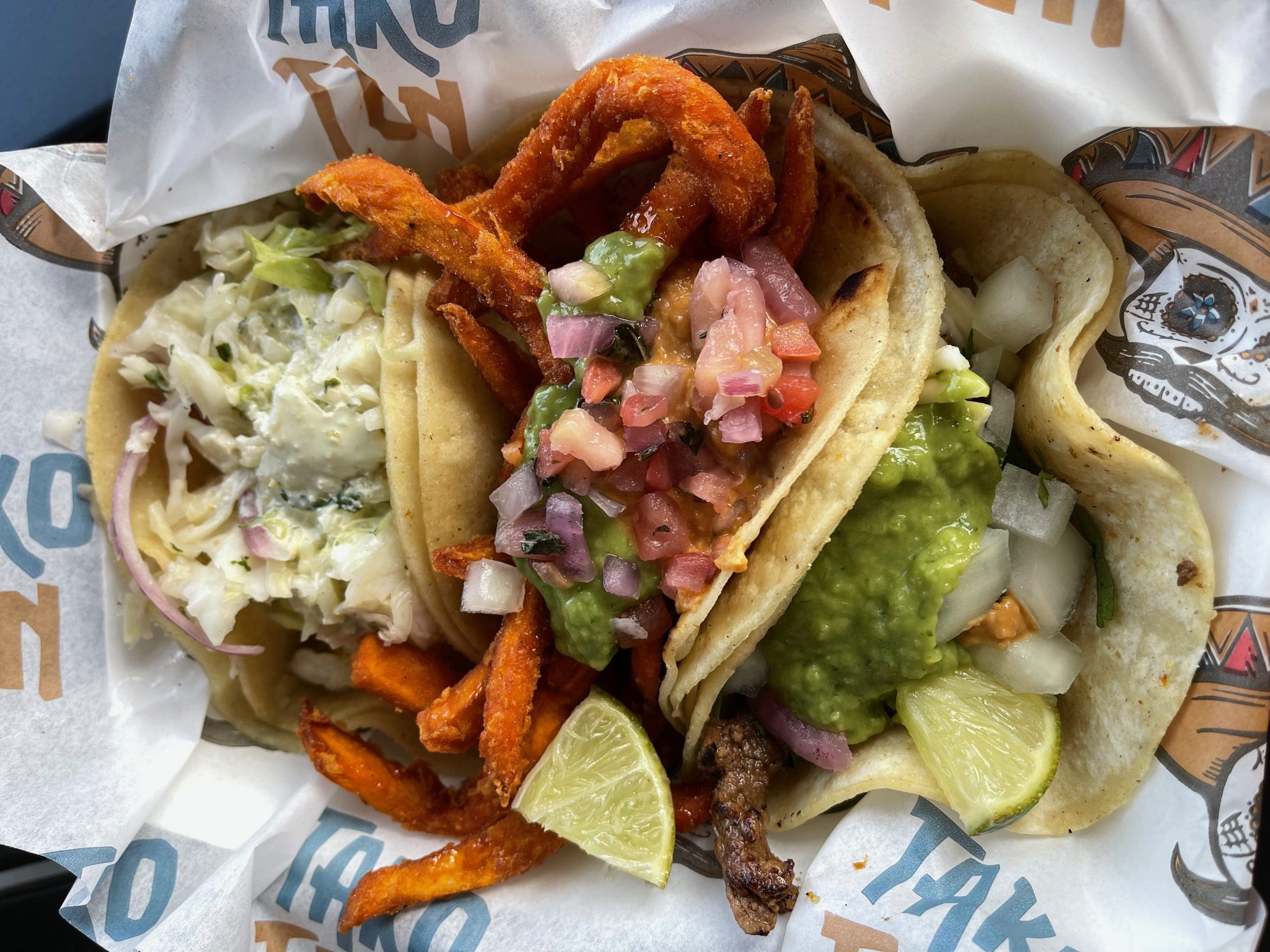
Gustavo Arellano, author of Taco USA: How Mexican Food Conquered America, wasn’t kidding when he quipped “The Taco Bell taco is dead. Long live the taco.”  Boomers like me may not have grown up heading for the border, but we did grow up with the Taco Bell “taco template”–a crunchy hard-shell tortilla crammed with seasoned ground beef, chopped tomato, lettuce, a fistful of shredded yellow cheese and a large dollop of sour cream.  We’ve long since joined enlightened millennials and generation Z diners in railing against what Chef Rick Bayless calls Taco Bell’s “near-laughable caricature” of authentic Mexican tacos.   So just what are authentic Mexican tacos? Travel throughout the Land of Montezuma and whether you get your tacos from upscale restaurants, market stalls or street vendors, you’ll quickly discover their versatility, diversity and deliciousness.  Adventurous diners can, for example, enjoy palm-sized tortillas filled with virtually every part of the pig, cow, or chicken.  These proteins can be stewed (as in a guisado), barbecued (for barbacoa), roasted on a vertical spit (al pastor), cooked atop a griddle (a la plancha), or served campechano (a mélange of chopped meats). Tacos de mariscos (seafood), pescado (fish) and chapulines (grasshoppers) are also pretty popular…