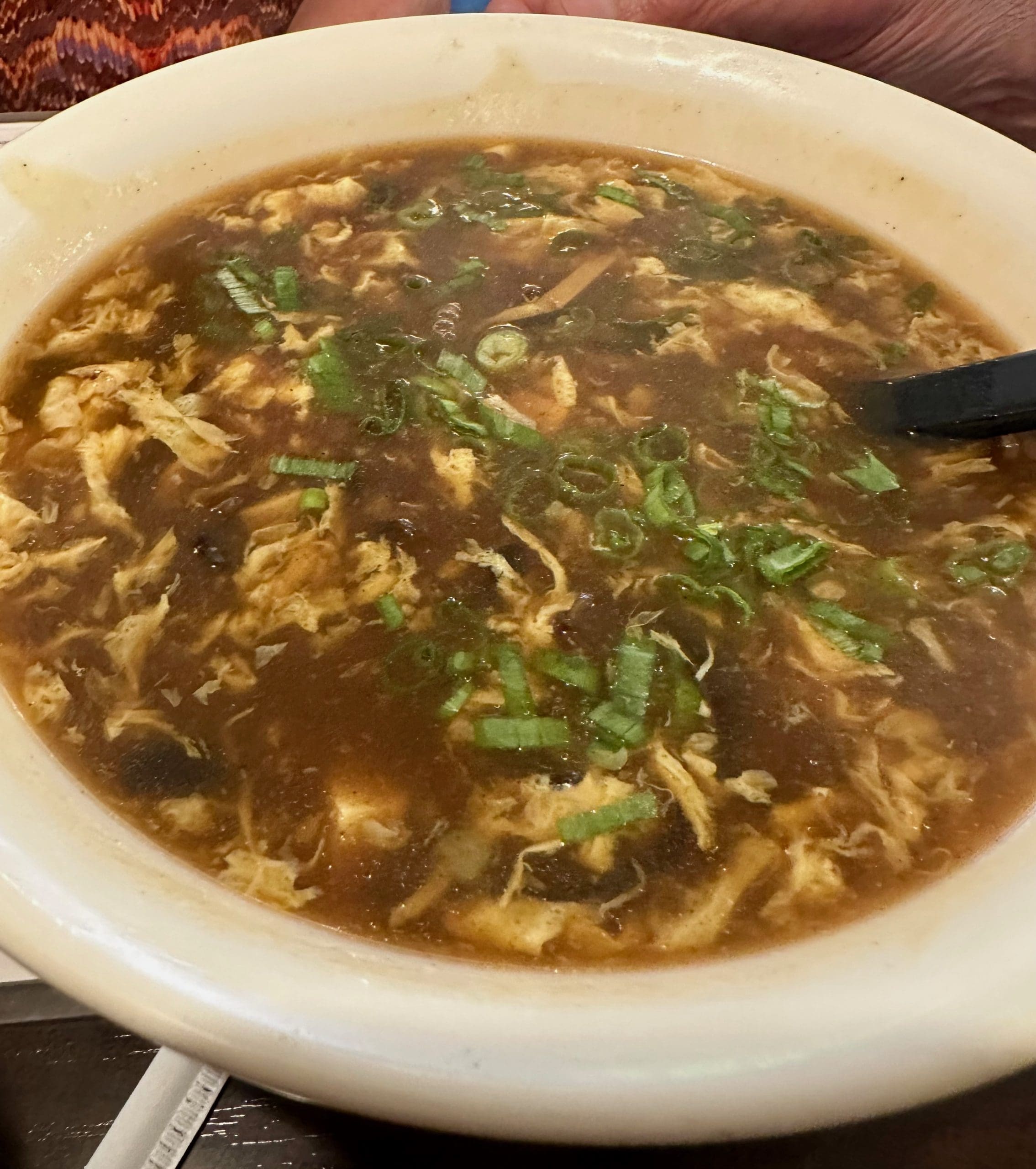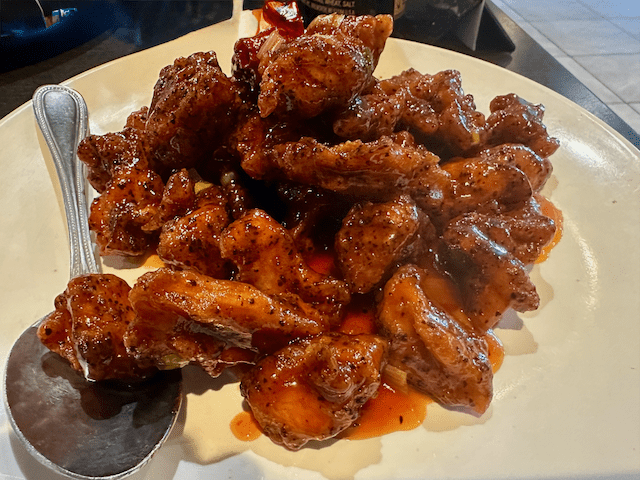
Red Chilli House – Albuquerque, New Mexico

Red “Chilli” House…doesn’t “Chilli” read like a misspelled word that knocked a spelling bee contestant out of the competition?  Or like someone added one too many letter “l’s” to the already misspelled word “chili?”  Actually, that spelling (which some of us purists consider Texan) is by design.   The delightful Chinese restaurant sporting that appellation–which opened its doors in June, 2024–wouldn’t change it.  Among other things, it illustrates just how important Capsicum is in some provinces of China, particularly Sichuan and Hunan. Capsicum, as most New Mexicans know, is the genus to which all chili (chile in New Mexico) peppers and bell peppers belong. The fruit of the capsicum plant contains a chemical called capsaicin, the active ingredient that gives chile its piquancy.  Historians widely agree that capsicum was unknown outside the tropical and subtropical regions of the Americas before 1490s.  That’s when Christopher Columbus sailed the ocean blue and brought this red-fruited plant along with other food plants, such as maize, beans and squash, from the New World to the Old. When introduced to China in the 16th Century, chile peppers were called “barbarian peppers” on account of their foreign origin.  Eventually the province of Sichuan developed a profound…

Tasty Noodles & Dumplings – Albuquerque, New Mexico

The first time I noticed that the dishes served to people of Asian descent weren’t covered in neon bright sauce, I wondered why those strange looking dishes weren’t on the menu.  Or maybe I just didn’t see them.   I asked my server (who was barely conversant in English) and was essentially told I wouldn’t like “authentic” Chinese food.  “What the heck am I eating?” I  asked myself.  That was the beginning of my explorations into the ancient and traditional culinary culture of China.  I delved into just what dishes are considered “authentic” and just what “authentic” means. Dogmatists and purists insist that dishes that weren’t “invented” in China are spurious, not legitimate.  They use such terms as “Americanized” and “white-washed” to describe those dishes.  They point out that much of the Chinese food served across the fruited plain is stickier, sweeter, and unhealthier than traditional dishes served in China.  They don’t necessarily point out that some of the differences between Chinese food from China and Chinese food served in the states is because of the wide availability of American ingredients such as carrots, snow peas, green peppers, broccoli and mushrooms. Additionally, Chinese immigrants were partly forced to rely on…