Plaza Cafe Southside – Santa Fe, New Mexico

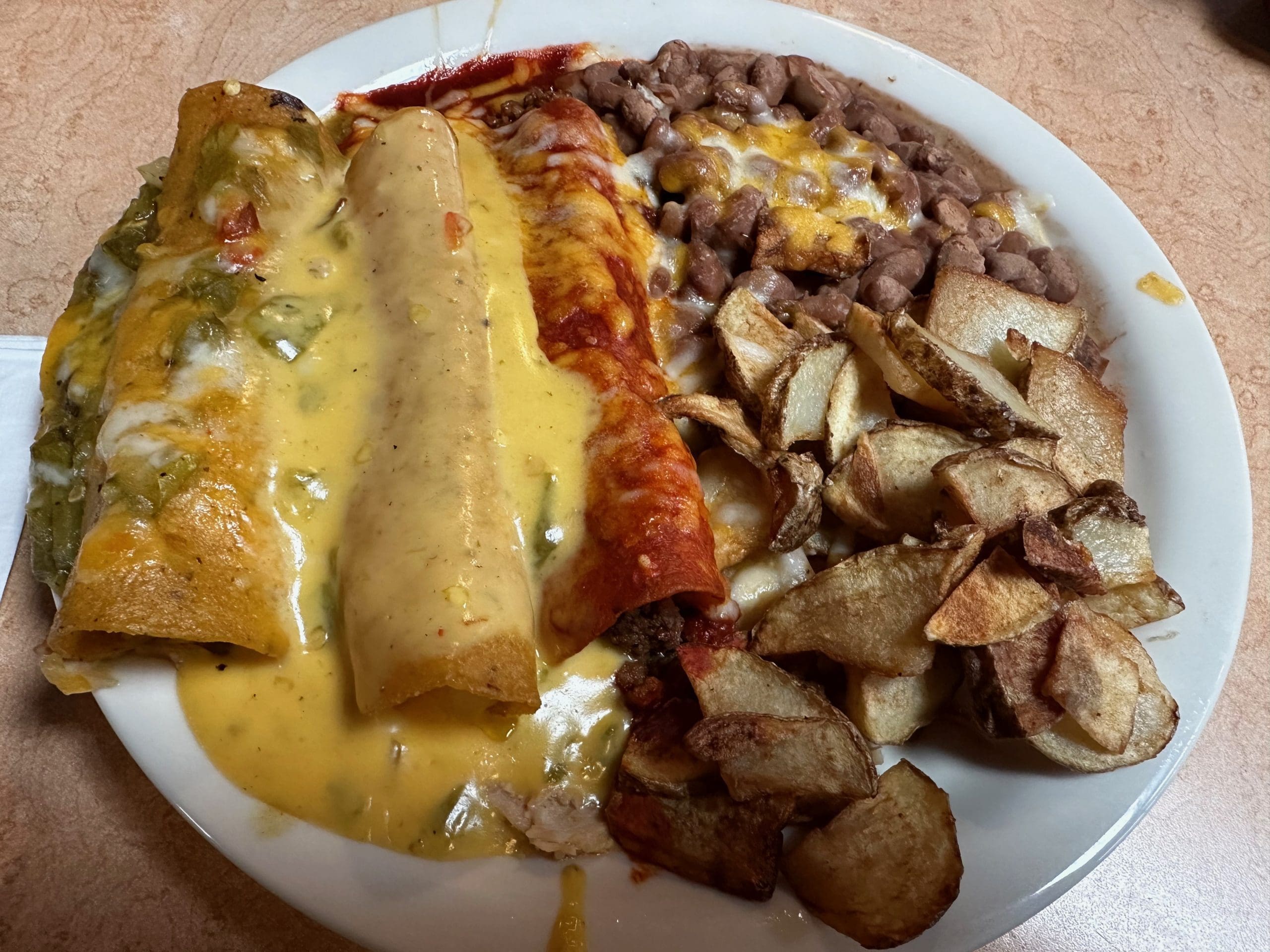
Santa Fe’s oldest restaurant (circa 1918), the Plaza Cafe is so popular that long waits to be seated are commonplace. Compound that with the hassle of trying to find a parking spot that isn’t a marathon’s length to walk to and from the Cafe then having to navigate through throngs of awestruck tourists and it’s a restaurant we don’t visit as often as we’d like. Our visits have become even more infrequent thanks to the 2003 launch of the Plaza Cafe’s sister restaurant (albeit a sister that’s 84 years younger) on Santa Fe’s south side. The Plaza Cafe Southside, situated in San Isidro Plaza on Zafarano Drive, is a welcome respite from the challenges inherent with trying to dine in the teeming tourist traversed Plaza area. It’s one of an increasing number of excellent restaurants situated well outside Santa Fe’s well beaten, well eatin’ Plaza area. It’s also one of several very good restaurants within easy walking distance of the Regal Cinemas 14. It’s the Plaza Cafe Southside’s second home. For its first six years, the Cafe occupied cozy, but cramped confines within a motel off Cerrillos. The Plaza Cafe Southside is the brainchild of Leonard Razatos who “wanted to…

Hot Tamales – Rio Rancho, New Mexico

While the word tamale is most certainly Spanish, its derivation is from the Nahuatl word tamalli.  Tamallis were developed as a portable ration carried by war parties in pre-Columbian North America and were as common and varied as the sandwich is today.  One commonality among tamalli then and tamales today, is the corn meal dough (masa) which is made through a process called “nixtamalization.”  In pre-Colombian times, the process involved using wood ashes to soften field corn for easier grinding.  Today this is done by slaking lime.  Interestingly, nixtamalization not only softens field corn, it aids in digestibility and increases the nutrients absorbed by the human body. Though the fundamental component of the tamale remains masa, fillings for this delicious snack or entree are almost as diverse as the imagination, ranging from sweet (pineapple, coconut, pecans, bananas, chocolate and more) to savory and everything in between.  There are also tremendous variations in the wrapper which envelops the filling.  Dried corn husks are probably the most common, but the descendants of the Meso Americans also use fresh corn husks, banana leaves and the membrane from some agave plants. In New Mexico, we like to think of tamales as being part of…