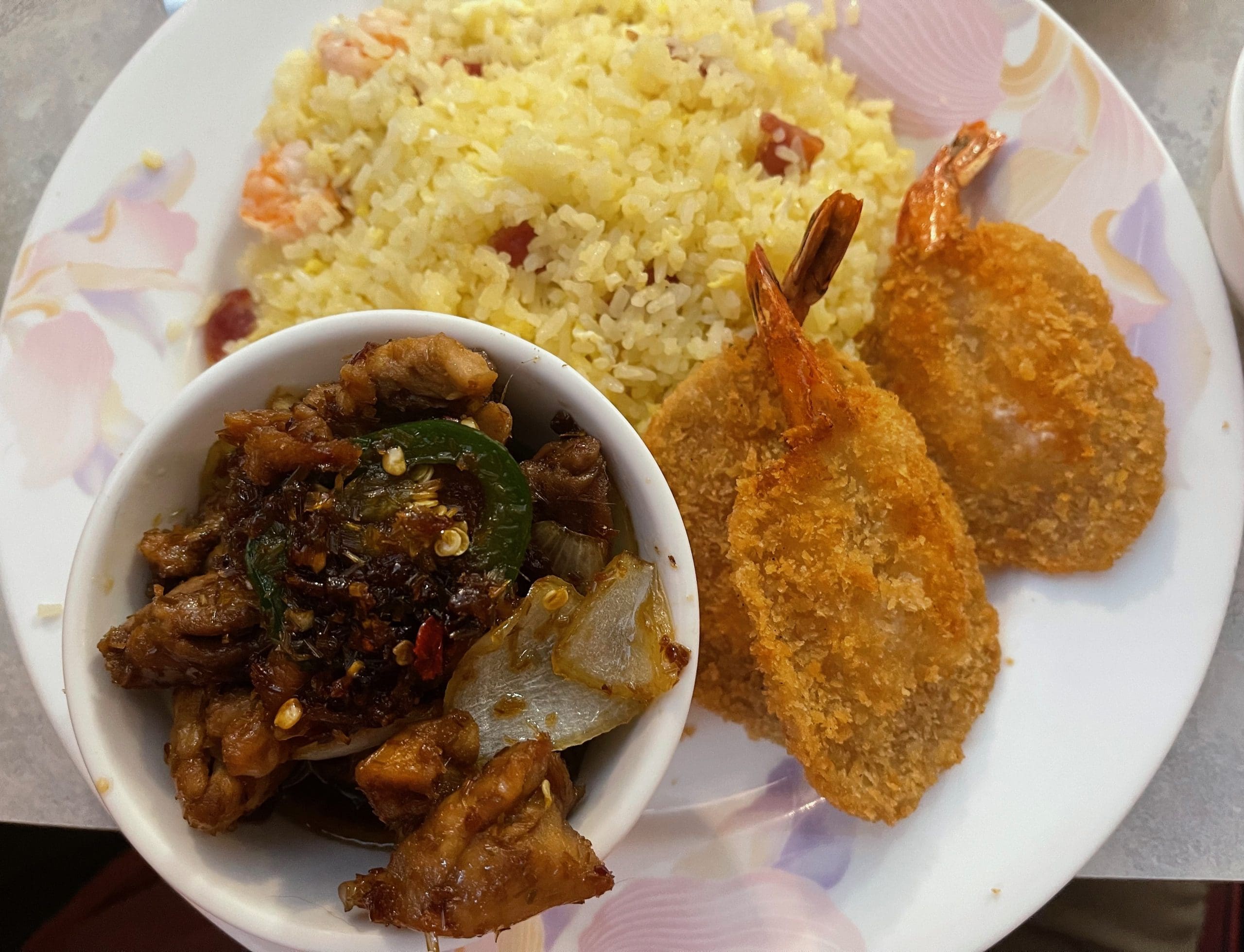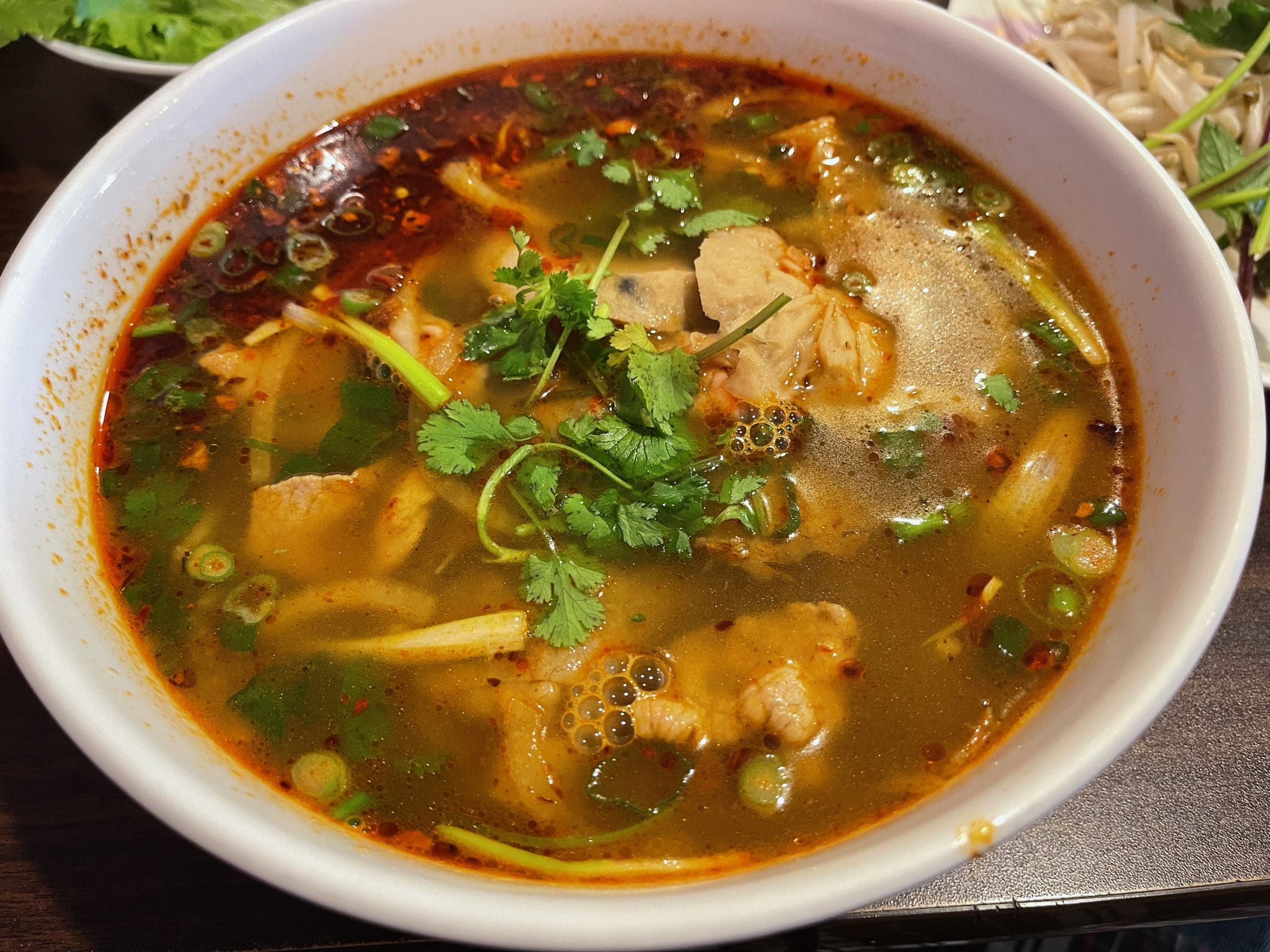
Saigon 2 Restaurant – Rio Rancho, New Mexico

In Chinese and Vietnamese cultures, numerology is very important. If you’ve traveled extensively, you may have wondered why the term “Pho” followed by a number is so commonplace. Often these numbers are considered lucky–and not necessarily across an entire culture. A number may be lucky on a personal level, perhaps marking a date that’s special to the restaurant owner. Espy a restaurant named Pho 66and the number 66 may well represent the year the owner fled Vietnam during the war. Restaurants named Pho 75 may well be honoring 1975, the year Saigon fell. Numerical repetition is also considered fortuitous. The City of Vision certainly counts the number eleven as a lucky number. November 11th, 2011 at precisely 11 o’clock AM (11/11/11 at 11AM) saw the launch of Rio Rancho’s third Vietnamese restaurant when Saigon 2 Restaurant opened its doors on Southern Boulevard. The restaurant is situated in an 1,800 square foot space that’s about a thousand feet smaller than Saigon Restaurant, its elder sibling on San Mateo. Because the Rio Rancho restaurant is smaller, the menu is somewhat abbreviated–115 items instead of 145 items. Fish dishes are not be served in Saigon 2, but for the most part, the dishes…

Saigon Restaurant – Albuquerque, New Mexico

According to some stereotypes, when you eat Chinese food, you’ll be hungry an hour later.    That stereotype is known as the “Chinese food paradox.”   One of the culprits behind that stereotype is rice, a very starchy food which metabolizes quickly.  Others blame monosodium glutamate (MSG) when hunger creeps in shortly after finishing a meal. Italian food is also shrouded in stereotype. “The trouble with eating Italian food,” according to British writer George Miller, “is that five or six days later you’ll be hungry again.” With Italian food–at least Americanized Italian food served in some of the ubiquitous chains–portions are often enough to feed a village in a developing country.  A plethora of pasta, tons of tomato sauce, mountains of meatballs.  Is it any wonder Alka Seltzer’s most famous commercial depicted a poor sap bemoaning the consumption of dozens of Mamma Mia’s spicy meatballs? These stereotypes may have been fashioned in humor, but there may be some elements of truth behind them. Unfortunately many of the stereotypes about Vietnamese food are based on inaccurate and xenophobic untruths perpetuated in many cases by people who haven’t tried Vietnamese food. The stereotype which should persist about Vietnamese food is that it leaves…