
Perhaps more than anyone I’ve ever met, my Singaporean friend Ming Lee (God rest his beautiful soul) regarded people by the content of their character, not by physical characteristics. So, it surprised me to hear him joke “we all look alike.” It was an unsolicited admission that even he couldn’t always discern the cultural genesis of Asian people he met. He also joked “at least I can always tell where an Asian restaurant’s food comes from.” Ming was a bona fide gastronome who introduced me to the cuisine of Singapore and Malaysia. Like me, he disliked restaurants in which overt homogenization of Asian food was apparent. Sure, different culinary cultures across Southeast Asia have borrowed from one another over the millenia, but most adapt to cultural tastes rather than copy exactly.
Ming was wary of Asian restaurants that purported to serve the cuisine of more than one Southeast Asian nation. To him, the concepts of global cuisine and multicultural restaurants “dumbed down” what is best about each culinary culture. We disagreed on the concept of fusion cuisine, the blending of elements from different cultures, creating new dishes that offer several cultures on a plate. I like the concept when executed well and when sufficient diversity (such as Mexican and Chinese fusion dishes) is showcased. Ming was adamant that the best restaurants served foods originating within their progenitor’s borders. He intensely disliked sushi restaurants not owned by Japanese, especially those who seemingly hired sushi chefs off-the-street.

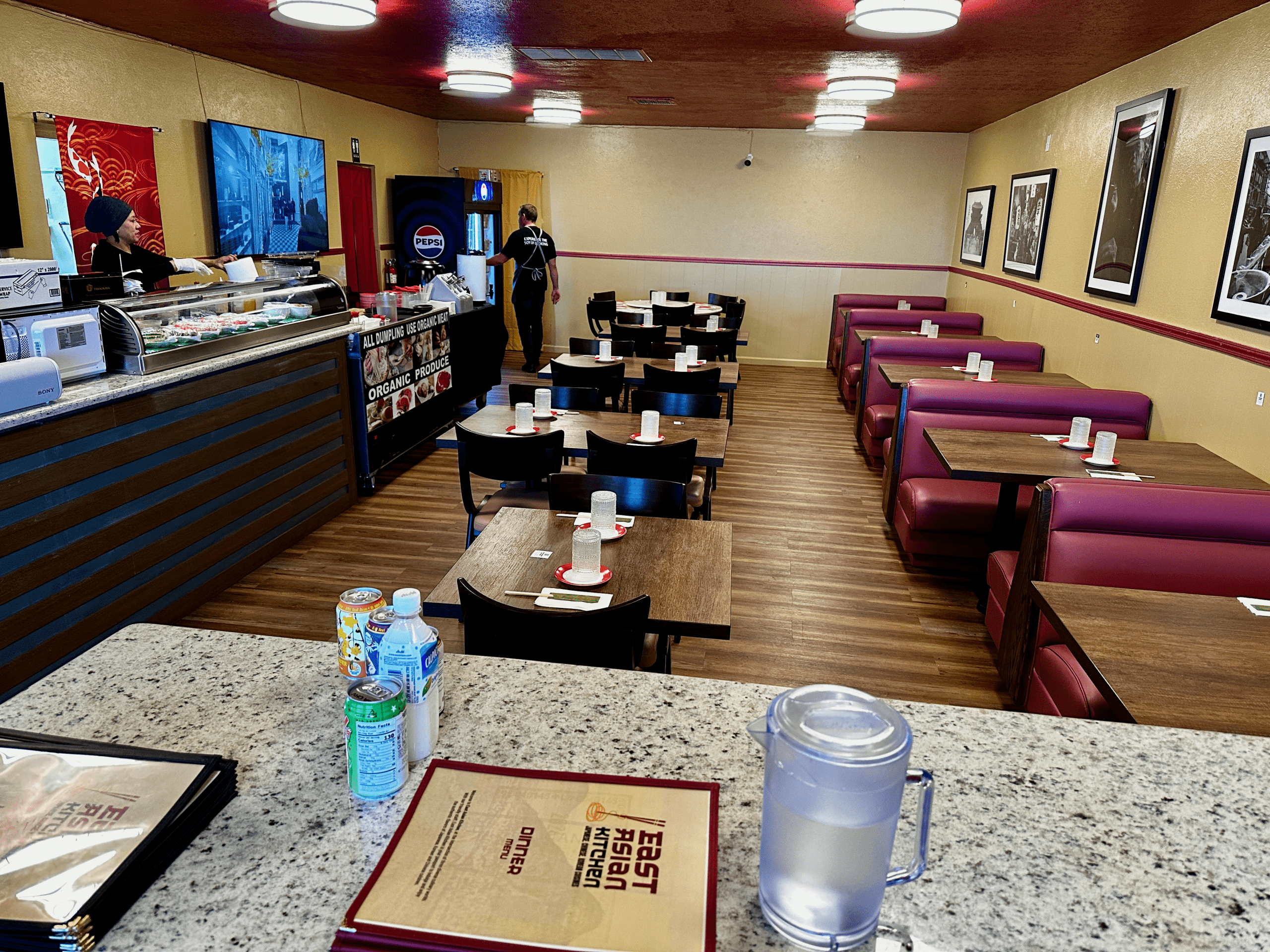
I believe Ming would appreciate (maybe declare its cuisine authentic) East Asian Kitchen, an eatery on Eubank whose menu offers diverse offerings from Korea, Japan and China. Located on the southeast corner of Candelaria and Eubank in the location which previously housed Fei’s Cafe, the East Asian Kitchen is helmed by a genial Japanese family which relocated from Manhattan to Albuquerque. With extensive restaurant experience, they launched their concept in September, 2025. In short order, the restaurant garnered praise and accolades on social media, several people lauding it as Albuquerque’s best for Asian food.
As befitting its tricultural menu, the restaurant’s website promises “At East Asian Kitchen, we bring together the bold flavors of Japanese, Korean, and Chinese cuisine, all under one roof. Each dish is crafted with care, combining authentic recipes and fresh ingredients to celebrate the rich traditions of East Asia. From sizzling Korean BBQ to savory Chinese favorites and delicate Japanese rolls, every meal is a journey of flavor, culture, and connection. Located in Albuquerque, New Mexico, we are committed to providing an exceptional dining experience.” Perusing the menu is akin to taking a culinary tour of Japan, Korea and China. Stride over to the sushi bar and you’ll see all the telltale signs of fresh fish.
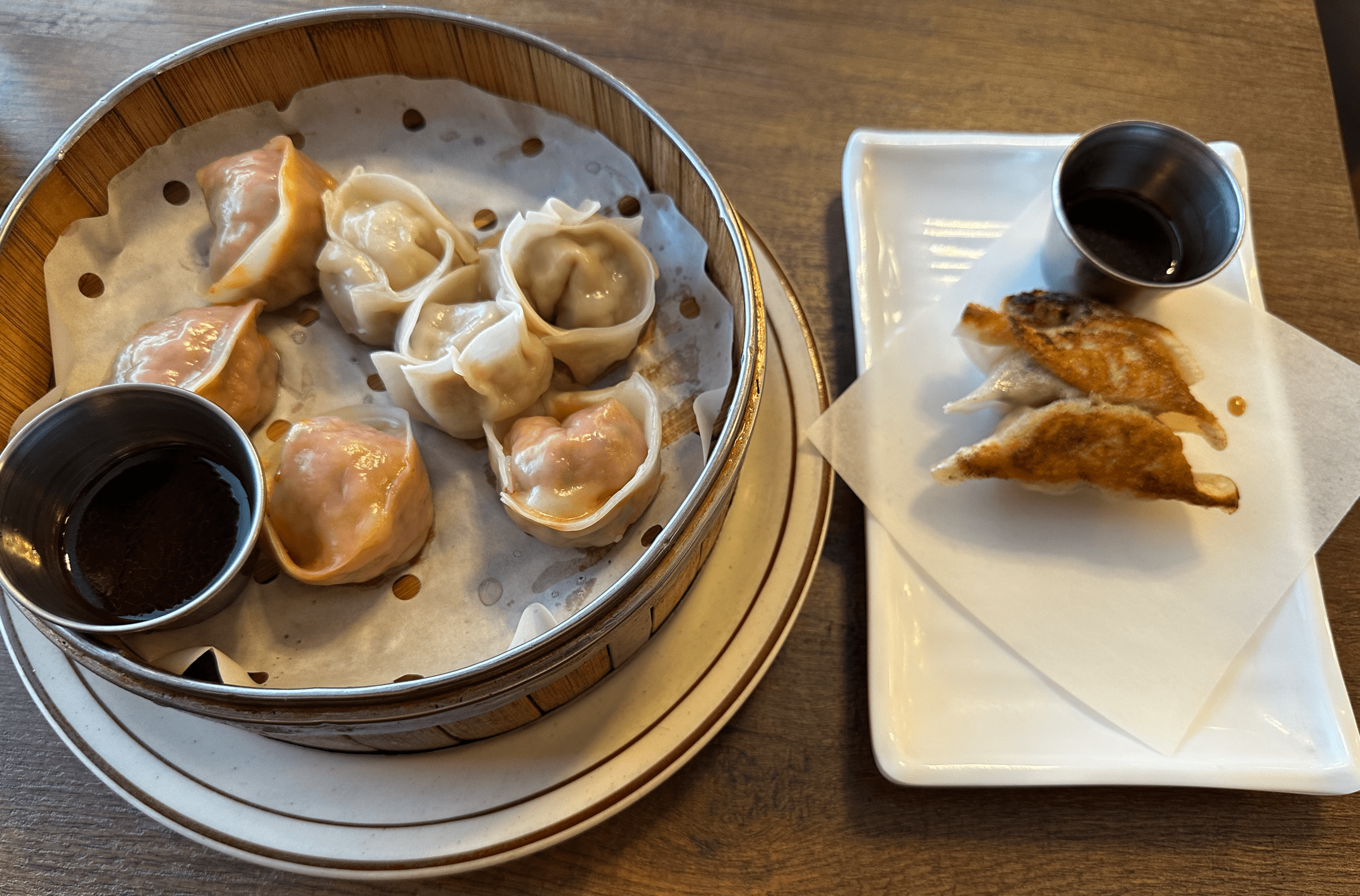
5 December 2025: Ming would undoubtedly have ordered the East Asian Dumpling Sampler, an array of dumplings from Japan (gyoza), Korea (mandu) and China (jiaozi). Understanding the nuances and subtleties of each dumpling type, he would have told me how authentic each dumpling was. Though my knowledge of dumplings isn’t at Ming’s level, I discerned significant differences in each. The pinkish steamed Korean mandu (four pieces) is stuffed with pork, kimchi and glass noodles. It has the kick of a small mule, particularly if you dip (or dunk) it in the accompanying sauce (chili oil, soy sauce, vinegar) which bests every other dumpling sauce in town. The pan-fried crescent-shaped Chinese jiaozi (traditional Chinese dumplings) are stuffed with minced pork, cabbage, chives and scallions. The pan-fried Japanese gyoza are filled with pork, cabbage and chives. It probably won’t surprise you to learn my favorite was the Korean mandu with its heat-generating properties.
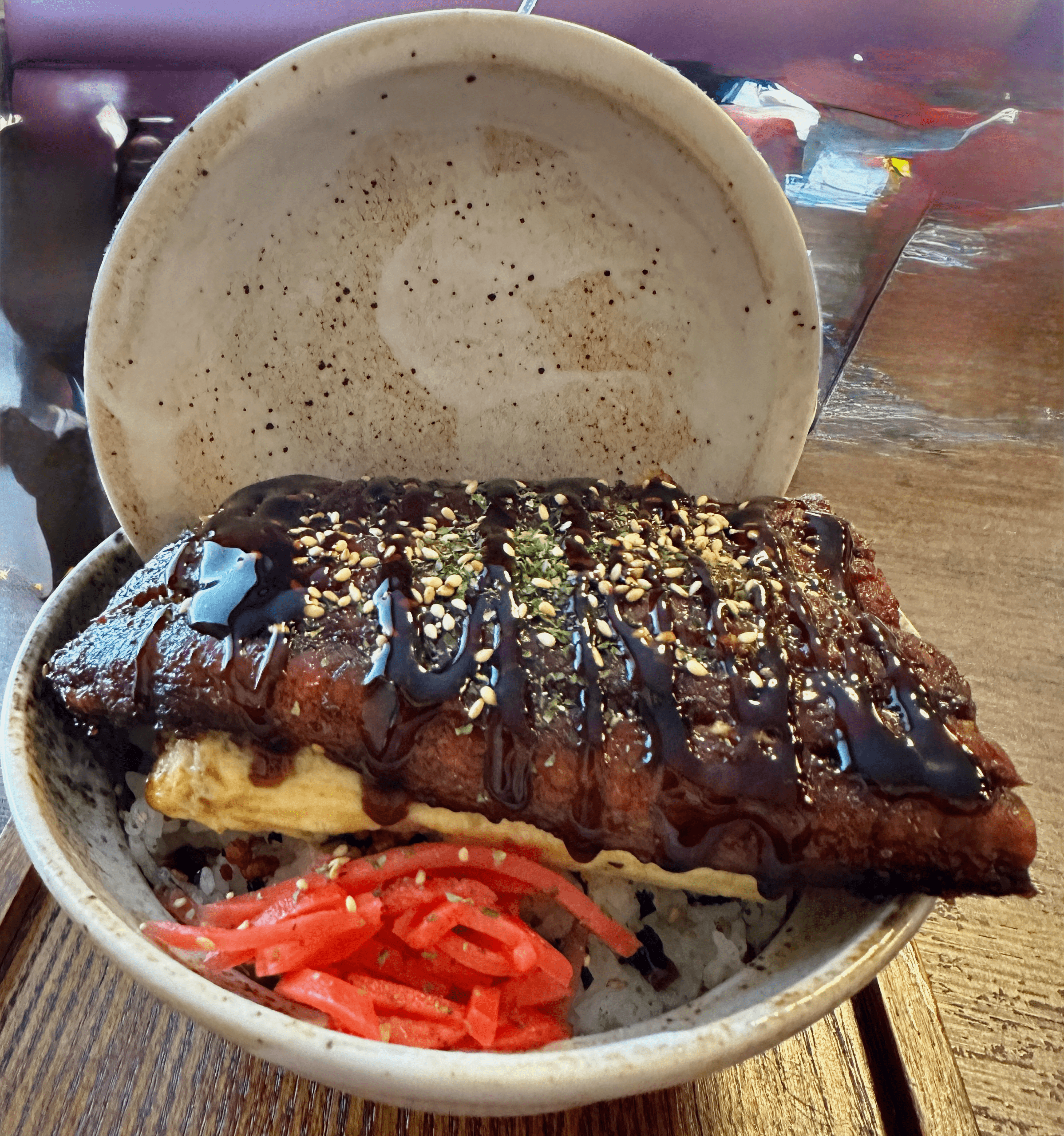
5 December 2025: Although the menu listed about a hundred items I’d love to try, my eyes stopped wandering when I came across unagi dan, one of my very favorite Japanese dishes ever. Unagi, as you may know, is grilled freshwater eel. Unagi is said to have stamina-giving properties. Containing 100 times more vitamin A than other fish, unagi is believed to heighten the sexual drive of men. Japanese wives would prepare unagi for dinner to suggest to their husbands that they want an intimate night. East Asian Kitchen glazes its unagi with unagi sauce which is somewhat similar to teriyaki sauce, It’s a rather sweet sauce so I was grateful that the chef was rather frugal in applying it. A generous slab of unagi draped over a Japanese omelette (made by rolling together several layers of fried beaten eggs) over rice. It had been several years since I last had unagi dan which made me so thankful East Asian Kitchen prepares it so well.
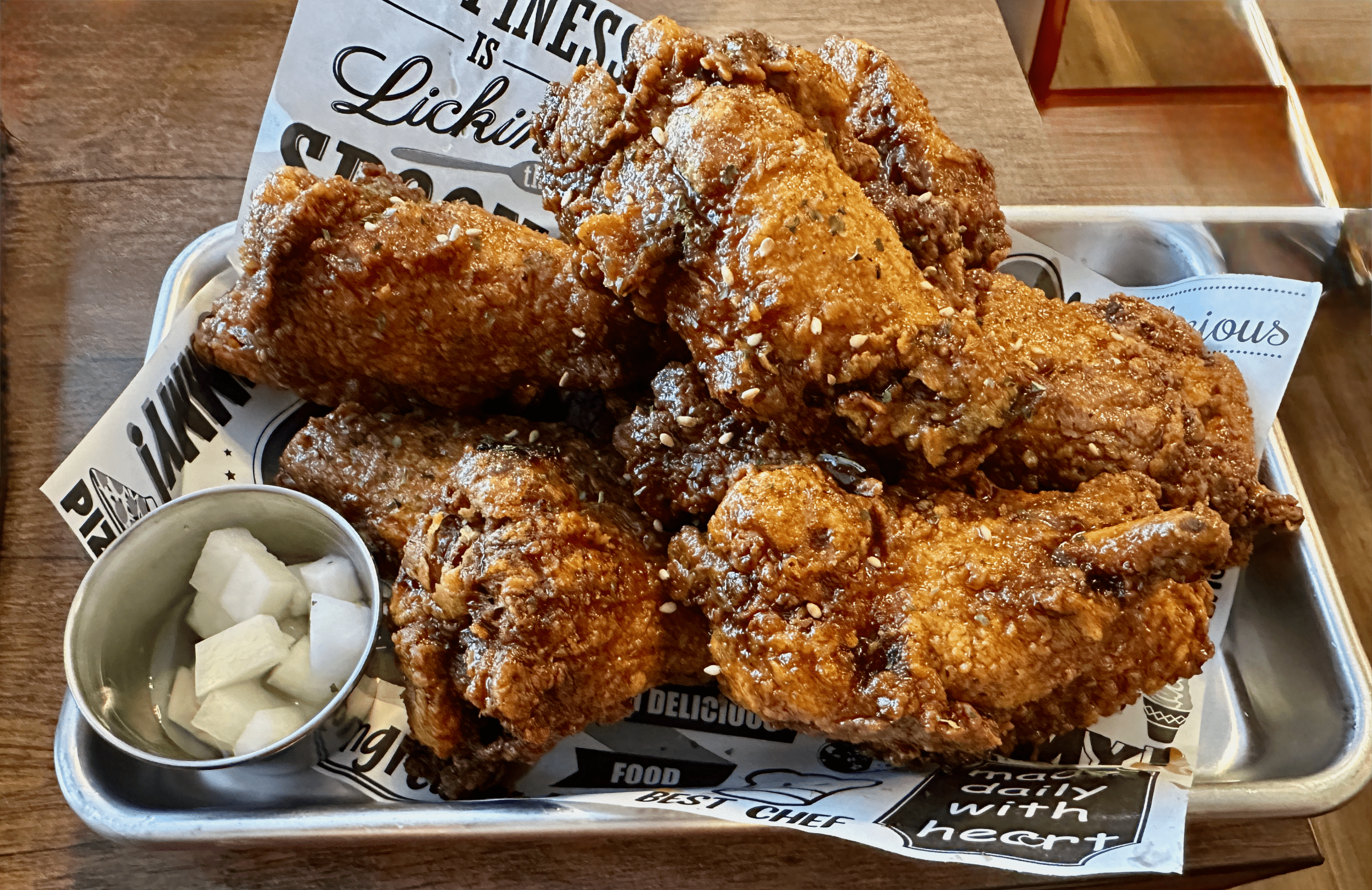
5 December 2025: My Kim is enamored of the “real KFC.” That’s Korean Fried Chicken, renowned for its ultra-crispy, light crust achieved through a double-frying method and a thin coating of starch rather than a heavy batter. Her favorite version comes from K Style Kitchen on Albuquerque’s westside so comparisons were inevitable. At East Asian Kitchen, the Korean fried chicken is served as an appetizer and is available in quantities of six, twelve or twenty wings (and flats). These signature double-fried crispy wings are prepared with your choice of two sauces: soy garlic, sweet and savory or you can order them plain with sauce on side. My Kim likes her KFC with enough garlic to ward off a family of vampires. The garlic sauce wasn’t quite that garlicky, but it did imbue the crispy chicken with deliciousness. In my Kim’s estimation, they still fall short of the KFC at K Style Kitchen, but not by that much.
16 April 2026: Some sushi snobs believe only Japanese can make authentic sushi. Frankly, most of us can’t really tell the difference and don’t care if a sushi restaurant is owned by people from Korea, China, Thailand, Laos or Mexico. The main difference we’re told is that sushi restaurants owned by people from other cultures tend to offer more “Americanized” sushi styles. This means focusing on sushi (maki) rolls made with spicy mayo, cream cheese, eel sauce and deep-fried ingredients or cooked fish tailored for Western palates. If you see a sushi roll featuring such toppings as mango, avocado or crunchy stuff, it’s not “traditional.” Japanese sush tends to fish-focused, high-end sushi made in the traditional Japanese methods.
Another practice once thought of as unthinkable is female sushi chefs. Wrong-thinking posited that women’s hands were “too hot” to handle sushi without “ruining” it. We weren’t necessarily surprised to see a female sushi chef at East Asian Kitchen’s sushi station. We had no doubt she would create sushi every bit as wonderful as any male chef could. Nor were we surprised at the number of “Americanized” maki rolls (including the Sushi 101 offering: The California Roll). As with most sushi restaurants across the fruited plain, East Asian Kitchen caters to its American guests. There’s nothing wrong with that. Nor is there anything wrong with enjoying the creativity of Americanized maki rolls.
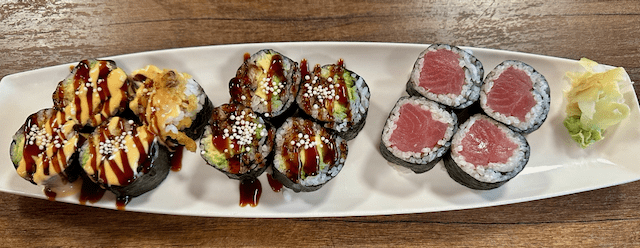
The sushi menu at East Asian Kitchen lists ten maki rolls, four tempura and specialty rolls and eight classic rolls (apparently the California roll is a classic). You’ll also espy a section on the menu called “Deal Rolls:” any three rolls for $17 (as of 17 April 2026) or four rolls for $27. It’s a good way to sample the restaurant’s sushi offerings. One of my prime considerations in ordering sushi is getting something my (delicate of tongue and taste buds) Kim can enjoy (she finds even the accompanying ginger overly piquant, much less the wasabi). My preference is for raw fish-centric sushi, especially in sashimi (sliced raw fish without rice) form.
Taking advantage of the “any three rolls” offer, we picked a triumvirate of tasty maki rolls my Kim could enjoy. Her favorite of the three was the eel and avocado roll (with cucumber, scallion, and eel sauce). Though similarities exist between eel sauce and teriyaki sauce, eel sauce is thicker, sweeter and stickier. My Kim loves it. She also liked the avocado and cucumber roll with its mild sauces. The one maki roll most to my liking was the tuna roll in which vinegared rice and nori played second fiddle to the tuna, a perfectly pink slab of fresh and delicious fish.
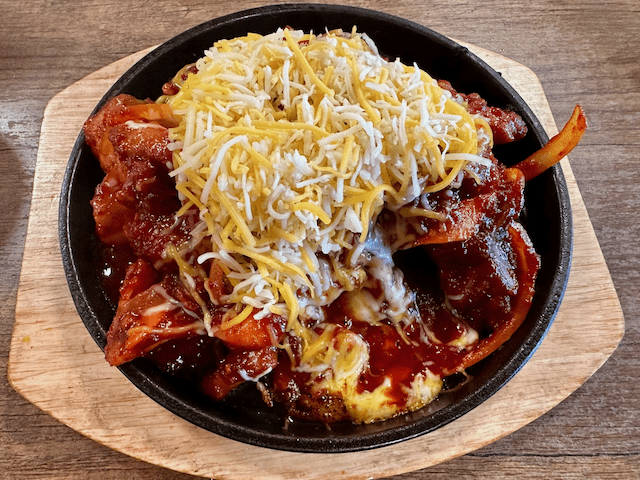
16 April 2026: One dish that lives up to its name is Buldak, a Korean dish featuring grilled or fried chicken coated in a fiery sauce made from gochujang (chili paste) and gochugaru (chili powder). Buldak transaltes to fire (bul) dak (chicken) and is not a dish for diners who can’t enjoy angry food. How angry? As our server delivered the steaming cast iron dish to our table, he had a coughing fit and had to step away from the table. To counteract the heat, it’s topped with shredded cheese. The cheese doesn’t help much. This is one of the most piquant dishes I’ve had in Albuquerque…which means it’s one of my favorites. Because it’s served in a cast iron dish, it remains hot for the duration of your meal. That heat seems to exacerbate the heat of the chilis.
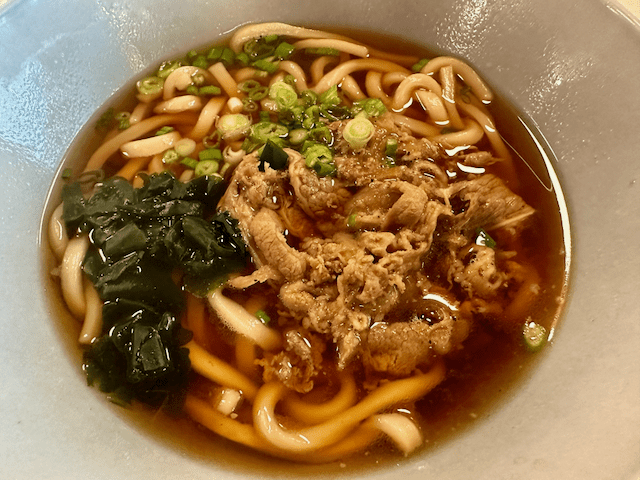
16 April 2026: Save for a former UNM basketball coach whose nickname was “Noodles,” my Kim is a noodle enthusiast. She absolutely adores noodles (almost as much as she dislikes most vegetables). East Asian Kitchen doesn’t have a great number of noodle dishes, but our server found one my Kim would enjoy. It’s the Niki Udon (Udon noodles with sliced beef in mildly sweet sauce). Niki Udon is a classic Japanese comfort food made from chewy, thick wheat noodles (Udon). The broth is a savory, light-colored dashi topped with thinly sliced, sweet-and-savory simmered beef and garnished with green onions and seaweed (which she discarded). This is a wonderful winter-defeating elixir good any time of year.
Only one thing would have made our inaugural visit to East Asian Kitchen better. That would have been sharing our meal with my dear friend Ming Lee.
East Asian Kitchen
2918 Eubank, N.E.
Albuquerque, New Mexico
(505) 294-8612
Website | Facebook Page
LATEST VISIT: 16 April 2026
1st VISIT: 5 December 2025
# OF VISITS: 2
RATING: Excellent – High quality dining experience; very good to excellent food, attentive service, and a well-maintained atmosphere; worth a detour.
COST: $$ – $$$
BEST BET: East Asia Dumpling Sampler, Unagi Dan, Korean Fried Chicken, Buldok, Niki Udon, Maki Rolls
REVIEW #1498
Agree! Went there tonight because Nagomi was closed and East Asian Kitchen blew my socks off. I used to live in Japan, and this place hit the spot. We tried the cucumber salad and shishito peppers for appetizers, and the karaage don and pork chasu with kimchi for entrees. Everything was packed with flavor and perfectly prepared. Service was great and really friendly, too. 10/10. There’s a reason it’s got 4.8 stars across 500 reviews on Google. Wow. Can’t wait to go again.
Im going to abq soon and your blog has been amazing to see where we want to eat, i’m going to keep scrolling to see more places, thank you, thank you