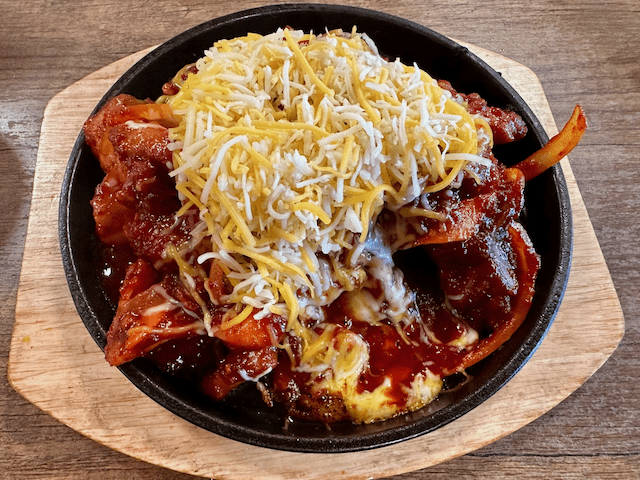
K Style Kitchen – Albuquerque, New Mexico

If you’re susceptible to the power of suggestion–especially as it pertains to ear worms (recurring tunes that involuntarily pop up and stick in your mind)–you’re probably going to hate me (or you can skip this paragraph and continue to love me).  That’s because if you do read this paragraph you’re going to be humming to yourself one of the most annoying songs of all time–Gangnam Style.  Arguably, Gangnam Style is not as annoying as La Macarena or My Humps (which Rolling Stone declared “the most annoying song ever”). The more you try to suppress Gangnam Style, the more your impetus to hum it increases, a mental process known as ironic process theory.  By the way, those most at risk for “stuck song syndrome” are females, youth, patients with OCD and anyone reading this paragraph. Unless you can speak Korean you’re going to have to hum Gangnam Style and not sing it.  The only lyrics in English are “Eh, sexy lady.”  Korean rap singer Psy who took Gangnam Style all the way to number one describes the song as “a tribute to the ladies of the wealthy district.”  He’s talking about the affluent Gangnam district in Seoul Korea which Psy describes…

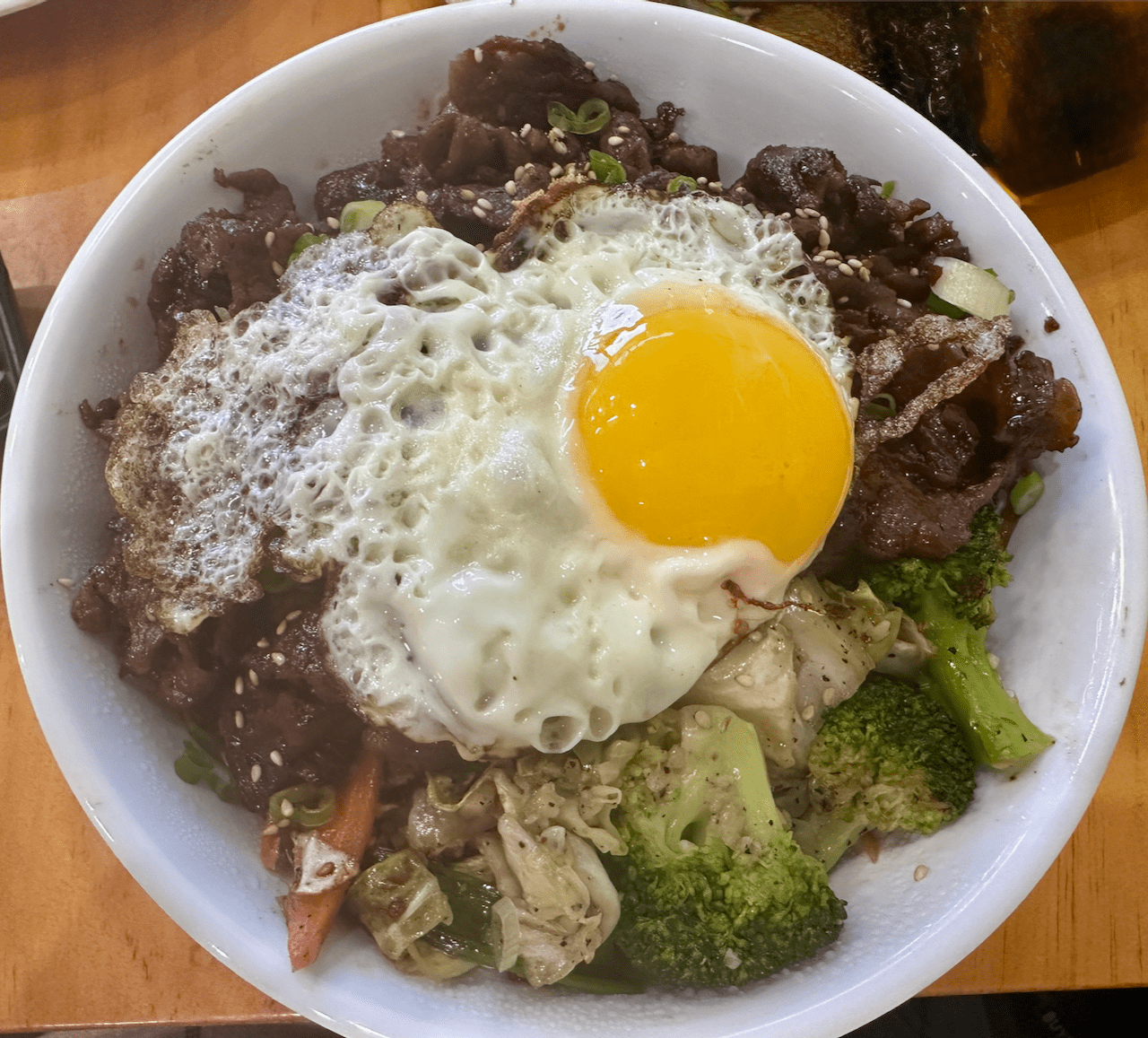
East Asian Kitchen – Albuquerque, New Mexico

Perhaps more than anyone I’ve ever met, my Singaporean friend Ming Lee (God rest his beautiful soul) regarded people by the content of their character, not by physical characteristics.  So, it surprised me to hear him joke “we all look alike.”  It was an unsolicited admission that even he couldn’t always discern the cultural genesis of Asian people he met.  He also joked “at least I can always tell where an Asian restaurant’s food comes from.”  Ming was a bona fide gastronome who introduced me to the cuisine of Singapore and Malaysia.  Like me, he disliked restaurants in which overt homogenization of Asian food was apparent.  Sure, different culinary cultures across Southeast Asia have borrowed from one another over the millenia, but most adapt to cultural tastes rather than copy exactly. Ming was wary of Asian restaurants that purported to serve the cuisine of more than one Southeast Asian nation.  To him, the concepts of global cuisine and multicultural restaurants “dumbed down” what is best about each culinary culture.  We disagreed on the concept of fusion cuisine, the blending of elements from different cultures, creating new dishes that offer several cultures on a plate.  I like the concept when executed…

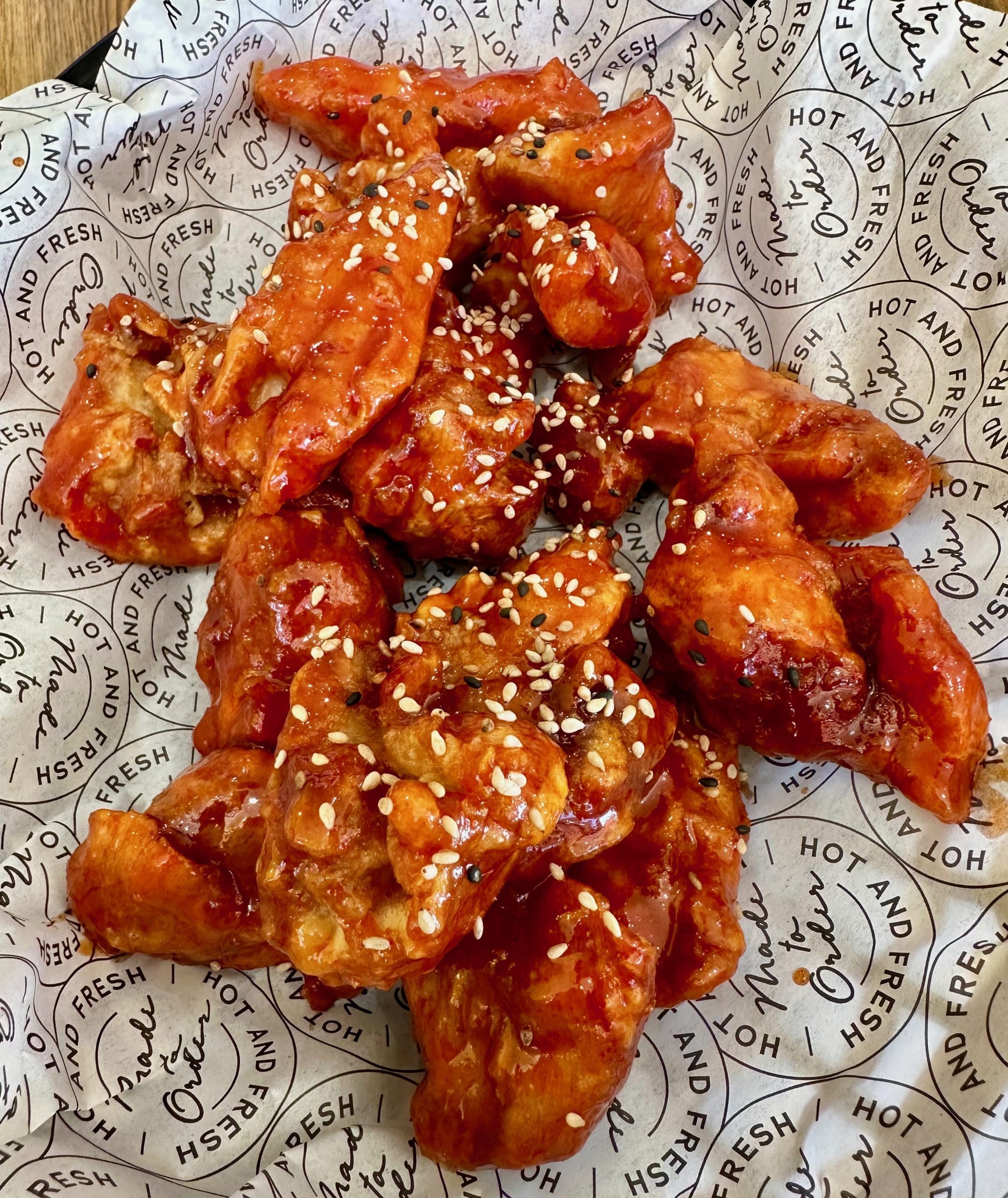
Kokio Chicken – Albuquerque, New Mexico

Most culinary historians agree that black American soldiers stationed in Korea during the Korean War (June 25, 1950 – July 27, 1953) taught the Korean soldiers with whom they fought side-by-side how to make fried chicken.  Popular theory holds that black American soldiers wanting to celebrate American Thanksgiving feasted with fried chicken. (Apparently not even scrounge-master Radar O’Reilly could find a turkey in the entire Korean peninsula).   The fried chicken was shared with their Korean compatriots. Before that memorable Thanksgiving celebration, chicken in Korea was commonly served boiled in stews.   Eating it  fried was an entirely new experience for the Korean soldiers. Though fried chicken was an instant hit, the war thoroughly devastated the Korean economy.  Essential ingredients for fried chicken – such as chicken and cooking oil – were extraordinarily scarce and beyond most people’s financial reach. In fact, cooking oil was not even commercially available until the 1970s.  During the 1960s, whole rotisserie chicken became a coveted luxury dish served on special occasions in Korea. The commercialization of inexpensive cooking oil in 1971 coupled with a period of economic boom and incredibly rapid industrialization which gave Korean people more disposable income, and made chicken far more…

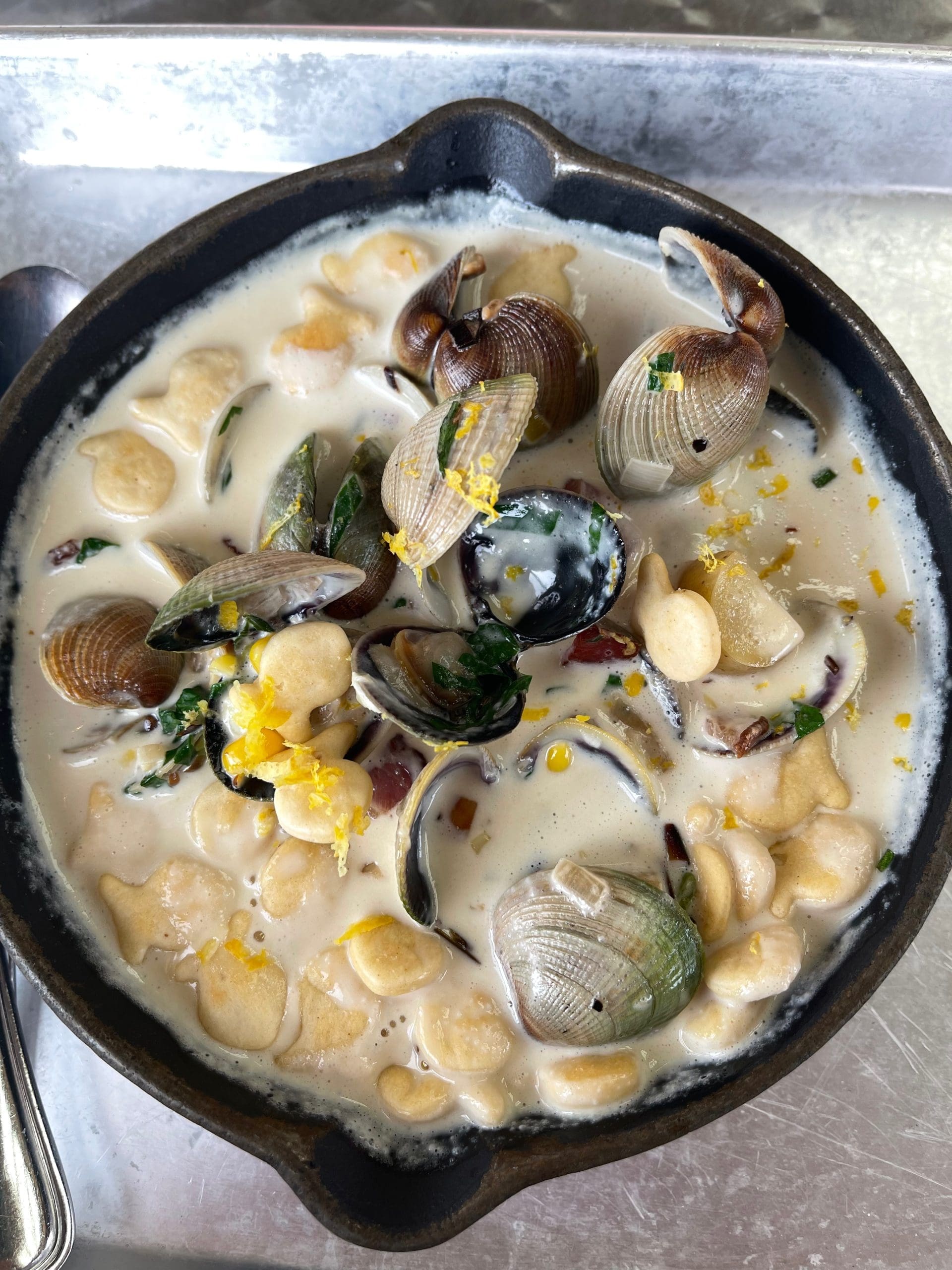
Rowley Farmhouse Ales – Santa Fe, New Mexico

Only in John Denver’s hit song “Thank God I’m A Country Boy” is life on the farm “kinda laid back.” In actuality, farm life can be downright arduous, requiring back-breaking work in climatic extremes for low wages. It was much worse in colonial days when life on a farm generally meant very few luxuries outside of a warm fire and a tankard (or ten) of house-brewed ale. Beer was brewed not only to refresh, sustain and comfort hard-working farmers, but because during sanitation-deprived colonial times, it was safer than water. Farm-brewed beer was created with what was on hand, whether it be wheat, hops, barley or rye supplemented with such ingredients as evergreen boughs, juniper berries, honey and fruit. Because beer was made with whatever ingredients were available, the lack of convention led to an emphasis of individuality over uniformity. Along with life, liberty and the pursuit of happiness, beer, it seems, was almost an inalienable right and in many cases, an integral part of a worker’s compensation package. Gentlemen farmers such as George Washington brewed beer not only for themselves, but for their farm workers whose employment contracts often stipulated a certain daily allotment of beer. Washington’s farm workers…