East Asian Kitchen – Albuquerque, New Mexico

Perhaps more than anyone I’ve ever met, my Singaporean friend Ming Lee (God rest his beautiful soul) regarded people by the content of their character, not by physical characteristics.  So, it surprised me to hear him joke “we all look alike.”  It was an unsolicited admission that even he couldn’t always discern the cultural genesis of Asian people he met.  He also joked “at least I can always tell where an Asian restaurant’s food comes from.”  Ming was a bona fide gastronome who introduced me to the cuisine of Singapore and Malaysia.  Like me, he disliked restaurants in which overt homogenization of Asian food was apparent.  Sure, different culinary cultures across Southeast Asia have borrowed from one another over the millenia, but most adapt to cultural tastes rather than copy exactly. Ming was wary of Asian restaurants that purported to serve the cuisine of more than one Southeast Asian nation.  To him, the concepts of global cuisine and multicultural restaurants “dumbed down” what is best about each culinary culture.  We disagreed on the concept of fusion cuisine, the blending of elements from different cultures, creating new dishes that offer several cultures on a plate.  I like the concept when executed…

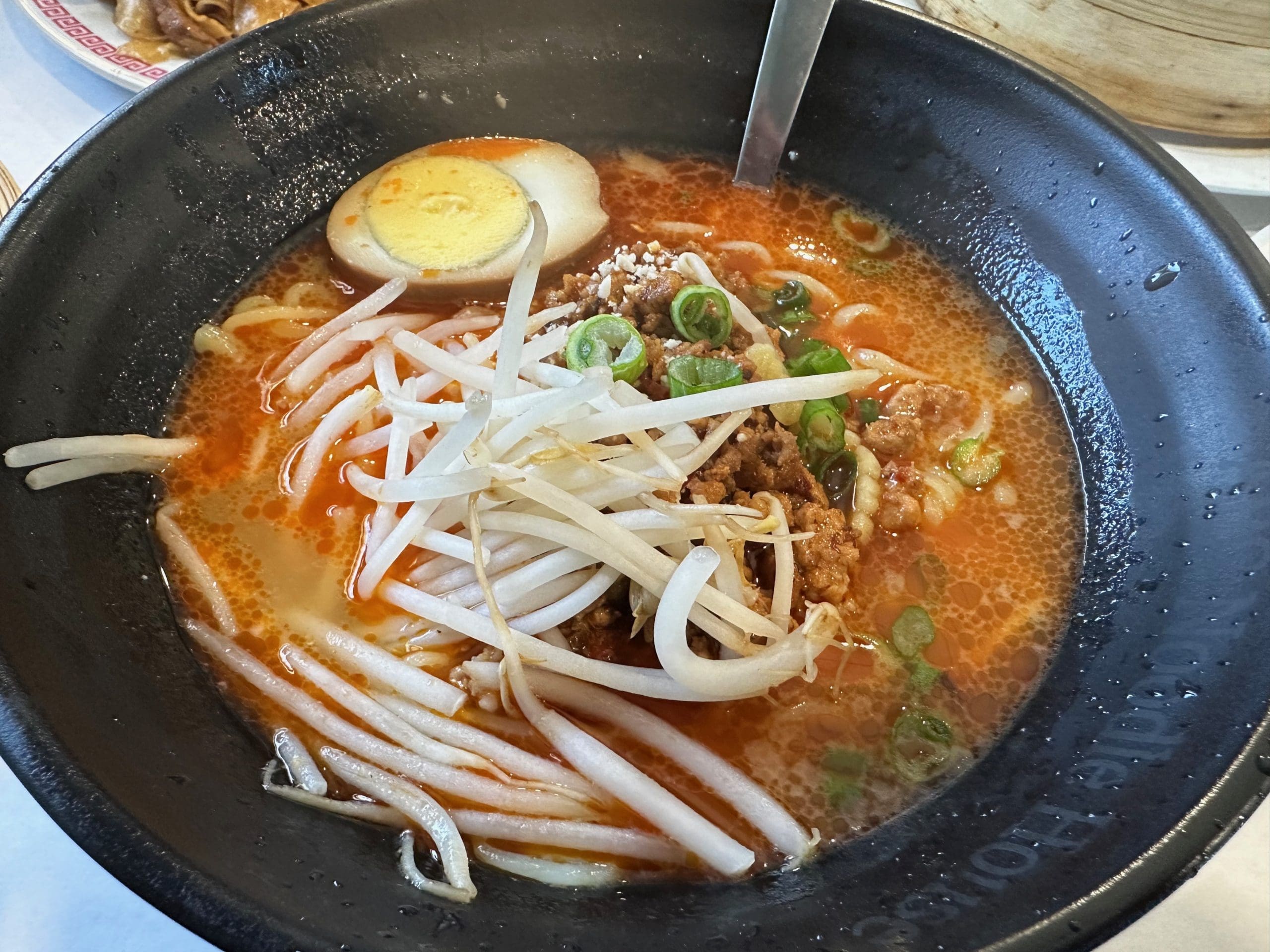
Aji Ramen – Albuquerque, New Mexico

If a television show was to be created about ramen (some pronounce it ray-men), it would probably be called “Everybody loves ramen.”  According to the World Noodles Association (yes, there is such an entity), Americans consume 5.15 billion servings of instant ramen every year.  If you think that’s a lot, the United States ranks as only the sixth-largest consumer globally, significantly far behind such Asian nations as China and Indonesia.  Still, the land of spacious skies and fruited plains ranks as the top ramen consumer outside of Asia.   The per person consumption rate among Americans is 15 servings of ramen per year.  Would you believe South Korea is ranked the world’s number one per capita in instant noodle consumption (72.8 servings of instant noodles per annum)? Perhaps because of my non-traditional route (night school and testing out of courses) to higher education, I’ve never had instant ramen.  That’s right.  In my 39 years on planet Earth, my lips have never partaken of the food most commonly associated with college students.  Maybe it’s a good thing.  The high-calorie content and the high concentration of refined carbohydrates, fats, and sodium  in instant noodles, contribute to an increased risk of metabolic disease.  Though…

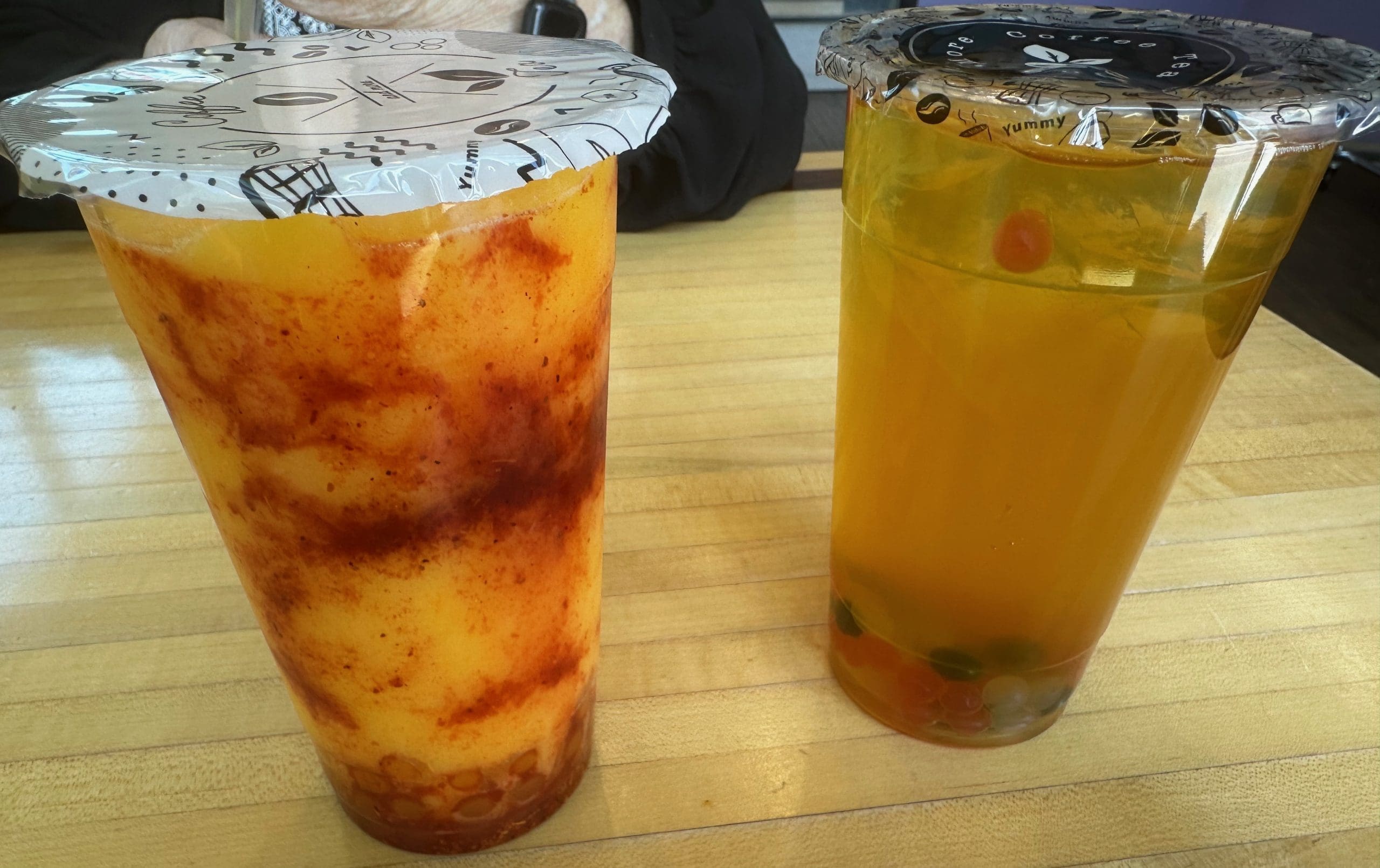
Kawaii Boba Cafe – Albuquerque, New Mexico

I have a confession to make.  I just don’t get anime…and can’t figure out the pokemon craze.  That’s a rather starting admission for an Information Technology (IT) professional to make.  Maybe I need help?   After all, for your stereotypical male IT professional, anime and pokemon are just steps in the typical progression of IT affectations.  They’re the logical graduation that follows a rather unhealthy obsession with Princess Leia and all things Star Wars.  Which reminds me, I found Star Wars silly and boring.  Since I’m airing dirty laundry, I may as well admit I’d just as soon watch paint dry as play a video game.  Any video game. Nor do I ever celebrate Pi day (March 14th) and my Kim had to explain what Star Wars Day (May 4th) means (May the fourth be with you). My male colleagues in the IT profession, several of whom still live in their mom’s basement, are probably apoplectic about these revelations.  They probably think I don’t like dinosaurs either.  Well, er…   All these heretical confessions probably mean I’ll have to renounce all my IT certifications and turn in my beanie.  Next thing you know my techno-nerd colleagues will hack my computer to…

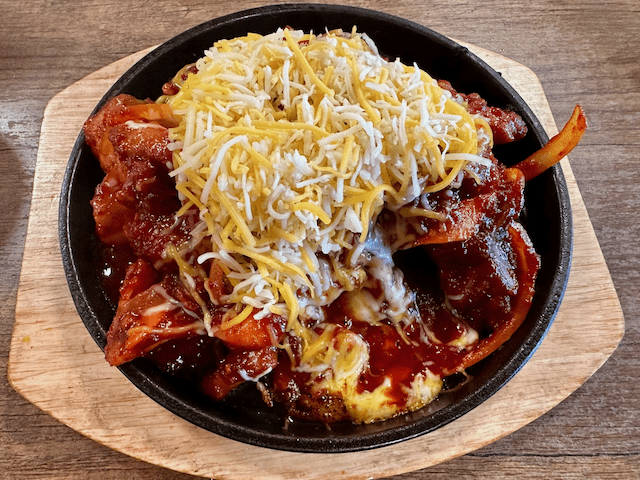
ABC Cajun Seafood & Noodle House – Albuquerque, New Mexico

Although popular myth attributes the introduction of pasta in Italy to Marco Polo, pasta’s origins in Lo Stivale can be traced back as far as the 4th century B.C.  That’s when the Etruscan civilization-which existed in the Tuscany region from the 8th to the 3rd century BCE–began the centuries old love affair between Italians and pasta.  Culinary historians agree that pasta’s earliest roots begin in China, during the Shang Dynasty (1700-1100 BC), where some form of pasta was made with either wheat or rice flour. Pasta also appears to have been part of the ancient Greek diet in the first millennium B.C.  Africa also had its own form of pasta (made with the kamut crop). Despite being first to create pasta, you don’t often hear the term “pasta” associated with China.  That’s because there’s a difference between pasta and noodles.  The National Pasta Association defines pasta as being “a dough made from durum wheat and water and stamped into different shapes.”   Noodles, on the other hand, aren’t linked to one particular grain.  Nona Lin, a wonderful website explains: “From buckwheat noodles to rice noodles, yam noodles, and wheat flour noodles, there’s no shortage of choice. Noodles can be crafted from…