East Ocean Chinese & Seafood – Albuquerque, New Mexico

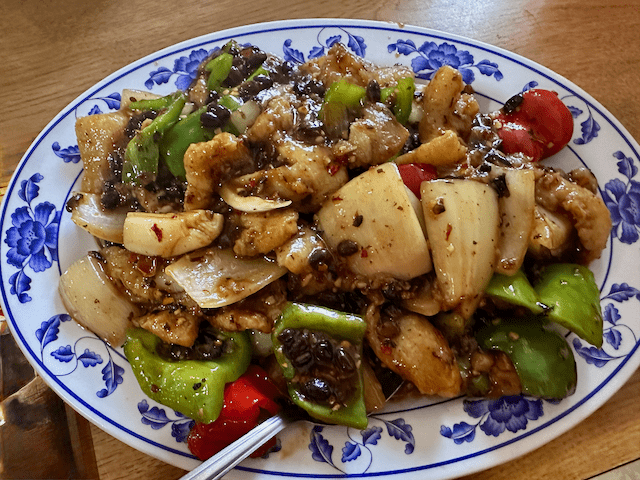
In 2022, Freddie Wong posted a TikTok video that went viral on several social media platforms. In the video, Wong, purports to find the most “authentic” Chinese food by utilizing restaurant review website Yelp in a unique way.  “The easiest way to find authentic Chinese food, assuming you’re living in a major metropolitan area, is to go on Yelp and to look for restaurants with three-and-a-half stars,” declared Wong in his TikTok video, which garnered an astonishing 7.2 million views in only two days. “Exactly three and a half, not three, not four. Three-and-a-half stars is a sweet spot for authentic Chinese food.” Again, the assumption is based on living in a major metropolitan area where there are a preponderance of “authentic” Chinese restaurants.  In cities such as Albuquerque, few restaurants even offer a traditional Chinese menu (if you ask for it).  Among those is East Ocean which coincidentally or not is rated  exactly three-and-a-half stars on Yelp.  A Duke City mainstay for more than thirty years, East Ocean has a huge following that includes  George Thorning, my friend and colleague at the University of New Mexico.   Though he did experience a bit of consternation when the restaurant changed…

Buck & Rider – Gilbert, Arizona

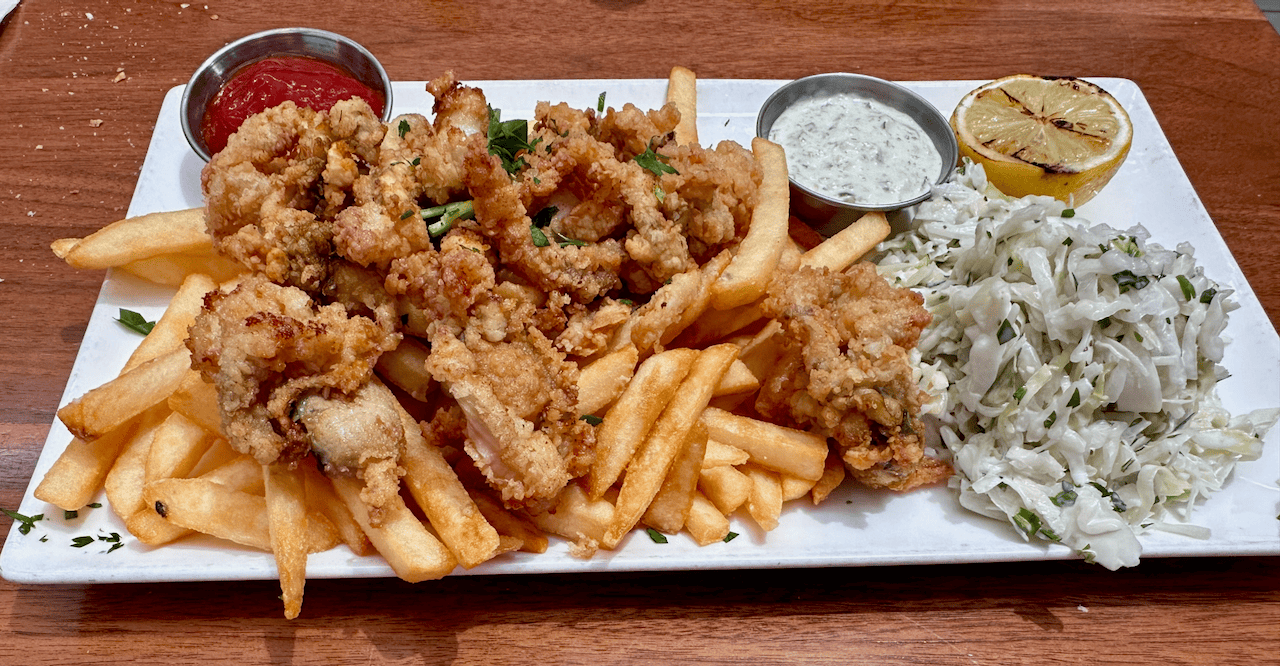
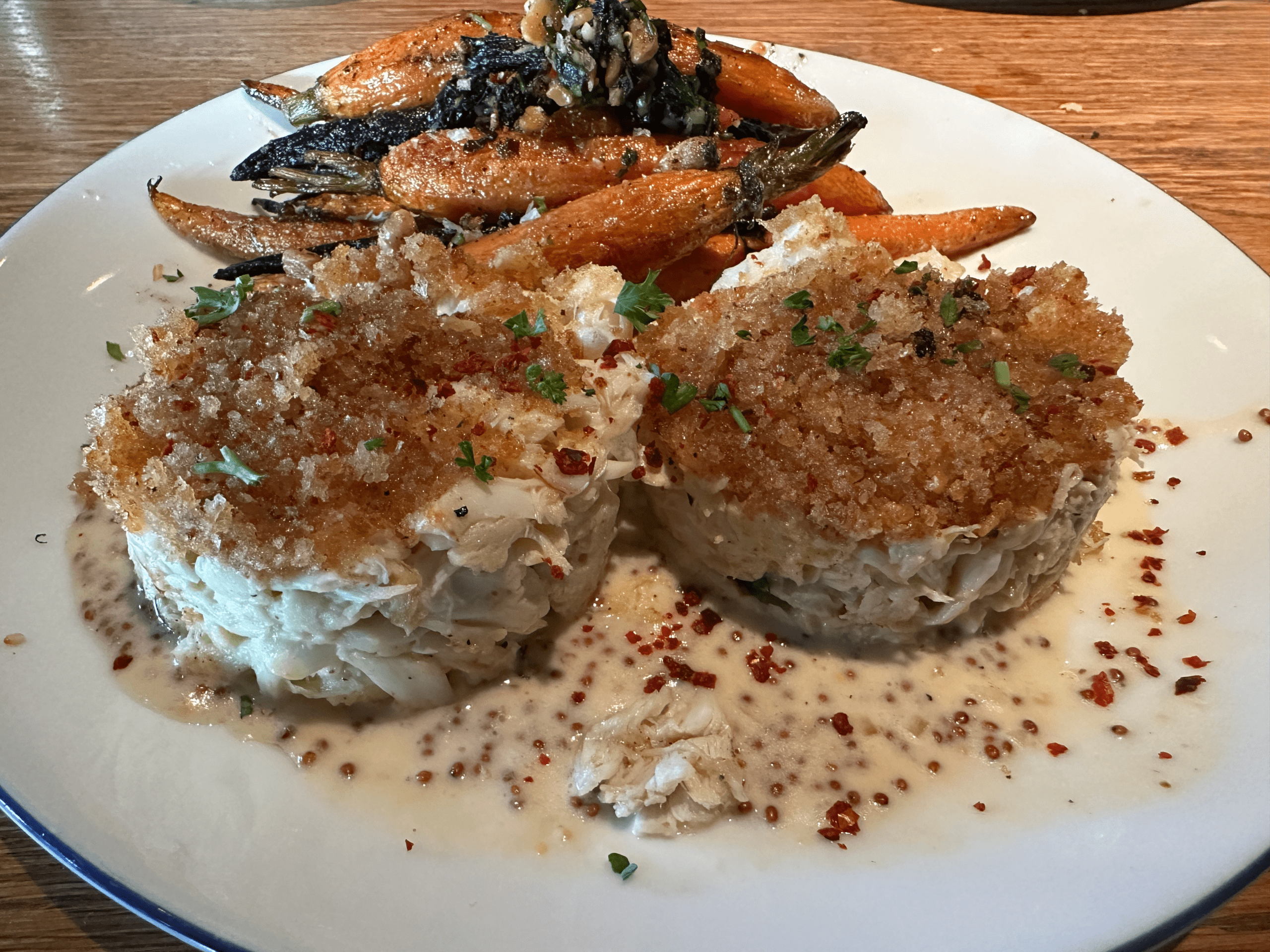
If you believe you can’t find great seafood in Phoenix because it’s landlocked and nine months out of the year its temperature rivals that of the sun, you would be mistaken.  As my friend Steve Coleman reminded me recently, 200 years ago, passenger trains in England made fish and chips possible throughout the country by facilitating the transport of fish to interior cities.  Similarly, advances in air travel and refrigeration have made seafood much more available to those of us whose only fresh seafood is the Rio Grande minnow.  Sure, you can catch some fish in the rivers and canals throughout Arizona, but you won’t find lobster, crabs, oysters, mussels, stone crab and other “real” seafood. For years, my dear friends the Plata Brothers Bruce and Loren have been singing the praises of Buck & Rider. Though the name sounds like a children’s cowboy cartoon, Buck & Rider offers a soiree of fresh fish and seafood sourced daily from coastal regions.  Those coastal regions aren’t solely within the fruited plain, but even New Zealand where fresh hamachi comes straight from the net to shipping containers designed to preserve its freshness.  There are three Buck & Rider restaurants in the Valley…

ABC Cajun Seafood & Noodle House – Albuquerque, New Mexico

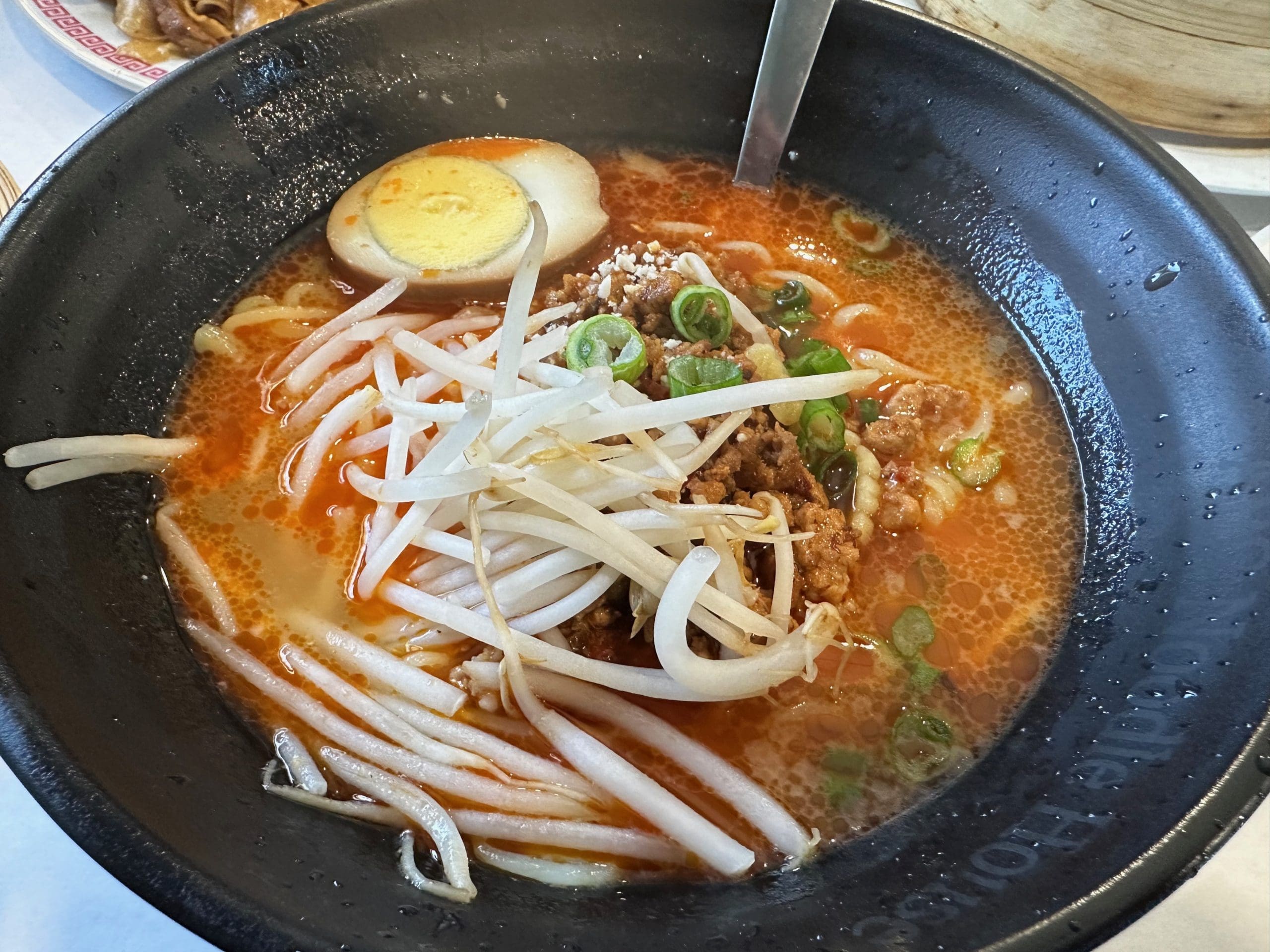
Although popular myth attributes the introduction of pasta in Italy to Marco Polo, pasta’s origins in Lo Stivale can be traced back as far as the 4th century B.C.  That’s when the Etruscan civilization-which existed in the Tuscany region from the 8th to the 3rd century BCE–began the centuries old love affair between Italians and pasta.  Culinary historians agree that pasta’s earliest roots begin in China, during the Shang Dynasty (1700-1100 BC), where some form of pasta was made with either wheat or rice flour. Pasta also appears to have been part of the ancient Greek diet in the first millennium B.C.  Africa also had its own form of pasta (made with the kamut crop). Despite being first to create pasta, you don’t often hear the term “pasta” associated with China.  That’s because there’s a difference between pasta and noodles.  The National Pasta Association defines pasta as being “a dough made from durum wheat and water and stamped into different shapes.”   Noodles, on the other hand, aren’t linked to one particular grain.  Nona Lin, a wonderful website explains: “From buckwheat noodles to rice noodles, yam noodles, and wheat flour noodles, there’s no shortage of choice. Noodles can be crafted from…

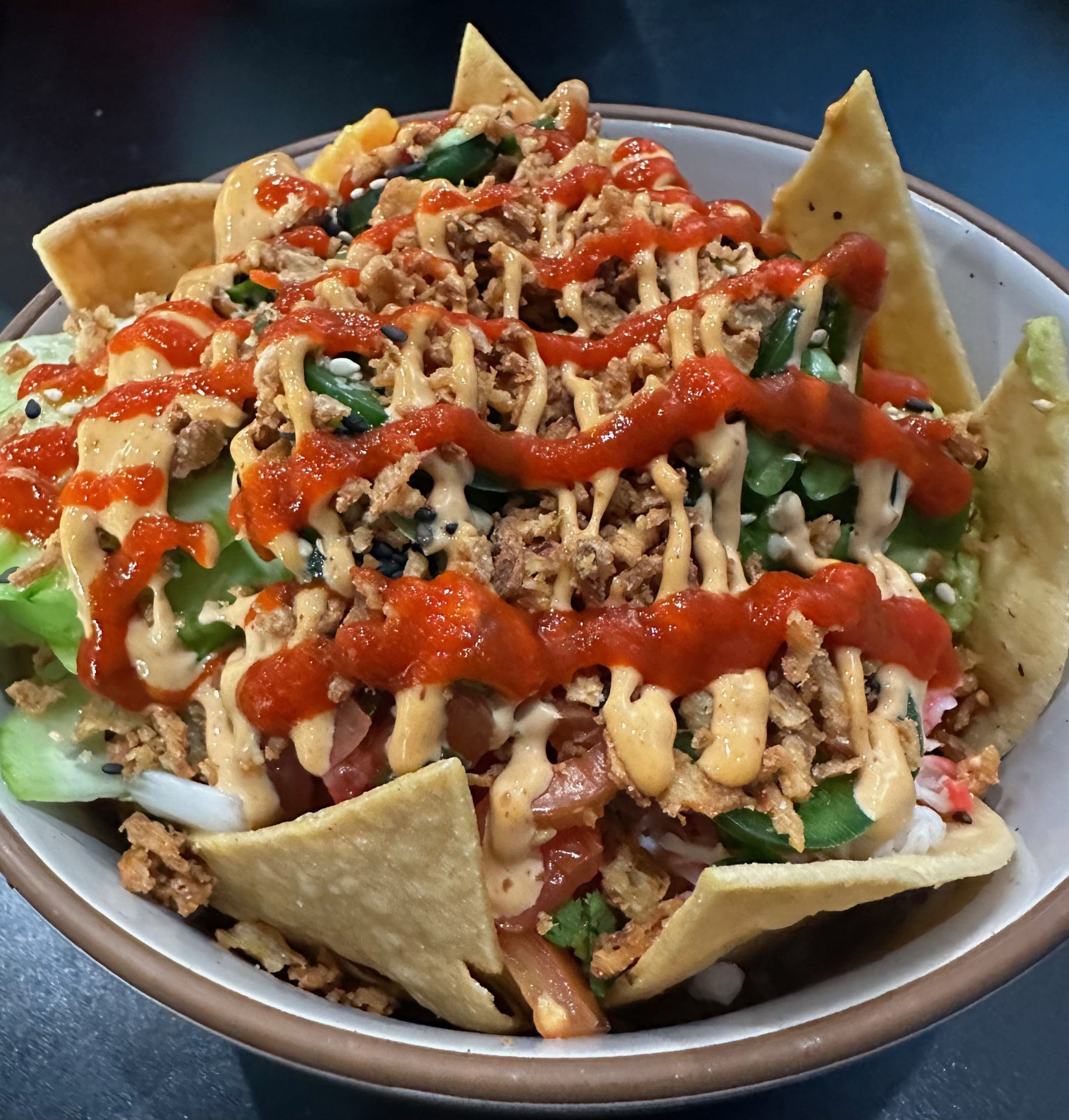
Poké Serrano Asian-Latin Fusion – Rio Rancho, New Mexico (CLOSED)

Ask most people what comes to mind when they think about Hawaiian food and the likely answer is Spam®.  No matter how much the Aloha State’s tourism department does to showcase the state’s diverse and exciting culinary culture, the stereotype that Hawaiians eat Spam® for breakfast, lunch, dinner and snacks in between meals is engrained in many of us.  Because Hawaiians do consume seven-million cans of  Spam® per year (with a population of 1.42 million residents in the Islands), it begs the question “Is it really a stereotype if facts bear out the fact that Spam® is so immensely popular in Hawaii.” Not everyone who spends time on the sandy beaches is as svelte as portrayed by media.  Widespread obesity plagues the Islands.  Some of that may be attributable to the quintessential canned ham product proudly made in Minnesota, a processed food  replete with salt and other “bad for you” things. Spam® became a vital part of the Hawaiian diet during World War II when rationing was a fat of life for its citizenry.  Hawiians figured out how to incorporate Spam® into their diet and figured out it’s a pretty versatile product.  Note: If you’re from Northern New Mexico and…

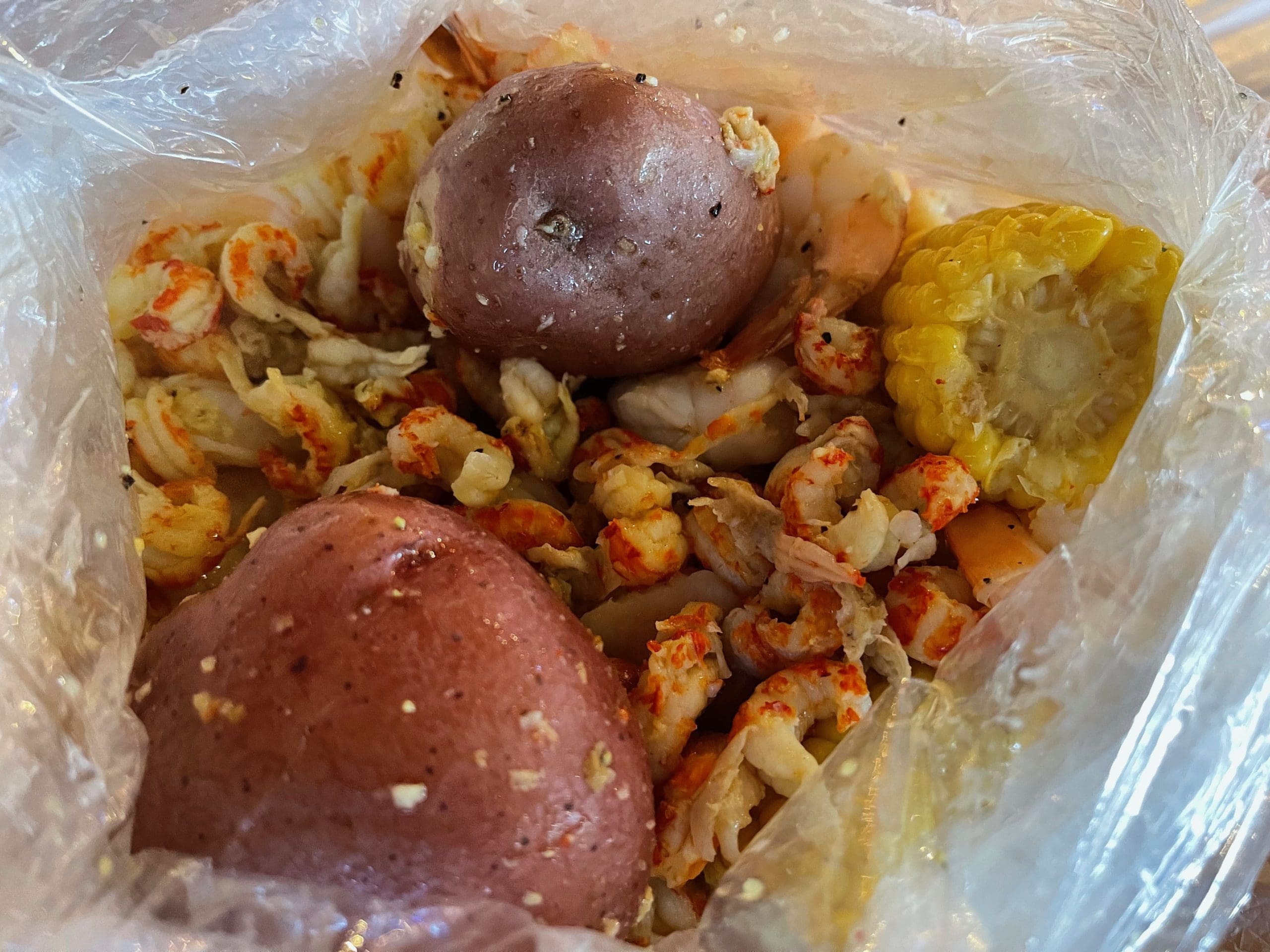
Down N Dirty Seafood Boil – Albuquerque, New Mexico

Seafood boil in the Duke City! If the notion conjures visions of heading to Tingley Beach and embarking on an unappetizing repast of catfish, rainbow trout and silvery minnows boiled together in a large pot of green chile seasoned broth, you’re in for a treat. As of September, 2013, it’s possible for expatriates from any of America’s coastal regions to indulge in authentic seafood boil…and it’s very good.  So good, in fact, that since its launch, copycat restaurants have spawned throughout the Duke City. Down N Dirty Seafood Boil was the first–often duplicated but never replicated.   Albuquerque’s very first seafood boil restaurant launched to very little fanfare. The event should have been celebrated with ceremonial splendor and rejoicing. Think about it. Among the dozens of restaurant openings in the Duke City every year, very few actually serve an untapped market. Even fewer fill a real niche and offer a product unique to the marketplace, something that can’t be found anywhere else in the area. Expats who’ve lived along coastal waters know of what I speak. As they read this, they may even be experiencing involuntary salivation at their memories of seafood boils in their past and the prospect of…

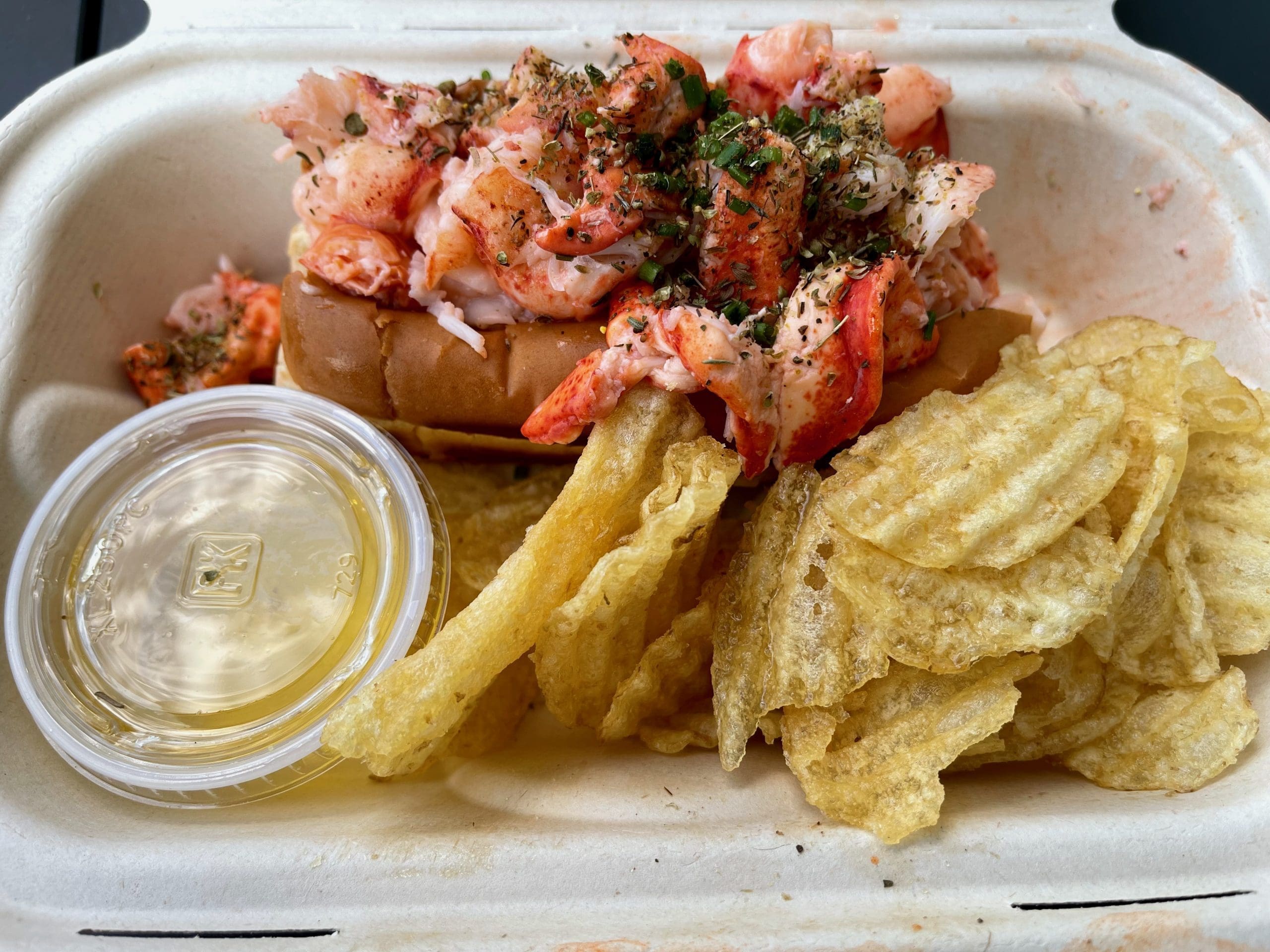
Freshie’s Lobster Co. – Salt Lake City, Utah

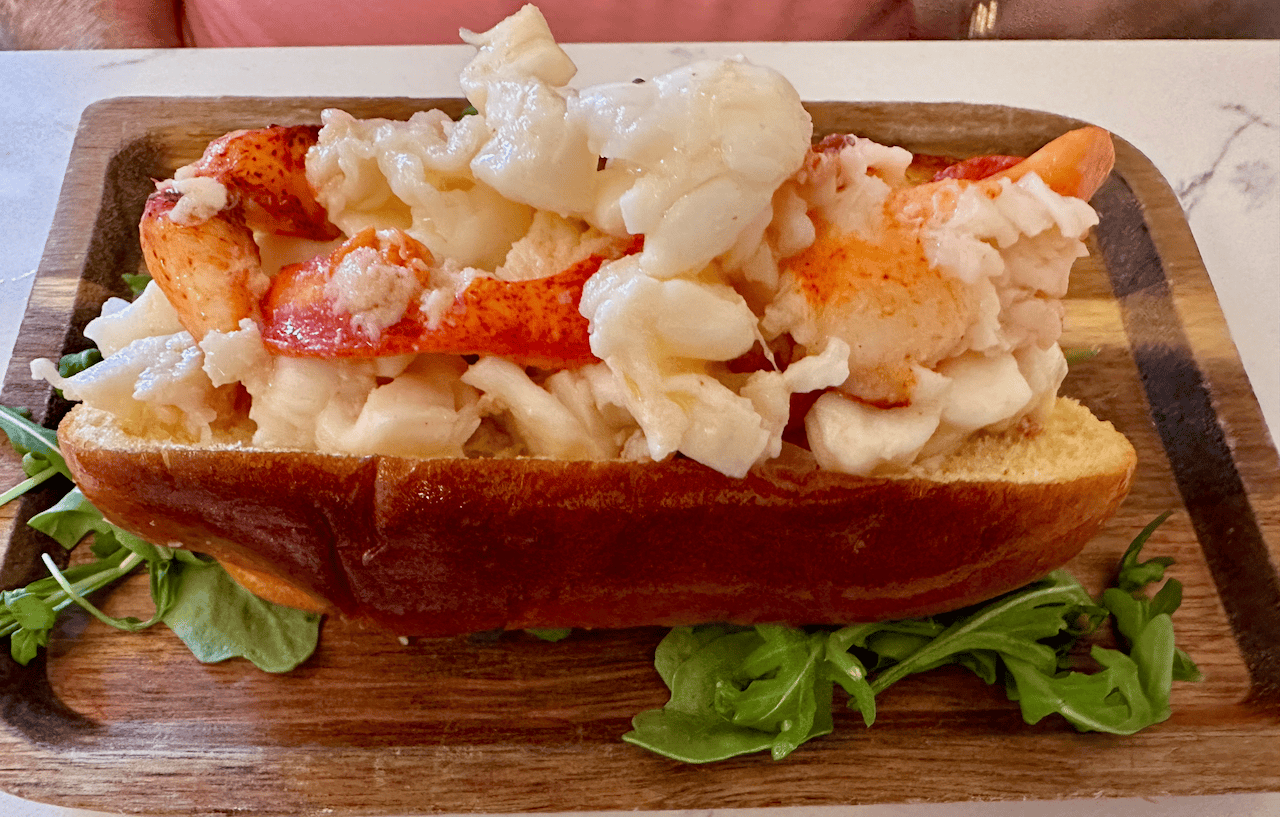
The best lobster in the world?  In Salt Lake City?  That’s as improbable as the Detroit Lions winning a Super Bowl, as unlikely as drivers in New Mexico developing the motor skills to use turn signals, as far-fetched as a conservative NRA member driving a Subaru in Santa Fe.  As a landlocked state some two-thousand miles from the cold New England waters that produce the world’s most delicious lobsters, the notion that a Salt Lake City restaurant would be acclaimed as home of the “world’s best lobster roll” seems quite implausible indeed.  Even the concept that a lobster restaurant (other than Red Lobster) would experience wild success in Salt Lake City could be construed as rather fantastical.  Utah isn’t exactly known for lobster.   Fry sauce, funeral potatoes, Jell-O salad yes, but not lobster. Earning the distinction of the “world’s best lobster roll” is precisely what Freshie’s Lobster Co. in downtown Salt Lake City did.  In 2017, Freshie’s owners Lorin and Ben Smaha competed against twelve other contenders for “World’s Best Lobster Roll” at the “Down East Lobster Roll Festival“ competition in Portland, Maine.  Most of the other competitors were from Maine.  A panel of professional judges voted Freshie’s version…

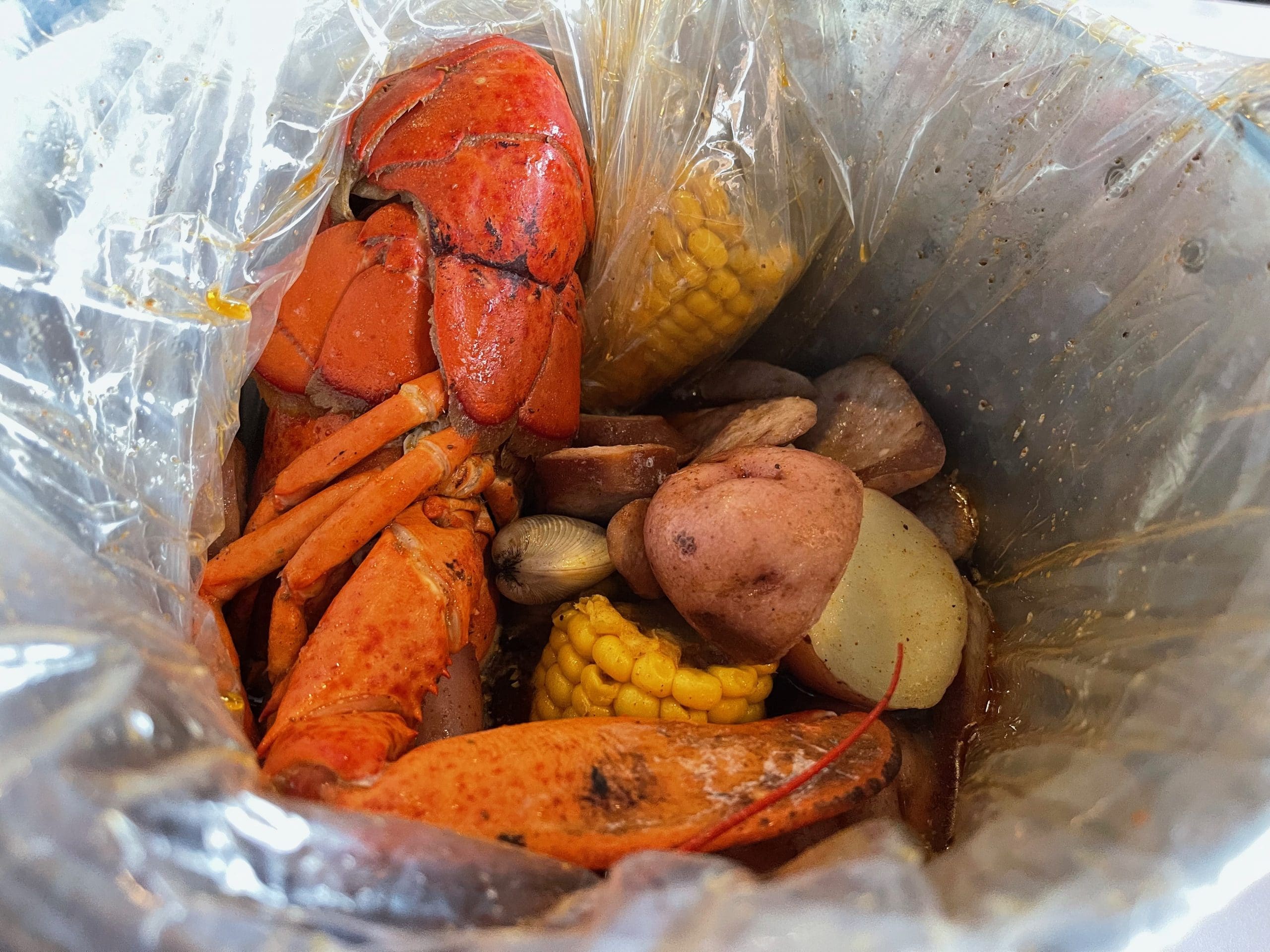
Storming Crab – Albuquerque, New Mexico

Archaeologists believe there’s a scientific explanation for contemporary  humankind’s  predilection for seaside vacations and trips to the beach.  Evidence–stone tools used to cut through animal flesh–seems to support the theory that the first humans migrated out of Africa by following the eastern coastline.  This, the theory posits, would have led to Australia being discovered before Europe.  As noted by Professor Chris Stringer, the head of human origins at the Natural History Museum in London: “The earliest evidence of modern humans in Europe is 40,000 years old whereas we find evidence dating to 60,000 years ago in Australia.  This (migrating along Africa’s eastern coastline) provides a possible explanation.” In addition to the tools used by our beachcombing ancestors, the archaeologists found the remains of several edible marine animals, including oysters, mussels and crabs.  Whether or not this also explains humankind’s pescatarian propensities, many of us are passionate about seafood–and not in the way Dolly Parton meant when she proclaimed “I’m on a seefood diet.  I see food, I eat it.”  According to Seafood Source, “on average, Americans consumed 16.1 pounds of seafood in 2018, a per capita consumption rate of 16.1 pounds,  the highest since 2007.”  Shrimp remains the most popular…

Salty Catch – Albuquerque, New Mexico (CLOSED)

As children growing up in landlocked and agrarian Peñasco, my siblings and I led a very sheltered life. Our extremely provincial experience with “seafood” was limited to Mrs. Paul’s fish sticks which we dipped in Kraft’s sandwich spread (we didn’t know about tartar sauce) and (gasp, the horror) Mrs. Paul’s fried shrimp. Sure, we snared the legal limit (yeah, right) of German brown trout, cutthroat trout and rainbow trout in the cold, rocky waters of the mountain streams in our backyard, but that wasn’t “seafood.” That was fish! One commonality among the “seafood” and even the “fish” we experienced was that it was all fried. Okay, so the Mrs. Paul’s seafood was already breaded and fried when we removed it from its hermetically sealed container. All we had to do was put it on a baking pan and bake it “until crispy and browned.” Despite my mom following the instructions on the box, both the fish sticks and shrimp had a mushy and oily texture. It certainly didn’t have the wonderful mouth-feel of the fish she fried for us. One memorable school trip to the “big city” of Albuquerque included a visit to Sizzler, a “fancy” steakhouse chain that would…

Flamez Bistro – Albuquerque, New Mexico (CLOSED)

Hold the pickles Hold the lettuce Special orders don’t upset us All we ask is that you let us serve it your way In 1974, Burger King introduced its most successful and long-standing advertising campaign, the heart of which was “Have It Your Way,” a catchy jingle designed to contrast just how flexible Burger King is compared to its largest competitor, the ubiquitous McDonalds. The earworm-inspiring jingle told us we could have burgers made especially for us—tailor-made, customized, prepared any way we want them. It implied that unlike its rigid and inflexible competitor, Burger King recognizes our uniqueness and they celebrate it with burgers that reflect our individuality, lifestyles and dietary considerations. There are, Burger King tells us, 221,184 ways to have the Whopper made our way. It’s hard to fathom that nearly a quarter-million combinations are possible from a burger whose basic constituents are a flame-grilled quarter-pound beef patty, sesame seed bun, mayonnaise, lettuce, tomatoes, pickles, ketchup and sliced onion. Only a fuzzy-math-proficient government accountant could possibly appreciate and explain how a Whopper can be made your way so many ways. Whataburger, which prides itself on delivering each customer’s burger made-to-order, advertises 36,864 different ways to make a Whataburger and…

Slapfish – Albuquerque, New Mexico (CLOSED)

Every year, a jolly, bearded (some might also say fat) gentleman leaves the comforts of his home to celebrate an event that comes only once a year. Throughout the year he’s visited good little mom-and-pop restaurants across the Land of Enchantment and rewarded them with kind reviews wrapped in polysyllabic words and alliterative phrases. On this special day, my Kim’s birthday, the bearded gentleman isn’t quite as jolly for as faithful readers know, once a year I agree to take my cookie-baking bride to the Olive Garden. It’s a deal we have, albeit one that makes me feel like Faust in the Christopher Marlowe play. Faust, for the non-English majors among you was a scholar who sells his soul to the devil in exchange for unlimited knowledge and worldly pleasures. In my case, the deal is a visit to Olive Garden once a year in exchange for all the strange and exotic restaurants I want to visit the rest of the year. I sure got the rotten end of that deal. On 28 October 2017, my Kim decided to collect my soul, er….have me make good on my promise and take her to the Olive Garden (which she doesn’t like…

Shanghai Reds at the Fisherman’s Market & Grill – La Quinta, California

For years, fish tacos have been one of those popular, almost faddish obsessions which have garnered more attention and affection than cynics like me believe is warranted (much the same way some of us feel about Beyonce and anything Kardashian).  It’s always been well beyond my capability to understand why fish tacos have been so highly regarded.  Sure, my Kim and I have had a number of good to very good fish tacos, but we’ve never had a truly transformative, eye-opening “now I get it” fish taco.  Not even in San Diego.  Certainly not in New Mexico.  Apparently, we’re not the only ones. Legendary gifted raconteur Anthony Bourdain didn’t get fish tacos either (or for that matter, Nashville hot chicken).  He didn’t necessarily deride them as he did airline food, ranch dressing or vegan food, but when he did more than acknowledge them, it was usually with the same enthusiasm he expressed for Frito pie.  So, when he proclaimed the fish tacos at Shanghai Reds “truly extraordinary; truly, truly, extraordinary,” we knew we had to find out for ourselves if all those rare superlatives from Bourdain were warranted. Great fish tacos in the desert?  In a Chinese restaurant?  We asked…