PIOCHE FOOD GROUP – Fruitland, New Mexico

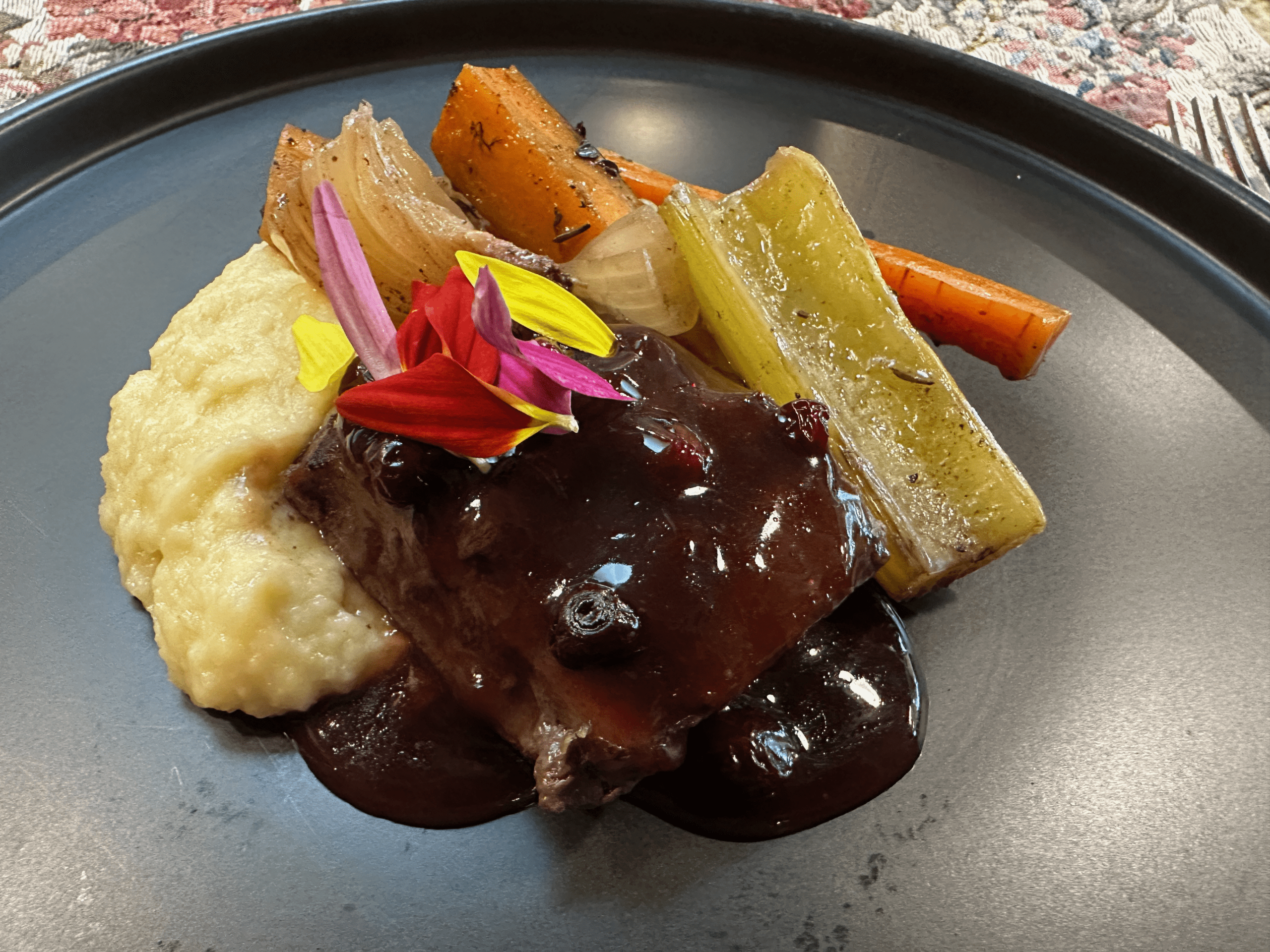
As my friend and retired restaurateur Tom Hamilton and I watched the Pioche family prepare a meal for some twelve guests, we both marveled at the quiet efficiency of the kitchen.  A veteran of decades leading highly-regarded kitchens, Tom related that most kitchens are a loud and frenetic hive of activity amped up to high volume.  Communication among kitchen staff is an absolute must to ensure synchronicity, especially when multiple courses are being prepared.  Instead of the characteristic chaotic din of most restaurant kitchens, the Pioche family worked in harmony, focusing on the quiet, efficient, and harmonious execution of the multitudinous tasks involved in the preparation of  a nine-course meal. It probably shouldn’t have surprised us so much that the Pioche family worked in such consonance.  After all, a traditional traditional Navajo (Diné) approach to family and communication is deeply rooted in the concept of K’é, a system of kinship and connectivity. This approach emphasizes respect and collective responsibility.  While Chef Justin Pioche is  the marquee name, he deflects praise and credits his sister Tia and mom Janice.  He’ll tell you he can’t operate without them and he’s not just being modest.  Like concordant instruments in an orchestra, each family member…

Salt and Board – Albuquerque, New Mexico

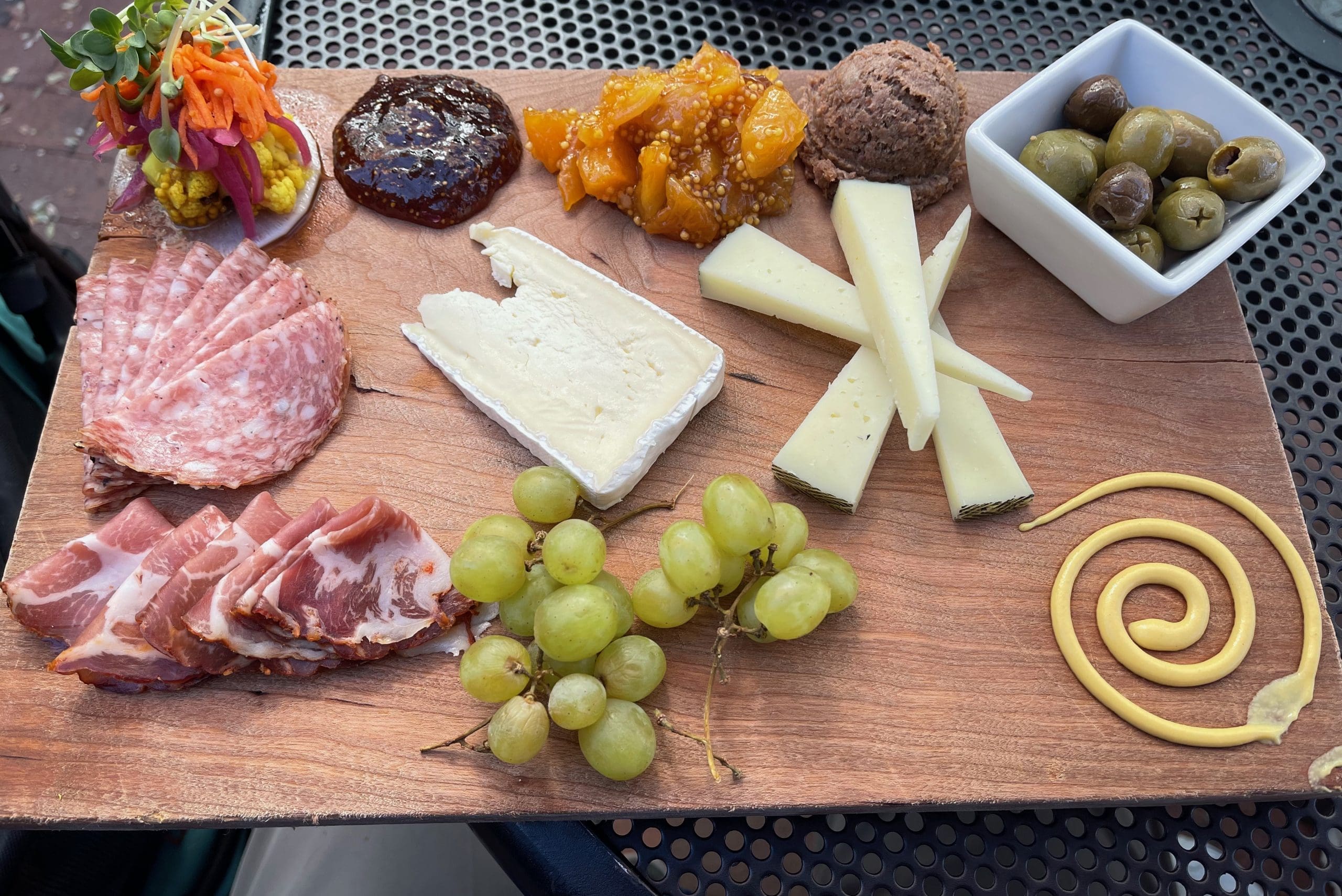
“Five years ago, everyone was making beer in their bathtubs, and now everyone’s making charcuterie in their garage!” ~Brian Malarkey, Chef When my friend Carlos, a punctilious polyglot conversant in four languages, asked what my Kim and I ate over the weekend, my poorly-pronounced beginner’s French response was “une assisette de charcuterie et de fromages.” “Oh, you had cold-cuts and cheese,” he responded. “No, we had charcuterie!” I emphasized, slowly pronouncing each syllable of the term: “char-cu-te-rie.” “Only the French,” he retorted “could convince you a plate of bologna and slices of cheese is a gourmet dish worth thirty dollars.” Carlos was only kidding, of course, but beyond his flippancy was a veiled challenge. He wanted me to figure out what distinguishes “charcuterie” from any other plate of cold-cuts and cheeses thrown together. It could be argued that charcuterie’s historical roots extend hundreds of years back when early civilizations figured out how to cure and preserve meats. The term “charcuterie,” which is derived from the French words for flesh (chair) and cooked (cuit), finds its genesis in fifteenth-century France. Charcuterie was essentially born out of the necessity for foods to have a long shelf life. Because pork vendors were prohibited…