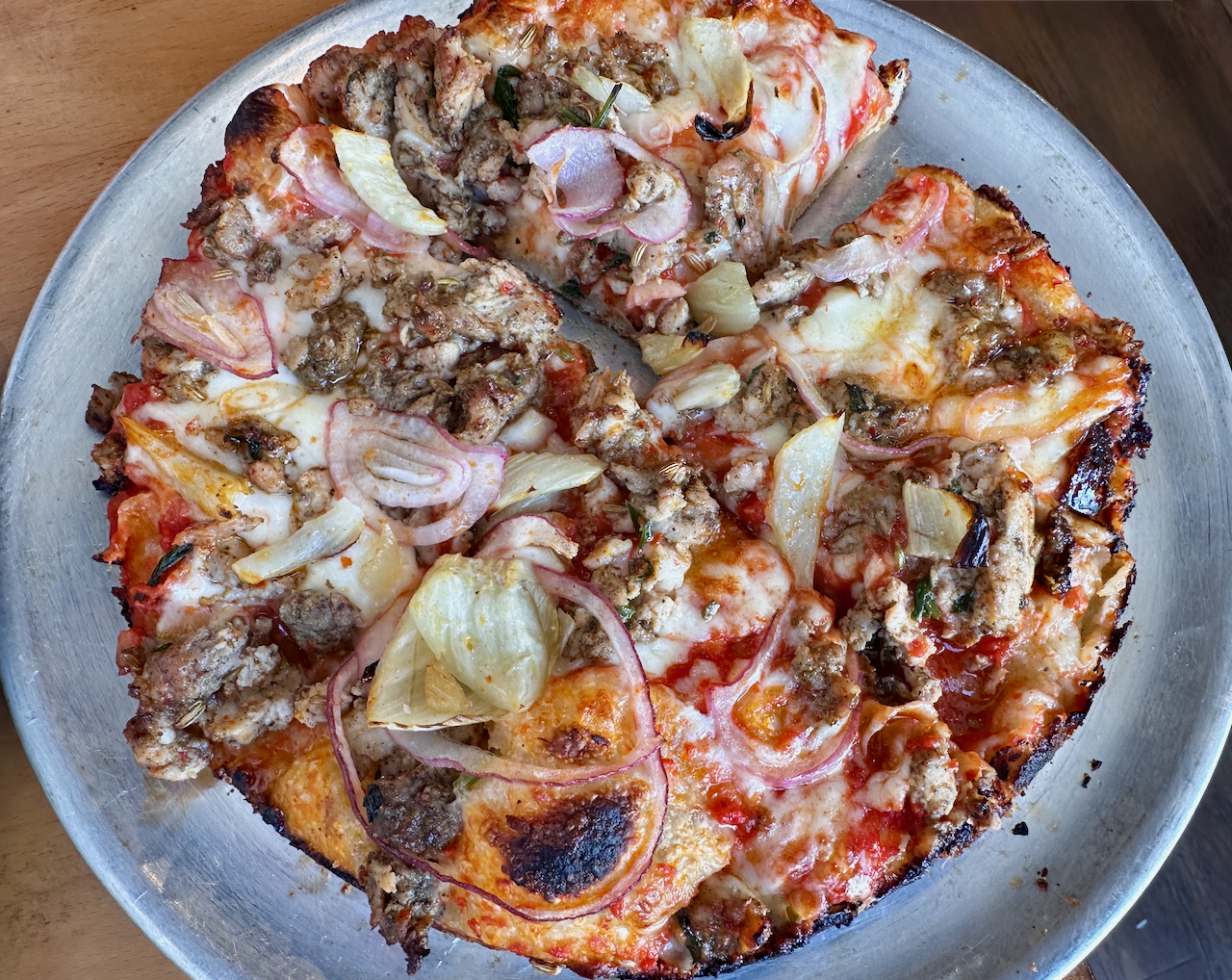
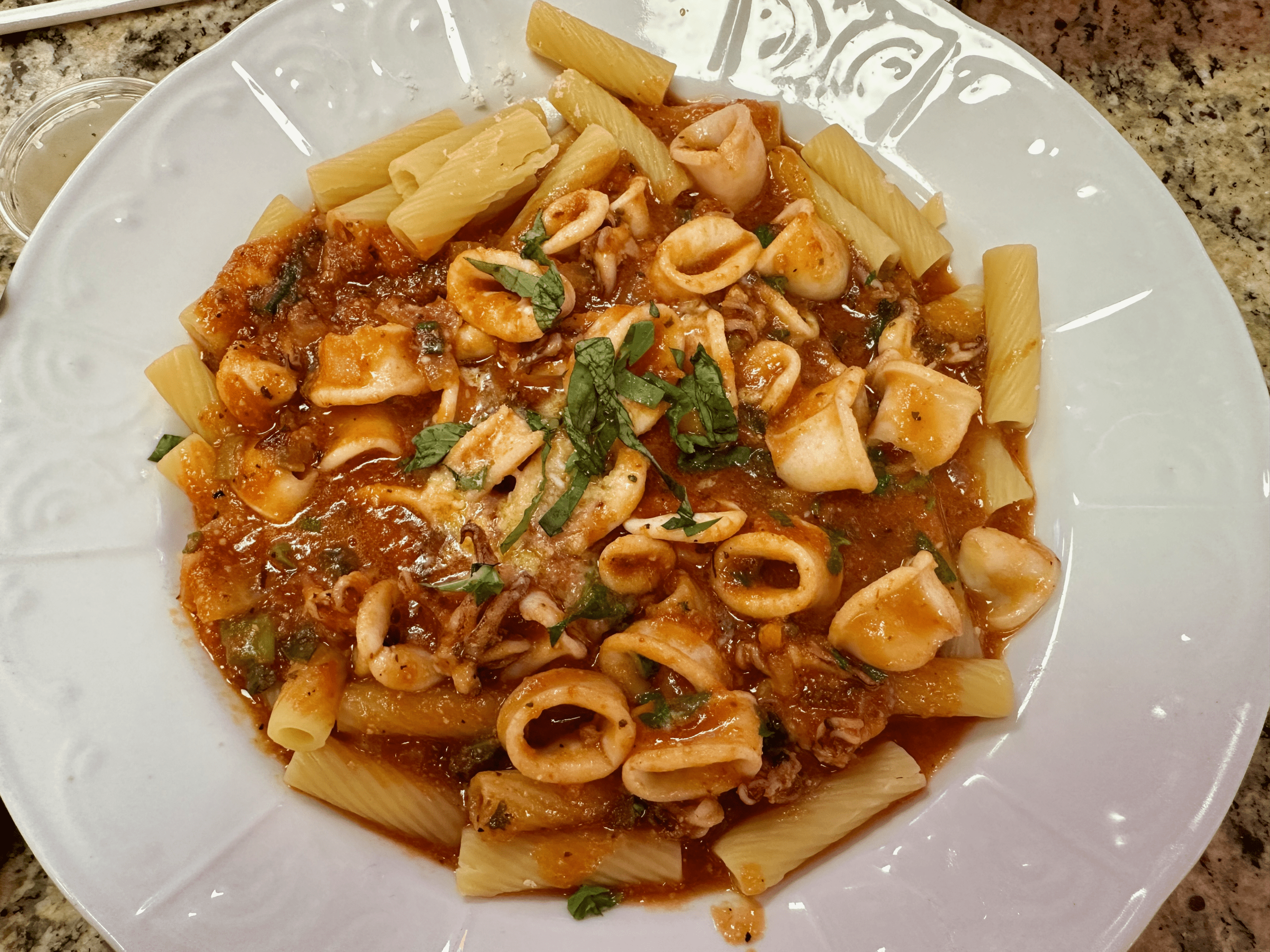
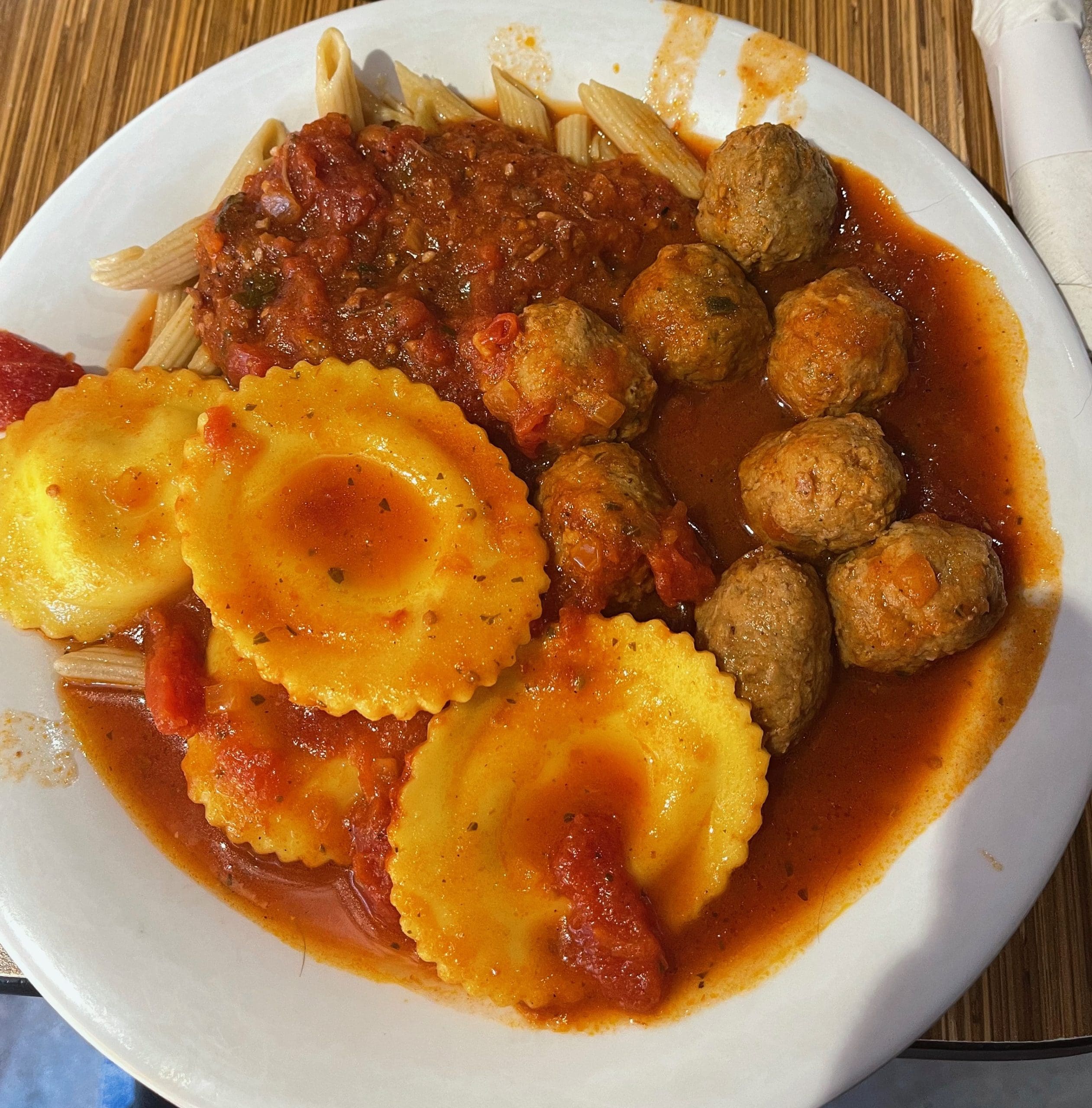
Tony’s Pizzeria – Albuquerque, New Mexico

Why is it so hard to convince others to change their minds and hearts? That’s a question philosophers, psychologists and even curious hoi polloi like me have pondered over for millennia. Perhaps never has that question been brought to the fore as during recent political events. Sadly, the question takes on even more of a personal bent when you believe someone else’s views betray something inherently rotten about their character—or when someone else believes the same about yours. Rightly or wrongly, we’re wired to believe people’s views are barometers of their moral conscience. Psychologists have long posited the existence of a confirmation bias which is a tendency to seek out information that confirms our existing views and to avoid information that disconfirms them.  Confirmation bias has exploded with the advent of social media.  Specific algorithms present information that appeals to our tastes.  Finding that information confirms our beliefs and rewards our dopamine receptors.  Studies have also shown that  when presented with information we don’t like or with which we disagree, our brains literally shut off and ignore it.  That accounts for the reason we as humans tend to “hang out” with people who are like us and believe the same…

Guido’s Chicago Meat & Deli – Scottsdale, Arizona

For years now, my Kim and I have largely eschewed American television, especially its sophomoric, lowbrow and “meant for voyeurs” reality shows.  We’ve been increasingly gravitating to an almost exclusive viewership of British television which we’ve found to be meant for grown-ups rather than children.  British television programs offer a sophistication direly absent in American programming.  British programs tend to be more substantive, refined and of much higher quality than their American counterparts.  That assessment applies to mysteries, comedies, dramas and even commercials. The final nail in the coffin for American television were two absolutely unwatchable reality shows:  The Kardashians and Jersey Shore.  Both showcase obnoxious, self-aggrandizing and vacuous characters with no redeeming characteristics.  The Jersey Show, for example, made celebrities of four loud, foul-mouthed, hypersexual Italian Americans who self-style as “guidos” and “guidettes.”  Never mind that “guido” (slang for a working-class urban Italian-American) is widely perceived by Italian-Americans as a pejorative word, like “spic” or “wop.” It’s a very unflattering stereotype. Lest you think we lowered ourselves to watch such detritus, we caught a promotion for the series which bragged about gathering the “hottest, tannest, craziest guidos” and assembling them at a beach resort where all would be laid…

GELATO DOLCE VITA & ITALIAN GROCER – Mesa, Arizona

“La Grassa” (The Fat One) is the nickname of Bologna, Italy.  While that sobriquet may seem unflattering, Bologna bears it with honor.  This city in the north-central region of the country is considered the “gastronomic heart of Italy,” a place where food is an art form and a passion.   This may be best exemplified by one of the foods born in Bologna.  I’m talking, of course, about gelato.  Throughout “Lo Stivale” (the boot, a nickname bestowed upon Italy because the shape of the peninsula resembles a high-heeled boot) gelato is revered.  Not surprisingly, Bologna is not only the home of Italy’s oldest university (and the oldest in the western world), but home to Carpigiani, “Gelato University.” Mesa, Arizona is the home of two of Carpigiani’s distinguished alumni.  Both Walter Bergamaschi and Marti Printy, founders of the Gelato Dolce Vita attended the Gelato University.   Having grown up in Bergamo, about two-and-a-half hours from Bologna, they have been around superior gelato all their lives.  In 2010, they launched Gelato Dolce Vita (literally “Gelato Sweet Life) in Mesa.  At the time there were only two gelato shops in Phoenix.  Ice cream shops dominated the market.  In time, customers began to appreciate the difference…

Tomato Cafe – Albuquerque, New Mexico

You like potato and I like potahto, You like tomato and I like tomahto Potato, potahto, Tomato, tomahto, Let’s call the whole thing off – Ira & George Gershwin Prior to the introduction of tomatoes in 1548, the Italian diet was largely similar to the diet throughout the rest of the Mediterranean. Such staples as bread, pasta, olives, and beans were commonplace, as was a variety of different types of polenta. The Italian diet of the time varied depending on region: fish featured heavily near the coast while inland regions would rely more on pork and wild game. Garlic, onion, pepper and onion oil was used to add flavor.  Olive oil also held a central role in the region’s cuisine.  While a Mediterranean diet is delicious and even healthy, it’s certainly not as popular as Italian food has become across the world thanks largely to the now ubiquitous tomato. Tomatoes were initially received with skepticism on account of their unusual qualities. They were associated with eggplant, another foreign vegetable introduced to Europe from abroad (in this case from the Middle East). Similar to tomatoes, it took hundreds of years for eggplant to become an accepted ingredient in the Italian diet.…

Poppy’s Pizzeria & Italian Eatery – Albuquerque, New Mexico (CLOSED)

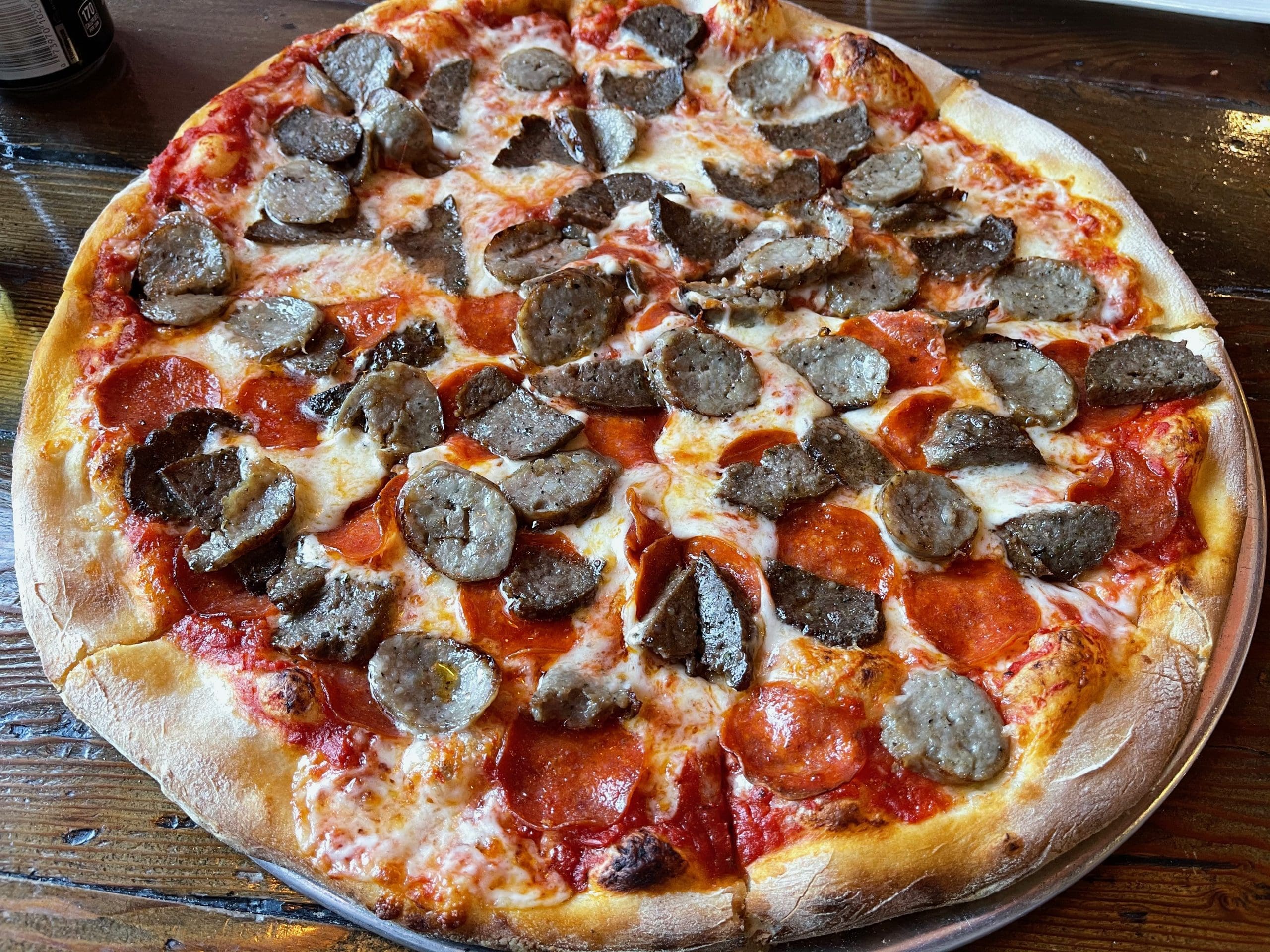
Chef-owner Mario D’Elia knew what he’d be in for when he named his new restaurant Poppy’s Pizzeria & Italian Eatery.  Legions of Seinfeld fans would undoubtedly joke  “Poppy’s a little sloppy,” a reference to Poppie, a restaurateur on the comedy Seinfeld who didn’t wash his hands after using the bathroom.  Sure enough,the jokes came…until the jokesters tasted the seriously outstanding authentic New York style pizza.  Poppy’s pizza is no joking matter.  So why would Mario subject himself to a spate of predictable and hackneyed jokes? Poppy, as you might know, is an affectionate nickname given to a father, grandfather or a male authority figure standing in a similar position.  Mario speaks with reverence and love about his poppy, the nurturing grandfather who encouraged and challenged him to always do his best.  Mario’s Poppy would be very proud of the man his grandson has become.  The precocious child who once giggled as he bounced on his grandfather’s knee has become not just quite a chef, not just quite a dad, but quite a good dude. Born and raised in the same Bronx neighborhood Joe Guzzardi of Joe’s Pasta House also called home, Mario started cooking at age 12.  Because culinary school…