Il Vicino – Albuquerque, New Mexico

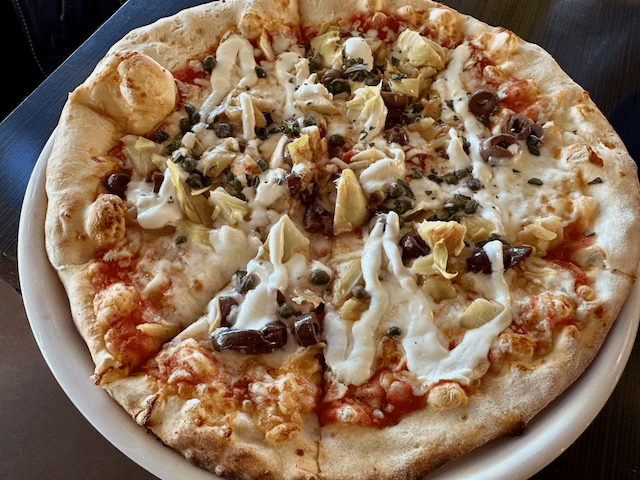
Undoubtedly the most oft-quoted line on Robert Frost’s poem “Mending Wall” is “good fences make good neighbors.” Frost, a four-time Pulitzer Prize award winning American poet certainly didn’t have Il Vicino (“the neighbor”) in mind when he penned his prose. Fortunately fences are no obstacle to patrons of this popular contemporary Italian trattoria. A well-regarded neighborhood eatery with three Albuquerque locations, Il Vicino is probably best known for its wood-oven pizza and award-winning brewery with popular micro-brewed ales but it offers much more than that. Known in some circles for prized beers, Il Vicino has a private wine label designed to complement its menu. Victuals include salads, panini and piadine-style sandwiches and baked lasagna, too. Il Vicino has long been a fixture in Albuquerque’s Nob Hill area (3403 Central Avenue, S.E.) with a second location in the far Northeast Heights (11225 Montgomery Boulevard, N.E.). In November, 2009, a third Il Vicino was launched in the burgeoning Northwest side (10701 Coors Blvd, N.W.). You’re never too far away from Il Vicino.  Every year, Pizza Monthly, a highly respected trade publication, mails out surveys to independent pizzerias across the nation. Using their responses, they compile a “Hot 100 list” — a ranking…

Chicago Pizza Kitchen – Albuquerque, New Mexico

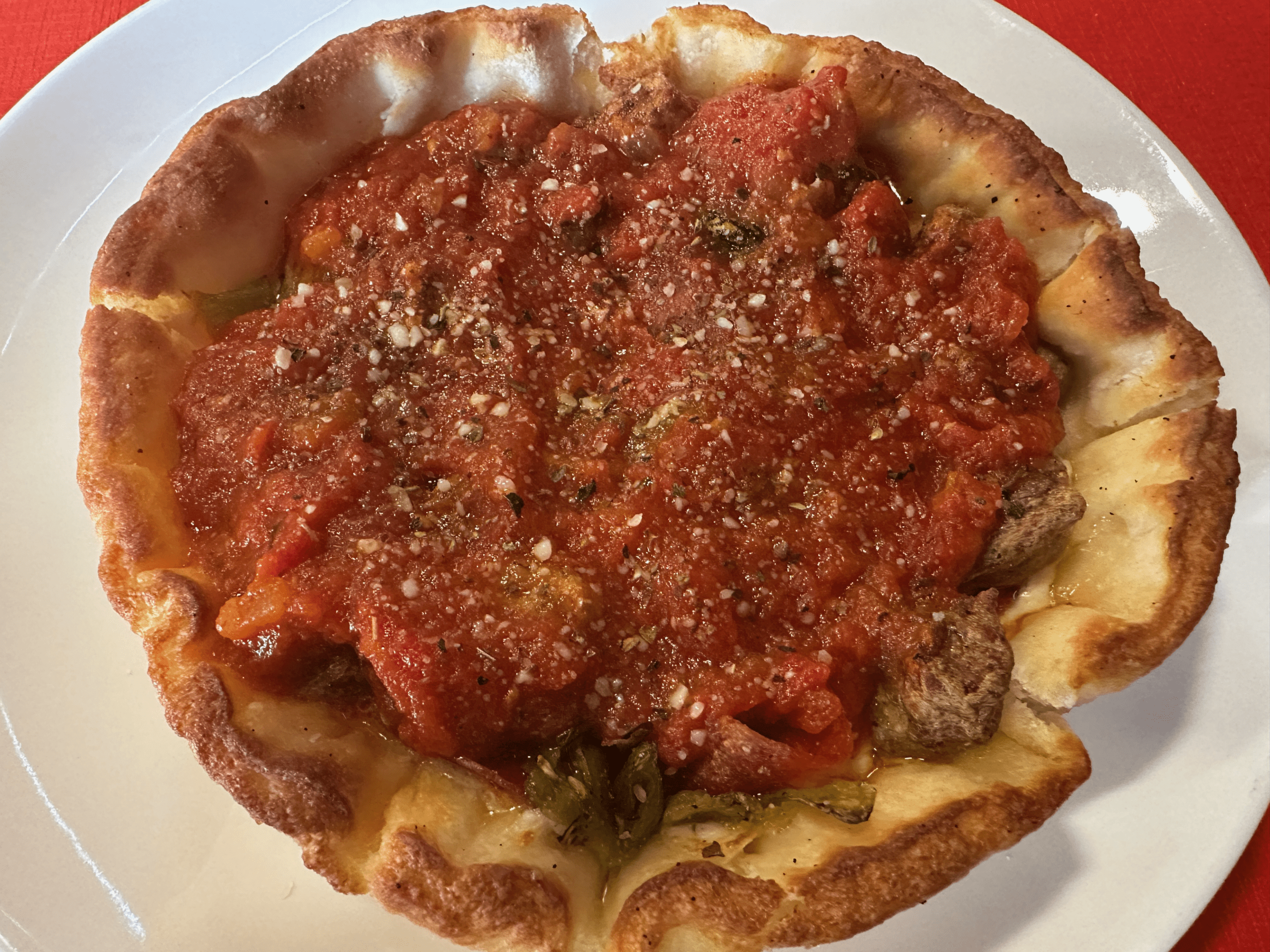
There is A LOT to see at the Chicago Pizza Kitchen (CPK).  My Chicago born-and-bred bride loved the framed photographs of the Windy City’s incomparable skyline and distinct architecture.  Bulls and Bears fans (not a reference to the stock market) will enjoy perusing photos and banners of Chicago’s sports teams.  Students of the age of chivalry will gravitate to the restaurant’s northern-most corners where knights in shining armor (literally) stand guard.  Military veterans like me will reminisce about our own experiences in service to our country as we peruse the photos depicting the military service of Chicago Pizza Kitchen’s owners.  Some of us will linger longest at the POW-MIA table, one of the most poignant and thought-provoking sights at any Duke City restaurant. Contemplating the meaning behind the POW-MIA table setting can bring you to tears, especially if you served or had family in the armed forces.  A POW-MIA table has only one place setting, representing the frailty of one prisoner, alone against his or her suppressors.  Fittingly the table is set close to the dining room entrance.  There are a number of other symbols displayed on the table which military veterans will appreciate. Some of my brothers-in-arms (including my own…

PANE BIANCO – Phoenix, Arizona

When she lived in Tucson, Arizona Republic dining critic Andi Berlin would drive nearly two hours  to Phoenix to enjoy foods that can’t be found anywhere else in Arizona.  One of her five favorites held such sway over her that she actually moved to the Valley of the Sun so that she could enjoy it more often.  Now that’s a gastronome after my own heart!  Among the cinquefoil restaurants was Pane Bianco, whose sandwiches Andi says “are so perfect that they’ve achieved cult status.”  Perfect sandwiches!  Hmm, that’s a good reason to relocate and maybe the reason the Phoenix real estate market is among the nation’s top 10 hottest markets. During dozens of trips to Phoenix over my eighteen-year tenure at Intel, I would have described Phoenix as a culinary wasteland.  That’s based largely on well-intentioned colleagues taking me to their favorite restaurants–usually chains that hadn’t yet made their way to the Land of Enchantment or worse, Arizona-style Mexican restaurants.  There were exceptions, of course, but those were few and far in between and in every case, those few were restaurants I discovered myself, usually on my way to the airport.  To abet my culinary explorations, I would actually schedule a late flight…

Davido’s Pizza – Rio Rancho, New Mexico

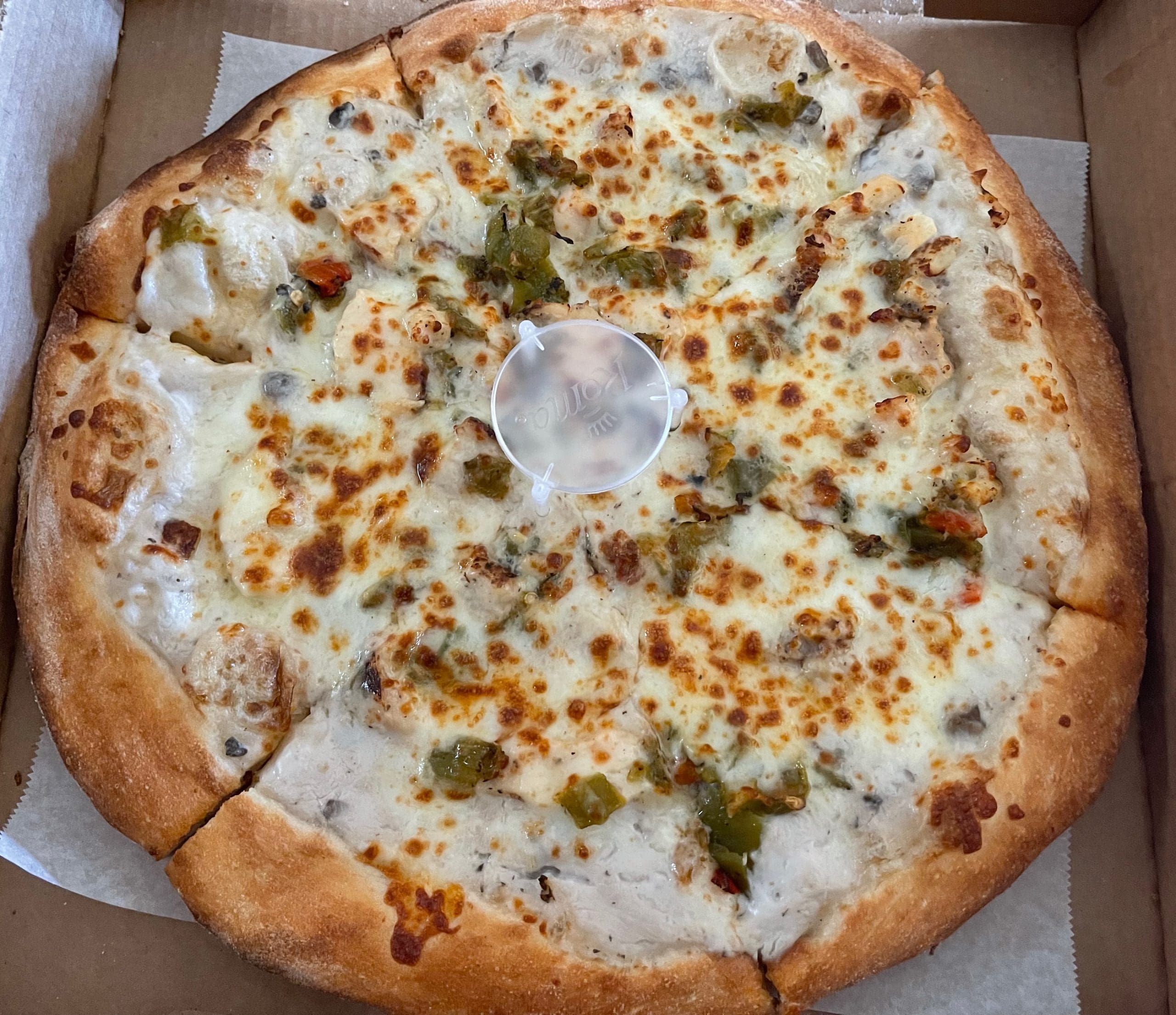
Some might call the American Realty and Petroleum Company (AMREP for short) a pioneering visionary for its early 1960s purchase of over 50,000 acres on the dusty Sandoval County plains that are now Rio Rancho. Others use different–and not necessarily as complimentary–adjectives to describe the land speculator whose clever marketing attracted hundreds of New Yorkers (among others) to the then untamed western fringes overlooking the Rio Grande. They came because Rio Rancho was a “lucrative investment” with half acre lots going for under $800 in the 1960s. They came because Rio Rancho offered “fishing, camping, swimming and golfing in a place where the sun shone 360 days a year.” They came to live in an area which sloped “among the greenest, most fertile valleys in the world.” Middle income retirees from New York initially made up a significant percentage of Rio Rancho’s population, earning the community the sobriquet “Little New York.” The nickname is still bandied about even though Rio Rancho’s population is comprised of people from all over the country. In its first decade, the fledgling newcomer became the sixth largest city in New Mexico and by 1990, the census indicated the city had grown to more than 32,000…