El Papaturro Restaurant – Los Ranchos De Albuquerque, New Mexico

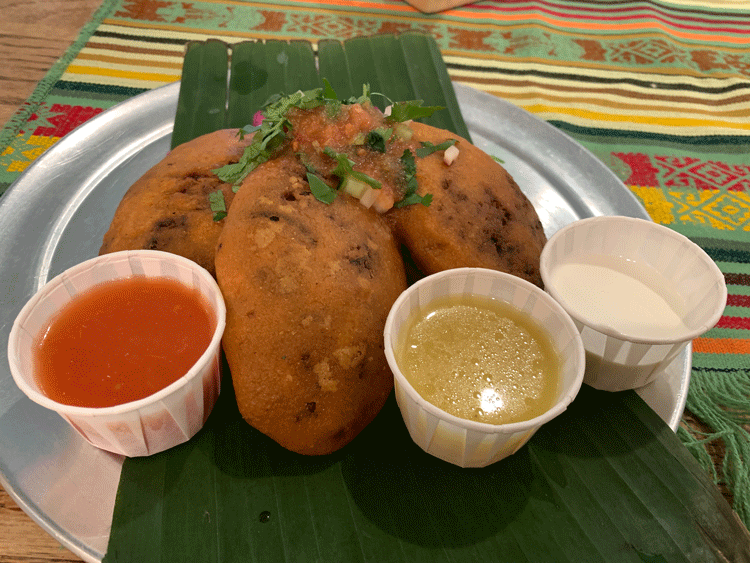
Driving north on Fourth one Sunday afternoon, my sharp-eyed Kim espied a new eatery with the curious name El Papaturro. Our first inclination was that the Pappas Restaurants group had made another incursion into the Land of Enchantment. It seemed to make sense considering the Pappas Restaurant Group, a family-owned and operated restaurant company based out of Houston, is the parent restaurant of Pappadeaux which has had a presence in Albuquerque since 2004. Pappadeux, a seafood restaurant with Cajun leanings, has several sibling eateries across the fruited plain, all sporting “Pappas” on their appellation. Seemingly covering all palates, the Pappas restaurant family includes Pappasito’s Cantina for the Mexican food lover in you, Pappas Seafood House, Pappas Brothers Steakhouse, Pappas Bar-B-Q, Pappas Burger and Pappas Grill and Steakhouse. Upon finally remembering that the trademark spelling for the Pappas family of restaurants calls for “Pappa” to be spelled with two p’s, we dismissed the notion that this was yet another restaurant in the burgeoning Pappas family. So what the heck, we wondered, is a Papaturro? Most likely, we reasoned, the term was probably Greek and not Spanish. With our combined vocabulary of Spanish and Spanglish words (including dozens of invectives), we would…

Gobble This – Albuquerque, New Mexico

“Is there a sound on Earth as joyous as the pat-pat-pat from a Salvadoran kitchen, the gentle rhythm of a cook slapping together a pupusa that just happens to be yours?” ~Jonathan Gold Pulitzer Prize-Winning Restaurant Critic Los Angeles Times Somewhere amid the bottlenecked tangle of highways, byways, freeways, parkways, roadways and expressways (boy, is that a misnomer) that make up Los Angeles there is well-trod mile many consider sacred. The Los Angeles Times calls it the “pupusa mile.” Housed in this approximately 5,280-foot-long stretch just beyond Koreatown is a congregation of Salvadoran restaurants so revered that “walking the pupusa mile is considered a foodie rite of passage.” Foodies were late-comers to the pupusa mile. Salvadorans, who constitute the second largest foreign-born group in Los Angeles with about 68,000 households, have been making pupusa pilgrimages for generations. Chef Nestor Lopez, scion of Salvadoran immigrants, grew up in Los Angeles and was largely raised on the foods of his ancestral homeland. When he matriculated at the prestigious Le Cordon Bleu culinary school, he didn’t intend or expect to someday launch a restaurant showcasing Salvadoran cuisine. His culinary arts focus was on fine dining. After graduating from Le Cordon Bleu, he plied…

Tune-up Café – Santa Fe, New Mexico

Dave Who? From 1981 until its closing in 2008, the converted residence at 1115 Hickox Street was the home of Dave’s Not Here, a quaint and quirky neighborhood favorite loyalist locals described as “unforgettable.” Perhaps “memorable” would have been more appropriate, because as the Eagles reminded us in their 1976 hit song New Kid In Town, “they will never forget you ‘til somebody new comes along.” That somebody new…the new kid in town… the usurper who made many of us forget about Dave’s Not Here is the Tune-Up Café. When it first launched, the Tune-Up Café was always mentioned in the same breath as its beloved predecessor. Over time, however, the equally funky Tune-Up Café has carved out its own identity and it’s no longer just “that restaurant which replaced Dave’s Not Here.” Vestiges of Dave’s Not Here remain if you look closely, but for the most part, it can truly be said that Dave’s now truly gone. The shoulder-to-shoulder personal space proximity dining room hasn’t grown up any, but a small covered patio has been added. Not even a mirror on the dining room’s west-facing wall can make the Tune-Up Café any larger. The Tune-Up Café is the brainchild…

Pupuseria Y Restaurante Salvadoreño – Albuquerque, New Mexico

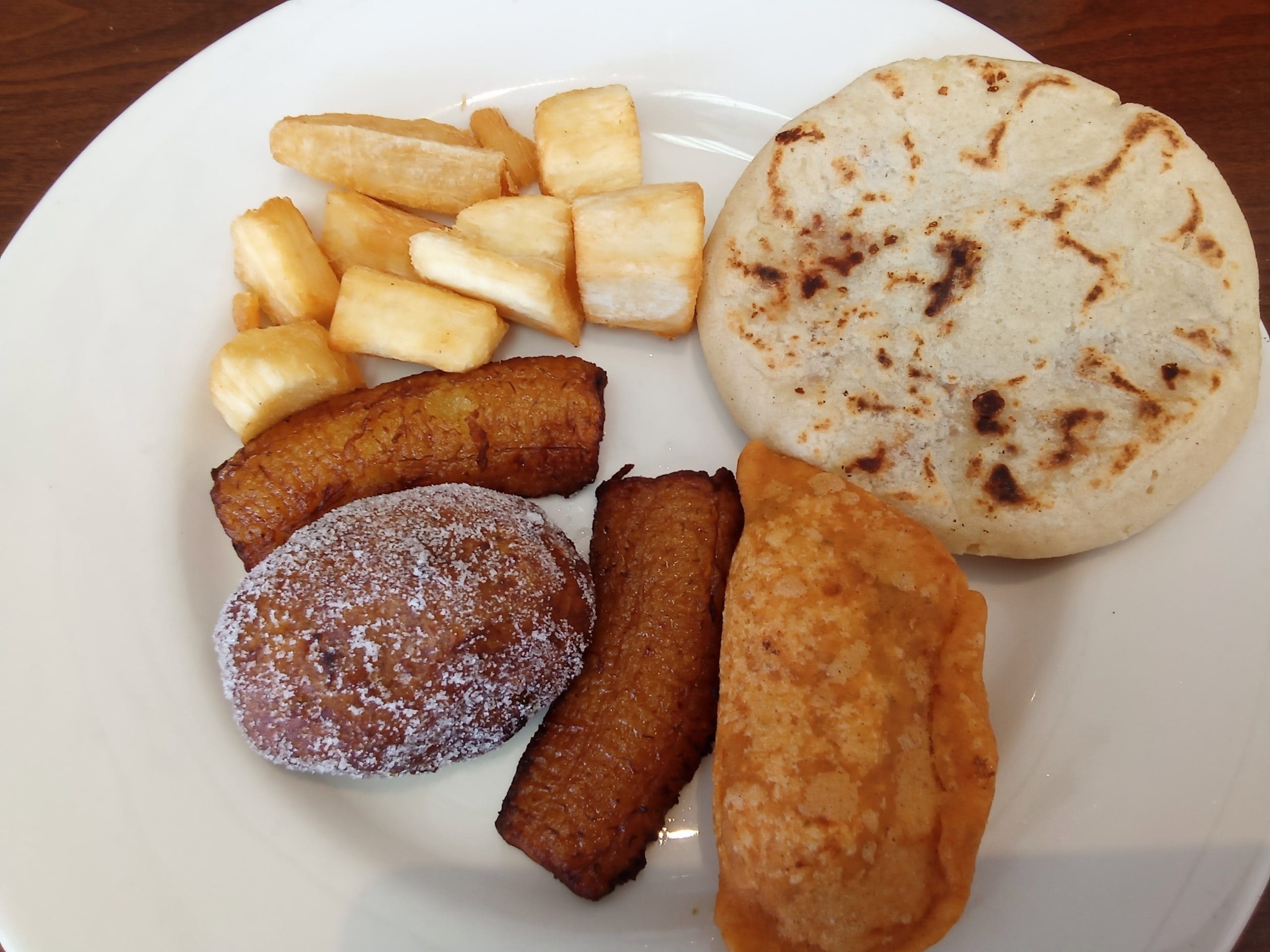
In the 1980s, several hundred thousand Salvadorans fled their civil war ravaged nation (courtesy, many would say of America’s attempting to turn El Salvador into the Western hemisphere’s version of Vietnam).  Many migrated to large metropolitan areas in the United States where their culture has quietly flourished.  Those immigrants introduced and hooked Californians on their national snack, a modest street food called the pupusa.  If you’ve never had a pupusa, there’s a chance you may have learned of them on the Food Network’s Diners Drive-Ins and Dives program.  In 2009, host Guy Fieri visited Santa Fe’s Tune-Up Cafe where the garrulous wayfarer was first introduced to pupusas himself. A pupusa is a thick, hand-made corn tortilla stuffed with sundry ingredients, the only limitation as to what each is engorged with being the imagination of the chef preparing them.  Unlike New Mexican tortillas, Salvadorian tortillas are made with no baking powder and very little (if any) salt.  They’re roughly four-inches in diameter and made with a maize masa.  In recent decades, pupuserias have sprung up in many large American cities.  Generally small and family run, pupuserias have been developing a very popular following among college students and adventurous diners. Pupuseria Y Restaurante…