La Sierra New Mexican Restaurant – Albuquerque, New Mexico

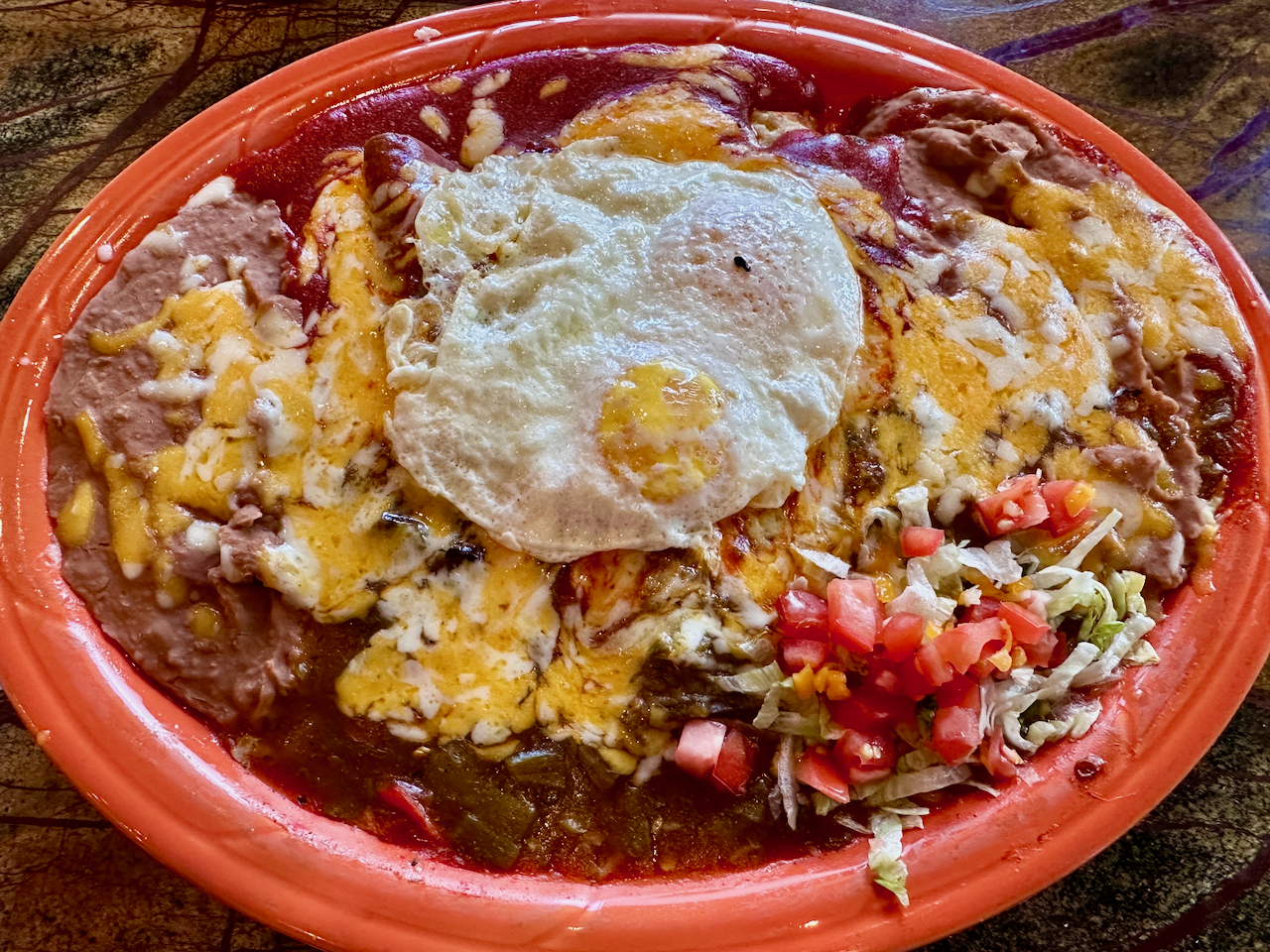
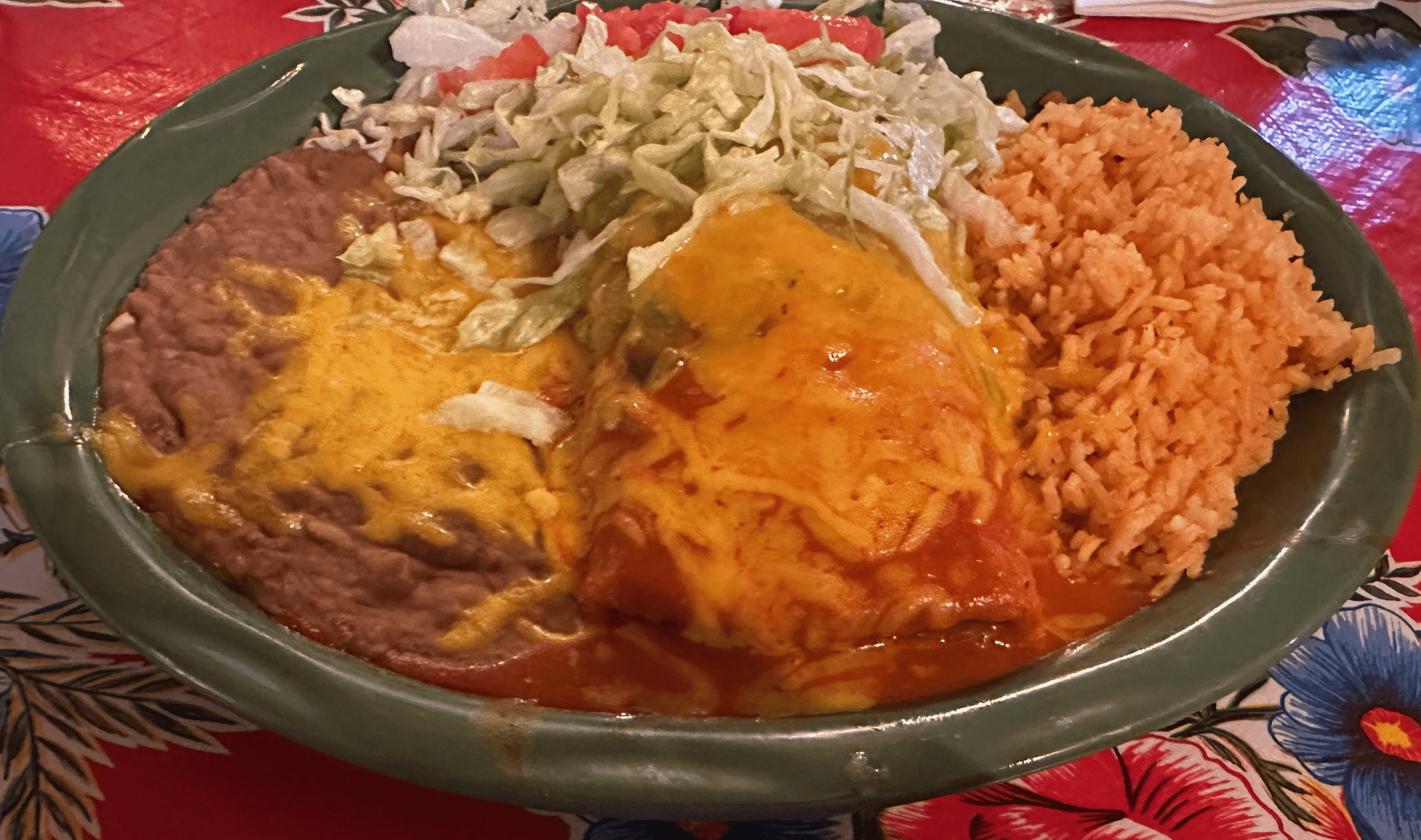
“I eat uno, dos, tres, quatro burritos Pretty soon I can’t fit in my Speedos Well, I hope they feed us lots of chicken fajitas And a pitcher of margaritas” ~Taco Grande by Weird Al Yankovic While perusing the slogans–One Bite And You’re Hooked; Cooked Slow, Served Hot, Loved Fast; Hot Chile makes Everything Better” on the windows of La Sierra, I half expected to see lyrics from the “Weird “Al Yankovic song “Taco Grande”  (a parody of the song “Rico Suave”).  What I didn’t expect was for La Sierra to live up to its self-aggrandizing hype.  Of course, diners always hope a restaurant is as good as it professes to be, but all-too-often an eatery doesn’t live up to the hype.  La Sierra does…and then some! Albuquerque’s very first instantiation of La Sierra (not to be confused with the venerable Mac’s La Sierra) launched in July,  2025 on the corner of Menaul and University at the site of a former Little Anita’s.   Some nine months later, a second La Sierra opened its doors.  This one is located on Alameda just west of Corrales Road. You may recall that this location once housed The Whole Enchilada which was later renamed…

Los Cuates – Albuquerque, New Mexico

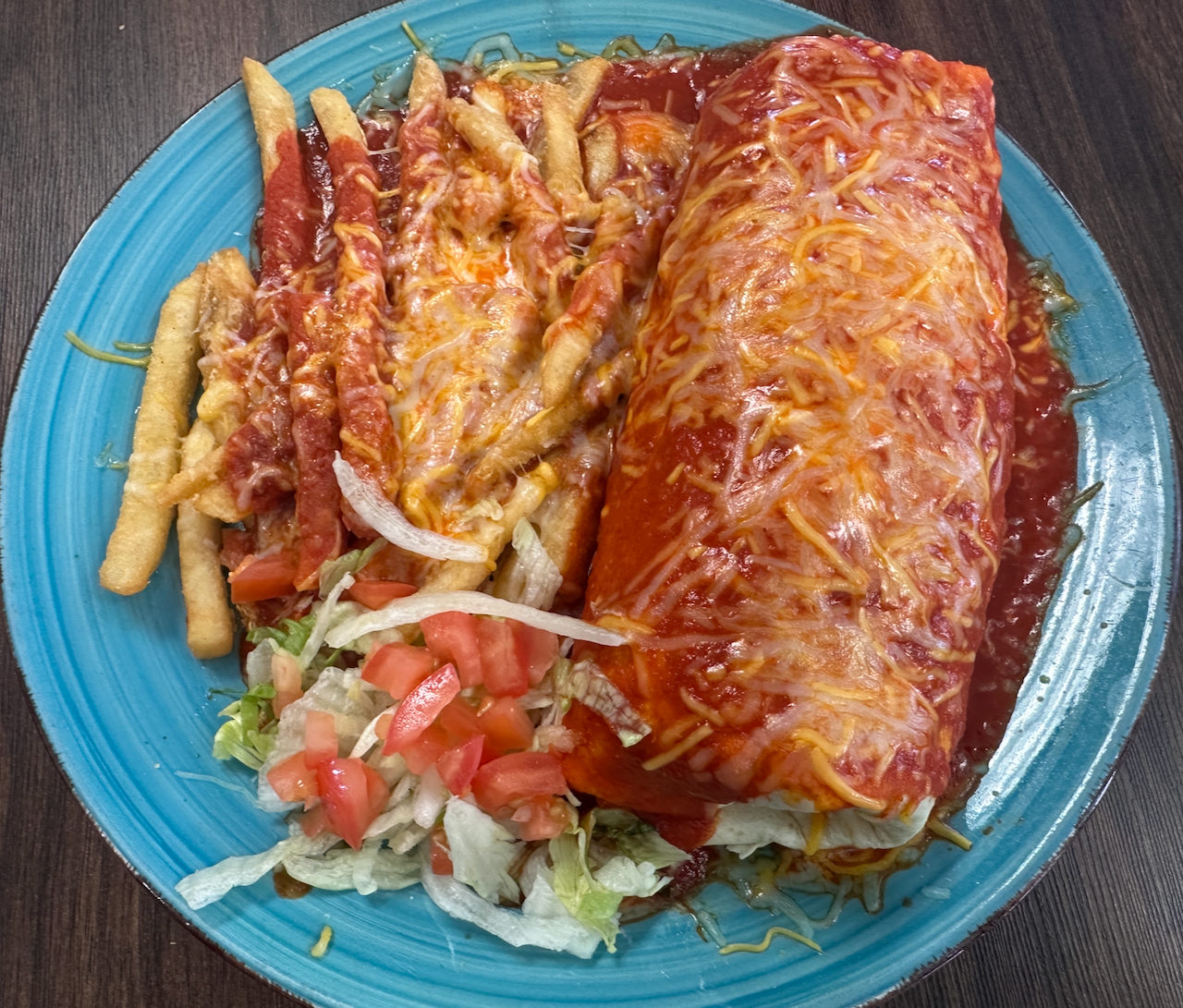
Of the five variations of twins that occur commonly throughout the world, the most common fraternal (non-identical) occurrence is male-female twins which transpire in about 40% of all twins born. Fraternal twins may share up to 50% of their genes and generally are no more similar or dissimilar than any other two siblings.  Although technically not twins because they were “born” four years apart, the Duke City’s most famous twins are the Los Cuates restaurants (cuates being the Spanish word for twins), named for Antoinette and Marcus, the fraternal male-female twins of founder Frank R. Barela, an inspiration for all of us who started at the bottom and worked our way up. Barela got his start in the restaurant business in 1971 as a busboy at Silvano’s, a legendary Duke City purveyor of New Mexican food.  In 1985, he bought Silviano’s and renamed it Los Cuates after his newborn children.  In 1989, he took over another Albuquerque landmark of the era, Cocina De Carlos Mexican Restaurant, across the street from his first eatery. Because of the two restaurant’s twin-like proximity, he also named it Los Cuates…not Los Cuates I and Los Cuates II, just Los Cuates.  Note: While walking the…

Ramona’s Mexican Cafe – Albuquerque, New Mexico

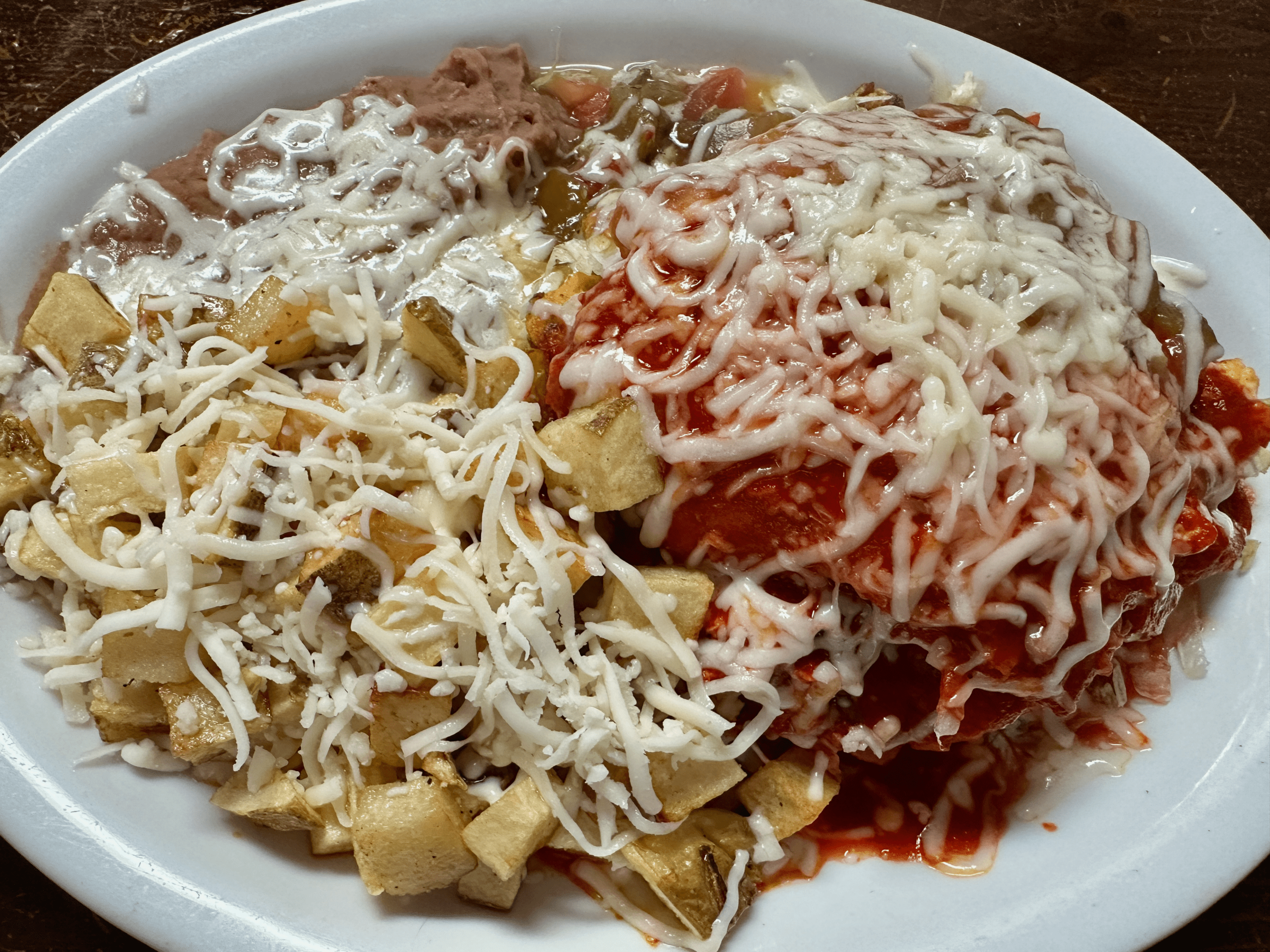
“No one who cooks, cooks alone. Even at her most solitary, a cook in the kitchen is surrounded by generations of cooks past, the advice and menus of cooks present, the wisdom of cookbook writers.” ~Laurie Colwin, Novelist Watch virtually any episode of Kitchen Nightmares and you might just be convinced that families can’t possibly work together in a restaurant.  Kitchen Nightmares, one of Gordon Ramsay’s eight-hundred or so television shows, is rather formulaic–Ramsay spends a week with a failing restaurant in an attempt to revive the business.  Almost invariably, the failing restaurant is owned and operated by a family.  Almost invariably, the drama falls just short of Homer strangling Bart.  Arguments on Kitchen Nightmares are loud and intense.  Copious tears are shed.  Predictably, the sagacity and sangfroid of Saint Ramsay brings sanity to the family fray and the family joins him in a rendering of kumbaya. Contrast a visit to a Kitchen Nightmares restaurant with a visit to Ramona’s Mexican Cafe and the only drama you might experience is the internal conflict of trying to figure out what to order from a terrific menu.  Ramona, the matriarch of the Chavira Y Valles family, runs the kitchen with her sons.…

El Agave Mexican Restaurant – Rio Rancho, New Mexican

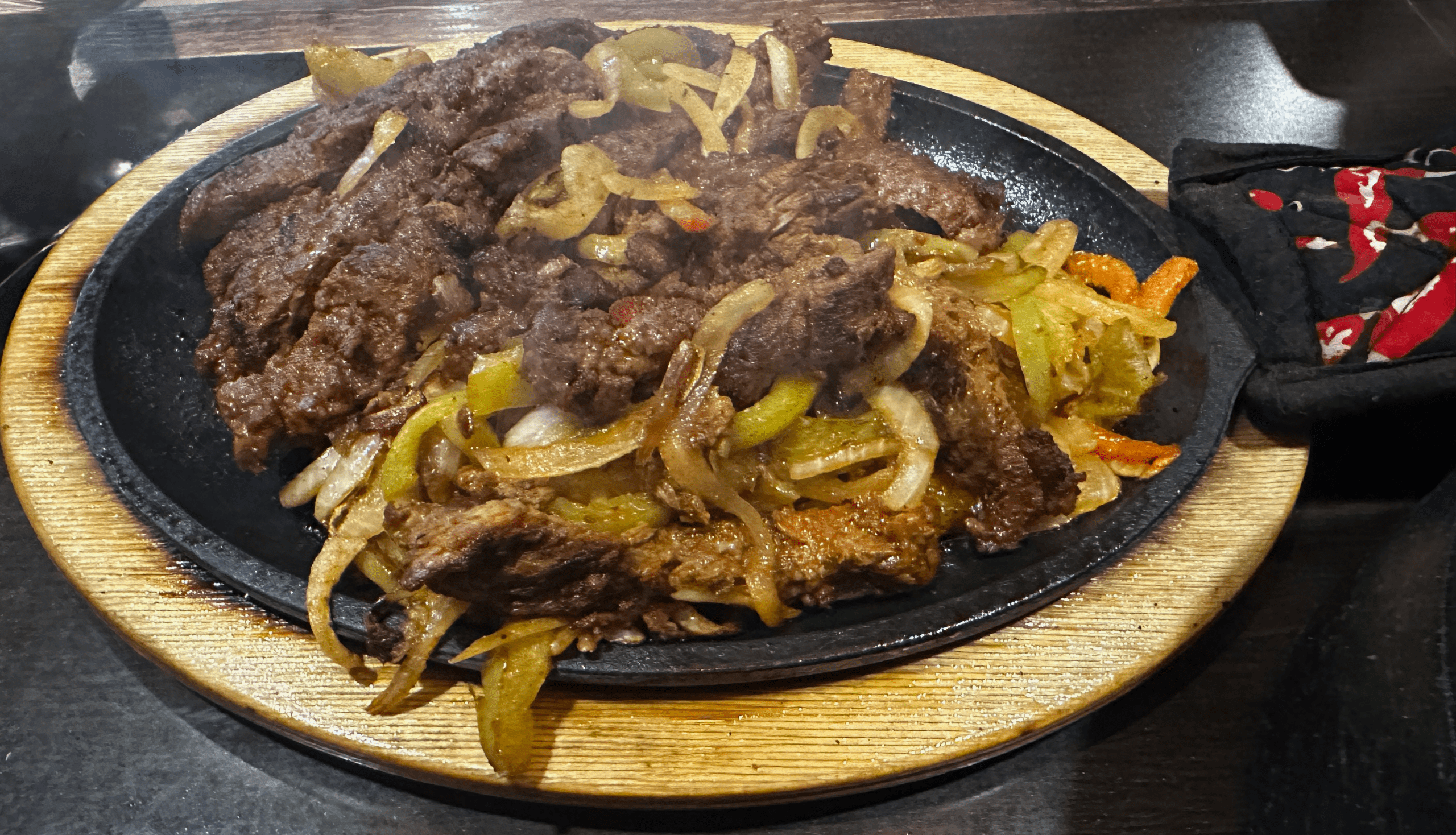
Even the teetotalers among us recognize the importance of agave in the production of tequila and mescal.   What most of us may not fully appreciate is  agave’s diverse cultural and culinary significance, particularly in Mexico.  For example, the drought-resistant succulent plant has been used in medicinal treatments such as treating wounds, digestive ailments, and even as a remedy for coughs and sore throats.  It’s a source of natural sweetener and a healthier alternative to refined sugars.  Restaurants in Mexico use it to prepare salsas, marinades, desserts and even some traditional dishes.  Agave even plays a prominent role in indigenous cultures where it’s revered and valued.  Many of us use it to xeriscape our yards throughout the Southwest. Since October, 2017, foodies in the City of Vision have recognized another type of agave for which to be grateful.  That would be El Agave, a delightful family-owned-and-operated Mexican restaurant.  If you haven’t seen El Agave during your own peregrinations in Rio Rancho, that’s because it’s recessed about a block from heavily trafficked Rio Rancho Blvd., the city’s main north-south drag.  Worse, it’s esconced in the Lujan Plaza, a timeworn shopping center that’s seen better days.  El Agave occupies a corner space diagonally…

El Patron – Albuquerque, New Mexico

I was a strapping lad of fifteen when hired as a “box boy” at a country store in Peñasco. Now, being a box boy at a small village country store is to being a bagger at Smith’s or Albertson’s in Albuquerque what the red chile at Mary & Tito’s is to McCormick’s chili seasoning mix. The former is so much more than the latter. For one thing, my duties included bailing hay, rounding up cattle, stacking lumber, loading cement, operating a forklift and every once in a while actually bagging or boxing groceries. The job kept me in great physical condition for football season. “Eloy,” my fellow “box boy” was a crusty curmudgeon sixty-some years old who didn’t always take direction well and expended more energy getting out of work than actually doing it. Every morning when our boss, a lovely and gracious woman, gave us our marching orders, he would respond “si patrona” (“yes boss.”) after each order. On busy days those orders came with the rapid fire cadence of an auctioneer. Eloy’s responded just as quickly, “si patrona, si patrona, si patrona.” Occasionally he sneaked in in a “si cabrona” (the literal term means female goat, but is…

La Posta De Mesilla – Mesilla, New Mexico

If only walls could talk, you’d want the adobe brick walls at La Posta (The Inn) to recount their impressions of the veritable “who’s who” of Western history who once sought shelter within its fortified walls.  You’d want those walls to reveal their thoughts of legendary outlaw Billy the Kid who hung out at La Posta on his road to notoriety.  You’d want those walls to tell you about the steely presence of General Douglas MacArthur, who commanded Allied forces in the Pacific Theater during World War II. You’d want those walls to share their account of Generalissimo Pancho Villa, another sojourner who sought shelter at La Posta.  Certainly no raconteur could provide the details known only to the walls at La Posta when it quartered controversial frontiersman Kit Carson or for then General, later President, Ulysses S. Grant. Built in the 1840s by Sam and Roy Bean, themselves  historical luminaries, La Posta was originally a freight and passenger service.  After the Civil War, it became part of the Butterfield Stagecoach line which ferried passengers and mail from eastern outposts in Memphis and St. Louis to California.  During the 1870s and 1880s, the sprawling edifice was home to the Corn…

The Pantry Dos – Santa Fe, New Mexico

There’s no annual event I enjoy more than the Roadrunner Food Bank’s Souper Bowl which takes place one week before some ballyhooed football game.  That game is the National Football League’s Super Bowl, a star-studded event in which the celebrity with the best name (Taylor Swift) doesn’t even play football.  Celebrities abound at the Souper Bowl, too, but they’re real people, the type of which you would enjoy sharing a meal with.  During my twelvth year of serving as a judge at the Souper Bowl, I had the privilege and pleasure of spending time with several of those local celebrities.  I wouldn’t trade a minute with them for an hour with Kendrick Lamar (whoever he is) or Taylor Swift. For years, two of those celebrities–Steph Duran of  Magic 995 and the legendary TJ Trout of 96.3 KKOB–have made morning and afternoons much more enjoyable (particularly when driving the city’s mean streets) for denizens of the Duke City.  Their astute observations and facial expressions (particularly Steph’s “Sally” face) as they sipped some thirty soups helped make the 2025 Souper Bowl thoroughly enjoyable.  You probably wouldn’t call Glenn Walters a “celebrity” unless you’re intimate with state government where he’s revered among the…

Monroe’s New Mexican Food – Albuquerque, New Mexico

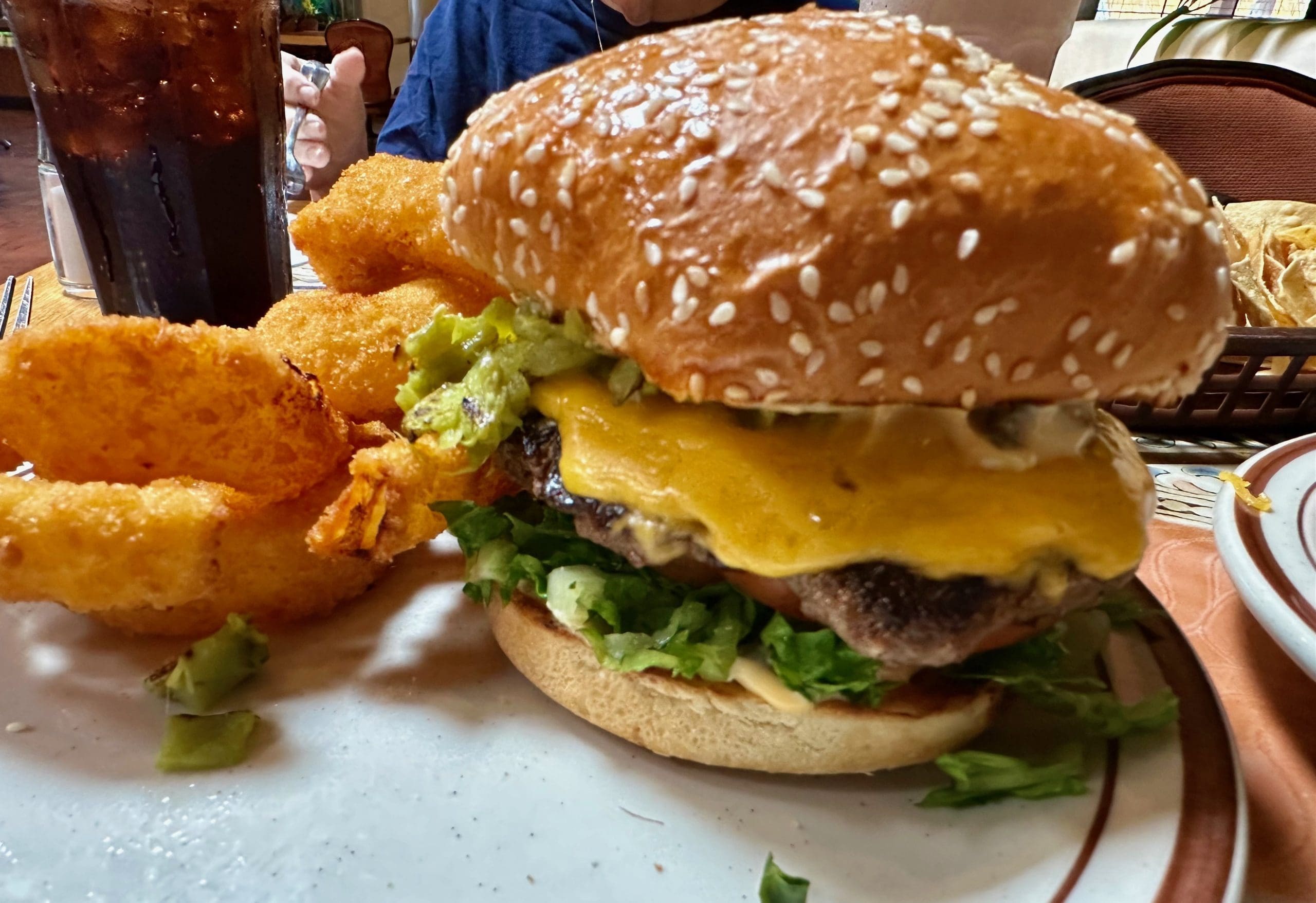
If I’ve learned anything from dining at Monroe’s, it’s that I shouldn’t leave the restaurant with any regrets.  Invariably what I end up regretting most often is that I didn’t have the green chile cheeseburger, one of the very best in town, if not the Land of Enchantment.  It’s a green chile cheeseburger so good that I’ll order it during three consecutive visits before ordering anything else on the menu–and when I don’t order it, I lament not having had my ardor quelled by its utter deliciousness. Some may question how a restaurant with such an “Anglicized” appellation as Monroe’s can possibly proffer such an enchanting green chile cheeseburger, much less any other  excellent New Mexican cuisine.  Frankly, it could have been even worse.  Monroe’s was originally owned by a Scandinavian named Monroe Sorenson who owned a small chile parlor on the corner of Rio Grande Boulevard and Mountain.  So, the restaurant’s name might well be Sorenson’s, a name you might  otherwise associate with lingonberries, lutefisk and even reindeer meat. In 1979, Miguel Diaz, a native of Puerto Rico who grew up in New York, purchased Monroe’s and moved it to a refurbished gas station on Lomas (1520 Lomas, N.W.)…

Hot Tamales – Rio Rancho, New Mexico

While the word tamale is most certainly Spanish, its derivation is from the Nahuatl word tamalli.  Tamallis were developed as a portable ration carried by war parties in pre-Columbian North America and were as common and varied as the sandwich is today.  One commonality among tamalli then and tamales today, is the corn meal dough (masa) which is made through a process called “nixtamalization.”  In pre-Colombian times, the process involved using wood ashes to soften field corn for easier grinding.  Today this is done by slaking lime.  Interestingly, nixtamalization not only softens field corn, it aids in digestibility and increases the nutrients absorbed by the human body. Though the fundamental component of the tamale remains masa, fillings for this delicious snack or entree are almost as diverse as the imagination, ranging from sweet (pineapple, coconut, pecans, bananas, chocolate and more) to savory and everything in between.  There are also tremendous variations in the wrapper which envelops the filling.  Dried corn husks are probably the most common, but the descendants of the Meso Americans also use fresh corn husks, banana leaves and the membrane from some agave plants. In New Mexico, we like to think of tamales as being part of…

El Bruno Restaurante Y Cantina – Albuquerque, New Mexico

At about 75 miles each way, Cuba, New Mexico is almost equidistant between Albuquerque and Farmington. Regardless of starting point, the drive to and from Cuba is one of the Land of Enchantment’s most spectacular. A preponderance of scenic vistas and an otherworldly, multi-hued topography make the drive a sightseer’s delight. The stratification of multi-hued earthen layers, will remind you of colorful Navajo sand paintings while hulking hoodoos (columns or pillars of bizarre shape caused by differential erosion on rocks of different hardness) will inspire awe, none more so than the nipple shaped Cabezon Peak, a dramatic 7,785 foot volcanic formation that commands the skies. I must admit that most of my enjoyment of those incomparable vistas has been on the return trip from Cuba. For some reason, I always seem to be in a hurry to get there with a single-mindedness of purpose only a seeker with a yen to be sated can truly understand. In my quest to fulfill that longing, I’ve even resorted to corrupting the innocent, once convincing my friend Sandy that her new Prius could reach speeds of over 100 miles-per-hour on the long, straight stretches of U.S. Highway 550. So what would drive two…

El Molcajeton – Albuquerque, New Mexico

Molcajetes have become so commonplace on many a Mexican restaurant’s decor that we sometimes forget molcajetes are the traditional Mexican version of the mortar and pestle…that they have both form and function.  As we gawk in admiration at the symmetry and fine craftsmanship of a well-made molcajete, we don’t always reflect on the fact that throughout Mexico and some parts of the Estados Unidos molcajetes are still used to crush and grind spices and to prepare guacamole, moles and salsas.  In restaurants and homes in which molcajetes are used for their intended functional purpose, the guacamole, moles and salsas created within them are said to taste better, much better. As James Beard Award-Winning Writer and Chef Patti Jinich says “A wonderful thing about molcajetes, is that since they are so porous they have a remarkable memory. They store within them, the essences, oils, smells and flavors of all that has been served or made in them. Maybe that’s why it is said that molcajetes season with time and use. Maybe that’s also why it is said that making a sauce or rub or paste in a molcajete makes it taste better.”  Patti’s theory has credibility.  The rough surface of molcajetes…