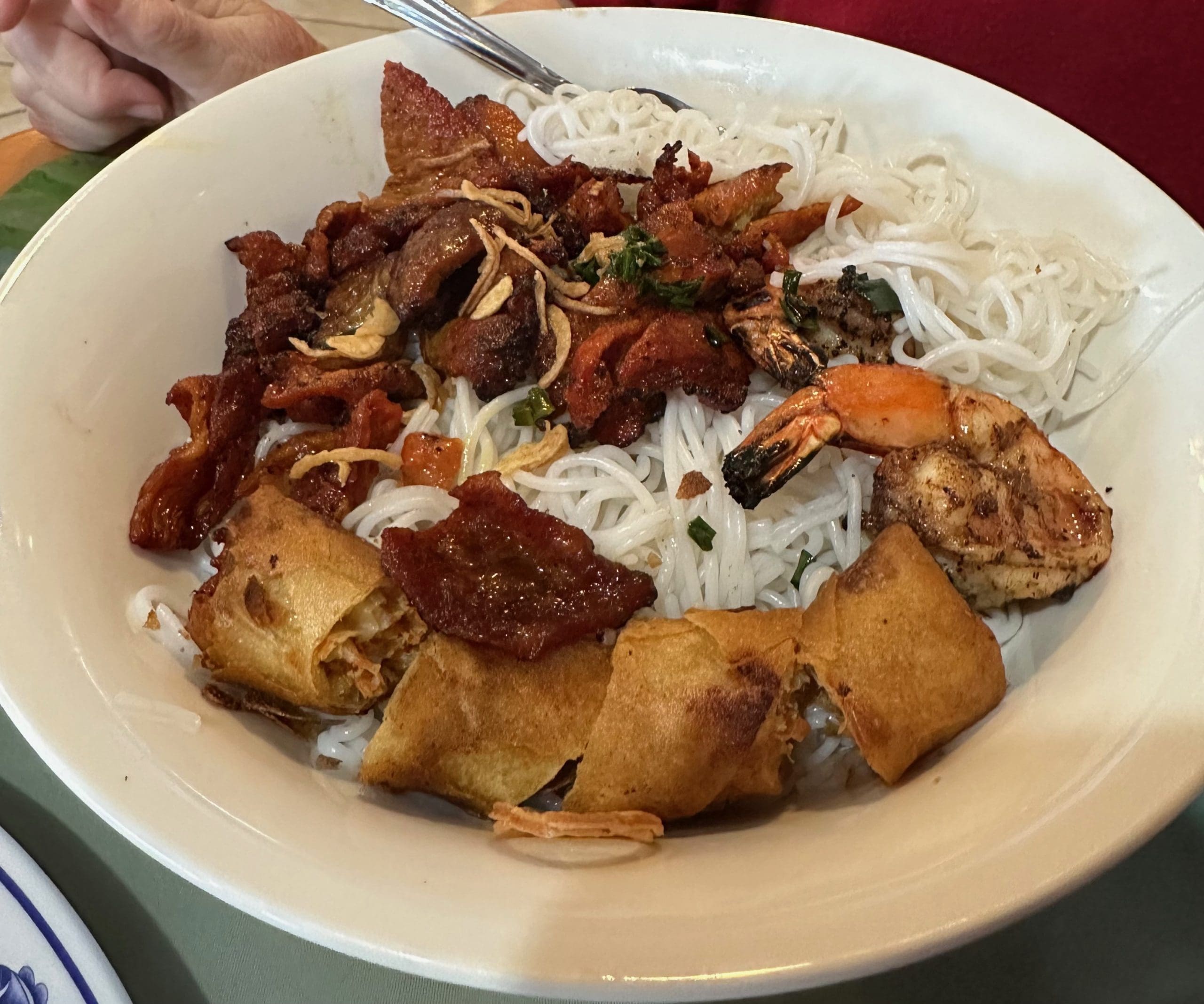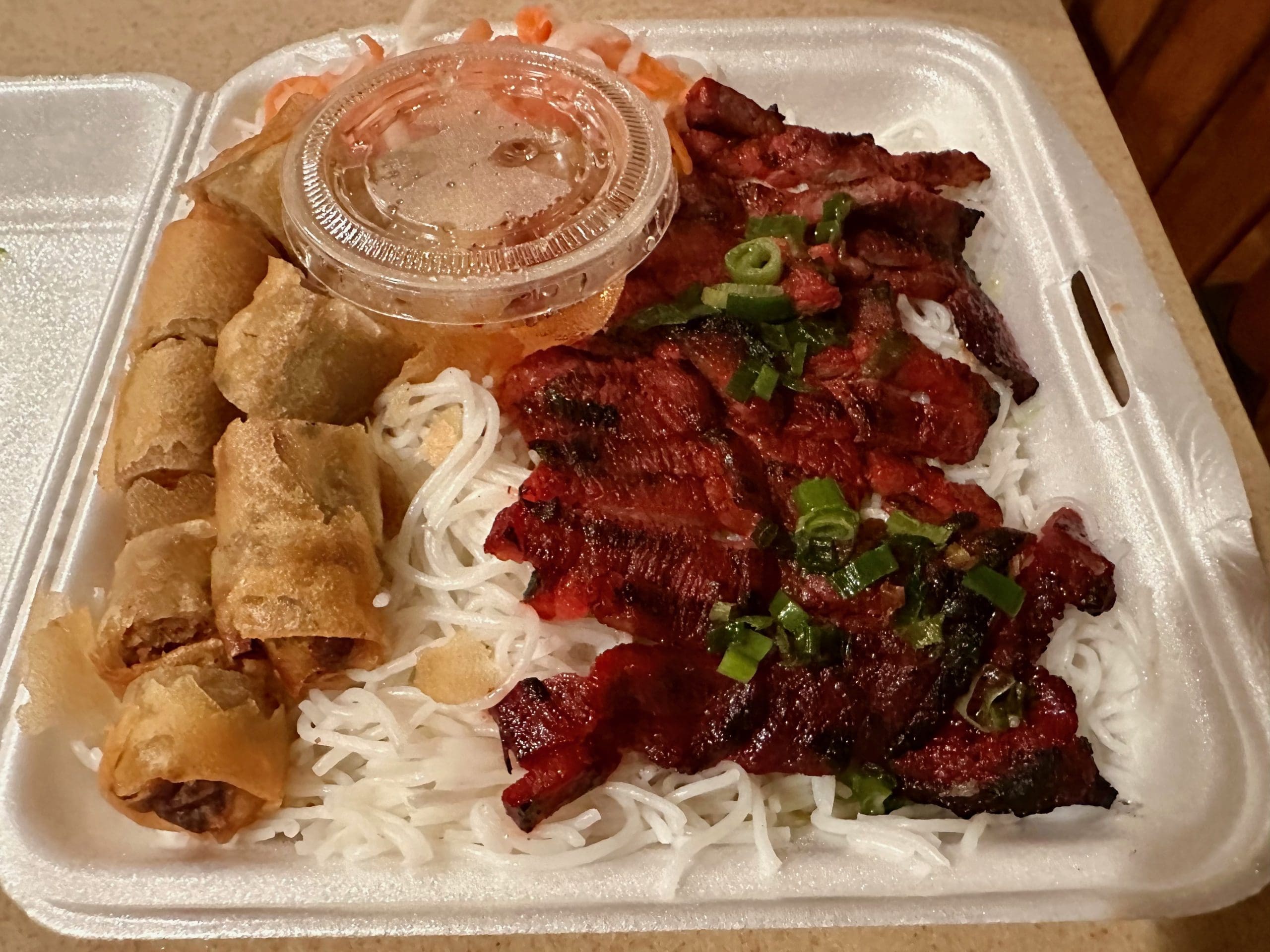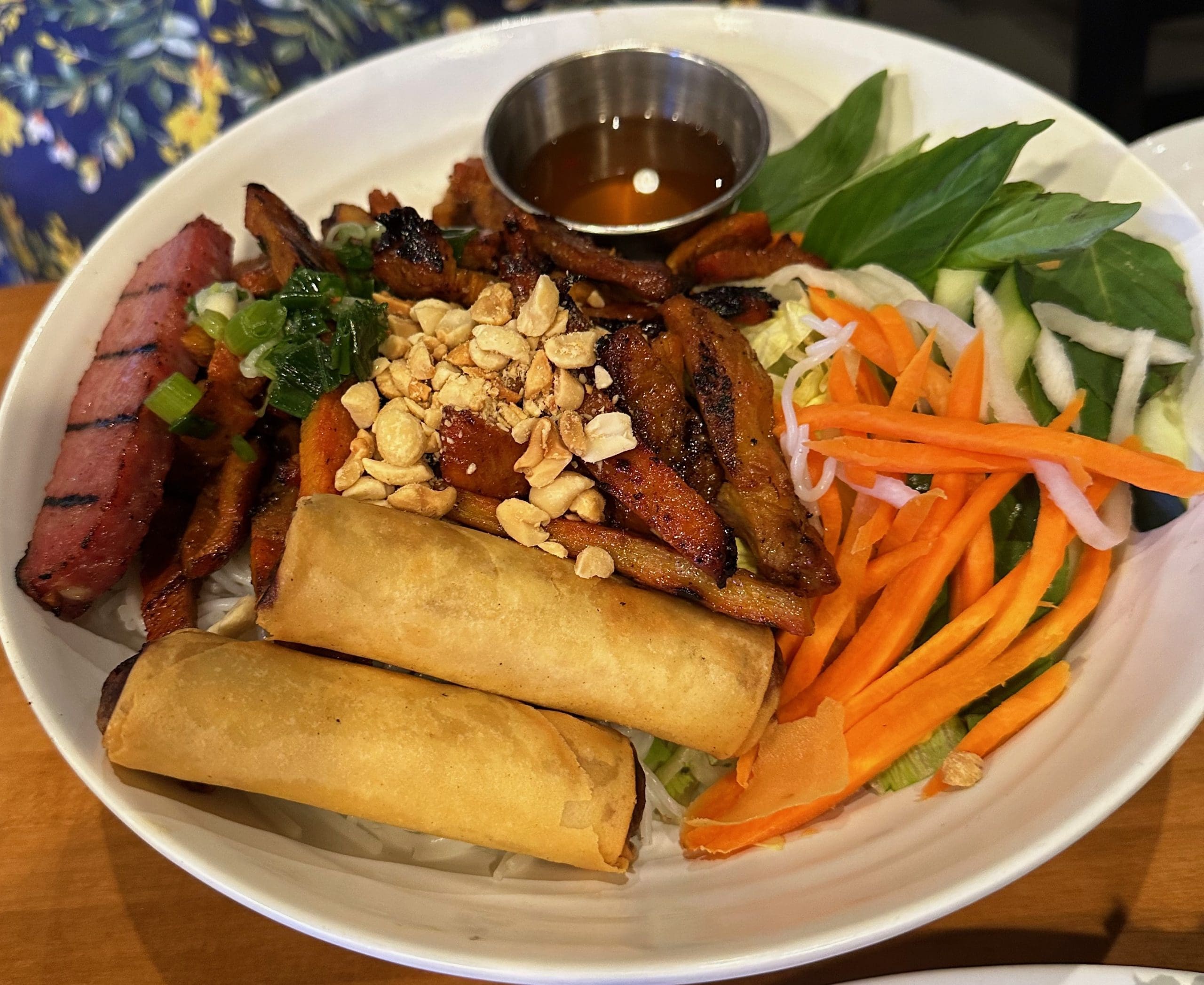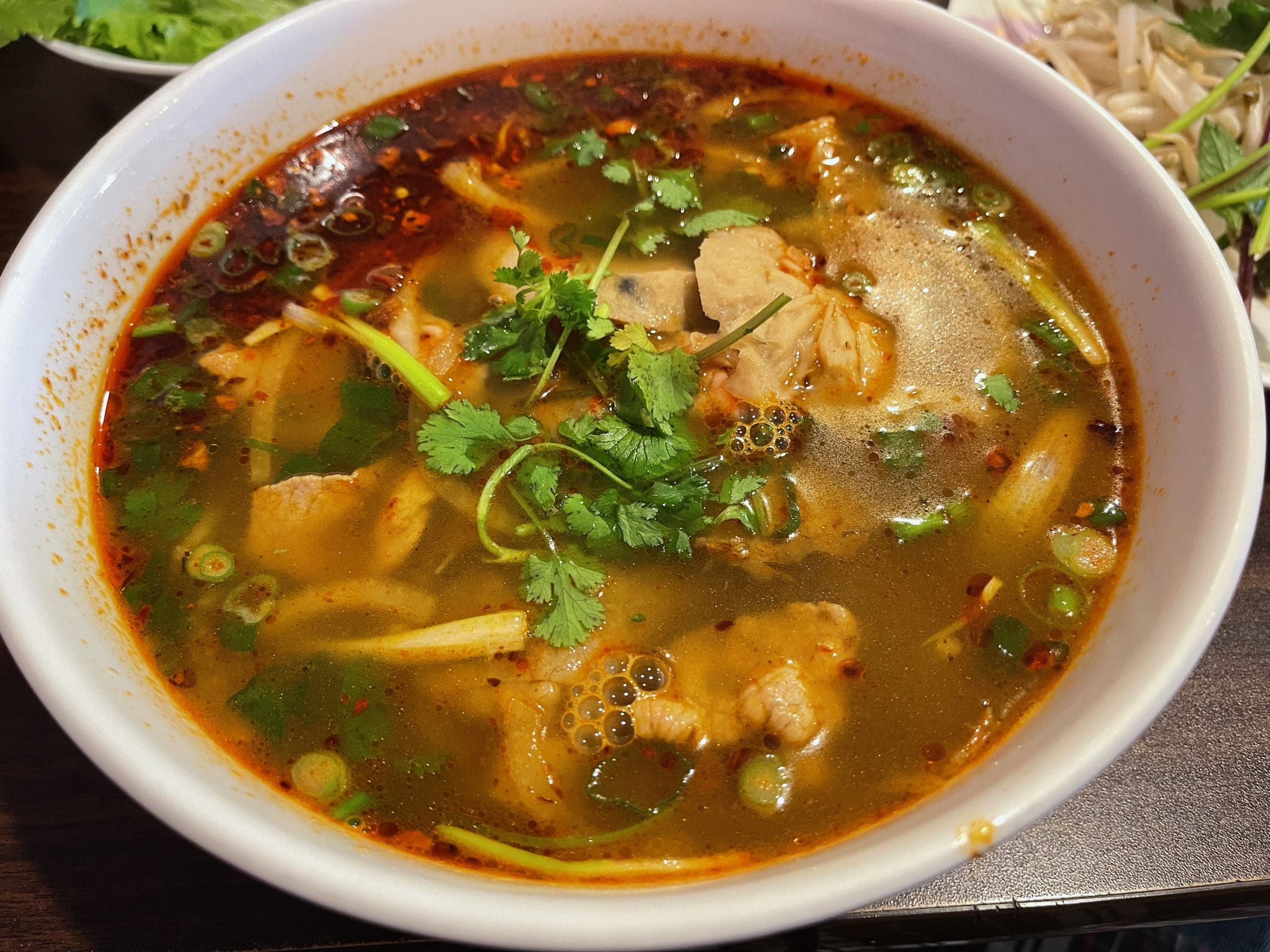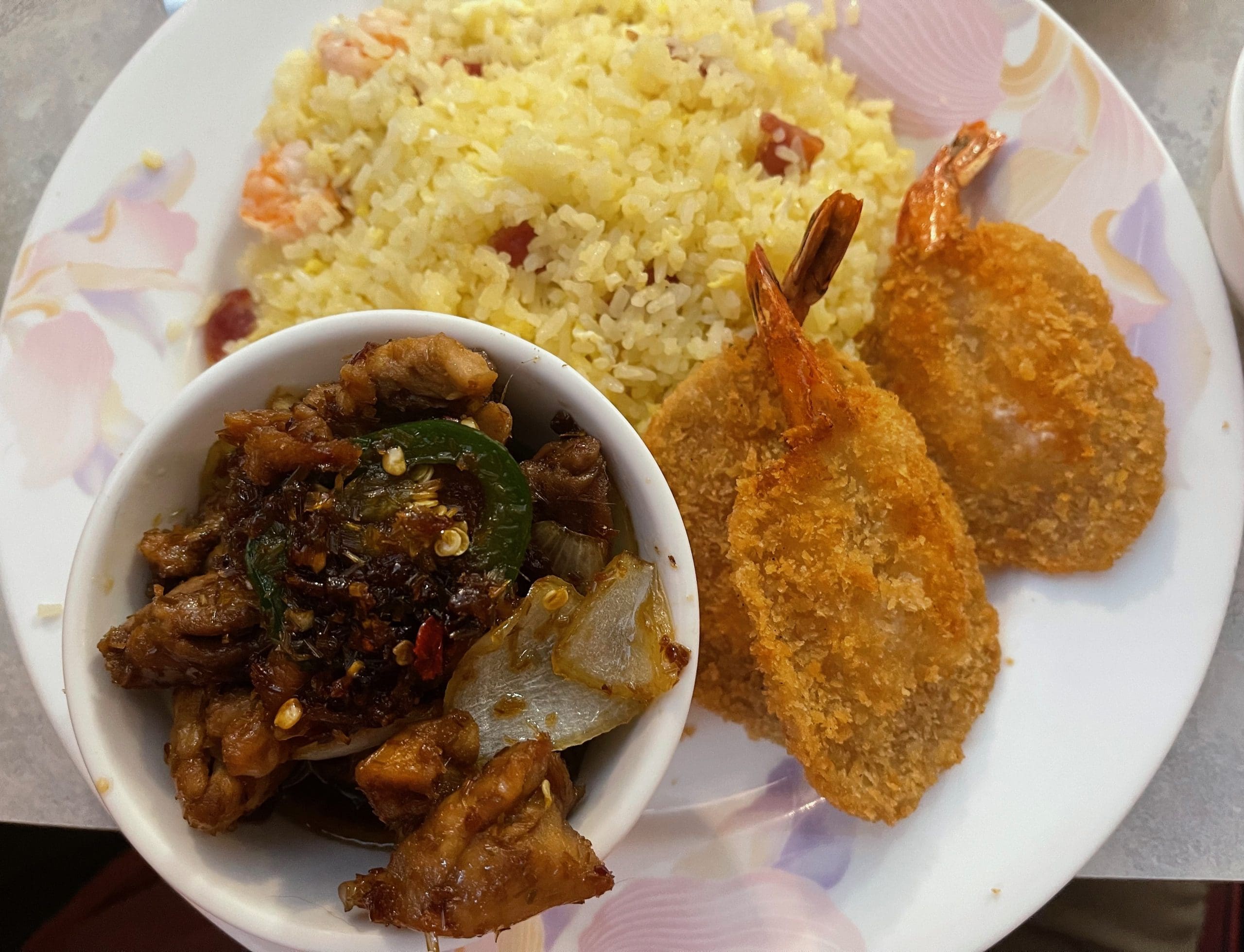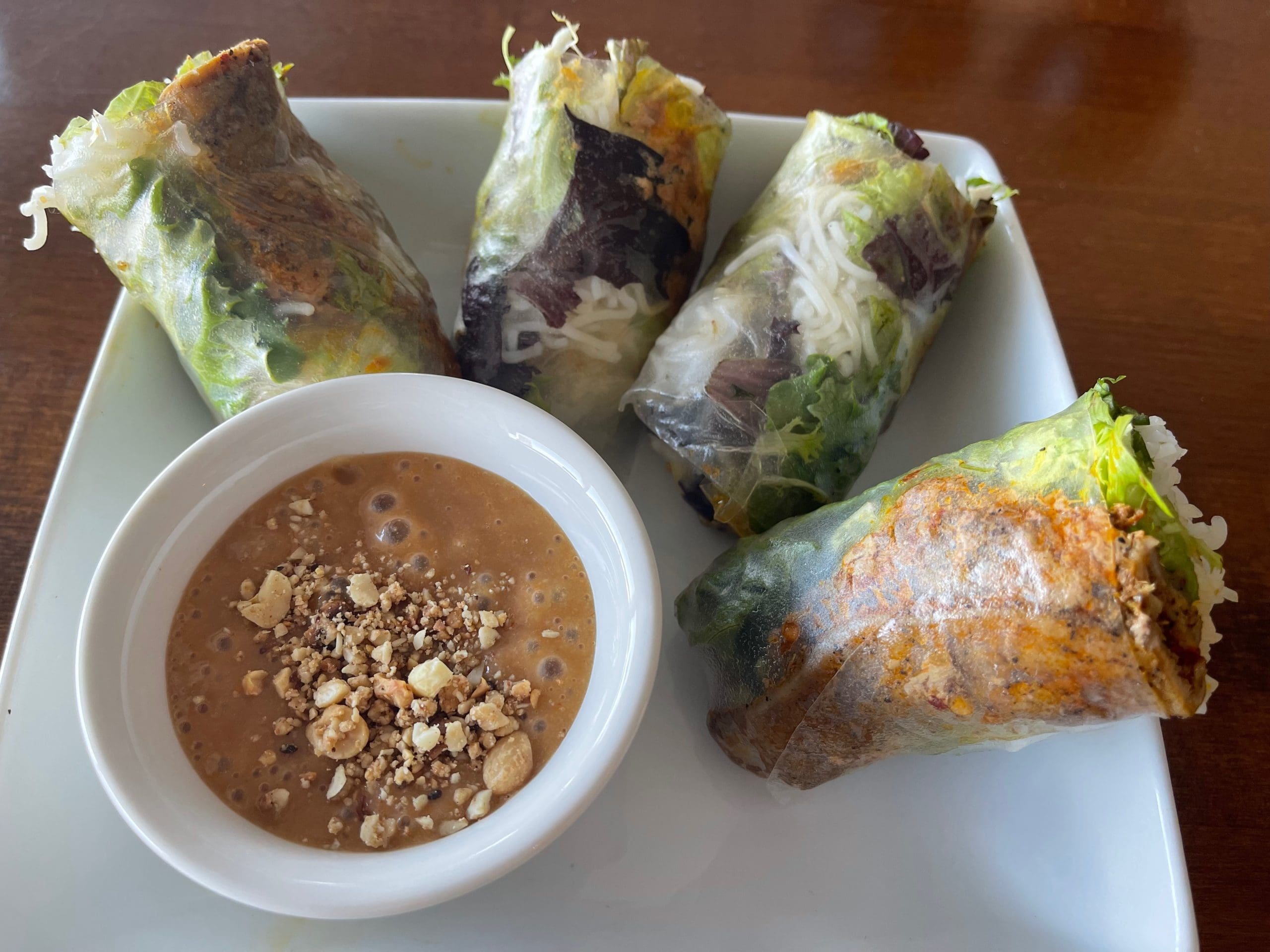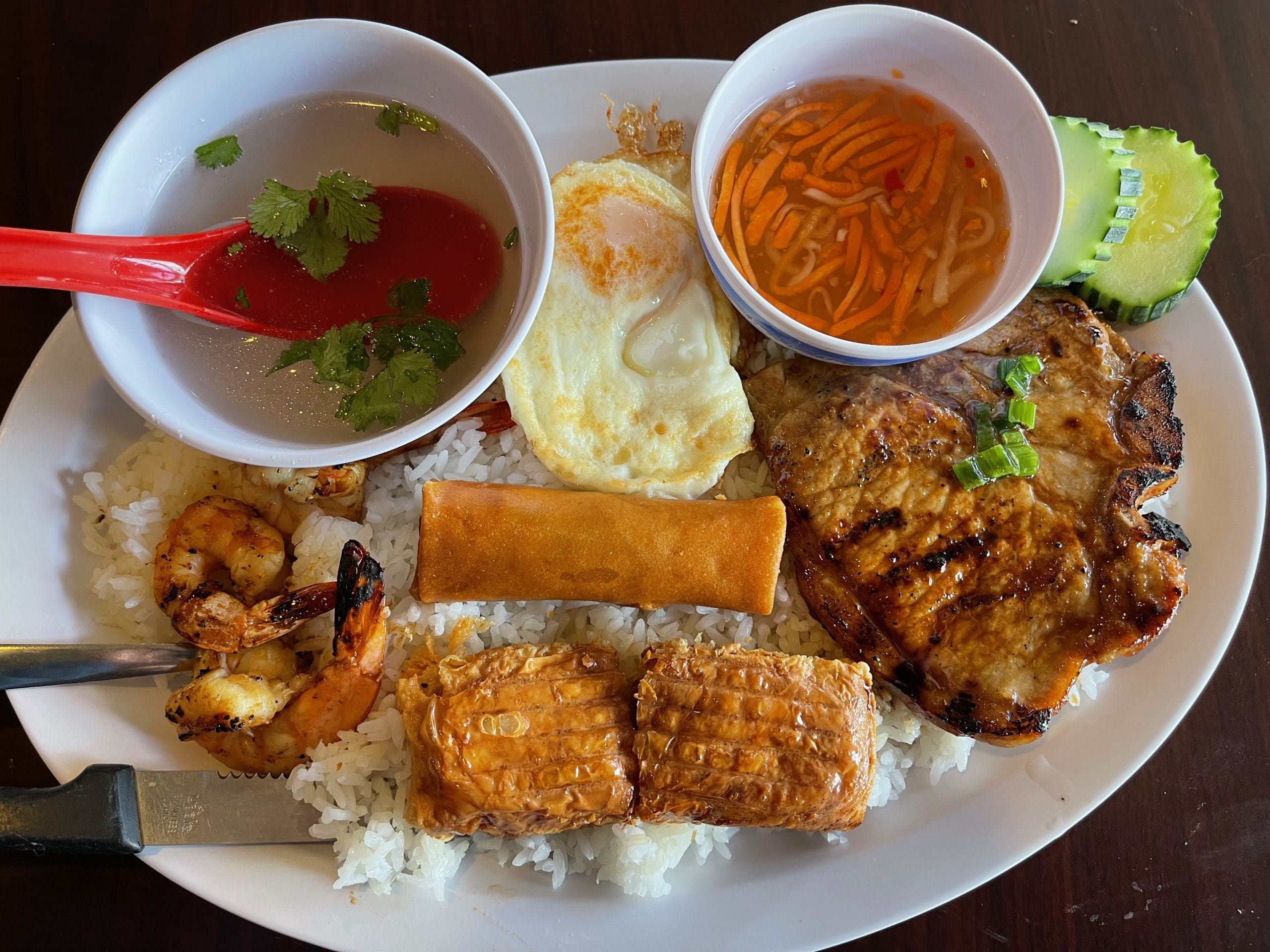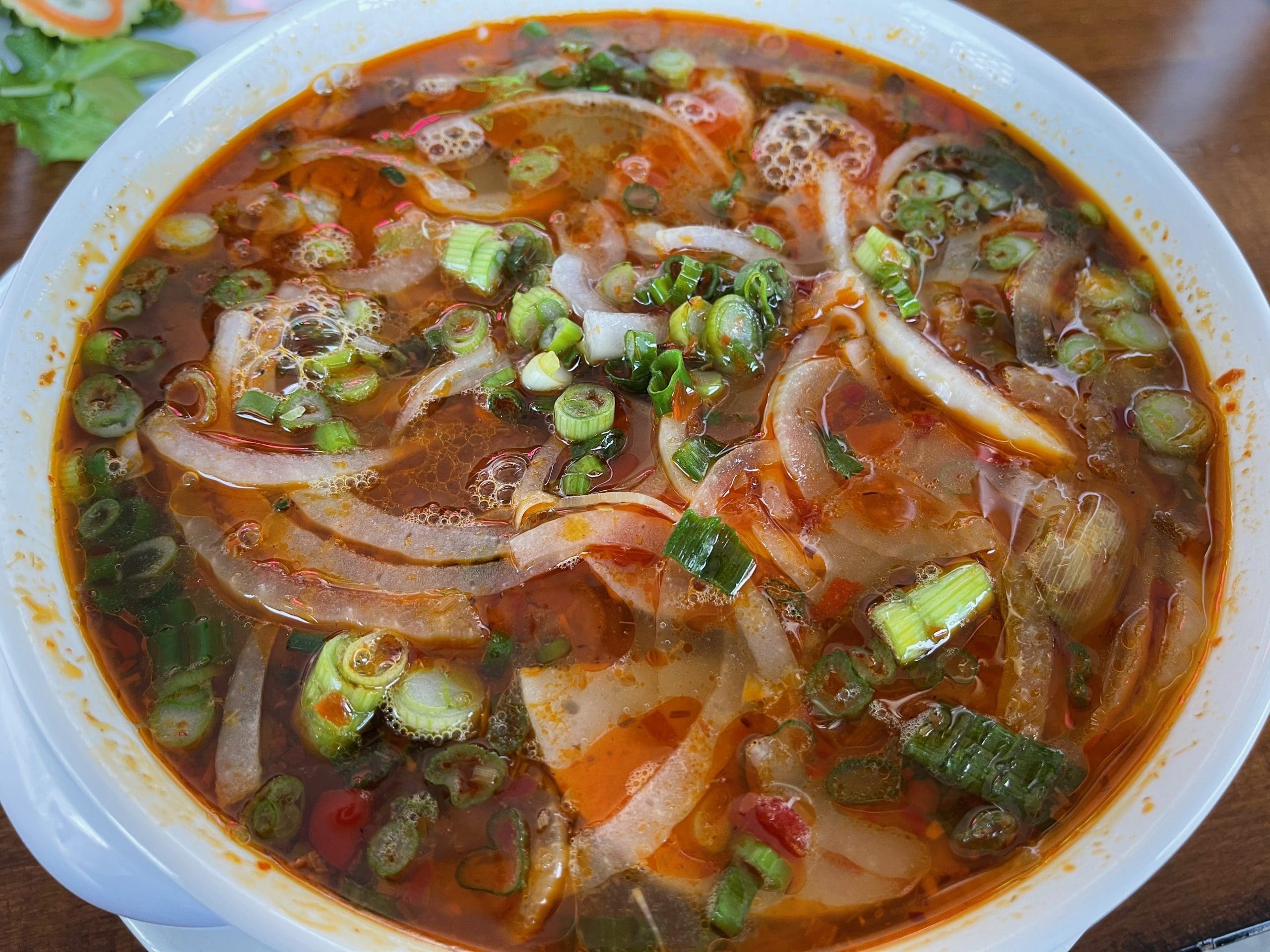
Pho Ginger – Albuquerque, New Mexico

The Cultural Atlas reveals one aspect of Vietnamese life that is readily apparent to those among us well acquainted with Albuquerque’s Vietnamese restaurant families:  “Family is the most important aspect of life in Vietnam. It is much more interdependent and tight-knit than what many Western cultures are familiar with. The cohesiveness and health of the family unit is often a main imperative. The “family unit” itself generally includes a larger nexus of relationships. Aunts, uncles, grandparents and other extended relatives often have very close relationships and provide a central support system.” During our time in the Land of Enchantment, we’ve seen just how interdependent and tight-knit Vietnamese families are.  We’ve also experienced how warm and welcoming those families are.  We consider James and Thu Nguyen at Cafe Dalat among our very favorite restaurateurs.  Same with Vicki Truong at SaiGon.  Sean and Kim, the genial proprietors of Saigon City, treat us like family.  Visiting their restaurants is like going home and catching up with relatives we actually like–a lot!  Aside from the obvious, one commonality among these three restaurants is that family either works in them or has their own restaurant in town. When we walked into Pho Ginger on Juan…

Pho #1 – Albuquerque, New Mexico

Beef.  How do I love thee? Let me count the ways. I love thee to the depth and breadth and height my pho spoon can reach. Okay, I’m no Elizabeth Barrett Browning, but if I were to count the ways I love beef, the count might stop at seven–as in the special seven courses of beef offered at Pho #1.  Serving  the Duke City for more than two decades, Pho #1 makes an audacious claim by virtue of its name but it’s a claim with which loyalists will agree.  It’s an International District gem that continues to thrive in a neighborhood some diners eschew. With more than one-hundred items on the menu–not including the seven courses of beef–Pho #1 offers a veritable compendium of Vietnamese food favorites including a large selection of pho bo (beef noodle soup).  Pho is the classic Vietnamese fast food, served in a large soup bowl with fresh rice noodles topped with your choice of beef slices (rare steak, well-done flank, brisket, tendon, tripe, skirt flank and beef ball) then sprinkled with chopped green onion, cilantro leaves and sliced onion.  Each bowl is accompanied by a plate of bean sprouts, sliced jalapenos, lime and basil. Pho…

Viet Taste – Albuquerque, New Mexico

In the “gobble and go” pace of contemporary American life, it’s sometimes difficult to remember what you ate during your last meal, much less recall the sensory experience of that meal.  When that happens to true gourmands, they will actively seek a memorable dining experience in which all five senses are invoked. One of the best restaurants in Albuquerque in which to have such a sensory experience is almost any Vietnamese restaurant. One such example is Viet Taste which opened on April 4, 2007.  Even more than most Vietnamese restaurants, Viet Taste exemplifies comprehensive eating, the most sublime form of Vietnamese cooking and eating. This style of eating involves all five senses. In comprehensive eating, you eat with your eyes first. It’s important that all dishes be attractively presented with a diversity of colors and forms. Plating is almost an art form and Vietnamese wait staffs have a penchant for eye-pleasing arrangements. Everything on your plate is where it should be for optimum harmony and appearance. The balance of color, texture and appearance should give diners pause to reflect on how great everything looks. It also helps that at Viet Taste, the ambiance is soothing and attractive. This is one…

Basil Leaf – Albuquerque, New Mexico

“Do we really want to travel in hermetically sealed Popemobiles through the rural provinces of France, Mexico and the Far East, eating only in Hard Rock Cafes and McDonalds? Or do we want to eat without fear, tearing into the local stew, the humble taqueria’s mystery meat, the sincerely offered gift of a lightly grilled fish head? I know what I want. I want it all. I want to try everything once.” – Anthony Bourdain Genesis 11 recounts a time when the entire world had a common language and dwelt as one people. Alas, hubris overtook the generations of survivors of the great flood who decided, with great unity of purpose, to build a city named Babel with a tower that would reach to heaven itself. Our omnipotent God knew this “stairway to heaven” was essentially a self-aggrandizing monument to the people themselves, calling attention to their own abilities and achievements instead of giving glory to God. Consequently, God confused their language, causing them to speak different languages so they would not understand one another. He also scattered the people of the city all over the face of the Earth. Some Biblical scholars believe this event marks the point in…

Saigon 2 Restaurant – Rio Rancho, New Mexico

In Chinese and Vietnamese cultures, numerology is very important. If you’ve traveled extensively, you may have wondered why the term “Pho” followed by a number is so commonplace. Often these numbers are considered lucky–and not necessarily across an entire culture. A number may be lucky on a personal level, perhaps marking a date that’s special to the restaurant owner. Espy a restaurant named Pho 66and the number 66 may well represent the year the owner fled Vietnam during the war. Restaurants named Pho 75 may well be honoring 1975, the year Saigon fell. Numerical repetition is also considered fortuitous. The City of Vision certainly counts the number eleven as a lucky number. November 11th, 2011 at precisely 11 o’clock AM (11/11/11 at 11AM) saw the launch of Rio Rancho’s third Vietnamese restaurant when Saigon 2 Restaurant opened its doors on Southern Boulevard. The restaurant is situated in an 1,800 square foot space that’s about a thousand feet smaller than Saigon Restaurant, its elder sibling on San Mateo. Because the Rio Rancho restaurant is smaller, the menu is somewhat abbreviated–115 items instead of 145 items. Fish dishes are not be served in Saigon 2, but for the most part, the dishes…

Saigon Restaurant – Albuquerque, New Mexico

According to some stereotypes, when you eat Chinese food, you’ll be hungry an hour later.    That stereotype is known as the “Chinese food paradox.”   One of the culprits behind that stereotype is rice, a very starchy food which metabolizes quickly.  Others blame monosodium glutamate (MSG) when hunger creeps in shortly after finishing a meal. Italian food is also shrouded in stereotype. “The trouble with eating Italian food,” according to British writer George Miller, “is that five or six days later you’ll be hungry again.” With Italian food–at least Americanized Italian food served in some of the ubiquitous chains–portions are often enough to feed a village in a developing country.  A plethora of pasta, tons of tomato sauce, mountains of meatballs.  Is it any wonder Alka Seltzer’s most famous commercial depicted a poor sap bemoaning the consumption of dozens of Mamma Mia’s spicy meatballs? These stereotypes may have been fashioned in humor, but there may be some elements of truth behind them. Unfortunately many of the stereotypes about Vietnamese food are based on inaccurate and xenophobic untruths perpetuated in many cases by people who haven’t tried Vietnamese food. The stereotype which should persist about Vietnamese food is that it leaves…

Bamboo by Kulantro – Albuquerque, New Mexico

Hawaiian pizza, black licorice, blue cheese, anchovies, candy corn, cilantro…these are among the pantheon of foods Readers Digest says everyone either loves or hates. And by “everyone,” Readers Digest includes such culinary glitterati as Julia Child who expressed her loathing for for cilantro in a 2002 interview with Larry King.   The towering chef  proclaimed she detested cilantro, saying it has a “dead taste” to her.  Food Network personality Ina Gartner is even more blatant:  “I just hate it,” she related in a Munchie’s podcast.  “To me, it’s so strong and it actually tastes like soap to me, but it’s so strong it overpowers every other flavor.” Why then do some people have such a profound cattiness toward cilantro? According to a genetic survey by researchers at Cornell University, there’s a very specific gene that makes some people strongly dislike the taste of cilantro. Scientists surveyed nearly 30,000 people before singling out the offending gene as the OR6A2 gene. According to Kitchn, this gene “codes for the receptor that picks up the scent of aldehyde chemicals” — these chemicals are found in cilantro and soap. Is it any wonder so many people anecdotally say cilantro tastes like soap? If you’re…

Pho Bar – Rio Rancho, New Mexico

“In food, as in death, we feel the essential brotherhood of man” – Vietnamese Proverb Western sensitivities cause even those among us who consider ourselves gustatorily open-minded to utter an “ick” or two at what is culinarily acceptable–even considered delicious–in other cultures. Some of us would recoil in disgust at the notion of eating grilled dog, roasted cat, grain-fed mice, beating cobra heart, soft-boiled fetal duck or silk caterpillars, but these are dishes an official Vietnam culture site considers “something special” when skilfully cooked. What the watered down American palate often considers disgusting may, in fact, have deep cultural underpinnings, some of the aforementioned “delicacies” even gracing the tables of royalty. Oftentimes things Americans consider inedible creepy crawlies are eaten for the sake of survival. The diversity of our planet is such that what is delicious, disgusting, edible or delicious often has powerful cultural, socioeconomic and religious connotations, all of which evoke visceral reactions. Among Hindus who regard cows as sacred creatures, the ubiquitous American hamburger can be very offensive. Many Hindus are very careful to avoid the meat aisle where the “dead animals” are kept. Until rather recently, many Chinese nationals wouldn’t dream of consuming cheese, the thought of…

Bamboo Grill – Albuquerque, New Mexico (CLOSED)

In his 30s, curmudgeonly London food critic Jay Rayner who’s been called the “enfant terrible (literally “terrifying child) of the gastronomic scene,” came to the realization that he hated hangovers more than he hated being drunk.  During a visit to a Vietnamese restaurant in London, he achieved an epiphany:  “huge steaming bowls of a deeply aromatic beef broth called pho, bobbing with slivers of meat and wide rice noodles – would prove a perfect cure. The head pain would ease. The pitch and roll of the stomach would steady. A gentle, soft comfy cloud of well being would descend. And all this for not very much money at all.” A 2017 article from the travel experts of Lonely Planet also believes pho is “an excellent hangover cure.”  In fact, pho appears first on a list of personal tips on how to survive a hangover on the road.  The article’s editor expounded further: “The broth rehydrates, the sodium gives you a little pick-me-up, and the freshly cooked beef adds protein in wafer-thin slices (which is all I can usually stomach in this state).”   The article concludes: “Even an image of a steamy bowl of pho can cure that headache for…