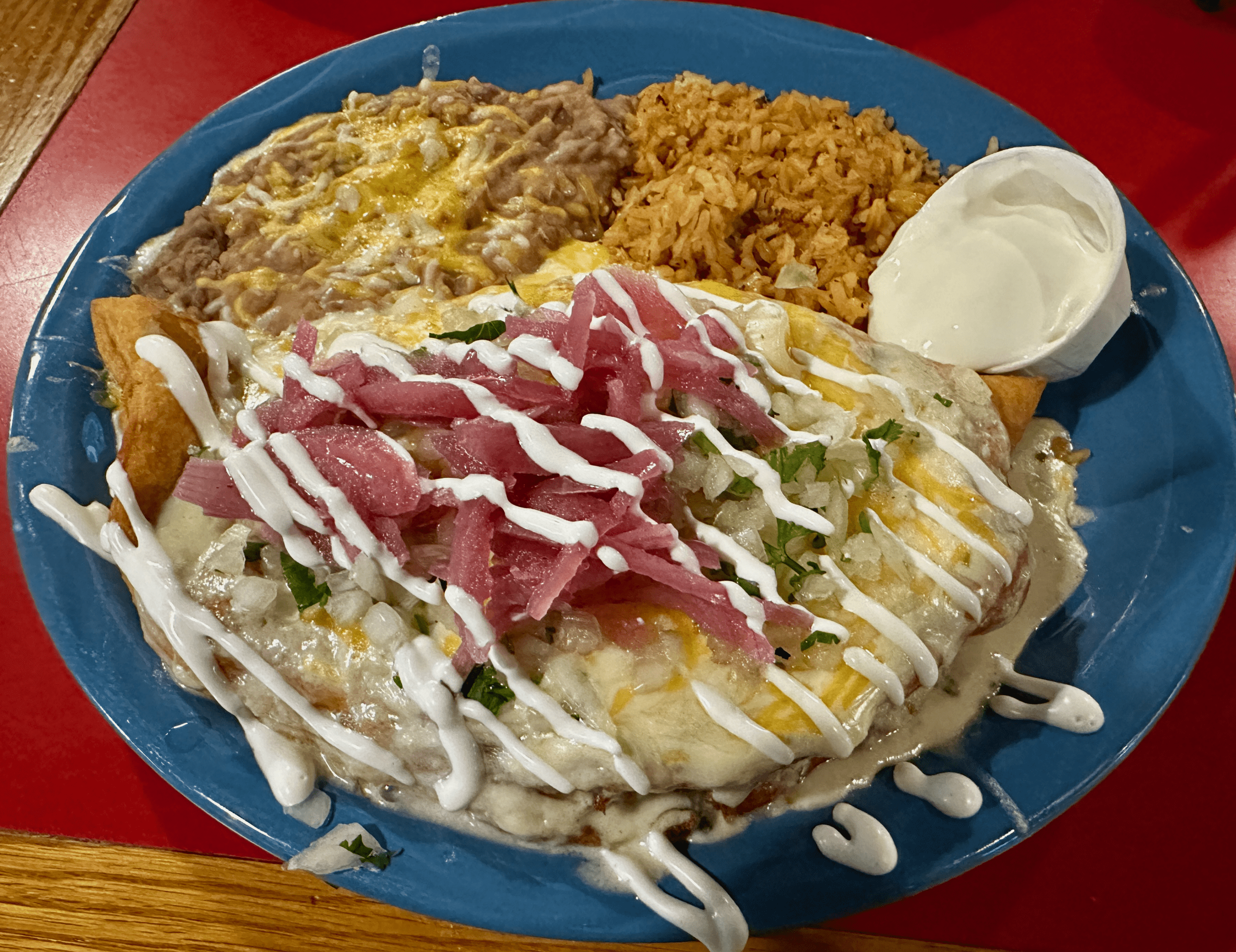
Los Cuates – Albuquerque, New Mexico

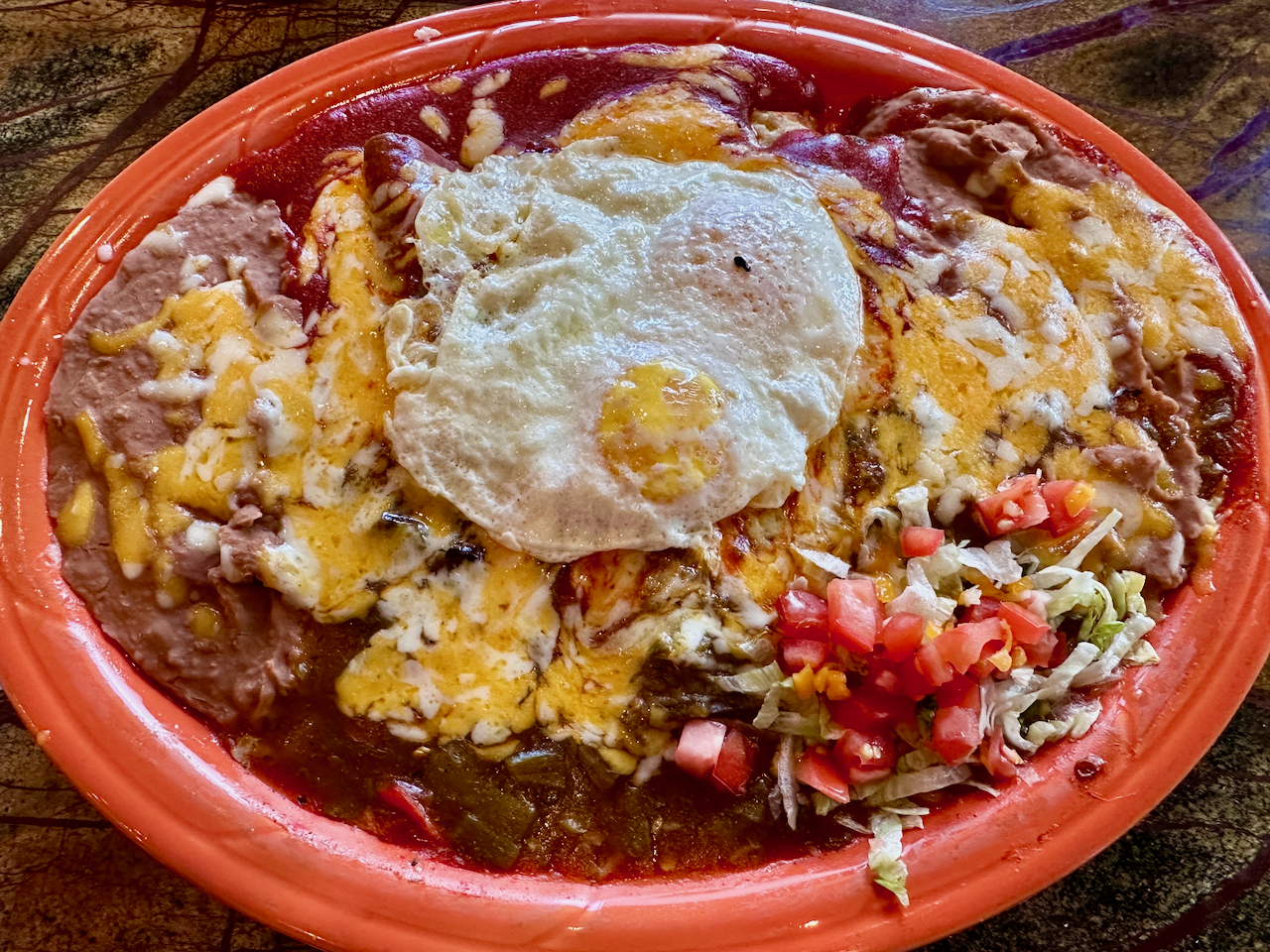
Of the five variations of twins that occur commonly throughout the world, the most common fraternal (non-identical) occurrence is male-female twins which transpire in about 40% of all twins born. Fraternal twins may share up to 50% of their genes and generally are no more similar or dissimilar than any other two siblings.  Although technically not twins because they were “born” four years apart, the Duke City’s most famous twins are the Los Cuates restaurants (cuates being the Spanish word for twins), named for Antoinette and Marcus, the fraternal male-female twins of founder Frank R. Barela, an inspiration for all of us who started at the bottom and worked our way up. Barela got his start in the restaurant business in 1971 as a busboy at Silvano’s, a legendary Duke City purveyor of New Mexican food.  In 1985, he bought Silviano’s and renamed it Los Cuates after his newborn children.  In 1989, he took over another Albuquerque landmark of the era, Cocina De Carlos Mexican Restaurant, across the street from his first eatery. Because of the two restaurant’s twin-like proximity, he also named it Los Cuates…not Los Cuates I and Los Cuates II, just Los Cuates.  Note: While walking the…

Salsa Brava – Flagstaff, Arizona

As the feminine form of “bravo,” brava translates from Spanish and Italian to “well done,” “excellent,” or “good.” Brava is often used to praise a female performer, often in conjunction with or preceding requesting an encore for a performance well executed.  Stemming from Italian and Spanish, brava can also be used to mean brave, angry or fierce.  I’m one of those Hispanic gents who expects…make that demands, salsa to be fierce and angry.  I want my salsa to bite me back, to reenforce through its potency and piquancy that pain is a flavor.  That’s especially true when a Mexican restaurant sports the audacious name “Salsa Brava.” Salsa Brava is a perpetual “best of the city” award-winner in Flagstaff.  It’s been earning “best Mexican” and “best salsa” accolades for the entirety of its nearly four decades years serving “The City of Seven Wonders.”  My hopes were that one of those seven wonders was indeed Salsa Brava’s eponymous salsa.  Make that salsas.  Shortly after you’re seated, your server will ferry to your table three salsas and a basket of chips.  The three salsas are a classic pico de gallo (mild), fire roasted-tomato chipotle (medium), and a pineapple/habanero (spicy).  Salsa is complimentary, increasingly…

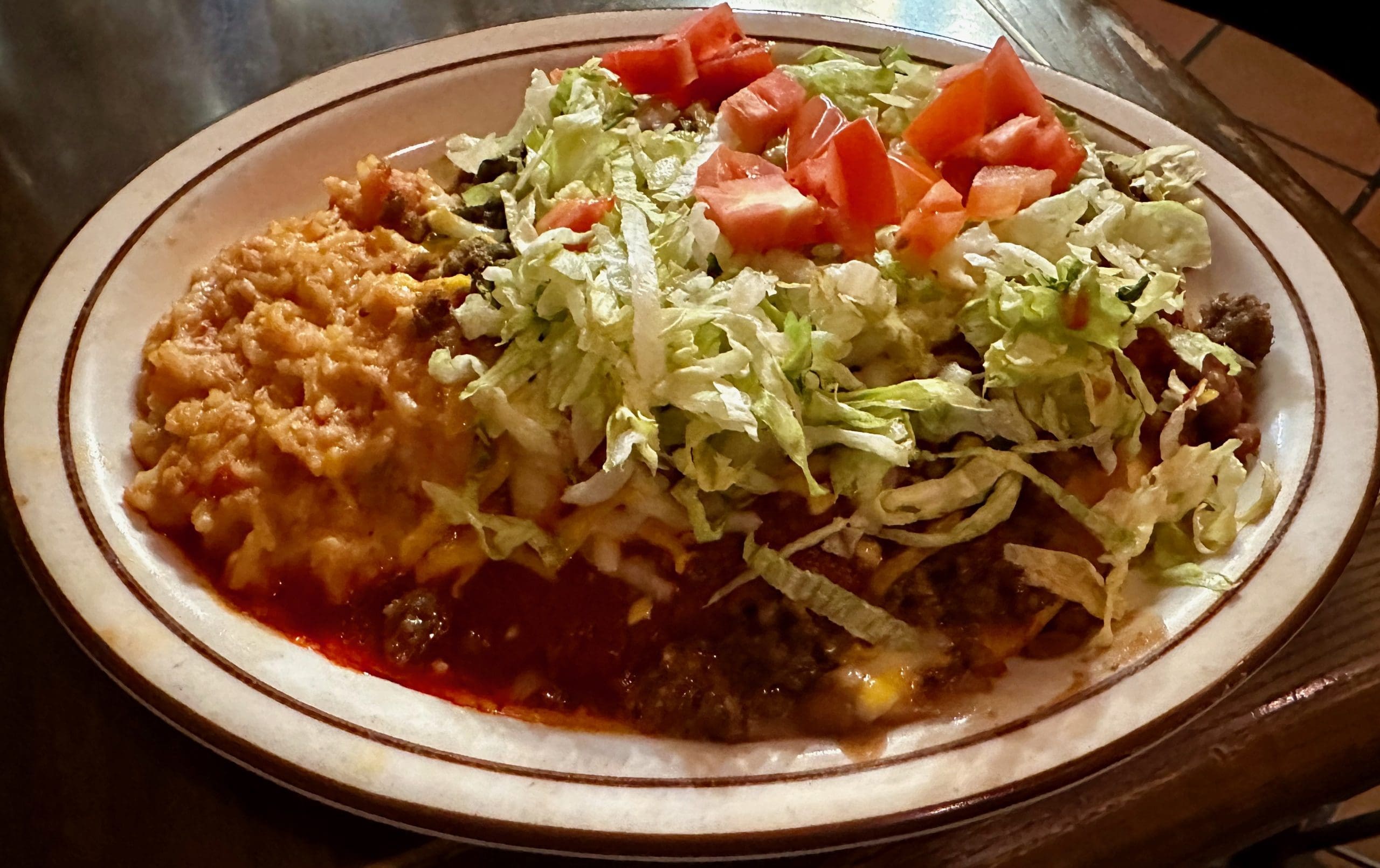
Arriba Shihuahua – Albuquerque, New Mexico

“How do they get away with using the name “Shihuahua” instead of Chihuahua,” I pondered, noting to myself that wokeism and cultural sensitivities have declared offensive virtually any term that  is perceived to diminish a culture or an individual (that perception usually being in the eye of the offended).  Surely, the National Mexican-American Anti-Defamation Committee would take umbrage at that name, much as it did more than fifty years ago when Frito Lay introduced the Frito Bandito.  For those of you not geriatrically advanced enough to remember the Frito Bandito, he was a cartoon mascot who spoke broken English and robbed people of their Fritos corn chips, a reference to the “Mexican bandit” stereotype in Western movies. As if to reinforce my point about people becoming easily offended, Arriba Shihuahua had to respond to a Yelp reviewer’s one-star rating: “We would like to clarify some things. The channels we put on TV do not aim to polarize or discriminate anyone’s political beliefs, but rather serve to entertain customers. (The news was actually a request from a customer.) We’re sorry if it offended you in any way. However, we do not appreciate our personal beliefs being automatically assumed and being disrespected for…

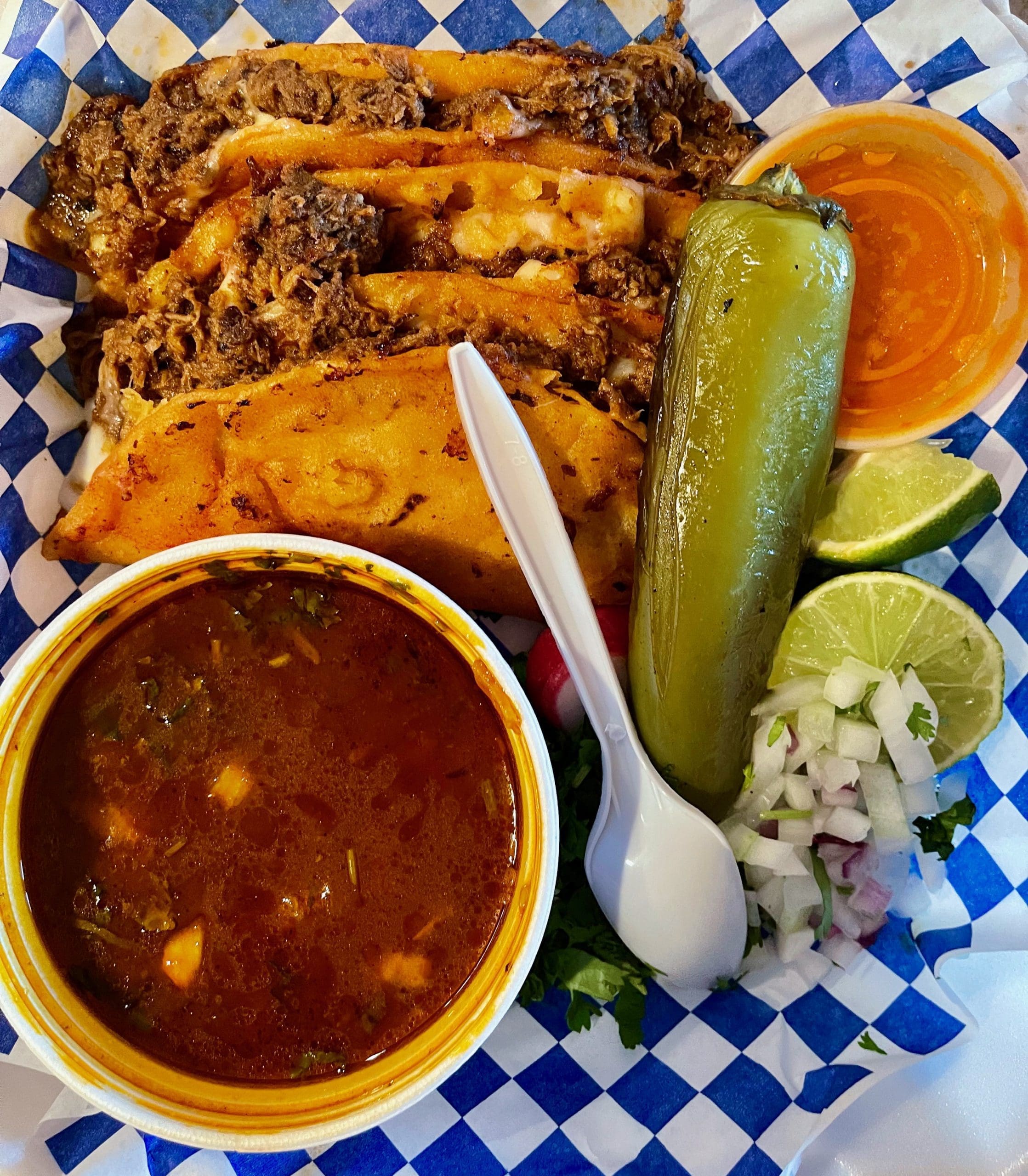
El Bruno Restaurante Y Cantina – Albuquerque, New Mexico

At about 75 miles each way, Cuba, New Mexico is almost equidistant between Albuquerque and Farmington. Regardless of starting point, the drive to and from Cuba is one of the Land of Enchantment’s most spectacular. A preponderance of scenic vistas and an otherworldly, multi-hued topography make the drive a sightseer’s delight. The stratification of multi-hued earthen layers, will remind you of colorful Navajo sand paintings while hulking hoodoos (columns or pillars of bizarre shape caused by differential erosion on rocks of different hardness) will inspire awe, none more so than the nipple shaped Cabezon Peak, a dramatic 7,785 foot volcanic formation that commands the skies. I must admit that most of my enjoyment of those incomparable vistas has been on the return trip from Cuba. For some reason, I always seem to be in a hurry to get there with a single-mindedness of purpose only a seeker with a yen to be sated can truly understand. In my quest to fulfill that longing, I’ve even resorted to corrupting the innocent, once convincing my friend Sandy that her new Prius could reach speeds of over 100 miles-per-hour on the long, straight stretches of U.S. Highway 550. So what would drive two…

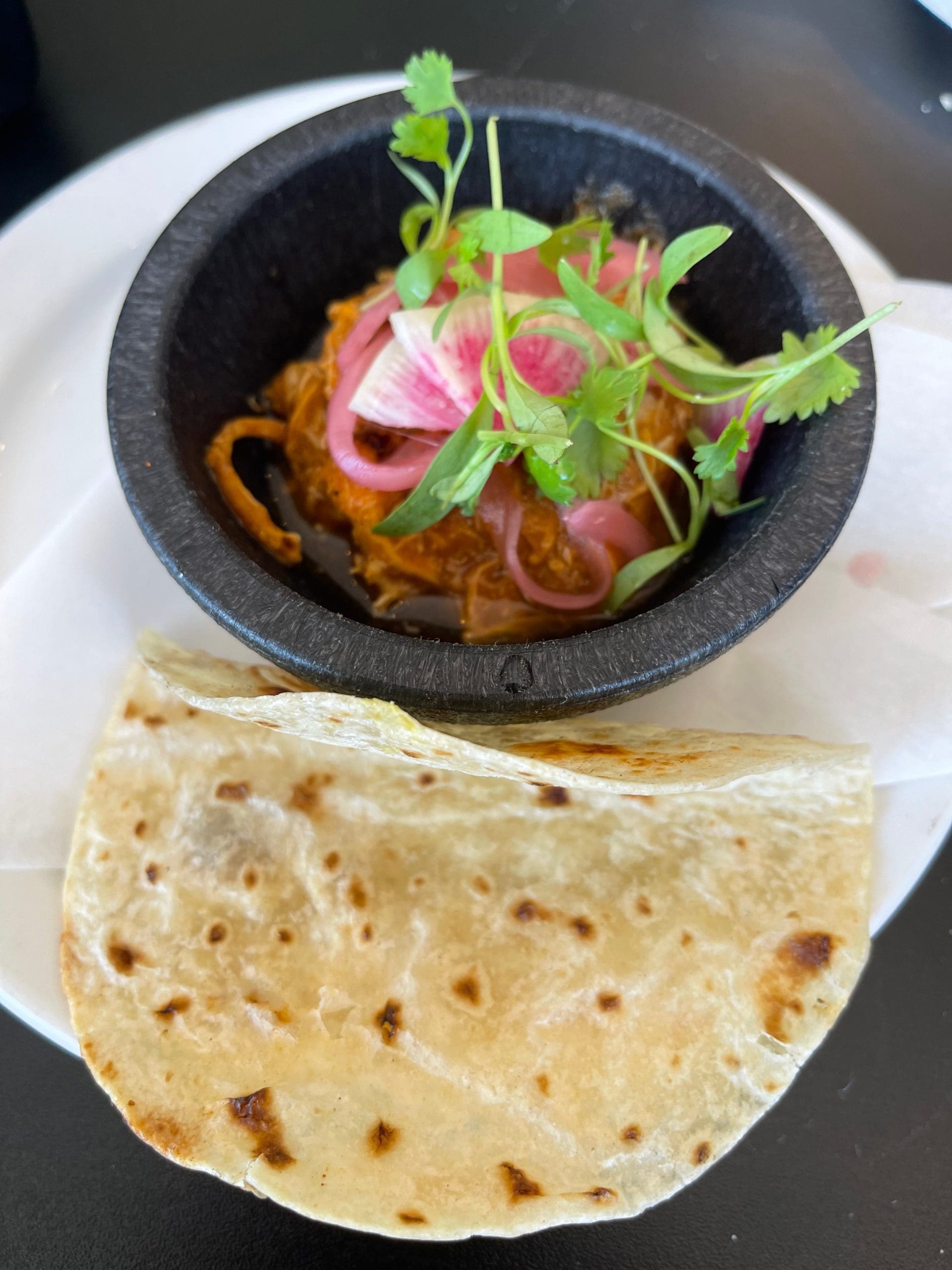
No Te Rajes – Rio Rancho, New Mexico

As the eldest of six, I had the wonderful blessing of having spent more time with our dad than my siblings did.  Dad was the embodiment of the term “gentle man,” a patient mentor and nurturing exemplar of how to be a father and friend.  During our many outings, dad always had the radio tuned to KDCE, “The Station That’s All Heart” out of Espanola.  KDCE played the New Mexican and Mexican songs dad grew up with and loved.  Among his favorites (frequently on KDCE’s repertoire) was Ay Jalisco No Te Rajes by Jorge Negrete. It became one of my favorites, too. The song title made absolutely no sense to me because the term “rajes” comes from the verb “rajarse” which means to “crack” or “split.”  Dad explained that colloquially, “no te rajes” means “don’t back out” or “don’t chicken out.”  He assured me the song was basically a love song to the Mexican state of Jalisco.  He also told me it was the theme song to the 1941 Mexican movie of the same name, based on a novel by the same name.  If you think I’m a wealth of information, you should have met my dad, one of the…

El Cotorro – Albuquerque, New Mexico (CLOSED)

There’s a scene in the 2006 lucha libre (Mexican professional wrestling) comedy film Nacho Libre in which Nacho’s ectomorphic tag team partner Esqueleto (“the skeleton”) orders two grilled, buttered and chile-dusted elotes (corn-on-the-cob) from a street vendor. Esqueleto graciously attempts to hand one to Nacho who rebuffs the offer, knocks the elotes to the ground and bellows “get that corn out of my face!” That antagonistic act so enraged Esqueleto that he leaped on Nacho’s back and attempted to throw his corpulent partner to the ground. The sight of the two golden elotes tinged with red chile on the ground was funny at the time, however, after consuming the elotes at El Cotorro, we would consider knocking elotes to the ground an act of sacrilege and sheer madness. It’s no wonder Esqueleto was so upset. Sure we’ve had elotes elsewhere…plenty of elotes at a plethora of elsewheres, in fact, but only at El Cotorro have elotes made us swoon in appreciation. El Cotorro, which translates to “the parrot” in English is not what you might expect from a Mexican restaurant of that name. It’s not a restaurant named for the stereotypical squawking “Polly wants a cracker” parrot mascot some kitschy…

Taqueria Los Amigos – Albuquerque, New Mexico (CLOSED)

“On a dark desert highway, cool wind in my hair Warm smell of colitas, rising up through the air” ~Hotel California, The Eagles in 1977, when the Eagles’ immortal rock anthem Hotel California was released as a single, most radio hits clocked in at about three minutes.  Three minutes is just about as long as Hotel California’s hauntingly compelling intro and the legendary guitar-duet-slash-duel-slash-musical-conversation between Don Felder’s double-necked Gibson EDS-1275 and Joe Walsh’s Fender Telecaster. The high voltage, era-defining song with its intensely intricate instrumental work, soaring harmonies and enthralling lyrics make Hotel California an iconic indictment of the dark underbelly of the American dream and its excesses. Hotel California’s allegorical, introspective lyrics alone make it one of the most widely speculated songs in rock history.  Studies of those lyrics have resulted in numerous interpretations of the song.  Among the most widely contemplated lyrics surround the song’s first stanza: “warm smell of colitas rising up the air.”  At least three vastly different definitions of colitas exist.  Among the most common misinterpretations is one replete with sexual innuendo–specifically that colitas is sexual slang meaning “little tails.”  In Mexican slang, colitas also refers to cannabis. In numerous interviews, Don Felder has clarified…