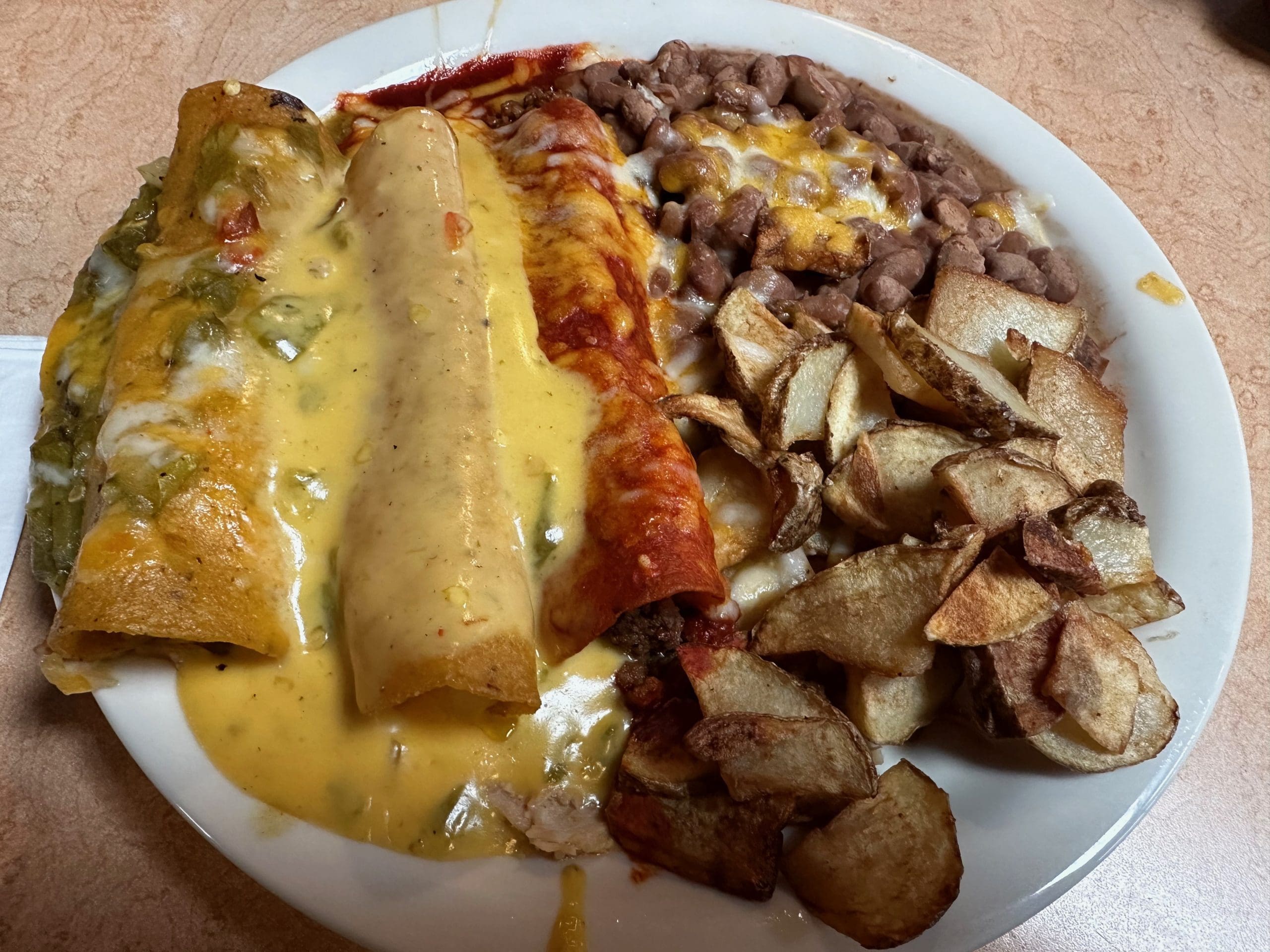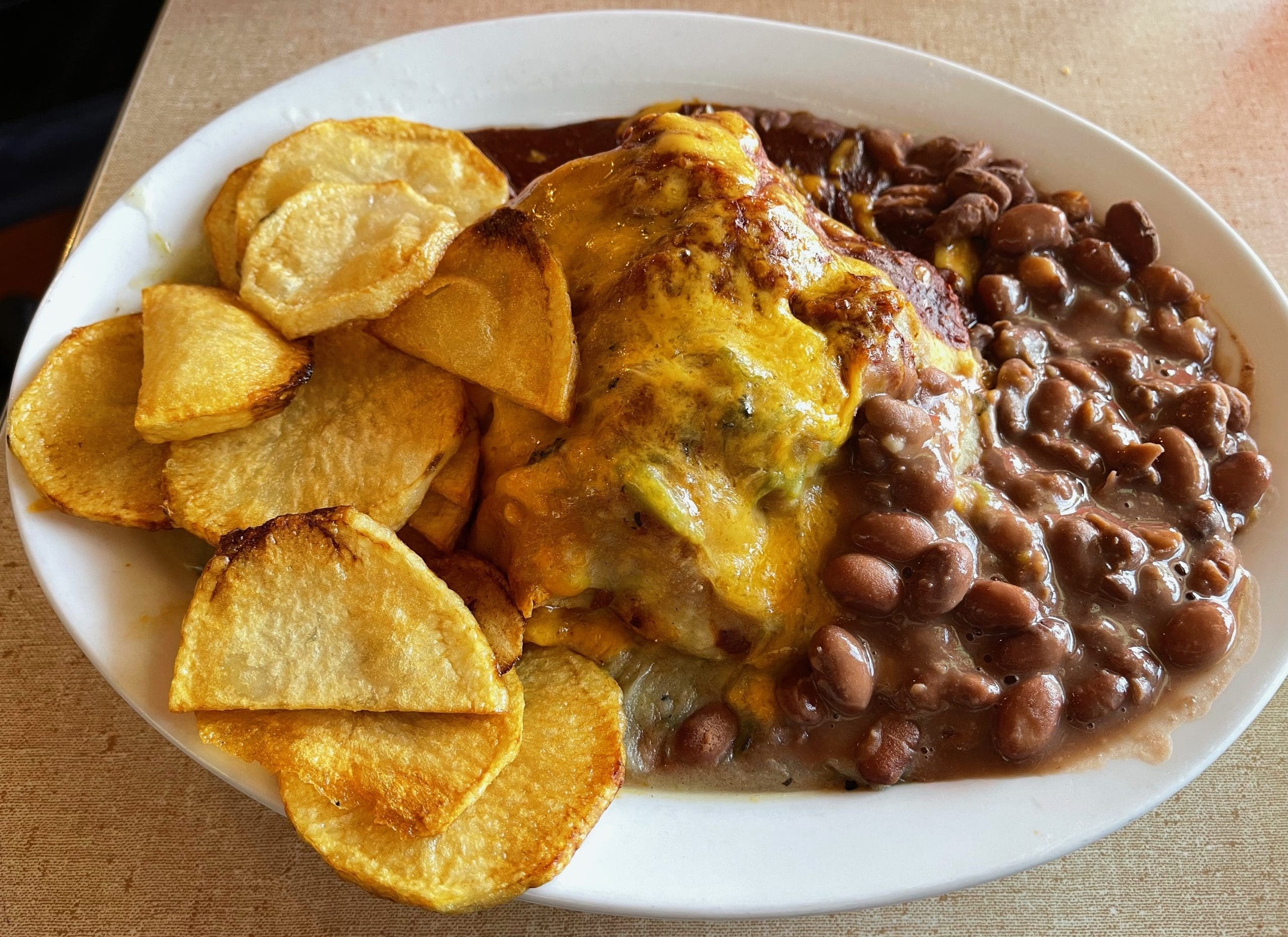
Mick’s Chile Fix – Albuquerque, New Mexico

Addicts are all too familiar with the symptoms, especially the insatiable cravings that can only be quelled by a fix. There’s nothing like the high you get from the addictive mistress that is New Mexican chile. That’s why we willingly singe our tongues and scald our taste buds to get that fix. What gives chile its intense fire and creates the need for a fix is a chemical called capsaicin, a natural ingredient that stimulates the mouth’s nerve endings, causing a burning sensation. In response to this burning sensation, the brain releases endorphins, natural painkillers that may produce a temporary “high.” So, the more of a fiery chile you eat, the stronger the soothing effect. Even though chile isn’t medically addictive, some chile lovers may be hooked on the high they get…just ask anyone in New Mexico who loves the stuff. Better still, ask a chile addict who no longer lives in New Mexico and can’t get the stuff everyday. The withdrawal is painful. In dreams they are plagued by the unrequited yearning which can be fulfilled only by a satisfying bowl of red or green. They wake to drool soaked and chewed up pillows. New Mexicans are fortunate indeed…

Hot Tamales – Rio Rancho, New Mexico

While the word tamale is most certainly Spanish, its derivation is from the Nahuatl word tamalli.  Tamallis were developed as a portable ration carried by war parties in pre-Columbian North America and were as common and varied as the sandwich is today.  One commonality among tamalli then and tamales today, is the corn meal dough (masa) which is made through a process called “nixtamalization.”  In pre-Colombian times, the process involved using wood ashes to soften field corn for easier grinding.  Today this is done by slaking lime.  Interestingly, nixtamalization not only softens field corn, it aids in digestibility and increases the nutrients absorbed by the human body. Though the fundamental component of the tamale remains masa, fillings for this delicious snack or entree are almost as diverse as the imagination, ranging from sweet (pineapple, coconut, pecans, bananas, chocolate and more) to savory and everything in between.  There are also tremendous variations in the wrapper which envelops the filling.  Dried corn husks are probably the most common, but the descendants of the Meso Americans also use fresh corn husks, banana leaves and the membrane from some agave plants. In New Mexico, we like to think of tamales as being part of…

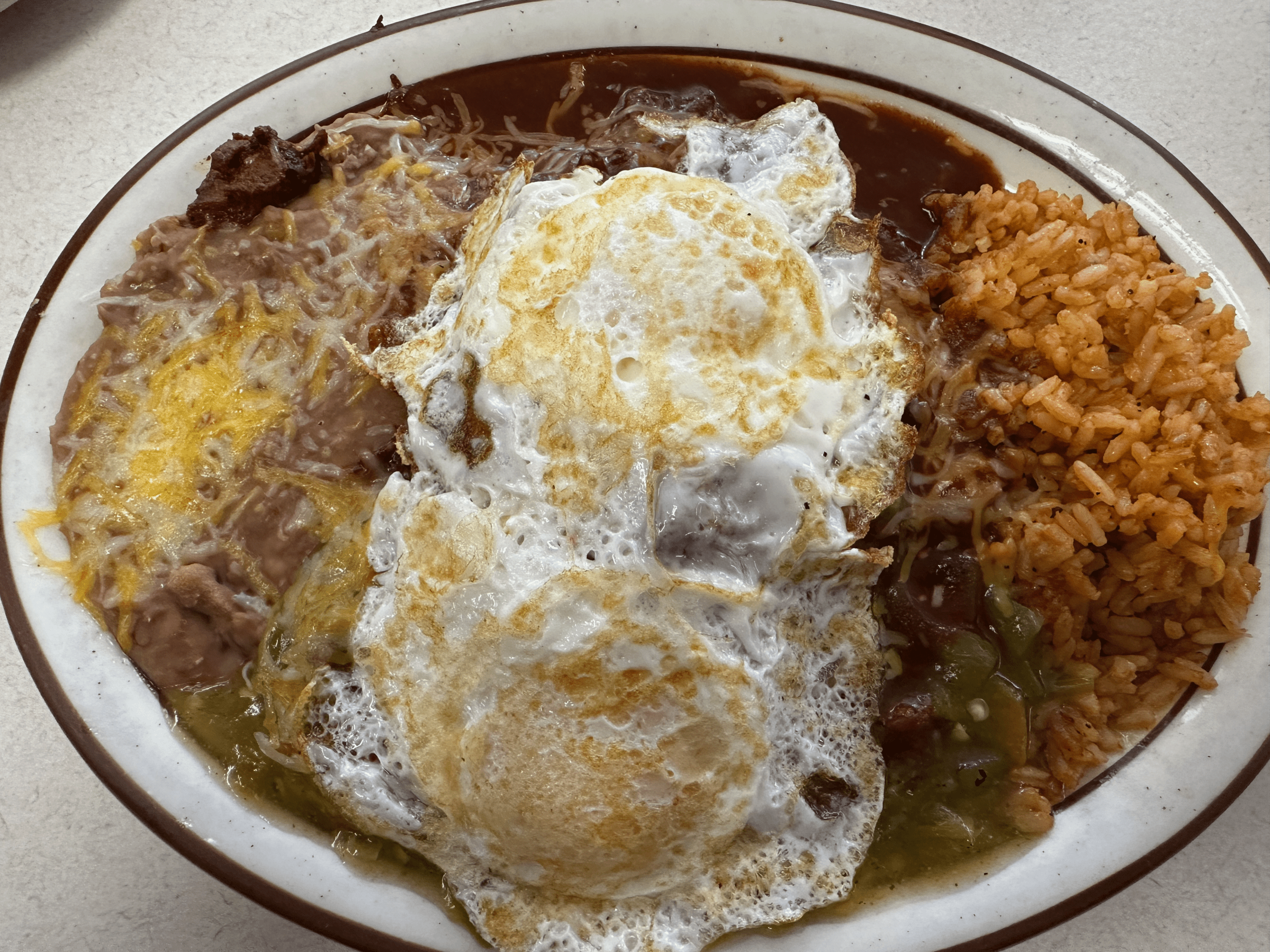
El Camino Dining Room – Los Ranchos de Albuquerque, New Mexico

Many of us who predate, however slightly, the explosion of institutionalized fast food retain a fondness for the remaining independent family restaurants whose arsenal in the competition for hungry diners consists of reasonable portions of great meals at budget-conscious prices all served by a friendly and accommodating waitsfaff. An Albuquerque restaurant which epitomizes those ideals is the El Camino Dining Room, captured brilliantly above by the fabulous photographer Deanna Nichols. The El Camino was built by Clyde H. Tyler in 1950, five years after the latest “war to end all wars” and 13 years after Route 66 was “straightened” so that it would bypass Santa Fe completely.  Albuquerque was much more innocent back then.  Some might even describe it as a “cow town trying to be a city.”  At the time, 44% of America’s population resided in rural areas and the Duke City’s population was only 96,800. Despite no longer being part of Route 66, one of the city’s busiest thoroughfares was 4th Street on which commerce was burgeoning.  It was the perfect location for an independent family restaurant, far from the cavalcade of Howard Johnson’s type restaurants which grew along the interstates. Similar to Howard Johnson’s which prided itself…

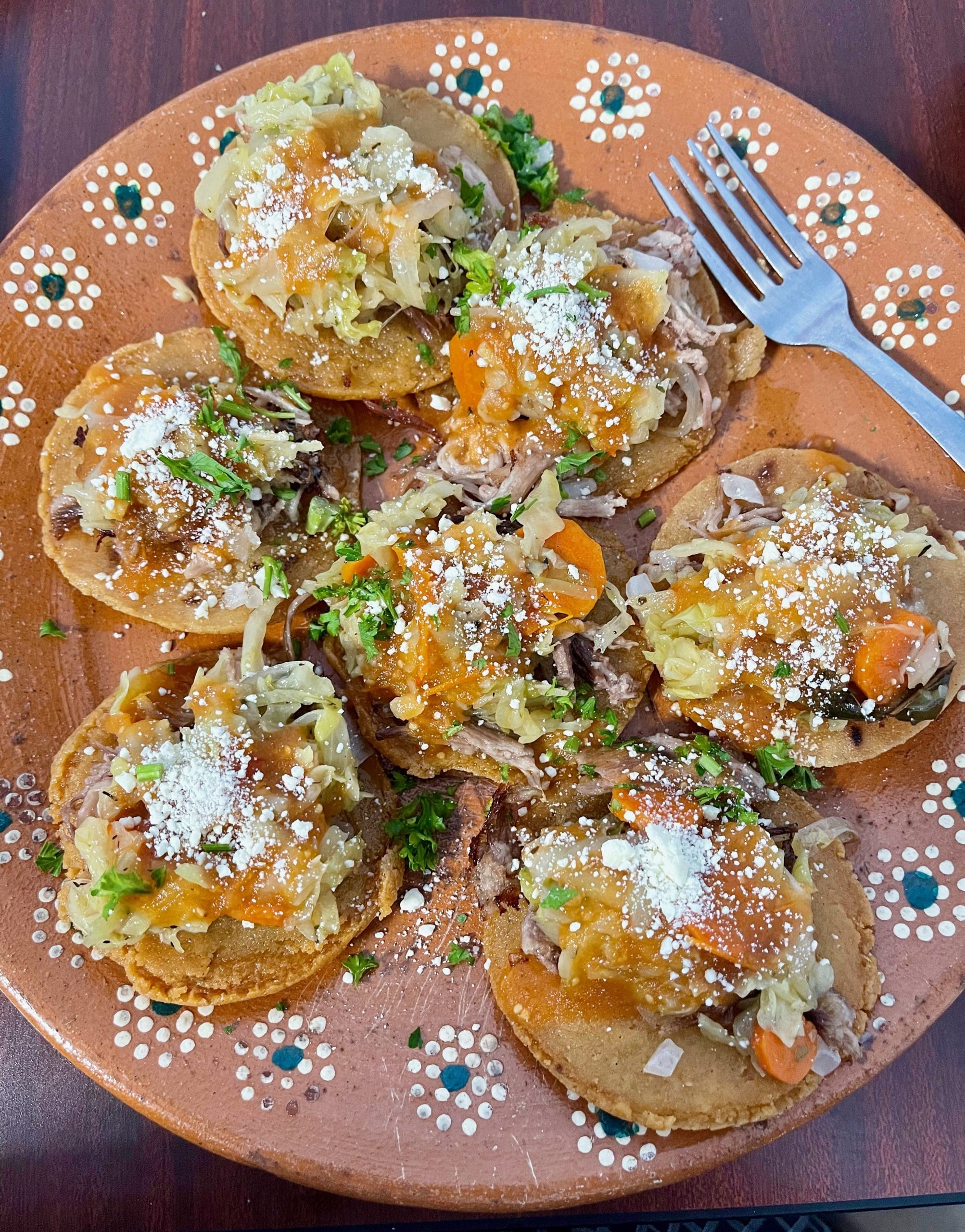
Panaderia Guatemalteca Eterna Primavera – Albuquerque, New Mexico (CLOSED)

To truly understand the cuisine of Guatemala, it helps to understand why this Central American paradise is known as the “Land of Eternal Spring.”  With nineteen diverse ecosystems, Guatemala boasts of jungles, forests, beaches, volcanoes and an expanse of natural resources.  Thick, lush vegetation enrobes seemingly never-ending mountain landscapes in verdant hues.  Magnificent pristine waterfalls cascade over those mountains, feeding the rivers that nourish fecund lands.  A belt of fire formed by active volcanoes is often shrouded by clouds just as ominous.  Bordered at its west by the Pacific and by the Atlantic at its east, Guatemala is graced by a diversity of climates and elevations. Relatively mild year-round, the climate is tropical and sub-tropical but varies greatly in relation to altitude.  Topographical diversity ranges from sea level to mountains that climb to more than 13,000 feet.  Precipitation in excess of 150-inches per year prevail at higher elevations while near-desert conditions persist elsewhere.  In addition to its well-deserved sobriquet “Land of Eternal Spring,” Guatemala is fittingly known as “the heart of the Mayan world.”    Pride in the culture and history of one of world’s greatest civilizations and their formidable accomplishments is understandably deep.  For more than a thousand years,…