Spicy Junction – Albuquerque, New Mexico

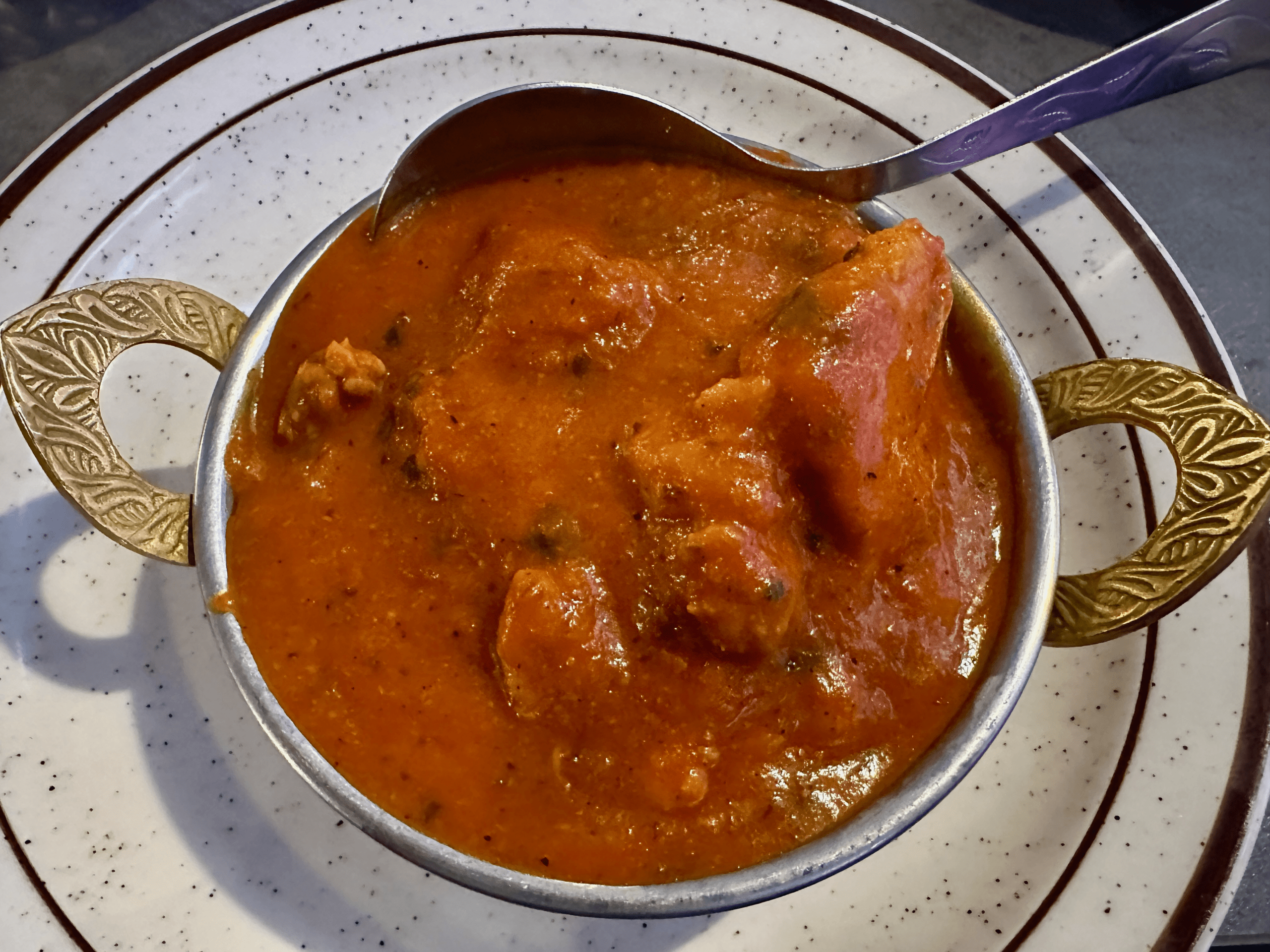
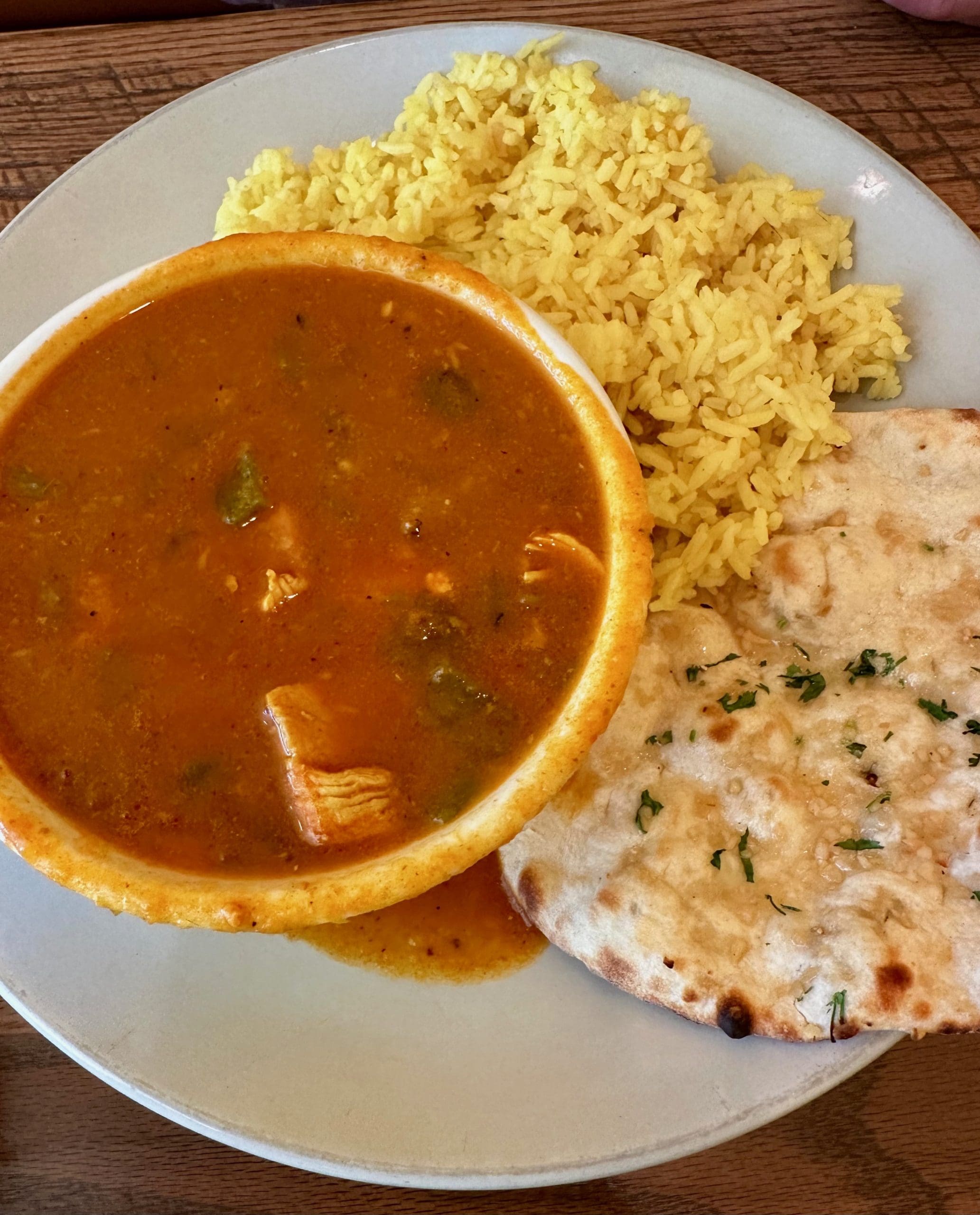
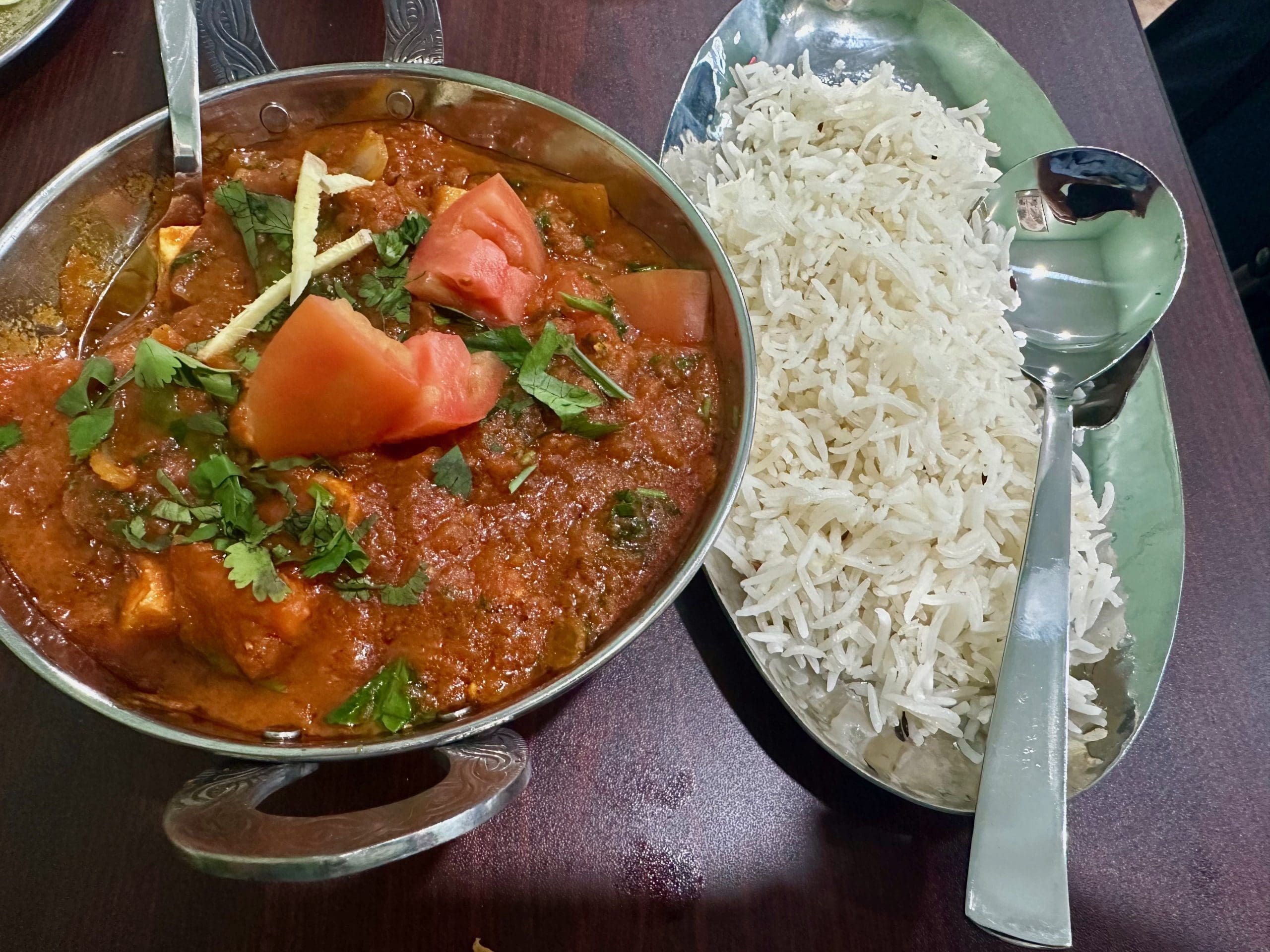
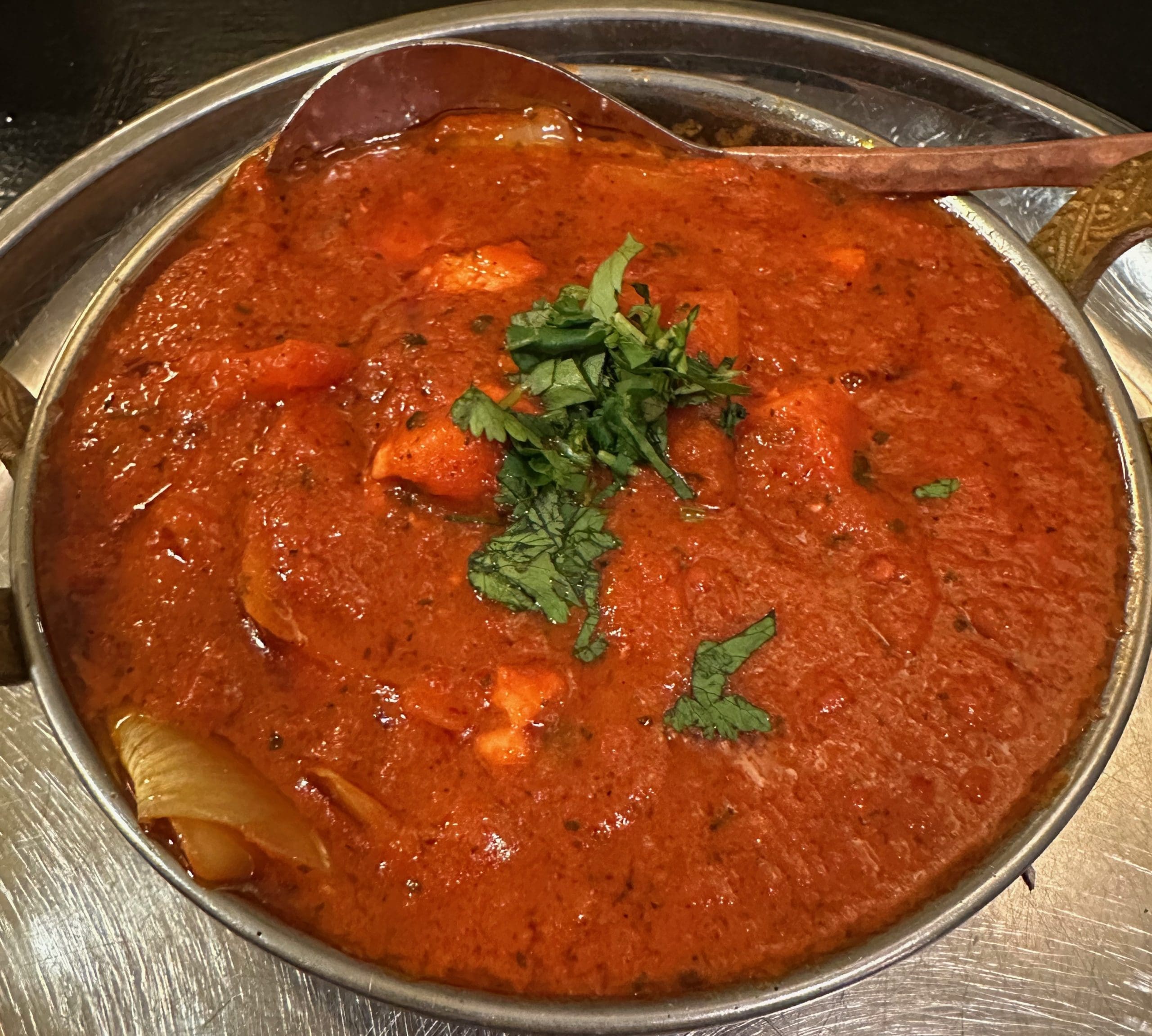
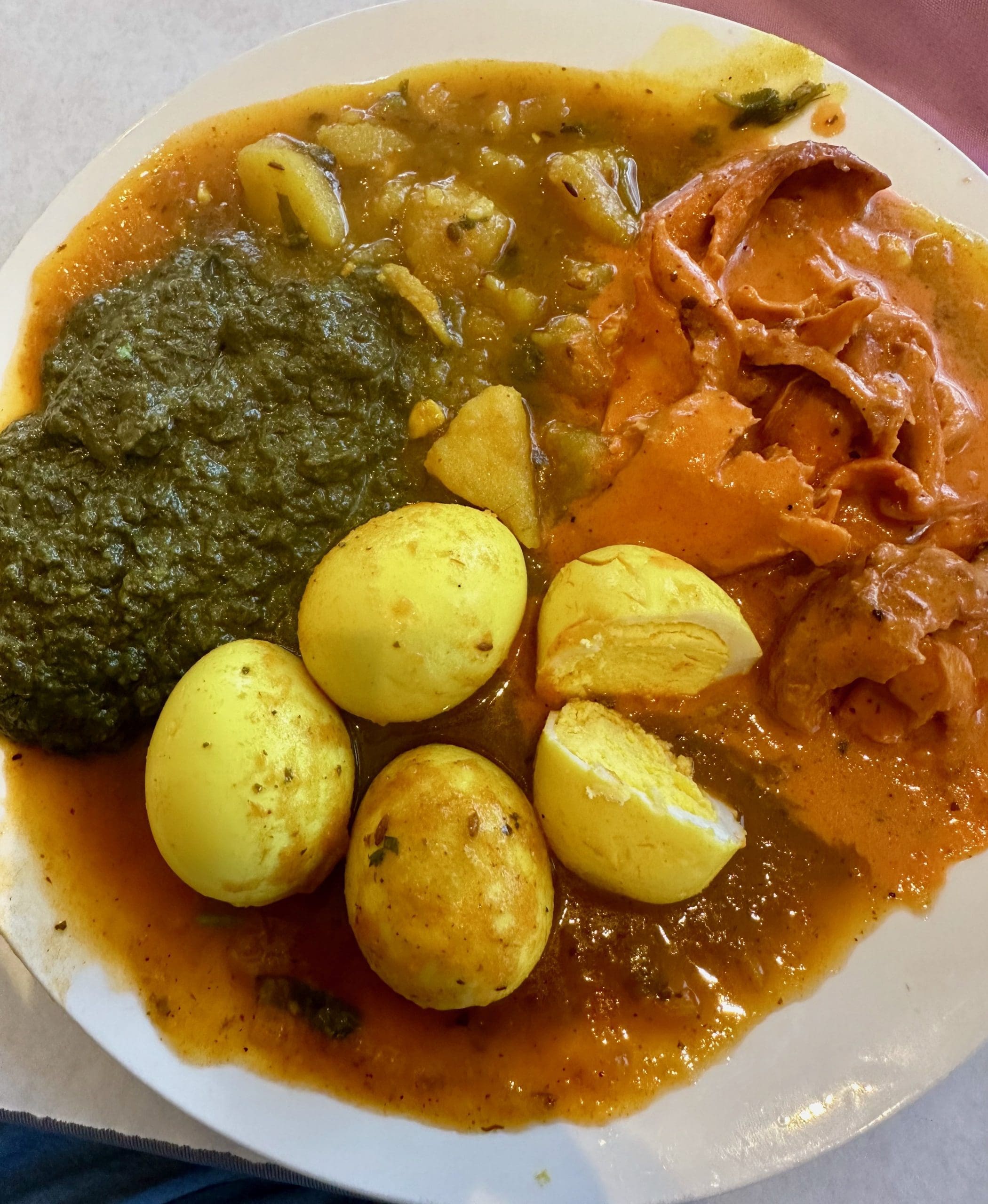
While perusing the menu at Spicy Junction, you might hearken back to The Dream, the very eclectic restaurant owned and operated by Pakistan emigrant Babu Bhatt in an uproariously funny episode of Seinfeld. As Jerry Seinfeld observed about The Dream’s menu, “he’s serving Mexican, Italian, Chinese. He’s all over the place.” Spicy Junction’s menu is similarly diverse, a melange of Indian, Venezuelan, Middle Eastern, Indo-Chinese and even pizza and burgers splayed temptingly onto three individual menus. That the menu is so “all over the place” makes great sense in that the chef worked as a chef at the location’s previous tenant, El Chamo Arabe. In 2023, El Chamo Arabe introduced Duke City diners to a melange of Venezuelan and Mediterranean foods all in one menu.  While El Chamo Arabe now operates at Rio Rancho’s The Block (7805 Enchanted Hills Blvd.), its former chef and his bride took over the Menaul space.  They’re both Indian, but rather than serve Indian food exclusively, they decided to retain the existing menu and have added pizza.  If it sounds like an adventure in cuisine types you may not have thought go so well together, you’ll be more than pleasantly surprised at just how diverse…

Taste of India – Albuquerque, New Mexico

“Don’t go and cook Indian food if you never cooked Indian food, you know?” ~Wolfgang Puck Those who can’t do, write.  The pan is mightier than the pen. Pick your aphorism.  When it comes to cooking Indian food, both certainly apply in my case.  Every effort to prepare even the most basic of Indian dishes is a painful reminiscence of the Chemistry courses which confounded, confused and frustrated me in equal measure.  Sure, covalent bonds made sense (because they were easy), but the math-based system of writing complex chemical equations may as well have been Klingonese.  So, too, are most recipes for Indian dishes. Yes, a passable phalanx of premixed “instant” Indian food exists, but what’s the fun in preparing that?  Aspiring Indian food cooks (and masochists like me) prefer to prepare everything from scratch.  That includes grinding and roasting ingredients for our own garam masala, an essential Indian spice mix which Epicurious considers “the Indian equivalent of French herbes de Provence or Chinese five-spice powder.”  Somehow, my mix always has the taste appeal of a lethal bleach and ammonia combination.  After years of trial and failure, I’ve arrived at  the painful realization that I may never be able to…

Royal Hyderabad – Albuquerque, New Mexico

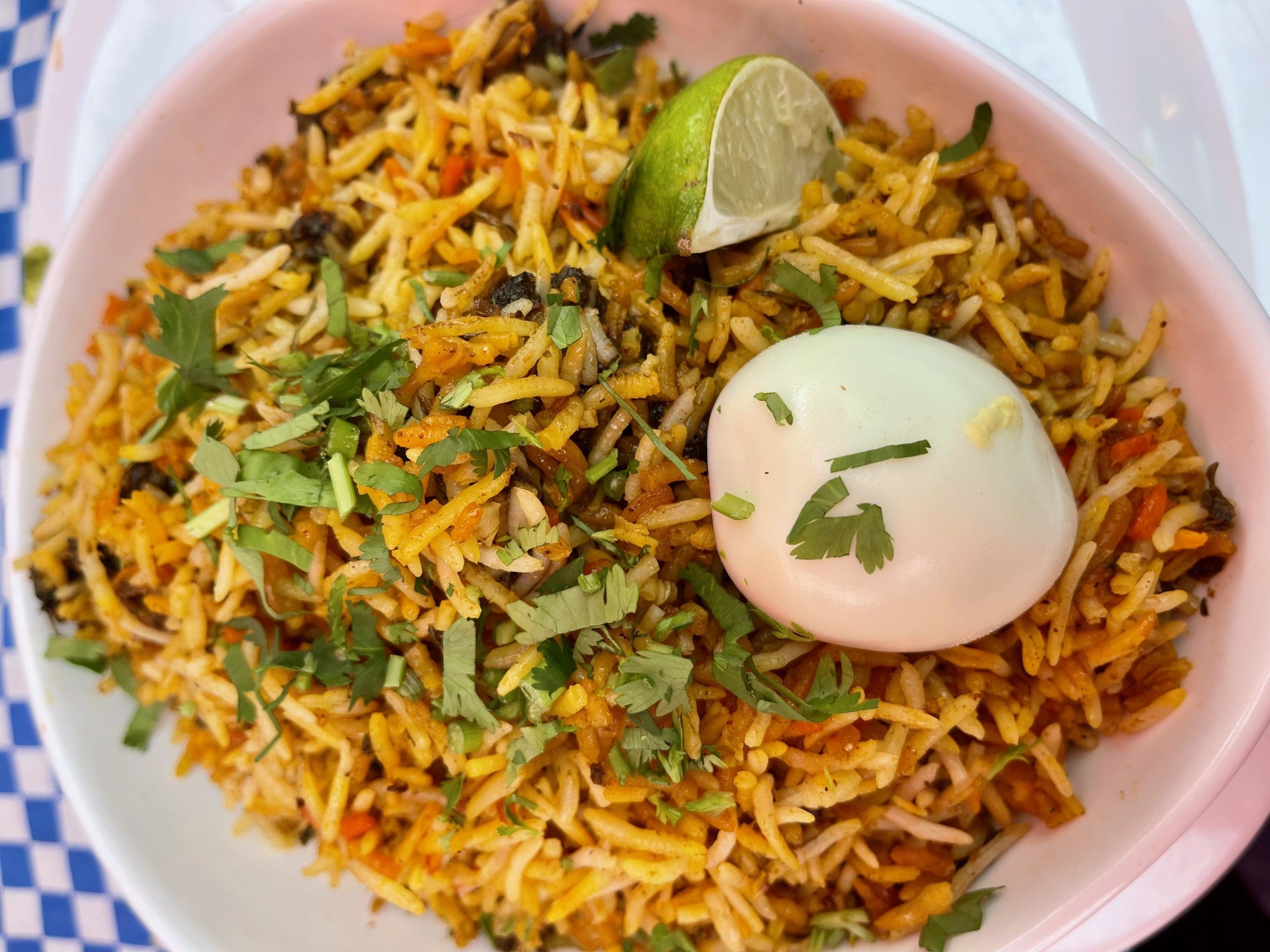
When the New York Times described biryani as “the Indian equivalent of arroz con pollo or paella,” legions of Southwest Asians and culinary cognoscenti cried “Fake News!”  The media  megalith with the masthead that boasts of “all the news that’s fit to print” may as well have declared the Taj Majal as the architectural equivalent of Randy’s Donuts in Los Angeles or the Longaburger Company Building  in Ohio.  It’s highly unlikely Latin America and Spain are nearly as passionate about arroz con pollo or paella as denizens of the exotic subcontinent are about biryani, a dish The Better India boasts “epitomizes the zenith of Indian cuisine.  Zenith–that means biryani is at the very top, as good as it can possibly be.  So there, New York Times! Just by its title the book Biryani: The King of Indian Cuisine gives you an idea how esteemed the dish is.  The inside cover explains “biryani is the most beloved dish in every corner of India and many parts of Asia.”  In India, biryani has achieved legendary or mythical heights.  Chef Suvir Saran believes, “Biryani is the mirror image of our population and as the clock is ticking, its a test of time. Biryani has survived longer than any Human being, it will live forever because…

Maharaja Indian Cuisine – Albuquerque, New Mexico

In his Netflix “23 Hours to Kill” special, comedian Jerry Seinfeld posed the question:  “What is the idea of the buffet?  Well, things are bad.  How can we make it worse?  Why don’t we put people that are already struggling with portion control into some kind of debauched Caligula food orgy of unlimited human consumption?”  Frankly, that’s a notion I’ve contemplated myself, but it’s not the only reason I don’t partake of buffets.  As an independent observer of the culinary condition, reviewing buffets–irrespective of how good they might be–is not a true indicator of a restaurant’s quality.   For that, you’ve got to order off the menu. Please don’t get me wrong.  I’m not anti-buffetite.   My Kim loves buffets.  So does our friend John Martin, a fellow trencherman.  During the height of the Cabrona virus, even culinary cognoscenti believed all-you-can-eat buffets were a thing of the past, just like sending Christmas cards.  The more fastidious among us were relieved that sanitation protocols would be the riddance of those too short plexiglass sneeze guards and the sharing of serving sporks and tongs.  Sadly, doing away with buffets–even if only for a short time–resulted in the permanent closure of such buffet favorites as…

Marigold Cafe – Albuquerque, New Mexico

It’s not all parents who can give birth to two children in a six week period, but that’s precisely what Harrison and Violet did.  In early October, 2019, they welcomed into the world a beautiful bundle of love they christened Jasmine.  Just before Thanksgiving six weeks later, they greeted their second “baby” when Marigold Cafe opened its doors in the Journal Center area retail space which also houses Restoration Pizza and Cabela’s.  Along with Torinos @ Home, these two bookend restaurants just may make the Journal Center area a dinnertime dining destination instead of just two other restaurants serving the burgeoning area’s lunch crowd. The Marigold Cafe is a breath of fresh air, introducing the Duke City to a heretofore unsampled fusion concept that melds Indian cuisine with New Mexican and American favorites. It’s an idea whose time has come and best of all, it’s executed exceptionally well. Credit that to the passion of its dynamic owners. When Marigold’s website touts a “local, family owned business that has a passion for food and culture,” you can take it to the bank that these aren’t prosaic platitudes.   Neither is Marigold’s mission statement. A restaurant’s mission statement is used to convey a…

Kabab & Curry – Albuquerque, New Mexico

A recent study by The Picky Eater analyzed the world’s most popular cuisines and dishes.  Picky Eater’s survey determined that Italian cuisine (highlighted by pizza, pasta, and risotto) is the most popular cuisine in the world, followed by Japanese and Indian food. The study also revealed that Chinese restaurants are the most common worldwide, representing an average of 9.5% of all restaurants in “top-visited cities,” followed by Italian cuisine concepts (roughly 8.5%) and Indian establishments (8%).  Indian restaurants have not propogated as widely in the United States. A 2023 study by the Pew Research Center closely indicates that Indian restaurants account for only 7 percent of all restaurants serving Asian food in America.  That’s starting to change. Although the first Indian restaurant ( the Hindustanee Coffee House in New York City) opened its doors in the late 1800s, it wasn’t  until the 1960s and 1970s that Indian cuisine began to gain wider recognition, as more Indian immigrants came to the United States and opened restaurants and grocery stores. Today, Indian cuisine is a well-established part of the American culinary culture–one that is poised to explode largely thanks to innovative second- and third-generation Indian-American chefs developing new dishes and unique concepts.…

The Dhaba – Tempe, Arizona

I joked with our friend Kris Lincoln about the irony of introducing an Indian to Indian cuisine.  I’m going to pin that paradox on Christopher Columbus.  Legend has it that Columbus used the term “Indian” to refer to the original inhabitants of the American continent.  It’s widely believed (though more romanticized than accurate) that he used the term “Indian” because he was convinced he had landed in “The Indies” (Asia) where he hoped to discover a new source of wealth,  Whether attributable to confusion or an education system that often perpetuates mistaken beliefs, the label “Indian” has stuck. That misnomer is widely used across the fruited plain–even by many indigenous peoples of the western hemisphere.  In the 1960s, the term “Native American” was coined to replace “Indian” with a “more appropriate name.”  This new term is also fraught with inaccuracy, not to mention political incorrectness.  As we know, “America” is derived from Amerigo Vespucci, a 16th century Italian navigator who was once said to be the “discoverer” of the continent. How can the name of people who were already here be named for him? Kris is a proud Dine‘, literally meaning “The People.” Dine’ is what Navajos call themselves.  It…

Naan & Dosa – Albuquerque, New Mexico

There is a charm about the forbidden that makes it unspeakably desirable.” ~Mark Twain >Ever since Eve succumbed to the wiles of a serpent who moonlighted as a used car salesman, humankind has been easily led into temptation.  As playwright Oscar Wilde once jokingly remarked, “I can resist anything except temptation.” We can all relate. We all face temptations of one sort or the other.  Like the forbidden fruit of Eden, temptation can be very attractive and very difficult to resist.  Though technically sin–actions or offenses that are offensive to God–is a concept to which only Christianity and Judaism subscribe, most of the world’s religions do believe in the concept of right or wrong–as defined by the laws and rules set forth by their respective gods and as interpreted by religious leaders within the respective faith. Sometimes (or quite often as has recently been revealed) those religious leaders are also led astray.  One of the more benign examples involves a Brahmin, a member of the priestly class in Hindu society’s caste system.  Since alcohol was forbidden to Brahmins, one tried to ferment his own with rice.  When his efforts failed, he poured out the contents onto a pan and made…

Tikka Spice South Asian Street Food – Albuquerque, New Mexico (CLOSED*)

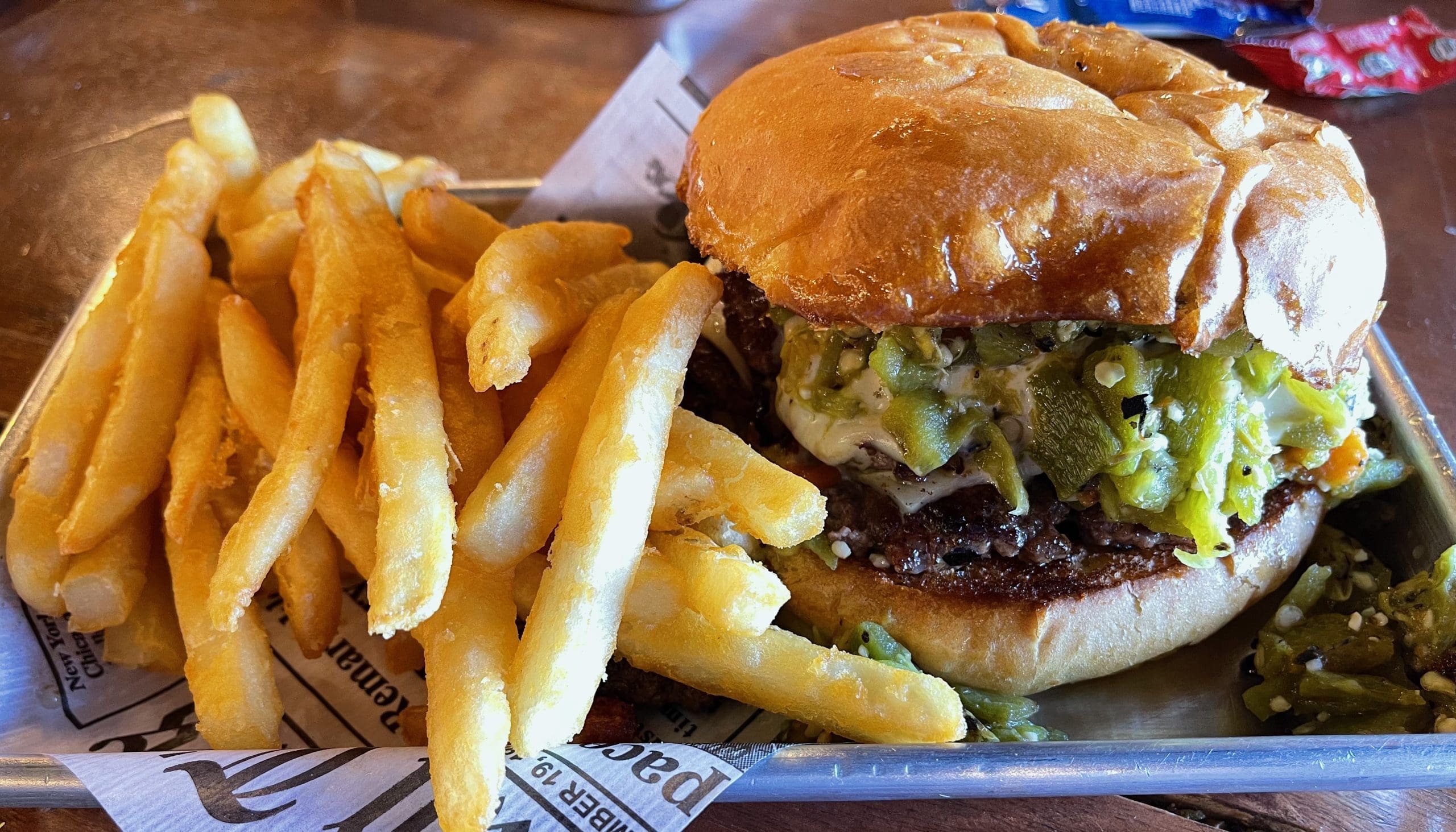
*NOTE:  Only the brick and mortar version of Tikka Spice has closed.  Tikka Spice still operates out of a food truck. In baseball it’s called the “Triple Crown,”an incredibly rare achievement in which a player leads the league in average, home runs, and runs batted in.  To win the triple crown, a player must tremendous power to hit for distance as well as a very keen eye to hit baseballs thrown at nearly 100 miles per hour and place them on the field in positions that result in driving in runs.  In horse racing, the term Triple Crown represents a series of horse races for three-year-old Thoroughbreds, consisting of the Kentucky Derby, Preakness Stakes, and Belmont Stakes.  To win all three of these races is even more rare. There’s another Triple Crown competition that’s even more challenging and difficult to win.  That’s Edible’s Green Chile Cheeseburger Smackdown, an annual event held in Santa Fe every year since 2013.  This competition has one simple goal: to determine the best burger in New Mexico.  I would argue that the reason this competition is even more difficult to win than the aforementioned Triple Crowns is that the Smackdown is not an athletic achievement reliant on…

Bawarchi Indian Cuisine – Albuquerque, New Mexico (REBRANDED)

NOTE: Although Bawarchi quickly earned praise and acclaim from the public and the media alike, corporate support was lacking.  Bawarchi, a burgeoning chain with locations in 23 states, seemed more interested in expanding across the fruited plain than it did in supporting its local affiliate.  Within three years, the Khan family had rebranded its name to “Royal Hyderabad.”  It’s not only the name that changed.  New recipes were developed, some items were dropped from the menu and other items were added.  In November, 2025, Royal Hyderabad launched its second location, this time on Albuquerque’s ever-expanding west side.  The new restaurant is a 4,000-square-foot space that can accommodate 110 people.  Please visit my review of Royal Hyderabad for more information. When the New York Times described biryani as “the Indian equivalent of arroz con pollo or paella,” legions of Southwest Asians and culinary cognoscenti cried “Fake News!”  The media  megalith with the masthead that boasts of “all the news that’s fit to print” may as well have declared the Taj Majal as the architectural equivalent of Randy’s Donuts in Los Angeles or the Longaburger Company Building  in Ohio.  It’s highly unlikely Latin America and Spain are nearly as passionate about arroz con…

TIKKA HUT PIZZERIA AND KABOB HOUSE – Albuquerque, New Mexico (CLOSED)

“I’ll give you three guesses to tell me what tabula rasa means,” I challenged my friend and Wordle phenom Carlos.  “That’s easy,” my erudite amigo proclaimed, “Tabula Rasa was a silent screen actress in the 1920s.”  “Close,” I replied, “but you’re thinking about Tallulah Bankhead.”  “I was just kidding,” he demurred, “Everyone knows tabula rasa is a Mediterranean salad.”  “You’re getting closer,” I joked, “but the Mediterranean salad you’re thinking about is tabouli.”  On his third attempt, Carlos gave me the right answer: “I’m drawing a blank.” Tabula rasa, in fact, translates from Latin to “blank slate.” In psychology as well as in epistemology (theory of knowledge), tabula rasa refers to the idea that we are solely the product of our upbringing and experiences.  In psychology, it also refers to  the technique therapists use when they themselves become “blank,” and allow the recipient to project their own needs, desires, and beliefs onto them. For those of us who follow culinary trends, the term has a third definition, one coined by CBC writer Andrew Coppolino who wrote: “Unless you are a rigid food traditionalist and a dedicated adherent to the dogmatic philosophy that pizza can only be called pizza if it…