“Tradition is everything. It’s very important.
But we need to remember that the traditions of today
Were the modernity of the past.
And that the things we think are very science fiction type of things
Will be the traditions of tomorrow.”
~Chef Jose Andres
Chef Jose Andres was the founder of the World Central Kitchen which provides large-scale relief to communities affected by natural disasters and conflicts around the world. He’s one of Time Magazine’s world’s 100 most influential people. He earned a Presidential Medal of Freedom for his altruism as well as for being the Spanish-American culinary innovator who popularized tapas in the United States. His list of accomplishments and the reach of his philanthropic efforts mark him as one of those rare human beings whose influence and impact extend far beyond the kitchen.
Several years ago, my Kim and I visited China Poblano, a spectacular restaurant launched by Chef Andres in Las Vegas, Nevada. This eatery pays tribute to the concept of East meets West, serving both Mexican and Chinese foods. Las Vegas Weekly called China Poblano “quite simply the perfect restaurant for today’s hipster foodie.” China Poblano is not a fusion restaurant per se in that it doesn’t take Mexican and Chinese dishes and transform the diverse and certainly disparate culinary traditions, elements and ingredients of the two very different nations to form an entirely new genre. Instead, the restaurant serves Mexican dishes and it serves Chinese dishes and the twain…well, occasionally it does meet. It’s a concept we enjoyed.
Jose Andres’s East Meets West idea is alive and well in Albuquerque albeit instead of the melding of Chinese and Mexican food, it’s Chinese and Venezuelan cuisine under one umbrella concept. It’s a concept that makes sense. According to SupChina, a New York-based investigative news website, the Venezuelan government estimates that [as of 2018], 500,000 Chinese citizens were living in Venezuela. The article’s authors explained that this includes approximately 60,000 Chinese citizens and 400,000 residents of Chinese descent, representing the “fourth-largest Chinese population]in the Americas (behind the U.S., Canada, and Peru.”)
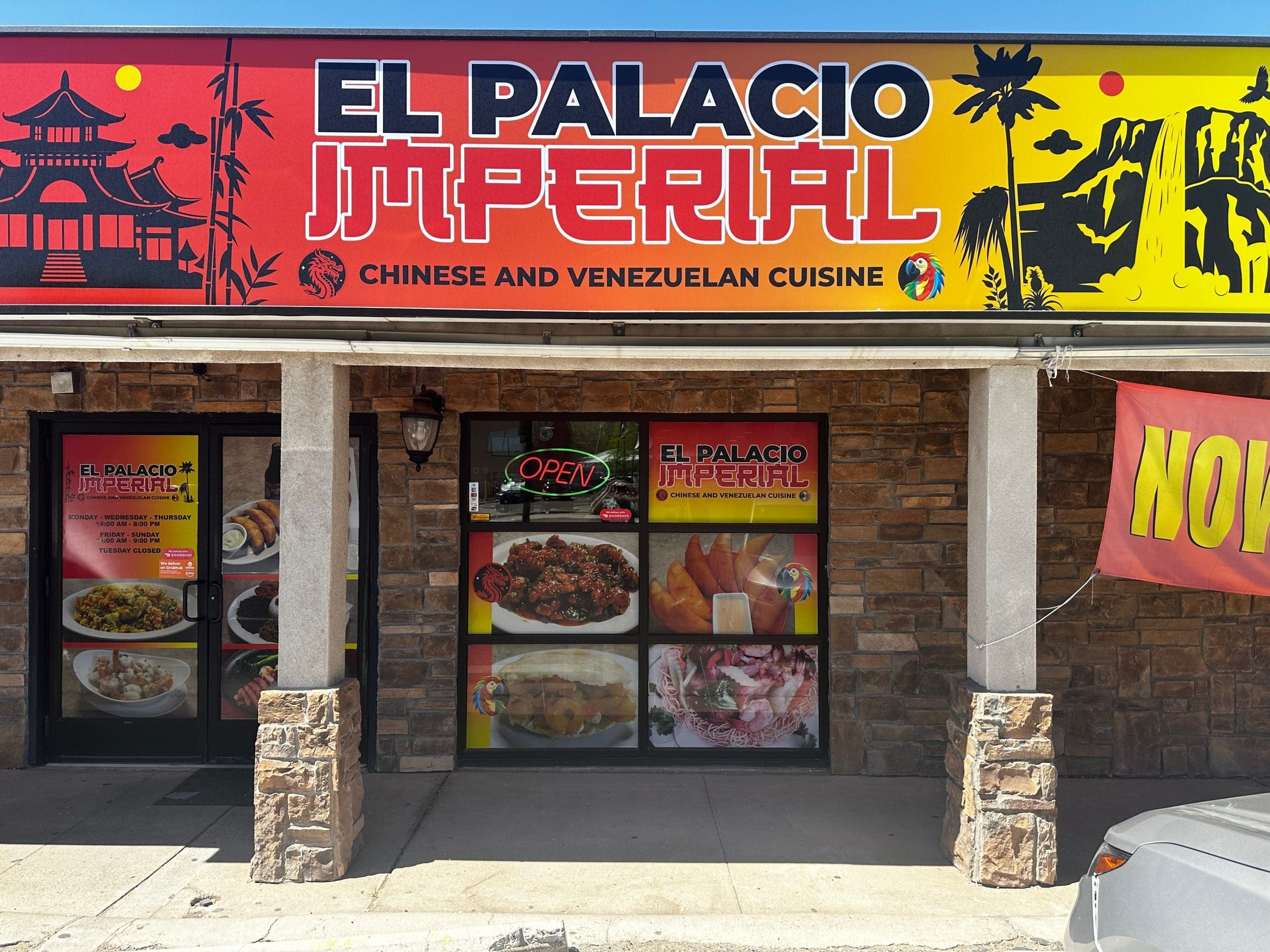
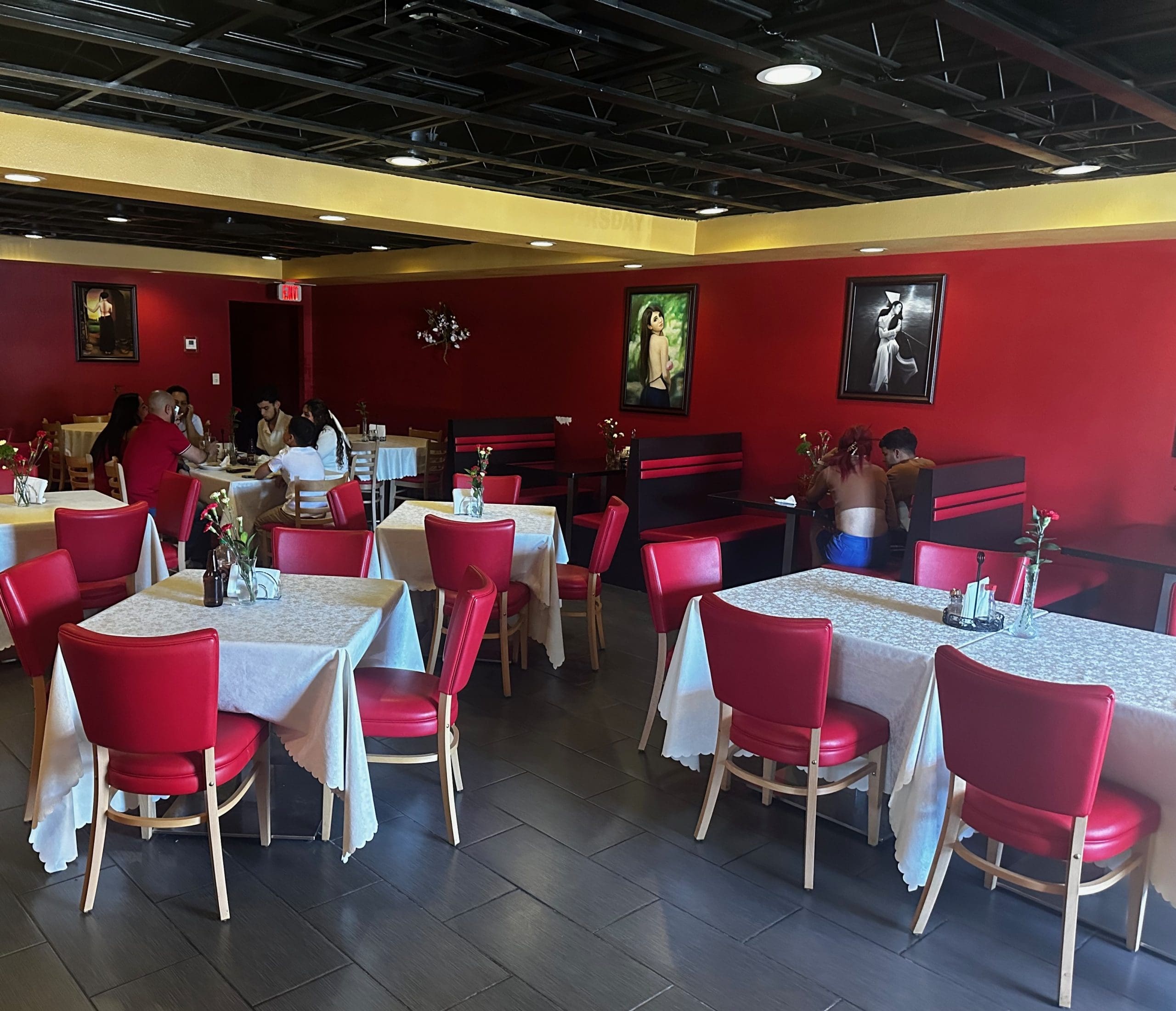
El Palacio Imperial opened its doors in December, 2024 at the location which previously housed Le Bistro Vietnamese Cuisine & Bakery, a staple on San Pedro just north of Lomas. Vestiges of the previous tenant are plentiful. The front room where you enter still displays Le Bistro’s banh mi and bakery menu. Even the dining room still shouts “Vietnamese.” Walls are festooned with framed photographs of pulchritudinous Vietnamese women, many attired in ao dai, a silk tunic with pants worn by women and men. It’s only when you study the menu that you’ll conclude there’s nothing Vietnamese about this restaurant.
Owners Wai K Kwan and Gregoria C Gonzalez-Chirinos were born in Venezuela where Wai operated a restaurant also named El Palacio Imperial. Both struggle with English, but speak Spanish at least as well as I do. Gregoria’s primary language is actually Spanish and admits to not speaking Chinese very well. They’re very friendly and customer-oriented. El Palacio Imperial is located at 1313…No, Not Mockingbird Lane. It’s on 1313 San Pedro virtually across the street from Christy Mae’s Restaurant.
As you stride into the restaurant, you’ll espy a slateboard listing the day’s specials. Perusing the menu, you’ll probably do a double-take at the fomidable array of Chinese and Venezuelan specialties. It’s just not something you see everyday. More than on many menus, El Palacio’s includes color photographs of many of the menu items. Those photos don’t necessarily correspond to the items listed across the page, but Wai and Gregoria can certainly clarify what item is depicted. Unless you’ve frequented Venezuelan eateries in the past, you’ll probably recognize more of the Chinese menu items.
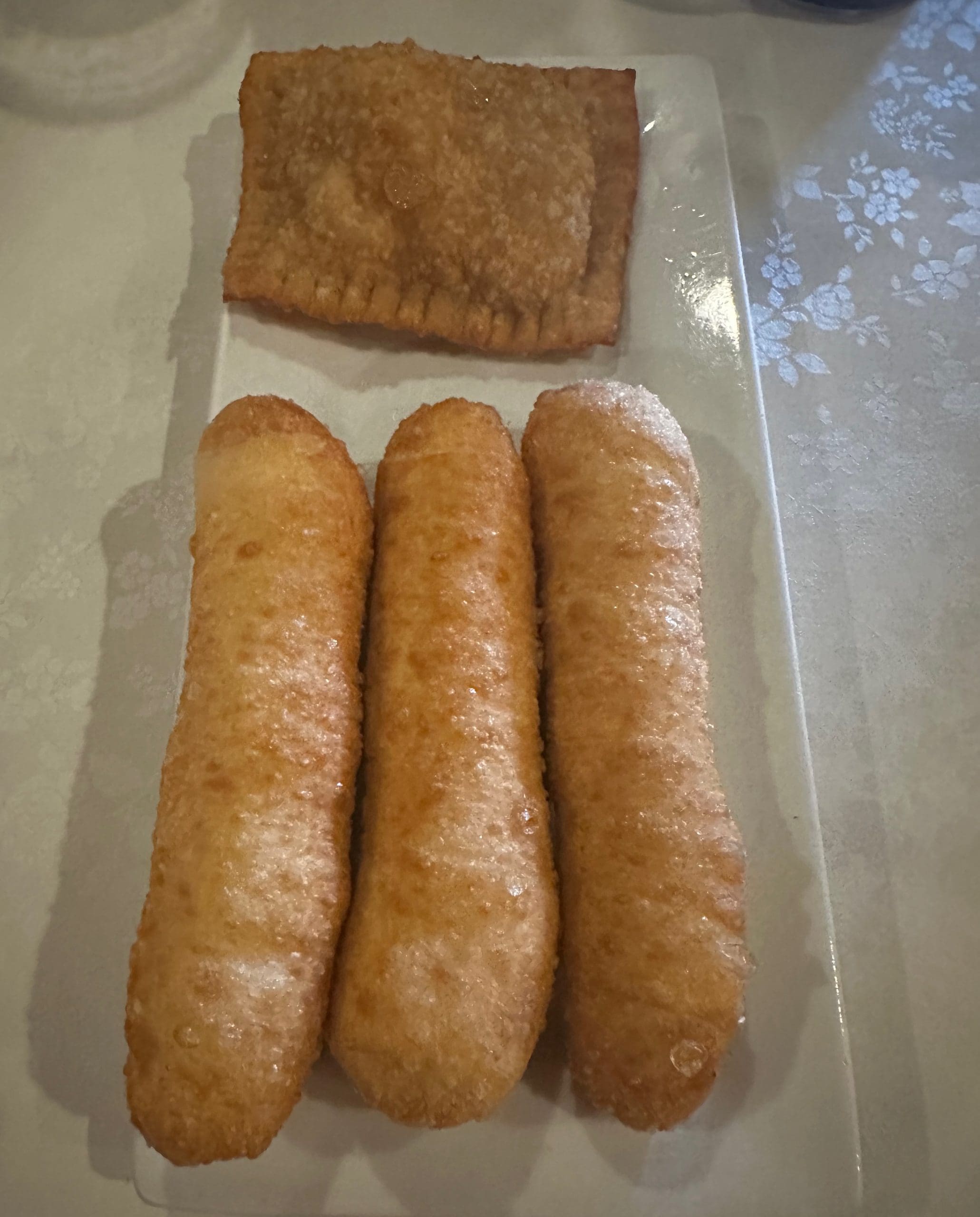
My friend and frequent dining companion Bill Resnik has often called our visits to new restaurants “community service.” Sometimes community service can be painful, but more often than not, we discover delicious new gems. Bill is not one for shying away from ordering menu items he’s not previously had. For example, he ordered three tequeños, fried spears of wheat dough stuffed with semi-hard queso blanco (or in Palacio imperial’s case, mozzarella). If you’ve ever had mozzarella sticks at Italian restaurants, you have an idea what to expect. What you might not expect is how much better tequeños are than traditional mozzarella sticks. Not only do they have a delightful crispy crunch, they’re magnificent melty deliciousness. The tequeños are served with a semi-sweet mayo-based sauce which my Kim liked. Bill and I, of course, requested Chiu Chow, a Chinese chili sauce.
Another starter we all enjoyed was a pastelito stuffed with cheese and potato. In Venezuela, pastelitos are baked puff pastry–type pastries filled with sweet or savory fillings. This pastelito actually looked as if was wrapped in traditional Chinese egg roll wrapping. As with egg rolls, the pastelito has a nice crunch which precedes a creamy potato and melted cheese interior. Bill and I enjoyed our pastelito with Chiu Chow chili sauce. It’s a fiery sauce with a nice flavor, but there’s no Chiu Chow in town as good as Ming Dynasty’s.
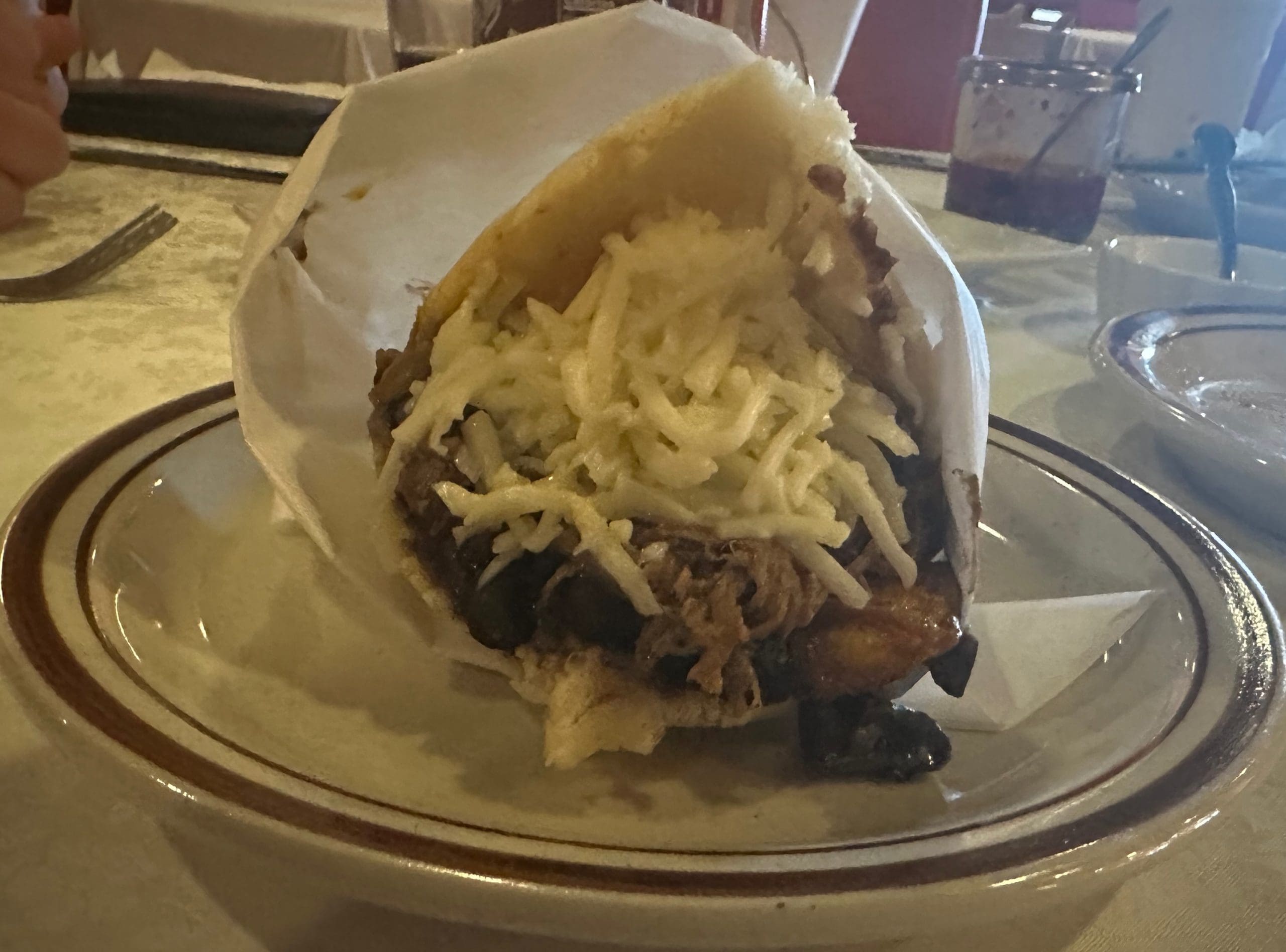
Among my many culinary discoveries during my years in the Boston area were arepas, a maize-based bread originating in South America’s northern Andes region. The genesis of the word “arepa” is thought to be the language of the Caracas natives on Venezuela’s north coast. For centuries, arepas were an important staple in the diet of impoverished Venezuelans and Colombians, but today they are eaten by rich and poor alike and are considered one of Venezuela’s national foods. Arepas are part of the daily diet in place of bread for most Venezuelans who love their versatility. They can be fried or baked, served plain or with a filling and at any time of the day as a snack, starter or appetizer.
Since my inaugural bite of an arepa, I’ve enjoyed dozens of them. Palacio Imperial’s arepa de pabellon (shredded beef, black beans, fried sweet plantain slices and grated white cheese) is the best arepa I’ve ever had. That’s largely thanks to the Pabellón Criollo (juicy shredded beef, salty black beans, white rice, and fried sweet plantains), widely regarded as Venezuela’s national dish. It makes for an unforgettable starter. There’s something nuanced in the beef that gives it personality. It’s the subtle influence of something piquant that provides a delightful counterbalance to the sweetness of the fried plantain. Then there’s the melted white cheese with its salty notes and the black beans with their rich, earthy flavor. In future visits, no matter what else I may order, I’ll always order an arepa de pabellon, too.
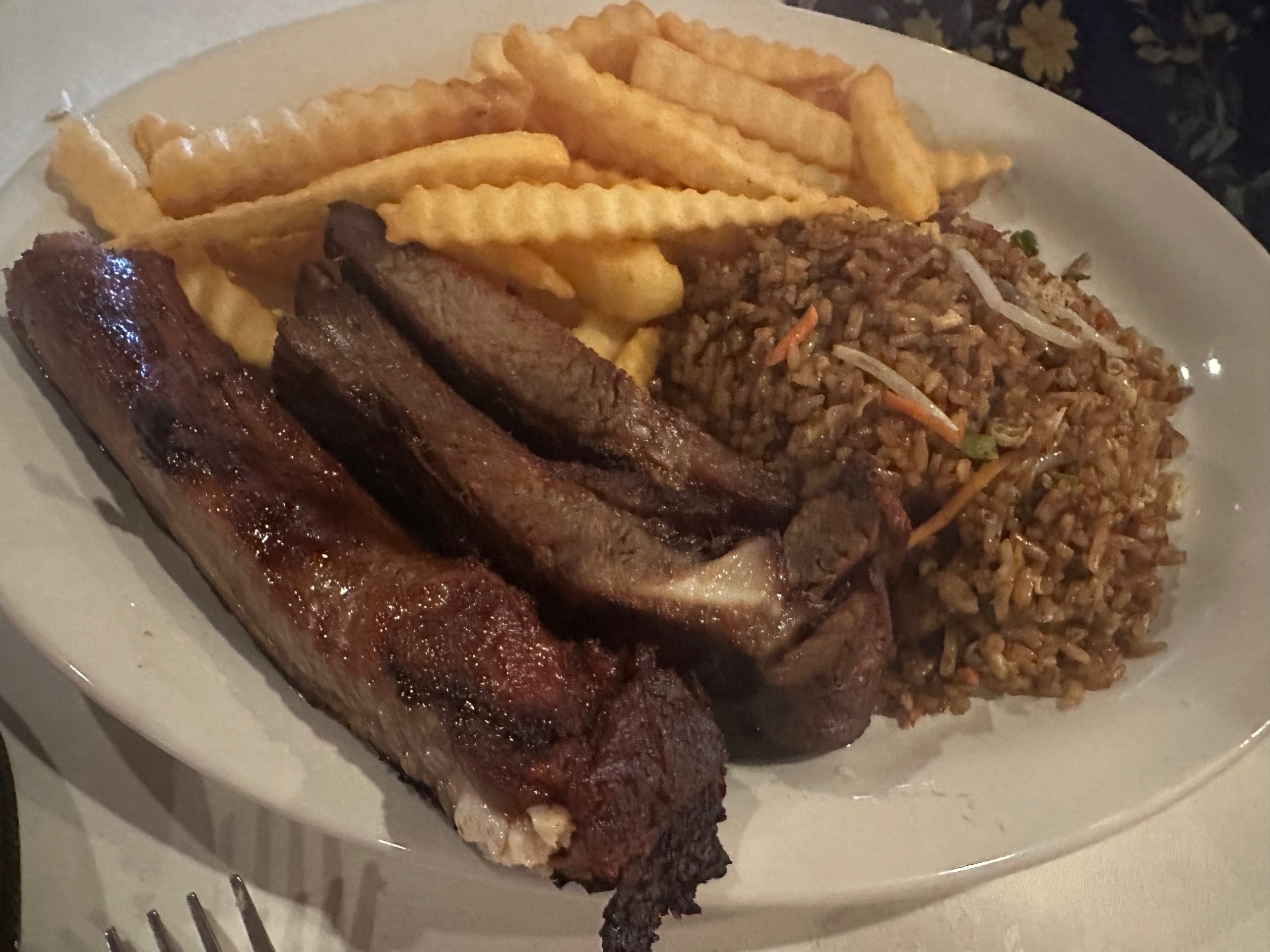
My Kim’s culinary preferences can be somewhat dichotomous. She doesn’t, for example, like chicken fried steak or “anything breaded,” but she loves the fried pork ribs at Albuquerque’s Havana Restaurant. Hoping to duplicate the magic of those pork ribs, she ordered El Palacio’s grilled pork roast rib. Three meaty (porky?) pork ribs graced her plate along with fried rice and French fries, a combination coupling carbohydrate-laden sides. These ribs aren’t as tender as those at Havana, but they’re juicy and flavorful. All three of us enjoyed the fried rice. Darker (despite not being drowned in soy sauce) than most fried rice we’ve had, that fried rice had a discernibly unique flavor.
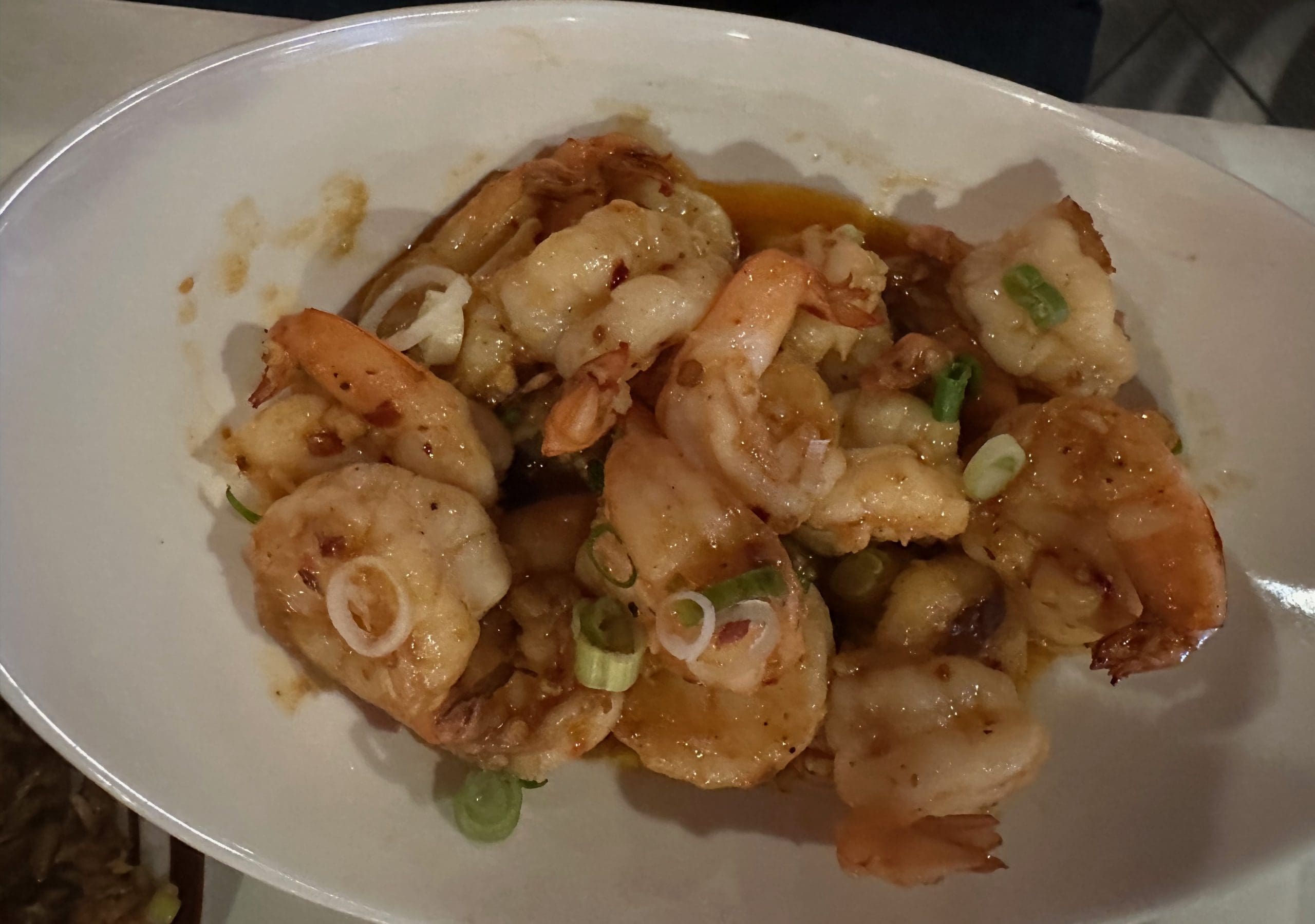
El Palacio offers a number of seafood entrees including garlic shrimp, Bill’s choice though he asked that the dish be made “hot.” True to its name, the dish was redolent with garlic, but it lacked the heat he was seeking. Even a side of fish sauce (sweet) familed to give him the endorphin-generating piquancy he loves. The shrimp had the snap of freshness and were prepared well. Other than the garlic sauce and shrimp, the only ingredient seen on the plate were scallions. Though Bill and I have similar predelictions for piquancy, I often draw the line with seafood whose flavors tend to be obfuscated by potent peppers.
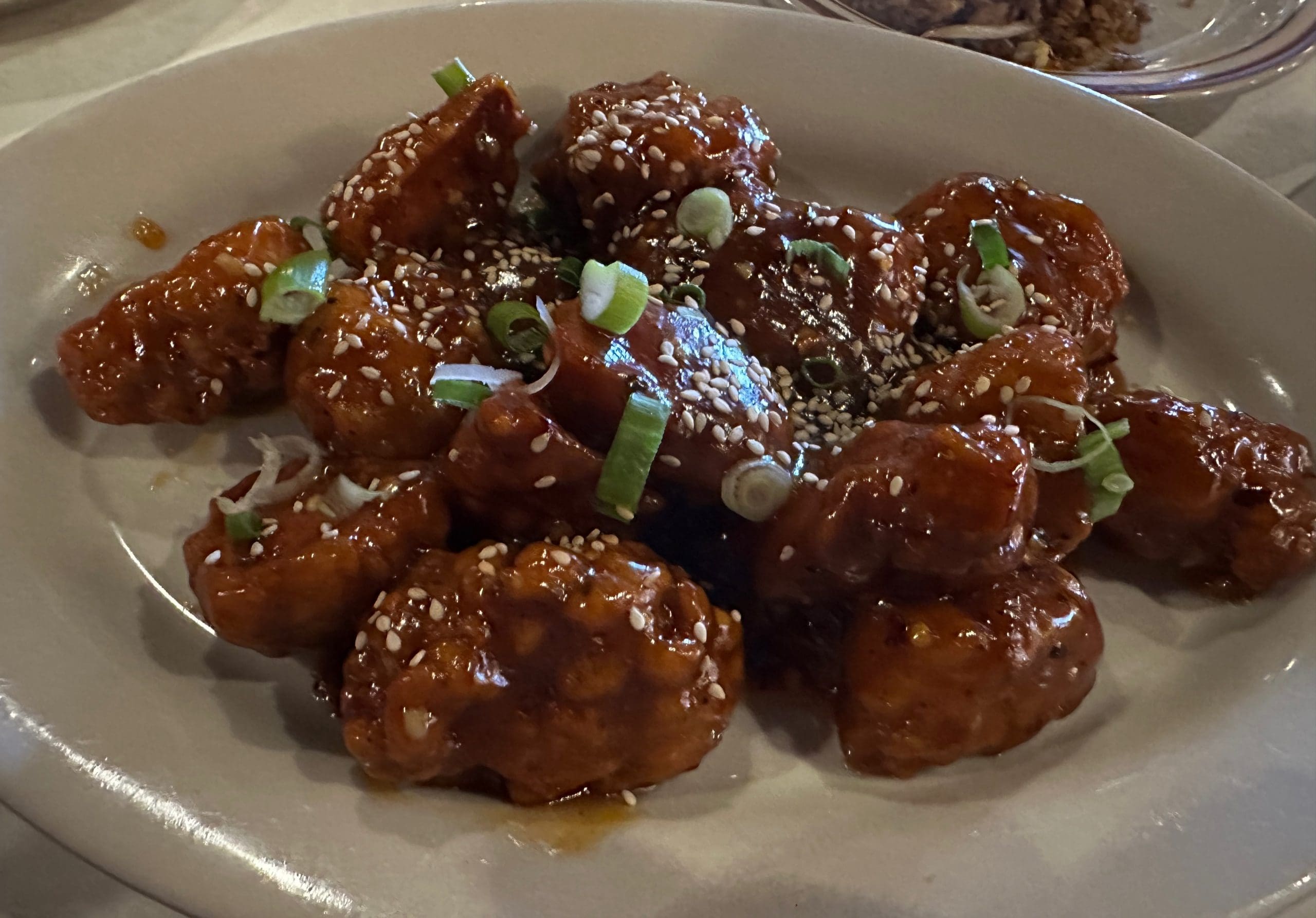
Wai insisted the orange chicken was “hot” and not “sweet,” the enticement I needed to order a dish I rarely order. Apparently heat is in the taste buds of the diner. As with most orange chicken, the plateful or orange nuggets appeared laquered in a syrupy sauce. Any heat the dish may have had was subtle. Also absent was the influence of orange zest, a flavor-enhancing touch I look for in orange chicken. Chicken was plentiful, ameliorated with sesame seeds and scallions.
El Palacio Imperial is a melding of culinary cultures many of us might not have realized could work so well. Whether you’re jonesing for Chinese food or Venezuelan cuisine, you’ve got the best of both worlds under one roof.
El Palacio Imperial
1313 San Pedro Drive, N.E.
Albuquerque, New Mexico
(505) 255-2637
Facebook Page
LATEST VISIT: 12 April 2025
# OF VISITS: 1
RATING: N/R
COST: $$
BEST BET: Arepa Pabellon, Orange Chicken, Tequeño, Garlic Shrimp, Grilled Pork Roast Rib, Fried Rice
REVIEW #1463
Hi Gil,
They are on San Pedro, not San Mateo. You have it correct at the end, but not under your lead picture.
You’re the most prolific bibliophile I know so I recognize that when you find an error, it’s a whopper.
Fascinating fusion concept! Thanks for pointing out how many Chinese live in Venezuela. Just a thought, Gil, perhaps you should carry a lighter with you, even though you don’t smoke. Then when the piquancy of a dish is disappointing, you could just light your tongue on fire in-between bites. It’s kind of the same thing for those of us who have a lower tolerance of spice than you do. 😆