PANE BIANCO – Phoenix, Arizona

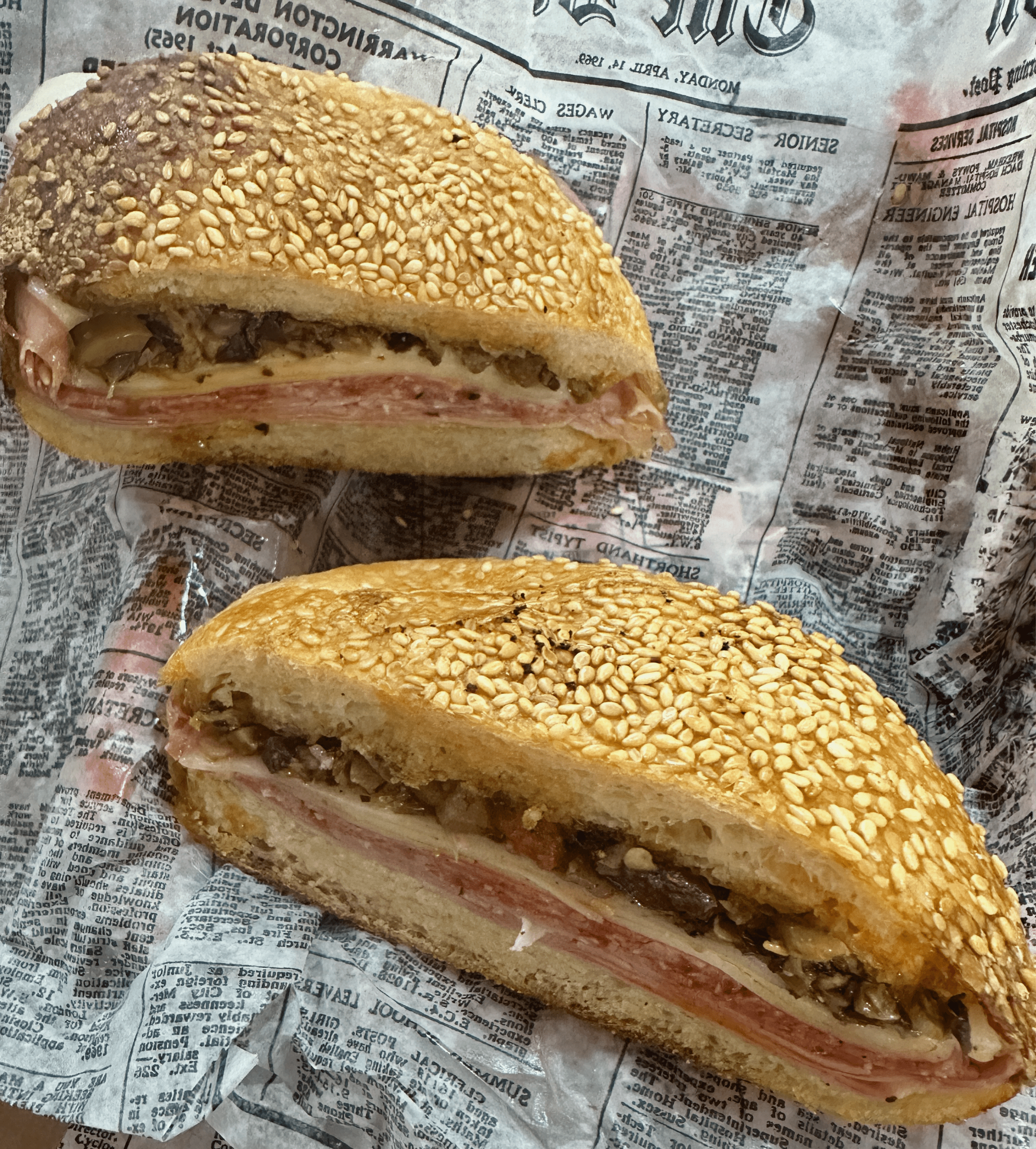
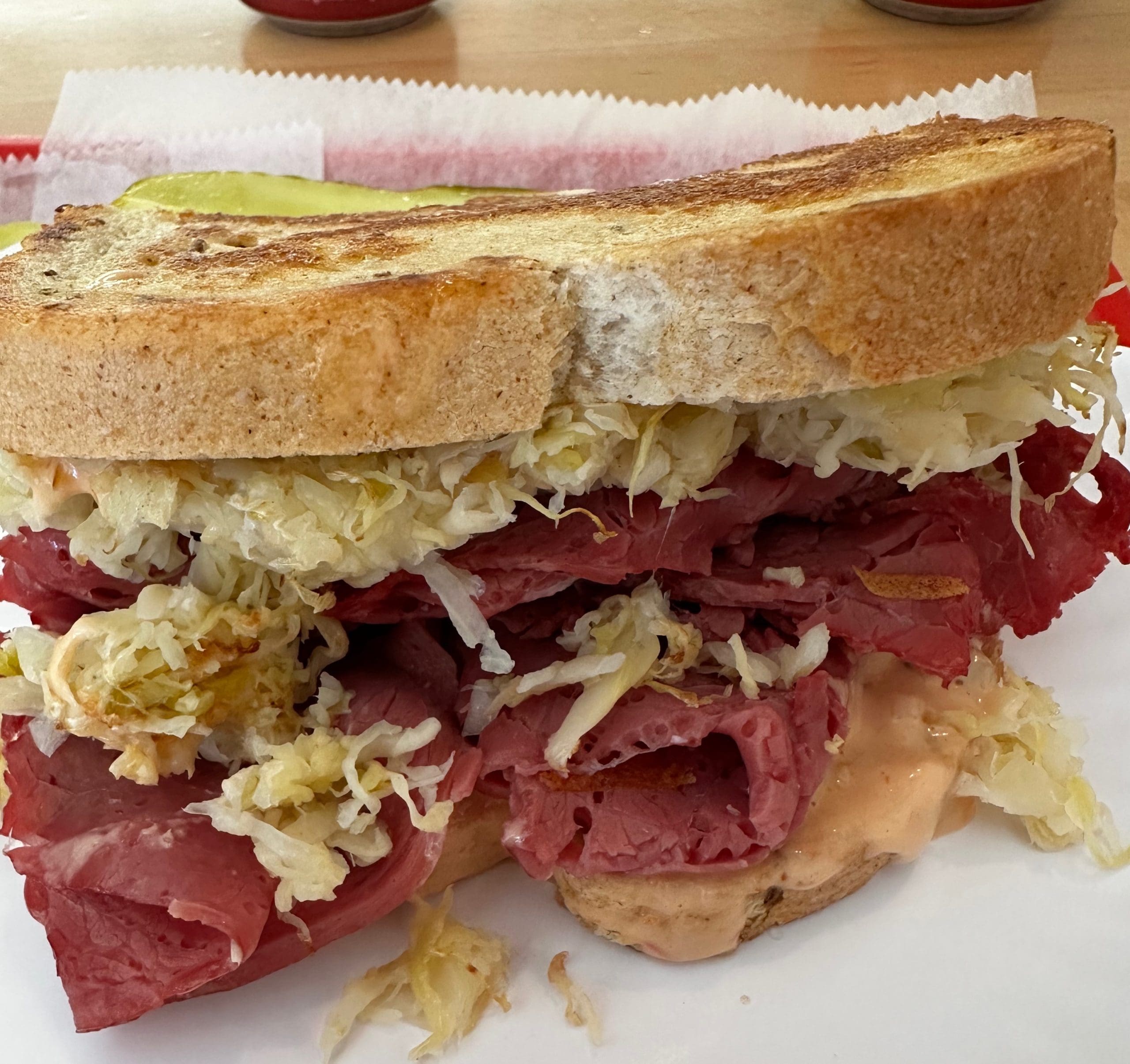
When she lived in Tucson, Arizona Republic dining critic Andi Berlin would drive nearly two hours  to Phoenix to enjoy foods that can’t be found anywhere else in Arizona.  One of her five favorites held such sway over her that she actually moved to the Valley of the Sun so that she could enjoy it more often.  Now that’s a gastronome after my own heart!  Among the cinquefoil restaurants was Pane Bianco, whose sandwiches Andi says “are so perfect that they’ve achieved cult status.”  Perfect sandwiches!  Hmm, that’s a good reason to relocate and maybe the reason the Phoenix real estate market is among the nation’s top 10 hottest markets. During dozens of trips to Phoenix over my eighteen-year tenure at Intel, I would have described Phoenix as a culinary wasteland.  That’s based largely on well-intentioned colleagues taking me to their favorite restaurants–usually chains that hadn’t yet made their way to the Land of Enchantment or worse, Arizona-style Mexican restaurants.  There were exceptions, of course, but those were few and far in between and in every case, those few were restaurants I discovered myself, usually on my way to the airport.  To abet my culinary explorations, I would actually schedule a late flight…

Turtle Mountain Brewing Company – Rio Rancho, New Mexico

The Tewa name “Oku Pin” which translates in English to “Turtle Mountain” has three meanings of significance to the people of Okay Owingeh, one of New Mexico’s great Tewa speaking Northern New Mexico Pueblos. “Oku Pin” was the the Indian name given to Dr. Alfonso Ortiz who obtained worldwide prominence as an anthropologist and ethnologist until his death in 1998. Ortiz was born and raised in San Juan Pueblo which in 2006 officially changed its name to Okay Owingeh. “Oku Pin” is also the Tewa name for Sandia Peak, the 10,678-feet high mountain which provides a spectacular backdrop for Albuquerque, Bernalillo and Rio Rancho. When Nico Ortiz, son of the famous anthropologist launched his inaugural restaurant and microbrewery in 1997, it just made sense that it should be called Turtle Mountain, a name which pays homage to his father and to the magnificent peaks under whose shadow his enterprise would flourish. Today, Turtle Mountain has also become synonymous with good food and (ostensibly) very good beer. Nico Ortiz has dedicated his life to the pursuit and production of good beer and has garnered tremendous recognition for his efforts, including a multi-page spread on the November, 2005 edition of New Mexico…

Dion’s Pizza – Albuquerque, New Mexico

Toga! Toga! Toga! Ever since the misfit Delta Tau Chi fraternity threw the most debaucherous toga party ever in the 1978 “teensploitation” comedy Animal House, the toga party has been ingrained in the college party culture. The genesis of the toga party goes back much, much further than Animal House. Toga parties, in fact, precede collegiate life in the fruited plain by many hundred years. The first toga party was actually organized in ancient Greece in honor of the Greek god Dionysus, the deity of the grape harvest, wine-making and wine, of ritual madness, fertility, theater and religious ecstasy (that’s quite a job description, even for a god). Dionysus literally had a cult following of men and women who worshiped him. Together this vagabond group became some of history’s first true party animals, holding orgiastic celebrations where they danced to frenzied music and behaved like crazed San Diego State basketball fans. It was during this revelry that Dionysus invented both the toga party and the first drinking games. You might not know it but the Dion’s Pizza franchise that has become ubiquitous in the Duke City area, is actually named for that rapscallion god Dionysus (albeit a shortened version of…

Mario’s Pizza & Ristorante – Albuquerque, New Mexico

In the 1978 movie Same Time Next Year, Ellen Burstyn’s character lamented that her husband considered his years in the Army the best years of his life. When Alan Alda’s character, her partner in a 26-year adulterous affair, commiserated that many men felt that way about their time in the military, Burstyn retorted, “but he spent two years as a prisoner of war.” Only a husband who wants to sleep on the couch would admit to any source of happiness outside of marriage… and only an honest answer to the loaded question “does this dress make me look fat“ is more deleterious to any amorous prospects. When I speak fondly to my lovely bride about how much I cherished my years in Massachusetts, it’s always prefaced or followed by “I wish you had been with me.” My two years in the Bay State were the best years of my life…outside of my married years, of course. Massachusetts converted this once gangly and naive lad of 19 who grew up in bucolic Peñasco, New Mexico into a more worldly and sophisticated young man ready to conquer the world. Having been raised on a diet of northern New Mexican staples such as…

Pullano’s Pizza & Wings – Glendale, Arizona

Several years ago during a fund-raising effort, Albuquerque’s PBS television station KNME aired a program called “Sandwiches That You Will Like.”   The documentary was produced by the exceptionally talented Rick Sebak of Pittsburgh station WQED.  The entertaining travelogue featured delicious sandwiches (and the folks who make and enjoy them) served by shops, stands and diners from across the USA. This program originally aired in 2002, also the year a companion book titled Sandwiches That You Will Like was published.  The book was written by fabulous food author Becky Mercuri. I was well aware of most of the sandwiches showcased in the documentary and the book.  There were several, however, I had not tried.  The most intriguing sandwich to me was the “Beef on Weck” from Schwabl’s in West Seneca, New York, just outside of Buffalo.  Schwabl’s claims to have invented the beef on weck.  The segment on the beef on weck featured Becky Mercuri, one of my very favorite food authors.  Becky’s enthusiasm for the sandwich was so heartfelt and genuine that I wanted to visit Buffalo to sample one (or ten) of them.  Moreover, I hoped to share a few beef on weck sandwiches with Becky. What, you ask,…

GELATO DOLCE VITA & ITALIAN GROCER – Mesa, Arizona

“La Grassa” (The Fat One) is the nickname of Bologna, Italy.  While that sobriquet may seem unflattering, Bologna bears it with honor.  This city in the north-central region of the country is considered the “gastronomic heart of Italy,” a place where food is an art form and a passion.   This may be best exemplified by one of the foods born in Bologna.  I’m talking, of course, about gelato.  Throughout “Lo Stivale” (the boot, a nickname bestowed upon Italy because the shape of the peninsula resembles a high-heeled boot) gelato is revered.  Not surprisingly, Bologna is not only the home of Italy’s oldest university (and the oldest in the western world), but home to Carpigiani, “Gelato University.” Mesa, Arizona is the home of two of Carpigiani’s distinguished alumni.  Both Walter Bergamaschi and Marti Printy, founders of the Gelato Dolce Vita attended the Gelato University.   Having grown up in Bergamo, about two-and-a-half hours from Bologna, they have been around superior gelato all their lives.  In 2010, they launched Gelato Dolce Vita (literally “Gelato Sweet Life) in Mesa.  At the time there were only two gelato shops in Phoenix.  Ice cream shops dominated the market.  In time, customers began to appreciate the difference…

Joe’s Italian Restaurant – Farmington, New Mexico

Is it disingenuous for restaurants to label themselves with titles and sobriquets they don’t quite (or at least not quite honestly) live up to?  (Politicians do it all the time, so why not restaurants?) Is it pretentious and haughty to use labels with which English-speaking diners might be impressed even though we don’t know what they mean?  Is it instead great marketing, a clever way to increase the number of guests?   It’s something I actually ponder when visiting Italian restaurants.  For example, when our friend Greg Hamilton introduced us to “Joe’s Restaurant” in Farmington, I momentarily wondered if it could possibly be good considering its humble name. Far too many Italian restaurants label themselves as trattorias, osterias and tavolas.  Not knowing what those labels mean, many of us are impressed, believing those terms must signify much more than an “ordinary” restaurant.  In truth, a trattoria is just a type of informal Italian restaurant known for its traditional, home-style, and regional cuisine served in a relaxed, family-like atmosphere).  An osteria is a simple Italian establishment traditionally focused on serving wine and light snacks, similar to a wine bar or pub.  A tavola calda (literally “hot table”), is an Italian cafeteria-style establishments…

M’tucci’s Italian Restaurant – Albuquerque, New Mexico

“Sometimes the spaghetti likes to be alone..” —Stanley Tucci as Segundo in Big Night With a name like M’Tucci’s Italian Restaurant, you might wonder if the Italian restaurant on the intersection of Coors and Montano is named for Academy Award nominated actor Stanley Tucci. After all, Tucci co-starred in Big Night and Julie & Julia, arguably two of the very best food movies in recent years. Initially christened M’tucci’s Kitchina, the “Kitchina” part of the restaurant’s name was obviously a whimsical play on “cucina,” the Italian term for kitchen, but was spelled more similarly to Kachina, the Hopi ancestral spirits. In any case, if the amusing name and fun, casual ambiance don’’t ensnare you, the food certainly will. Step into the expansive dining room and the playfulness hinted by the restaurant’s original name continues. Our immediate impression was “Laissez les bon temps roulette” (let the good times roll) as in New Orleans Mardi Gras. That impression was gleaned from the colorful Mardi Gras-like masks on several walls and a life-sized alligator on another. Then there’s the pergola–large enough to accommodate a table of four–with an ominous lizard crawling down the roof. There’s something to pique your interest everywhere you turn.…

Sergio’s Bakery & Cafe – Albuquerque, New Mexico

In Italy, the oft-used idiom “Senza il pane tutto diventa orfano” translates to “without bread everyone is an orphan.” That’s how important bread  is in Italian culture.  Is it any wonder bread consumption in Italy is higher than in any other European country, even France. Many loaves are made by artisan bakers operating out of family-owned and operated bakeries.  Most work on a small scale and are heavily influenced by family recipes and regional traditions.  Those secrets and techniques have been handed down from baker-to-baker over the years. Family is essential to retaining the continuity of bread-making excellence in Italy.  Whether baking bread for home or operating a panetteria  and (or) a panificio, traditions are passed on from one generation to another.  Note:  In Italy, a panetteria is a shop that sells bread while a panificio is a place where a baker bakes bread.  Those lines , however, are often blurred, and the two places may be the same, called a forno (a term which also means oven).   Many of Italy’s bread-baking traditions have largely transcended the distance between the old world and the fruited plain. One readily apparent example in the Land of Enchantment is Sergio’s Bakery and Cafe. …

Little Deli & Pizzeria – Austin, Texas

In the 1973 Woody Allen movie”Sleeper,” the neurotic comedian, writer, actor, and film director declaimed, “I believe there’s an intelligence to the universe, with the exception of certain parts of New Jersey.”  Comedian George Carlin pounced on New Jersey’s license plate, deriding the “Garden State” sobriquet, expressing that it should be “The Tollbooth State.”   In response to his son-in-law Michael “Meathead” Stivic’s “I hate Jersey” comment, Archie Bunker declared “Everybody hates Jersey! But somebody’s gotta live there.” New Jersey is the Rodney Dangerfield among the fifty states.  It gets no respect, especially when compared with its nextdoor neighbor New York.  Perceptions among some outsiders is that the population of New Jersey is replete with Italian-American Mafia types like Tony Soprano.  Others perceive as accurate the unwatchable MTV “reality” television series Jersey Shore which perpetuates Italian-American stereotypes of New Jerseyans.  Its gratuitous use of the ethnic slurs “guido” and “guidette” are an affront to every good and decent resident of the state. Admittedly I haven’t spent much time in New Jersey.  My first visit was just long enough to qualify on the M16 rifle before the Air Force sent me to RAF Upper Heyford, England.  Would you consider it boasting if…

Happy Chickenzz – Albuquerque, New Mexico

“And believe me, a good piece of chicken can make anybody believe in the existence of God.” ~Sherman Alexie, The Absolutely True Diary of a Part-Time Indian Two things came to mind when my friend Nader and I approached Happy Chickenzz during our inaugural visit in September, 2019. First, I mused, “if happy cows come from California (a 2002 marketing campaign for California cheese), where do happy chickenzz come from.” My second rumination was to wonder if the ‘zz’ at the end of the word chicken is an indication that the chicken is so boring, it’ll put your taste buds to sleep. You know, zzzzz. As we were quick to learn, it’s not only the chickenzz who are happy here.  So are diners.  Endorphin-rush happy! Fully sated and blissfully happy! As for putting taste buds to sleep, these chickenzz have so much personality, so much depth of flavor, so much  that they’ll wake up the most staid of taste buds and delight even the most pedantic of palates. Happy Chickenzz started off as one of six original food pods at the pristine El Vado multi-use complex on Central Avenue just east of the Rio Grande.  In October, 2024, Happy Chickenzz…