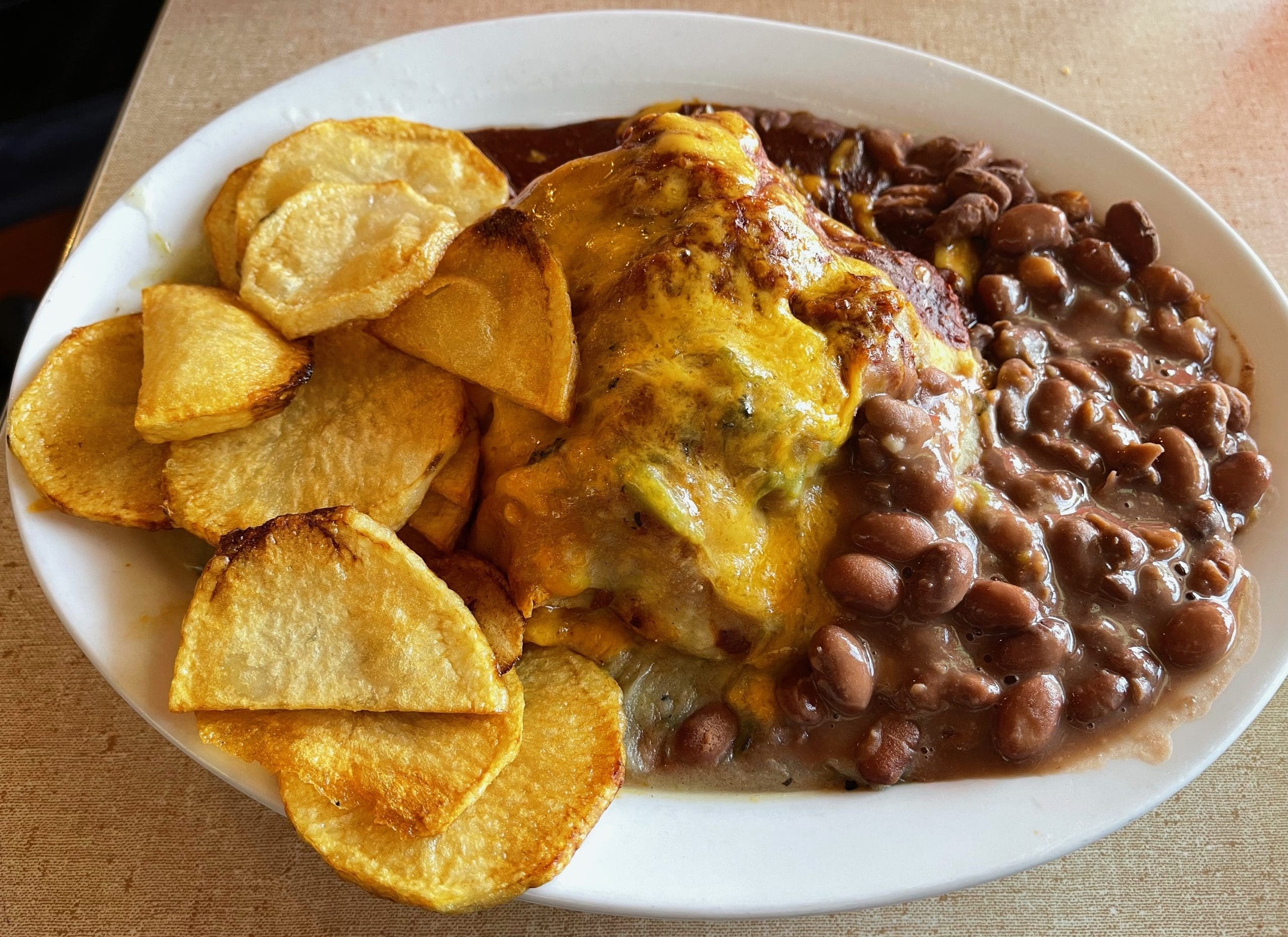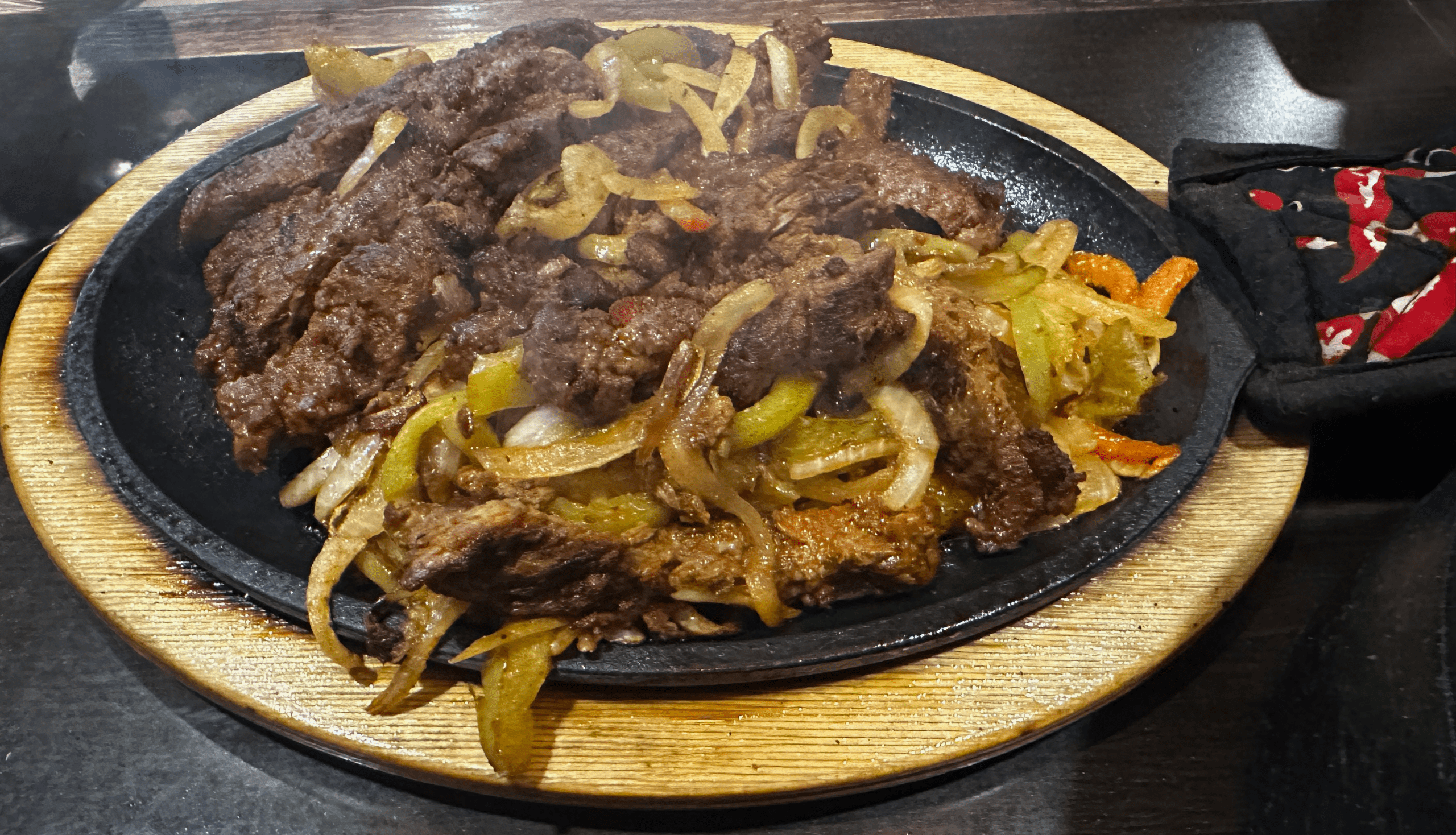
El Patron – Albuquerque, New Mexico

I was a strapping lad of fifteen when hired as a “box boy” at a country store in Peñasco. Now, being a box boy at a small village country store is to being a bagger at Smith’s or Albertson’s in Albuquerque what the red chile at Mary & Tito’s is to McCormick’s chili seasoning mix. The former is so much more than the latter. For one thing, my duties included bailing hay, rounding up cattle, stacking lumber, loading cement, operating a forklift and every once in a while actually bagging or boxing groceries. The job kept me in great physical condition for football season. “Eloy,” my fellow “box boy” was a crusty curmudgeon sixty-some years old who didn’t always take direction well and expended more energy getting out of work than actually doing it. Every morning when our boss, a lovely and gracious woman, gave us our marching orders, he would respond “si patrona” (“yes boss.”) after each order. On busy days those orders came with the rapid fire cadence of an auctioneer. Eloy’s responded just as quickly, “si patrona, si patrona, si patrona.” Occasionally he sneaked in in a “si cabrona” (the literal term means female goat, but is…

JAMBO CAFE – Santa Fe, New Mexico

Growing up in the 60s–the dark ages before the Internet was even a glimmer in Al Gore’s eyes and google–then spelled “googol”– represented an very large number (currently being approached by build back better spending)–even precocious children like me derived most of our knowledge of Africa from National Geographic magazines and Tarzan movies. We thought Africa was one large monolithic country comprised solely of stark, expansive deserts or lush, mysterious jungles. Africa’s indigenous people, we believed, had to compete for food with lions, tigers and hyenas, oh my. Though Africa was called “the Dark Continent,” it was truly our knowledge which was in the dark, obfuscated by stereotypes and misconceptions. The 1966 debut of Star Trek helped eliminate some of those stereotypes with the introduction of communications officer Lieutenant Uhura, a stunning black woman from the United States of Africa who spoke Swahili. By the time Disney’s The Jungle Book premiered in 1967, I had learned enough about Africa to know that save for in zoos, you couldn’t find a tiger in the entire continent. In the intervening years since the naivete of my youth, I’ve also learned that Africa is comprised of 53 very distinct and autonomous nations and…

El Camino Dining Room – Los Ranchos de Albuquerque, New Mexico

Many of us who predate, however slightly, the explosion of institutionalized fast food retain a fondness for the remaining independent family restaurants whose arsenal in the competition for hungry diners consists of reasonable portions of great meals at budget-conscious prices all served by a friendly and accommodating waitsfaff. An Albuquerque restaurant which epitomizes those ideals is the El Camino Dining Room, captured brilliantly above by the fabulous photographer Deanna Nichols. The El Camino was built by Clyde H. Tyler in 1950, five years after the latest “war to end all wars” and 13 years after Route 66 was “straightened” so that it would bypass Santa Fe completely.  Albuquerque was much more innocent back then.  Some might even describe it as a “cow town trying to be a city.”  At the time, 44% of America’s population resided in rural areas and the Duke City’s population was only 96,800. Despite no longer being part of Route 66, one of the city’s busiest thoroughfares was 4th Street on which commerce was burgeoning.  It was the perfect location for an independent family restaurant, far from the cavalcade of Howard Johnson’s type restaurants which grew along the interstates. Similar to Howard Johnson’s which prided itself…