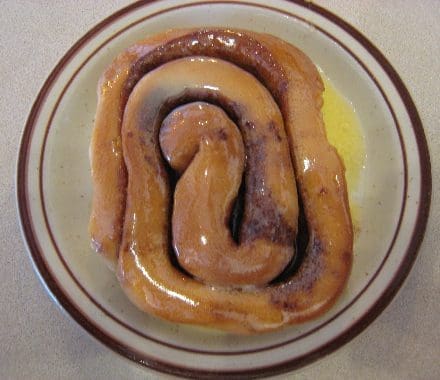
Isleta Grill – Albuquerque, New Mexico

When the Spanish arrived in the late 1500s they named the village south of Albuquerque Isleta, a diminutive of “isla” which means “island.”  Fast forward 600 years, and may as well have been christened “desert island” as in short for “deserted island.”  Despite being one of the largest of New Mexico’s nineteen Pueblos, drivers may not have even known that Exit 215 off Interstate 25 will transport them to the home of some 3,000 inhabitants.   That is until the Isleta Resort & Casino began operating in 1986.  Calling itself “New Mexico’s Grandest Casino Resort,” the Isleta Casino Resort boasts of the best of headline entertainment, capacious meeting rooms, gaming, dining and more.  It’s located just minutes South of Albuquerque’s Sunport and in fact, it has an Albuquerque address. So does the Isleta Grill which itself might have remained a hidden treasure had it not been for the New Mexico State Fair’s green chile cheeseburger challenge.  While the New Mexico State Fair hosts a number of food related competitions, none garner as much attention as the green chile cheeseburger challenge.  Unlike political elections, the public is not subjected to a months-long bombardment of torturous and borderline slanderous messages.  Instead, an online call goes…

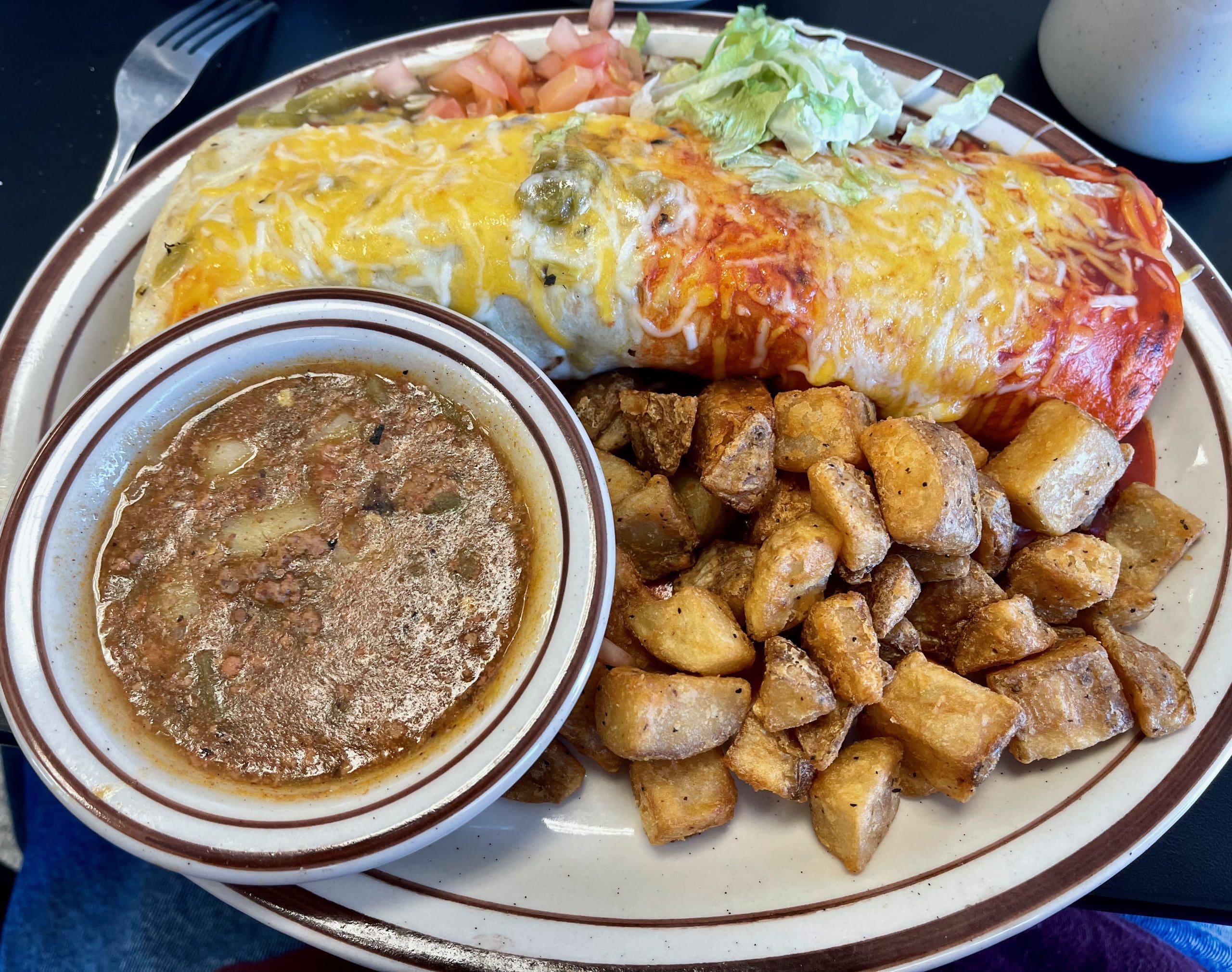
The Frontier Restaurant – Albuquerque, New Mexico

Most college and university areas have at least one restaurant that transcends the “student hang-out” label to become a popular dining destination among all demographics, whether or not the diners matriculated at the nearby institution of higher learning. In Albuquerque that dining destination is the Frontier Restaurant. In its fifty plus years of serving the Duke City, the Frontier has gone beyond providing the quintessential college eatery experience. Some contend it may well be THE quintessential New Mexican restaurant. Serving Albuquerque since February, 1971, the commodious, barn-like Frontier Restaurant occupies half a city block (quite remarkable considering it started out as a small, one room eatery), seats more than 300 patrons and features an impressive gallery quality art collection which includes several portraits of John Wayne, a favorite of the owners (for whom the University of New Mexico School of Architecture and Planning has named a gallery). The Frontier is a place to see and be seen. Everyone from UNM students to celebrities (in Albuquerque this is primarily the local television news media) and Lobo athletes frequents the Frontier. The Frontier is the brainchild of Larry and Dorothy Rainosek, transplants from Austin, Texas, who have become among Albuquerque’s most altruistic…

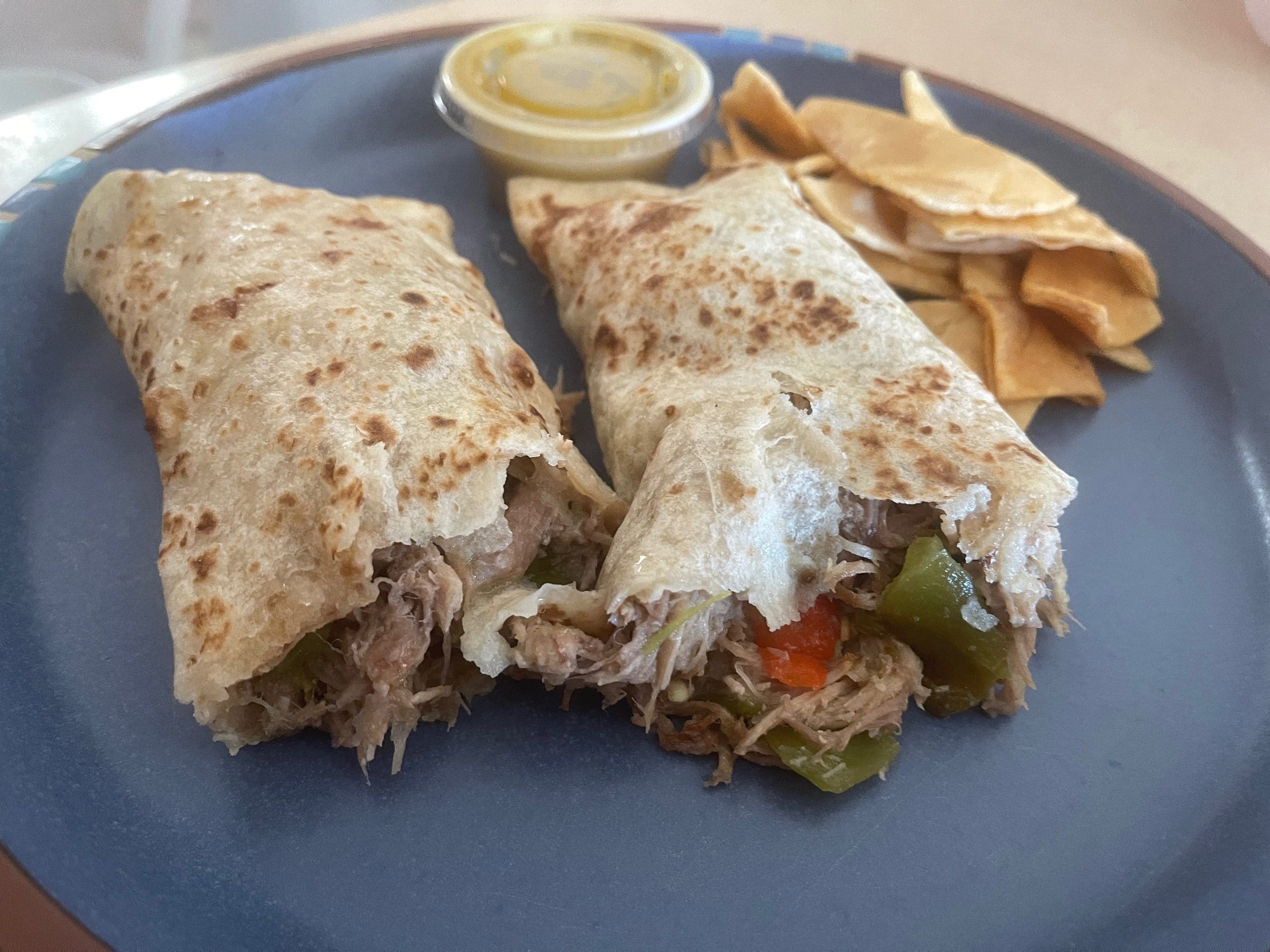
Tortilla Kitchen – Albuquerque, New Mexico (CLOSED)

A sure sign Spring has arrived In rural New Mexico is the annual ritual of cleaning the acequias, the community operated ditches used to irrigate fields, gardens and lawns. Early in the morning, property owners or their designated paid representatives would convene at appointed spots to begin the effort. Work crews typically consisted of grizzled veterans, most of whom acted as “mayordomos” (bosses) and young bucks like me with strong backs. Not surprisingly, distribution of work was…shall we say, quite inequitable. The old-timers would order us around, shouting out instructions like elderly drill sergeants. Most of us youngsters didn’t mind. During frequent breaks we got to hear some of the most ribald and raunchy stories from highly respected elders. One I’ve never forgotten is when a thrice-married viejito was asked by a colleague “Do all women look alike?” “I’ll tell you honestly,” he responded “not even their tortillas look alike.” While the question was designed to elicit a response about a certain female, er…anatomical part, my take-away had everything to do with tortillas. My mom was (and still is) the very best tortillera in the Penasco valley. Her tortillas were on the thin side with beautiful pinto pony char spots.…

Ruby’s Tortilleria – Bernalillo, New Mexico

“A tortilla can be the, I would say, the most meaningful, the symbol of the Mexican cuisine, it’s the heart of the Mexican cuisine, the soul … the most recognizable element of the Mexican cuisine.” ~ Hugo Ortega James Beard Nominated Chef In 1519, when Hernan and his Spanish conquistadors arrived in Mexico, the indigenous people had never seen anyone like the bearded strangers attired in imposing armor made of iron.  These light-skinned strangers, some of whom had eyes of blue or green, arrived in “floating mountains” significantly larger than the canoes used by the natives.  The arrival of the strangers coincided with an Aztec prophecy, leading Montezuma, the Aztec ruler, to believe that perhaps Cortés was the Aztec god Quetzalcoatl, the “feathered (bearded) serpent.”  According to legend, Montezuma convened his most sage advisors who counseled their leader to proceed with caution.  They dispatched emissaries to greet the strangers and offer them two types of food:  the food of the gods, covered with the blood of human sacrifice; and the food of humans, including avocados, turkey and soft, flat corn breads they called tlaxcalli (from the verb “ixca” (to cook [on a comal: grill or griddle]).  The Spaniards chose the…

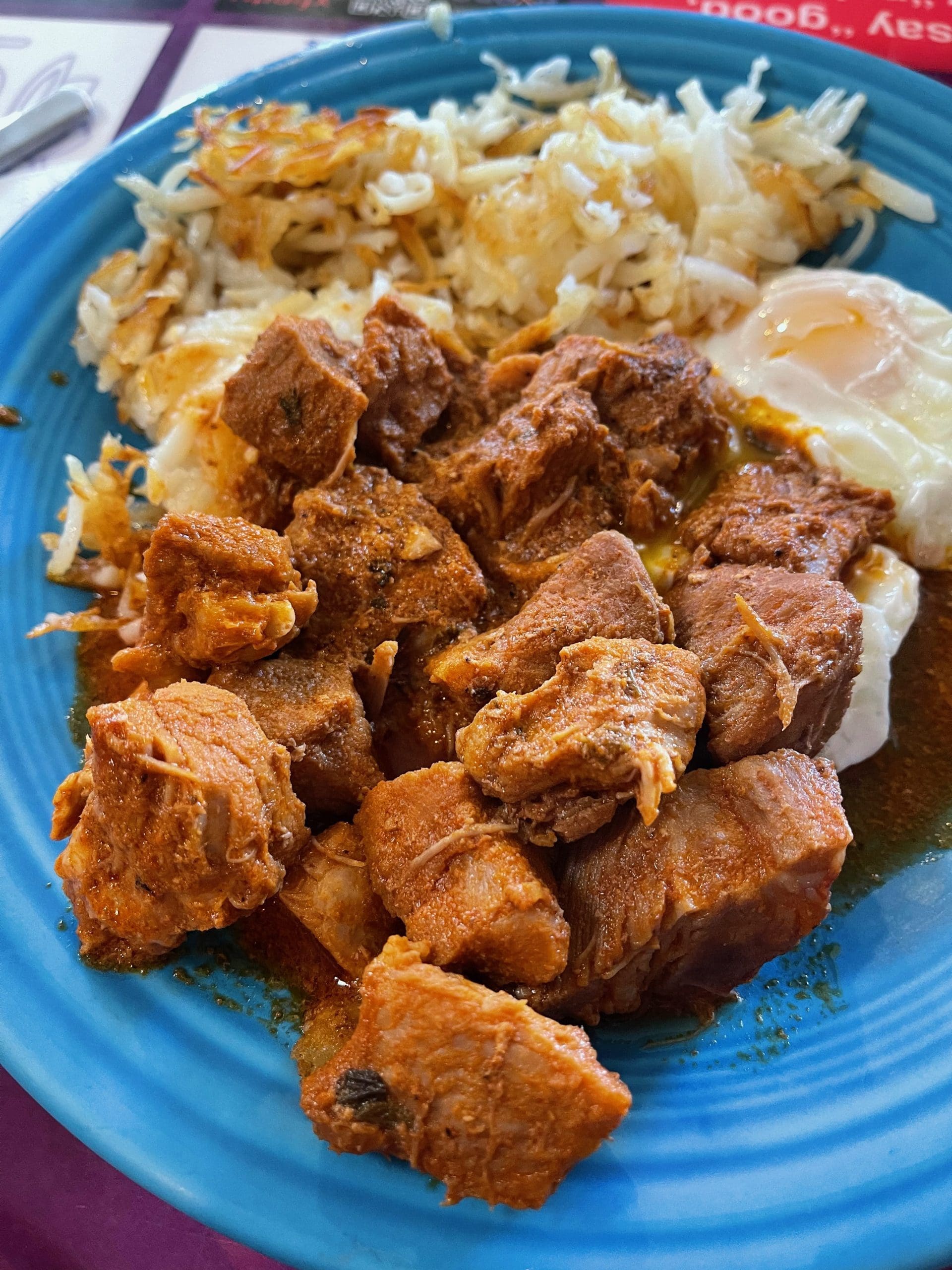
Barelas Coffee House – Albuquerque, New Mexico

Quick, name the oldest neighborhood in Albuquerque. Most people would say Old Town which was settled in 1706 near the banks of the Rio Grande. Most people would be wrong. The oldest neighborhood in Albuquerque is actually the Barelas neighborhood, formally established as a ranching settlement in the late 1600s. The history of the central Rio Grande region began at and expanded from Barelas, once a thriving hub of commerce bustling with activity. Both the Camino Real, the royal road to Mexico City and Route 66, America’s mother road passed through the Barelas neighborhood. Barelas was the seat of a flourishing railroad enterprise which facilitated a burgeoning economy.  The neighborhood began a precipitous decline in the 1950s when odoriferous emanations from an area sewage treatment plant drove people away. Then in the 1960s, shopping mall developments proved too formidable competition for long-established mom and pop businesses, the economic heart of the community. Before long, the federal government was calling Barelas a “pocket of poverty” and what was once a thriving neighborhood languished. By the 1970s, Barelas was all but forgotten–perhaps a blessing in disguise because that allowed the preservation of historic buildings for which the community is best known today.…