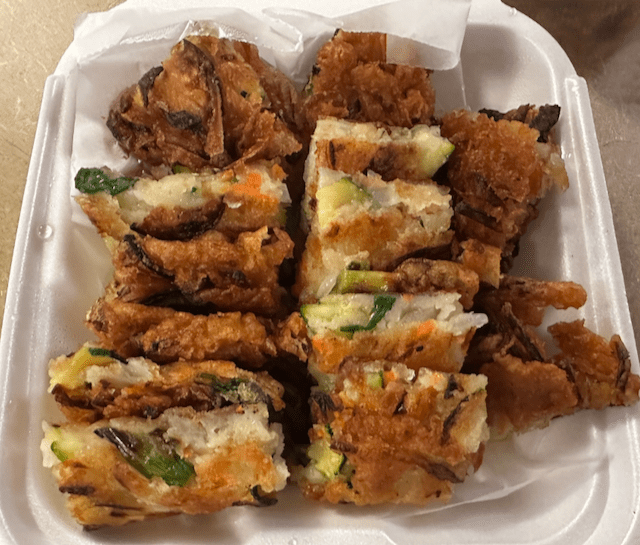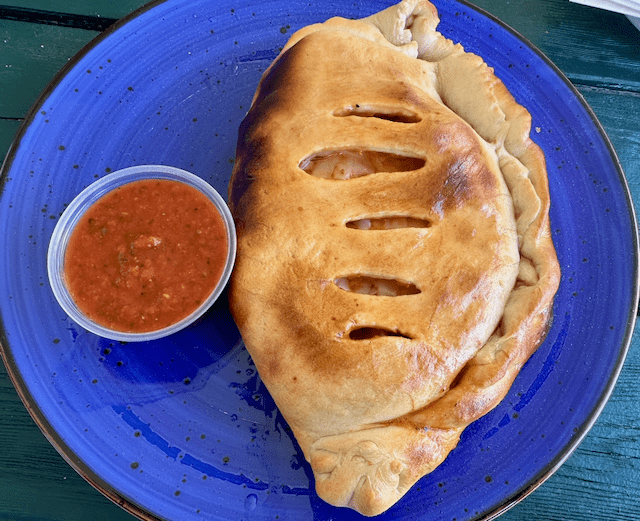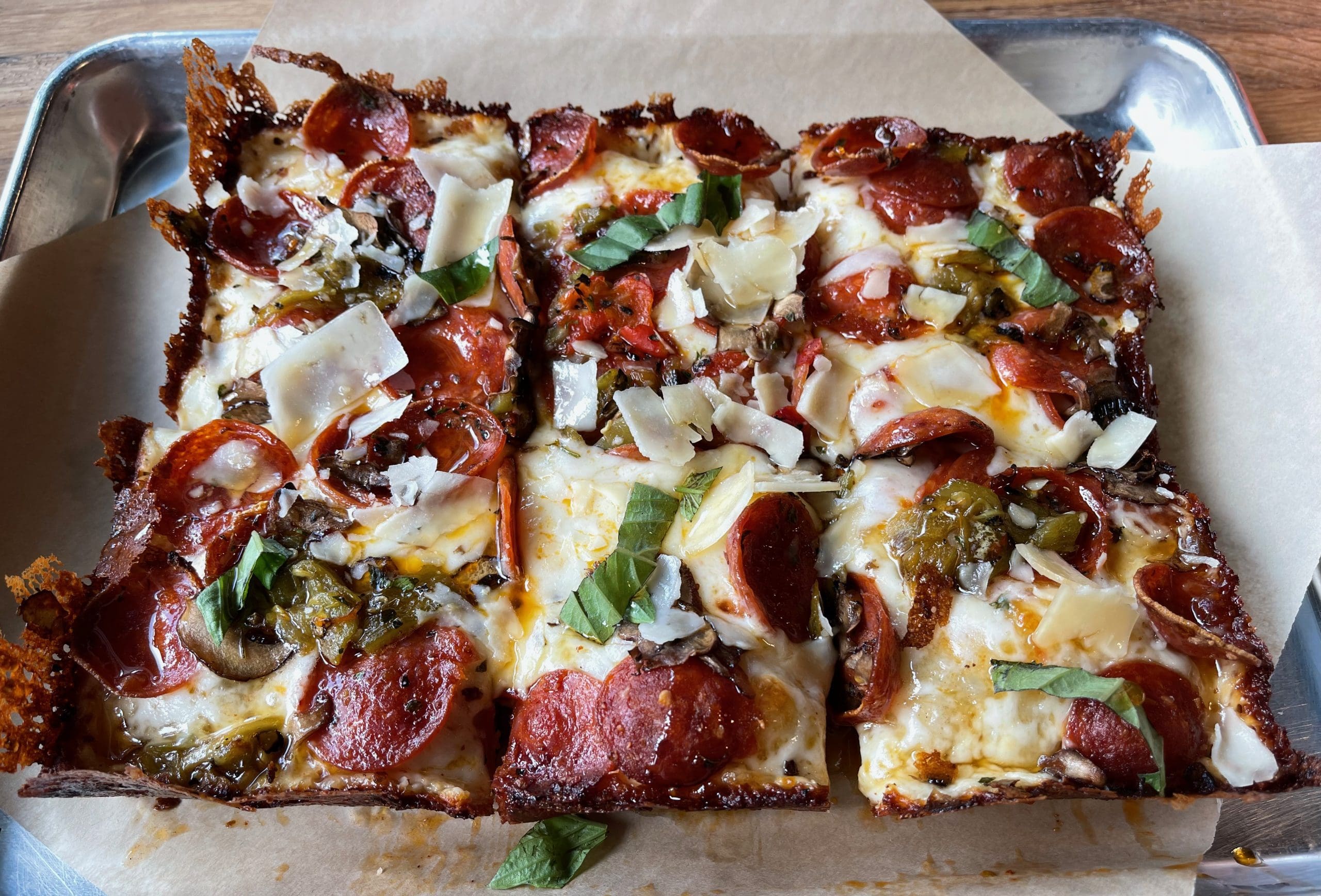
Thicc Pizza Co. – Albuquerque & Rio Rancho, New Mexico

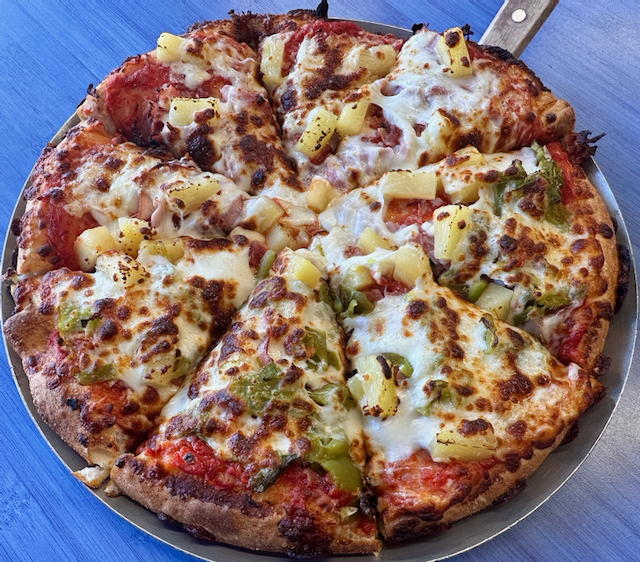
As you’ve read on the tagline for Gil’s Thrilling (And Filling) Blog, your humble blogger fancies himself somewhat of a sesquipedalian (a person who tends to use big words).  My logophilia (the love of vocabulary) is a lifelong affliction, both in English and in Spanish.  Despite my “affair” with words, one word-related term which just doesn’t always describe me is neologist (someone who uses new words). This is especially true about slang terms in fashion among the pop-culture-oriented youth.  When it comes to such terms, I’m not far removed from groovy, bread and copacetic.  It’s certainly not that I’m not interested in such words.  It’s just that I don’t seem to know anyone young and cool enough to use such terms (sorry BOTVOLR). Upon espying the name “Thicc Pizza Co.,” my initial inclination was “why would anyone spell “thick” so incorrectly.”  It then dawned on me that “thicc” could be one of those neologisms (a newly coined word or expression) no one in my inner circle seems to use.  A little research on the Sydney Morning Herald confirmed my suspicions: “Appearing in hip-hop circles during the early 2000s, the term “thicc” (originally “thick”) developed in African-American culture as a synonym for…
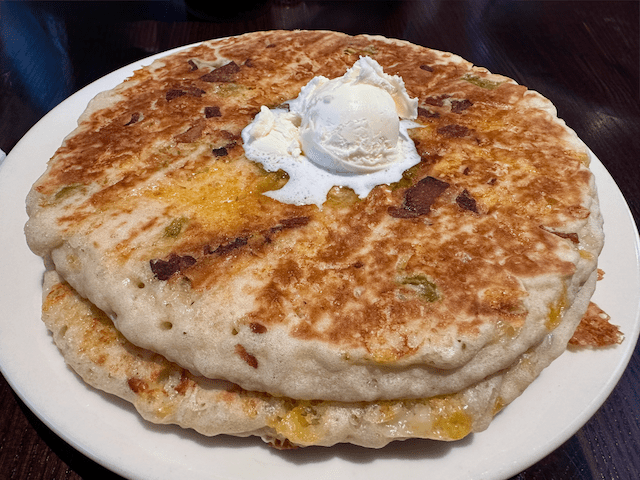
Vick’s Vittles Country Restaurant – Albuquerque, New Mexico

Possum shanks; pickled hog jowls; goat tripe; stewed squirrel; ham hocks and turnip greens; gizzards smothered in gristle; smoked crawdads. “Ewwww Doggies!,” now that’s eatin’. ~The Beverly Hillbillies Guests at the Clampett residence always seemed to recite a litany of excuses as to why they couldn’t stay for dinner when Granny announced the mess of vittles she’d fixed up. Not even the opportunity to dine at the fancy eatin’ table (billiards table) and use the fancy pot passers (pool cues) under the visage of the mounted billy-yard (rhinoceros) was enough to entice the sophisticated city slickers to stay for dinner with America’s favorite hillbillies. For the generation who grew up watching The Beverly Hillbillies, the notion of eating vittles elicits a broad smile and a warm heart. Those sentiments were rekindled when we drove east on Central Avenue just past Wyoming and espied a new restaurant named Vick’s Vittles Country Kitchen. Not only did it conjure memories of “heaping helpings of hospitality” from Jed and all his kin, the name “Vick’s Vittles” seemed so familiar and comfortable. That’s because several years ago a restaurant named “‘Country Vittles” plied its chicken-fried specialties for about an year on Central Avenue where Middle…

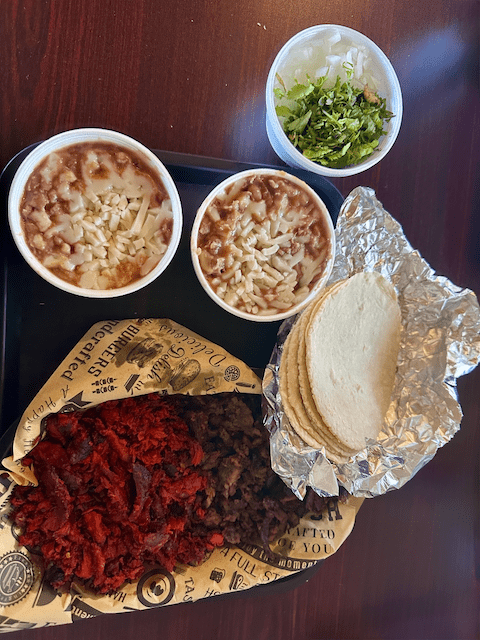
Al Trompo Mexican Grill – Albuquerque, New Mexico

Comaraderie, brothers-in-arms, esprit-de-corps, commitment, dedication…Unless you’ve served your country in the armed forces of the United States, these terms probably don’t mean much.  For those of us who did serve–proudly, gallantly, nobly–these terms mean everything.  They’re not just a call to arms; they’re our code of conduct.  They’re the way we carry ourselves.  They denote our commitment to one another, the importance of taking care of our own.   The uniforms worn by the select and exceptional men and women  signify the call to duty–the ideals, and the shared title of being an American and believing in all that means.  More than any other factor, it’s those ideals that truly bind servicemen and women together, across all five branches. Our brotherhood–that inexorable bond–doesn’t mean we’re not competitive with one another. Fierce rivalries exist among the five branches. We’ve been known to throw down with brothers-in-arms in defense of our particular branch. We rib one another good-naturedly with insults and derrogatory terms.  That’s what brothers and sisters do.  Our familial skirmishes and disses are ours exclusively.  If you didn’t serve, you won’t be invited to participate.  Like good families are, we’re mostly respectful and proud of our brothers-in-arms.  We thank one another…

Slice & Dice – Albuquerque, New Mexico

You might remember a 2004 documentary called Supersize Me in which writer-producer Morgan Spurlock explored the consequences on his health of a diet consisting solely of McDonald’s food for one month.  Spurlock has nothing on Dan Janssen who as of 2019 had eaten almost nothing but pizza for nearly thirty years.  That’s pizza for lunch and dinner every day of the year for just about three decades.  Janssen is certainly no believer in the old adage that variety is the spice of life because the only spice with which he tops his pizza is oregano.  Nor does variety extend to the type of pizza he enjoys.  Every day he usually consumes one fourteen-inch cheese pizza for lunch and another for dinner. Any dietary diversity he enjoys is through eating at different pizza restaurants–even chains, about which he declares “they’re all pretty bad, but I do frequent them. Pizza is like sex—even when it’s bad, it’s good.”  Ironically, as a teenager Janssen became a vegetarian for “ethical reasons” but determined rather quickly that he didn’t like vegetables.  A pizza diet seemed to make sense.  Just as a diet of nothing but McDonald’s food for a month wreaked havoc on Morgan Spurlock’s health,…

Little Europe – Albuquerque, New Mexico

Few natural wonders are as awe-inspiring and spectacular as  the chalky White Cliffs of Dover on the English coast.  Only for a short while are those bright white, natural geological formations visible at night as you’re sailing away toward France on a cross-channel ferry.  Instead, as you depart from Dover’s busy port, you’re treated to an increasingly receding facade as the 350-foot chalk faces dim, their bright white geological features vividly reflecting moonlight.  That’s the view I remember most from my first English crossing some 21 miles away from France.  Along with a busful of eager passengers, we were bound for Calais, the closest point in France to Great Britain. For the Germans, that made it the most logical and heavily fortified location for an Allied invasion. Our “invasion” wasn’t to visit wartime sights most of which are some 230 miles east at Normandy D-Day landing beaches (such as Omaha and Juno). Our excursion was much more peaceful (although not necessarily quiet). We were bound for Auchan, a well-stocked hypermarket (a massive retail establishment that combines a supermarket and a department store under one roof) in Bolulogne-Sur-Mer.  Auchon was reputed to be the ideal place to purchase French wines, cheese…

J’s Var-B-Q – Albuquerque, New Mexico

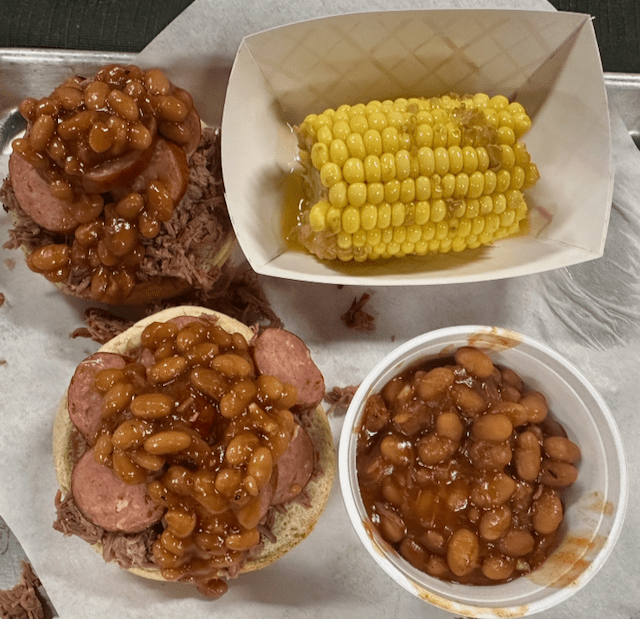
Step into J’s Var-B-Q and the first thing you’re inevitably going to notice is the aroma of smoked meats wafting toward you.  The bouquet of sweet and succulent smoke envelops you like a warm blanket on a cold night.   It’s a comforting smoke sure to elicit involuntary salivation.  It’s a siren’s song luring you to the counter where you place your order from a tempting menu of meats, sandwiches, sides, specialties and desserts.   If the doors to J’s Var-B-Q were to literally stay open, the rapturous redolence of smoked meats would escape onto Montgomery and traffic would be snarled with motorists (maybe even a vegetarian or six) making their way to this bodacious barbecue restaurant. The second thing you’re likely to notice is a large mural on the wall depicting a grizzled gentleman with engorged pythons for arms.  He’s got his hands steepled in prayer and his eyes closed in reverence.  Undoubtedly he’s giving thanks for the bounty laid out before him: a plate of ribs and hot links with sides of mac-and-cheese and baked beans.  The prayerful man on the mural is Julian Vargas, a born-and-bred New Mexican and patriarch of the Vargas family.  If you haven’t…

Brekki Brekki – Albuquerque and Rio Rancho, New Mexico

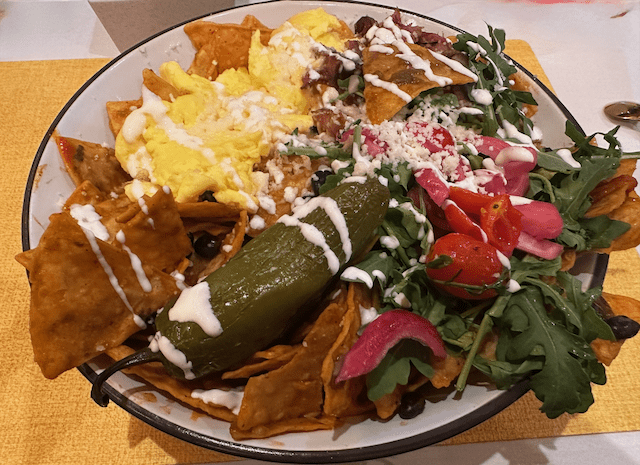
Brekki Brekki–To those of us who were around in the mid 70s, those two words might dredge up recollections of the citizens band (CB) radio vernacular.  Maybe even the Chuck Norris movie “Breaker!  Breaker!” with its perfunctory butt-kicking.  Though I pride myself on having a sesquipedalian vocabulary, I had never heard the term “brekki” used  as slang for breakfast” until watching the Irish television series “Jack Taylor.”  My research revealed “brekki” is not an Irish term for breakfast, but is in Iceland.  Yes, Iceland.  Jack Taylor’s backstory didn’t involve a stint in Iceland.  So, where did the Irish detective pick up the term.  Closer to home, why would a Duke City restaurant specializing in breakfast name itself “Brekki Brekki?” Paula, our delightful server didn’t know. She believes the term is Italian for breakfast, but verifiable evidence doesn’t seem to exist on the omniscient internet.  It’s conceivable the restaurant’s name is meant as a mnemonic, a word pattern designed to help people remember it.  At the very least, it’s a cutesy term.  Owner Robert Punya, who also founded and owns Poki Poki Cevicheria seems to like duplicated names.  If you haven’t had the pleasure of meeting Robert, you’re undoubtedly acquainted with…

Asian Pear – Albuquerque, New Mexico

“Careful Father, this stuff will melt your beads.” ~Lt Colonel Henry Blake, MASH 4077 Just as Hogan’s Heroes helped establish the perception many Americans (at least of my generation) had about German food, the television show MASH was the first introduction many of us had to Korean food. Set in South Korea during the Korean War, the series centered around a group of resilient doctors, nurses and support staff in an isolated hospital compound which saw more than its share of wounded. Not only did each half hour episode depict–sometimes rather graphically–the horrors of war, it painted a rather poignant and entirely accurate picture of sacrifice and hardship. Some of the sacrifice and hardship came at the hands of the kitchen staff which concocted some of the most unsavory fare conceivable (imagine a restaurant today serving creamed turnips, spam lamb and cream of weenie soup). Indigenous cuisine was apparently even worse because no matter how bad chow hall food was, the MASH team didn’t walk down to the nearby village for a meal of Korean food. And, as the quote above illustrates, when they did partake of Korean food, the impression given was that it was almost lethally piquant. Compared…

Turtle Mountain Brewing Company – Rio Rancho, New Mexico

The Tewa name “Oku Pin” which translates in English to “Turtle Mountain” has three meanings of significance to the people of Okay Owingeh, one of New Mexico’s great Tewa speaking Northern New Mexico Pueblos. “Oku Pin” was the the Indian name given to Dr. Alfonso Ortiz who obtained worldwide prominence as an anthropologist and ethnologist until his death in 1998. Ortiz was born and raised in San Juan Pueblo which in 2006 officially changed its name to Okay Owingeh. “Oku Pin” is also the Tewa name for Sandia Peak, the 10,678-feet high mountain which provides a spectacular backdrop for Albuquerque, Bernalillo and Rio Rancho. When Nico Ortiz, son of the famous anthropologist launched his inaugural restaurant and microbrewery in 1997, it just made sense that it should be called Turtle Mountain, a name which pays homage to his father and to the magnificent peaks under whose shadow his enterprise would flourish. Today, Turtle Mountain has also become synonymous with good food and (ostensibly) very good beer. Nico Ortiz has dedicated his life to the pursuit and production of good beer and has garnered tremendous recognition for his efforts, including a multi-page spread on the November, 2005 edition of New Mexico…

Rio Tacos – Albuquerque, New Mexico

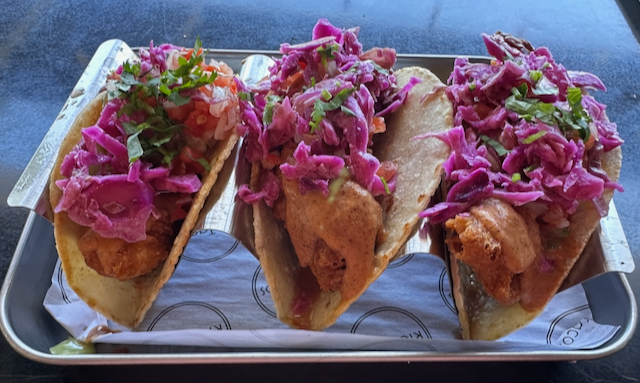
In May, Mexico City’s Tacos El Califa de León, in the downtrodden San Rafael neighborhood became the first Mexican taco stand to win a Michelin star.  One of the things that makes its selection remarkable is that the taqueria is the antithesis of most Michelin starred restaurants.  It’s not elegant and its tables aren’t set with immaculately pressed white linens.  There are no sterling place-settings or fine china.   Instead, the taqueria has no tables or seats.  It’s standing room only with space for only a handful of guests and a metal counter on which they can balance their plates. Fittingly, the taqueria is all about tacos.  There’s nothing else on the menu, only four options: bistec (seared steak), chuleta (thinly sliced pork chop), costilla (fork-tender beef) and the taqueria’s signature creation, the gaonera (whole steak).  These four proteins are sliced thinly, prepared with lard on a plancha (grill) and seasoned with coarse salt and a squeeze of lime.  While the chef is preparing each taco, handmade corn tortillas are being made alongside the grill.  It’s all prepared to order.  Tacos are served with your choice of two salsas. Michelin stars are a badge of honor, an honor coveted by…

Grassburger – Albuquerque, New Mexico

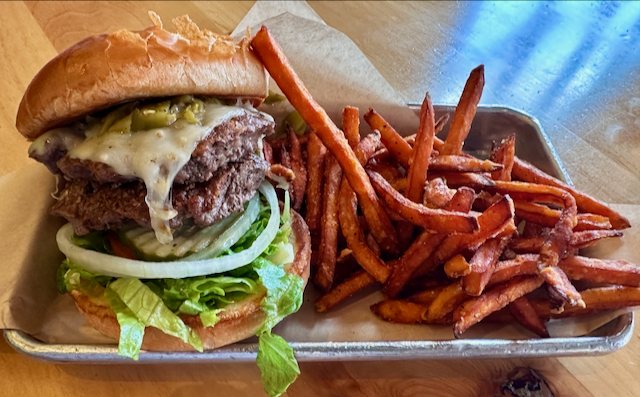
For nearly a decade, television viewers have been subjected to a very successful advertising campaign depicting contented cows talking and singing about the pleasures of life in sunny and warm California. The slogan for the “happy cows” campaign’ is “Great cheese comes from happy cows. Happy cows come from California.” The campaign would have you believe the cows are happy because they feast and frolic on a diet of delicious grass from verdant hillsides and not on troughs full of grains which don’t taste quite as good. I don’t know about cows being happier because they graze on grass, but can certainly attest to being a happier diner when enjoying a diet of grass-fed beef. Generations of New Mexicans, particularly from the more verdurous northern villages, find the notion of grain-fed cattle heretical. All our cows are grass-fed thanks to open-range grazing laws which allow carefree cows to traipse up and down the streets in search of unfenced (or poorly fenced) yards in which the grass does appear to be greener. In the late spring when mountain snows have started to melt, many ranchers herd their cattle into the mountains where meadowlands near the timberline are abundant. In fall when…