El Guero Canelo – Tucson, Arizona

If asked to participate in a word association exercise, any well-traveled foodie undergoing psychoanalysis would find it easy to name the first food that comes to mind when a city is mentioned: Philadelphia – the Philly cheesesteak sandwich; Boston – baked beans; Chicago – Italian beef sandwiches; San Francisco – sourdough bread; Milwaukee – butter burgers; San Antonio, New Mexico – green chile cheeseburgers.  You get the point.  Some foodies might not know that Philadelphia is the birthplace of liberty, but they know about Geno’s and Pat’s King of Steaks and their decades-long battle for Philly cheesesteak supremacy. You might find it strange that seemingly pedestrian foods would be the defining cuisine of burgeoning cosmopolitan cities, historically significant metropolises and tiny hamlets in the desert, but it’s not solely foodies who associate foods with places. Anthropologist Maribel Alvarez of the University of Arizona says the “quintessential food of Tucson” is the Sonoran hot dog, explaining that instead of taking guests to high-end restaurants, locals will bring their out-of-towners to one of the city’s purveyors of Sonoran hot dogs. Hot dogs, like baseball and barbecue, aren’t exclusively the domain of Americans any more.  In fact, they never were. Before you call…

Ted’s Hot Dogs – Tempe, Arizona

Reading Becky Mercuri’s magnificent Great American Hot Dog Book had the same effect on me that Fifty Shades of Grey had on soccer moms throughout the country.   How can someone so food obsessed not delight in such beautiful prose as “Western New York is definitely hot dog country and the preferred method of cooking is charcoal grilled.”  Charcoal grilled!  There goes another foodgasm.  New Mexicans don’t have to travel all the way to Buffalo, New York to experience these magnificent charcoal grilled libido activators.  We only have to go to Tempe, Arizona to sate our hunger…or lust, in some cases. Ted’s Hot Dogs was a precursor to the modern food truck.  In 1927, Theodore “Ted” Spiro Liaros began operating a horse-drawn cart in a park on Buffalo’s west side in close proximity to a large construction site.  Originally known as “Ted’s Red Hots,” Ted’s is still going strong nearly a century after launching.  It’s a beloved Buffalo area institution with eight locations in Western New York and one outlier in Tempe.  The secrets to Ted’s success is strict adherence to the methods and traditions that have won over generations of hot dog lovers. One tradition not likely to ever…

Jollibee – Chandler, Arizona

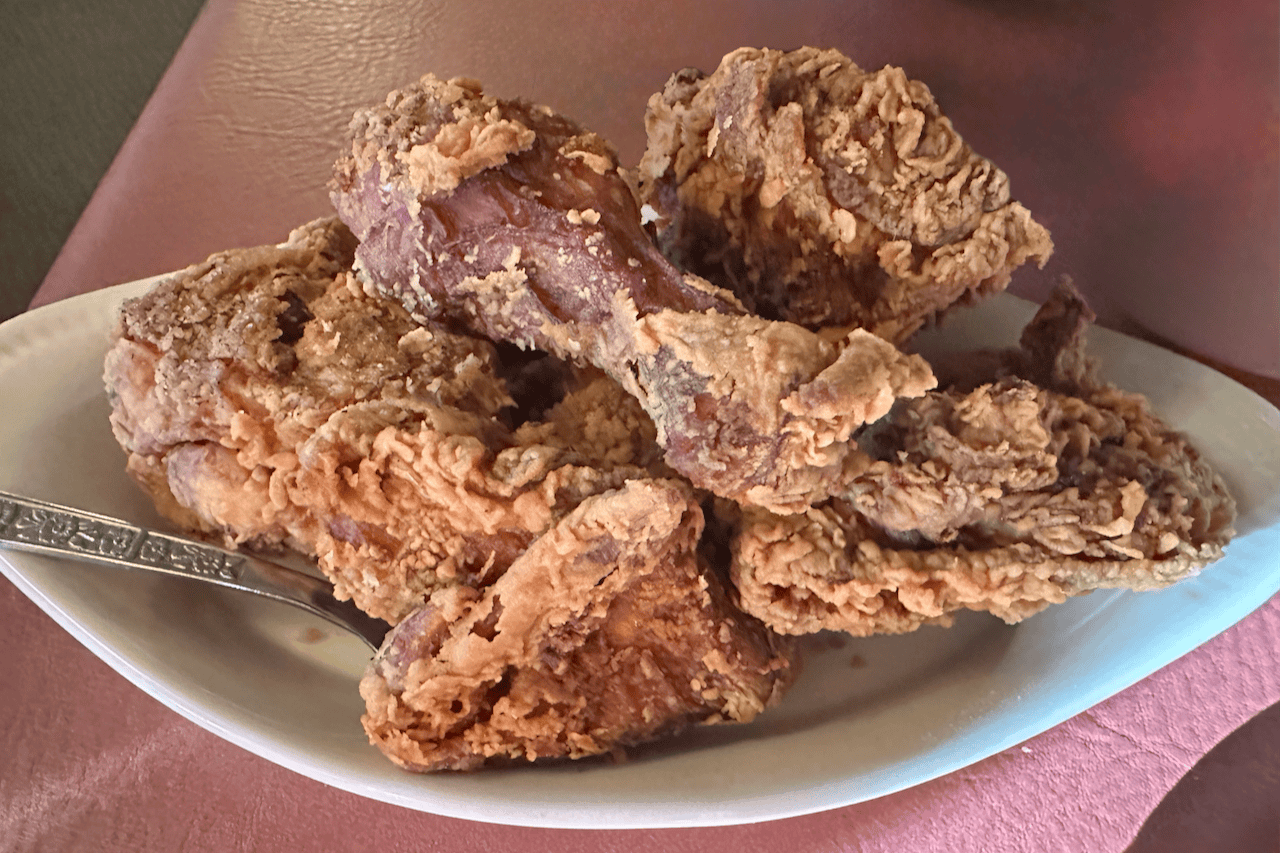
One visit to Jollibee might convince you you’ve visited yet another American chain restaurant.  You’d be half right.  Jollibee is a chain, but it’s a chain based out of the Philippines.  Apparently the many islands comprising The Philippines developed a taste for fried chicken and burgers during its years as a U.S. colony.  My Uncle Fred, a career Navy man stationed several times at Subic Bay (on the west coast of Luzon Island in the Philippines northwest of Manila), raved that the fried chicken, in particular, was far better than fried chicken anywhere in the United States.  Apparently he’s not the only person with that opinion. USA Today and Eater both recently named Jollibee fried chicken as the best in the country among fast-food restaurants, beating out brands such as Popeyes, Chick-fil-A, Church’s and KFC (not that you can consider that much of accomplishment considering how bad American fried chicken chains have become).  Jollibee now has about eighty locations across the fruited plain.  With my Kim hankering for fried chicken, we managed to find the only Jollibee in all of Arizona.  It’s located in Chandler, not too far from the Intel plants which I once visited for eighteen years.  Chandler,…

Pizzeria Bianco – Phoenix, Arizona

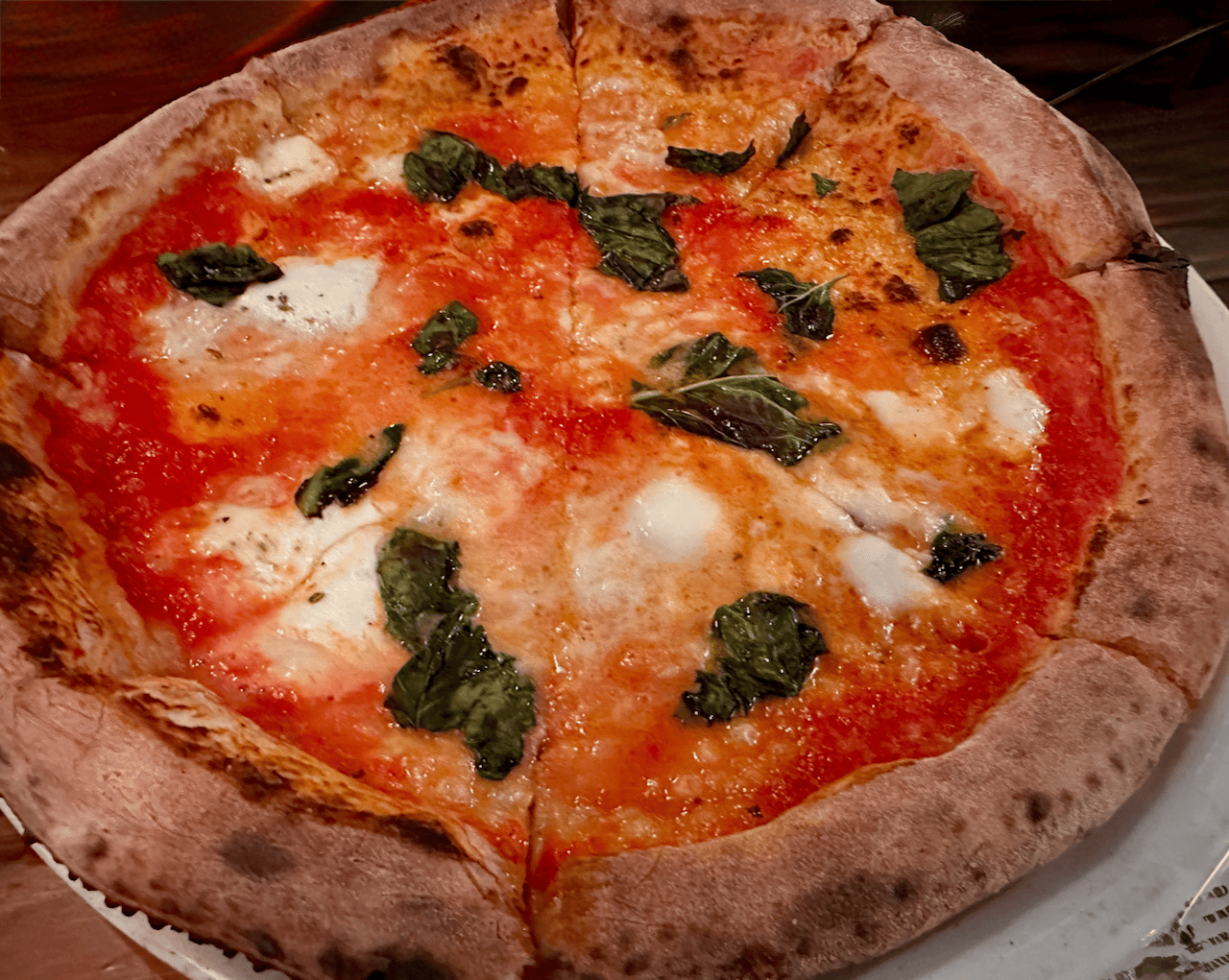
To celebrate the 100 year anniversary of pizza in America, Ed Levine, the creator/founder of Serious Eats,  ate nothing but pizza for an entire twelve month period, taking a representative pulse of the best from among thousands of pizza purveyors. His terrific tome, Pizza A Slice of Heaven, published in 2005,  provides a definitive guide to a much-loved product that in its elemental form is simplicity itself–bread, cheese and whatever toppings a pizzaioli artisan might care to add. To the surprise of many, Levine declared the best pizza in America (and the world, for that matter) to be made in the unlikely town of Phoenix, Arizona where the intensely brilliant Chris Bianco plies his trade as no other. Before a business trip to Phoenix in 2002, I also learned that a writer for Travel & Leisure magazine definitively proclaimed Pizzeria Bianco as “the best place in America for pizza.” I also found that in its 1998 edition, Zagat’s respondents rated Pizzeria Bianco the top restaurant in Phoenix with a lofty rating of 29. Despite these proclamations, I couldn’t accept that a pizza could possibly be that good. The impunity of all these blasphemers to place on the loftiest pedestal, a pizza…

Fry Bread House – Phoenix, Arizona

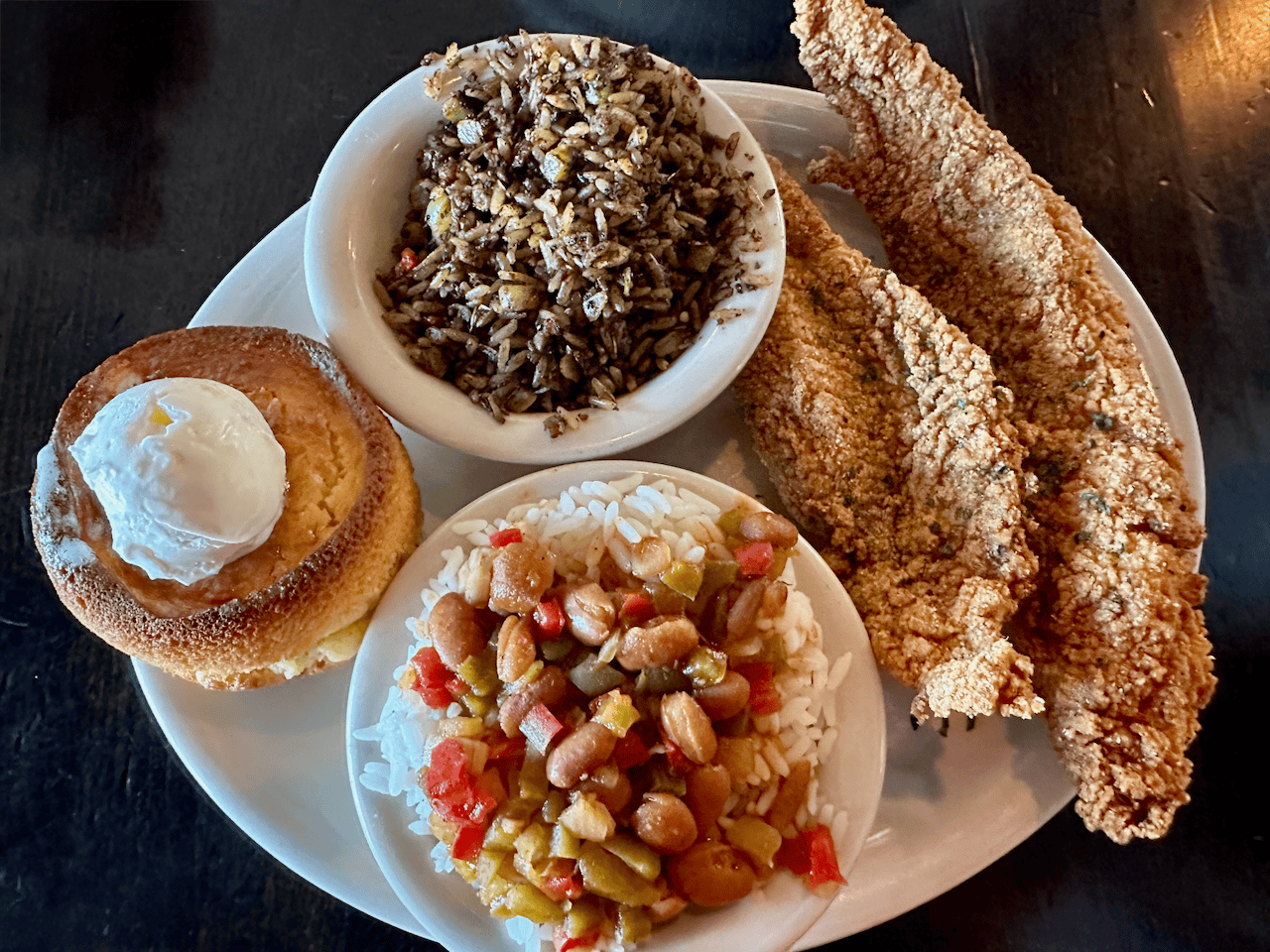
The James Beard America’s Classics Award honors locally owned restaurants with timeless appeal, beloved in their region for serving quality food that reflects the character and cultural traditions of their community, and must have been operating for at least 10 years, recognizing enduring, community-rooted establishments over flashy new trends. While the America’s Classic award is presented annually, only six of the twelve James Beard regions are eligible each year.  That means every other year, each region is represented.  This ensures broad coverage over time.  The most recent New Mexico recipient of the America’s classic award is the incomparable Mary & Tito’s. In 2012, the Fry Bread House, a beloved Phoenix institution since 1992, earned the America’s Classic award, becoming the very first Native American restaurant in the United States to earn that distinction.  The Fry Bread house was started by Cecelia Miller, a member of the Tohono O’odham Nation.  After she passed away in 2020, her children Jennifer and Richard continue the tradition.  According to the restaurant’s website “Tohono Oʼodham people are known throughout the southwest for their red chili beef, large, hand-stretched flour tortilla and fry bread.”   Over the years, the restaurant has garnered many “Best of the City”…

All Pierogi Kitchen – Mesa, Arizona

Not surprisingly, culinary historians aren’t in complete agreement regarding the origin of pierogi.  Most believe dumplings likely traveled from Asia along the Silk Road to Eastern Europe.  Perhaps they were even brought over by Marco Polo or Turkish traders.  That’s the more likely origin story.  The more popular Polish origin story credits St. Hyacinth of Poland for the pierogi.  In fact the Polish exclamation “St. Hyacinth with his dumplings!” is a call for help during hopeless circumstances (much like St. Jude being asked to intercede in the resolution of hopeless causes). There are two legends involving St. Hyacinth and pierogies.  During a visit to a village in Poland, a hailstorm broke out, destroying crops and leaving people with the prospect of famine. Hyacinth told them to pray. The next day, the crops were miraculously restored. As a token of gratitude, the people then treated Hyacinth to pierogi made from those crops. The second legend mentions Hyacinth feeding people with pierogi during a famine caused by the Mongol invasion of 1241.Whatever the true origin of pierogies may be, you can’t dispute that divine intervention was involved in the creation of one of the most universally popular foods throughout Eastern Europe. They…

Buck & Rider – Gilbert, Arizona

If you believe you can’t find great seafood in Phoenix because it’s landlocked and nine months out of the year its temperature rivals that of the sun, you would be mistaken.  As my friend Steve Coleman reminded me recently, 200 years ago, passenger trains in England made fish and chips possible throughout the country by facilitating the transport of fish to interior cities.  Similarly, advances in air travel and refrigeration have made seafood much more available to those of us whose only fresh seafood is the Rio Grande minnow.  Sure, you can catch some fish in the rivers and canals throughout Arizona, but you won’t find lobster, crabs, oysters, mussels, stone crab and other “real” seafood. For years, my dear friends the Plata Brothers Bruce and Loren have been singing the praises of Buck & Rider. Though the name sounds like a children’s cowboy cartoon, Buck & Rider offers a soiree of fresh fish and seafood sourced daily from coastal regions.  Those coastal regions aren’t solely within the fruited plain, but even New Zealand where fresh hamachi comes straight from the net to shipping containers designed to preserve its freshness.  There are three Buck & Rider restaurants in the Valley…

Myke’s Pizza – Mesa, Arizona

Americans eat a tremendous amount of pizza. Denizens of the fruited plain consume roughly 3 billion pizzas annually. Per capita that’s about 46 slices or 23 pounds per year, adding up to about 100 acres of pizza daily,  Pepperoni is the favorite topping and Super Bowl Sunday the biggest sales day. Over 90% of the U.S. population eats pizza regularly, making it a staple for any meal. With staggering numbers like that, you might think no country–not even Italy–comes close to competing with the United States for pizza consumption.  Norwegians consume the most pizza per capita globally, averaging around about 25 pounds per person annually. That’s significantly more than Italy or the U.S. According to Food & Wine, the most popular pizza in Arizona is a “meat lovers” pizza.  Perhaps, that’s because pizza paramours across the Grand Canyon State have not discovered Myke’s Pizza in Mesa.  When the season is right, Myke Olsen and his crew don’t hesitate to add in-season fruit to a pie.  Pineapple is old news–no longer new, exciting, or relevant.  Everybody does pineapple pizza…much to the consternation of purists.  In season, Myke’s pies may be graced by such ingredients as fresh sliced peaches.  Myke’s has also…

Harold’s Cave Creek Corral – Cave Creek, Arizona

Football fans can be unforgiving…and some of us have elephantine memories.  Dallas Cowboys fans, for example, will never forget nor forgive the Pittsburgh Steelers for having bested (obviously the referees cheated) the Cowboys twice in the Super Bowl.  Never mind that our beloved Cowboys finally did beat Pittsburgh in a later Super Bowl.  We’ll never get over losing two.  Our only consolation is that at least we didn’t lose to those neanderthal New York Giants.  Someday you’ll have to ask me how I feel about the Steelers and Giants.  With such antipathy toward those miserable Steelers, the one place you’d think I’d never be caught dead would be a Steelers Bar, much less one of the most highly regarded Steelers Bars in the country.  But, that’s precisely where we spent our New Years Eve. Mind you, it certainly wasn’t my idea.  My brother-in-law Tim–who knows about as much about football as the women on The View know about integrity–wanted to impress me.  He didn’t know that espying propaganda declaring the sprawling Harold’s Cave Creek Corral “Heinz Field West (the dreaded Steelers play at Heinz Field in Pittsburgh) might instead nauseate me.  Still, there it was–copious articles of adulation strewn throughout the…

Guido’s Chicago Meat & Deli – Scottsdale, Arizona

For years now, my Kim and I have largely eschewed American television, especially its sophomoric, lowbrow and “meant for voyeurs” reality shows.  We’ve been increasingly gravitating to an almost exclusive viewership of British television which we’ve found to be meant for grown-ups rather than children.  British television programs offer a sophistication direly absent in American programming.  British programs tend to be more substantive, refined and of much higher quality than their American counterparts.  That assessment applies to mysteries, comedies, dramas and even commercials. The final nail in the coffin for American television were two absolutely unwatchable reality shows:  The Kardashians and Jersey Shore.  Both showcase obnoxious, self-aggrandizing and vacuous characters with no redeeming characteristics.  The Jersey Show, for example, made celebrities of four loud, foul-mouthed, hypersexual Italian Americans who self-style as “guidos” and “guidettes.”  Never mind that “guido” (slang for a working-class urban Italian-American) is widely perceived by Italian-Americans as a pejorative word, like “spic” or “wop.” It’s a very unflattering stereotype. Lest you think we lowered ourselves to watch such detritus, we caught a promotion for the series which bragged about gathering the “hottest, tannest, craziest guidos” and assembling them at a beach resort where all would be laid…

Perfect Pear Bistro – Tempe, Arizona

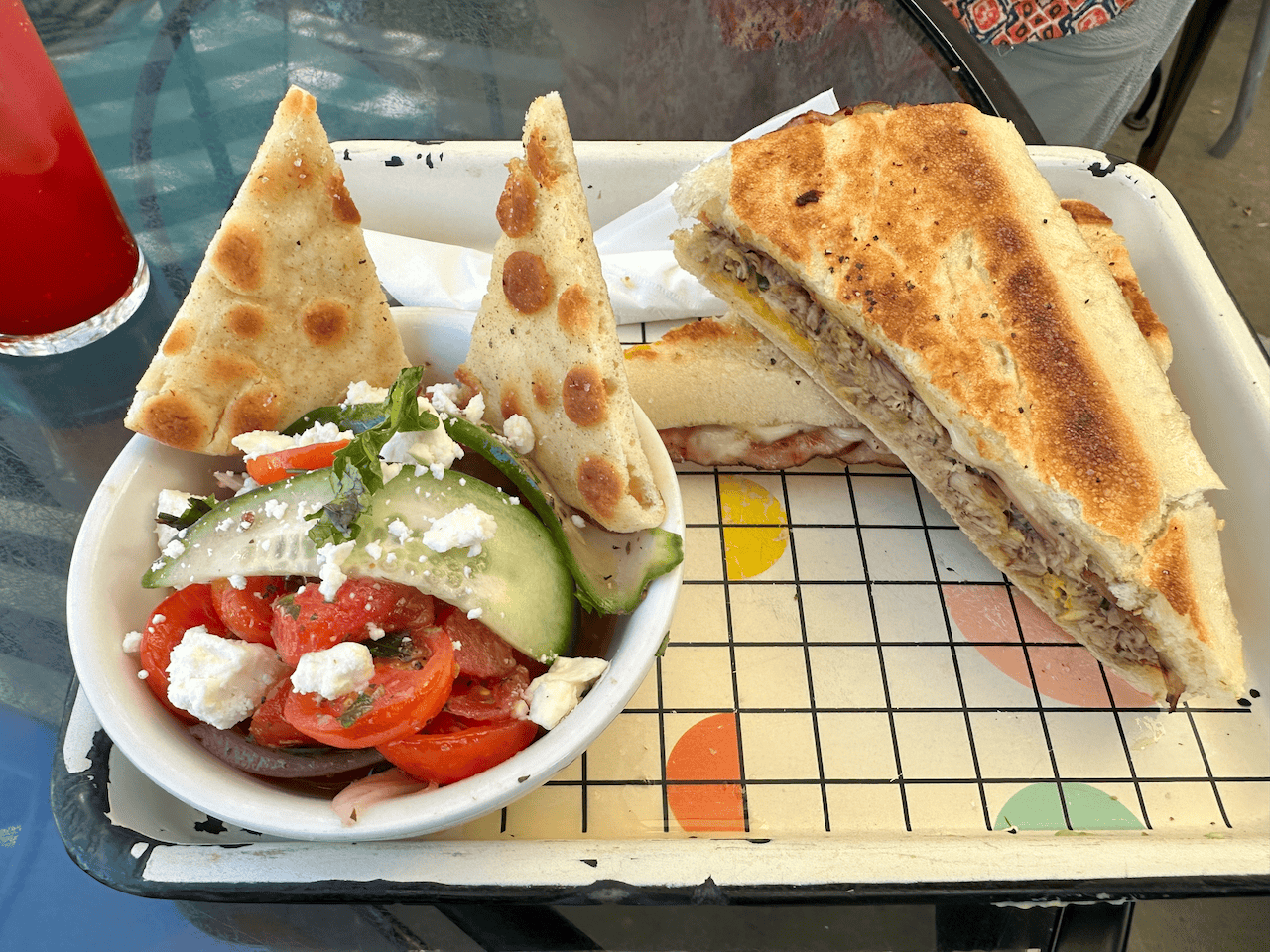
Growing up Catholic, I probably read more about the gods of Mount Olympus than the catechism which taught about the almighty God worshipped at St. Anthony’s in Peñasco.  I didn’t hold the gods of Greek mythology in reverence.  If anything, I wondered how they could be so peurile and petty.  Though also splenetic and petulent, they were very interesting.  Perhaps indicative of my future gastronomic interests, I was particularly curious about the foods that were so prominent in Greek mythology.  Pears, for example, were sacred to two of the most powerful goddesses: Juno (queen of the gods and marriage) and Aphrodite (goddess of love and beauty.  Pears were also prominent in one of my very favorite books, The Odyssey. Growing up in agrarian Peñasco, we were surrounded by lush trees offering a bounty of cherries, chokecherries, apples, peaches, apricots and more.  The only pear tree I can recall was in our grandfather Max’s front yard.  While the pears were sweet and delicious, we seemed to prefer using them as projectiles to hurl at one another or at offending cows daring to trespass into our yard.  Pears rated rather low in the pantheon of fruits…at least as an edible fruit.  Perhaps…