Nanami Noodle House – Albuquerque, New Mexico (CLOSED)

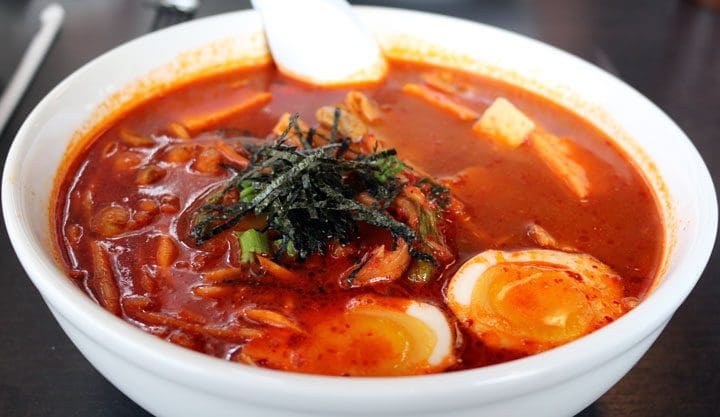
If Chinese superstitions have any credence, some of us may not be long for this world. Chinese superstitions posit that long noodles symbolize a long life. Ostensibly, if you cut your noodles, you’re cutting your life short. Instead of cutting your noodles, the Chinese advocate slurping up long noodles without breaking them. When it comes to noodles, the Chinese should know. After all, they’ve been preparing noodles longer than any culture in the world. In 2005, archaeologists uncovered a 4,000-year-old bowl of noodles in Northeast China, the earliest empirical evidence of noodles ever found. Buried under ten feet of sediment, an overturned sealed bowl contained beautifully preserved, long, thin yellow noodles made from two kinds of millet. Archaeochemist Patrick McGovern indicated that “even today, deft skills are required to make long, thin noodles like those found” at the Chinese site, adding that “this shows a fairly high level of food processing and culinary sophistication.” If you’ve never seen the art-and-science process of hand-making noodles, it should be on your bucket list–and because the process is quickly becoming a lost art, you should place it near the top of that list. Fortunately you don’t have to go far to witness veritable…

Arirang Oriental Market – Albuquerque, New Mexico

“Cuisine is the tactile connection we have to breathing history. History and culture offer us a vibrant living society that we taste through cuisine. All cuisine is a reflection of the society from which it emanates … in the end cuisine is the result of culture” – Clifford Wright If cuisine is the result of culture, then it can certainly be stated that music is the expressive language of that culture. Well before the advent of the written word, music was used to tell stories, impart wisdom, express ideas, share emotions and convey the history and culture of the civilization. Until the 20th century and the rapid cultural changes wrought by the postmodern period, music also bridged the generations. Family members of every generation typically listened to the same music. In Korea, there may be no song as beloved–even in North Korea–as Arirang, an iconic folk song often considered an unofficial national anthem. Its plaintiff lyrics convey a traveler’s agony and anguish while crossing a mountain pass named Arirang with a heartfelt longing to return home. After its service in Korea during the Korean War, the South Korean government designated Arirang as the official march of the United States Army’s…

Fu Yuang – Albuquerque, New Mexico

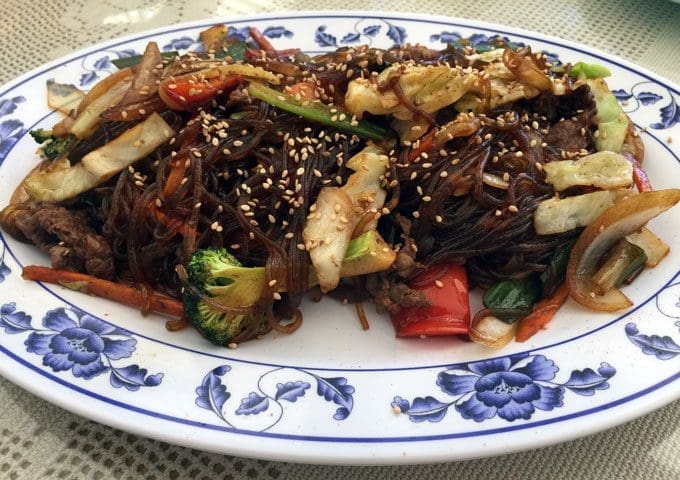
“I’ve eaten a river of liver and an ocean of fish! I’ve eaten so much fish, I’m ready to grow gills! I’ve eaten so much liver, I can only make love if I’m smothered in bacon and onions” ~ Hawkeye Pierce MASH 4077, Korea FROM THE FU YUANG FACEBOOK PAGE: Our Dear Fu Yuang friends, we closed the doors for business on Saturday, November 21st, 2020. 😢 Mia is no longer able to meet the physical demands of operating the restaurant. We tried to sell the restaurant to many prospective buyers, with no luck due to COVID-19. We want to thank everyone for their kindness, dedication, & support over the past 26 1/2 years. We will truly miss you all. Thanks for all the memories we have made together at Fu Yuang! For eleven years, televisions across the fruited plain were tuned in to CBS where the antics of the 4077th Mobile Army Surgical Hospital (MASH) enthralled audiences with a unique blend of crude hilarity and heartfelt humanity.  Set in South Korea during the Korean War, the series centered around a group of resilient doctors, nurses and support staff in an isolated hospital compound which saw more than its share…

Sakura Sushi & Grill – Albuquerque, New Mexico

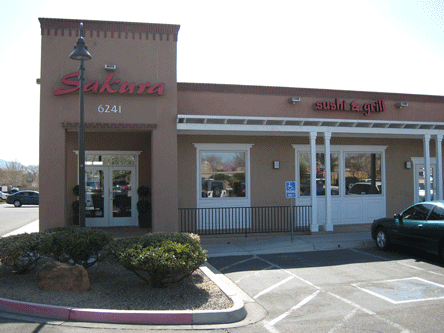
In describing “food porn,” The New Yorker once wrote, “The point is to get very close to what you are filming, so close that you can see an ingredient’s “pores” which then triggers some kind of Neanderthal reflex.  If you’re flicking from channel to channel and come upon food that has been shot in this way, you will be hardwired as a human being to stop, look, and bring it back to your cave.” Madison Avenue, which is virtually synonymous with advertising, recognizes the impact food porn has on the American consumer.  That’s why we’re bombarded with television commercials and magazine ads depicting spectacular displays of visually stimulating, sleek and sexy, glorious deliciousness–food not only as edible art, but as a medium that elicits a carnal response. Perhaps no modern medium utilizes food porn more effectively than the Food Network whose programming seems tailored to arouse a salivatory response and a lascivious desire to eat.  Its veritable pantheon of celebrity chefs recognizes that the appeal to viewers (who obviously can’t smell or taste their creations) is in the way food looks on a plate–its colors, symmetry and design patterns. Perhaps the most visually appealing moment on any Food Network program…

Kimchy Cabana – Niles, Illinois

To the unenculturated, the pungent emanations of Korean kimchy (pickled and fermented cabbage) are malodorous and offensive to the olfactory senses. To the Korean people, however, kimchy is so much more than a national dish; it’s a family treasure handed down from one generation to another over the millenniums. The influx of Korean war brides following the Korean War and beyond has meant the gradual introduction into the American mainstream of kimchy and other Korean culinary arts. Having experienced Korean cuisine from coast to coast, it has always impressed me to find Korean food remarkably consistent–usually at least good and often excellent. Kimchy Cabana certainly ranks with the best I’ve had yet. Our inaugural dining experience was made even better because we shared our meal with two of Niles’ finest law enforcement officials, my brother-in-law Chuck and his commander, true gentlemen for whom the badge truly represents integrity and dedication to the public. Our meal started with the traditional Korean family meal offering of small dishes featuring spicy and pickled vegetables. Most Korean restaurants alternate these vegetables on a daily basis but always include kimchy which is typically the eye-watering star of the show. Every vegetable tantalized our taste buds…

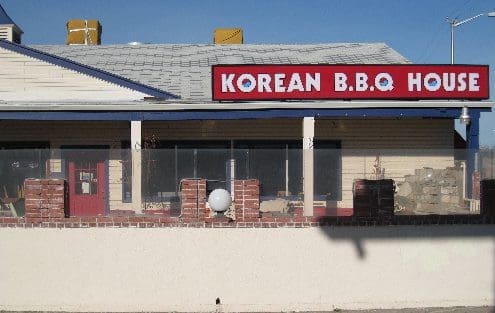
Korean Barbecue House – Albuquerque, New Mexico (CLOSED)

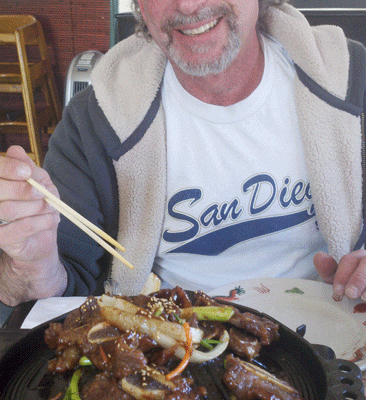
For dining patrons in the know, the 2002 closure of the Fu Shou House was one of the most heartrending moves in the Duke City restaurant scene. In the Korean B.B.Q. House, Fu Shou was reborn. While the Fu Shou proprietors don’t own the Korean B.B.Q. House, they did hold court in the kitchen for a while after the restaurant’s launch crafting the delicious entrees for which they were renown. Another chef now stewards the kitchen, but has maintained the high standards of his predecessors. Initially serving both Korean and Chinese food, this Central Avenue restaurant now focuses exclusively on Korean food and has already captured quite a loyal following–for good reason. The bulgogi is spicy, sweet, tangy and absolutely delicious. Ditto for the bulkalbi which thankfully was also meaty and relatively free of fat. Unlike bulgogi and bulkalbi served at some other Duke City restaurants (primarily Japanese and Chinese restaurants), the Korean B.B.Q. House version was made of high quality meat, not the sinewy, fatty stuff which should be saved for the house pets. Both the bulgogi and bulkalbi are served with five side dishes, including one of the spiciest kimchees in town. An accompanying egg drop soup was…