Pho Nho – Albuquerque, New Mexico

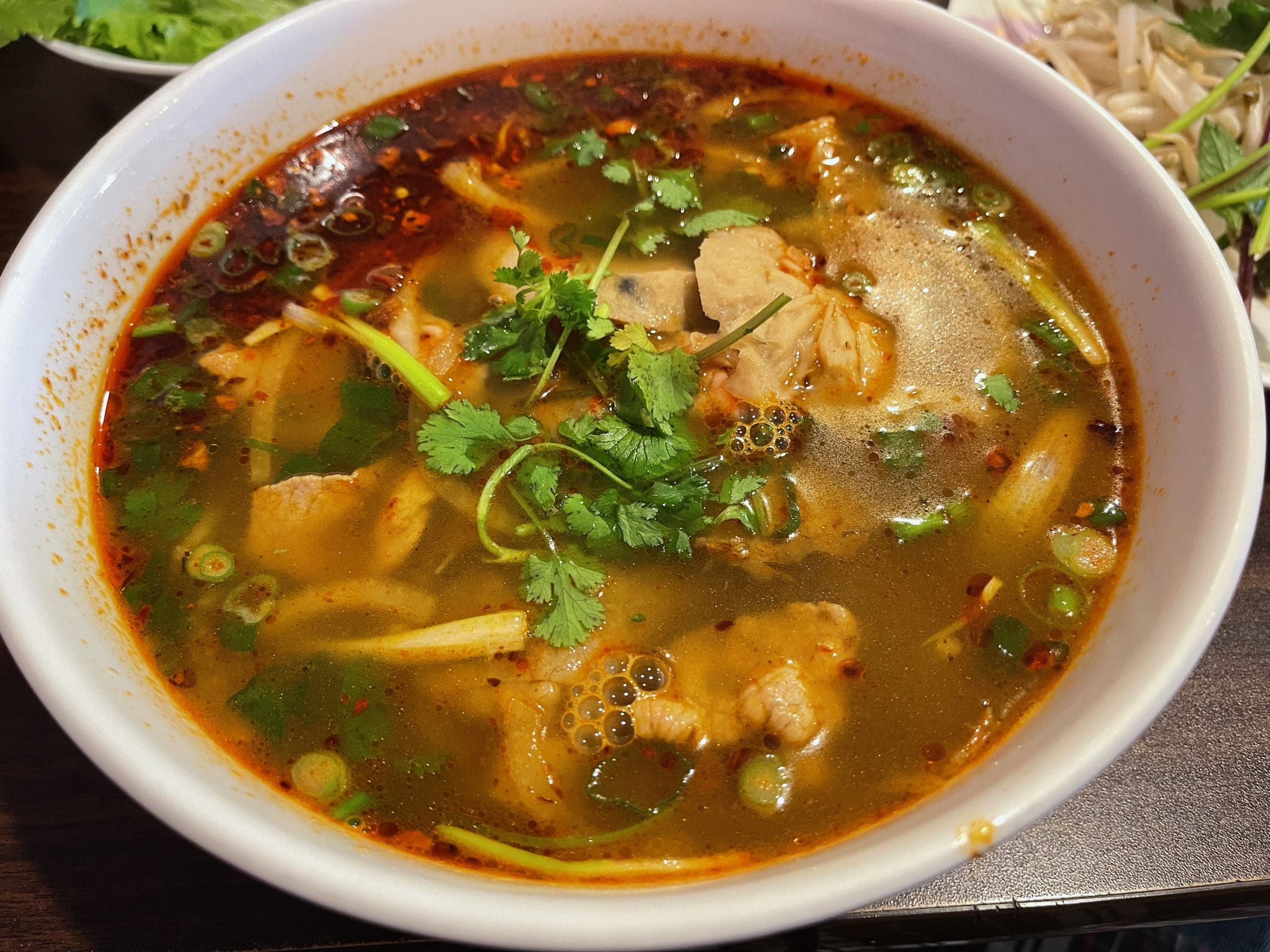
Foodies are a passionate–some would say even snobbish–lot. The most passionate among them are sticklers for authenticity and provenance of ingredients and preparation methods.  The plebeian among us who don’t know quite as much had better not represent inaccuracies as truths (much as politicians do) or even use culinary terms incorrectly lest we be excoriated.  Tieghan Gerard, a well-intentioned blogger, learned just how passionate savvy foodies can be. Tieghan, the creator of the popular food blog Half Baked Harvest found herself in hot water when she had the audacity to misrepresent a quick noodle soup recipe. More specifically, she dubbed her recipe “chicken pho,” a faux pas on may levels and for many reasons.  Readers were quick to point out the recipe was NOT pho, a dish that should never be prepared quickly.  Strictly speaking, they pointed out, pho is a soup made with beef (although increasingly chicken and vegetarian versions are being made).  Several steps in the recipe (such as caramelizing the chicken) would never be done in a traditional pho recipe.  For the most woke among her  readers, Tieghan’s most grievous mortal sin was in calling her soup “pho,” an unforgivable misappropriation of Vietnam’s most popular and famous…

I Grill Korean BBQ & Hotpot

You hear it very time a seismic event or devastating conflagration strikes California.  Doomsayers seem to come out from under the rocks to proclaim it “divine castigation.”  That’s also their argument when the Golden State’s elections don’t go as they would like.  These very same people don’t seem to like much about California.  Such negativity makes me wonder if these fatalists have ever spent much time in this fabled  land of opportunity and adventure.  There’s got to be a reason California is the most populous state in the union.  Surely the forty-million residents would be leaving in droves if it was that bad. Although the Air Force took me to most of the contiguous states in the country, it was Intel which first sent me to California.  Back when Intel was flush with cash, I was dispatched to Santa Clara for weeks at a time.  These business trips were not only highly productive, they  introduced me to the uniquely wonderful “California cuisine” and its emphasis on fresh, local and seasonal ingredients.  As a movement, California cuisine’s embrace of diverse culinary cultures and innovative approaches reflected the state’s own diversity and commitment to high-quality, sustainable and healthy foods. Asian restaurants are…

Pho Lien Hoa – Oklahoma City

“Oklahoma, Where the wind comes sweepin’ down the plain And the wavin’ wheat Can sure smell sweet When the wind comes right behind the rain.” ~Oklahoma by Rodgers & Hammerstein The setting for Rodgers and Hammerstein’s revolutionary 1943 Broadway hit Oklahoma showcased wide-open plains and rugged landscapes that painted both a literal and metaphorical canvas.  The vastness of the territory mirrored the boundless dreams and limitless energy of its inhabitants.  This award-winning musical depicted the ushering in of organized statehood, a challenging transition from mostly unsettled agrarian land.  That transition parallels the characters’ personal journeys toward growth and self-discovery.  Oklahoma became a timeless classic largely because of the stirring music, but also its celebration of love, community, and resilience among vibrant characters. We weren’t expecting Shirley Jones belting out “Oh What a Beautiful Morning” when we crossed into the Sooner State’s sacred borders, nor did we expect John Steinbeck’s The Grapes of Wrath or warring factions of cowboys and Indians.  Frankly we didn’t know what to expect.  You’ll forgive my ignorance of modern day Oklahoma.  It was obviously stunted by my having watched the musical a few dozen times.  My friend Steve Coleman, the prolific blogger who informs and entertains…

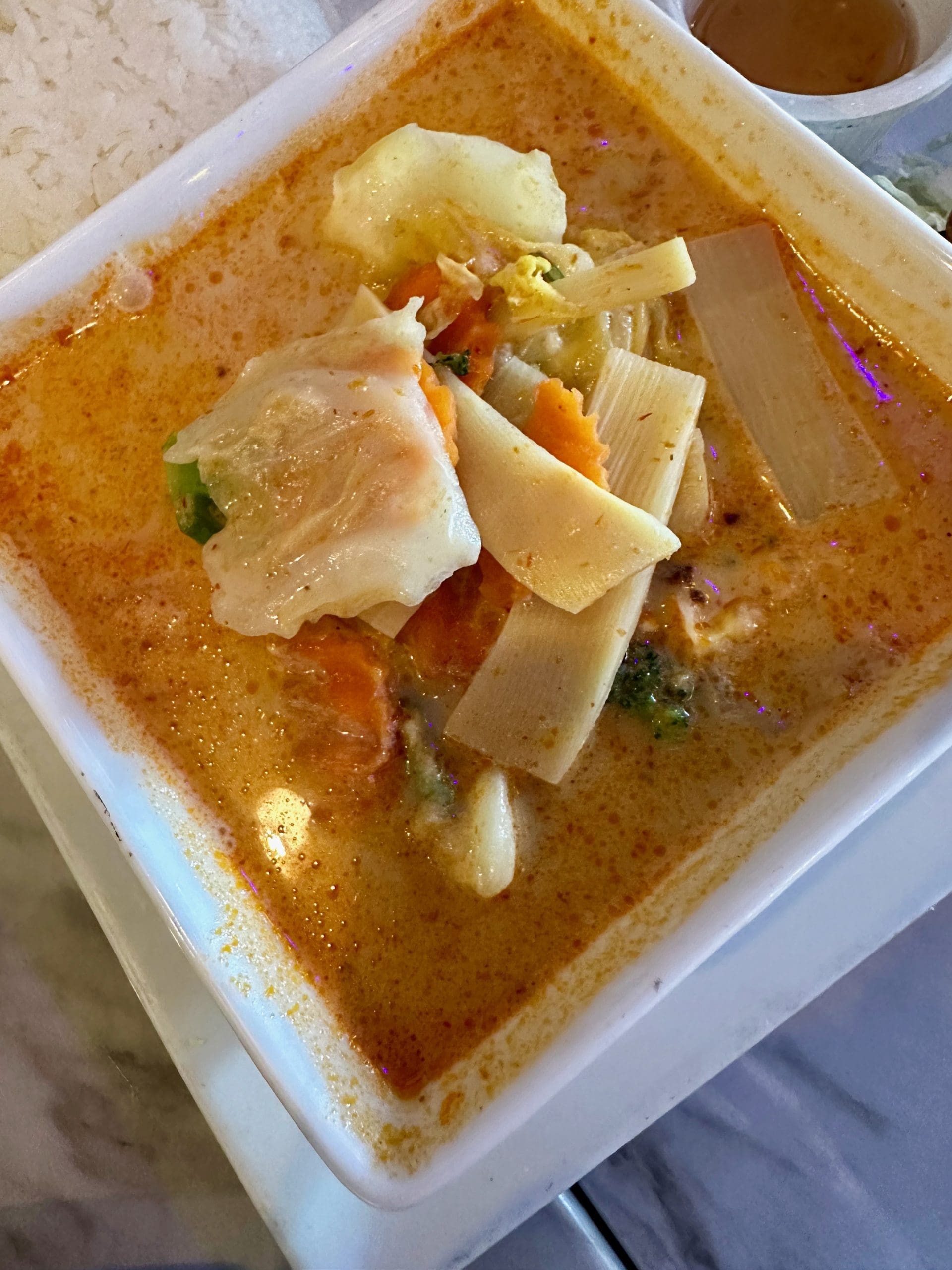
Sa! Thai Restaurant – Albuquerque, New Mexico

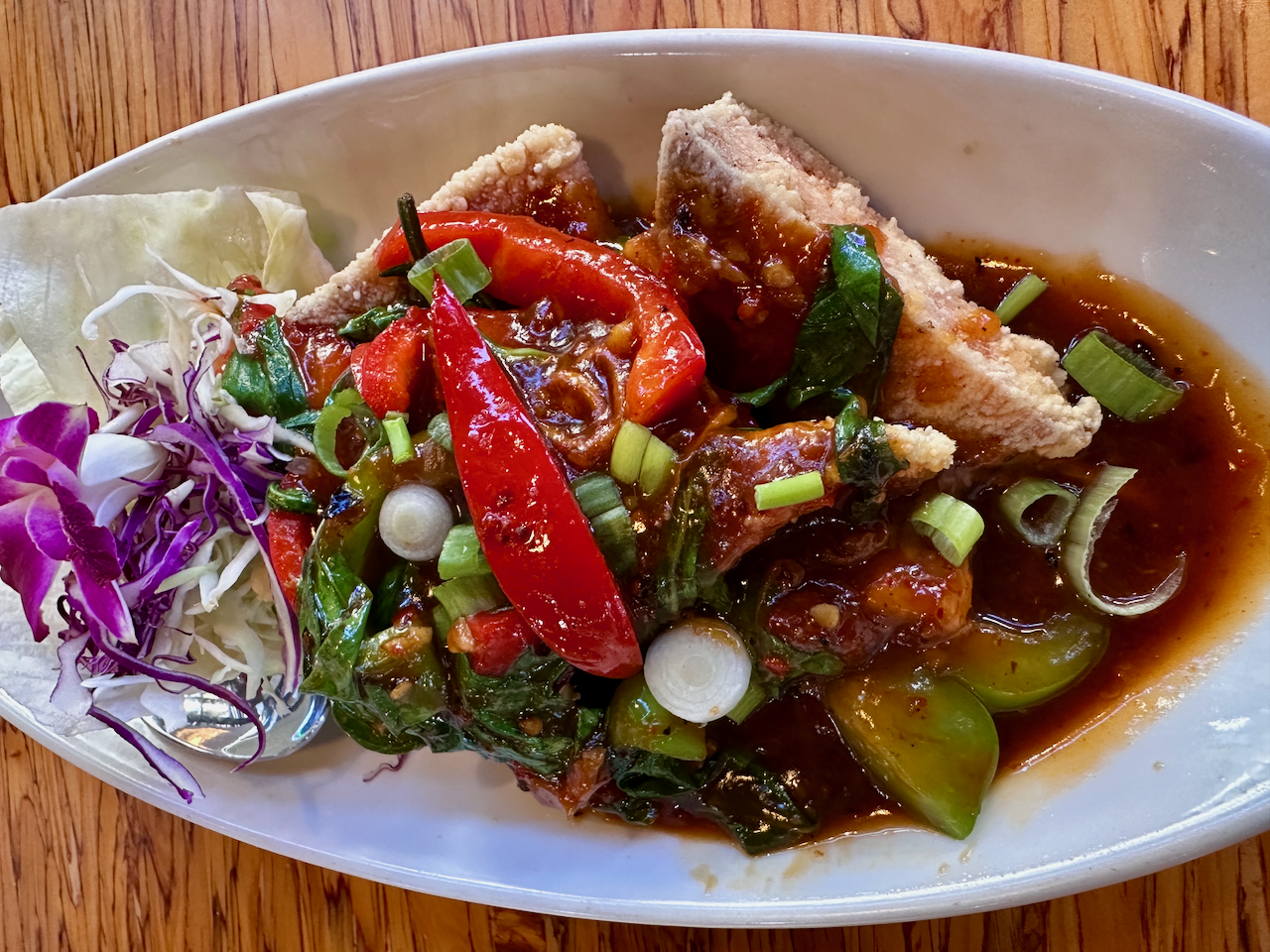
In 2023, TasteAtlas, an “encyclopedia of flavors, a world atlas of traditional dishes, local ingredients, and authentic restaurants” compiled a ranking of the 100 best cuisines in the world.  The highest rated cuisine in the world (to no surprise) was Italian followed by Japanese then Greek.  Thai cuisine was ranked 17th in the pantheon of great cuisines, just one slot ahead of American cuisine (whatever that is).  TasteAtlas also named Phat Kaphrao (also known as Pad Grapao or “holy basil stir-fry”), a dish made from meat, chili and basil, as the “best stir-fried dish in the world.”  Among the highest rated dishes, Phat Kaphrao ranked third overall.  Considering 395,205 dishes were rated, Phat Kaphrao’s place in the standings signifies it as one of the best dishes you can possibly order. Before even looking at a menu, linguaphiles (those of us who love languages and words) need to know what “Sa!” translates to.  Seeing “Sa! Thai”  on the marquee, you might think in its entirety “Sa! Thai” might be pronounced “satay,” the popular Thai appetizer of seasoned, skewered and grilled meat, served with a sauce.  Instead, “Sa!” is a shortened version of “sawatdee,” a phrase that means “Hello.”  This phrase is…

Thai Spice – Albuquerque, New Mexico

“Thai food ain’t about simplicity. It’s about the juggling of disparate elements to create a harmonious finish. Like a complex musical chord it’s got to have a smooth surface but it doesn’t matter what’s happening underneath. Simplicity isn’t the dictum here, at all. Some westerners think it’s a jumble of flavors, but to a Thai what’s important, it’s the complexity they delight in.” ~Chef David Thompson Complexity of flavors, disparate elements, a jumble of flavors…these are the expectations diners have come to expect from Thai restaurants. The underlying foundation of Thai cuisine, going back to Chinese influences as early as the 10th century, is to achieve a satisfying and exciting taste experience through the relationship between five fundamental tastes: sweet, salty, spicy, sour and bitter. Properly balancing these flavors is the true essence of Thai cooking. Overemphasizing any of these fundamental tastes, particularly “sweet” and a Thai restaurant risks its cuisine being labeled “Americanized.” For a cuisine to be considered “Americanized” isn’t necessarily a bad thing. Generations of Americans have grown up enjoying American Chinese foods developed by Americans of Chinese descent. Such familiar offerings as chop suey, crab Rangoon, pepper steak, fried wontons, sesame chicken and even the ubiquitous…

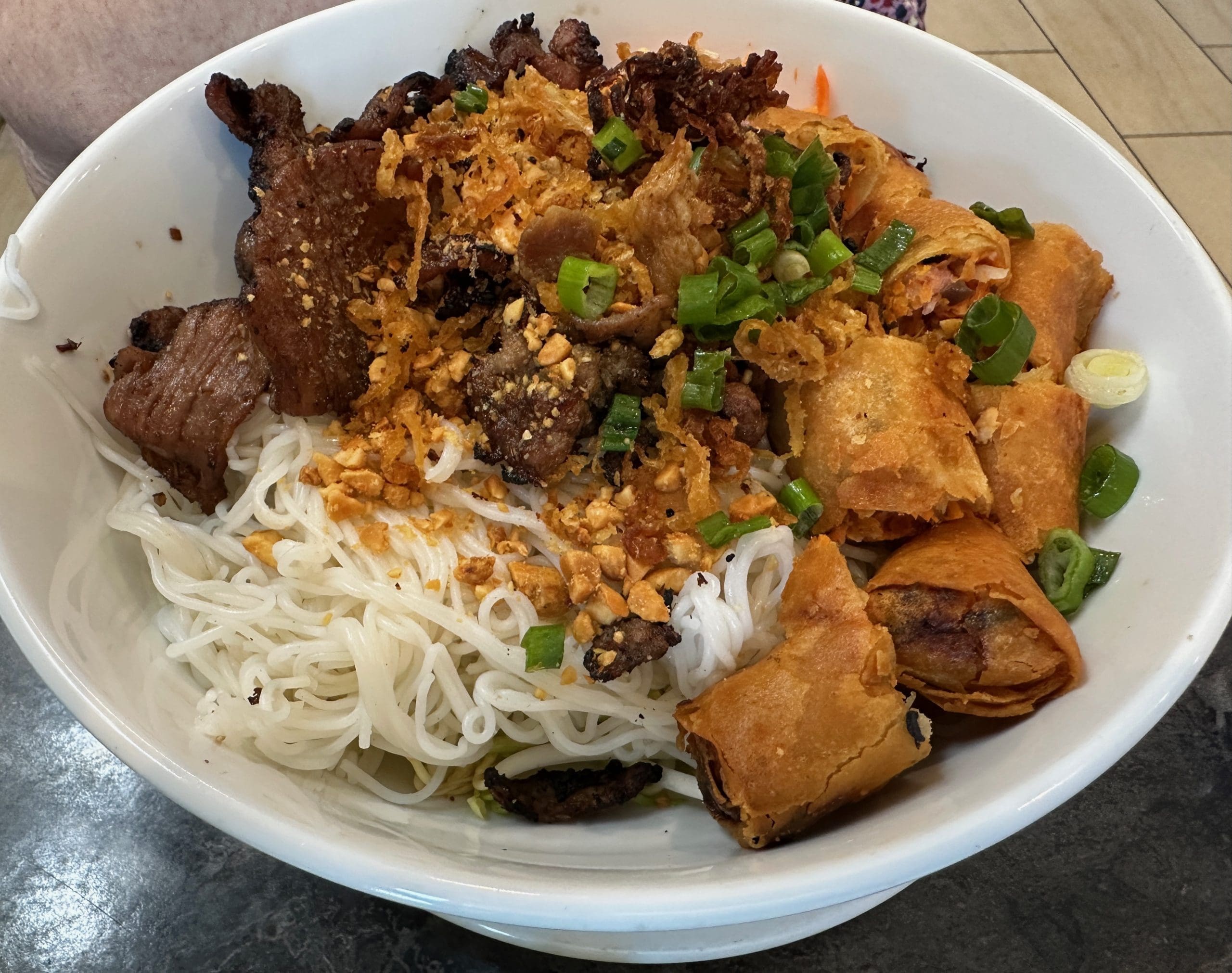
Pho #1 – Albuquerque, New Mexico

Beef.  How do I love thee? Let me count the ways. I love thee to the depth and breadth and height my pho spoon can reach. Okay, I’m no Elizabeth Barrett Browning, but if I were to count the ways I love beef, the count might stop at seven–as in the special seven courses of beef offered at Pho #1.  Serving  the Duke City for more than two decades, Pho #1 makes an audacious claim by virtue of its name but it’s a claim with which loyalists will agree.  It’s an International District gem that continues to thrive in a neighborhood some diners eschew. With more than one-hundred items on the menu–not including the seven courses of beef–Pho #1 offers a veritable compendium of Vietnamese food favorites including a large selection of pho bo (beef noodle soup).  Pho is the classic Vietnamese fast food, served in a large soup bowl with fresh rice noodles topped with your choice of beef slices (rare steak, well-done flank, brisket, tendon, tripe, skirt flank and beef ball) then sprinkled with chopped green onion, cilantro leaves and sliced onion.  Each bowl is accompanied by a plate of bean sprouts, sliced jalapenos, lime and basil. Pho…

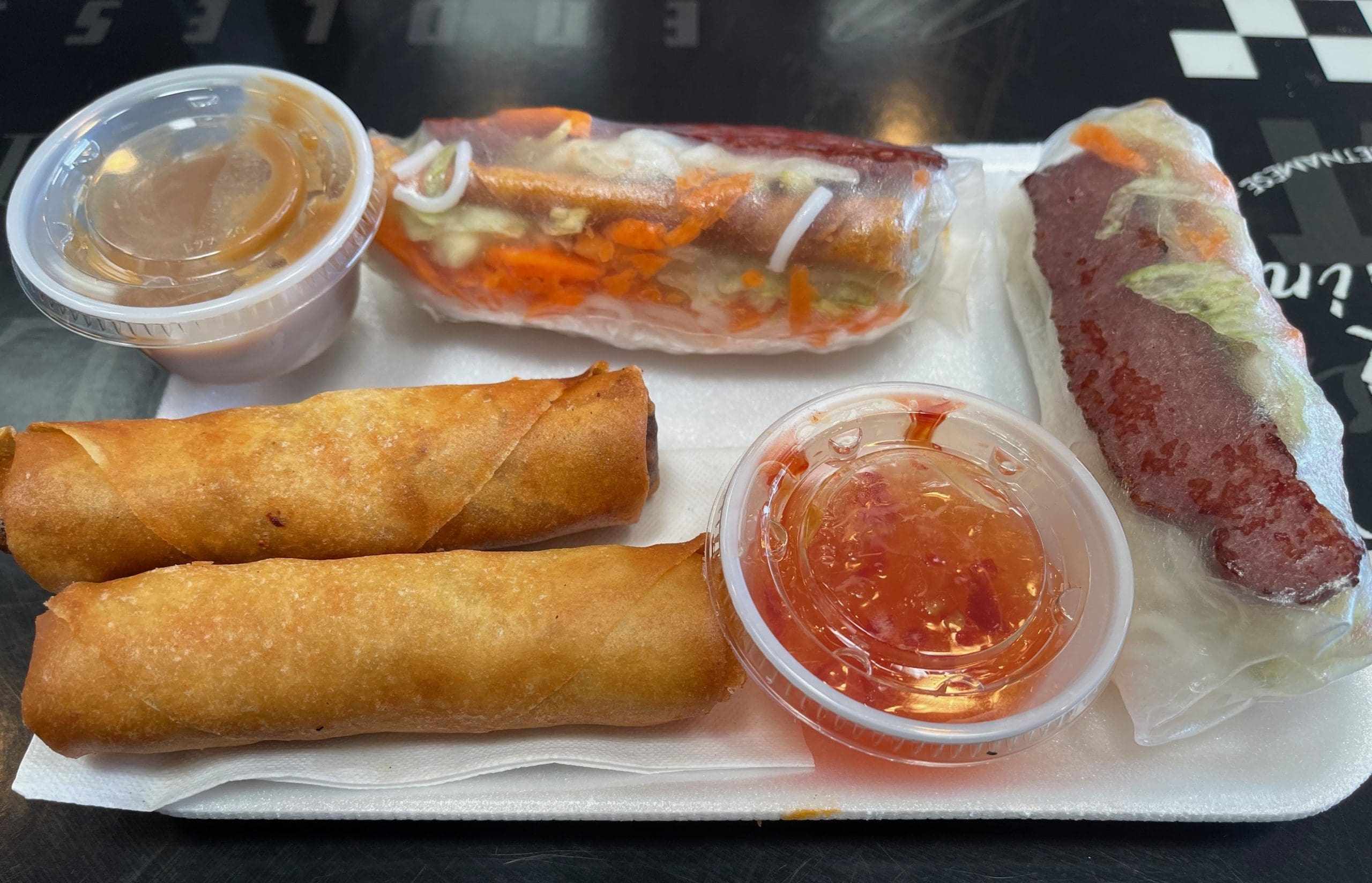
Spring Rollin’ – Albuquerque, New Mexico

Reclusive American poet Emily Dickinson insisted a light exists in spring that’s not present at any other time of year. If you’ve ever spent a winter in the Northern Hemisphere at a latitude of 42° or more, you know what it’s like to long for that light. You can relate to the irritability and restlessness of having fewer than eight hours of sunlight during winter months. You know what it’s like to head to work in the dark and return home in the dark. You know the confinement of cabin fever when persistent rain or snow keep you indoors for prolonged periods of time. If you’ve experienced long, dark winters, you celebrate the return of spring. In northern climates, the advent of spring is celebrated as a return to warmer weather, new growth and increased daylight. While most countries celebrate spring festivals a couple of weeks after the much loathed Daylight Savings Time, China’s Spring Festival (better known as the Chinese New Year) begins somewhat earlier. Generally falling on a day between January 21st and February 20th in the Gregorian calendar, this spring festival is the grandest festival in China. China’s spring festival is a seven-day long holiday in which…

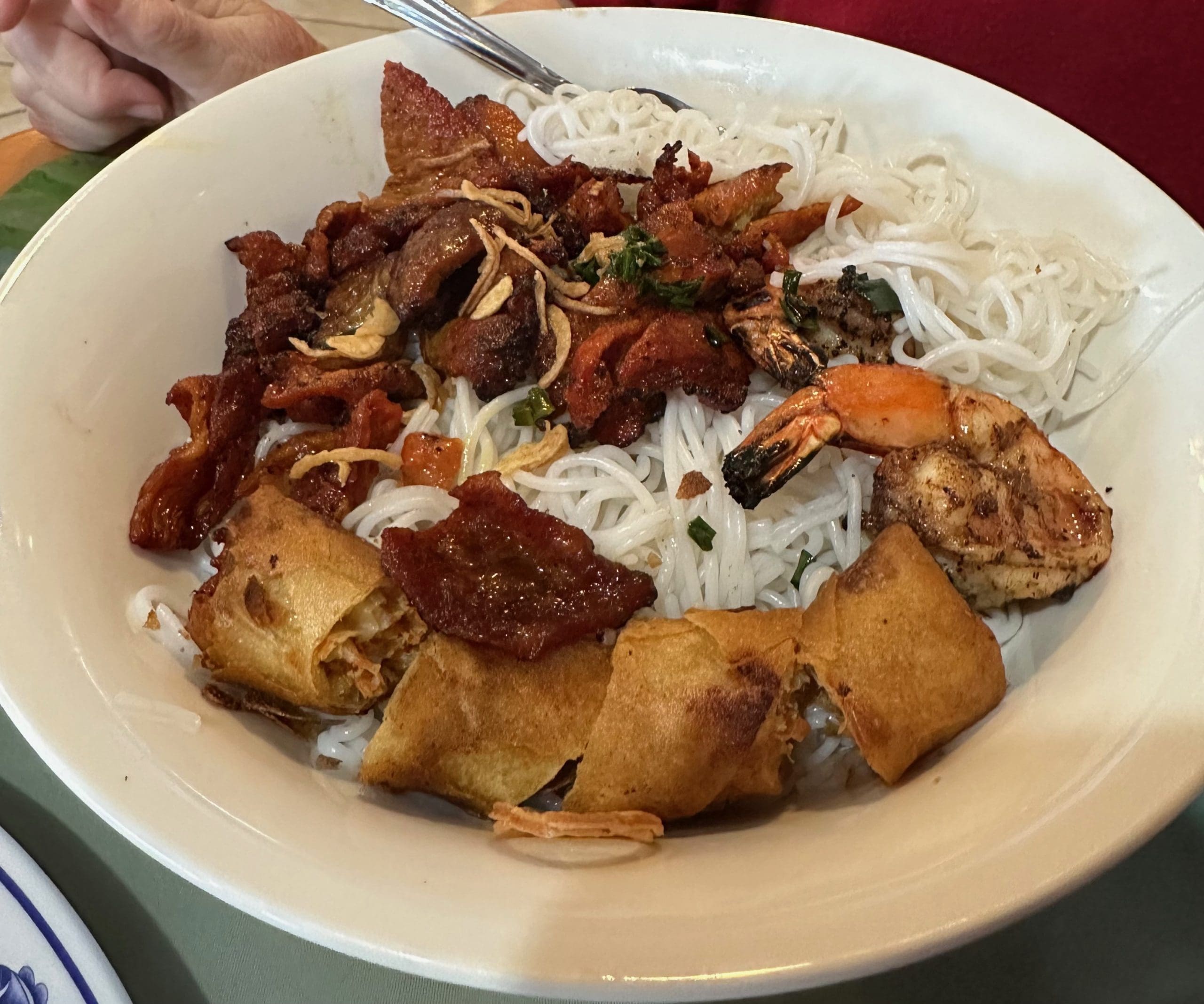
Saigon 2 Restaurant – Rio Rancho, New Mexico

In Chinese and Vietnamese cultures, numerology is very important. If you’ve traveled extensively, you may have wondered why the term “Pho” followed by a number is so commonplace. Often these numbers are considered lucky–and not necessarily across an entire culture. A number may be lucky on a personal level, perhaps marking a date that’s special to the restaurant owner. Espy a restaurant named Pho 66and the number 66 may well represent the year the owner fled Vietnam during the war. Restaurants named Pho 75 may well be honoring 1975, the year Saigon fell. Numerical repetition is also considered fortuitous. The City of Vision certainly counts the number eleven as a lucky number. November 11th, 2011 at precisely 11 o’clock AM (11/11/11 at 11AM) saw the launch of Rio Rancho’s third Vietnamese restaurant when Saigon 2 Restaurant opened its doors on Southern Boulevard. The restaurant is situated in an 1,800 square foot space that’s about a thousand feet smaller than Saigon Restaurant, its elder sibling on San Mateo. Because the Rio Rancho restaurant is smaller, the menu is somewhat abbreviated–115 items instead of 145 items. Fish dishes are not be served in Saigon 2, but for the most part, the dishes…

Saigon Restaurant – Albuquerque, New Mexico

According to some stereotypes, when you eat Chinese food, you’ll be hungry an hour later.    That stereotype is known as the “Chinese food paradox.”   One of the culprits behind that stereotype is rice, a very starchy food which metabolizes quickly.  Others blame monosodium glutamate (MSG) when hunger creeps in shortly after finishing a meal. Italian food is also shrouded in stereotype. “The trouble with eating Italian food,” according to British writer George Miller, “is that five or six days later you’ll be hungry again.” With Italian food–at least Americanized Italian food served in some of the ubiquitous chains–portions are often enough to feed a village in a developing country.  A plethora of pasta, tons of tomato sauce, mountains of meatballs.  Is it any wonder Alka Seltzer’s most famous commercial depicted a poor sap bemoaning the consumption of dozens of Mamma Mia’s spicy meatballs? These stereotypes may have been fashioned in humor, but there may be some elements of truth behind them. Unfortunately many of the stereotypes about Vietnamese food are based on inaccurate and xenophobic untruths perpetuated in many cases by people who haven’t tried Vietnamese food. The stereotype which should persist about Vietnamese food is that it leaves…

Lime Vietnamese Restaurant – Albuquerque, New Mexico

Kevin: What am I looking at here? Donna: It’s pho. Kevin: It’s what? Donna: Pho. Kevin: Well pho looks like a clogged sink. What are those chunks floating around in there? What is that? Donna: It’s chicken. You love chicken. Kevin: Do they make this outside? What is this? <pulls up a single basil leaf> Donna: Seasoning. Just try it. Kevin: <slurps up spoonful and contemplates flavor> Donna: Is it good? Kevin: <holds up finger and slurps up another spoonful; slaps palm on table> Kevin: Hold the pho-one. This is insane! This existed this whole time and you don’t tell me about it? Donna: Yeah and wait til you try the beef. Kevin: <look of utter surprise> This comes in beef? ~ Kevin Can Wait If you’ve ever introduced an unadventurous dining companion to the wonder of utter deliciousness that is Vietnamese cuisine, you can probably relate to that little snippet from the CBS comedy series Kevin Can Wait. Kevin exemplifies the culinary neophyte who is reluctant to try new foods, especially those which might be considered exotic or strange. Life’s travels and travails haven’t afforded them the opportunity to experience and enjoy such foods, so it’s up to us,…