La Sierra New Mexican Restaurant – Albuquerque, New Mexico

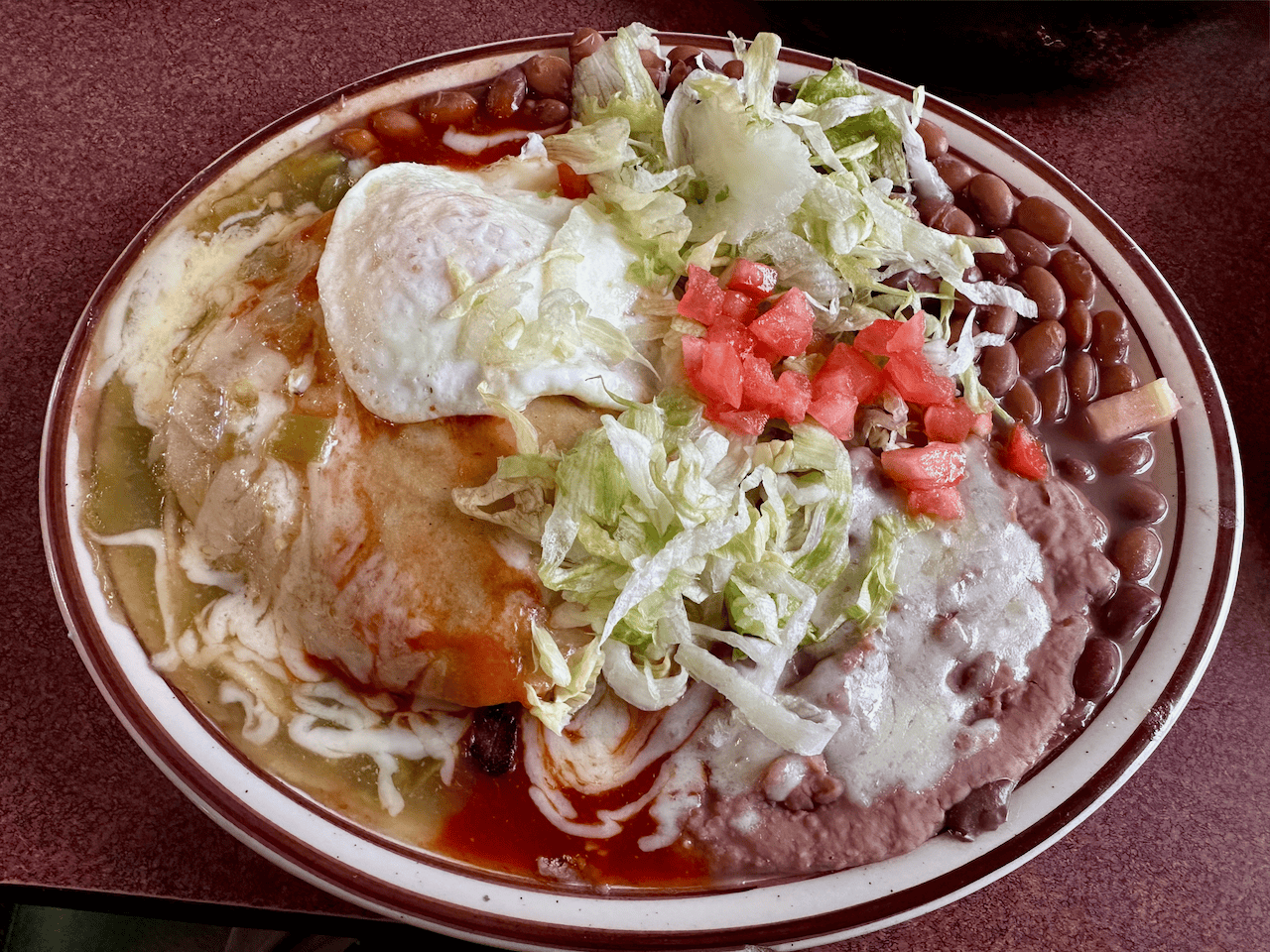
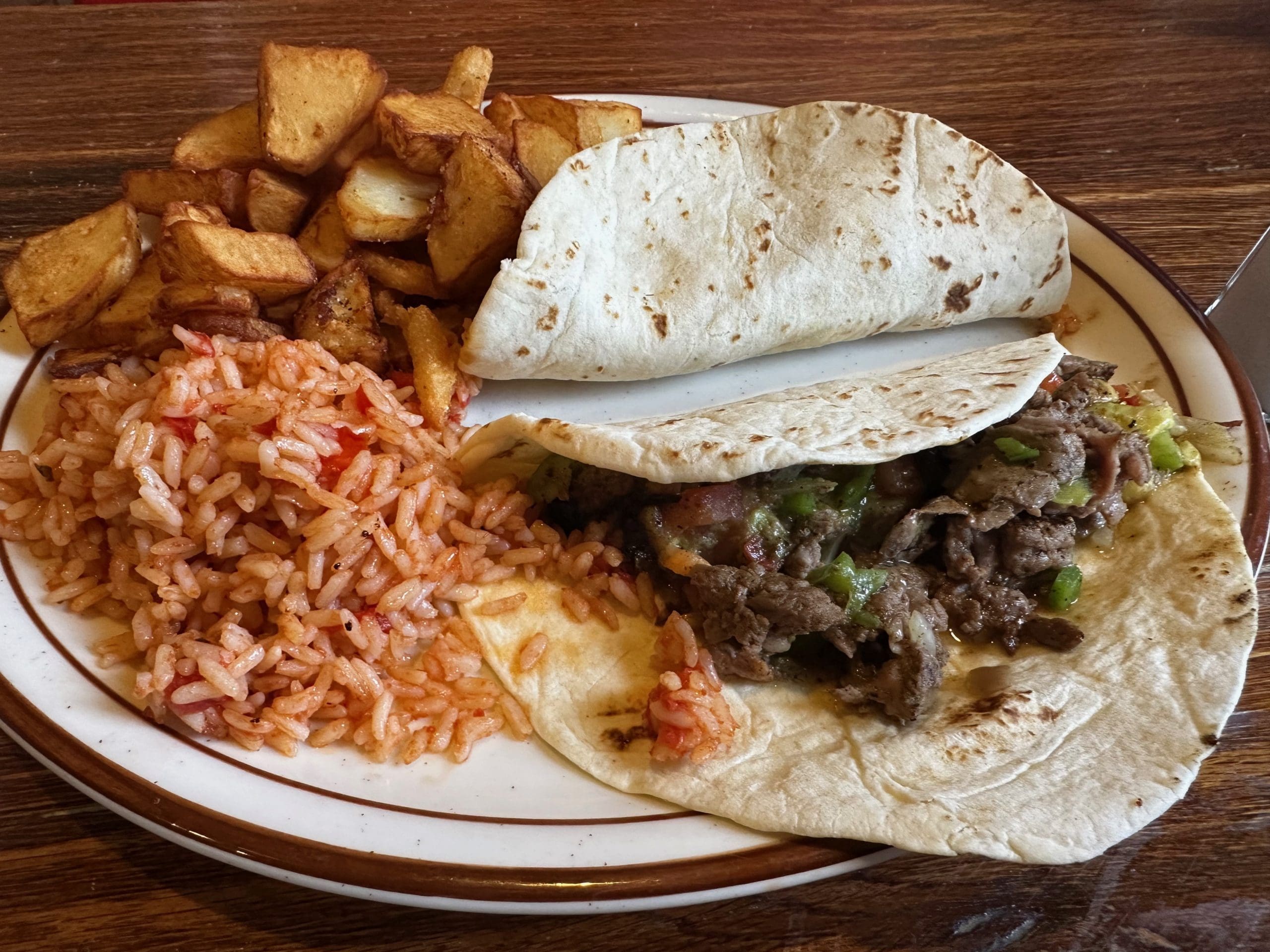
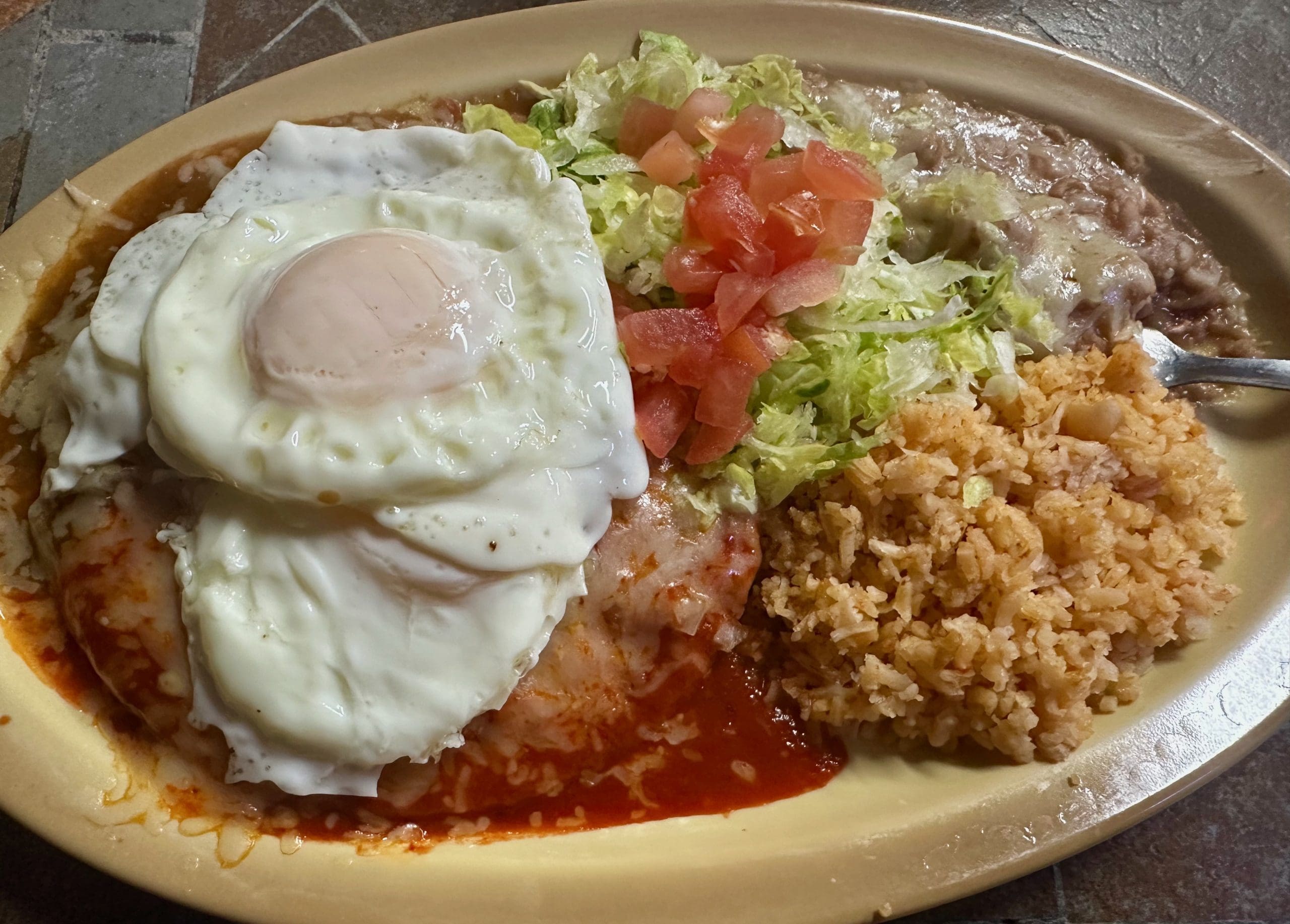
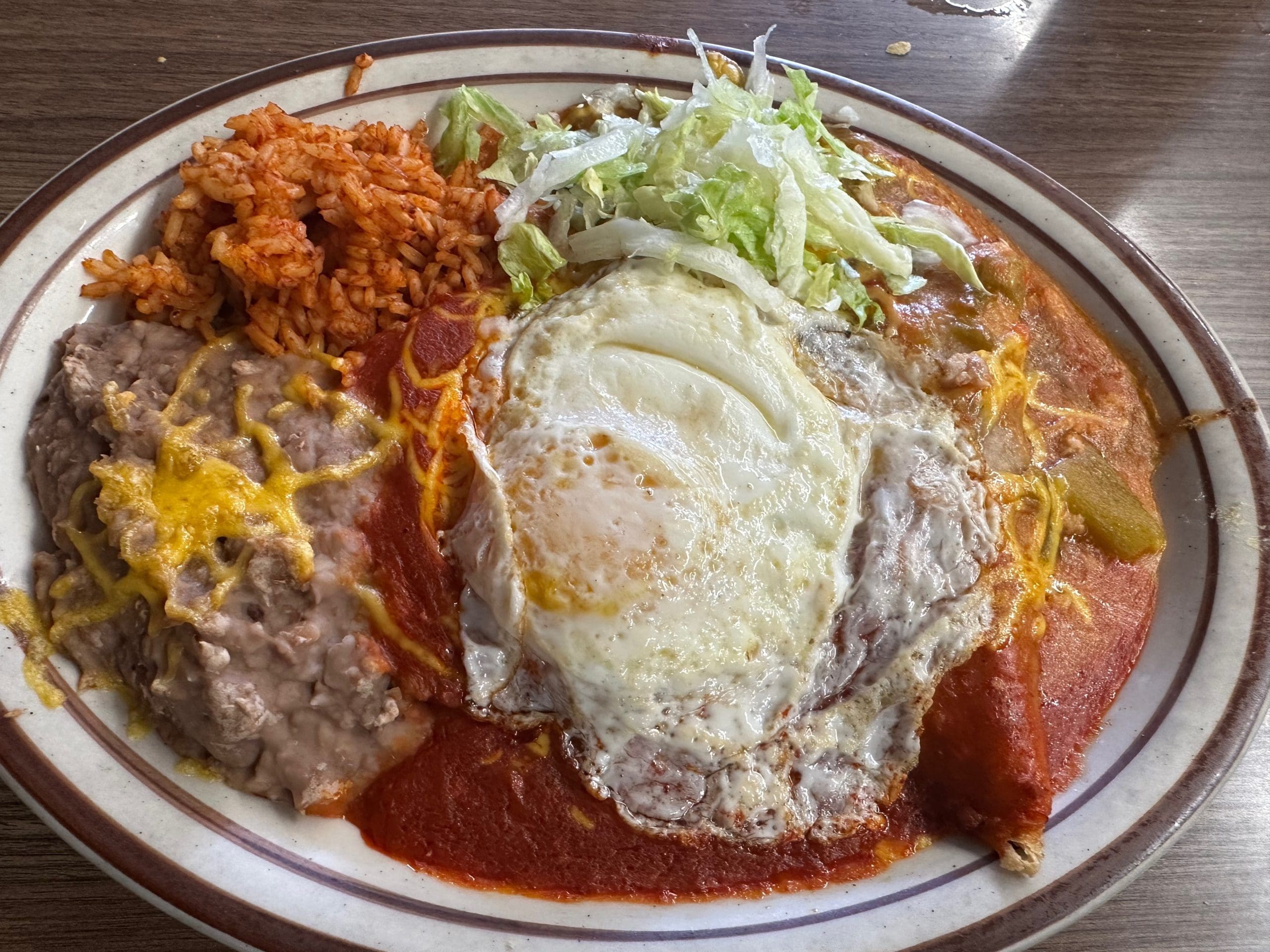
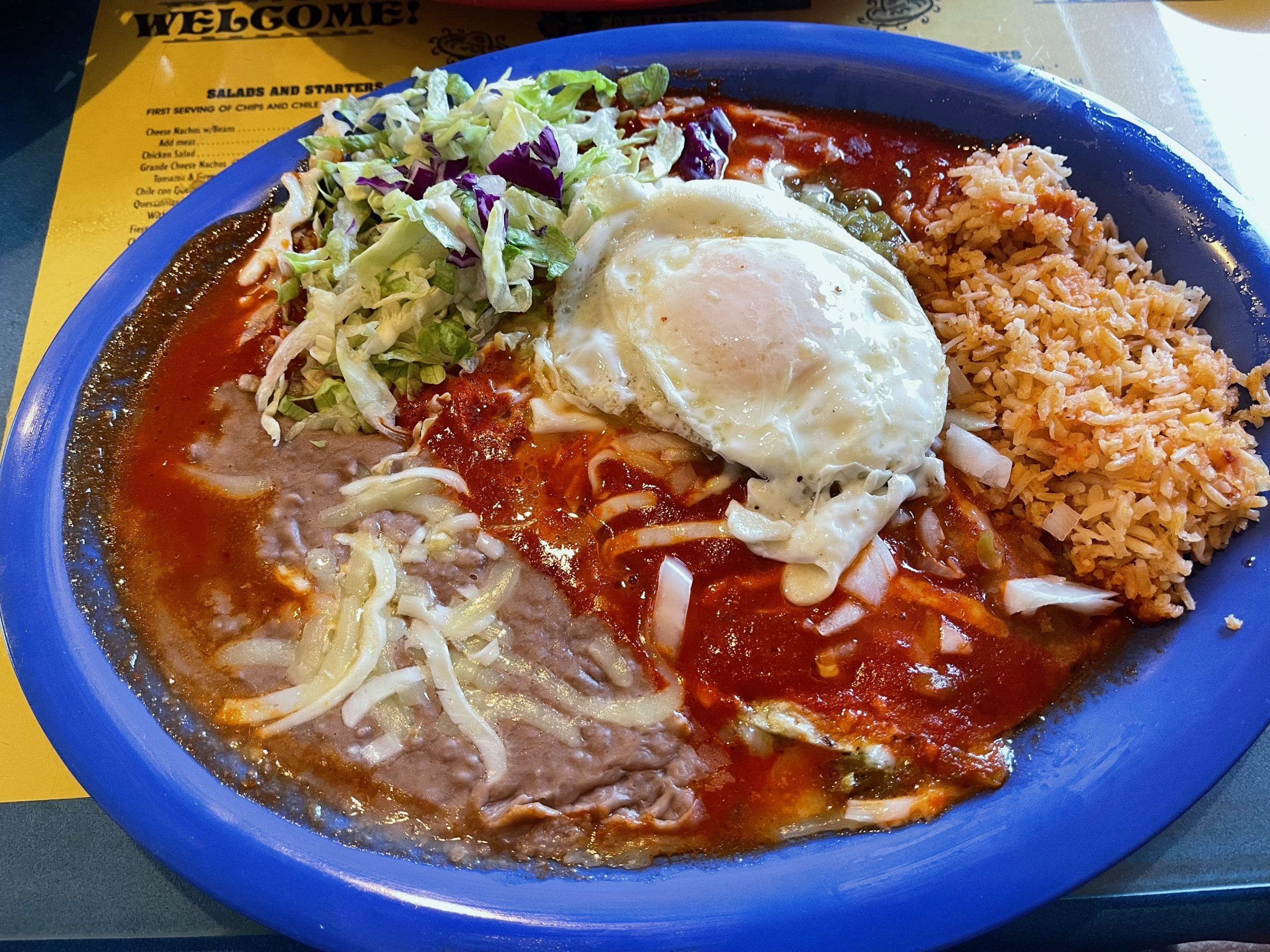
“I eat uno, dos, tres, quatro burritos Pretty soon I can’t fit in my Speedos Well, I hope they feed us lots of chicken fajitas And a pitcher of margaritas” ~Taco Grande by Weird Al Yankovic While perusing the slogans–One Bite And You’re Hooked; Cooked Slow, Served Hot, Loved Fast; Hot Chile makes Everything Better” on the windows of La Sierra, I half expected to see lyrics from the “Weird “Al Yankovic song “Taco Grande”  (a parody of the song “Rico Suave”).  What I didn’t expect was for La Sierra to live up to its self-aggrandizing hype.  Of course, diners always hope a restaurant is as good as it professes to be, but all-too-often an eatery doesn’t live up to the hype.  La Sierra does…and then some! Albuquerque’s very first instantiation of La Sierra (not to be confused with the venerable Mac’s La Sierra) launched in July,  2025 on the corner of Menaul and University at the site of a former Little Anita’s.   Some nine months later, a second La Sierra opened its doors.  This one is located on Alameda just west of Corrales Road. You may recall that this location once housed The Whole Enchilada which was later renamed…

Los Cuates – Albuquerque, New Mexico

Of the five variations of twins that occur commonly throughout the world, the most common fraternal (non-identical) occurrence is male-female twins which transpire in about 40% of all twins born. Fraternal twins may share up to 50% of their genes and generally are no more similar or dissimilar than any other two siblings.  Although technically not twins because they were “born” four years apart, the Duke City’s most famous twins are the Los Cuates restaurants (cuates being the Spanish word for twins), named for Antoinette and Marcus, the fraternal male-female twins of founder Frank R. Barela, an inspiration for all of us who started at the bottom and worked our way up. Barela got his start in the restaurant business in 1971 as a busboy at Silvano’s, a legendary Duke City purveyor of New Mexican food.  In 1985, he bought Silviano’s and renamed it Los Cuates after his newborn children.  In 1989, he took over another Albuquerque landmark of the era, Cocina De Carlos Mexican Restaurant, across the street from his first eatery. Because of the two restaurant’s twin-like proximity, he also named it Los Cuates…not Los Cuates I and Los Cuates II, just Los Cuates.  Note: While walking the…

Perea’s Tijuana Bar & Restaurant – Corrales, New Mexico

The curious appellation “Tijuana Bar” dates back to the 1920s when the 18th amendment to the Constitution established Prohibition in the United States during the period 1920 to 1933. Because Prohibition forbade the sale of alcoholic beverages, many Americans got their alcohol illegally or they went to Mexico. Tijuana was a popular vacation and honeymoon destination and it happens to be where Teofilo C. Perea, Sr. and his bride honeymooned in the 1920s. The newlyweds visited a bar called the “Tijuana Bar” and decided then and there to use that name should they ever open a bar. Bureaucracy being what it is, once a license to dispense alcohol is issued, it’s very difficult to change the name on the license–hence Tijuana Bar. It fits. Housed in one of the oldest buildings in Corrales, a 200 year plus old structure constructed of “terrones” or thick slabs of earth rather than adobes, Perea’s Tijuana bar & Restaurant doesn’t subscribe to the notion that all food served in Corrales has to be of high-brow fru-fru variety. In fact, for outstanding home-cooked New Mexican food, Perea’s is one of a handful of restaurants vying for “best restaurant” in the Duke City area. In my…

La Posta De Mesilla – Mesilla, New Mexico

If only walls could talk, you’d want the adobe brick walls at La Posta (The Inn) to recount their impressions of the veritable “who’s who” of Western history who once sought shelter within its fortified walls.  You’d want those walls to reveal their thoughts of legendary outlaw Billy the Kid who hung out at La Posta on his road to notoriety.  You’d want those walls to tell you about the steely presence of General Douglas MacArthur, who commanded Allied forces in the Pacific Theater during World War II. You’d want those walls to share their account of Generalissimo Pancho Villa, another sojourner who sought shelter at La Posta.  Certainly no raconteur could provide the details known only to the walls at La Posta when it quartered controversial frontiersman Kit Carson or for then General, later President, Ulysses S. Grant. Built in the 1840s by Sam and Roy Bean, themselves  historical luminaries, La Posta was originally a freight and passenger service.  After the Civil War, it became part of the Butterfield Stagecoach line which ferried passengers and mail from eastern outposts in Memphis and St. Louis to California.  During the 1870s and 1880s, the sprawling edifice was home to the Corn…

Papa Felipe’s Mexican Restaurant – Albuquerque, New Mexico

In 2009, James Beard Award-winning food journalists Jane and Michael Stern published a terrific tome entitled 500 Things to Eat Before It’s Too Late. Despite the ominous (some might say fatalistic) name, the book is actually a celebration of the best dishes that are unique to this country. The Sterns, who have been focusing on quirky All-American food haunts since 1977, describe in delicious detail, the best dishes proffered at roadside stands, cafes, street carts throughout the fruited plain. In an interview with the Wall Street Journal, Michael Stern was asked if the inclusion of the words “too late” in the book’s title referred to the “death of the small eatery, or the reader’s impending doom from eating too much fried chicken, French fries and fried fish.” He indicated he was referring to “the impending onslaught of the nutrition police who will make all of this stuff illegal one of these days.” He also warned of the loss of “some variety and some local specialties that were once easy to find and are now hard or impossible to find due to chain restaurants.” Despite the onslaught of the ubiquitous national food chain, Stern was optimistic that “Americans have become more…

Chope’s – La Mesa, New Mexico

During my Kim’s inaugural visit shortly after we retired from the Air Force in 1995, we ran into a former Las Cruces resident now living in the nation’s capital. His near teary-eyed testimony about how much he missed Chope’s was more powerful than a Sunday sermon.   When he kissed the hallowed ground in front of Chope’s, we knew he meant it.  An elderly gentleman recounted the time Chope’s salsa was so hot it made him hiccup for three days.  A middle-aged woman from Las Cruces rhapsodized about Chope’s chile rellenos, her testimony practically eliciting involuntary salivation in the impromptu audience of queued patrons.  Chope’s has had a similar effect on most its guests for six generations. Perhaps the consummate mom-and-pop operation, Chope’s had the most humble of beginnings.  Nearly a century ago,–1915 to be precise–Longina Benavides began selling enchiladas to her neighbors in the farming community of La Mesa.  A   kerosene lantern hanging outside the front door of the circa 1850s family home signaled the availability of  enchiladas just off the stove.  When Longina’s son Jose inherited the home, he and his wife Lupe continued the family tradition of feeding their neighbors.  They named the family business “Chope’s,” the…

Monroe’s New Mexican Food – Albuquerque, New Mexico

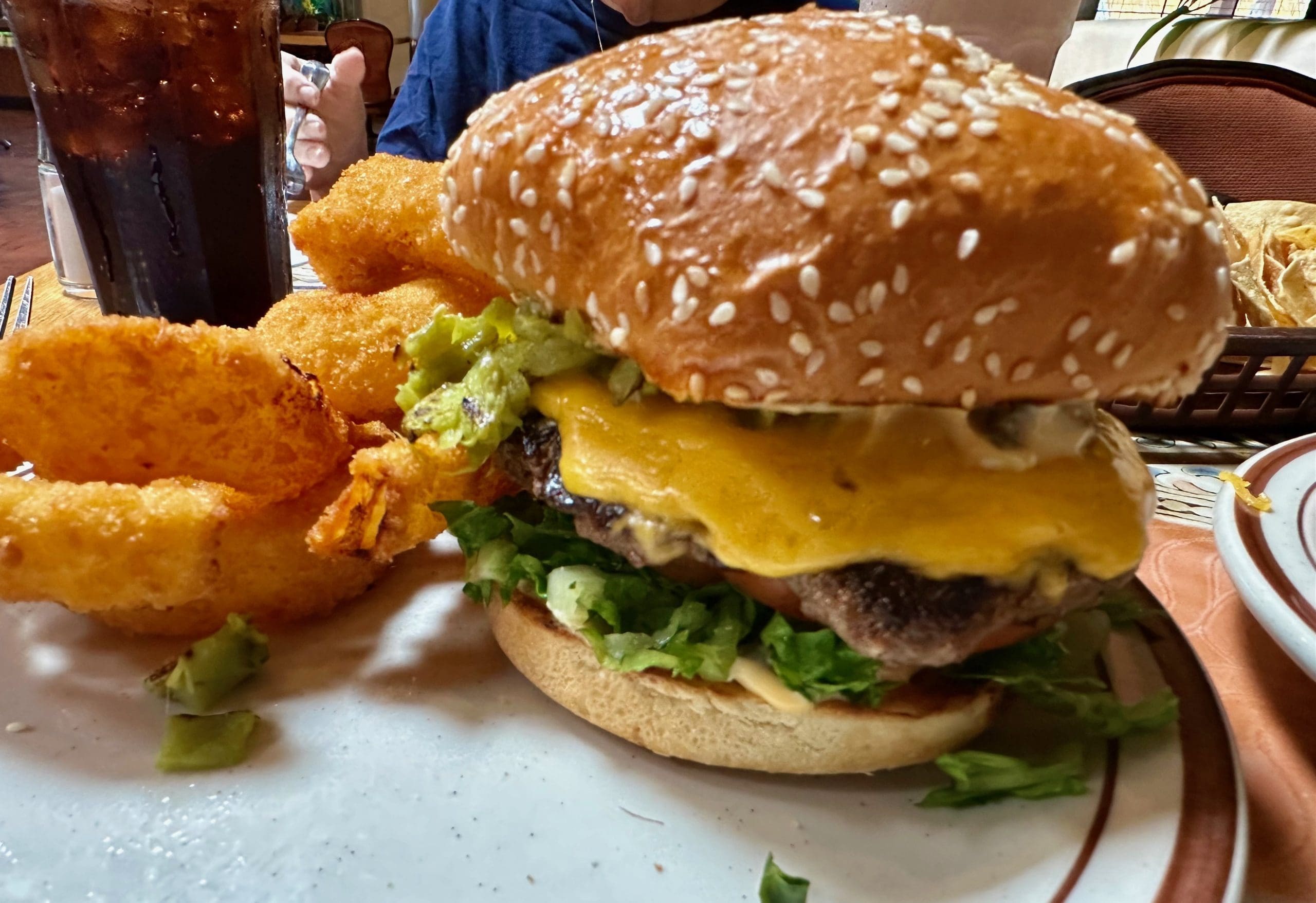
If I’ve learned anything from dining at Monroe’s, it’s that I shouldn’t leave the restaurant with any regrets.  Invariably what I end up regretting most often is that I didn’t have the green chile cheeseburger, one of the very best in town, if not the Land of Enchantment.  It’s a green chile cheeseburger so good that I’ll order it during three consecutive visits before ordering anything else on the menu–and when I don’t order it, I lament not having had my ardor quelled by its utter deliciousness. Some may question how a restaurant with such an “Anglicized” appellation as Monroe’s can possibly proffer such an enchanting green chile cheeseburger, much less any other  excellent New Mexican cuisine.  Frankly, it could have been even worse.  Monroe’s was originally owned by a Scandinavian named Monroe Sorenson who owned a small chile parlor on the corner of Rio Grande Boulevard and Mountain.  So, the restaurant’s name might well be Sorenson’s, a name you might  otherwise associate with lingonberries, lutefisk and even reindeer meat. In 1979, Miguel Diaz, a native of Puerto Rico who grew up in New York, purchased Monroe’s and moved it to a refurbished gas station on Lomas (1520 Lomas, N.W.)…

Jerry’s Cafe – Gallup, New Mexico

The Land of Enchantment is bisected north to south by the murky and mucky Rio Grande which meanders some 700 miles through the state.  Throughout the millennia, the fourth longest river in America has been the often tenuous lifeline upon which New Mexico’s citizenry has relied for sustenance and for recreation.  Its precious waters are multifarious in their use–from human and animal consumption to the sustainment of agricultural systems and so much more.  Depleted over time by human dependence and a perpetual drought condition, it is nonetheless a linchpin for New Mexico’s future even as demand for its resources increases and stresses on the river grow. The Rio Grande Corridor is where the vast concentration of New Mexico’s urban centers exist and more than half of its population (over one million) resides.  The four most populous cities in the state–Albuquerque, Las Cruces, Rio Rancho and Santa Fe in that order–are all within this riverine corridor.  It’s been that way for the estimated 10,000 years in which New Mexico has been inhabited.  The arable lands near the Rio Grande, for example, is where a vast concentration of the indigenous peoples the Spaniards named “Pueblos” chose to live.  Considering their dependence on…

NOPALITO RESTAURANT – Las Cruces, New Mexico

Growing up in rural Northern New Mexico, my siblings and I thought all Mexican food was the same–the way my mom, grandmothers and aunts prepared it (which is to say it was outstanding).  At the time New Mexicans hadn’t universally acknowledged that the genesis of our cuisine wasn’t solely Mexico.  Back then, only the most savvy culinary historians were crediting Spanish and Native ingredients and preparation techniques as differentiating factors that made New Mexican cuisine unique.  It also wasn’t that long ago New Mexicans were spelling our official state vegetable as “chili.”   No, that’s not an episode of the Twilight Zone.  It’s the way it was just a few decades ago when all three of  my sisters matriculated at New Mexico State University. We didn’t know what to think when they’d return home on long weekends and holidays and prepared these strange and different “Mexican” dishes.  Sour cream enchiladas?   Con queso made with muenster cheese?  Green chile salsa?  Rolled enchiladas?  Gorditas?  Those “Mexican” restaurants in Las Cruces were either revolutionizing Mexican food or they didn’t know what they were doing.  It didn’t take long before we all embraced these new dishes and looked forward to sampling other delights from…

Abuelita’s New Mexican Kitchen – Bernalillo and Albuquerque, New Mexico

Abuelita–perhaps no word in the vernacular of Spanish Northern New Mexico evokes such veneration, reverence and, for those of us who have lost these heaven-sent treasures, a melancholy ache not even time can erase. The abuelita is the family matriarch, the heart of the extended family and the sagacious matron to whom you go for counsel, consolation and cooking. For generations, New Mexico’s abuelitas have been nurturing their families with the simple foods passed down by their own abuelitas. Before the proliferation of New Mexican restaurants, abuelita’s was where the family congregated–no special occasion was necessary because any time with your abuelita was a special occasion. Dining at Abuelita’s New Mexican Kitchen in Bernalillo or Albuquerque won’t replace dining at your own abuelita’s, but you’re guaranteed a good meal, sizeable portions and genial, attentive service. As at your own abuelita’s home, there’s almost always something going on in the kitchen. Abuelita’s is open for breakfast, lunch and dinner every day but Monday and has been serving Bernalillo since 1984. Photographs honoring abuelitas of local patrons festoon the muted yellows and earth tones of the restaurant’s walls. Fittingly the shirts worn by the wait staff sport the motto “panza llena, corazon…

El Camino Dining Room – Los Ranchos de Albuquerque, New Mexico

Many of us who predate, however slightly, the explosion of institutionalized fast food retain a fondness for the remaining independent family restaurants whose arsenal in the competition for hungry diners consists of reasonable portions of great meals at budget-conscious prices all served by a friendly and accommodating waitsfaff. An Albuquerque restaurant which epitomizes those ideals is the El Camino Dining Room, captured brilliantly above by the fabulous photographer Deanna Nichols. The El Camino was built by Clyde H. Tyler in 1950, five years after the latest “war to end all wars” and 13 years after Route 66 was “straightened” so that it would bypass Santa Fe completely.  Albuquerque was much more innocent back then.  Some might even describe it as a “cow town trying to be a city.”  At the time, 44% of America’s population resided in rural areas and the Duke City’s population was only 96,800. Despite no longer being part of Route 66, one of the city’s busiest thoroughfares was 4th Street on which commerce was burgeoning.  It was the perfect location for an independent family restaurant, far from the cavalcade of Howard Johnson’s type restaurants which grew along the interstates. Similar to Howard Johnson’s which prided itself…