Patty Man – Albuquerque, New Mexico

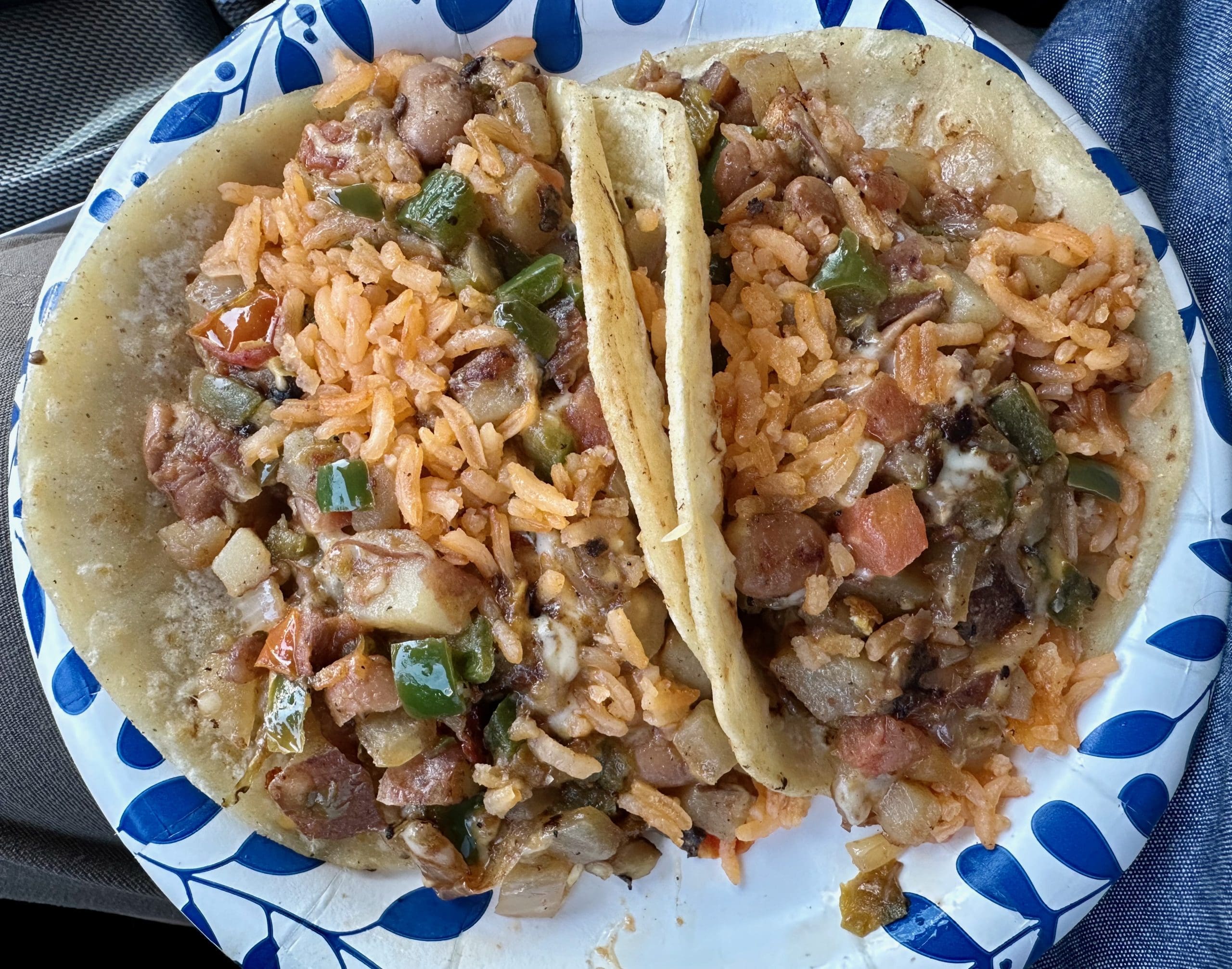
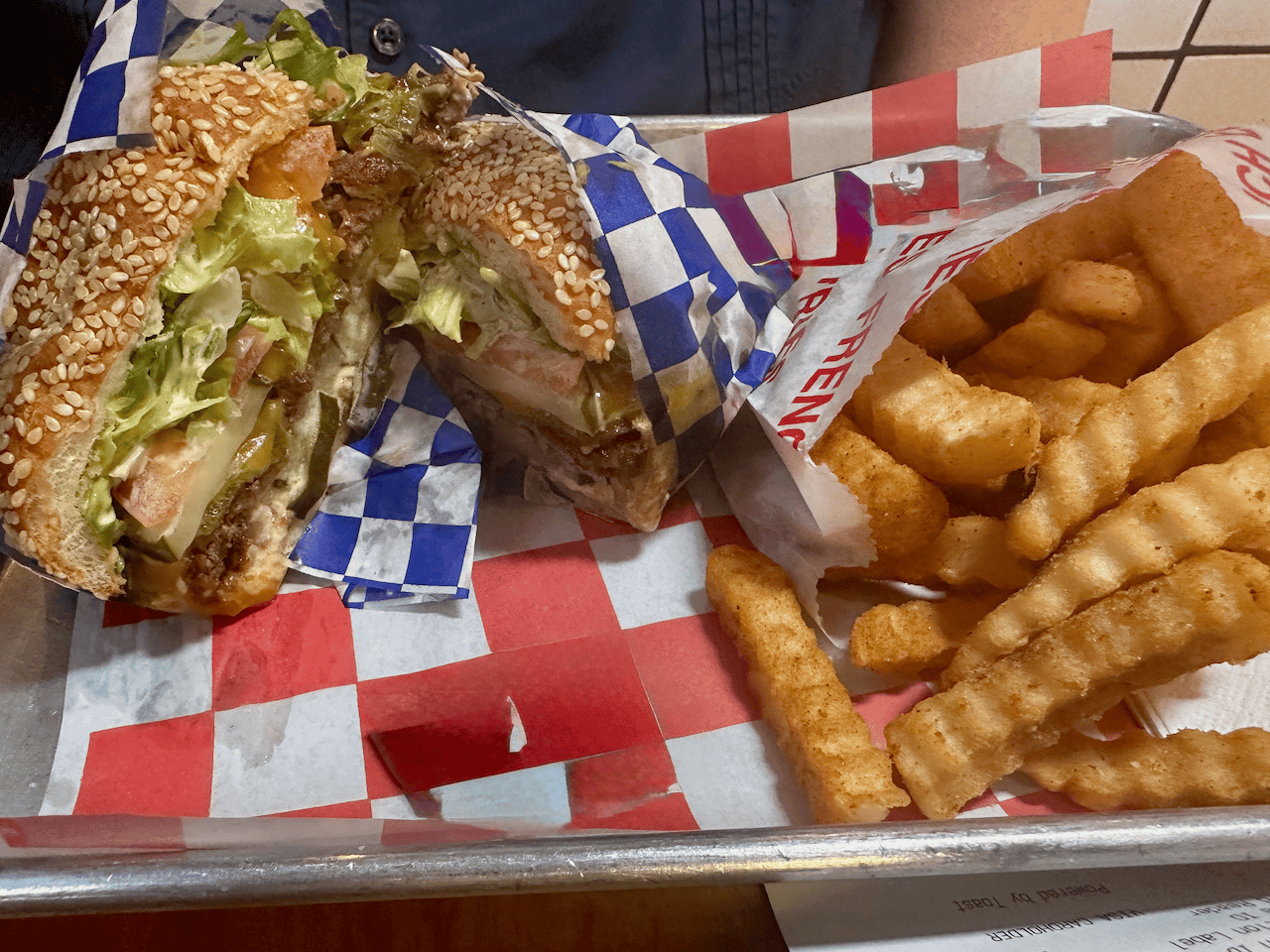
“Hotter than a sizzling flat-top, More powerful than a wood-fired grill, Able to stack towering flavors in a single bite… Look, up at the Sawmill! It’s a James Beard semifinalist It’s the king of the grill… It’s The Patty Man!“ Chef Sean “The Patty Man” Sinclair is a self-effacing guy, more like mild-mannered reporter Clark Kent than his “man of steel” alter ego.  You won’t see Chef Sinclair run into a phone booth to don his apron and toque nor will gawking crowds point toward him and utter “Look!  In the kitchen, it’s a cook.  It’s a chef.  It’s Sean Sinclair.”   Despite having been a semifinalist in the James Beard Foundation’s “Best Chef – Southwest” honors for 2025, he’s chosen a path that’s not as likely to garner such recognition as his previous stint as the executive chef at Level 5 at Albuquerque’s Hotel Chaco in Albuquerque Despite having served as a sous chef at the world-renowned, multiple-time three-Michelin starred restaurant The Inn at Little Washington, Chef Sinclair has left the more glamorous world of fine-dining to focus on more humble culinary ventures. In October 2025 and transitioned from executive chef at Level 5 to pursue entrepreneurial ventures with Heritage…

El Chile Toreado – Santa Fe, New Mexico

Until 2008, the notion of gourmet culinary offerings being proffered by a mobile conveyance was unheard of.  Prior to then, food trucks were (often rightfully so) known as “roach coaches” or even worse “barf buggies.”  Roach coaches were an eyesore, a medium of last resort usually parked at construction sites, manufacturing plants, public parks or basic military training bases where captive trainees had no alternative.  Roach coaches were a pure convenience with no pretense to gourmet (or even good) cuisine.  Most of them hawked simple fare such as hot dogs and tacos as well as potato chips, cigarettes, candy and chewing gum. During the era of “convenience stores on wheels,” food trucks weren’t worried about building a brand.  Nor were they concerned with repeat business or customer loyalty. There was no such thing as social media at the time and there were no Yelp reviews. These unsightly vehicles (many with actual roaches in tow) were in business to serve a location for a short time period. After at construction job ended at one site, for example,  they would simply move onto the next profitable location and the process would continue.  These “convenience stores on wheels” served a purpose, but during…

Horno Restaurant – Santa Fe, New Mexico

By the time my Kim and I returned to New Mexico in 1995, the days of my family steam-baking chicos in hornos were long past, but she sure was intrigued by our mud and adobe outdoor ovens.  She wasn’t so much interesting in exaggerated tales of our back-breaking labors, but of the process of baking chicos in those hornos.  We explained that the process began by building a fire inside the oven and letting it burn for hours–long enough for the hornos’ mud walls and floor to acquire a thermal capacity perfect for steaming corn.  The corn isn’t inserted into the horno until all that’s left of the fire is red embers.  With the corn nestled comfortably atop the ashes, we would sprinkle water over the corn to inspire steam. We would then seal the horno door with adobe bricks,  We would also seal the “smoke hole” in back of the horno.  The corn was then baked overnight. At this point you might still be wondering what “chicos” are. Chicos begin as an ear of field corn which is tied into ristras (strings) and hung to dry. Alternatively, as we preferred, the corn is baked (steamed) in an horno where…

THE LOVE APPLE – Taos, New Mexico

If the Roman Catholic Church in the 16th century had had its way, the tomato might not be a ubiquitous ingredient in the cooking of many cultures today. So, just what is it about the seemingly innocuous tomato that once earned it a scurrilous reputation in the Church, the type of reputation which made it the Paris Hilton of the nightshade family? Brought to Europe by the Spanish conquistadors, it was initially viewed with apprehension, thought not to be edible but purely decorative–and poisonous. Leave it to the French to change that perception by ascribing aphrodisiac properties to what they called pomme d’amour or love apple. This prompted the Roman Catholic Church of the time to declare the tomato the “fruit of the devil,” a sinful indulgence. >The scandalous tomato, its sensuous red color and sweet-tangy flesh spurting with red juiciness, was even believed to be the fruit Eve offered to Adam. Because of its role in original sin, the Church believed the tomato to have been cast off to the furthest reaches of man (the new world), where it could no longer be the tempting source of transgression (sins of the flesh).  Leave it to the Spanish explorers to…

Barrio Cafe – Phoenix, Arizona (CLOSED)

A neighborhood should never be defined solely by grids and lines on a map or by a physical area where people live.  Nor should a neighborhood be defined by areas made homogeneous by restrictive covenants.  Neither should it be defined by brick-and-mortar landmarks.  What truly makes a neighborhood is its diverse and unique characters. Some are quirky and eccentric, some are brash and loud, others are indistinct and don’t stand out, but all are essential in weaving that beautiful neighborhood tapestry, that compendium of personalities that make up a community. The 16th Street “Barrio” neighborhood in Phoenix, Arizona is rich in both characters and character.  The latter is evident in the color wheel of unabashedly audacious and brash murals festooning the walls along the street.  It’s art with an attitude, art that inspires double-takes.  Who needs a gallery when you can drive up and down 16th Street and see better-than-museum-quality art depicting the culture and personality of the barrio: the iconic imagery of Dia De Los Muertos figures, low riders, masked luchadores, Mayan deities and so much more.  One of the most vivid threads in the rich and diverse tapestry that is the Phoenix’s 16th Street “barrio” neighborhood is Chef Silvana…

Tikka Spice – Albuquerque, New Mexico

“Fly once more like you did before, Sing a new song chicken tikka!” ~Chiquitita Misheard Lyrics You might think by virtue of my name and then gangling gait, school mates at St. Anthony’s in Penasco would have tagged me with the nickname “Gilligan.”  Instead, because I was considered a bit of a brainiac prone to sesquipedalian lexicon, my nickname was “The Professor.”  It was a sobriquet worn like a badge of honor.  Professor Roy Hinkley was my hero, a brilliant scientist marooned on an uncharted desert isle with six other stranded castaways.  The Professor built such cool gadgets as a Geiger counter, lie detector, battery charger and much more…usually with coconut shells, wire and papaya seeds.   The Professor, in fact, built almost everything the castaways needed to ensure their comfort and safety (including phones, lights and rudimentary pedal-powered motor cars).  The only thing he couldn’t figure out was a way to patch the U.S.S. Minnow to effect an escape from the tropical island nest.  Considering my frustrations at not being able to prepare Indian food, I wonder if The Professor would have been able to master that confoundingly complex art.  Scratch that!  Anyone who’s able to make nitroglycerine from…