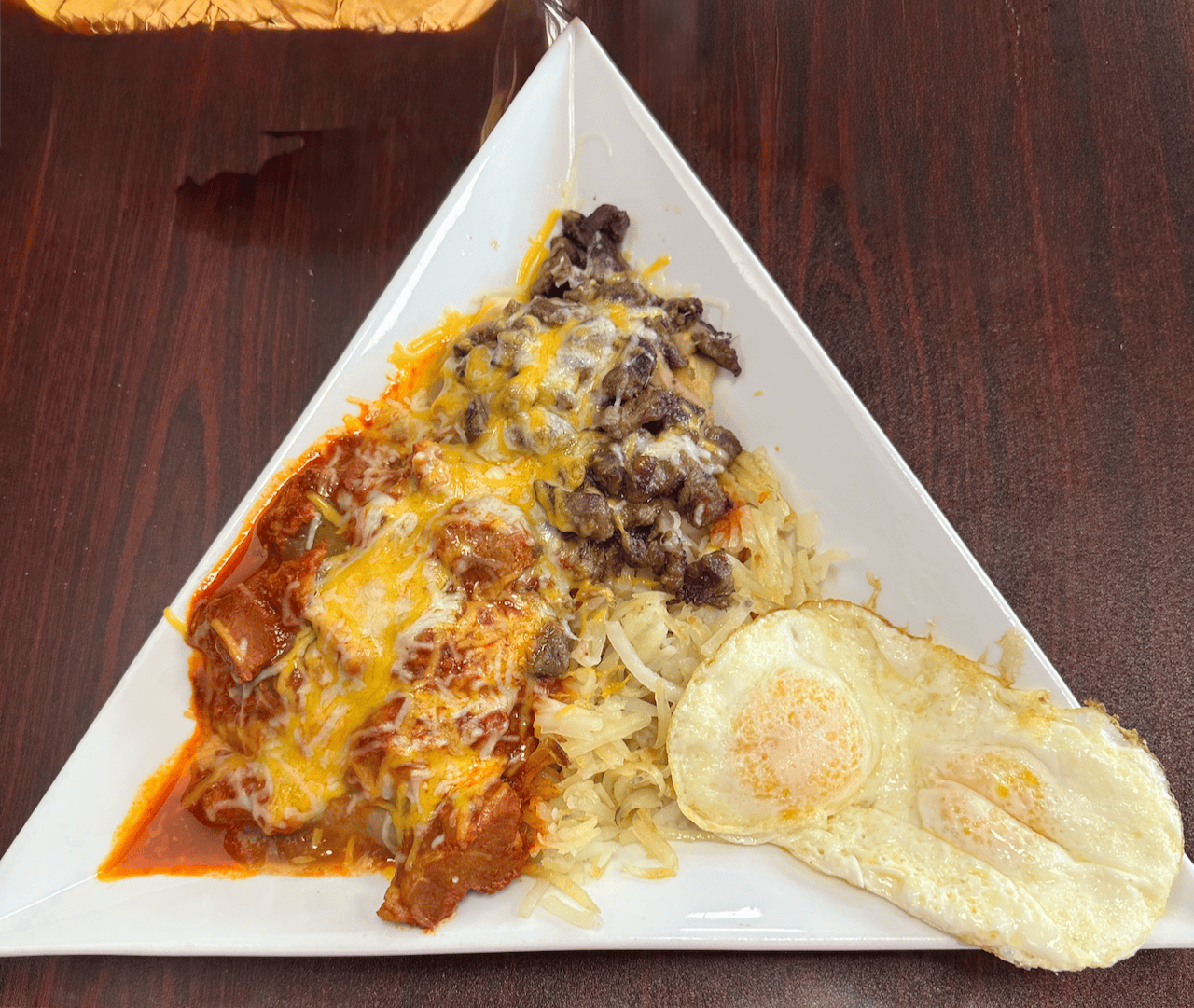
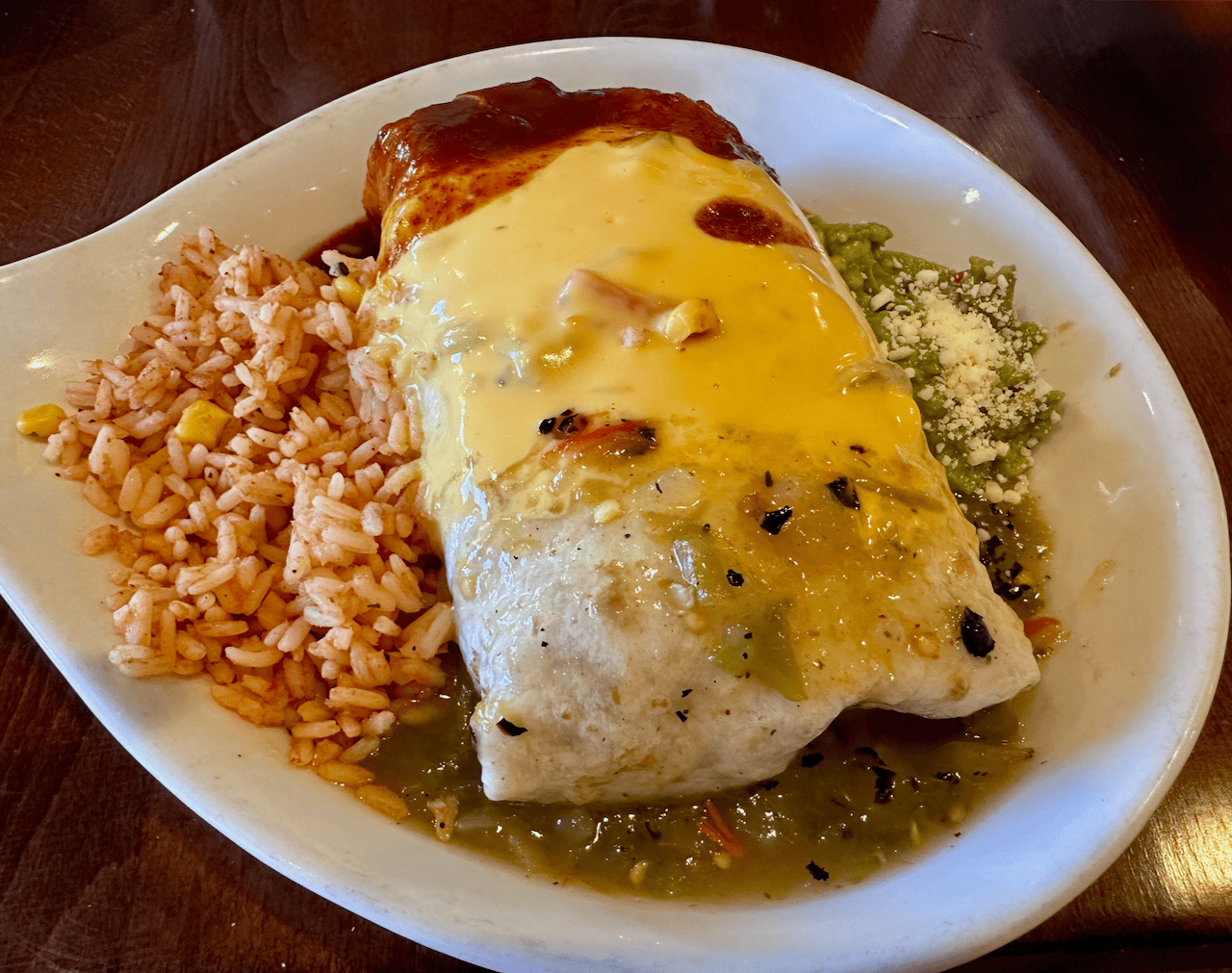
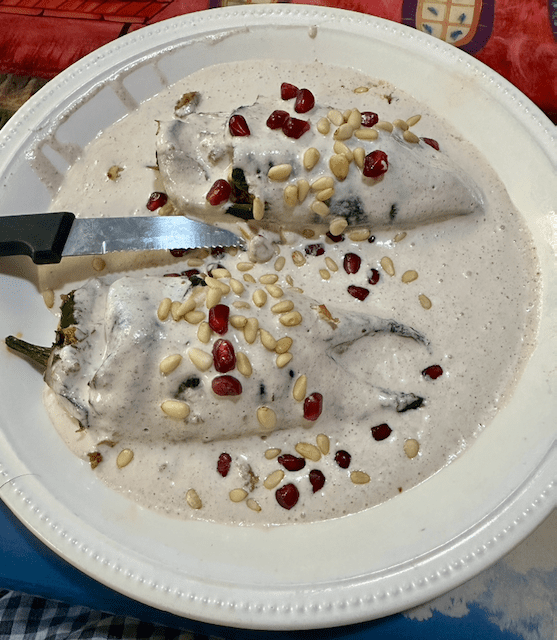
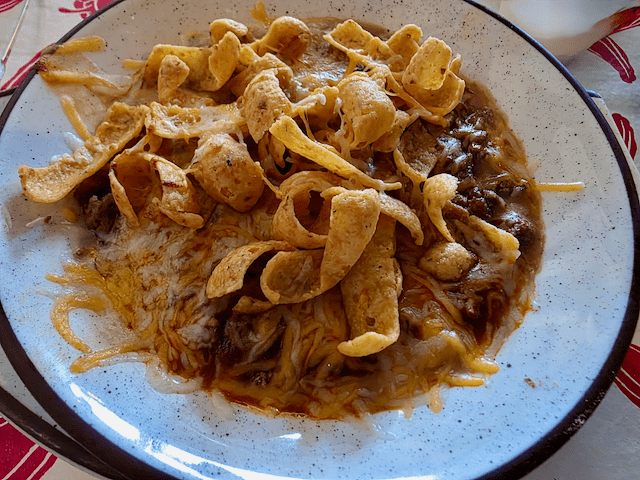
Delicias Cafe – Albuquerque, New Mexico

There’s no denying the ever-increasing popularity of Mexican food across America, but it may surprise you to learn that in the estimation of some sources, it has supplanted Italian food as the favorite ethnic cuisine in the land. Marketplace, a nationally syndicated business oriented radio program with more than nine-million listeners a week, says there’s no bones about it, calling Mexican food “the most popular ethnic food in the U.S., bigger than Italian or Chinese.” Askmen.com confirms only that “Mexican has become one of the three most popular cuisines in the U.S., with nearly 90% of the total population having tasted it.” According to Marketplace, there are some 90,000 or so Mexican restaurants across the fruited plain. The loose categorization…

Perea’s Tijuana Bar & Restaurant – Corrales, New Mexico

The curious appellation “Tijuana Bar” dates back to the 1920s when the 18th amendment to the Constitution established Prohibition in the United States during the period 1920 to 1933. Because Prohibition forbade the sale of alcoholic beverages, many Americans got their alcohol illegally or they went to Mexico. Tijuana was a popular vacation and honeymoon destination and it happens to be where Teofilo C. Perea, Sr. and his bride honeymooned in the 1920s. The newlyweds visited a bar called the “Tijuana Bar” and decided then and there to use that name should they ever open a bar. Bureaucracy being what it is, once a license to dispense alcohol is issued, it’s very difficult to change the name on the license–hence…

Las Villas Taqueria – Rio Rancho, New Mexico

Upon learning that a new Mexican restaurant named “Las Villas Taqueria” would be launching in Rio Rancho, the bilingual lexicologist in me didn’t immediately ponder the menu.  Instead, my ruminations were of the translation of “Las Villas,” a Spanish term with several meanings depending on context.  I pondered whethr the restaurant was named for  small towns or settlements or for  luxurious country homes, both translations of the term “las villas.”  Then again, “Villas” is a common Spanish surname.  After a superb meal with my dear friend Bill Resnik, I came to the conclusion that “Las Villas” is actually a diminutive form of “las maravillas,” or “the wonders.”  That’s wonder as in “a feeling of surprise mingled with admiration caused by…

Earl’s Family Restaurant – Gallup, New Mexico

Two years after the end of the “second war to end all wars,”  a hamburger joint in Gallup first opened its doors.  What started out as a small burger place with scant seating (four stools and a couple of booths) has grown over the years to accommodate legions of loyal guests, some of whom have been frequenting Earl’s Family Restaurant practically since its inception.  Today, the seating capacity at Earl’s approximates 300.   That’s just barely enough to accommodate crowds during peak hours  Earl’s is open seven days a week fror breakfast, lunch and dinner. At nearly eighty years of serving Gallup residents and travelers along historic Route 66, Earl’s shows no signs of surcease. As you amble through the canopied…

El Agave Mexican Restaurant – Rio Rancho, New Mexican

Even the teetotalers among us recognize the importance of agave in the production of tequila and mescal.   What most of us may not fully appreciate is  agave’s diverse cultural and culinary significance, particularly in Mexico.  For example, the drought-resistant succulent plant has been used in medicinal treatments such as treating wounds, digestive ailments, and even as a remedy for coughs and sore throats.  It’s a source of natural sweetener and a healthier alternative to refined sugars.  Restaurants in Mexico use it to prepare salsas, marinades, desserts and even some traditional dishes.  Agave even plays a prominent role in indigenous cultures where it’s revered and valued.  Many of us use it to xeriscape our yards throughout the Southwest. Since October, 2017,…

El Patron – Albuquerque, New Mexico

I was a strapping lad of fifteen when hired as a “box boy” at a country store in Peñasco. Now, being a box boy at a small village country store is to being a bagger at Smith’s or Albertson’s in Albuquerque what the red chile at Mary & Tito’s is to McCormick’s chili seasoning mix. The former is so much more than the latter. For one thing, my duties included bailing hay, rounding up cattle, stacking lumber, loading cement, operating a forklift and every once in a while actually bagging or boxing groceries. The job kept me in great physical condition for football season. “Eloy,” my fellow “box boy” was a crusty curmudgeon sixty-some years old who didn’t always take…

Fiesta Azul Tequila House Mexican Kitchen – Albuquerque, New Mexico

TIM WALZ: “I have white guy tacos.” VP KAMALA HARRIS: “What does that mean? Like, mayonnaise and tuna? What are you doing?” TIM WALZ: “Pretty much-ground meat and cheese.” VP KAMALA HARRIS:  “Do you put any flavor in it?” TIM WALZ:  “Uh, no.  Black pepper is the top of the spice level in Minnesota, ya know” A promotional  video featuring the Democratic Presidential nominee sharing a funny exchange with her Vice Presidential pick revealed the latter’s “Midwestern tastes” which include a “white guy taco.”   Analysis of America’s voting preferences has been done for virtually every demographic category save perhaps the “taco vote.”   Sadly, in the world of politics even a video elicits rancor and outrage when it depicts candidates behaving…

Papa Felipe’s Mexican Restaurant – Albuquerque, New Mexico

In 2009, James Beard Award-winning food journalists Jane and Michael Stern published a terrific tome entitled 500 Things to Eat Before It’s Too Late. Despite the ominous (some might say fatalistic) name, the book is actually a celebration of the best dishes that are unique to this country. The Sterns, who have been focusing on quirky All-American food haunts since 1977, describe in delicious detail, the best dishes proffered at roadside stands, cafes, street carts throughout the fruited plain. In an interview with the Wall Street Journal, Michael Stern was asked if the inclusion of the words “too late” in the book’s title referred to the “death of the small eatery, or the reader’s impending doom from eating too much…

Chope’s – La Mesa, New Mexico

During my Kim’s inaugural visit shortly after we retired from the Air Force in 1995, we ran into a former Las Cruces resident now living in the nation’s capital. His near teary-eyed testimony about how much he missed Chope’s was more powerful than a Sunday sermon.   When he kissed the hallowed ground in front of Chope’s, we knew he meant it.  An elderly gentleman recounted the time Chope’s salsa was so hot it made him hiccup for three days.  A middle-aged woman from Las Cruces rhapsodized about Chope’s chile rellenos, her testimony practically eliciting involuntary salivation in the impromptu audience of queued patrons.  Chope’s has had a similar effect on most its guests for six generations. Perhaps the consummate mom-and-pop…

Ironwood Kitchen – Albuquerque, New Mexico

I’m not sure Matt Moody could sell milk to the lactose intolerant or ice to an eskimo, but it would be hard to bet against him. The genial owner of the Ironwood Kitchen on Albuquerque’s sprawling far northwest, Matt has a rare enthusiasm for both his restaurant and his recipes.  He won’t just describe a dish on the menu, he’ll tell you how it’s prepared and may even give you the genesis of its ingredients. That type of enthusiasm and confidence is infectious. Matt is also wise and experienced enough to understand the customer is always right…even if he doesn’t agree with them.  When my friend Bill Resnik and I practically accused him of being a “Cuminista” for using cumin…

The Mine Shaft Tavern – Madrid, New Mexico

“You load sixteen tons and what do you get? Another day older and deeper in debt. St. Peter, don’t you call me cause I can’t go. I owe my soul to the company store.” Those immortal lyrics, hauntingly performed by crooner Tennessee Ernie Ford describe with a poignant reality, the plight of the American miner even onto the 20th century. By payday, which came at month’s end, miners did indeed owe their souls to the company–for the company house in which they were living, for groceries to feed their families, for doctor bills and even for the tools they used to mine. They were paid in scrip which could only be spent at the company store, leaving them no choice…