The Chuck Box – Tempe, Arizona

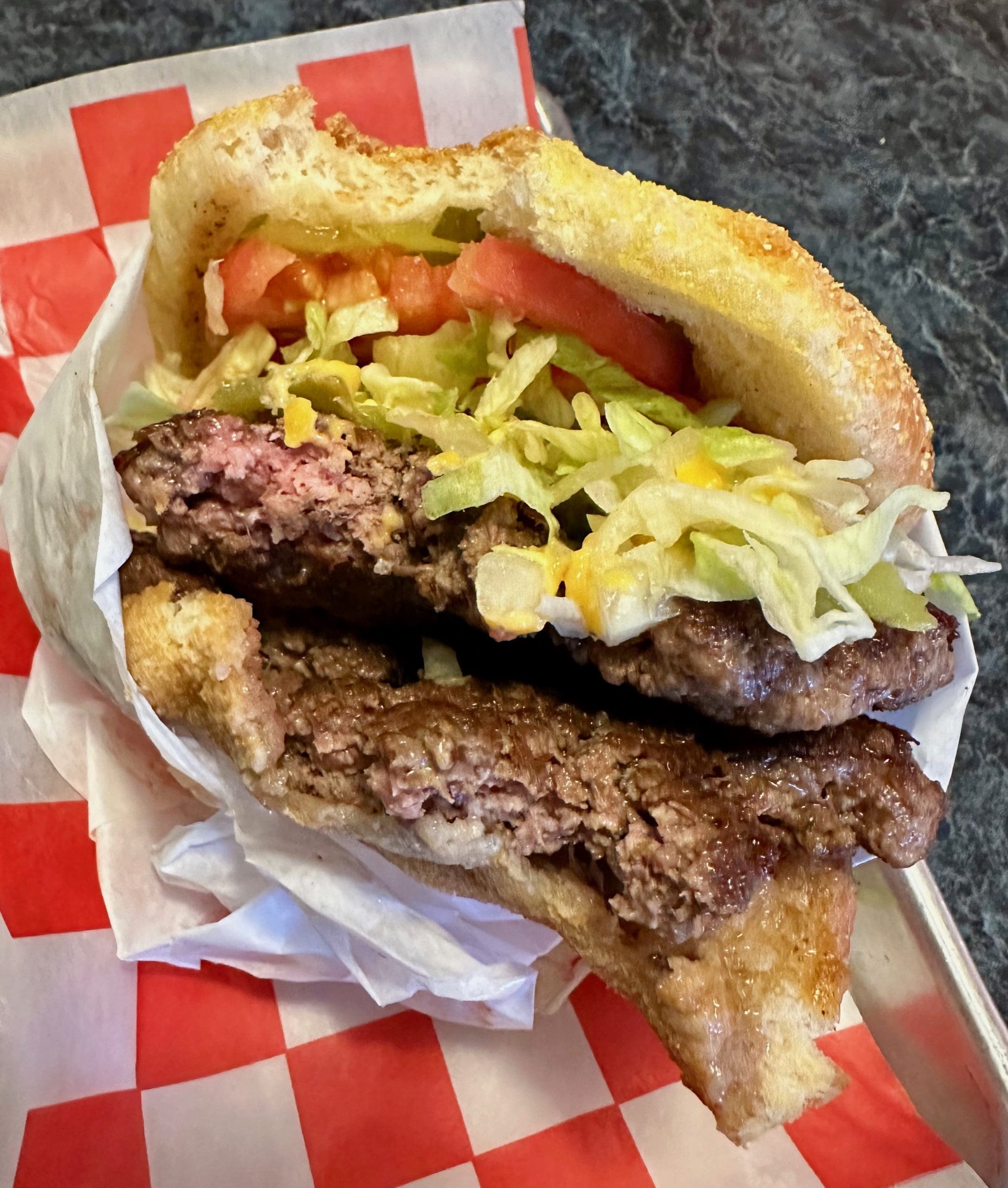
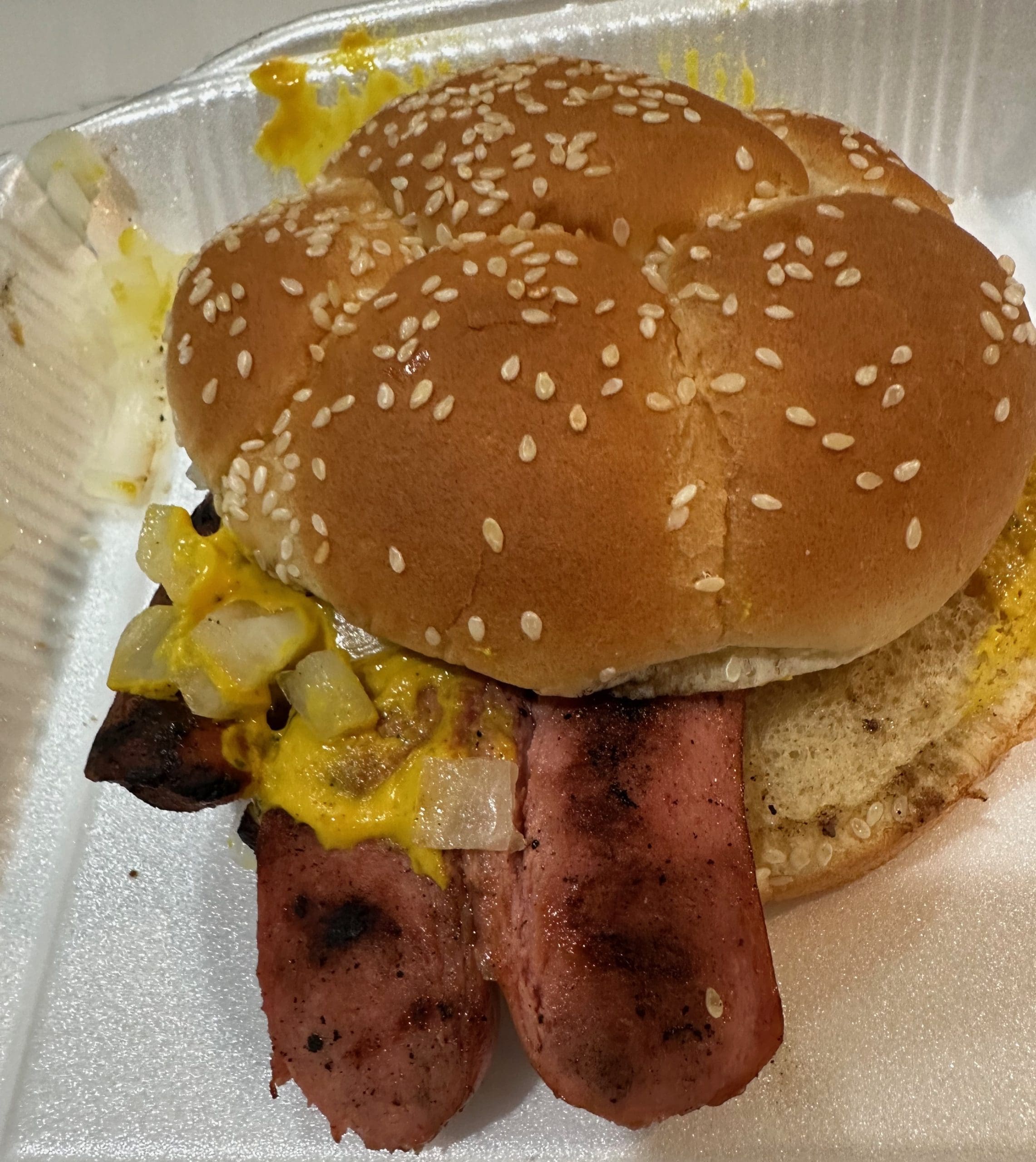
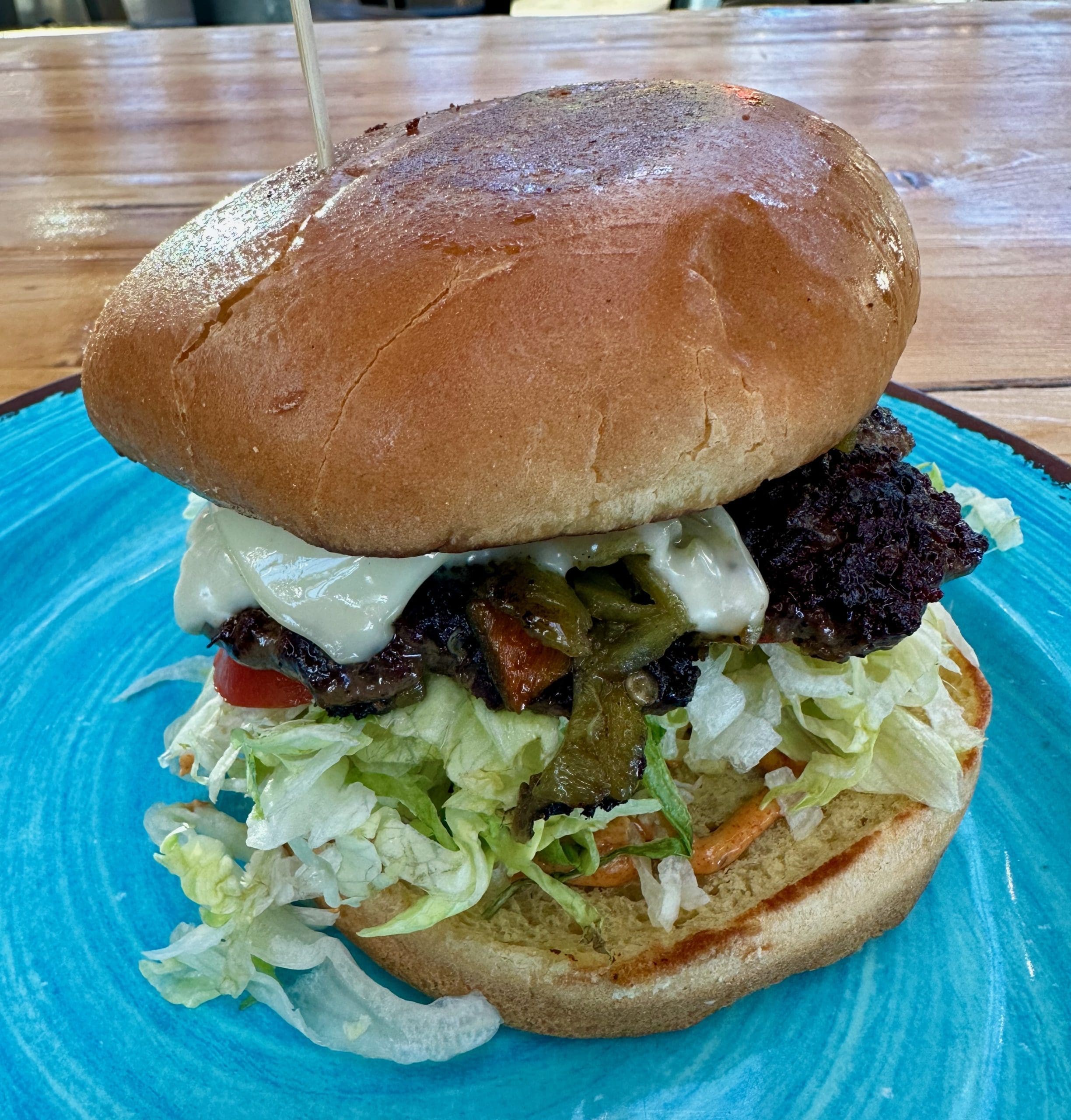
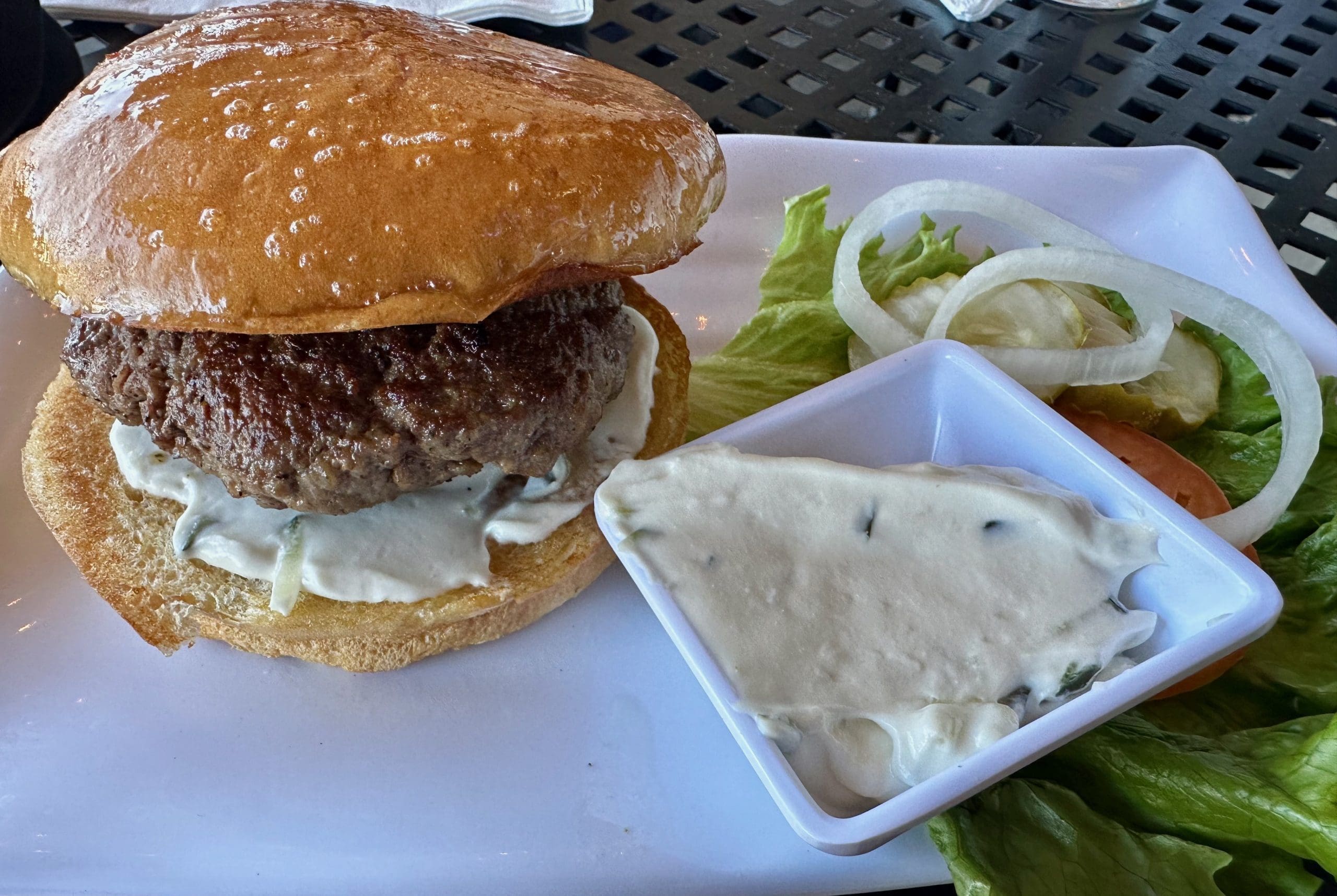
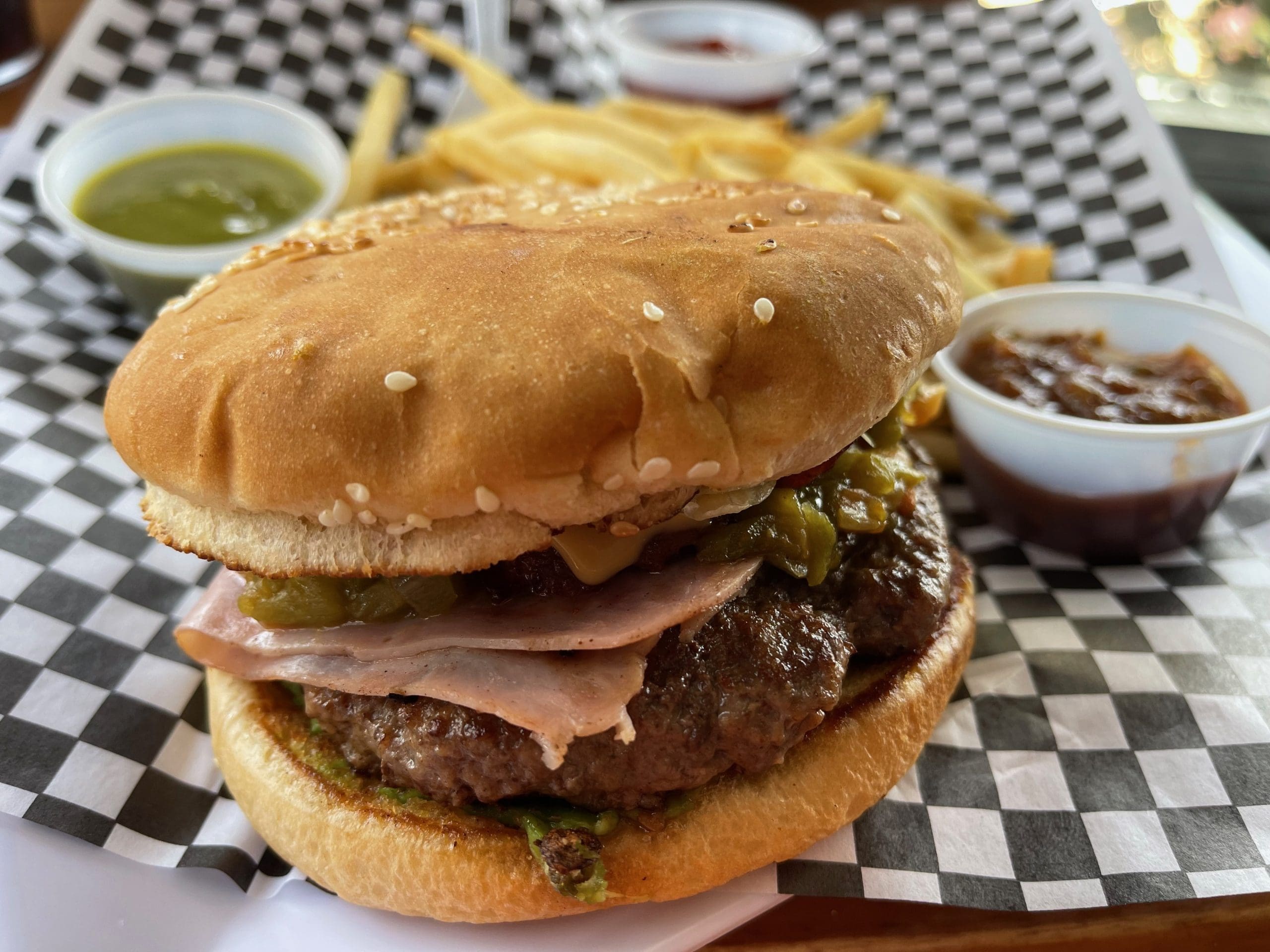
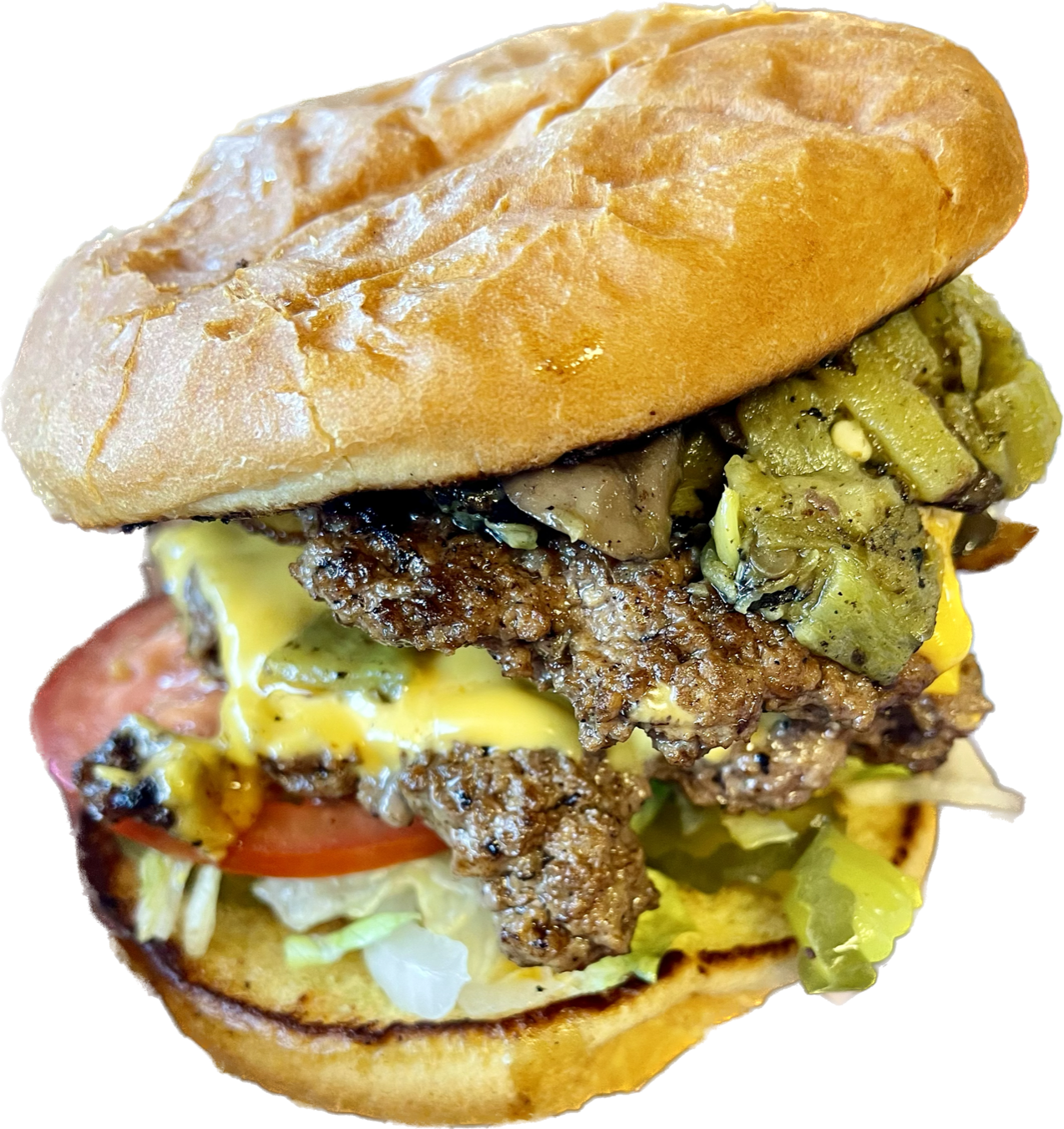
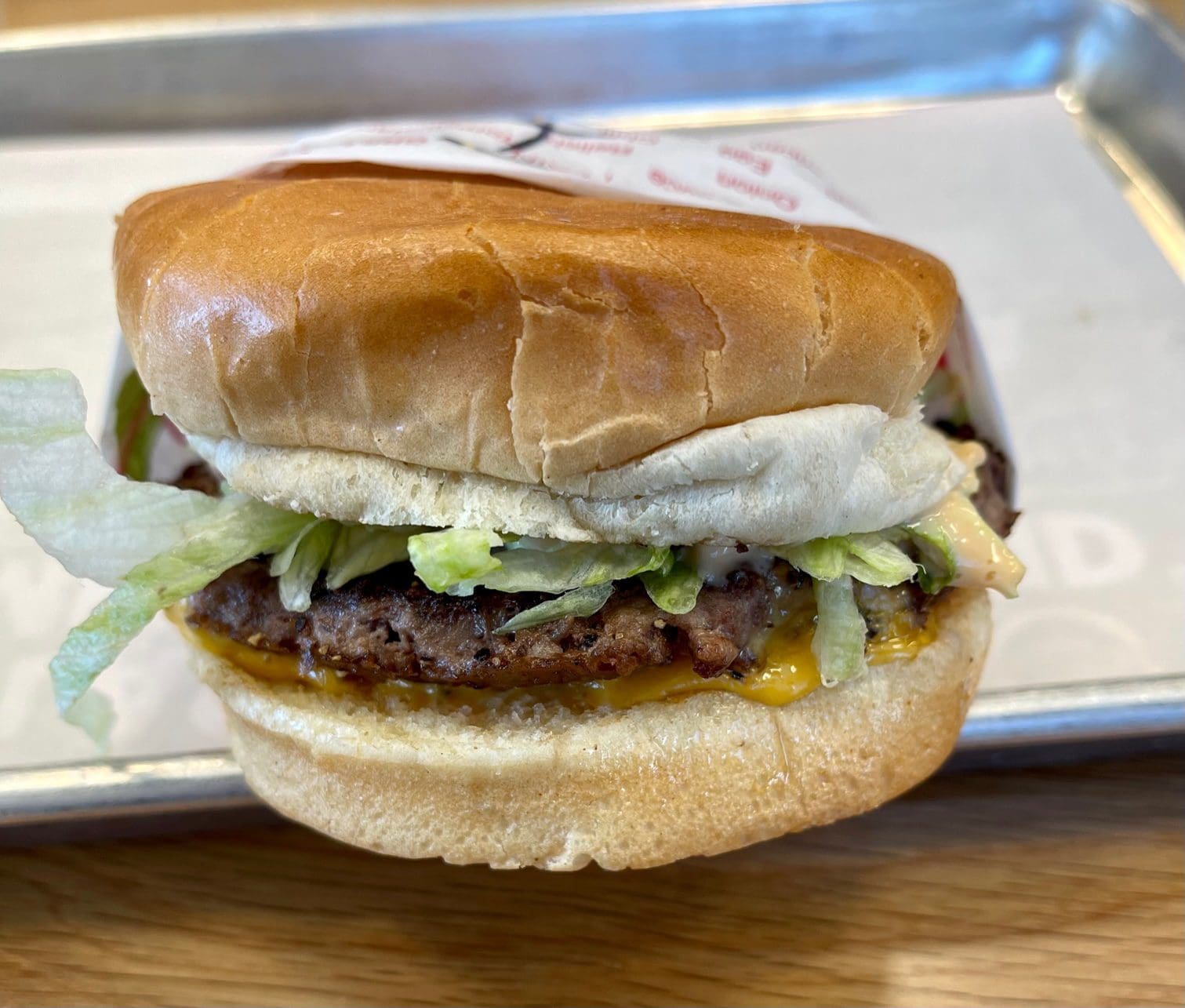
“I’ll have the great big one,” the barrel-chested behemoth behind me chortled.  One of his companions, a bookish nerd followed up with “I’ll have the big one.”  Not to be outdone, several male Arizona State University (ASU) students took turns ordering either the “great big one” or the “big one.”  Each order was followed by raucous laughter as if they were the first students ever to place their orders for burgers named for their respective sizes (the burgers, not the students’ manhood).  Not one of them dared ask for “the little one” for fear of being humiliated or even ostracized by their fellows.  “What a brilliant marketing strategy!,” I thought as I, too, ordered a “great big one” even though I wasn’t that hungry The great big one, as you may have surmised, is the biggest burger available at The Chuckbox, an ASU area institution and one of the oldest businesses in Downtown Tempe.  Now in operation for nearly half a century, it’s been continuously owned by Frank, formerly an executive for a now defunct burger chain.  When the chain wanted him to move, Frank decide to remain in Phoenix to focus on his family, and create a new, and…

On The Flip – Albuquerque, New Mexico

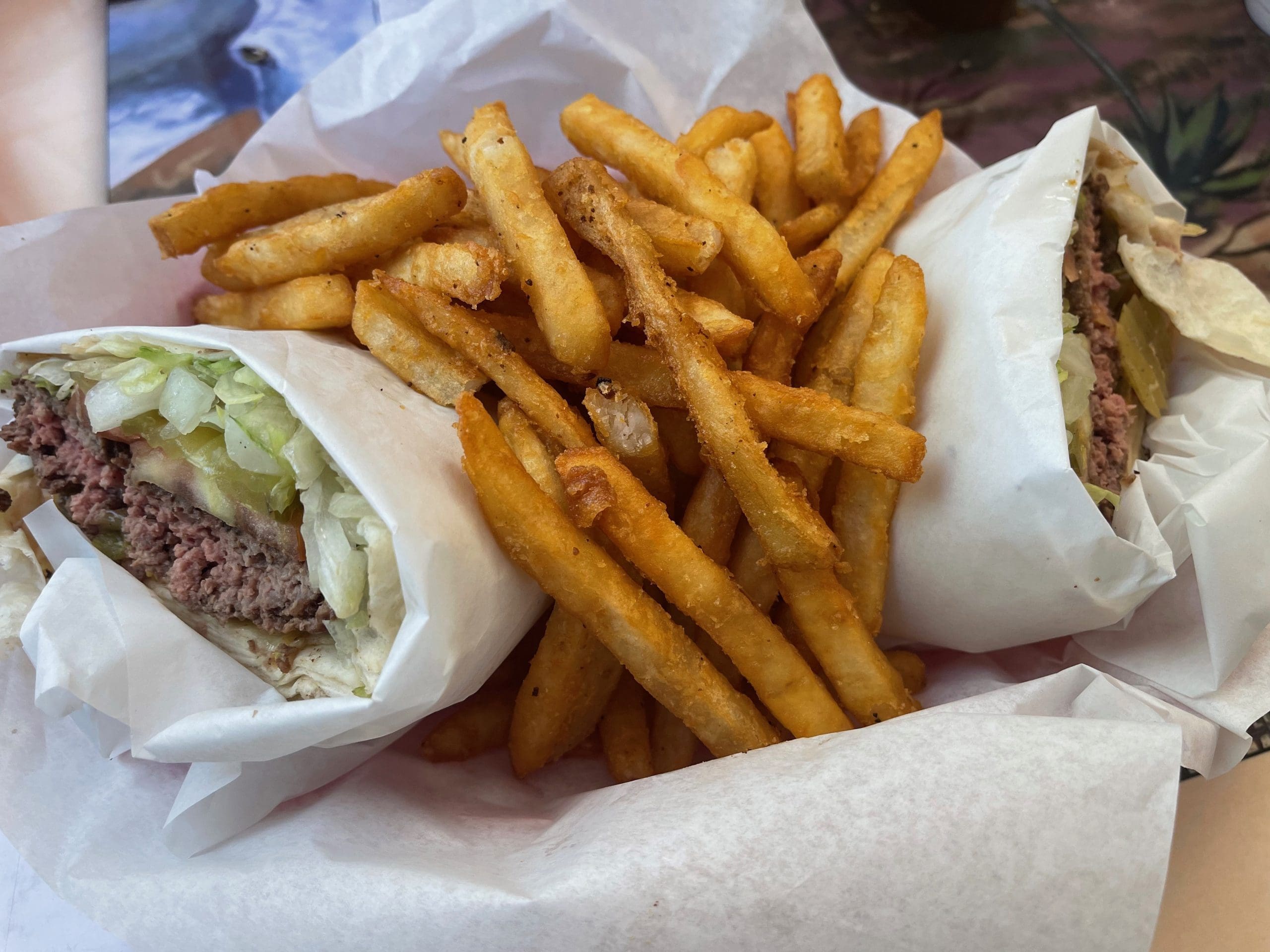
Though I pride myself on having a sesquipedalian vocabulary, very often pop culture vernacular escapes me.  Even food memes borne of pop culture are well over my head.  If you’re familiar with or use such terms as “good soup,” “cheugy,” “phone eats first,” “glizzy” and “caviar bump,”  you must be from the Gen Z generation.  Were I to use these terms, it would make me seem like a patronizing old fossil trying to be cool. During a December, 2023 visit to the Tin Can Alley, my Kim and I came a restaurant with a curious name neither of us could comprehend.  We quickly dismissed the notion that “On The Flip” had something to do with Albuquerque drivers extending their middle fingers in a salute denoting that other drivers are number one.   We then agreed the name has something to do with food that’s flipped.  Pancakes maybe.  Burgers probably. It turns out On The Flip is subtitled “beach grub perfected.”  My first experience with beach grub came in Massachusetts where beach grub consisted of lobster rolls, fried clams and tuna grinders.  In Mississippi beach grub was oysters, shrimp and crab.  None of these sumptuous seaside favorites–perfected or otherwise–appear on On…

Five Star Burgers – Albuquerque, New Mexico

On Friday, March 19th, 2010 and to surprisingly little fanfare, a locally owned and operated burger restaurant by the name of Five Star Burgers launched in Albuquerque’s North Towne Plaza at Academy and Wyoming. Its opening predated by about a week, the launch of a similarly named burger establishment, an east coast based interloper named Five Guys which has exploded across the country with nearly 600 locations in 39 states. The latter opening was greeted with ruffles and flourishes, pomp and circumstance and throngs of curiosity-seekers and “chain gangs.” Despite the relative lack of hype and brouhaha, Five Star Burgers won’t play second-fiddle to any burger restaurant. The name on the marquee will tell you that. That name is bold and maybe more than a bit audacious; some might say it borders on braggadocio. Five-star, after all, is a term used to denote the highest quality, something that is incomparable and absolutely without peer. In a rating system of one to five stars, it signifies the pinnacle, the top, the very best. My friends in Taos tell me the name fits. Taos is where owner Bob Gontram founded his first of five planned Five Star Burgers restaurants. The historical “Soul…

Burger Bro’s – Albuquerque, New Mexico

Such advanced human traits as complex symbolic expression, art as an aesthetic visual form and elaborate cultural diversity emerged mainly during the past 100,000 years or so.  That’s more than four-million years after humans gained the ability to walk on two legs. By comparison, the ubiquitous All-American burger has evolved in the blink of time.  Most culinary historians believe the burger as we know it today was invented somewhere between 1885 and 1904. Even most of us who have lived three or more decades have seen significant changes in the burger.  Many of those changes have occurred during the 21st century–the last twenty years or so. Think about it.  For the most part, the predominant burger many “seasoned” eaters across the fruited plain enjoyed until recent years was relatively unadorned save for the burger’s essential and defining elements: a soft, toasted bun (sesame seed buns were popularized by the Golden Arches in the 60s); sweet, vine-ripened tomatoes; crisp, cool, crispy lettuce; a smear of pungent yellow mustard; maybe some chopped white onions and in the middle of it all, a juicy, seasoned all-beef patty.  To be sure, additional ingredients–cheese in the 1920s or 1930s and in New Mexico, green chile in the 1940s–eventually…

Santa Fe Bite – Santa Fe, New Mexico

“This burger is a wonder. It’s thick, it’s perfectly cooked, juicy and covered in cheese… If eating a burger is a sin, this burger is like going to Vegas with a hooker who you kill, stuff in your trunk, and push off into a canyon.” —The Amateur Gourmet Glass-half-full nay-sayers will tell you it shouldn’t have worked. Housed in a ramshackle building some might describe as being “in the middle of nowhere,” it defied the number one rule for restaurant success: location, location, location. It was Lilliputian in size, incapable of accommodating everyone clamoring to get in. Long waits were common with only a small porch and limited eating as a “waiting area.” Seating was in personal space proximity. in winter and rare rainy seasons, the dirt and gravel parking lot could become rather messy. From a debits and credits perspective, these were the debits, the factors which worked against the Bobcat Bite ever becoming a success, much less a legendary dining destination. Fortunately the Bobcat Bite was frequented by diners with a glass is half full perspective, not by accountants and their ledgers. The Bobcat Bite was not beloved in spite of the aforementioned debits; it was beloved because…

Big Mike’s Burgers & More – Belen, New Mexico

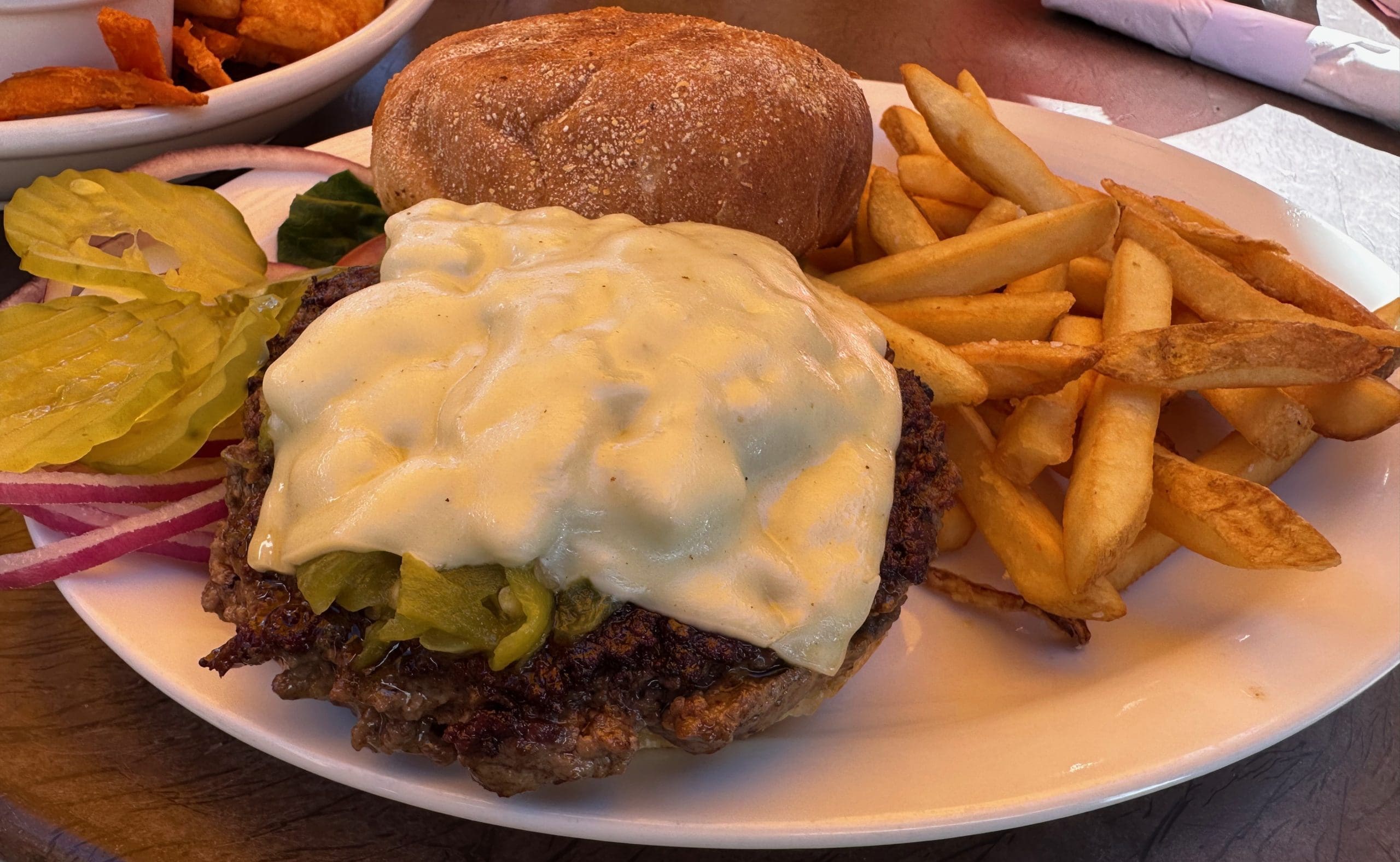
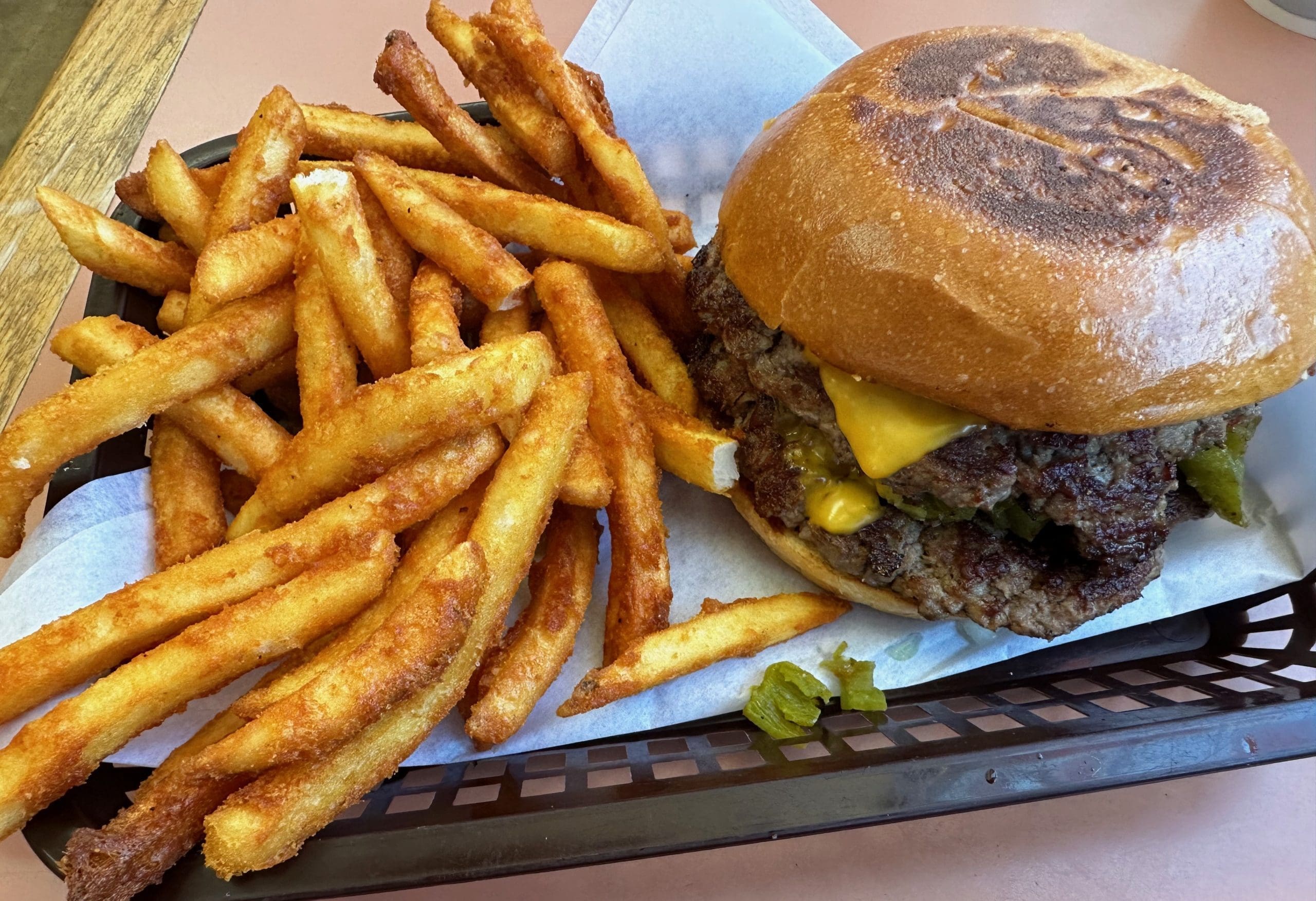
In 2014, Epicurious compiled a list of  crimes against burgers:  Hockey-puck patties, pressing down with a spatula, over-flipping, unmelted cheese and hard-as-a-rock buns.   For decades most burger aficionados followed these commandments as if their souls depended on them.  We cringed and bristled when burger flippers smashed down burger patties on a grill.  “There goes all the juices” we bemoaned.  “Here comes another dry as a New Mexico dust devil burger” we lamented.  Of all the felonious assaults against our beloved burger, pressing down the spatula was the most grievous, a crime that should be punishable by years of hard labor. Then in the 1970s a Kentucky restaurateur “invented” something we know today as a “smash burger.”  To hasten the preparation time and sate the throngs queued up to be fed, he placed a large bean can atop the beef patties.  By “smashing” the burger with a heavy object, he discovered the meat had greater contact with the griddle.  Not only did this lead to a better flavor, the resultant beef patties developed a “crust” that sealed in juices.  Smash burgers are super model thin compared to thick quarter- or half-pound beefy behemoths.   The thinner burger has a much darker,…

Burger Boy – Cedar Crest, New Mexico

The vividly hued threads that comprise a beautiful community tapestry are its diverse and unique characters. Some are quirky and eccentric, some are brash and loud, others are indistinct and don’t stand out, but all are essential in weaving that beautiful community tapestry, that compendium of personalities that make up a whole. One of the most vivid threads in the rich and diverse tapestry that is the alpine community of Cedar Crest, New Mexico was prolific artist, carver and tinkerer Ross Ward. Before settling in New Mexico, Ross was a show painter for carnivals, traversing the country for more than three decades. It was in Cedar Crest that Ross built Tinkertown, a folk art environment replete with an impressive array of miniatures and memorabilia of all kinds. Note: The next best thing to visiting Tinkertown is learning all about it on New Mexico True Television (Season 3, Episode 3) which is thankfully still available online even though the wonderful program no longer airs. Tinkertown is his legacy, the manifestation of his belief in self-determination and freedom. Now a roadside attraction, it welcomes thousands of guests each year. One of Ross Ward’s most well-known artistic endeavors hangs not on a wall…

Rex’s Hamburgers – Albuquerque, New Mexico

From 1988 through 2005, Rex’s Hamburgers stood practically alone in offering Duke City consumers an alternative to the homogeneous gobble-and-go offerings of deep-pocketed fast-food chains like McDonald’s, Burger King and Wendy’s. Rex’s earned and retained the hearts of Albuquerque diners for nearly 20 years. During its halcyon days, it garnered the long defunct’s Abq magazine’s “Best of Albuquerque” honors for several consecutive years. The reason Duke City patrons were so loyal to Rex’s was because Rex’s was at the diametric extreme opposite of the chain restaurants. Whether ensconced in a strip mall or housed in a single tenant edifice, Rex’s offered real sit-down service at a relaxed and reasonable pace. Moreover, it served hamburgers the way they are intended to be prepared. That means they started with real meat, never frozen, formed into a ball and flattened on the griddle with a spatula then allowed to cook slowly to retain the beef’s natural juiciness. Unlike at the Golden Arches, you never had to wonder what filler was used in Rex’s all-beef patty. It was always 85 percent lean and 15 percent fat, the time-tested optimum balance for optimum flavor. It was always served hot and with only the freshest of…

Fatburger – Isleta & Espanola, New Mexico

To its detractors, there are a lot of things about which to criticize California, but even detractors will give the Golden State its due when it comes to a national obsession–the hamburger.  California is the state that gave America McDonald’s, In-N-Out Burger and my favorite, the Fatburger. (My Illinois in-laws will remind me with proud vehemence that the “original” McDonald’s restaurant location (launched on April 15th, 1955) was in Des Plaines, Illinois, but the “first” McDonald’s hamburger stand operated out of San Bernardino in 1954.) To some readers, my declaration of Fatburger being my favorite California burger may be seen as heretical, the schismatic raving of a mad man and proof that your humble blogger is a moron.  I’ve had friends throughout the country question my patriotism, parentage and credentials as an essayer of restaurant reviews because of my declared preference for Fatburger and disdain for another California burger chain they prefer.  “How,” they protest “can anyone possibly prefer Fatburger to In-N-Out?”.  It’s easy!  Fatburger is superior in every way…at least to me.  Your opinion may differ, of course, but this is America and people used to be free to dissent even on crucial matters such as expressed burger preference.…

Circle T Burgers – Belen, New Mexico

The year was 1958.  The average American wage-owner’s income was $4,650 per year.  A Ford automobile cost between $1,967 and $3,929.  Milk was $1.01 per gallon.  Bread cost 19 cents a loaf and a can of Chef Boyardee spaghetti went for 19 cents a can.  First class US postage was raised to 4 cents after having held at 3 cents for more than a quarter-century.  A gallon of gasoline cost 24 cents. In 1958, the United States had two-thirds of the world’s 47-million television sets and many of them were tuned in to Gunsmoke, Father Knows Best, Dinah Shore and The Jack Benny Show.  France gave the world the disposable Bic pen (which very few people under 20 have even heard of today).  Corningware dishes, the hula hoop and stereo records were introduced.  To pay for this copious consumerism, American Express introduced the first credit card. The “King” Elvis Prestley was inducted into the United States Army. Prince, Andy Gibb, Madonna and Michael Jackson were born. In the world of sports, Pele scored two goals to lead Brazil to victory at the 1958 World Cup.  Wilt Chamberlain left the University of Kansas to play with the Harlem Globetrotters.  Ohio State…

66 Diner – Albuquerque, New Mexico

Known as “America’s Highway” and celebrated by author John Steinbeck as the “Mother Road,” the legendary Route 66 meandered across 2,448 miles of the fruited plain, crossing three time zones and eight states as it traversed from Chicago to Los Angeles. For many—especially destitute sharecroppers fleeing Oklahoma’s devastating Dust Bowl—Route 66 held the promise of a better life. For others, Route 66 brought a sense of connectedness with parts of America previously considered difficult to reach. For them, Route 66 engendered a frontier spirit of adventure, greatly expanding their vacation options and travel opportunities. For hundreds of communities strewn along the two-lane blacktop, Route 66 was also an engine of economic prosperity, creating tremendous opportunities for entrepreneurs large and small. The service industry fared especially well with roadhouses, motels and restaurants springing up, offering respite and sustenance to weary and hungry travelers. Since the halcyon days of Route 66, neon signage has been a prominent and vital part of the Mother Road as it winds through Albuquerque. From the foothills of the Sandias in the east to the parched desert expanse of the west, Route 66 is festooned with vibrant neon signage that cuts a luminous swath through the city.…