Grimaldi’s Pizzeria – Scottsdale, Arizona

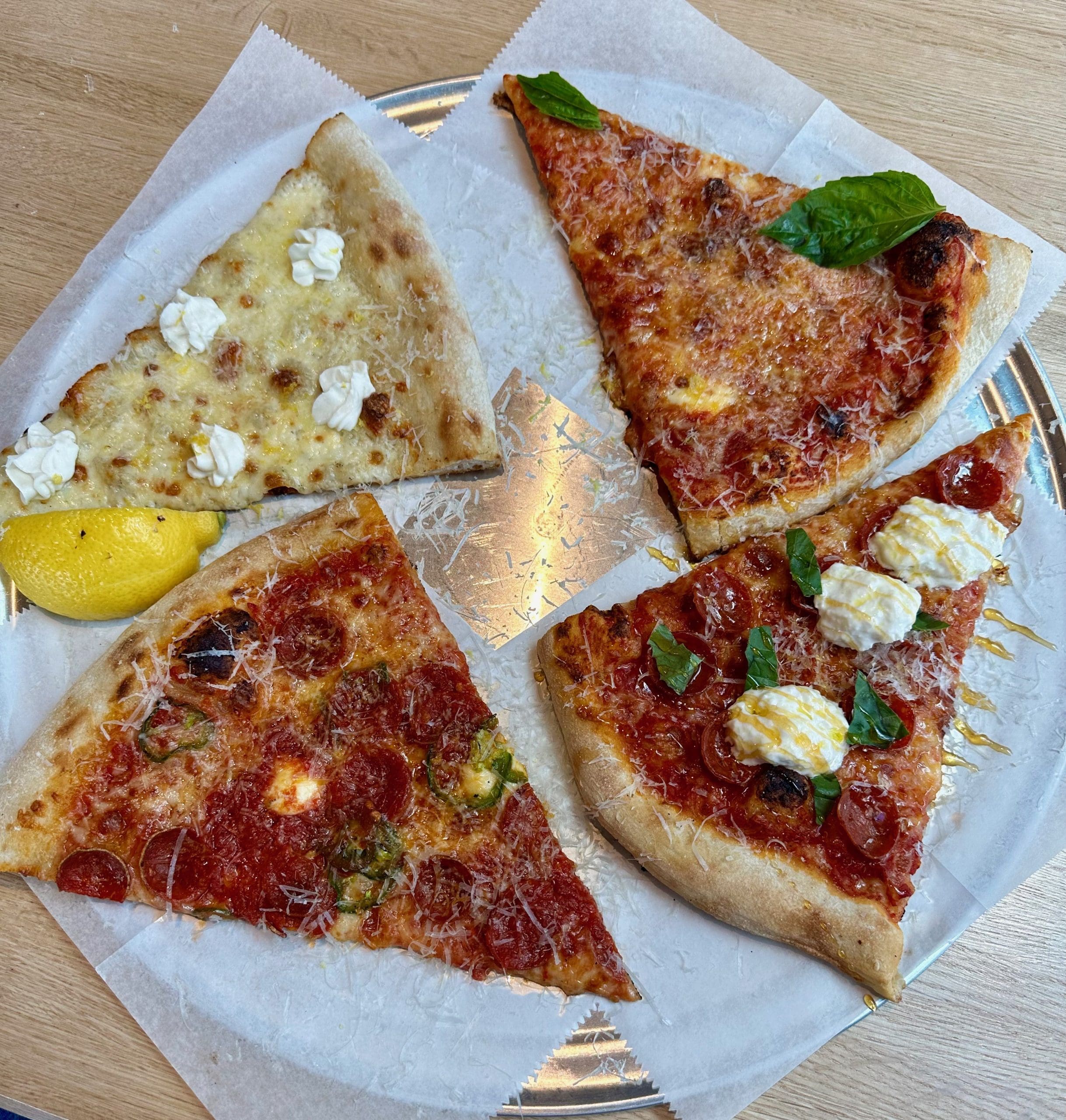
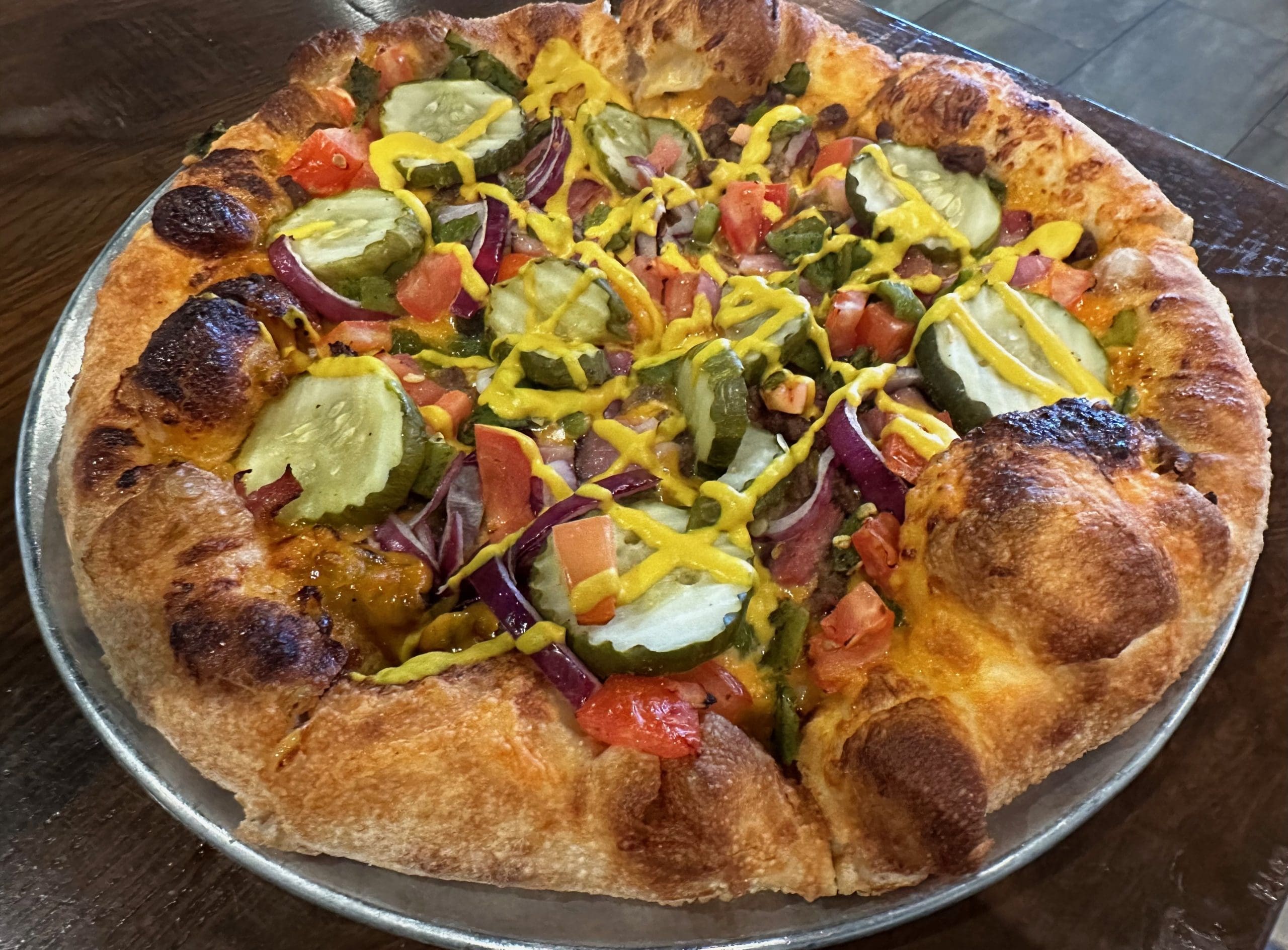
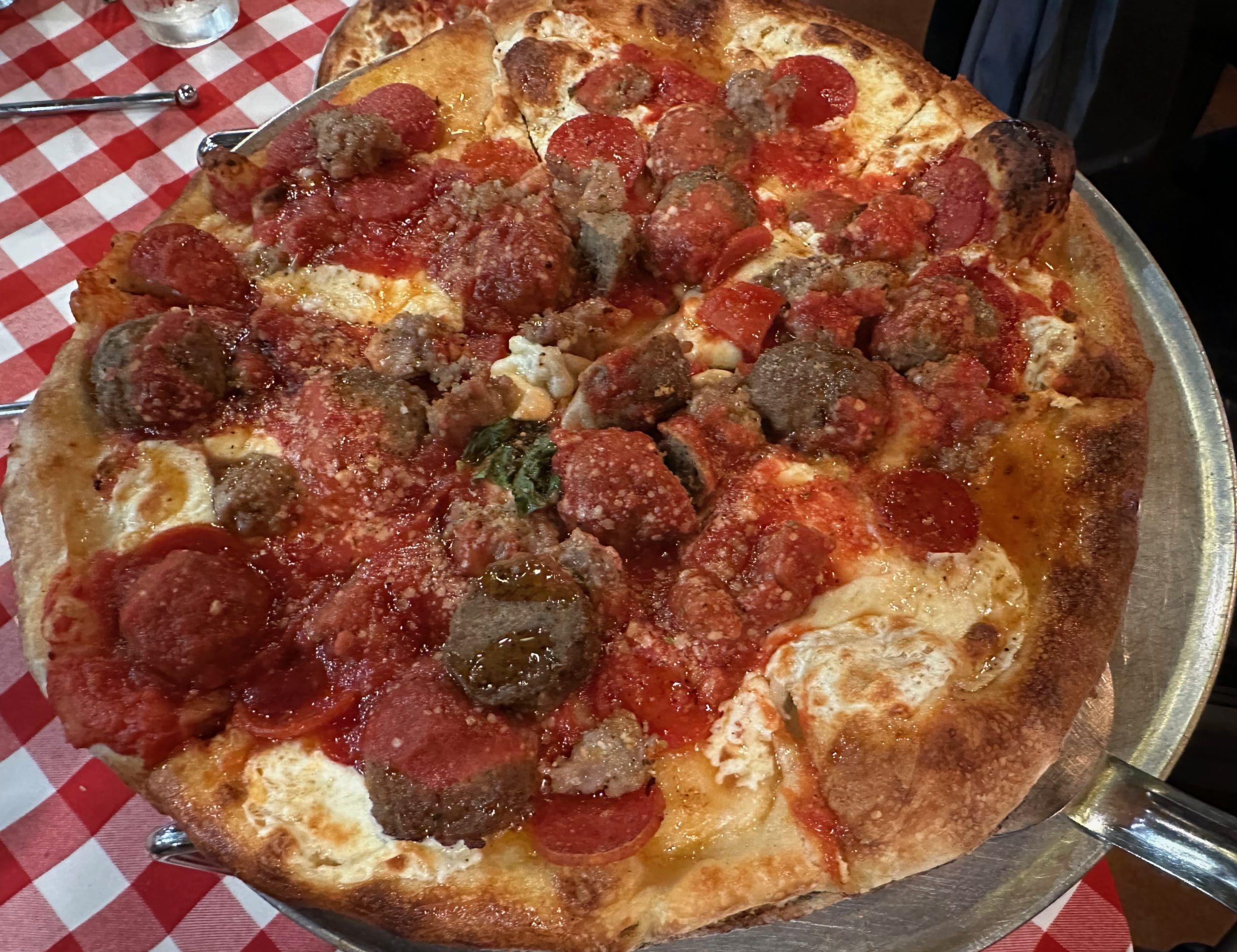
I don’t often refer to myself as a “restaurant critic” or “restaurant reviewer.” My preferred gloss is “observer and essayer on the culinary condition.”   Yep, that’s a high falutin bit of ego-stroking, but it’s accurate.  One of the things I’ve observed during frequent trips to the Phoenix area–both while employed at Intel and while snowbirding over the Christmas and Festivus holidays–is that middling quality chain restaurants tend to find a home in the Valley of the Sun an year or two before figuring out they would be smash successes in Albuquerque. Another salient obseration is that some pretty highly regarded East Coast and Midwest restaurants and chefs don’t like the cold either…or maybe they’re following the exodus of snowbirds wanting to escape the miserable winter weather.  Ted’s Hot Dogs, a Buffalo refugee turned Valley mainstay since the 1980s was among the first.  Grimaldi’s, a New York City institution which can trace its lineage to America’s pizza pioneers, followed suit a few years later.   Strewn across the Valley are such Chicago transplants as Lou Malnati’s, Rosati’s Pizza and the perpetually mispronounced Portillo’s.  Every one of these restaurants has maintained a presence where they got their starts, but are also…

Piccolino Italian Restaurant – Santa Fe, New Mexico

When I asked Gaby (our server Gabriela) what the Italian name “Piccolino” translates to, she didn’t have a clue.  She asked Olga Tarango-Jimenez, the restaurant’s co-owner who also seemed at a loss, but shared the restaurant’s very interesting history.  When my Kim Googled “Piccolino, she found it translates to “little one” and has such slang alternatives as “teeny weeny.”  Talk about a fitting name.  I joked with Gaby that if she ever called her diminutive in stature boss “teeny weeny” she’d probably find out her boss has a giant temper. Just how small is Piccolino?  Before its transmogrification into one of Santa Fe’s most popular Italian restaurants, its Liliputian digs housed a Church’s chicken and before that a gas station.  Piccolino is situated off the beaten just a few blocks north of heavily trafficked Cerrillos and a hair or two east of Siler.  Square footage not withstanding, Piccolino optimizes its space while still managing to provide better than personal space proximity.  Somehow it looks a whole lot larger when you marvel at all the “Best of Santa Fe” awards accorded by readers of The Santa Fe Reporter.  All but one of those certificates designate Piccolino as Santa Fe’s best Italian.…

Miazga’s – Jackson, Wyoming

The Jackson Hole Valley is so breathtaking that in the 1970s when the US launched Voyager II into space, scientists attached an Ansel Adams photograph of the valley as a representation of life on Earth in the event aliens discovered the vessel.  Spanning two spectacular mountain ranges (the Grand Tetons and Grand Ventres), Jackson Hole just may be the most picturesque valley on the planet.  It’s an Eden with winter.  It’s also among the most expensive and desirable havens in the universe.  Space aliens captivated by the Ansel Adams photograph and wanting to visit had better up the credit limits on their credit cards.  They might also have to lower their expectations as to  intelligent life on Earth.  The valley is home away from home to Kanye West and Kim Kardashian among other glitterati.  Well-heeled aliens will find luxurious amenities throughout the valley.  Four- and five-star resorts and hotels offer world-class services, dining options and spas sure to spoil any extraterrestrial.  So will concierge services that lead to the very best of the Valley.  It won’t be longe before our sojourning aliens are getting fitted for tuxes and gowns so they can attend film, music and art events.  Soon they’ll…

TONY CAPUTO’S MARKET & DELI – Salt Lake City, Utah

Most of us know someone like Lucy Van Pelt, the irascible, bossy, highly opinionated diva in the syndicated Peanuts comic strip.   Since her debut in 1952, Lucy has been the perpetrator of two long-running gags.  One involves her holding the football (ostensibly so that Charlie Brown can kick a field goal or extra point) and pulling the ball away because she doesn’t want Charlie Brown to get it dirty.  The second gag parodies the lemonade stand operated by many young children under spacious skies.  Instead of a lemonade stand, she operates a psychiatric booth where she offers advice and psychoanalysis for a nickel.  The “advice” is often worthless though on occasion, she actually dispenses a pearl of wisdom.  Lucy Van Pelt has nothing on Tony Caputo and his friends in Salt Lake City.  Every Saturday morning for years, Tony and his friends, seven sagacious septuagenarians, would meet at Tony’s eponymous deli where they’d solve all the world’s ills.  To amp up excitement in their lives, they decided to share their wisdom with people in dire need.   Caputo got a booth at the nearby farmers market where the seven could dispense their counsel.  He put up a large banner…

Dr. Field Goods Kitchen – Santa Fe, New Mexico

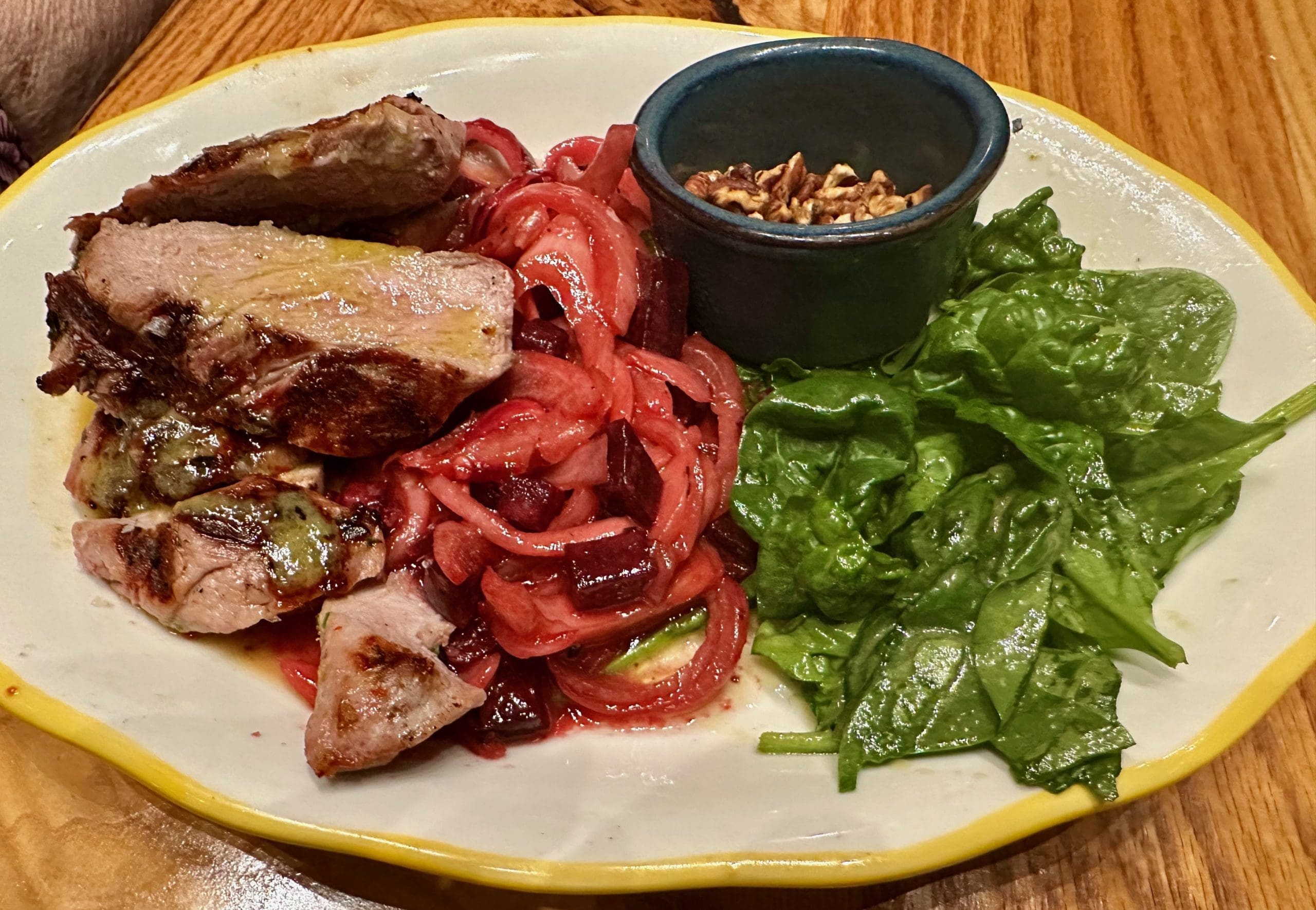
At first contemplation, Dr. Field Goods sounds like a strange name for a restaurant. To the lexicologist in me, it brought to mind the Hippocrates missive “Let food be thy medicine and medicine be thy food.” To the white-coat-syndrome suffering, borderline iatrophobe in me, the name sent shivers down my spine. To the gastronome in me who finally realized the emphasis is on “field goods” and not on “Doctor,” the name elicited a curiosity that wouldn’t be sated, especially after an effusive recommendation from the Lobo Lair (good luck finding the specific post). As you’ve probably surmised, Dr. Field Goods is all about using fresh, local ingredients (“field goods”), a farm-to-table approach which delights the locavores among us who prefer consuming foods that are produced locally, not shipped long distances to market. The farm-to-table movement in New Mexico is more than just alive and well. It’s thriving with several exemplars who do it exceedingly well. With expectations high for a restaurant named Dr. Field Goods, it’s got a lot to live up to. The “Doctor” is Chef Josh Gerwin, an accomplished MD (master of deliciousness) who’s cut a wide swath across Northern New Mexico’s culinary landscape. Chef Gerwin earned his…

Scalo – Albuquerque, New Mexico (CLOSED)

Contrary to popular belief, Scalo was not already a Nob Hill fixture in 1706 when Don Francisco Cuervo y Valdés, governor and captain general of New Mexico, named a new settlement for the Duke of Alburquerque, then viceroy of New Spain.  Scalo didn’t actually open until December, 1986, but during its lengthy tenure it has such a degree of permanence in our memories and taste buds that it’s hard to believe it wasn’t one of the fabled paradors (an establishment where travelers could seek lodging, and usually, food and drink) along the Camino Real.  It would make sense because the word “Scalo” itself translates from Italian to “stopover.”  Then there’s Scalo’s revered spot on the now defunct Albuquerque Monthly.  On its tenth anniversary, the magazine created a “Best Of” Hall of Fame, listing the ten establishments–restaurants, bars, card stores, clothing stores, computer stores, galleries and more–which had received more “best of” votes during the decade of the 90s than anyone else. The first establishment listed was Scalo Northern Italian Grill, which was also perennial selection on the magazine’s annual listing of the city’s top ten fine-dining restaurants (other mainstays still serving the city include the Artichoke Cafe, Prairie Star and…

Firenze Pizzeria – Albuquerque, New Mexico (CLOSED)

Name a pizza joint “Florence Pizzeria” and public reaction would likely be dubious:  “Who the heck is Florence?”  “Can someone named Florence possibly have a clue how to make pizza?”  Now translate “Florence” to Italian and all of a sudden, “Firenze Pizzeria” has instant credibility.  Never mind that most of the pizza in Florence (er, Firenze), Italy is of the Neapolitan variety.  The name Firenze is a perfect fit for a pizzeria.  Even the name inspires visions of a fire-breathing Italian oven preparing a waifishly thin pizza in just about a minute. Steven Meyer, owner-operator of Albuquerque’s Firenze Pizzeria knows a thing or two about fire-breathing ovens and waifishly thin pizzas.  In 2011, he pioneered portable pizza in the Duke City, toting an Italian-made oven throughout the city.  Being booked every weekend for nearly two years for special events, catering and a semi-permanent gig at the Downtown Growers’ Market at Robinson Park facilitated the decision to seek a permanent venue.  He found the perfect spot at 900 Park Avenue, S.W., just across Central Avenue to Robinson Park. The two-story edifice Firenze called home for nearly nine years had plenty of character and personality.  One of its neighbors was the lair…

Scarpas Brick Oven Pizza – Albuquerque, New Mexico

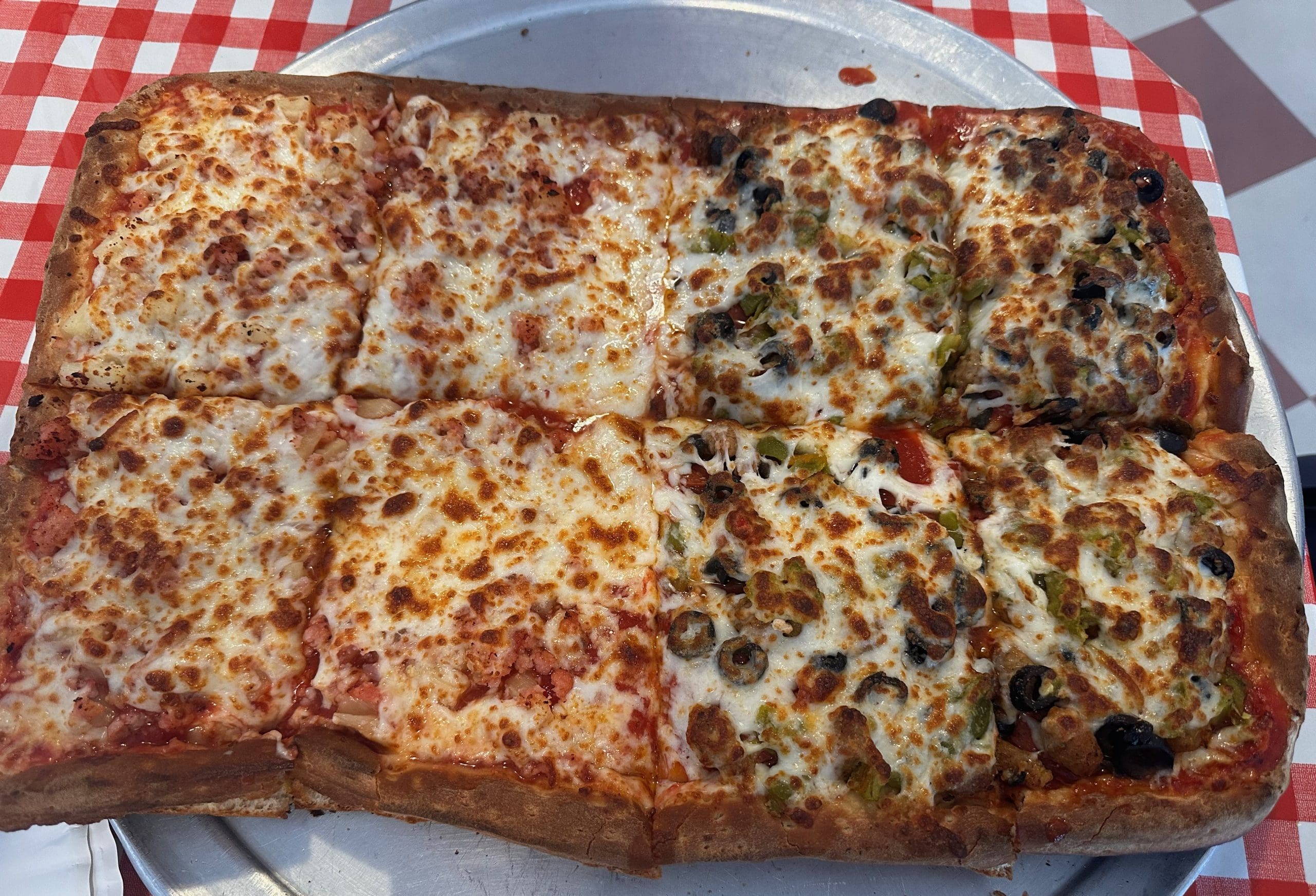
As an essayist of the New Mexico culinary condition, it’s easy to be lured in by new restaurants, those bright and shiny beacons of promise.  Sadly, critics (and those of us who play them in movies and television) gravitate toward new restaurants with the expectation of newness, something heretofore different and amazing.  We often do this at the expense of tried-and-true, established and proven restaurants which haven’t ever let us down.  For every new restaurant I visit, there are hundreds of old favorites to which I don’t return often enough.  One such personal favorite is Scarpas, a long-time fixture on Academy.  Prior to our visit in January, 2023, our previous visit was in December, 2006.  That’s far too long! Academy has been home to Scarpas since entrepreneur and restaurant impresario Jim Schumacher opened it in 1995.  For years later, he opened a second Scarpas, this one on Montgomery.  Schumaker, you might remember, was the long-time owner of The Cooperage, a Lomas mainstay since 1976.   In 2020, Joe Sommers, a Scarpas employee from day one, purchased the restaurant from Schumacher. Not too much later, The Cooperage shut down for good. In 2021, year two of year the world’s nightmare, the Montgomery…

Limonata Nob Hill Crepe Escape – Albuquerque, New Mexico

While contemplating a name for their second Duke City restaurant venture, Maxime and Daniela Bouneou wanted to convey the feeling of a refreshing and invigorating venue in which their patrons could relax and enjoy themselves. After deliberating several options, they ultimately decided on Limonata, the Italian word for lemonade. When Daniela proudly told her friends in Italy what the new restaurant would be named, they laughed, reminding her that Limonata is an Italian slang term for “French kiss.” Though Maxime and Daniela may have become a bit more “Americanized” by having lived in the United States for more than a decade, Limonata had the look, feel and most importantly, tastes of a true Italian trattoria. Limonata was launched as the more informal and sassy younger sibling of Torinos @ Home, the sensational Italian ristorante many of the cognoscenti considered one of, if not the Land of Enchantment’s best for Italian cuisine. Limonata’s menu focused on simple fare–Italian street food–at relatively low prices in a relaxed, family-friendly atmosphere and as the Bouneous envisioned, it’s a refreshing change of pace. Limonata is located in Albuquerque’s Nob Hill district, one block south of Central Avenue on Silver. There’s a bit of delicious irony…

Tomato Cafe – Albuquerque, New Mexico

You like potato and I like potahto, You like tomato and I like tomahto Potato, potahto, Tomato, tomahto, Let’s call the whole thing off – Ira & George Gershwin Prior to the introduction of tomatoes in 1548, the Italian diet was largely similar to the diet throughout the rest of the Mediterranean. Such staples as bread, pasta, olives, and beans were commonplace, as was a variety of different types of polenta. The Italian diet of the time varied depending on region: fish featured heavily near the coast while inland regions would rely more on pork and wild game. Garlic, onion, pepper and onion oil was used to add flavor.  Olive oil also held a central role in the region’s cuisine.  While a Mediterranean diet is delicious and even healthy, it’s certainly not as popular as Italian food has become across the world thanks largely to the now ubiquitous tomato. Tomatoes were initially received with skepticism on account of their unusual qualities. They were associated with eggplant, another foreign vegetable introduced to Europe from abroad (in this case from the Middle East). Similar to tomatoes, it took hundreds of years for eggplant to become an accepted ingredient in the Italian diet.…

Cibo – Phoenix, Arizona

Inasmuch as they’re both Romance languages, there are a lot of similarities between Spanish and Italian.  Because Spanish was my first language, if spoken slowly enough I can probably understand thirty-percent of what is spoken in Italian.  Alas, not all Spanish and Italian terms are lexical cognates.  That is, they don’t have the same etymology or derivation.  For example, the Italian term “mangia” means “eat up” (naturally, it’s one of my favorite Italian words) while perhaps its closest Spanish equivalent is “come.”  Another Italian culinary term every self-respecting gastronome recognizes is “cibo” which translates in English to “food.” In Italy, life revolves around the preparation and enjoyment of good food (cibo buono).   Hmm, maybe I should have been born Italian?   As a gastronomo prolifico (the Italian AND Spanish translation for both words), I feel a profound connection to Elena Davis who writes the fabulous blog Cucina by Elena in which she shares recipes and memories of having grown up in Lo Stivale.  She’s a lady after my own heart.  Take this paragraph:  “In Italy, if we aren’t eating, we are probably talking about eating.  The word Mangia (verb: mangiare), pronounced man-juh, definition: eat-up!!”  Yes, you literally say it…