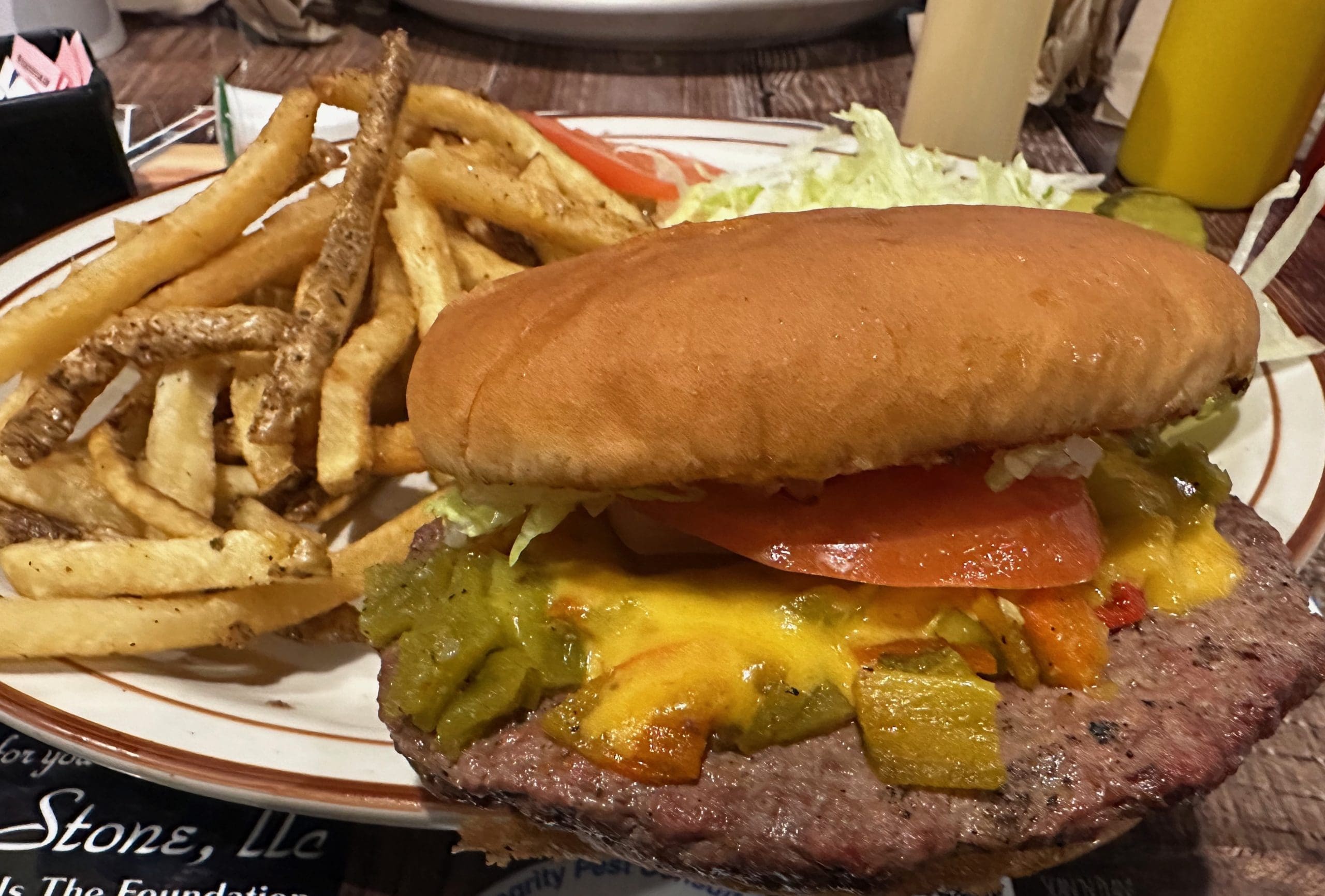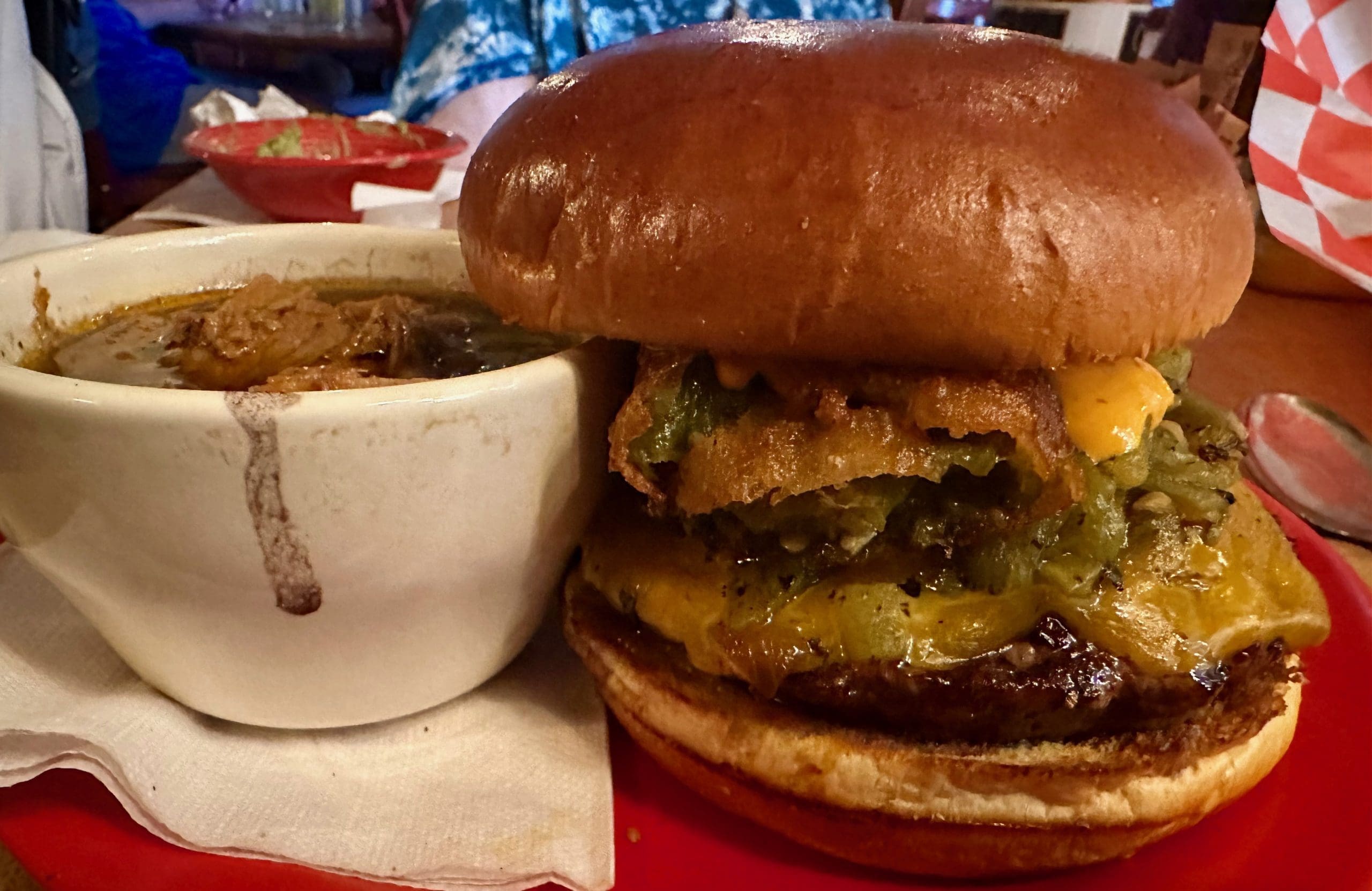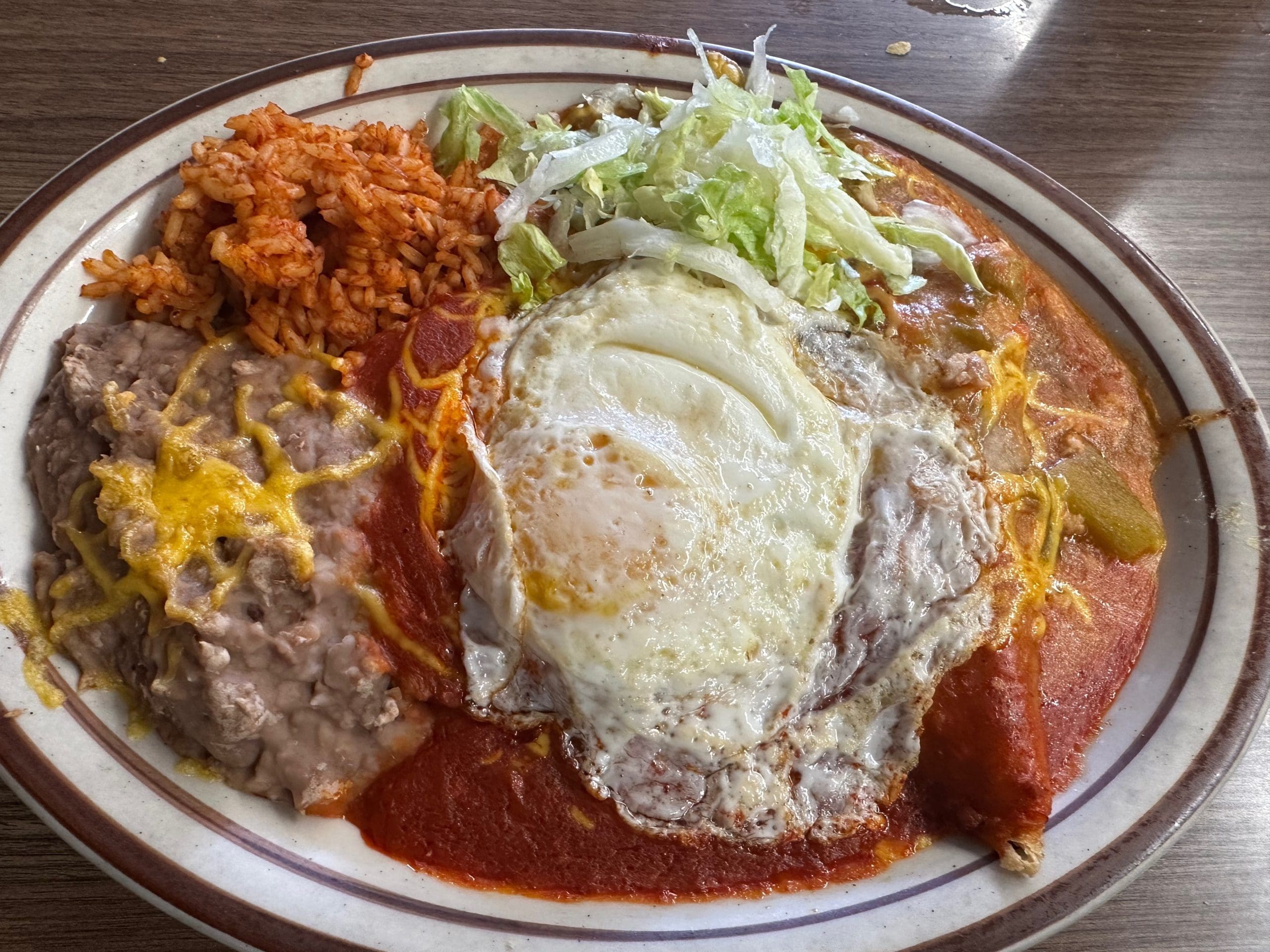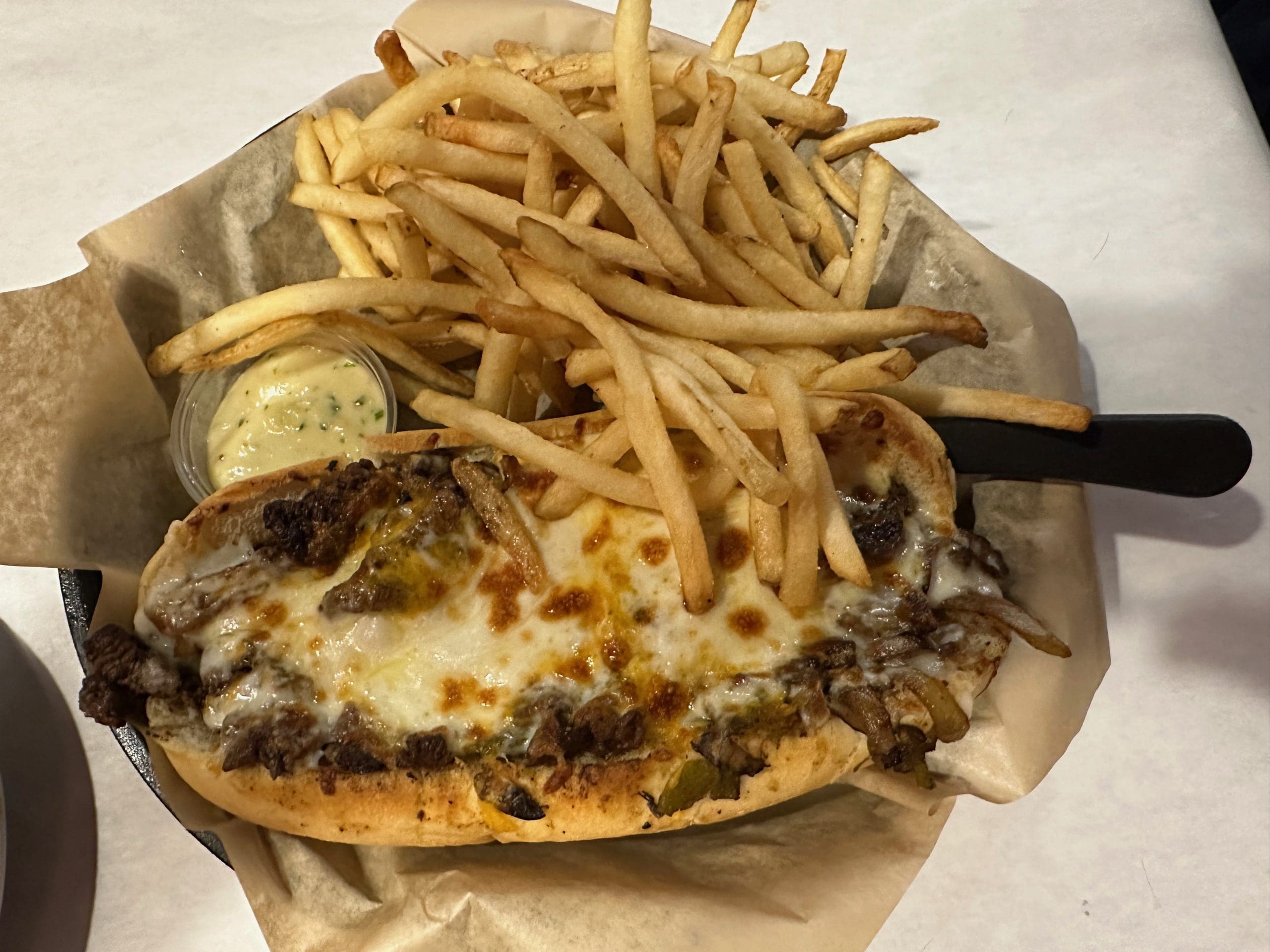
The Mine Shaft Tavern – Madrid, New Mexico

“You load sixteen tons and what do you get? Another day older and deeper in debt. St. Peter, don’t you call me cause I can’t go. I owe my soul to the company store.” Those immortal lyrics, hauntingly performed by crooner Tennessee Ernie Ford describe with a poignant reality, the plight of the American miner even onto the 20th century. By payday, which came at month’s end, miners did indeed owe their souls to the company–for the company house in which they were living, for groceries to feed their families, for doctor bills and even for the tools they used to mine. They were paid in scrip which could only be spent at the company store, leaving them no choice but to buy from the companies. Despicably, this allowed the company to gouge the miners with vastly over-inflated prices, leaving miners with families inextricably in debt to the company. When they got paid at month’s end, any money left after settling their debts to the company was insufficient to last through the following month. This vicious cycle was perpetuated the following month when miners again had to pay the company first and were lucky to have anything left for their…

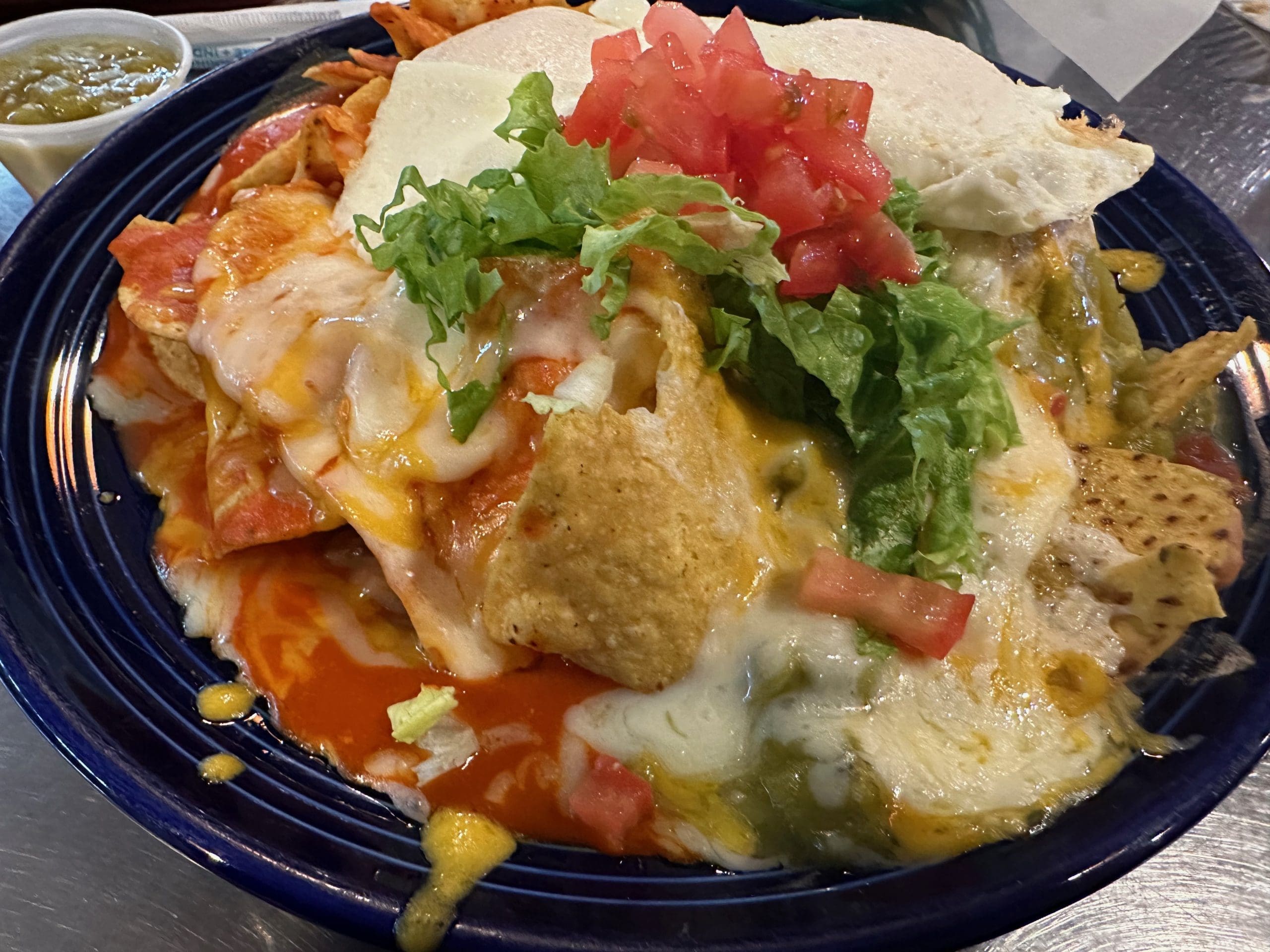
Monroe’s New Mexican Food – Albuquerque, New Mexico

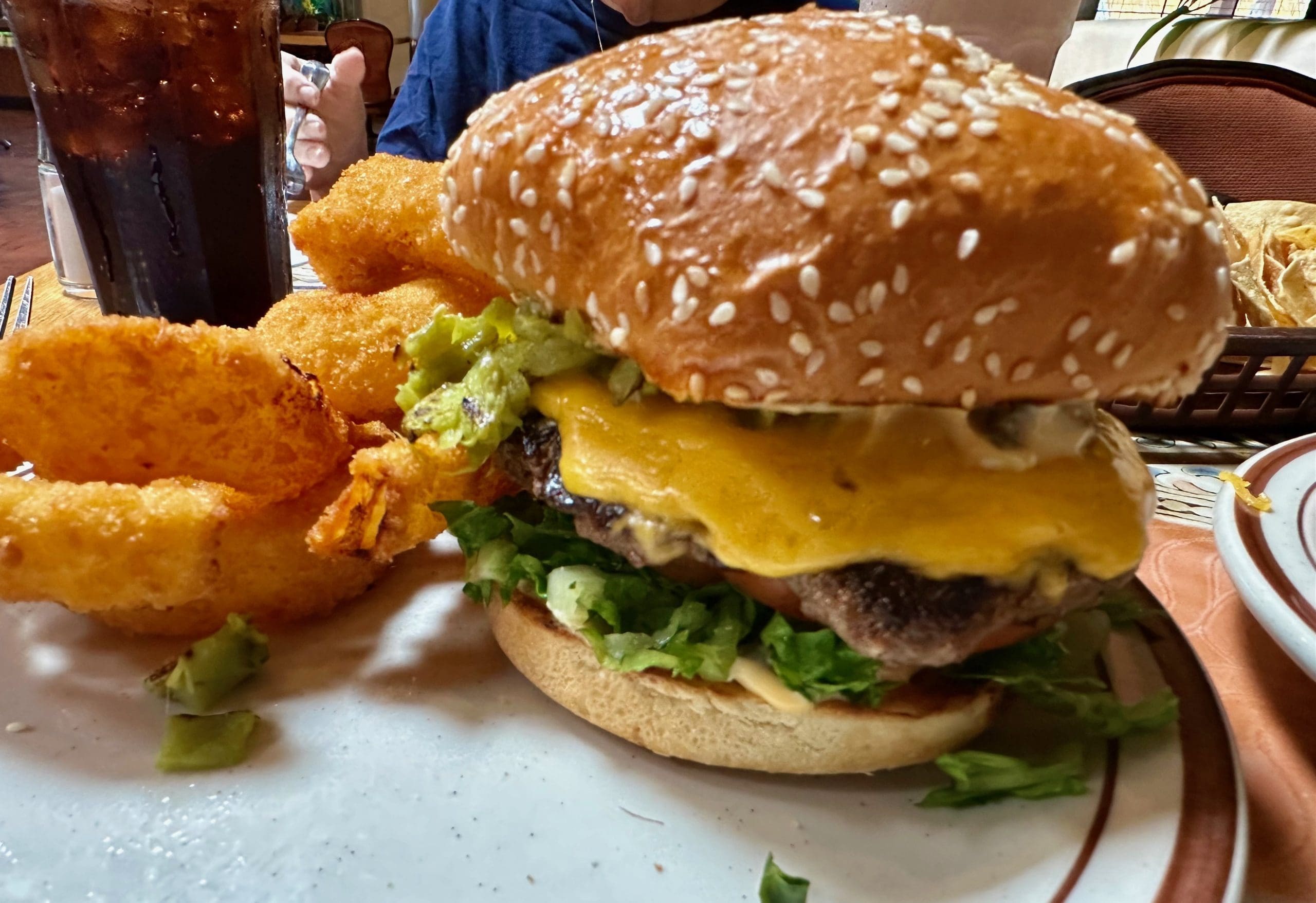
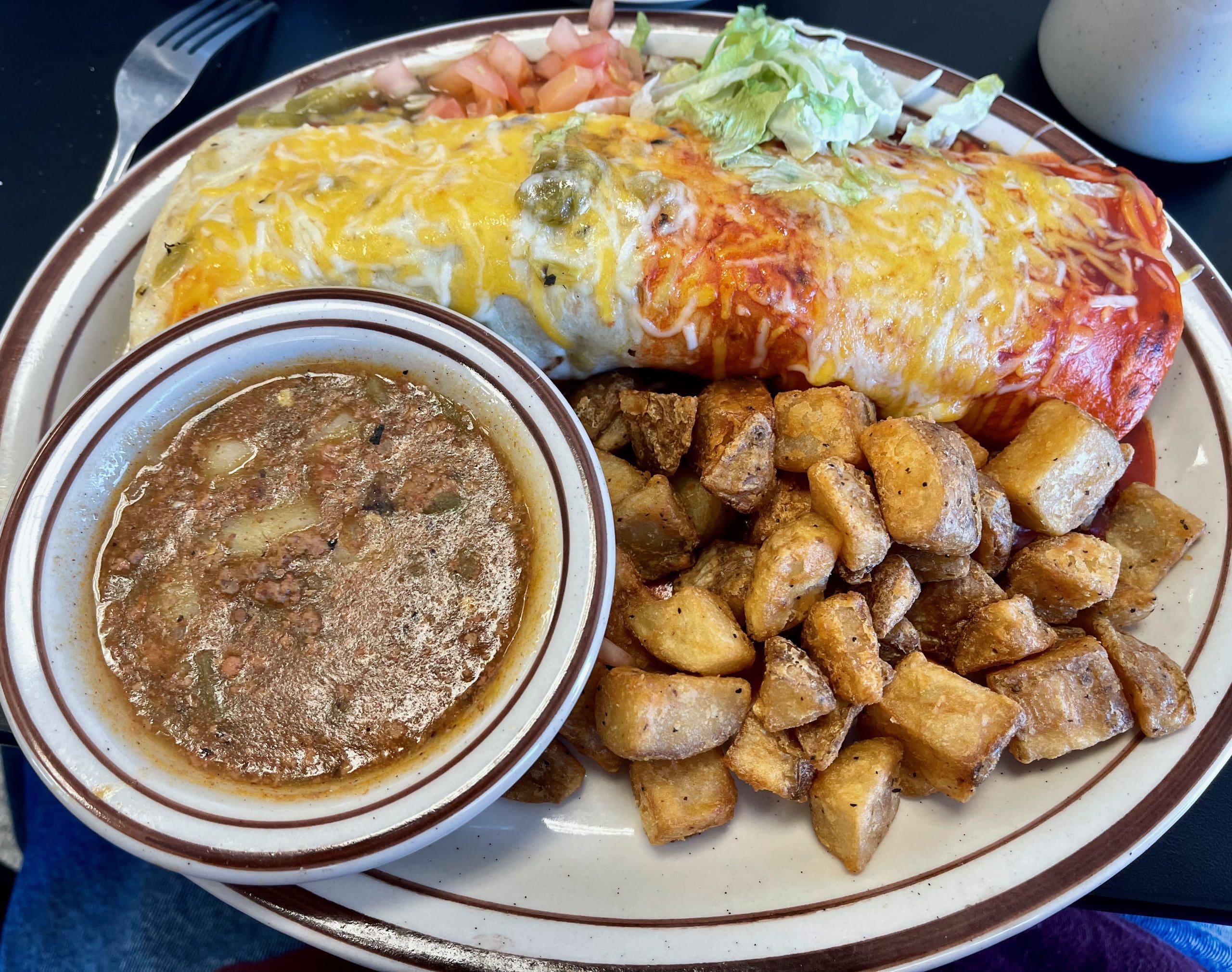
If I’ve learned anything from dining at Monroe’s, it’s that I shouldn’t leave the restaurant with any regrets.  Invariably what I end up regretting most often is that I didn’t have the green chile cheeseburger, one of the very best in town, if not the Land of Enchantment.  It’s a green chile cheeseburger so good that I’ll order it during three consecutive visits before ordering anything else on the menu–and when I don’t order it, I lament not having had my ardor quelled by its utter deliciousness. Some may question how a restaurant with such an “Anglicized” appellation as Monroe’s can possibly proffer such an enchanting green chile cheeseburger, much less any other  excellent New Mexican cuisine.  Frankly, it could have been even worse.  Monroe’s was originally owned by a Scandinavian named Monroe Sorenson who owned a small chile parlor on the corner of Rio Grande Boulevard and Mountain.  So, the restaurant’s name might well be Sorenson’s, a name you might  otherwise associate with lingonberries, lutefisk and even reindeer meat. In 1979, Miguel Diaz, a native of Puerto Rico who grew up in New York, purchased Monroe’s and moved it to a refurbished gas station on Lomas (1520 Lomas, N.W.)…

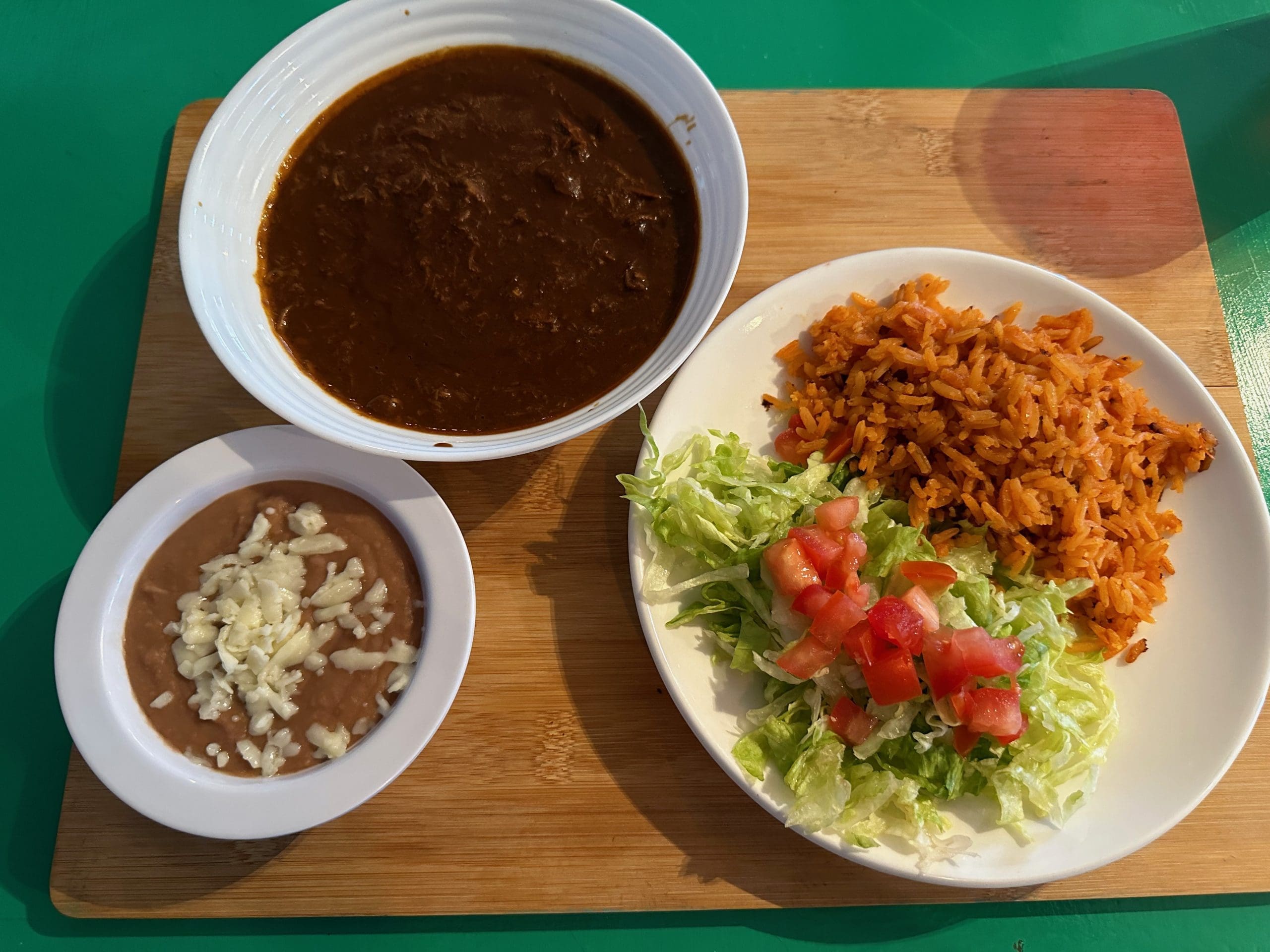
Jerry’s Cafe – Gallup, New Mexico

The Land of Enchantment is bisected north to south by the murky and mucky Rio Grande which meanders some 700 miles through the state.  Throughout the millennia, the fourth longest river in America has been the often tenuous lifeline upon which New Mexico’s citizenry has relied for sustenance and for recreation.  Its precious waters are multifarious in their use–from human and animal consumption to the sustainment of agricultural systems and so much more.  Depleted over time by human dependence and a perpetual drought condition, it is nonetheless a linchpin for New Mexico’s future even as demand for its resources increases and stresses on the river grow. The Rio Grande Corridor is where the vast concentration of New Mexico’s urban centers exist and more than half of its population (over one million) resides.  The four most populous cities in the state–Albuquerque, Las Cruces, Rio Rancho and Santa Fe in that order–are all within this riverine corridor.  It’s been that way for the estimated 10,000 years in which New Mexico has been inhabited.  The arable lands near the Rio Grande, for example, is where a vast concentration of the indigenous peoples the Spaniards named “Pueblos” chose to live.  Considering their dependence on…

High Point Grill – Albuquerque, New Mexico

If a tree falls in a forest and no one is around to hear it, does it make a sound?” Ask a physicist and you’ll get an earful about quantum theory, wave function, subatomic particles and rarefactions in the air. A philosopher might posit the plausible premise that when there is nobody around, the falling tree makes no sound at all–a premise achieved by interpreting the word “sound” to mean a human experience rather than a physical phenomenon. With well-practiced prattle and deft circumlocution, a politician would probably attribute culpability for the tree having fallen to “the other side of the aisle.” Ask this blogger and not only will you get a resounding “yes” to the oft-posed philosophical thought experiment, you’ll be given an analogical example of that tree reverberating so loudly that the forest was unable able to contain its sonorous, concordant melody. Okay, I’m waxing philosophical here. In my analogy, The Point Grill in Rio Rancho is the tree and the Albuquerque metropolitan area is the forest. Not getting my point? For nearly three years, voices crying out in the wilderness (literally) argued that The Point Grill was not only one of the very best restaurants in Rio…

Duran’s Central Pharmacy – Albuquerque, New Mexico

In an early episode of the Andy Griffith Show, while contemplating a job offer in South America, Andy tried to assuage his son Opie’s concerns about leaving Mayberry. Instead, he wound up confusing Opie by explaining that people in South America ate something called tortillas. Opie wondered aloud why anyone would eat spiders (tarantulas). Had Opie ever tasted the delicious, piping hot, just off the comal 10-inch buttered orbs at Duran’s Central Pharmacy, it’s unlikely he would ever confuse those grilled spheres with any arachnid. That’s because Duran’s features some of the very best tortillas of any restaurant in New Mexico. These are not the flavorless, paper-thin, production-line, machine-fashioned orbs you find at some restaurants (can you say Frontier Restaurant). Duran’s tortillas are made to order on a real comal and shaped by skilled practitioners using a well-practiced rolling pin. It’s the way abuelitas in New Mexico have done it for generations, a time-honored tradition Duran’s honors–with one exception. No lard is used on these tortillas; they’re strictly vegetarian. You can tell and appreciate the difference. In its annual Food & Wine issue for 2012, Albuquerque The Magazine awarded Duran Central Pharmacy a Hot Plate Award signifying the selection of…

CubaMex – Albuquerque, New Mexico

Because Columbus sailed the ocean blue in 1492 and a succession of Spanish explorers followed suit, you might expect that Spanish cuisine would have proliferated across the new world.  Instead, Spanish discoveries included indigenous cooking techniques and ingredients that forever altered the way scions of Spain ate. At the time of conquest, the European diet was principally comprised of bread, olive oil, olives, “meat,” and wine.   The “new world”–Mexico in particular–was rich, fecund, and replete with such crops such as beans, pumpkins, chilies, avocados, tomatoes, cocoa, cotton, tobacco, corn, and cassava, foods that could not be found in Mother Spain. All the territories explored and conquered by the Spaniards had their own bounty of unique and delicious culinary offerings.  Because traditional Spanish foods were an ocean away, it made sense the Spaniards would adopt indigenous foodstuff.   Many of those foods were ultimately introduced to the European continent.  It was the advent of eating not just for survival, but for pleasure.  To some extent, the vast variety of new ingredients and techniques were also shared among conquered lands.  Solely from the perspective of culinary diversity and deliciousness, it was a win-win.  The uniqueness of foods among such Spanish-held territories…

El Molcajeton – Albuquerque, New Mexico

Molcajetes have become so commonplace on many a Mexican restaurant’s decor that we sometimes forget molcajetes are the traditional Mexican version of the mortar and pestle…that they have both form and function.  As we gawk in admiration at the symmetry and fine craftsmanship of a well-made molcajete, we don’t always reflect on the fact that throughout Mexico and some parts of the Estados Unidos molcajetes are still used to crush and grind spices and to prepare guacamole, moles and salsas.  In restaurants and homes in which molcajetes are used for their intended functional purpose, the guacamole, moles and salsas created within them are said to taste better, much better. As James Beard Award-Winning Writer and Chef Patti Jinich says “A wonderful thing about molcajetes, is that since they are so porous they have a remarkable memory. They store within them, the essences, oils, smells and flavors of all that has been served or made in them. Maybe that’s why it is said that molcajetes season with time and use. Maybe that’s also why it is said that making a sauce or rub or paste in a molcajete makes it taste better.”  Patti’s theory has credibility.  The rough surface of molcajetes…

Tortilla Kitchen – Albuquerque, New Mexico (CLOSED)

A sure sign Spring has arrived In rural New Mexico is the annual ritual of cleaning the acequias, the community operated ditches used to irrigate fields, gardens and lawns. Early in the morning, property owners or their designated paid representatives would convene at appointed spots to begin the effort. Work crews typically consisted of grizzled veterans, most of whom acted as “mayordomos” (bosses) and young bucks like me with strong backs. Not surprisingly, distribution of work was…shall we say, quite inequitable. The old-timers would order us around, shouting out instructions like elderly drill sergeants. Most of us youngsters didn’t mind. During frequent breaks we got to hear some of the most ribald and raunchy stories from highly respected elders. One I’ve never forgotten is when a thrice-married viejito was asked by a colleague “Do all women look alike?” “I’ll tell you honestly,” he responded “not even their tortillas look alike.” While the question was designed to elicit a response about a certain female, er…anatomical part, my take-away had everything to do with tortillas. My mom was (and still is) the very best tortillera in the Penasco valley. Her tortillas were on the thin side with beautiful pinto pony char spots.…

Lindo Mexico Grill & Seafood – Albuquerque, New Mexico

In the entire world, there may not be a national anthem that inspires as much heart-felt pride among its citizenry as the Mexican ballad Mexico Lindo Y Querido. It is a hauntingly stirring proclamation of the balladeer’s profound love for his native land–a love so intense that even his guitar awakens in the morning inspired to sing with alacrity about that land he loves. The song speaks to the country’s volcanoes, prairies and flowers serving as talismans for the love of his loves, the country of Mexico itself. While the country of Mexico is indeed blessed with awe-inspiring wonders, its greatest beauty lies in the soul and character of its people. From the downtrodden descendents of its indigenous peoples to the scions of Cortez, most Mexicans remain God fearing, finding His presence in the simplicity of nature and glorifying His name in the way they approach life. There is also much simplicity in the daily bounty they receive with sincere reverence and gratitude. That simplicity is most often evident in the ingredients used to prepare Mexican food–corn, flour, peppers and beans being but a few staples. Lindo Mexico (literally Beautiful Mexico), a restaurant which launched in 2005, celebrates the culinary…

Los Olivos – Albuquerque, New Mexico

For many New Mexicans, Durango, Colorado is much more familiar than Durango, Mexico.  In truth, however, Mexico’s Durango may actually have more historical significance and ties to the Land of Enchantment than its like-named resort town in Colorado.  That’s especially true for the Catholic Churches of New Mexico. Episcopal jurisdiction for the Catholic church in New Mexico was placed in 1797 under the stewardship of the Bishop of Durango. New Mexico remained part of the Diocese of Durango until 1850 when Pope Pius IX created the Vicariate Apostolic of New Mexico and appointed Father Jean Baptiste Lamy as its first Bishop.  Yes, that’s the same Father Jean Baptiste Lamy on whom Wila Cather’s Death Comes For the Archbishop is based. Durango, Mexico was also a significant “paraje” (stopping point) along the The Camino Real de Tierra Adentro (Royal Road of the Interior Land), the 1,590 mile road between Mexico City and San Juan Pueblo (Ohkay Owingeh), New Mexico. During the 17th Century, the area between the villas of Durango and Santa Fe also came to be known as “the Chihuahua Trail.”   It’s a vast understatement to declare that Santa Fe’s reliance on El Camino Real was crucial to the…

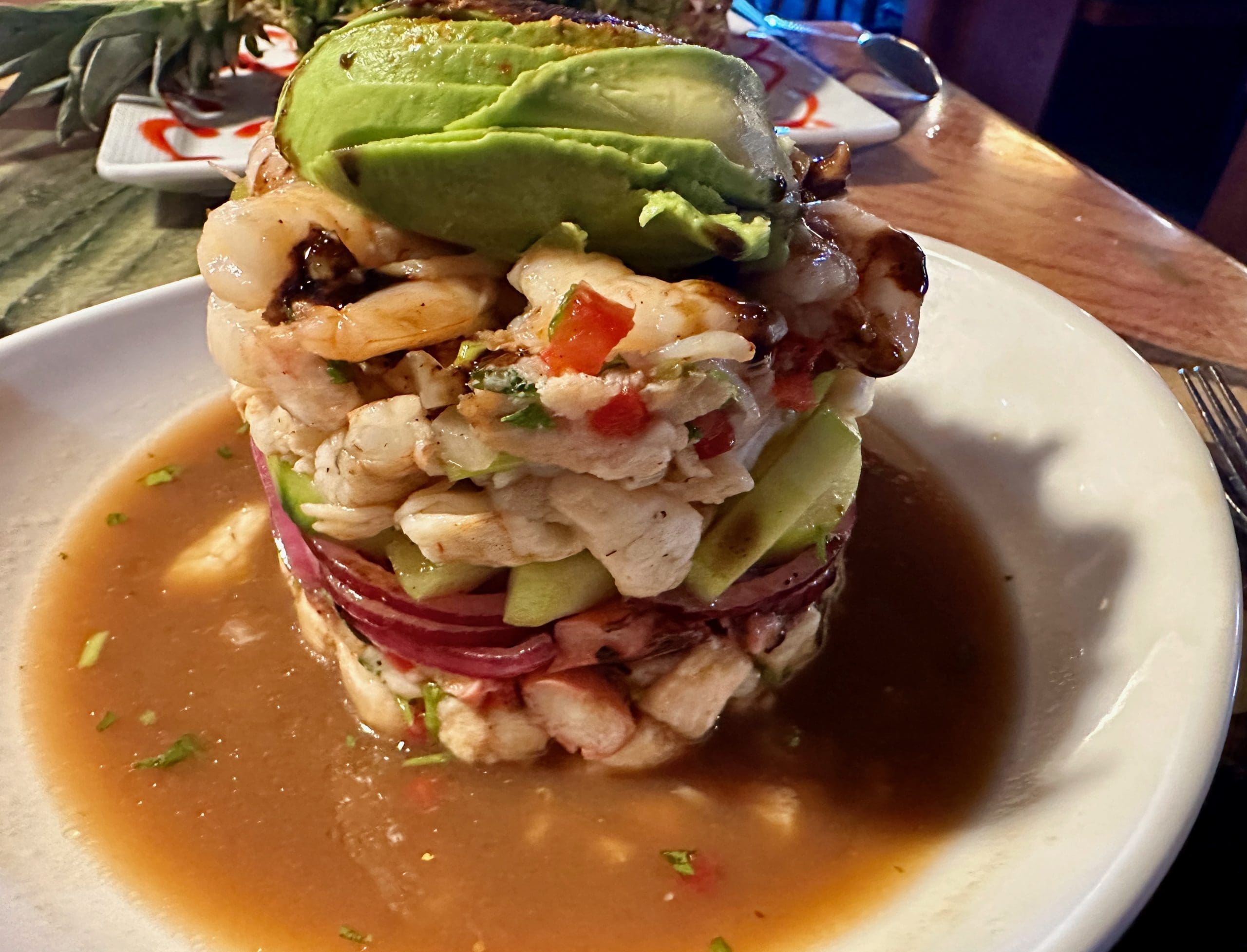
Mariscos La Playa – Albuquerque, New Mexico

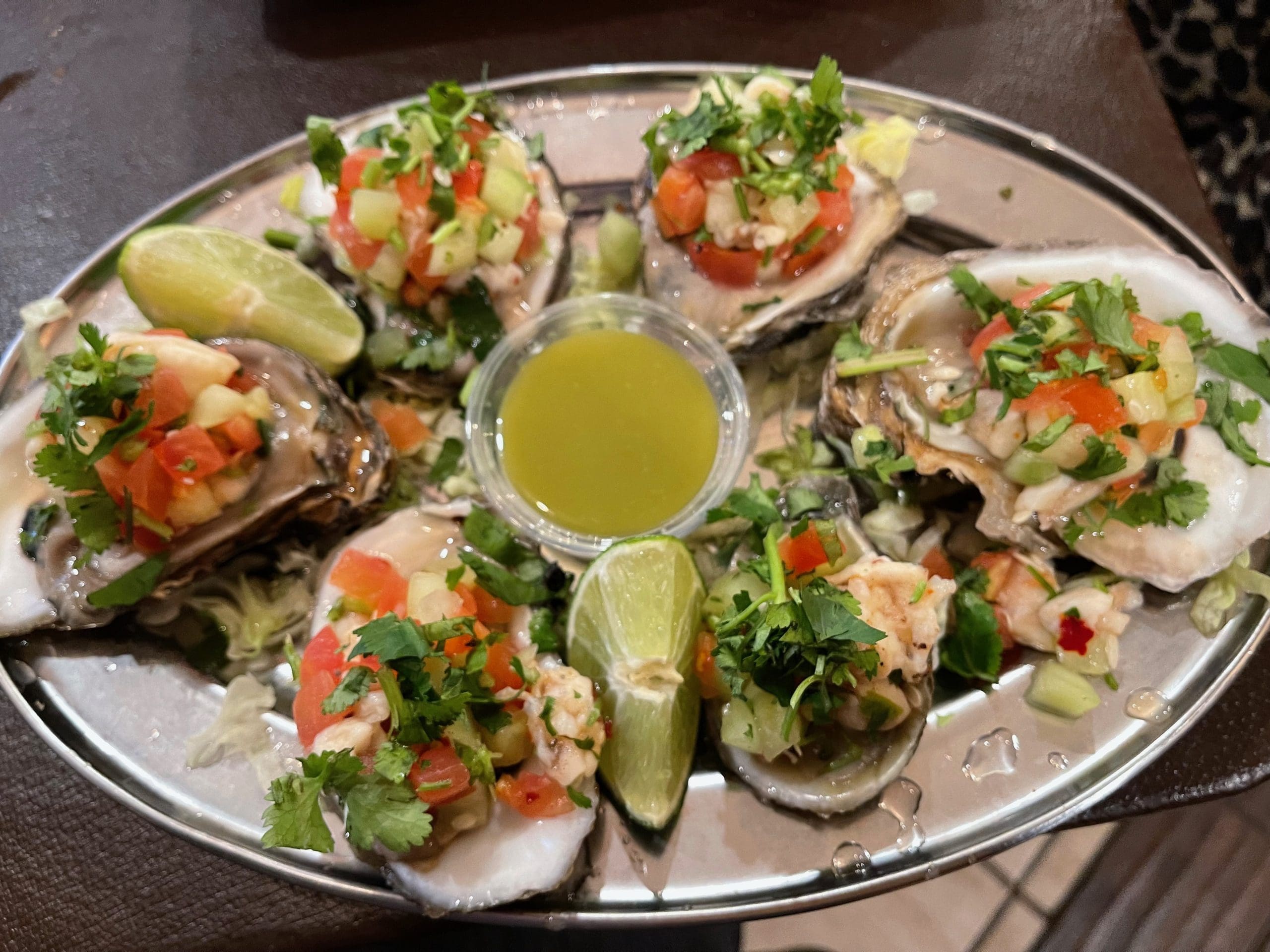
There’s deliciousness and there’s delicious irony on the menu at Mariscos La Playa. The deliciousness is more readily apparent. It’s part and parcel of virtually every item on the menu. You have to understand a little Spanish to grasp the delicious irony which is outwardly manifested in the form of a soup called “Caldo Vuelve a la Vida,” literally ” Come-back-to-life-soup.” The soup is a metaphor for the restaurant itself, the irony being that the restaurant itself came back to life in Albuquerque after a hiatus of almost two years. Mariscos La Playa operated in the Duke City from November, 2006 through mid-2013. Located on Central Avenue just west of Atrisco, the colorful Mexican seafood restaurant received significant critical acclaim from every online and print medium in the city. Moreover, it earned popular acclaim among Mexican seafood aficionados. Large crowds typified lunch and dinner at Mariscos La Playa, the third instantiation of a Mexican seafood dynasty founded and operated by Luis Ortega and his family who also own two locations in Santa Fe and one in Española. From a demographic standpoint, the original location was probably more ideally situated for the Duke City’s Mexican population. The new location–on San Mateo…