The Artichoke Cafe – Albuquerque, New Mexico

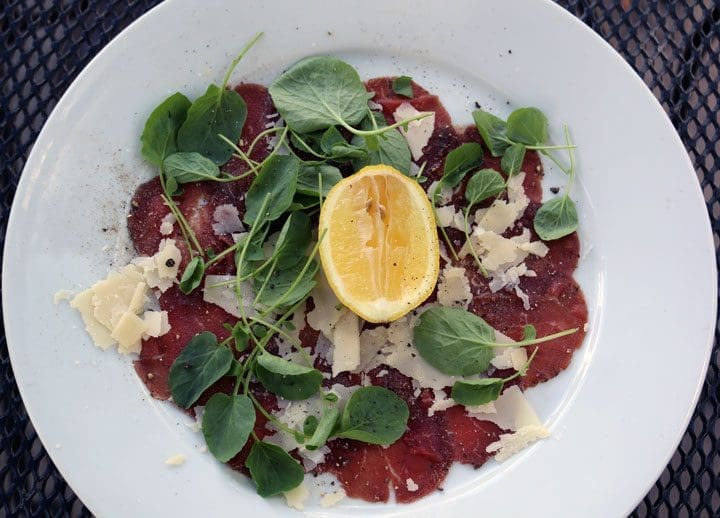
“These things are just plain annoying. After all the trouble you go to, you get about as much actual “food” out of eating an artichoke as you would from licking 30 or 40 postage stamps. Have the shrimp cocktail instead.” – Miss Piggy Miss Piggy, that shrill and garrulous walking side of bacon, may not appreciate the humble artichoke much, but among both health conscious and discerning diners, the artichoke has long been a healthful and delicious dining option. Considered a “super food” for its high antioxidant, fiber, potassium, phosphorous, iron, calcium and magnesium content, artichokes have long been used in the treatment of gall bladder and liver conditions because it improves liver functions and is recognized for its ability to lower blood pressure. It’s also been known, in some cases, to help with migranes and to give skin a healthy glow. In 16th Century Europe, eating an artichoke was considered scandalous behavior for women because the artichoke was considered an aphrodisiac (along with the humble tomato) and was reserved exclusively for men (especially aristocrats like Henry, VIII). Catherine de Medici, bride of King Henry, II of France, denounced that social more, introducing the artichoke along with traditional Italian foods…

BLADES’ BISTRO – Placitas, New Mexico

“Ask three Placitans what they like best about living in Placitas and… one will say it is being so far from everything, another, being so close to everything–and both will be right.” – The Placitas Chamber of Commerce Chamber of Commerce not withstanding, the distance from Placitas to fabulous gourmet restaurants has spanned both great mileage and the healing passage of time for residents. When hungry, the mileage between Placitas and either Santa Fe or Albuquerque has seemed interminable. When fondly recalling a glorious meal within its doors, time has been the sole comforter for residents still missing their beloved Cafe De Las Placitas, a magnificent shooting star which faded away much too quickly but left an indelible afterglow. Most residents will agree the distance to fine restaurant dining is a small price to pay when you live in an idyllic haven back-dropped by the reddish Sandias and surrounded by panoramic views of hills dotted with dessert flora, weather-worn mesas and verdured mountains. Compared to its bustling, burgeoning, boisterous neighbors, Placitas is a serene harbor of refuge and respite. Blades’ Bistro, which opened on March 19th, 2009, has greatly narrowed the distance to fine-dining for Placitas residents while rekindling fond…

Jhett’s Restaurant – Rio Rancho, New Mexico (CLOSED)

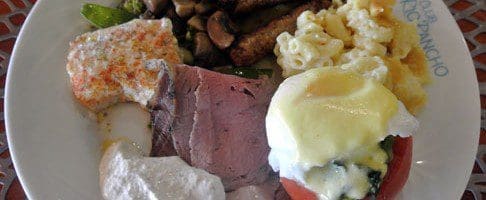
In its halcyon days, the Chamisa Hills golf course and country club in Rio Rancho was considered one of the city’s crown jewels. Its undulating 18-hole championship course with strategically placed deciduous trees and challenging water hazards once hosted the Charley Pride Golf Fiesta, one of the most prestigious tournaments in the state. Built in 1970, the 212-acre development was flanked by upscale gated communities and boasted of magnificent panoramic views showcasing the reddish hues of the Sandias at sunset and the twinkling city lights of Albuquerque at night. Alas, over time escalating water rates made operating the course economically onerous. Soon denuded fairways and eroded bunkers replaced the once verdant grounds. In 2013, the Chamisa Hills golf course and country club was auctioned off to be purchased nearly a year later by visionary entrepreneurs Bob Gallagher and Jhett Browne who immediately began putting into action their plans for restoring the operation to prominence and profitability. The two negotiated significant water rate reduction rates and plan for reduced turf areas to conserve water. At fruition, they hope to revivify the facility into one of the area’s best event centers, not just golf clubs. Rebranded as Club Rio Rancho, the sprawling…

Santacafe – Santa Fe, New Mexico

Is there anything as pure and simple as the innocence of a child, especially during the most magical time of the year? When my then six-year-old niece penned a heartfelt letter to Santa Claus, there was no doubt in her mind that her letter would be delivered and her wish would be granted. After all, she had been extra good all year long and what she wanted for Christmas was so reasonable. My niece’s fondest Christmas wish was that her family dine at Santacafe—not because of its reputation for inspired cuisine, but because she was sure she would meet jolly old Saint Nick at his restaurant “Santa Café.” It’s entirely possible my niece may have been the only person ever to have suffered a crushing disappointment at Santacafe, an elegant edifice which has been fulfilling wishes of discerning diners ever since it launched in 1983. In its three decades plus of pleasing the refined and pedantic palates of Santa Fe’s residents and visitors, Santacafe has been consistently regarded as one of the City Different’s very best, an institution the New York Times called “a restaurant to love, offering perhaps the best combination of inspired food and attractive surroundings in the…

Elaine’s – Albuquerque, New Mexico (CLOSED)

“They were all impressed with your Halston dress and the people that you knew at Elaine’s”. ~Big Shot by Billy Joel For nearly five decades–from 1963 through 2011–“the place to be” in Manhattan’s trendy Upper East Side was Elaine’s, perhaps the city’s most celebrated and revered A-lister’s hangout. Everyone who was anyone frequented Elaine’s, an eponymous establishment in which luminaries came to see and be seen. Celebrity habitues included glitterati from stage, screen, television, literature and politics such as Woody Allen, Marlon Brando, Clint Eastwood, Mick Jagger, Jacqueline Kennedy, Jack Nicholson, Kurt Vonnegut, Jr., Andy Warhol and Raquel Welch. Elaine Kaufman was the peripatetic presence around whom the celebrities flocked, the geocentric personality whose gravitational pull drew them all in. Every chic and cosmopolitan city has its own “place to be,” a vibrant cultural, retail and entertainment hub with its own distinctive sights, sounds and flavors. In Albuquerque, that cultural hub is Nob Hill, a fusion of trendy shops, eclectic galleries and swank dining options. The history of Nob Hill is interlaced with that of Route 66, the fabled “Mother Road” which once traversed the fruited plain from Chicago to Los Angeles. Remnants of Route 66 in its halcyon days…

Soul and Vine – Albuquerque, New Mexico (CLOSED)

“A recipe has no soul. You, as the cook, must bring soul to the recipe.” ~Thomas Keller A recent tweet from Ortega (yes, that purveyor of “high quality Mexican products”) posed the existential question “What’s your cooking style: cooking from the soul, from your taste buds, from a book or from your gut?” While most cooks and almost all chefs would contend they cook with their souls, their assertions are belied by the absence of the qualities and experiences diners might associate with the term “cooking from the soul.” For many of us, that term kindles cherished memories of our precious mothers lovingly preparing our favorite dishes, every spoonful an expression of their boundless love. For others, “cooking from the soul” may engender fond recollections of a perfectly executed gourmet meal served by a fabulous staff against a spectacular backdrop. Whatever imagery the term “cooking from the soul” conjures, most of us know when we’ve experienced it just as we can usually surmise that a cook or chef is just “going through the motions” in rote fashion. If you’re uncertain just what constitutes cooking from the soul, let’s turn to the wit and wisdom of The Ramen Girl: “You must…

Anasazi Restaurant – Santa Fe, New Mexico

As you gaze in awe and wonder at the luxurious trappings surrounding you everywhere you turn at the Rosewood Inn of the Anasazi, you can’t help but contemplate the irony. Inn of the Anasazi? Throughout their existence the Anasazi never knew luxury or leisure, focusing solely and at all times on survival. Shelter, food and water were of paramount concern in the Four Corners area of the Southwest, a desolate environment which was often brutal and unforgiving. Amidst the ravages of climatic extremes, the Anasazi scratched out an existence and an lasting legacy. While the subsistence living of the Anasazi civilization and the opulence of the Rosewood Inn of the Anasazi are at polar extremes, even stodgy historians might appreciate that this intimate world-class retreat “celebrates the enduring creative spirit and traditions of the regions early Native American.” This boutique gem also embraces Santa Fe’s rich cultural heritage and ongoing legacy as an artist colony. An extensive art collection is a vivid blend of Native, Hispanic and Anglo influences. In the Anasazi Restaurant and Bar luxury travelers have a restaurant worthy of the stunning three-story Inn. Richly appointed with the tricultural art of New Mexico, the restaurant is decidedly rich,…

Bouche – Albuquerque, New Mexico (CLOSED)

Career paths do not always unfold as stereotypes might dictate. Heavily recruited out of Mission, Texas, a high school football hotbed, Frans Dinklemann, a 6’6″ 241-pound defensive end, signed with the University of New Mexico where his Lobo teammates included perennial National Football League (NFL) All-Pro Brian Urlacher. By his senior year, Frans had grown to 6’7″ and 270 pounds and moved to the offensive line where he set the team weight room record for offensive linemen with a 33-inch vertical leap. The stereotype of the offensive lineman is of a brutish behemoth heavy on brawn and light on brain, a misanthrope with very little personality or charisma. In his inimitable manner, Hall of Fame NFL coach and longtime television analyst John Madden stereotypes the offensive lineman as a “big ol’ mean and nasty guy who tries to knock the snot out of the guy across from him.” With these stereotypes, you might surmise that after his Lobo career ended, Frans Dinklemann would become a nightclub bouncer or pursue some other similar profession requiring muscle and mass. Coach Madden, however, also pointed out that offensive linemen tend to be neat and precise, to be polite and have well-ordered lockers. This…

Geoffrey’s Malibu – Malibu, California

The walls at Geoffrey’s Malibu are festooned with copies of whimsical framed “doodles” created by Hollywood celebrities and movie stars who have dined at the posh seaside restaurant. Most are tongue-in-cheek self-portraits which probably speak volumes about the glitterati themselves–and not just whether they lack or are blessed with an artistic talent beyond their particular medium. Thematically, all the portraits include a heart. That’s because Harvey Baskin, the restaurant’s previous owner asked the artists to donate originals for publication and sale in support of a charity for children with heart disease. Jane Russell’s heart forms her shapely derriere at the terminus of legs which would otherwise go on forever. George Burns’ bespectacled heart puffs on one of his beloved cigars. Tony Bennett may have left his heart in San Francisco, but at Geoffrey’s Malibu it reputedly spans the Brooklyn Bridge. Geoffrey’s neighbor Johnny Carson, obviously knowing his limitations, drew a simple heart and signed his name beneath it. Woody Allen was clearly in his trademark dispirited disposition when he drew a broken heart The fact that guests can dine at Geoffrey’s Malibu and not even notice the celebrity caricatures is a testament to the spectacular beauty surrounding the cliff-side restaurant…

JENNIFER JAMES 101 – Albuquerque, New Mexico (CLOSED)

The number 101 has some very interesting connotations. If you grew up in the 60s, you might remember the Benson & Hedges cigarette jingle, “One, oh, one, one, oh, one, a silly little millimeter longer one, oh, one, a silly millimeter longer.” Talk about ear wax. That jingle was like It’s A Small World and the Gilligan’s Island theme. Once you got it into your head, you couldn’t get rid of it. My brainiac mathematician friend Bill Resnik appreciates that 101 is the 26th prime number. He points out that it’s also a palindromic number (a sequence that reads the same forward and backwards) or rather a palindromic prime. Geekier friends like Craig Stegman and Kenny Sanchez, developers extraordinaire, know 101 as a dreaded “fatal error” status code. In academics, 101 connotes a beginning or basic-level course number taught in universities in many English speaking countries. English 101, for example, is typically a remedial English course (not that I’d personally know anything about that). It’s where students brush up on the basics to prepare themselves for upper level courses. So why would Jennifer James, arguably Albuquerque’s very best chef, choose the number 101 to share her name on her restaurant’s…

Farm & Table – Albuquerque, New Mexico

For the past quarter century or so, American chefs and the dining public have increasingly embraced the concept of farm-to- table cooking. It makes great sense from an environmental and an economical standpoint and as the Smithsonian Magazine wrote, “the farm-to-table movement is at once hip and historic.” Its historical aspects are especially relevant in agrarian New Mexican villages where farm-to-table hasn’t always been a “movement,” “concept” or “trend.” It’s been a way of life, especially in the state’s frontier days when food wasn’t nearly as plentiful as it is today. Enchanting as it may be, New Mexico is a land which can be harsh and unforgiving as Native American pueblos and early settlers found out when, for centuries, they eked out a meager subsistence from an austere terrain amidst the ravages of climatic extremes. To a great extent their ability to coax a stable crop supply from an often unyielding earth was a tribute to their perseverance, hard work and divine graces. By the early 1800s, farmers made up about 90 percent of America’s workforce. Entering the 20th century, the percentage of Americans engaged in producing crops and livestock was down to 40 percent. Today, less than one percent…