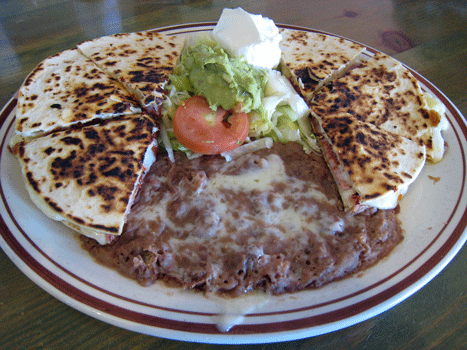
El Sarape – Albuquerque, New Mexico (CLOSED)
Before the advent of political correctness, the unchecked use of controversial stereotypes was rampant throughout America. Starting in the 1930s, for example, ethnic caricatures in the guise of tchotchkes (salt shakers, cookie jars, plant pots and the like) could be seen in households throughout the fruited plain. Neon-spangled roadside five-and-tens dotting the motorways and byways were primary culprits in the sale of kitschy, tacky knickknacks propagating such stereotypes as mammies, cigar-store Indians and the Mexican peasant taking a siesta while reclining against a saguaro. The sleeping Mexican, often called Pancho, was particularly prominent throughout the Southwest. Generally attired in huaraches, pantaloons, a sash which doubled as a belt, a massive sombrero that hid his face and a colorful sarape, that image perpetuated the stereotype of the lazy Mexican. While politically conscious Americans of all ethnicities found the sleeping Mexican offensive, in the border towns and in the barrios, the image was often used in front yards by families of Mexican descent as a symbol of home. According to Maribel Alvarez, an associate professor at the University of Arizona, Mexican workers viewed the sleeping Mexican not as a laughable stereotype or curio, but as a symbol of honor–a hard-working Mexican resting…