Cafe Bien – Albuquerque, New Mexico (CLOSED)

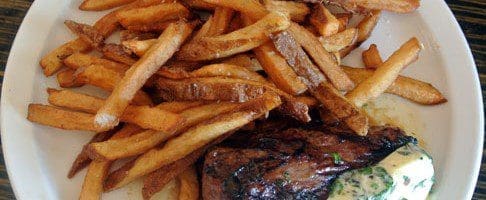
My friend Hannah, a brilliant linguist who’s become rather expert in the etymology and evolution of languages, speech patterns and morphology would find it dismaying should she hear someone attribute the term “Romance language” to the seductive sweet nothings spoken by such onscreen Lotharios as Ricardo Montalban. With the mere utterance of “Corinthian leather,” Montalban could make women (and some men) swoon, but while his smooth intonations and thick, sophisticated accent may sound “romantic,” “Romance languages have nothing to do with love and romance. Romance languages (the R is always capitalized) are languages that developed out of the Latin used in the Roman Empire between the sixth and ninth centuries A.D.. By the beginning of the 21st century nearly one billion people claimed a Romance language as their mother tongue, 300 million people as a second language. The five most widely spoken Romance languages are Spanish (410 million), Portuguese (216 million), French (75 million), Italian (60 million), and Romanian (25 million). Romance languages still share several commonalities and a surprisingly high proportion of basic vocabulary. Though more a polyglot (if knowing cuss words in multiple languages qualifies me as such) than a linguist, my first inclination at hearing about Cafe…

Loving Vegan – Albuquerque, New Mexico (CLOSED)

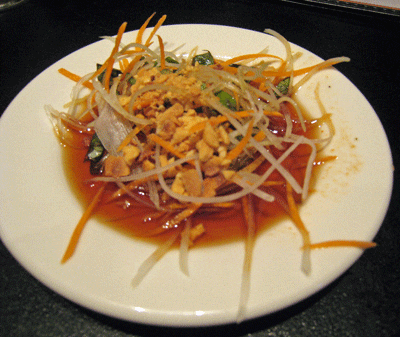
My adovada adoring amigo Ruben likened the irony to an episode of Seinfeld. Two weeks into his experiment with an ostensibly healthier vegan diet, he was craving sushi and needed his sushi-specific pangs of hunger sated. No sooner had we finished a very satisfying sushi soiree at Albuquerque’s only vegan sushi restaurant than our waitress apprised us the restaurant would be closing for good two days later. “Serenity now,” we cried, mimicking Frank Costanza when faced with a stressful situation. It just didn’t seem fair that we would make such a delicious discovery only to have plans for future meals dashed. Loving Vegan gave it the “old college try,” initially launching in June, 2012 on Coors Blvd before relocating in November, 2013 to a much more heavily trafficked Nob Hill location. In its relatively short life, Loving Vegan garnered a loyal following and a very prestigious honor. Within a year of opening, PETA (People for the Ethical Treatment of Animals) named Loving Vegan the “top restaurant for vegan sushi” in the United States and Canada. The citation from PETA read: “Loving Vegan earned our top prize because it truly proves that any food can be made deliciously and healthfully without…

Gravy – Albuquerque, New Mexico (CLOSED)

“Gravy is the simplest, tastiest, most memory-laden dish I know how to make: a little flour, salt and pepper, crispy bits of whatever meat anchored the meal, a couple of cups of water or milk and slow stirring to break up lumps.” ~Dorothy Allison, American writer Some would say that the discovery (invention?) of gravy is one of mankind’s crowning achievements. Others would deride it as the work of the devil, likening gravy to a beguiling temptress which bends the will to its bidding. Dolly Parton acknowledges that “every single diet I ever fell off of was because of potatoes and gravy of some sort.” It’s no surprise that similar to many of the world’s best tasting foods, gravy is generally fattening. Most commonly, it’s the byproduct of pan drippings and juices derived from cooking meat. Some among us who consider gravy one of mankind’s most glorious achievements (even as it flows through our veins) may salivate involuntarily when turning onto Central Avenue and espying a large sign reading simply “Gravy” subtitled with the three events with which gravy goes so well: “breakfast, lunch, dinner.” One of the most eagerly anticipated restaurant launches in recent memory, Gravy is the brainchild…

New Yorken Cafe & Bakery – Albuquerque, New Mexico (CLOSED)

“Some folks like to get away Take a holiday from the neighborhood Hop a flight to Miami Beach Or to Hollywood But I’m taking a Greyhound On the Hudson River Line I’m in a New York state of mind.” ~Billy Joel Perhaps only in New Mexico does the term “New York state of mind” evoke images of a desert hamlet atop the mesa overlooking the largest city in the state. Such was the effectiveness of the slick marketing campaign by the American Realty and Petroleum Company (AMREP for short) that Rio Rancho, the city it founded less than fifty years ago, may be more often referred to as “Little New York” than as the “City of Vision,” the sobriquet it would prefer. AMREP’s clever marketing attracted hundreds of middle-income New Yorkers to the then untamed western fringes overlooking the Rio Grande. To almost everyone else, however, “New York state of mind” calls forth the melting pot character that can take you around the world in five boroughs where as many as 800 languages are spoken. That multicultural diversity has become what former President Jimmy Carter described as “a beautiful mosaic” with “different people, different beliefs, different yearnings, different hopes, different…

Witch’s Brew – Albuquerque, New Mexico (CLOSED)

“Double, double toil and trouble; Fire burn, and cauldron bubble. Fillet of a fenny snake, In the cauldron boil and bake;” ~Macbeth Act 4 Scene 1 Each of the lunch ladies at the Peñasco Elementary School cafeteria undoubtedly earned a pair of wings, a harp, and a halo for all they were subjected to from the recalcitrant kids who lined up for our daily gruel. Whenever (and it was quite often) something unappetizing was served, we would burst into a chorus of “double, double, toil and trouble. Dump this slop on the double.” Most of us were six or seven years old and had certainly never heard of the three witches immortalized in the Shakespearean tragedy Macbeth. We’d improvised the little ditty from something we’d heard on an episode of Bewitched (or was it Gilligan’s Island?), a situation comedy of the 1960s. It wasn’t those sainted lunch ladies who first came to mind when I espied the sign for “Witches Brew,” a coffee house in the Altura Park neighborhood. Now much more geriatrically advanced (and ostensibly more “grown up”) I tried to recall the remarkably precise and detailed incantation (was it “eye of newt, toe of frog, wool of bat,…

Shade Tree Customs & Cafe – Albuquerque, New Mexico (CLOSED)

For at least the past seven years, the most famous “biker cafe” in the Land of Enchantment has been the fictional Maggie’s Diner in Madrid on the Turquoise Trail. Constructed in 2007 for the made-in-New-Mexico comedy Wild Hogs, Maggie’s Diner was frequented by bikers of all ilks, whether they be white collar executives in the throes of mid-life crises or the stereotypically rowdy, raucous bikers who terrorize the Madrid’s citizenry and demand food and adult beverages gratis. After January 14th, 2015 when the Food Network aired a Restaurant: Impossible episode entitled “Revved Up,” New Mexico’s most famous biker cafe probably became the Shade Tree Customs & Cafe in Albuquerque. Chef-host Robert Irvine and crew spent a couple of days in October “transforming” the restaurant. The premise of Restaurant: Impossible is that within two days and on a budget of $10,000, Irvine will transform a failing American restaurant with the goal of helping to restore it to profitability and prominence. To make the show entertaining, any existing dysfunction or drama in the restaurant’s day-to-day operations is spotlighted in the fashion of all reality shows. If anything, what the show revealed is that when two worlds—a motorcycle shop and a restaurant—collide, issues…

Viet Q – Albuquerque, New Mexico (CLOSED)

“When helicopters were snatching people from the grounds of the American embassy compound during the panic of the final Vietcong push into Saigon, I was sitting in front of the television set shouting, ‘Get the chefs! Get the chefs!’” Calvin Trillin, American writer, New Yorker Magazine It’s unlikely Trillin, a humorist renown for his love of food, was entirely serious about his seemingly callous reaction to the poignant imagery of thousands of South Vietnamese fleeing their besieged city. In his own inimitable way, he was using his sardonic wit to express appreciation for the exotic cuisine he loves so much. In fact, he considers the influx of Asians into American restaurant kitchens divine intervention of a sort: “God felt sorry for us because we lost a war to such a small country as Vietnam and sent the Vietnamese to us–where they were really needed.” Three decades after the evacuation of Saigon, the Travel Channel’s articulate bon viveur Anthony Bourdain, wrote about Saigon: “I think I’ve gone bamboo…I’ve gone goofy on Vietnam, fallen hopelessly, hopelessly in love with the place.” For Bourdain, that’s rare, unfettered praise. Most viewers recognize that Bourdain’s approach to his culinary adventures is antithetical to the burbling…

The Stumbling Steer – Albuquerque, New Mexico (CLOSED)

There are ranchers throughout New Mexico who might not think there’s anything even mildly amusing about a brewery and gastropub called The Stumbling Steer. These robust ranchers would likely equate the term Stumbling Steer to the clumsy gait exhibited by their precious livestock after they consume locoweed, a poisonous plant found in every one of the Land of Enchantment’s 33 counties. Ultimately leading to paralysis and death if not controlled, locoweed accounts for millions of dollars in livestock loss each year. The name Stumbling Steer obviously has nothing to do with the bane of ranchers throughout New Mexico. According to the gastropub’s Web site, the name has everything to do with a commitment to a farm and table approach. All the spent grains used to craft the brewery’s (ostensibly delicious) beers are fed to locally grown cattle which purportedly gain fat…or flavor. Those selfsame cattle provide the beef which graces a very imaginative menu. It’s a menu which changes with the seasons, keeping things fresh and fun. The Stumbling Steer is no ordinary brew pub. It’s a gastropub, a British term for a public house (pub) which specializes in high-end, high-quality food. The term gastropub, a portmanteau of pub and…

Ali Baba – Albuquerque, New Mexico (CLOSED)

Legends recount that in his quest for immortality, Mesopotamian king Gilgamesh visited a tavern where a divine barmaid gave him the advise: “Eat and drink your fill, Gilgamesh, and celebrate day and night. Make every day a festival; day and night dance and play.” Because of the fecundity of their land, the people of Mesopotamia could indeed afford to eat, drink and be merry until they died–even if they were denied immortality. The rich culinary legacy of ancient Mesopotamia (modern-day Iraq) can be traced back more than 10,000 years when the comparatively lush and fecund land constituting the fertile crescent gave rise to the cradle of civilization. The availability of water and agricultural resources allowed some of the world’s earliest human civilizations to flourish from both a societal and technological perspective. This region is credited with the development of writing, glass, the wheel and the use or irrigation. Tablets found in ancient ruins throughout Iraq document recipes used in temple festivals, including a 3,700-year-old recipe for a meat pie baked in an unleavened crust. In what are essentially the world’s very first cookbooks, these tablets reveal a very large and gastronomically advanced civilization. A cuneiform script on 24 stone tables…

EPAZOTE ON THE HILLSIDE – Santa Fe, New Mexico (CLOSED)

Epazote. That’s a word that can make an intrepid chef’s toque blanche resemble the white flag of surrender. If you’re a culinary savant and haven’t heard of epazote, it’s probably because the chefs at restaurants you frequent might just be afraid to use it. Would you want to use an ingredient also known as “skunkweed” and “wormseed”…a word derived from a Nahuatl term for an animal with a rank odor…an ingredient perhaps best known for reducing the after-effects of eating beans? When Chef Fernando Olea chose to name his fabulous new world restaurant Epazote, it signaled a bold departure from the stereotype too many diners have of Mexican restaurants. In the Chef’s inimitably gentle manner, he was declaring his passion for the cuisine of the pre-Columbian peoples of Mexico, signaling his embrace of historically authentic ingredients and preparation styles. At Epazote, he marries Mexico’s indigenous culinary traditions with those of New Mexico, especially its agricultural bounty. Oh, and he’s daring and talented enough to incorporate epazote into several recipes. Originally from Mexico City, Chef Olea has been enthralling savvy diners in Santa Fe since 1991 with his sophisticated interpretations of contemporary Mexican cuisine. In nearly a quarter-century, the Chef has…

Tara Thai Cuisine – Albuquerque, New Mexico (CLOSED)

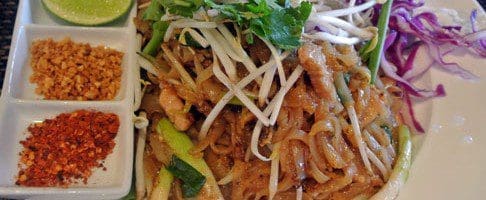
The Internet is replete with personality assessments. Some–such as a personality assessment based on your choice of pizza toppings–are created by psychologists ostensibly intent on obtaining scientifically valid results, but many others are intended solely for fun and have no real validity. In the latter category, most assessments can easily be manipulated to achieve the results you want. As you’re responding to questions, an inevitable conclusion becomes transparent. You can usually tell by the way you’re answering those questions what the results will be. On the other hand, some personality assessments are baffling. While you may think you’re manipulating the results, the subsequent assessment winds up contrary to your responses. One such assessment purports to tell you which “Big Bang Theory” character you are–to expose the inner geek or super hot neighbor inside all of us. For readers who may not be familiar with The Big Bang Theory, TV.com describes it as “a sitcom that shows what happens when hyper-intelligent roommates/physicists Sheldon and Leonard meet Penny, a beautiful woman moving in next door–and realize they know next to nothing about life outside of the lab. Rounding out the crew are the smarmy Wolowitz, who thinks he’s as sexy as he…