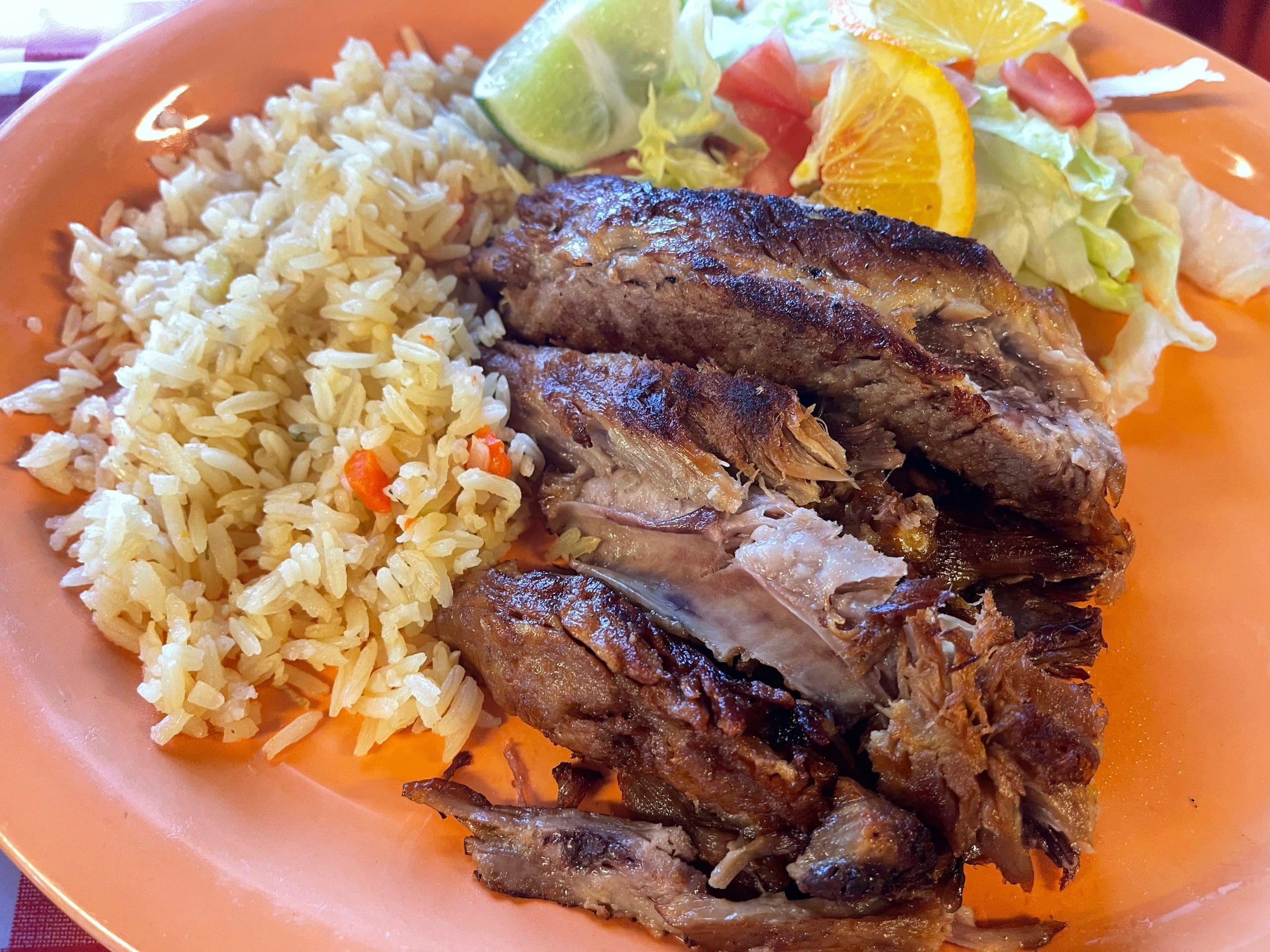
Ranchos Plaza Grill – Ranchos De Taos, New Mexico

If you’ve read or studied the history of New Mexico, you’re probably aware that life wasn’t easy for Spanish colonists. As with other efforts to colonize North America, Spanish settlers quickly found themselves insufficiently provisioned for the agrarian lifestyle they sought to establish and maintain. Wholly dependent on water to produce and maintain crops and farmland, they quickly found out rainfall in the desert Southwest was fickle and unpredictable. When winter came, the harsh realities of a poor crop yield set in. Settlers often had to resort to taking the food of their Indian neighbors, often by duplicitous means. Throughout the seventeenth century the Spanish population in New Mexico never exceeded more than 3,000, about one-sixth the number of Pueblo residents.  Clashes between Spanish settlers and soldiers and various Pueblos were largely predicated by the indignities Pueblos suffered at the hands of the Spanish. Then came severe drought, higher than average temperatures and very little rainfall.  Significant crop losses, livestock death and starvation made life tenuous. These conditions were exacerbated by raiding Navajos and Apaches seeking to supplement their own dwindling foodstuffs by preying on other inhabitants of the colony. Ultimately these events contributed to the Pueblo Revolt of 1680…

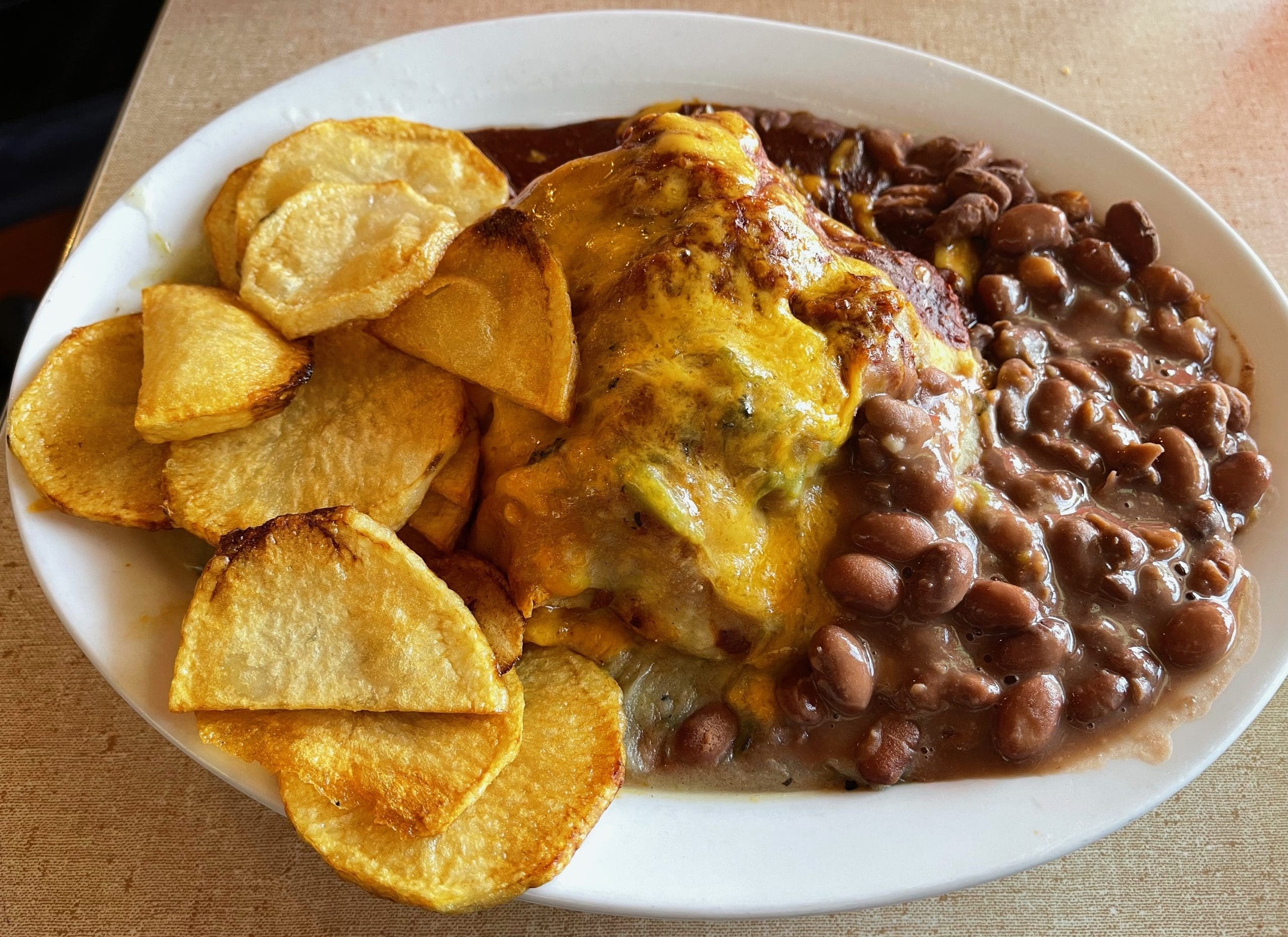
Los Olivos – Albuquerque, New Mexico

For many New Mexicans, Durango, Colorado is much more familiar than Durango, Mexico.  In truth, however, Mexico’s Durango may actually have more historical significance and ties to the Land of Enchantment than its like-named resort town in Colorado.  That’s especially true for the Catholic Churches of New Mexico. Episcopal jurisdiction for the Catholic church in New Mexico was placed in 1797 under the stewardship of the Bishop of Durango. New Mexico remained part of the Diocese of Durango until 1850 when Pope Pius IX created the Vicariate Apostolic of New Mexico and appointed Father Jean Baptiste Lamy as its first Bishop.  Yes, that’s the same Father Jean Baptiste Lamy on whom Wila Cather’s Death Comes For the Archbishop is based. Durango, Mexico was also a significant “paraje” (stopping point) along the The Camino Real de Tierra Adentro (Royal Road of the Interior Land), the 1,590 mile road between Mexico City and San Juan Pueblo (Ohkay Owingeh), New Mexico. During the 17th Century, the area between the villas of Durango and Santa Fe also came to be known as “the Chihuahua Trail.”   It’s a vast understatement to declare that Santa Fe’s reliance on El Camino Real was crucial to the…

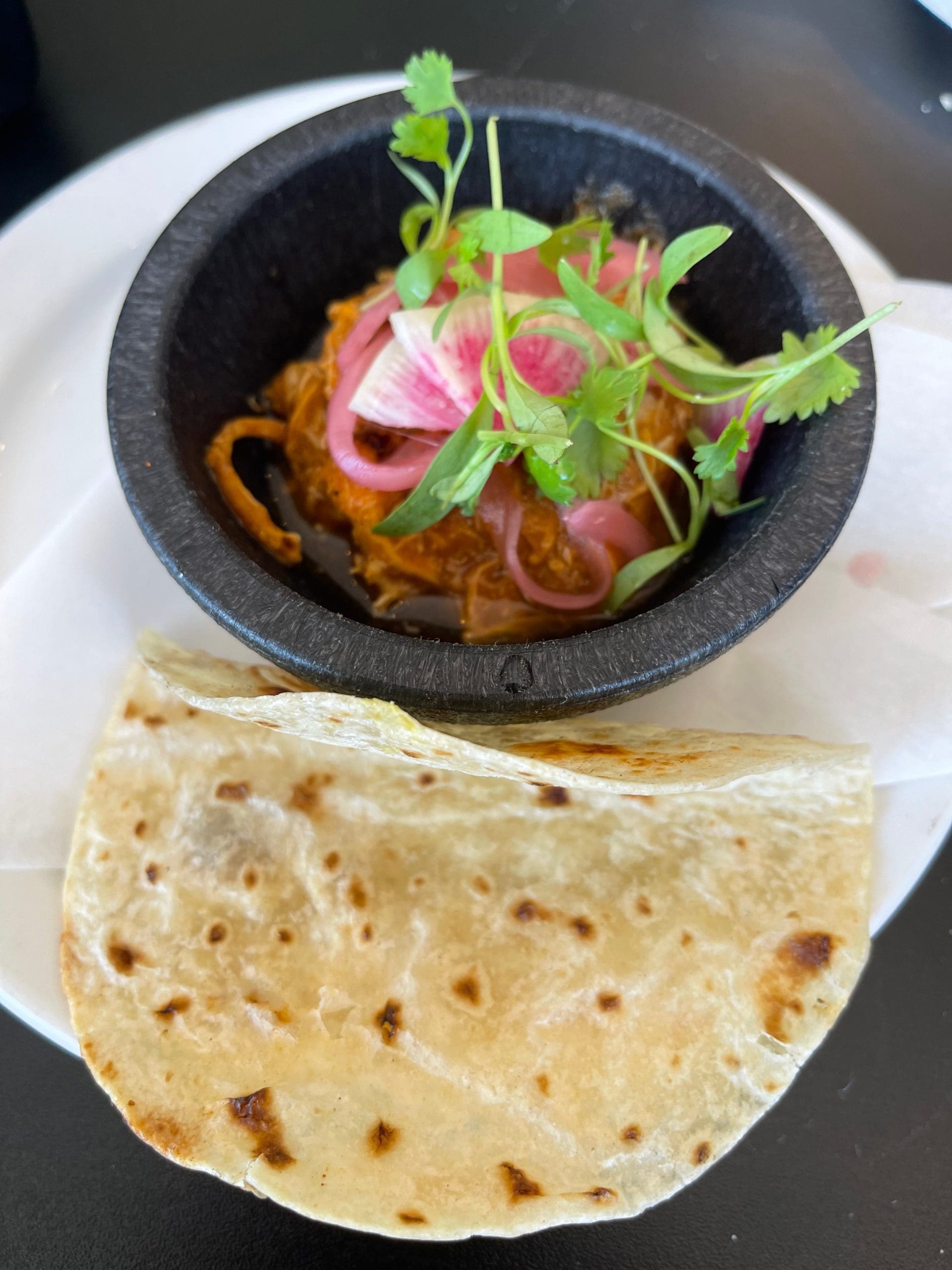
El Camino Dining Room – Los Ranchos de Albuquerque, New Mexico

Many of us who predate, however slightly, the explosion of institutionalized fast food retain a fondness for the remaining independent family restaurants whose arsenal in the competition for hungry diners consists of reasonable portions of great meals at budget-conscious prices all served by a friendly and accommodating waitsfaff. An Albuquerque restaurant which epitomizes those ideals is the El Camino Dining Room, captured brilliantly above by the fabulous photographer Deanna Nichols. The El Camino was built by Clyde H. Tyler in 1950, five years after the latest “war to end all wars” and 13 years after Route 66 was “straightened” so that it would bypass Santa Fe completely.  Albuquerque was much more innocent back then.  Some might even describe it as a “cow town trying to be a city.”  At the time, 44% of America’s population resided in rural areas and the Duke City’s population was only 96,800. Despite no longer being part of Route 66, one of the city’s busiest thoroughfares was 4th Street on which commerce was burgeoning.  It was the perfect location for an independent family restaurant, far from the cavalcade of Howard Johnson’s type restaurants which grew along the interstates. Similar to Howard Johnson’s which prided itself…

El Cotorro – Albuquerque, New Mexico (CLOSED)

There’s a scene in the 2006 lucha libre (Mexican professional wrestling) comedy film Nacho Libre in which Nacho’s ectomorphic tag team partner Esqueleto (“the skeleton”) orders two grilled, buttered and chile-dusted elotes (corn-on-the-cob) from a street vendor. Esqueleto graciously attempts to hand one to Nacho who rebuffs the offer, knocks the elotes to the ground and bellows “get that corn out of my face!” That antagonistic act so enraged Esqueleto that he leaped on Nacho’s back and attempted to throw his corpulent partner to the ground. The sight of the two golden elotes tinged with red chile on the ground was funny at the time, however, after consuming the elotes at El Cotorro, we would consider knocking elotes to the ground an act of sacrilege and sheer madness. It’s no wonder Esqueleto was so upset. Sure we’ve had elotes elsewhere…plenty of elotes at a plethora of elsewheres, in fact, but only at El Cotorro have elotes made us swoon in appreciation. El Cotorro, which translates to “the parrot” in English is not what you might expect from a Mexican restaurant of that name. It’s not a restaurant named for the stereotypical squawking “Polly wants a cracker” parrot mascot some kitschy…

Ale’s Cakes – Albuquerque, New Mexico (CLOSED)

Hypocrisy thy name is Gil. “For someone who whined so much about a one-hour (each way) commute to work, you’re willing to drive a hundred miles for lunch” my Kim lamented.  Our lunch destination wasn’t nearly a hundred miles away, but when you’re hungry it probably seems that way.  It would have seemed even further had we traversed the entirety of the street in which our intended restaurant is located. In fact, from its starting point to its terminus, that drive would truly have seemed interminable through all its winding and congested permutations. The street of which I speak is Albuquerque’s own Coors Blvd, otherwise known as New Mexico State Road 45.  According to Wikipedia, Coors Blvd is 22,918-miles long…er, make that 22.9-miles long though it does seem painfully longer than that (especially when you’re hungry).  Coors meanders parallel to the Rio Grande from the Southern boundary of Rio Rancho through Albuquerque and onto Isleta Pueblo.  It takes significantly longer to drive this route than it took the Mexican conquistadores to walk the Camino Real. Thank goodness for I-25 and Rio Bravo Blvd which shortened the length of our drive.  As we wended our way south on Coors, my Kim…

Taqueria Los Amigos – Albuquerque, New Mexico (CLOSED)

“On a dark desert highway, cool wind in my hair Warm smell of colitas, rising up through the air” ~Hotel California, The Eagles in 1977, when the Eagles’ immortal rock anthem Hotel California was released as a single, most radio hits clocked in at about three minutes.  Three minutes is just about as long as Hotel California’s hauntingly compelling intro and the legendary guitar-duet-slash-duel-slash-musical-conversation between Don Felder’s double-necked Gibson EDS-1275 and Joe Walsh’s Fender Telecaster. The high voltage, era-defining song with its intensely intricate instrumental work, soaring harmonies and enthralling lyrics make Hotel California an iconic indictment of the dark underbelly of the American dream and its excesses. Hotel California’s allegorical, introspective lyrics alone make it one of the most widely speculated songs in rock history.  Studies of those lyrics have resulted in numerous interpretations of the song.  Among the most widely contemplated lyrics surround the song’s first stanza: “warm smell of colitas rising up the air.”  At least three vastly different definitions of colitas exist.  Among the most common misinterpretations is one replete with sexual innuendo–specifically that colitas is sexual slang meaning “little tails.”  In Mexican slang, colitas also refers to cannabis. In numerous interviews, Don Felder has clarified…

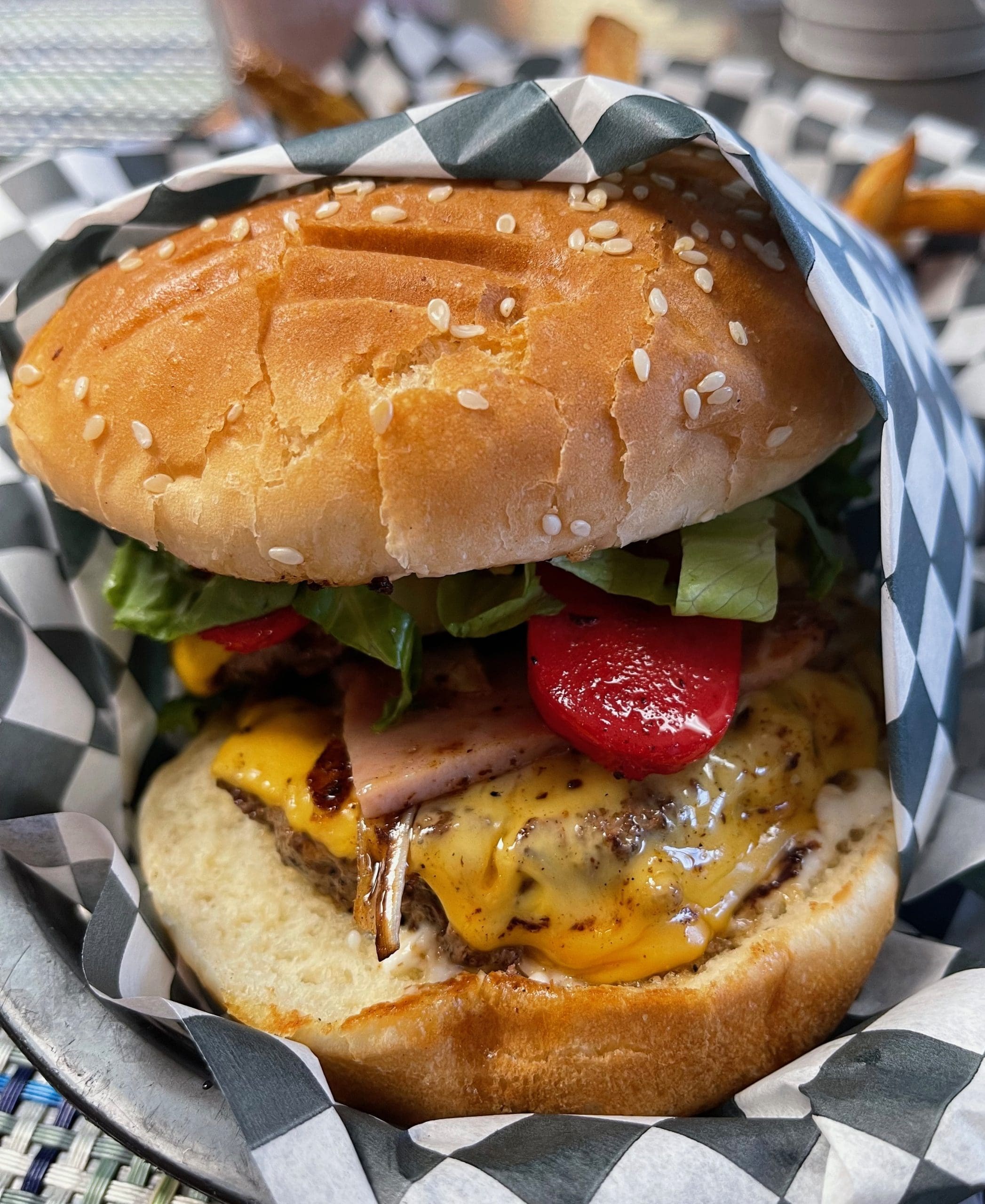
Tap N Taco – Rio Rancho, New Mexico

Imagine Marty McPlata, a 17 year old Rio Rancho High School student who gets transported back in time seven years to 2015. With the help of his mad scientist friend Bill Resnikoff, he makes his way back to the future to the year from which he left–2022.  Significant changes and burgeoning growth have transpired in the City of Vision since he left.  Among one of the improvements by subtraction is the absence of one of the city’s three Burger King restaurants, a multi-national chain he drove past only because it was on the way to Corrales. Marty smiled at the thought that Burger King’s incredibly creepy, big-headed mascot may finally driven away all of the “home of the Whopper’s” customers.  That realization hit Burger King CFO Josh Kobza in 2011: “We got rid of the creepy king character that tended to scare away women and children.”  Gone, Marty thought, are the gold and red colors of Burger King’s logo, ironically the same colors used by McDonald’s.  Gone, too, is the empty parking lot.  On some days only the drive-up window seemed to have customers. While the iconic, standardized shape of the familiar Burger King restaurant remains, the building is now…

El Rey Del Pollo – Albuquerque, New Mexico

My environmentally-conscious, Prius-driving friend Bruce “Sr. Plata” Silver has a much smaller carbon footprint than that carbon credit-trading hypocrite Al Gore.  No environmental activist would ever condemn Sr. Plata for fouling the air and water with a large amount of greenhouse gas emissions. Instead, he leaves large “al carbon fingerprints,” the finger-licking kind you get from frequenting restaurants which specialize in pollo al carbon, chicken prepared over charcoal. Pollo al carbon has spoiled Sr. Plata. He craves those juicy, spatchcocked, golden-skinned birds speckled with black char, chicken so meaty and delicious it makes store-bought rotisserie chickens look positively anorexic in comparison. Who can blame Sr. Plata?  Made well, pollo al carbon is absolutely addictive. “Finger-licking good” might be a cliche, but there’s truth to this one particular cliche as it applies to al carbon. Over the years, Albuquerque’s Mexican restaurants haven’t exactly been beacons of light pointing the way for seekers of pollo al carbon to sate their maws with full repast.  Certainly not like Sr. Plata’s birthplace of Los Angeles where you can’t toss the leg bone of a chicken without hitting another poultry place.  During our culinary excursions, Sr. Plata and I thought we had discovered the motherlode…

Don Choche Tacos Y Cerveza – Albuquerque, New Mexico

“Well, there’s not a taco big enough for a man like me That’s why I order two or three Let me give you a tip, just try a nacho chip It’s really good with bean dip.” ~Weird Al Yankovic – Taco Grande Philosophers and scholars have long pondered just what Rodin’s The Thinker was thinking about.  Okay, some people were probably wondering why he was naked, but mostly we wondered what deep philosophical ruminations occupied his mind.  Theories abound.  Was he contemplating the meaning of life?  Musing about what is truth?  I have my own theory. I believe The Thinker was wondering why the heck anyone would eat at Taco Bell when there are so many better options–especially in New Mexico.  From the look of utter perplexity on his face, he had to be wondering why around half the population of the United States visits a Taco Bell once every eleven days.  It would be easy to make this essay an indictment against American culture for “heading for the border” but wouldn’t it be a better tact to lavish praises on Albuquerque’s phenomenal independent taquerias, several of which have been recently reviewed on Gil’s Thrilling…  That’s what The Thinker would…

Ruby’s Tortilleria – Bernalillo, New Mexico

“A tortilla can be the, I would say, the most meaningful, the symbol of the Mexican cuisine, it’s the heart of the Mexican cuisine, the soul … the most recognizable element of the Mexican cuisine.” ~ Hugo Ortega James Beard Nominated Chef In 1519, when Hernan and his Spanish conquistadors arrived in Mexico, the indigenous people had never seen anyone like the bearded strangers attired in imposing armor made of iron.  These light-skinned strangers, some of whom had eyes of blue or green, arrived in “floating mountains” significantly larger than the canoes used by the natives.  The arrival of the strangers coincided with an Aztec prophecy, leading Montezuma, the Aztec ruler, to believe that perhaps Cortés was the Aztec god Quetzalcoatl, the “feathered (bearded) serpent.”  According to legend, Montezuma convened his most sage advisors who counseled their leader to proceed with caution.  They dispatched emissaries to greet the strangers and offer them two types of food:  the food of the gods, covered with the blood of human sacrifice; and the food of humans, including avocados, turkey and soft, flat corn breads they called tlaxcalli (from the verb “ixca” (to cook [on a comal: grill or griddle]).  The Spaniards chose the…

Barelas Coffee House – Albuquerque, New Mexico

Quick, name the oldest neighborhood in Albuquerque. Most people would say Old Town which was settled in 1706 near the banks of the Rio Grande. Most people would be wrong. The oldest neighborhood in Albuquerque is actually the Barelas neighborhood, formally established as a ranching settlement in the late 1600s. The history of the central Rio Grande region began at and expanded from Barelas, once a thriving hub of commerce bustling with activity. Both the Camino Real, the royal road to Mexico City and Route 66, America’s mother road passed through the Barelas neighborhood. Barelas was the seat of a flourishing railroad enterprise which facilitated a burgeoning economy.  The neighborhood began a precipitous decline in the 1950s when odoriferous emanations from an area sewage treatment plant drove people away. Then in the 1960s, shopping mall developments proved too formidable competition for long-established mom and pop businesses, the economic heart of the community. Before long, the federal government was calling Barelas a “pocket of poverty” and what was once a thriving neighborhood languished. By the 1970s, Barelas was all but forgotten–perhaps a blessing in disguise because that allowed the preservation of historic buildings for which the community is best known today.…