Umami Moto – Albuquerque, New Mexico

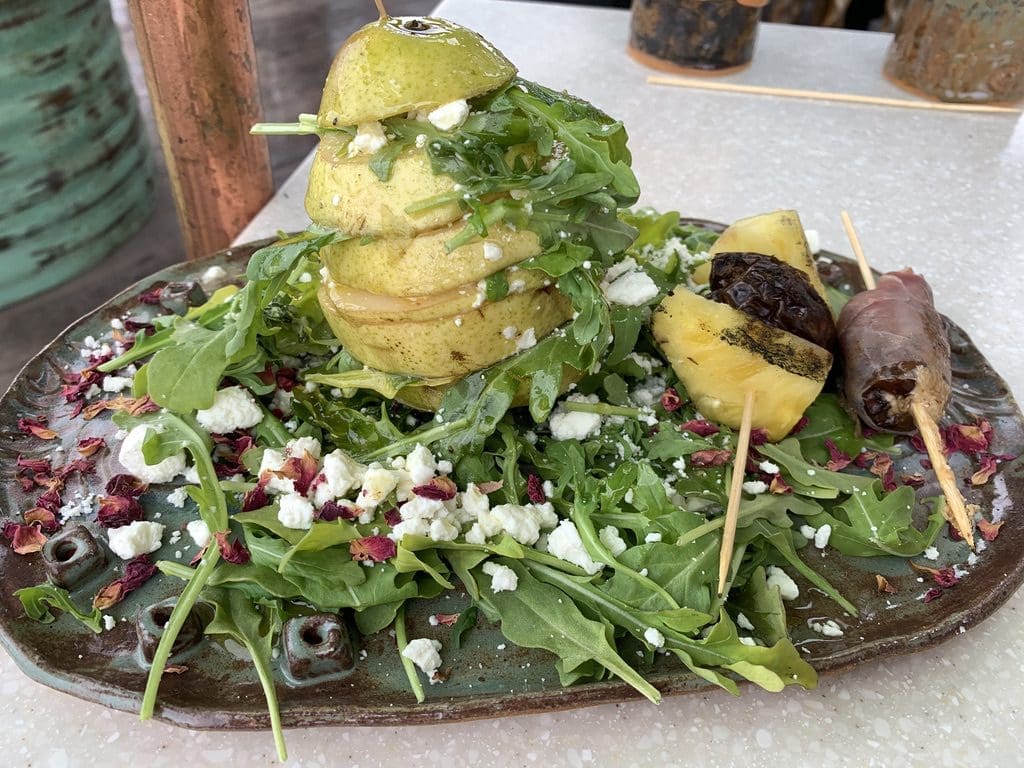
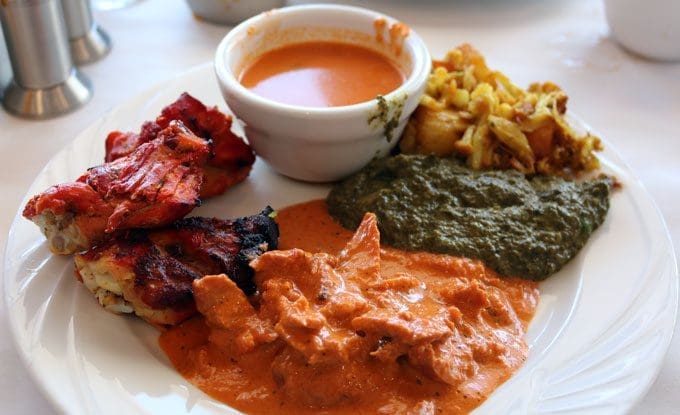
In the vernacular of the cannabis culture–as I learned growing up in Northern New Mexico–the term “moto” translates from Spanish to “someone who enjoys “mota,” a slang term for marijuana.”  Visitors to the Duke City from Española, Peñasco, Chimayo and other villages up North would probably giggle if they espied the mobile kitchen (that’s food truck to you, Bob) named Umami Moto.  Though Umami Moto won’t be able to sate the cannabis cravings of any weed wanters, it would certainly take care of their munchies after they’ve scored a lid or two. With all due respect to hippie-lettuce-lovers everywhere, the term “moto” for which the aforementioned mobile kitchen is named is a Japanese term which means: “the cause; the foundation; the basis.”  Umami is also a Japanese term, but it’s one that’s not so easy to define.  You might even say it’s the je ne sais quoi of culinary terms.  At its essence, umami is the “fifth taste,” after salty, sweet, sour, and bitter, but it’s so much more. Writing for New Yorker, Hannah Goldfield defined umami as “that other thing, the thing you didn’t even know needed a concept or a name until someone pointed it out. That deep,…

Pho Kup – Albuquerque, New Mexico

Virtually from infancy, my brother George was a prodigy with Lincoln logs, Erector sets and even Tinkertoys.  He could literally build anything.  That’s when he played indoors.  He preferred being out in the elements where weather-permitting, he would build solid and rainproof club houses and tree houses out of twigs, logs, boards and whatever else he could find.  In the winter, he built Eskimo-worthy igloos.  To no one’s surprise, George became a carpenter, quickly rising to the rank of construction superintendent.  Over a rather luminous career, he’s built stately residences as well as mission-critical structures and facilities at the Los Alamos National Labs.  In his rare spare time, he builds furniture and carves wood into artistic pieces. In entrepreneur Roy Solomon, George has a kindred spirit.  In 2015, Solomon launched a community-oriented commercial plaza constructed entirely with repurposed shipping containers as modular, architectural building blocks.   Christened the Green Jeans Farmery, the unique twist on a shopping plaza is an architectural marvel George would have enjoyed building.  Several among the cluster of shipping container buildings are connected by a bridge.  You can literally walk from one rooftop deck to another.  From the very beginning, Green Jeans Farmery has housed a number…

Cornerstone Bakery & Cafe – Ruidoso, New Mexico

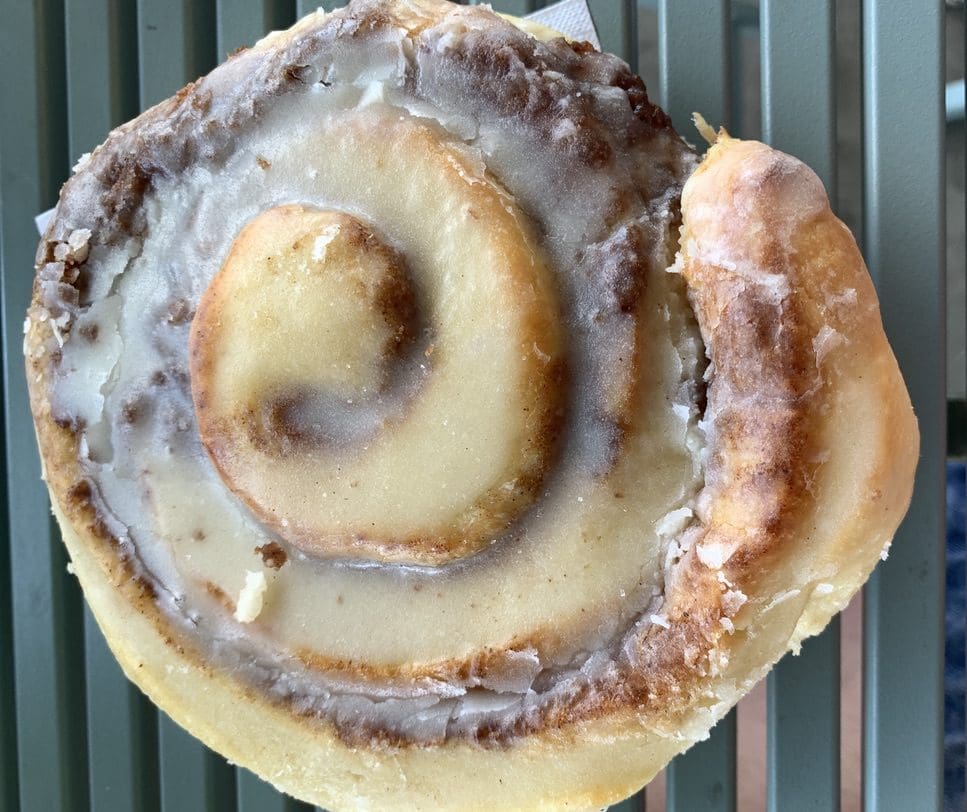
Texas, the Lone Star State slogan tells us, is “like a whole other country.”  Everywhere we turned during our weekend in Ruidoso, we espied oversized pickup trucks sporting Texas license plates.  It almost made us wonder if the “village of the noisy river” had been annexed into that whole other country.  The trend continued at the unholy hour of 8AM on a cool Sunday morning when the license plate for almost every vehicle in The Cornerstone Bakery & Cafe’s parking lot flaunted the familiar “Lone Star State” logo.   Ironically, when we had asked where locals went for breakfast, the answer was almost invariably The Cornerstone Bakery & Cafe. Lest you think I may be a bit xenophobic or paranoid about Texas,  nothing can be further from the truth.  Being around Texans is an opportunity to discuss two of my favorite things in the world–the Dallas Cowboys and Texas barbecue.  Not surprisingly, diners at two of the socially distanced tables under the large tent where we dined were happy to oblige.  In addition to discussing our mutual passions, we discussed the attraction of Ruidoso to denizens of Dallas, Denton, Dalhart and other Texas cities.  “There’s nothing like Ruidoso anywhere in…

Cafe Rio Pizza – Ruidoso, New Mexico

You might think that a beautiful town whose very name translates from Spanish to “noisy” would be boisterous and braggadocious abut all there is to see and do in that town.  Not so according to writer Tania Casselle.  Penning a piece for New Mexico Magazine Tania contends that “Ruidoso flies under a lot of people’s radar, even though regular vacationers are intensely loyal—and probably don’t want too many people to know about it.” Whether or not it truly it truly flies under a lot of people’s radar, Ruidoso is indeed an idyllic location, an enchanted mountain oasis of incomparable beauty.  It’s an year-round mountain playground in which deer, elk, turkey, quail, bear and lots of Texans roam the golf courses and streets.  Those are the qualities for which Ruidoso is known…at least by vacationers who probably don’t want too many people to know about it.  What Ruidoso hasn’t been widely known for–at least until rather recently–is its culinary scene. Denizens of the Land of Enchantment know the best green chile cheeseburgers in the universe can only be found within our state’s borders. We esteem our green chile cheeseburgers with such high regard that our state’s Department of Tourism promotes a…

Oso Grill – Capitan, New Mexico

When we pulled up to the order window at the Oso Grill’s drive-through lane, Misty, our sweet server handed us a menu and contritely explained that the restaurant had run out of shrimp.  “Why,” I asked “would anyone visit the Oso Grill for shrimp when they can have one of the very best green chile cheeseburgers in the Land of Enchantment.”  With apologies to Smokey Bear, that green chile cheeseburger is the reason many of us drive to Capitan, New Mexico.  Since, however, most New Mexicans consider Smokey one of our state’s upstanding citizens, we can enjoy a fantastic burger at Oso Grill then cross the street to pay our respects to the living symbol of fire protection.  Smokey is buried in the Smokey Bear Historical Park about one-tenth of a mile from the Oso Grill. The Oso Grill might have remained one of those secrets only denizens of the Lincoln county area know about.  Then came an invitation in 2017 from the New Mexico State Fair soliciting “ten established (brick and mortar) restaurants” to participate its annual New Mexico Green Chile Cheeseburger Challenge which “pits restaurant against restaurant to vie for the prestigious title of “green chile cheeseburger champion.” …

Tia Betty Blue’s – Albuquerque, New Mexico (CLOSED)

Tia Betty.  If the name conjures images of a dowdy old woman, a face etched with wrinkles and thinning grey hair pulled back neatly into a bun, you’re probably not alone.  Not even the youthfully ribald nonagenarian Betty White can alter the contemporary stereotypes ascribed to the increasingly anachronistic name Betty.  It wasn’t always the case.  In fact, there was a time  Betty was one of the most popular girl’s name in America and not just as a diminutive of Elizabeth or Bethany. According to the Social Security Administration, Betty was the fourth most popular girl’s name in the 1920s with more than 283,000 babies so christened.  Betty was an even more popular name in the 1930s when it ranked second among all girl’s names and was given to more than 300,000 infant girls.  The name declined in popularity in successive decades–from 11th in the 1940s, 35th in the 1950s,  102nd in the 1960s–before dropping from among the 200 most popular girl’s names cataloged by the federal government. There was also a time the name Betty conveyed images of voluptuous sexiness, especially on the big screen (though not even animated features were exempt).  The most enduring sex symbol of the…

The Paleta Bar – Bernalillo, New Mexico

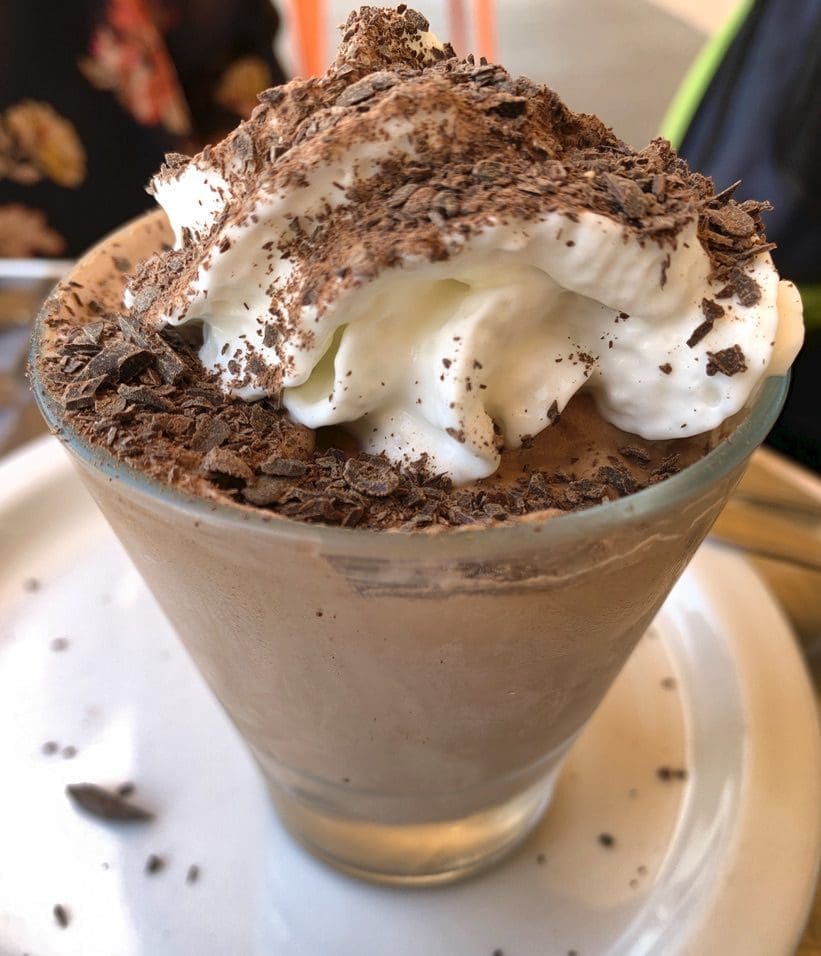
A few decades ago, Mad Magazine (or was it Cracked) published a two-panel cartoon depicting a couple of gringo turistas visiting Mexico on a stifling summer day.  On the first panel, one turista tells the other that he heard Mexican Coke is much stronger than Coke bottled across the border in the states.  When the second turista opens the bottle, a fizzy carbonated explosion knocks down a bird flying overhead…proving, of course, that Mexican Coke is definitely stronger (not to mention better tasting). Even a camel would get thirsty in Mexico on a sweltering July day when temperatures flirt with the century mark and there are no cacti in sight to provide shade.  No matter how thirsty that infernal dry heat may leave you, don’t ever try to down an entire Mexican Coke in one swig.  My sole attempt at doing so left me convulsing and writhing like a wounded beast, thrashing out and roaring in pain.  After that, I swore off Mexican “soft” drinks–and since everyone knows that you don’t drink the water in Mexico, I had to find a delicious alternative to slake my thirst and ward off heat in Mexico.  Fortunately, Mexico is the birthplace of paletas,…

Guava Tree Cafe – Albuquerque, New Mexico

A few years ago, my friend Bill Hanson, a gastronome of the first order, was hosting several of his Costa Rican employees at Intel’s Ocotillo (Arizona) plant. Like me, Bill delights in introducing his friends to new culinary adventures. Unfortunately, not all our colleagues were similarly inclined (despite one of Intel’s corporate values being “risk-taking”). One of them convinced the “Ticos” that the restaurant they should not miss for a “true American dining experience” was Claim Jumper, a regional chain (and slight upgrade from Chili’s). Ever the gracious host, Bill acquiesced to the Ticos’ request. I’ll let him describe the rest (from his gastronomic blog The Tao of Chow): “As each dish was produced and delivered to the table I sank further into my chair as the American decadence of over indulging was displayed in glorious Sysco provided plates heaping with food. Each dish could have easily have served three people as I sat and wondered how much food was actually consumed versus how much went into the dumpsters out back.” If the Ticos were disappointed in any way with the cavalcade of calorie-laden comestibles brought to the table, you’d never know it. To break bread (or arepas) with a…

Steam Q – Albuquerque, New Mexico

“I don’t know why men like to barbecue so much. Maybe its the only thing they can cook. Or maybe they’re just closet pyromaniacs.” ~Cecelia Ahern, P.S. I Love You >Whether or not the dubious and persistent stereotype about men and their grills has any veracity is a topic oft debated.  It’s been discussed anecdotally and it’s been analyzed scientifically.  In a 2010 article for Forbes, Meghan Casserly explained why men love grilling: “Grilling is sort of dangerous (there’s fire!), it lets dudes hang out together while also providing some sort of neutral entertainment (getting to watch one guy do stuff and possibly also criticizing him while he does it), and requires minimal cleaning (self-explanatory).” >In his 1993 essay “Why Do Men Barbecue?,” an article more about gender roles than about meat, anthropologist Richard Shweder expounded on the origins of male and female spaces in different cultures.  He posited that contemporary men and women throughout urban America don’t consider themselves tied to traditional gender roles.  So, where the men among our troglodytic ancestors brought home the mastadon for women to prepare (and bring them a beer or six), today’s men are just as likely to prepare the daily bread with…

Urban Hotdog Company – Albuquerque, New Mexico

Fat kids, skinny kids, kids who climb on rocks Tough kids, sissy kids, even kids with chicken pox love hot dogs. Armour Hot Dog Commercial, 1960s Advertising standards in the 1960s were quite a bit more lax than they are today. In today’s culture of American political correctness and woke idealogy, there’s no way an earworm-inspiring jingle such as the Armour Hotdog commercial would ever see the light of day, but back then it helped sell a lot of hot dogs. Even in the 1960s, Armour’s savvy ad agency undoubtedly understood the influence children had on the family’s food consumption budget. In addition to catchy jingles designed to appeal to children, Armour’s advertising agency enticed children with prizes to be had for a monetary pittance and a coupon cut out from the back of a package of its hot dogs. Not even parents were immune from Madison Avenue’s charms. They were swayed by assurances that hot dogs were actually good for children because they were “made from lean meat” and were “protein rich.” The 1963 United States census reported the production of 1.11 billion pounds of frankfurters and wieners, constituting thirty percent of all sausages made that year. Two years…

Burrito Express – Rio Rancho, New Mexico

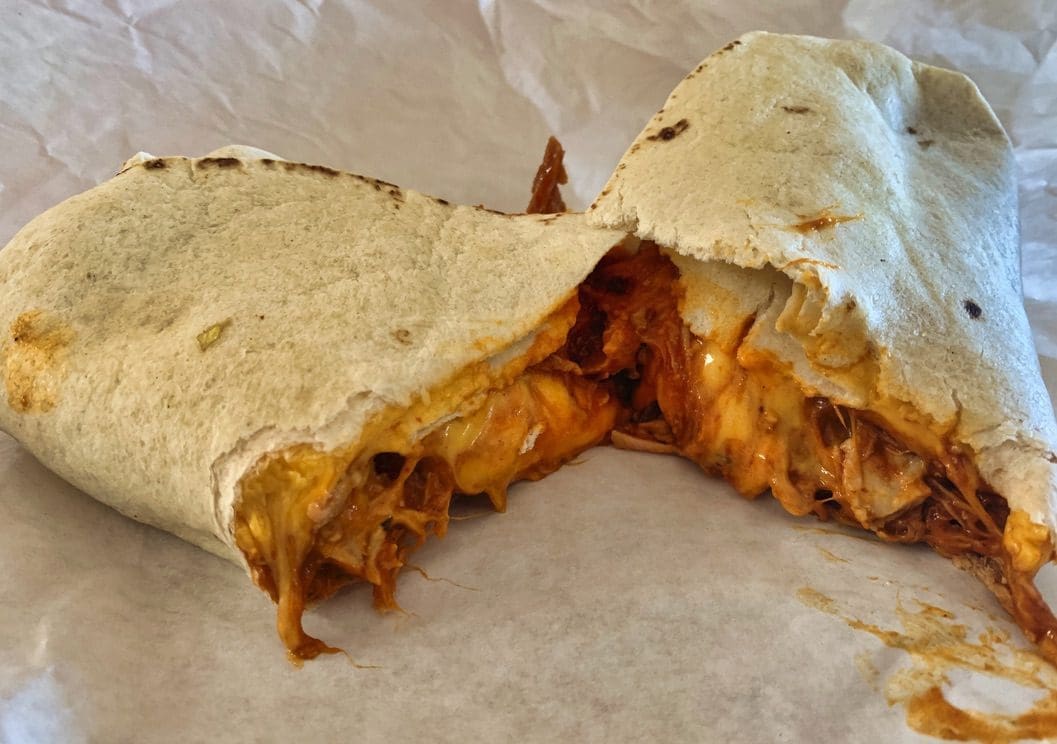
In an article entitled “Ode to the Handheld” in the April, 2020 edition of New Mexico Magazine, writer Alicia Inez Guzman noted that when her dad was growing up in the sixties, “the idea of plating a burrito for a sit-down meal was unheard of, laughable even.  That’s because the humble tortilla-as-envelope filled with protein and starch was tailor-made for eating in the fields and long the companion of the farm worker.” Google “burrito” and the results returned will almost invariably ascribe the same adjective used by Alicia Inez Guzman to describe the burrito–humble.  That’s fitting considering burrito translates from Spanish to “little donkey,” also a companion of the farm worker and perhaps the most humble and hard-working of all pack animals.  Etymologists believe the burrito is so named not because tortillas were ever stuffed with donkey meat or because a well-constructed burrito resembles a donkey, but because a rolled, tightly packed burrito looks like a bedroll or the packs on either side of a burrito’s haunches. Catch my friend Carlos on a day in which he’s waxing philosophical and you’ll get an earful about how a savvy dining public staved off the cultural appropriation of the humble burrito by…