Mulas – Corrales, New Mexico

How many times have you heard an elected official referred to as a “jackass?”  In the village of Corrales, that term could conceivably not be used as a pejorative.  Every year during the last weekend of the Corrales Harvest Festival, a pet mayor is named.  If the newly elected mayor is unable to fulfill his or her duties, a pet mayor pro tem is named to assume the duties of the mayoral office.  Corrales has long prided itself on being a paragon of democratic values and inclusivity though the winning candidate is usually a dog or a horse.  In 2022, the winning candidate was a peacock and in 2020, it was  Chip, a five month old miniature donkey. Unlike human elections in which the legitimacy of campaign fund sources (and how those funds are used) is often in question, pet mayor elections are based on a tally of dollar-ballots cast for each.   Votes are one dollar each with ballot boxes available throughout the village.  Nor will you find candidates bad-mouthing one another or railing against fake media coverage.  Campaign slogans tend to be more friendly, too. In 2021, for example, Jewel, a Standard Poodle’s slogan was “The world needs…

Ansots Basque Cuisine – Boise, Idaho

Historian Jan Morris wrote “Basque is one of the world’s more alarming languages. Only a handful of adult foreigners, they say, have ever managed to learn it. The Devil tried once and mastered only three words – profanities, I assume.”  Ellie Ansotegui, co-owner (along with her father Dan) of Ansots Basque Cuisine in Boise, Idaho lived in Basque Country for a year where she studied the language, enhancing the intermediate proficiency she had acquired growing up in a Basque family.  Alas, she returned to her Boise hometown and without practicing it faithfully, quickly lost the additional mastery she acquired in Spain. Ellie has advanced writing, reading, listening, and speaking proficiency in Spanish.  For fear of not being understood, I didn’t speak my New Mexican Spanish to her or her father.  It’s the “two nations separated by a common language” axiom that occurs literally anywhere you meet someone from “somewhere else.”  There is one universal language Ellie shares with guests at her family’s restaurant.  That’s the language of food. In a world in which there are is over 7,000 estimated languages, the language of food is universal!  Ellie spoke food very well with me, my Kim and my dear friend Dr.…

Tapas Papa Frita – Scottsdale, Arizona

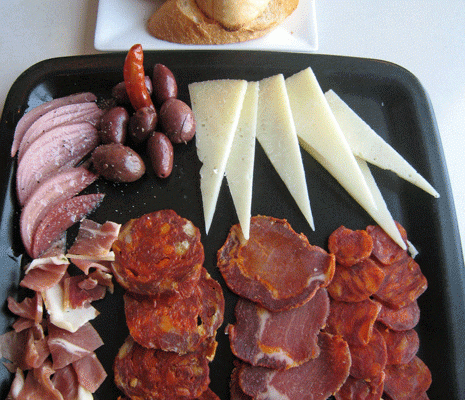
While dining at a restaurant in Phoenix, our stomachs roiled a bit as a pesky fly took a nosedive into my glass of Mexican Coca Cola.  By the time our server returned, the acid in the Coke had completely dissolved the fly.  There was no evidence remaining that a fly had drowned in the carbonated water.  If anything, that little escapade gave credence to one of two stories that explain the origin of Spanish tapas.  In this particular origin story, the genesis of tapas was in the working class taverns of Andalusia where field workers used slices of bread and meat to keep dust and insects out of their sherry glasses.  That story made me wish I had placed a piece of bread to keep that one fly away from my drink. There are similar origin stories, most involving covering beer or sherry with a saucer to keep flies out.  Bartenders eventually figured they could use the saucer to serve a little ham, some cheese and olives.  This clever move proved very popular among customers who appreciated the bar’s apparent generosity.  In one version of this origin story, devious innkeepers figured out they could serve cheap wine with a plate…

Damacio’s Bar & Tapas – Albuquerque, New Mexico

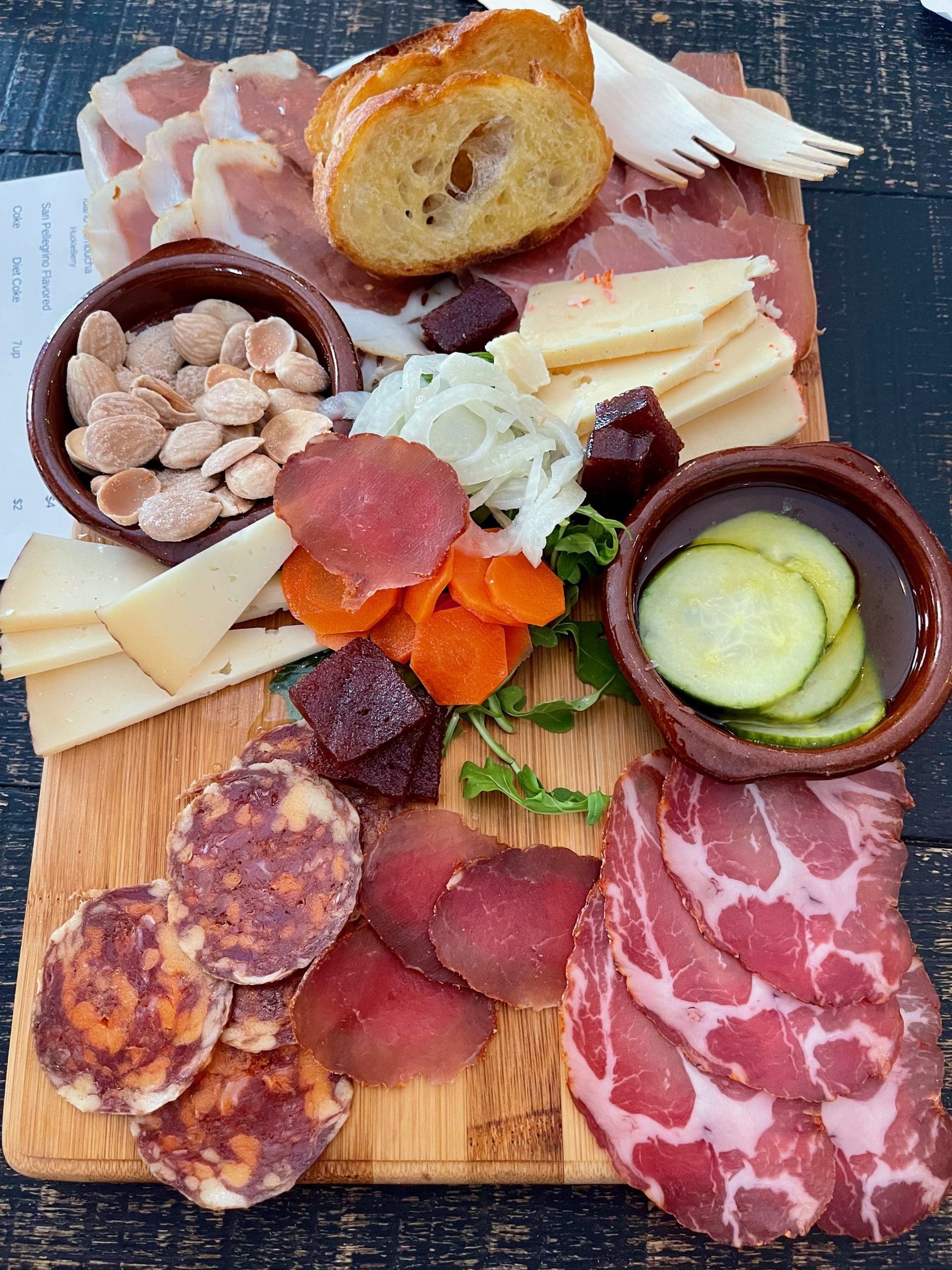
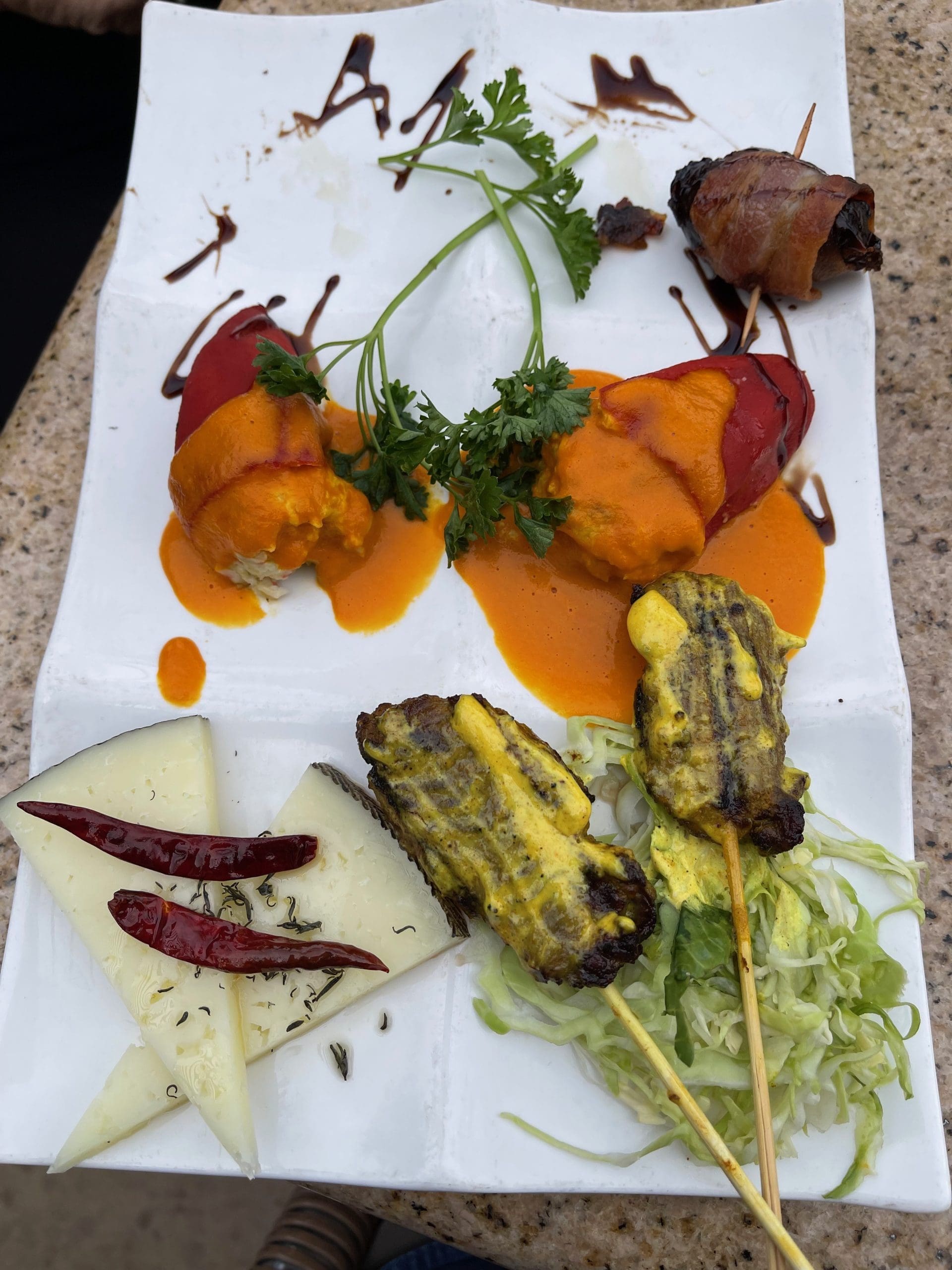
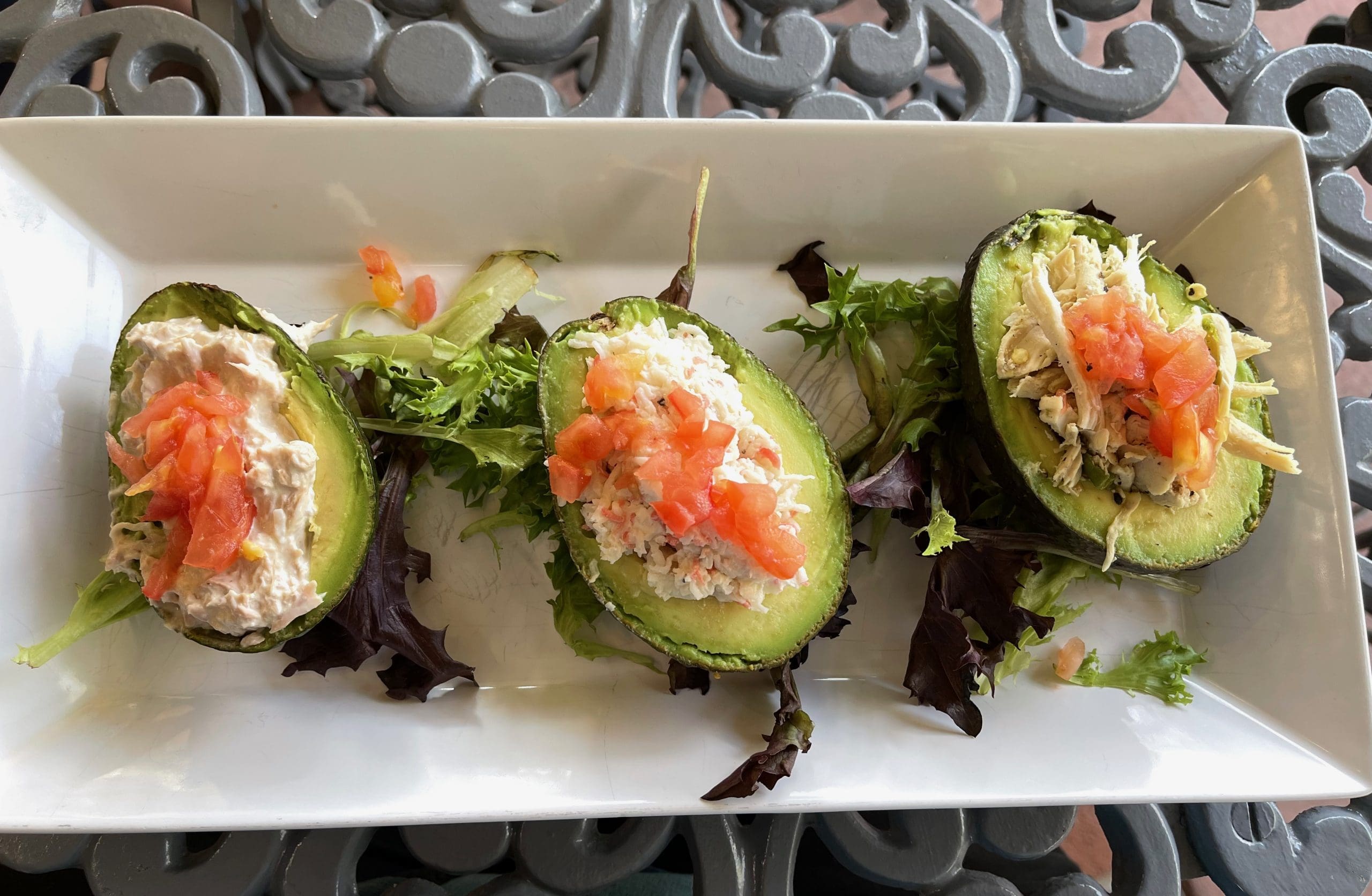
“I wanna open a Jamaican/Irish/Spanish small plate breakfast restaurant and call it Tapas the Morning to Ja.” ~Harris Wittels (Comedian) It wasn’t Wittel’s humorous quip that came to mind as we approached Damacio’s Bar & Tapas but rather something legendary raconteur and television host Anthony Bourdain once said.  During a 2013 episode of his CNN television show Parts Unknown filmed in Granada, Spain, he declared “We will never have tapas culture in America.”  Calling tapas “that greatest of Spanish traditions,” Bourdain added “You may think you know what a tapa is.  Like if you’ve had small bites at some fusion hipster bar where they do a whole lot of little plates. Yeah, that ain’t a tapa. Quite naturally Boudain’s comments got me to thinking: what exactly is a tapas culture and what are we doing wrong here in the Land of Plenty. Accompanied by his longtime Director of Photography Zach Zamboni and his fiancé, who live part-time in Granada, Bourdain was told by the fiancé that “Tapa is for free.  That’s the main issue of the tapa.”  Bourdain liked the concept: “So, you’re just paying for the wine. So if I were like a degenerate wino I could still eat…

MAS Tapas Y Vino – Albuquerque, New Mexico (CLOSED)

From Mas Tapas Y Vino’s Facebook Page: It has been a magnificent run, and we’ve been delighted to serve you. However, the time has come for us to close our doors and reimagine our restaurant. Please stay tuned as we unveil an exciting new concept by Hotel Andaluz. Had Miguel de Cervantes Saavedra written Don Quixote in the 21st century instead of in 1605, the title character’s quest in life might not have been to revive the chivalric virtues and values of adventurous knights. His quests might well have instead taken him on tapas bar-hopping adventures throughout Madrid, Spain. In his edible escapades, he would have fought the incursion into Spanish tapas traditions. Instead of tangling with windmills, he would have squared off against golden arches and a creepy crown-wearing burger mascot. Quixote’s sidekick Sancho Panza would have certainly earned his surname. Madrid, perhaps even more than Ernest Hemingway’s beloved Paris is a “moveable feast.” The practice of chasing after those diverse and delicious little dishes known as “tapas” is called a “tapeo” and no city does tapas bar-hopping as well as Madrid. In Madrid tapeos have achieved near cult status. They are a cultural event, a rite of passage…

Pig + Fig Cafe – White Rock, New Mexico

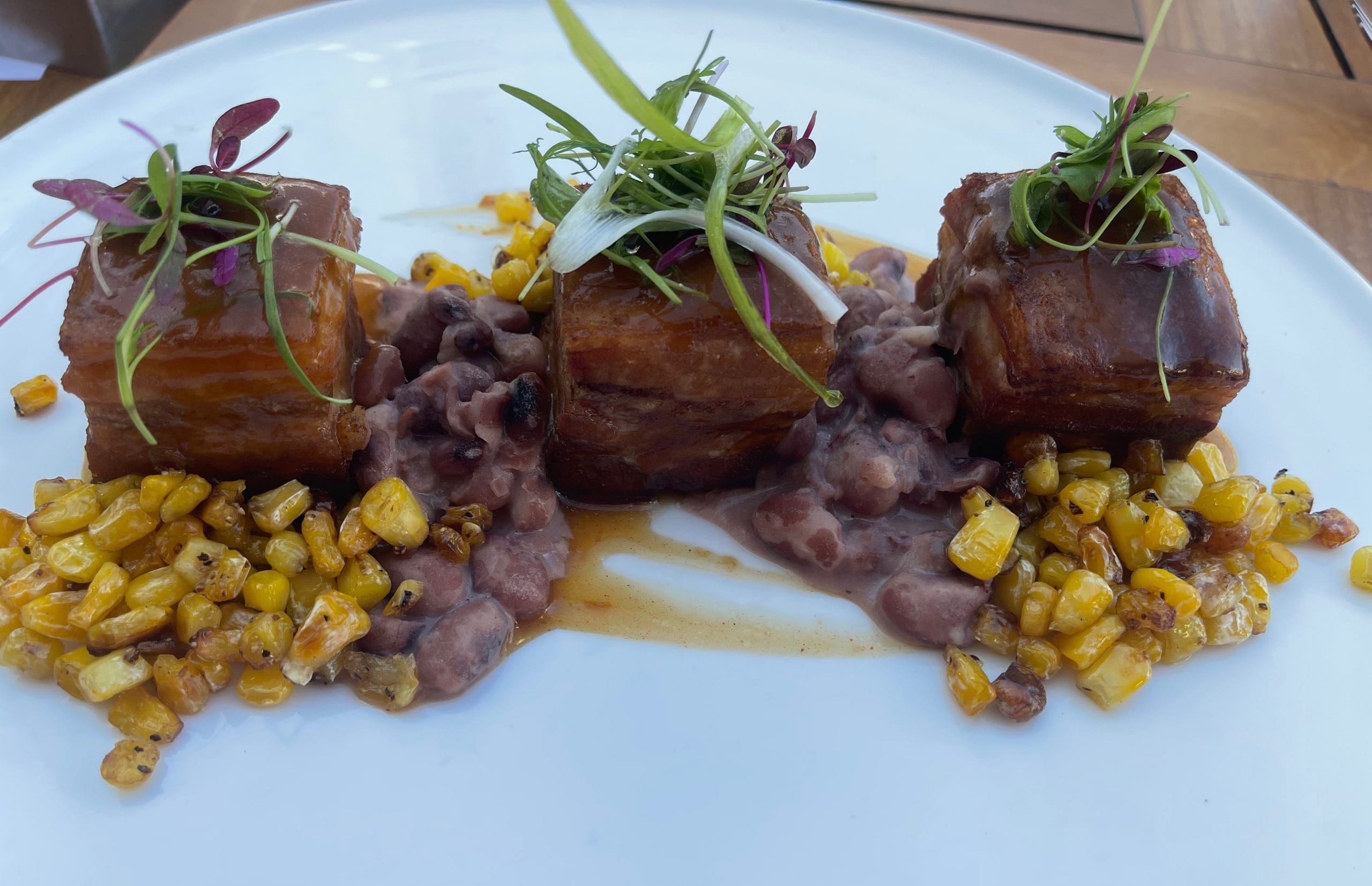
In its eighth season, the brilliant sitcom Seinfeld helped introduce casual comic book fans to the concept of Bizarro world, a setting which is weirdly inverted or opposite of expectations. In other words, a Bizarro world is a mirror image of conventionality, logic and reality, everything being reversed. Jerry Seinfeld’s polar opposite Kevin, for example, was depicted as kind, selfless and reliable in contrast to Jerry’s indifference, self-absorption and forgetfulness. Gene was quiet, studious, polite and giving while his Bizarro counterpart George was loud, obnoxious, cheap and slovenly. Some people believe there’s a polar opposite—a Bizarro version—of every one of us. I met “Bizarro Gil” while stationed at Keesler Air Force Base in Biloxi, Mississippi. While I (all modesty aside) consider myself a bit of a renaissance man, Derwin was atavistic, a throwback to the days of Ralph Kramden when men were short-tempered, disparaging and chauvinistic. He couldn’t understand why I would take my Kim out for dinner so often when there we had a perfectly good stove at home. It galled him that Kim often picked where we’d eat. His retort to that grievous affront was “The last time women decided what to eat, they doomed humanity for eternity,”…

VARA WINERY & DISTILLERY – Albuquerque, New Mexico

In 1620, King Philip III of Spain issued a royal decree mandating that each of the 19 recognized New Mexican Pueblos elect by popular vote, a governor, lieutenant governor and other officers as might be needed to carry on the Pueblo’s affairs. The decree required that elections take place at the close of a calendar year with installation into office occurring the first week of the new year. In commemoration of each Pueblo’s recognized sovereignty, each governor was presented a silver-headed Vara de Soberania (Cane of Sovereignty) with a cross inscribed on the sliver mount as evidence of the support of the Church.  This symbol of the governor’s commission and authority has been passed on to succeeding governors ever since. * In 1629, nine years after the Varas de Soberania were issued, Fray Garcîa de Zuñiga and Antonio de Arteaga smuggled vines out of Spain. In defiance of Spanish law prohibiting the growing of grapes for wine in the new world, they planted New Mexico’s first grapes on the east bank of the Rio Grande slightly north of the village of present-day San Antonio. Thanks to the audacity of the two Catholic monks, the major shortage of wine in the…

El Farol – Santa Fe, New Mexico (CLOSED)

For over a quarter century, the most popular section in New Mexico Magazine (the nation’s oldest state magazine, by the way) has been a humorous column entitled “One of Our Fifty is Missing.” The column features anecdotes submitted by readers worldwide recounting their experiences with fellow American citizens and ill-informed bureaucrats who don’t realize that New Mexico is part of the United States. Some travelers from other states actually believe they’re leaving their nation’s borders when they cross into New Mexico. Others think they need a passport to visit (not that they’d visit considering they’re wary of drinking our water.) Merchants and banks throughout America have been known to reject as “foreign credit cards” American Express and Visa cards issued by New Mexico banking institutions. Sometimes you have to wonder if “one of our fifty is missing” applies also to American History textbooks. As an unabashedly proud New Mexican of Spanish descent, I always wondered why public schools taught impressionable students that America’s history was the exclusive domain of the thirteen colonies. You would think this great country’s history began when the pilgrims descended on Plymouth Rock. Seemingly unbeknownst to history books was all the history transpiring across the Land…

The Cellar – Albuquerque, New Mexico (CLOSED)

While touring Granada, Spain during a 2013 episode of CNN’s Parts Unknown, Emmy award-winning celebrity host Anthony Bourdain bemoaned that “we will never have tapas culture in America.” Then, to emphasize his contention even further (and perhaps to rankle the ire of American foodies who frequent “tapas” restaurants across the fruited plain), he challenged viewers: “You may think you know what a tapa is, like if you’ve had small bites at some fusion hipster bar where they do a whole bunch of little plates. Yeah, that ain’t a tapa.” Bourdain, a best-selling author, world traveler, renowned chef and “poet of the common man” doesn’t just vociferate controversial statements because it’s good television. Agree with him or not, he knows what he’s talking about. When he says we will never have tapas culture in America, the operative word is “culture” as in the social practices associated with tapas. In Spain, tapas isn’t a formulaic approach in which a restaurant (or more likely, a drinking establishment) serves “small plates.” It’s so much more than that. In modern day Spain, tapas are not only a gastronomic custom, they are a deeply rooted social and communal event described by Travel and Leisure as “walking,…

Cosmo Tapas – Albuquerque, New Mexico (CLOSED)

Some of the world’s most elegant and refined cuisine has its genesis in very humble circumstances.  Today, Spanish tapas are widely regarded as sophisticated and exotic, but they didn’t start off that way.  In fact, Spanish tapas are an excellent embodiment of the axiom that when life hands you lemons, you should make lemonade.  The words “tapa” (singular) or “tapas” (plural) are derived from the Spanish word “tapar,” which means “to cover.”  In Spanish, a tapa is also the literal term for a “lid.”  How the word “tapas” became the term used to describe a popular epicurean craze is an interesting tale. It’s well established that in Spain, it’s traditional for many people to take an afternoon respite from the rigors of their daily lives and jobs to visit the local tavern or inn for snacks and refreshment.  In Old Spain, snacks and refreshment are inseparable, a tradition dating back to the Castilian king Alfonso the Wise who decreed that no wine was to be served in any inn throughout Castile unless accompanied by something to eat.  This precaution was to counteract the adverse effects of alcohol on an empty stomach. Observing that glasses of wine or sherry served to…

Conrad’s – Albuquerque, New Mexico (CLOSED)

There was a time when the name “Hilton” didn’t conjure up images of a ditzy blonde airhead whose celebrity is based largely on promiscuity. Well, maybe not. More than 50 years ago, another ditzy blonde, Zsa Zsa Gabor honeymooned at La Posada in Albuquerque with her then husband Conrad Hilton, a New Mexico native and founder of the historic downtown hotel in which Conrad’s is housed. Since the hotel’s launch in 1939, the guest registry at La Posada de Albuquerque has been signed by a veritable who’s who in celebrity and politics. Most come for the hotel’s Spanish colonial charm, opulent ambience and impeccable service, but I’ll bet some return for the innovative Yucatan Peninsula Region cuisine at Conrad’s, the hotel’s signature restaurant. After imbibing the lobby’s lavish accouterments and proceeding to your table, you’ll be hard-pressed to select from among the menu’s platos pequenos (small plates or appetizers), enseladas (salads), sopas (soups) and platos grande (big plates or entrees), the descriptions of which might leave your mouth watering. Luckily the wait staff is on the spot to satiate your hunger slightly with a basket of warm bread and a small plate of Spanish olives. A good start, particularly on…